Written by: Matthew Timmins, Founder and Managing Director, Leva Sleep
Key Takeaways for Better Couple Sleep
-
Sync sleep schedules and build screen-free wind-down rituals to align circadian rhythms and relax together with touch and herbal teas.
-
Exercise as a pair during the day and keep your bedroom cool (60-67°F), dark, and quiet to support deeper, more comfortable sleep.
-
Create a written “Sleep Agreement” and use positional strategies like side sleeping or gentle head elevation to ease snoring naturally.
-
Handle temperature differences with separate blankets and use elevation and alignment to reduce pain for each partner.
-
Upgrade to split adjustable bases for tailored comfort on each side of the bed and more peaceful sleep for both partners.
Your 10-Step Roadmap to Better Couple Sleep
These evidence-based strategies move from simple daily habits to more advanced positioning and adjustable base solutions.
-
Sync Your Sleep Schedules for Circadian Harmony
-
Create Screen-Free Unwind Rituals with Hugs and Tea
-
Exercise Together During the Day
-
Incorporate Natural Aids Like Magnesium into Shared Routines
-
Optimize Your Bedroom: Cool, Dark, and Quiet
-
Craft a “Sleep Agreement” for Open Communication
-
Address Snoring with Strategic Positioning
-
Manage Temperature Differences Individually
-
Relieve Pain Through Elevation and Alignment
-
Upgrade to Split Adjustable Bases Like Leva Sleep’s Systems
1. Sync Your Sleep Schedules for Circadian Harmony
Recent research emphasizes the importance of circadian alignment through consistent sleep timing for healthy, restorative rest. When partners keep different bedtimes and wake times, one person’s light, movement, and noise can disrupt the other’s natural sleep-wake cycle.
Start by identifying each person’s preferred sleep window, then choose a compromise bedtime that feels realistic for both of you. Shift your schedules by 15 to 30 minutes each night until you reach that shared target. This gradual approach supports your circadian rhythms while preserving the comfort and intimacy of going to bed together.
2. Create Screen-Free Unwind Rituals with Hugs and Tea
Screen-free wind-down time helps your body prepare for sleep more easily. Blue light from phones, tablets, and TVs suppresses melatonin, while physical touch between partners releases oxytocin, which eases stress and supports relaxation.
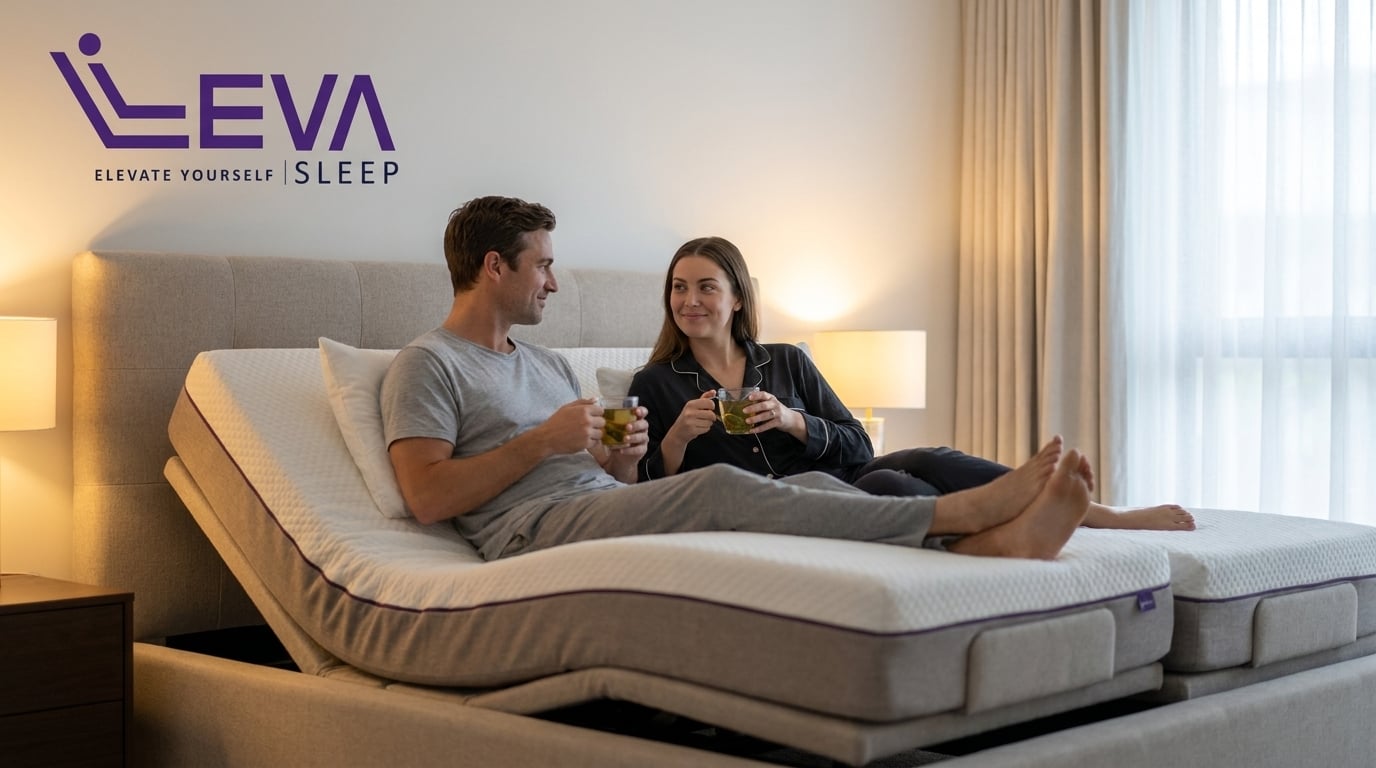
Set a 30 to 60 minute no-screen window before bed. Spend that time sharing herbal tea, doing light stretching together, or talking about your day while holding hands or cuddling. These simple rituals tell your bodies that bedtime is coming and deepen your emotional connection at the same time.
3. Exercise Together During the Day
Daytime movement improves sleep quality by increasing deep sleep and supporting a steady circadian rhythm. Working out as a couple adds accountability and makes the routine more enjoyable.
Plan morning walks, evening yoga, or weekend hikes you can do together. Finish vigorous exercise at least three to four hours before bed so your core temperature can drop again. Even light activities like gardening or dancing in your living room help when you stay consistent.
4. Incorporate Natural Aids Like Magnesium into Shared Routines
Magnesium helps relax muscles and calm the nervous system, which can make falling asleep feel easier. Turning these natural supports into shared habits helps both partners benefit and stick with them.
Consider taking magnesium supplements together 30 to 60 minutes before bed, after checking with your healthcare provider. You can also add magnesium-rich foods like almonds, spinach, or dark chocolate to your evening snack. Herbal teas with chamomile, valerian root, or passionflower fit naturally into your nightly wind-down routine as a couple.
These lifestyle foundations create a strong base for better sleep. Beyond habits and supplements, the space where you sleep also shapes how rested you feel.
5. Optimize Your Bedroom: Cool, Dark, and Quiet
Sleep studies indicate that the optimal bedroom temperature ranges between 60 and 67°F, with humidity between 30% and 50%. This range supports your body’s natural temperature drop at night and helps you stay comfortable until morning.
Use blackout curtains to block outside light and a white noise machine or fan to soften disruptive sounds. If one partner sleeps hot and the other cold, try separate blankets so each person can choose their own warmth level. A programmable thermostat can cool the room before bedtime and warm it slightly before your alarm.
6. Craft a “Sleep Agreement” for Open Communication
A clear “Sleep Agreement” reduces conflict by turning unspoken expectations into shared decisions. Many couples struggle with sleep because they never fully discuss their needs and boundaries.
Talk through topics like ideal bedtimes, wake times, reading lights, phone use in bed, snoring worries, and temperature preferences. Write down what you agree on and revisit it every few months or when routines change. This simple document keeps small frustrations from building into long-term resentment.
7. Address Snoring with Strategic Positioning
Positional therapy that encourages side sleeping can significantly reduce snoring. Sleeping on the back lets gravity pull the tongue and soft palate toward the airway, which can cause noisy breathing.
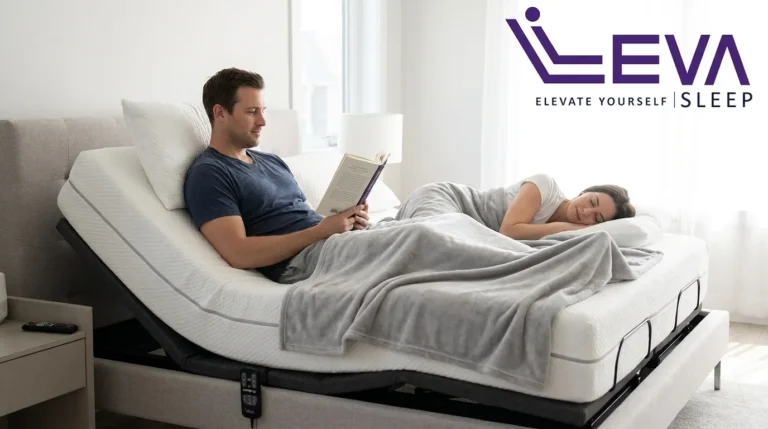
Promote side sleeping by placing a tennis ball in a sock and pinning it to the back of the snorer’s pajama top so back sleeping feels uncomfortable. Elevate the head of the bed by 4 to 6 inches to help keep airways open. For couples who need more support, adjustable bases with automatic snore detection can raise the head section slightly when snoring starts, providing hands-free relief.
When simple positioning tricks do not solve the problem, advanced adjustable bases with precise head and upper-body elevation give you more control over snoring and nighttime breathing.
8. Manage Temperature Differences Individually
Temperature differences often cause nightly tug-of-war over the covers. One partner may overheat while the other shivers, and a single shared blanket rarely satisfies both.
Give each person their own blanket or use a split-top sheet so you can choose different layers. Cooling mattress pads help hot sleepers, while heated blankets or extra quilts support cold sleepers without affecting the other side. Split adjustable bases also pair well with separate mattresses and temperature-regulating accessories on each side.
9. Relieve Pain Through Elevation and Alignment
Better alignment at night can ease chronic pain in the back, hips, shoulders, or knees. Flat mattresses often fail to support the body’s natural curves, which increases pressure on joints.
Test different pillow setups under your knees, between your legs, or behind your back to find positions that reduce discomfort. Adjustable bases provide finer control by letting you raise your head and legs to specific angles. Features like lumbar support and pillow tilt can target problem areas so both partners wake up with less stiffness and more energy.
10. Upgrade to Split Adjustable Bases Like Leva Sleep’s Systems
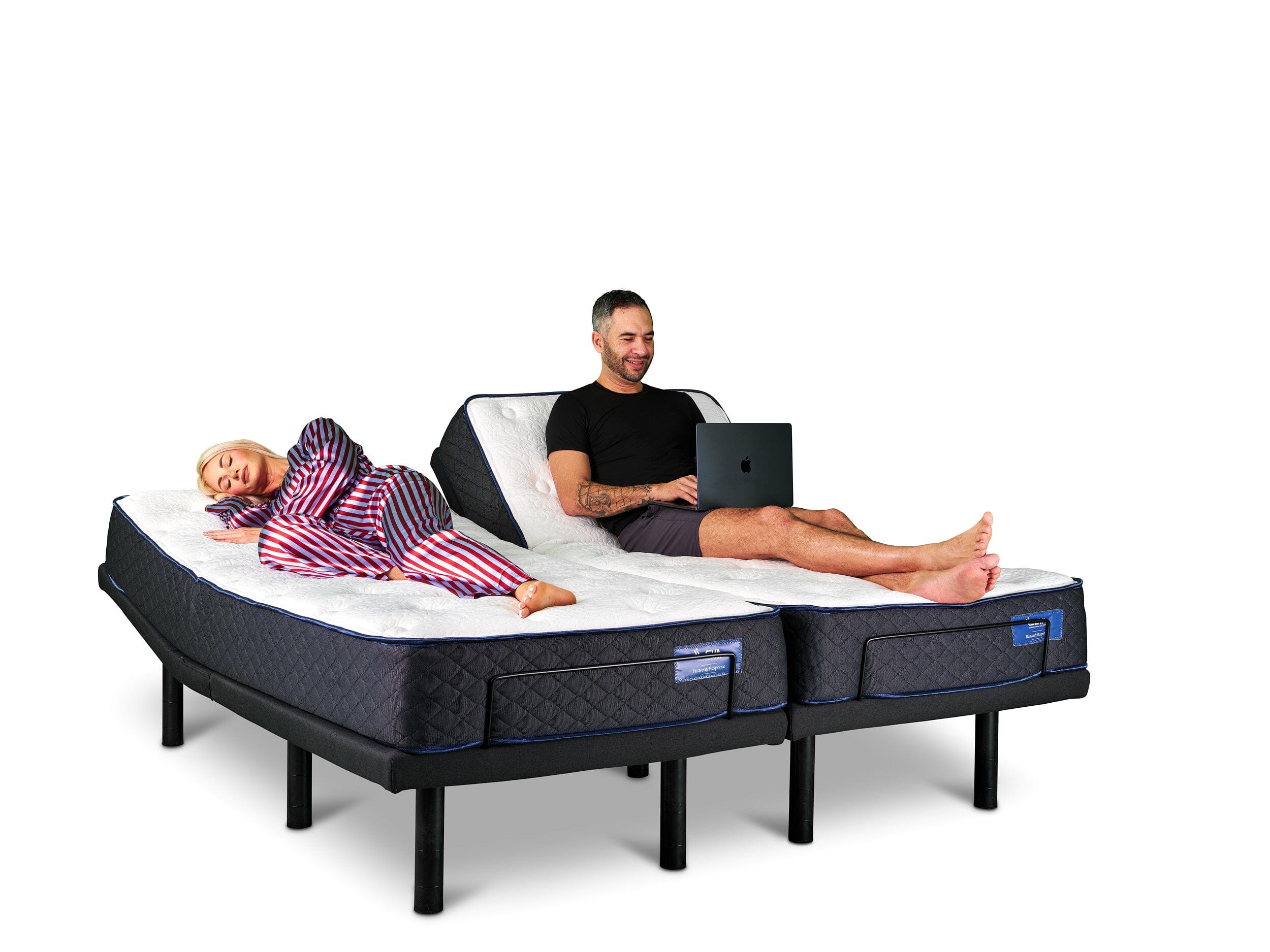
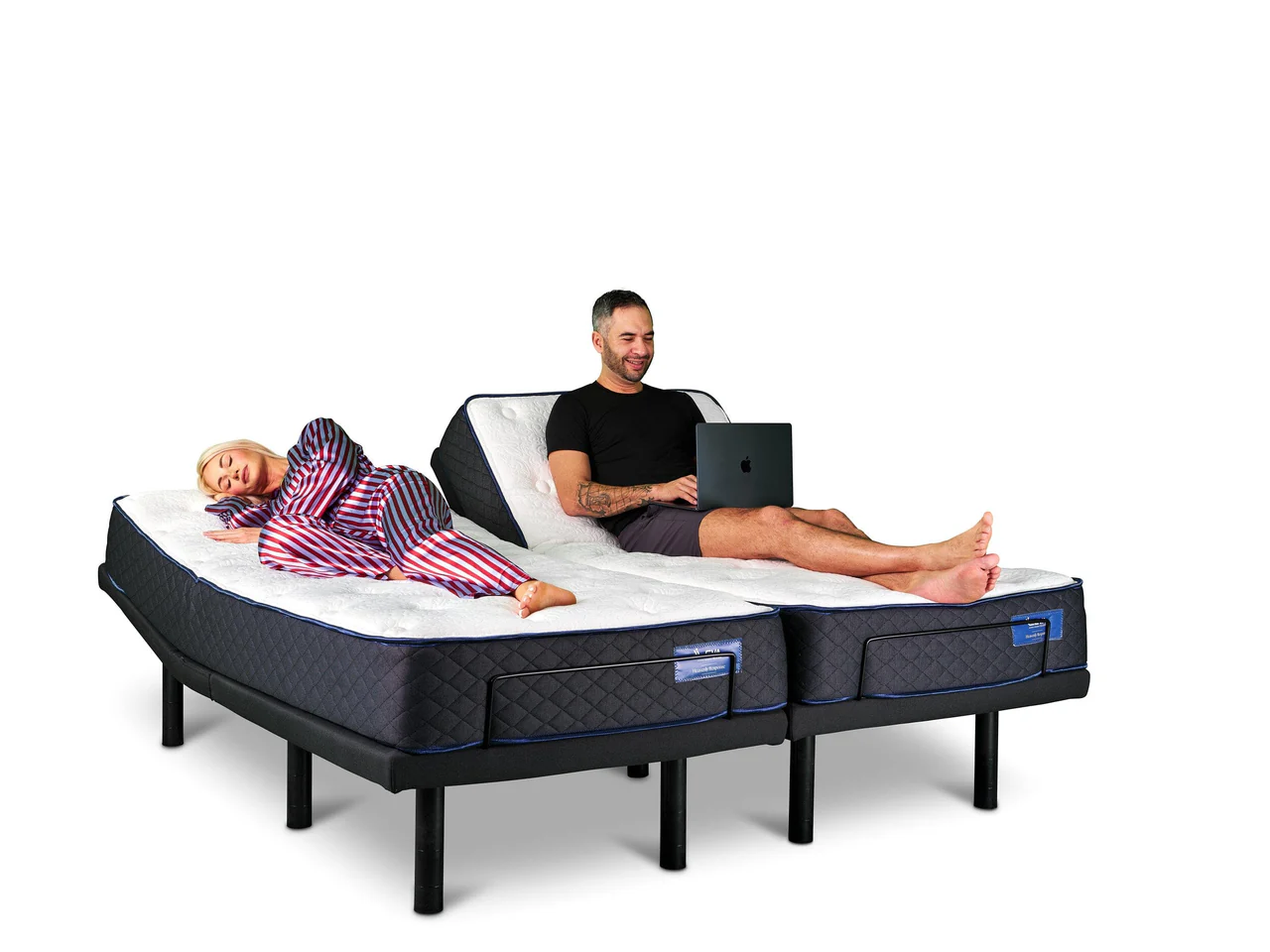
Split adjustable bases give couples with different needs a way to share a bed without sacrificing personal comfort. Each side of the bed moves independently, so partners can choose their own elevation, position, and sometimes even firmness.
Leva Sleep specializes in Split Queen and Split King setups that use whisper-quiet German motors and app-based controls for easy adjustments. Their upcoming anti-snore mode detects snoring and makes subtle changes to head position during the night. With over 25,000 satisfied customers and prices 30% to 50% lower than comparable luxury competitors, Leva Sleep offers advanced couple-focused adjustable systems that you can try in person at their La Jolla showroom.
Frequently Asked Questions
How can couples sleep better when sharing a bed?
Couples sleep better together when they align sleep schedules, build shared bedtime rituals, and keep the bedroom cool and dark. Clear communication about noise, light, and comfort preferences also matters. When these steps are not enough, split adjustable bases let each partner customize their side without disturbing the other.
What are natural ways to fix partner snoring?
Natural snoring relief often starts with side sleeping, gentle head elevation, and healthy weight management. You can also keep bedroom humidity in a comfortable range to reduce airway irritation. Adjustable bases that raise the head section and use snore-detection technology provide extra support for couples dealing with frequent snoring.
What’s the best solution for couples with different firmness preferences?
Split adjustable bases paired with customizable mattresses give each partner control over their own firmness level. This setup removes the need for one person to compromise while still allowing you to share the same bed and stay close.
Should couples choose Split Queen or Split King adjustable bases?
Split Queen works well for couples who want independent adjustment in a smaller footprint. Split King offers more personal space and the same independent controls on each side. The right choice depends on your bedroom size and how much room you prefer while sleeping.
When should couples consider investing in adjustable bases?
Adjustable bases make sense when good sleep hygiene alone does not solve issues like snoring, temperature battles, chronic pain, or very different comfort needs. If you are thinking about separate beds or feeling strain in your relationship because of poor sleep, adjustable bases can often restore comfort while keeping you together.
Conclusion: Reclaim Shared, Restorative Sleep
Shared, restorative sleep starts with practical changes like synchronized schedules, screen-free rituals, and a calm, cool bedroom. These steps resolve many common disruptions and help both partners feel more rested.
Some couples still face deeper challenges such as chronic snoring, temperature clashes, or ongoing pain. In those cases, advanced positioning and adjustable base solutions provide the extra support needed for both people to sleep well.
The path from simple habits to specialized systems reflects how unique each relationship is. What matters most is finding a setup that lets you both sleep deeply while preserving the closeness that strengthens your bond. Explore split adjustable bases and personalized positioning options to experience how better sleep can improve your nights and your relationship.