
Written by: Matthew Timmins, Founder and Managing Director, Leva Sleep
Key Takeaways
- Mismatched mattress firmness creates motion transfer, spinal misalignment, and pressure points that disrupt couples’ sleep.
- Medium-firm mattresses (6-7/10) balance support for many positions but often fail couples with very different needs.
- Split adjustable bases give each partner independent control of their side, so no one has to compromise on firmness or position.
- These systems support better spinal alignment, reduce snoring through elevation, and improve motion isolation in shared beds.
- Discover how Leva Sleep’s split adjustable bases create personalized comfort that can end your couple’s sleep disruptions.
How Mattress Firmness Disrupts Couples’ Sleep Quality
Motion Transfer and Sleep Disturbances
Mattress firmness affects how much movement travels across the bed. Medium-firm mattresses in the 6-7 firmness range often provide a good balance for couples, offering enough support for back and stomach sleepers while cushioning side sleepers. You can quickly check motion transfer by having one partner roll or get in and out of bed while the other lies still. When partners have very different firmness preferences, any compromise often increases motion transfer and wakes both people throughout the night.
Spinal Alignment Challenges
Scientific research indicates that firmer mattresses are not universally better for back health and can cause discomfort depending on sleep position, body weight, and personal preference. Side sleepers usually feel better on medium-firm to medium-soft surfaces that cushion hips and shoulders. Back sleepers often need medium to firm support to keep the spine aligned. When couples with different sleep positions share one firmness level, one partner’s spine usually falls out of alignment, which leads to tossing, turning, and poor-quality sleep.
Pressure Point Problems
Body weight strongly influences mattress firmness perception: heavier individuals experience a firm mattress as more supportive, whereas lighter individuals may find the same mattress too hard, failing to cradle pressure points and causing stiffness and discomfort. This weight difference between partners means the same surface can feel supportive to one person and painfully rigid to the other. One partner ends up with sore shoulders or hips from pressure points, while the other feels like they are sinking too deeply and losing support.
Warning Signs of Firmness Mismatch
Couples dealing with firmness conflicts often notice frequent nighttime awakenings, morning stiffness in the back or joints, and one partner regularly escaping to the couch or guest room. Ongoing arguments about mattress comfort also signal a mismatch. Experts state that muscles, ligaments, and joints require 30-60 nights to fully adjust to a new mattress’s firmness, often causing temporary back pain during this adaptation period. Because this adjustment takes time, choosing the right firmness from the start helps avoid weeks of unnecessary discomfort.
How Split Adjustable Bases Resolve Firmness Conflicts
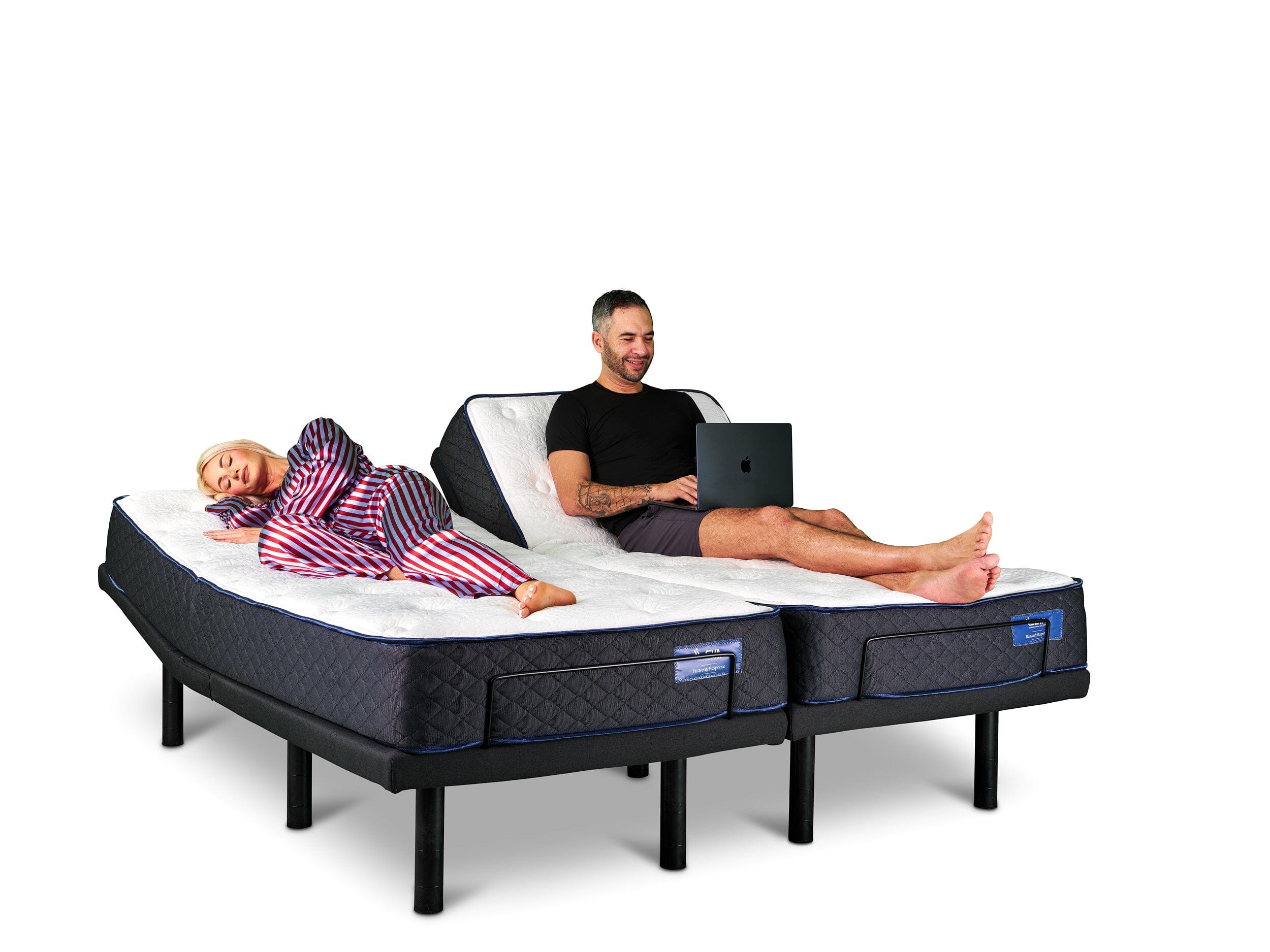
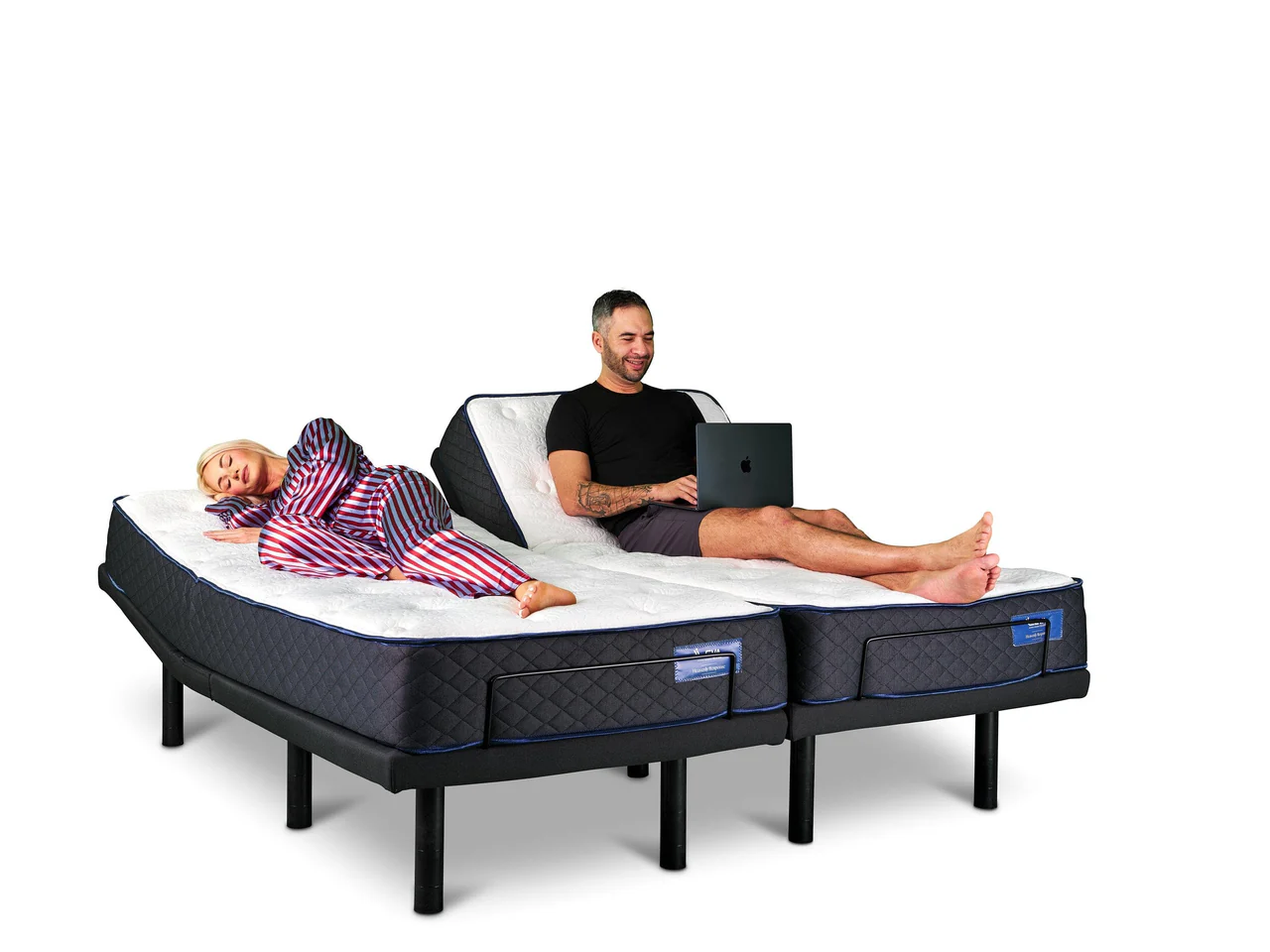
Split adjustable bases change how couples handle mattress firmness by giving each partner independent control over their side of the bed. Each person can fine-tune comfort through elevation changes, which subtly change how firm the mattress feels. Raising the legs creates a slightly firmer feel by reducing pressure point sinkage, while head elevation can ease issues like reflux or neck strain. Because each side moves on its own, one partner’s adjustments do not disturb the other’s sleep surface.
This independence supports more than basic comfort. Sleep positions strongly influence spinal alignment and musculoskeletal comfort, with back sleeping distributing weight evenly and keeping the spine neutral. Split adjustable bases let each partner choose the position that best supports their spine and joints. Gentle head elevation can also help with conditions like sleep apnea by opening the airway, so couples can address medical needs and comfort at the same time.
Leva Sleep’s advanced systems build on these benefits with whisper-quiet German motors and app-controlled positioning for precise adjustments. Upcoming AI anti-snore technology will detect snoring and make small automatic changes while you sleep. When you test adjustable bases, pay attention to motor noise, how smoothly the base moves, and how responsive the app feels.
Static Mattress Fixes vs Dynamic Split Adjustable Systems
Many couples first try flat medium-firm hybrids, mattress toppers, or even separate mattresses to solve firmness conflicts. These static options offer some relief but cannot adapt in real time as bodies, positions, and needs change. When you compare static solutions with dynamic split adjustable systems, focus on motion isolation, alignment support, cost for the features you get, and how each option fits your bedroom setup. The table below shows how common approaches perform on these key factors for couples with different firmness needs.
| Option | Motion Isolation | Alignment Adaptability | Cost vs Competitors | Leva Integration |
|---|---|---|---|---|
| Flat Hybrids | High (6-7/10 firmness) | Fixed | Standard | N/A |
| Toppers | Medium | Partial | Low | Limited |
| Leva Split Adjustables | Excellent (independent) | Full (positioning) | Competitive | Seamless (app, anti-snore) |
Medium-firm (around 6 out of 10) is a popular firmness level, with many sleepers preferring the 5-7 range. Leva Sleep’s US-made mattresses from partners like Airloom and Helix pair well with adjustable bases, so couples get dynamic firmness adjustment plus strong motion isolation from quality construction.
Matching Split Adjustable Solutions to Your Relationship
Choosing the right setup starts with a clear picture of each partner’s needs. Look at sleep position, body weight, pain points, and comfort preferences for both people. You can gather useful clues by watching how much each partner moves at night, noting any morning stiffness, and checking for uneven wear patterns on your current mattress.
Once you understand your patterns, think about bedroom size when deciding between split queen and split king configurations. Split king offers maximum personal space with two twin XL sides. Split queen delivers the same independent adjustability in a smaller footprint. Leva Sleep focuses on space-conscious split queen options and supports both sizes with app-controlled presets, specialized elastic-fitted sheets, and white-glove delivery that makes setup simple.
Science and Real Couples on Firmness Plus Adjustables
Recent research supports adjustable positioning as a practical way to improve sleep quality. Medium-firm mattresses can provide adequate support to promote proper sleep posture and spinal health. Elevation adjustments build on these principles by letting you fine-tune spinal alignment and reduce pressure points through small changes in head and leg height.
Chiropractors and physical therapists often recommend medium-firm mattresses for spinal alignment, and Leva Sleep’s adjustable bases extend that support with real-time positioning changes. Couples can shift positions during the night as comfort needs change, without waking each other or losing support.
Real Leva Sleep customers report major improvements after moving from compromise flat mattresses to split adjustable systems. One couple dealing with chronic back pain and loud snoring found that independent lumbar support and anti-snore positioning allowed them to share a room again. Their new setup supported both partners’ medical needs while restoring restful, uninterrupted sleep.
Next Steps for Better Sleep as a Couple
Mattress firmness shapes couples’ sleep through motion transfer, spinal alignment, and pressure point relief. Traditional flat mattresses often force one partner to sacrifice comfort, while split adjustable bases from Leva Sleep provide personalized firmness through dynamic positioning so both people can sleep well.
As Southern California’s adjustable bed specialists, Leva Sleep has helped more than 25,000 customers improve sleep with innovative split systems, US-made mattresses, and full white-glove service. Book your Leva Sleep demo today to see how split adjustable bases can upgrade your sleep as a couple.
FAQ: Mattress Firmness for Couples
What mattress firmness is best for couples with different preferences?
The medium-firm range mentioned earlier works well for many couples because it balances support and pressure relief. When partners have very different needs, split adjustable bases offer a stronger solution by letting each person customize firmness through independent positioning controls, so no one has to compromise.
Do split adjustable beds really fix motion transfer issues?
Split adjustable beds greatly reduce motion transfer between partners because each side operates on its own. When one person changes position or gets up at night, the other side stays stable. This independence, combined with a quality mattress, creates better motion isolation than most traditional flat mattresses.
Should couples choose split queen or split king adjustable bases?
The right choice depends on room size and how much personal space each partner prefers. Split king offers the most space and independence with two twin XL sides. Split queen delivers the same adjustability in a smaller footprint. Leva Sleep supports both options and can help you match the size to your room and sleep style.
Are adjustable bases noisy and disruptive?
Modern split adjustable bases, including Leva Sleep’s systems with whisper-quiet German motors, run with very little sound. The motors handle micro-adjustments smoothly, and app controls allow slow, gentle changes that avoid sudden movements or noise that could wake your partner.
Can adjustable bases help with sleep apnea and snoring?
Adjustable bases can help with sleep apnea and snoring by slightly elevating the head to open the airway. Leva Sleep’s upcoming AI anti-snore technology will detect snoring and make subtle adjustments to ease symptoms, which can offer a more comfortable option than CPAP machines for some mild to moderate cases.