Written by: Matthew Timmins, Founder and Managing Director, Leva Sleep
Key Takeaways
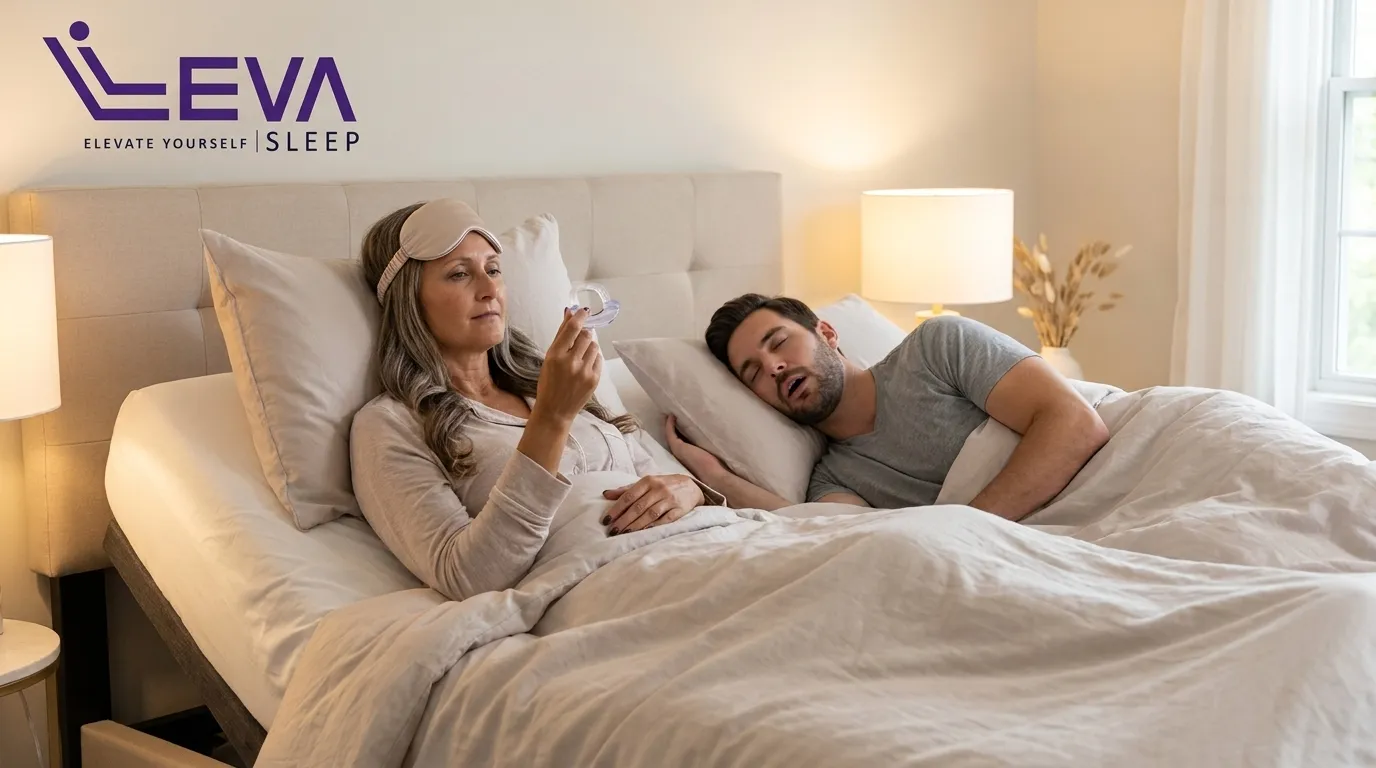
- Loud snoring often pushes couples into separate bedrooms, and many wearable anti-snoring devices fail because of poor comfort and low compliance.
- Positional therapy, mandibular advancement devices, and neuromuscular stimulators each target specific snoring causes and deliver different success rates.
- Long-term adherence is the biggest barrier for wearables, since jaw soreness, nightly setup, and partner disturbance often cause users to quit.
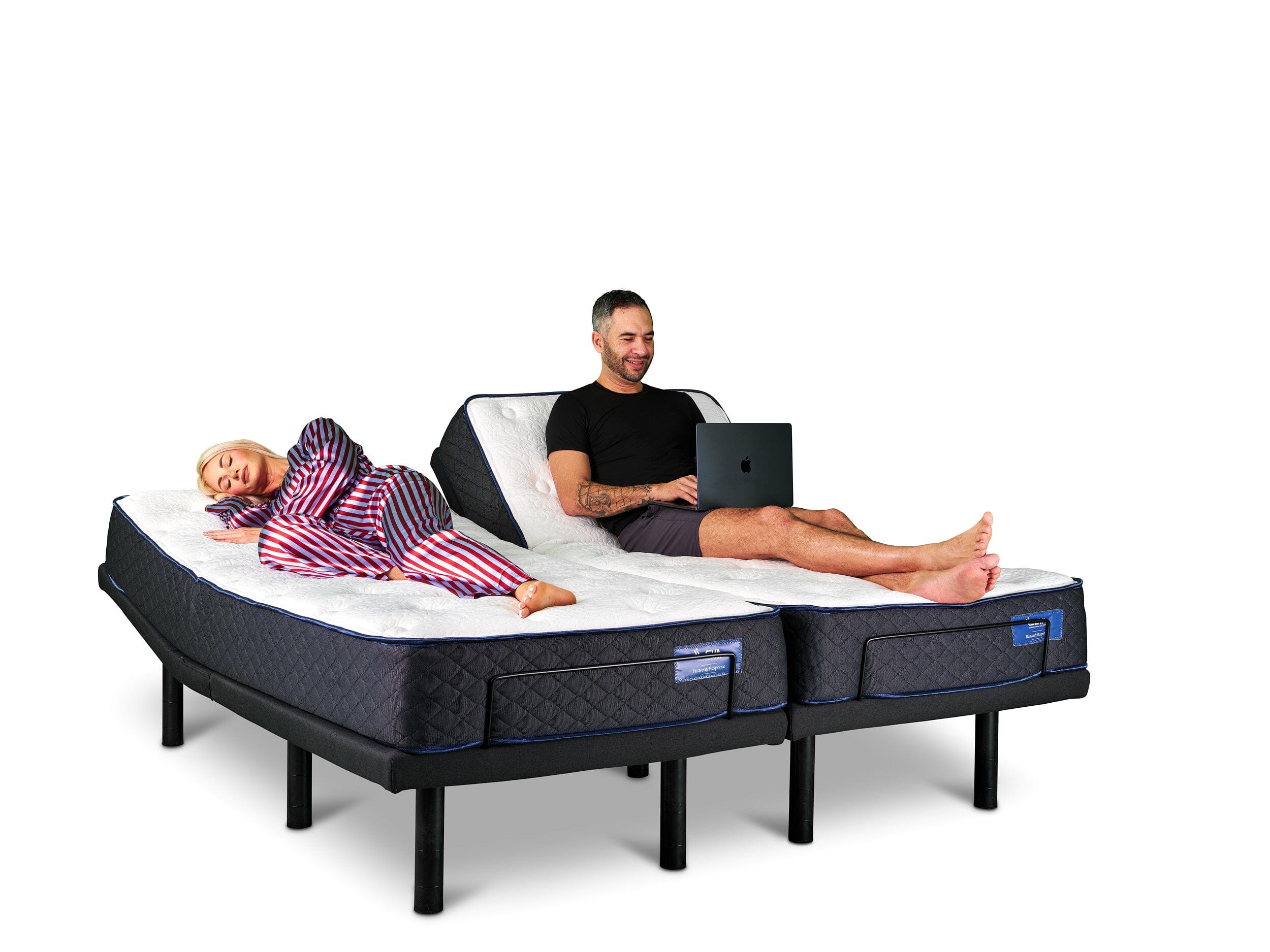
- Split adjustable beds like Leva Sleep offer a non-wearable option that uses independent head elevation to reduce airway collapse without nightly setup.
- For couples who want to stay together without gadgets, Leva Sleep provides a quiet, automatic solution, available online or in the La Jolla showroom.
How Positional Therapy Reduces Snoring
Positional therapy uses devices or elevation to keep sleepers off their backs and reduce airway collapse caused by gravity. Clinical studies show it can reduce snoring events when compliance is maintained. This approach works best for position-dependent snoring, where airway narrowing occurs mainly while sleeping on the back.
How Well Do Anti-Snoring Mouthpieces Work?
Snoring occurs when air flows past relaxed tissues in the throat, including the tongue, soft palate, and uvula, which then vibrate during breathing. Mandibular advancement devices (MADs) such as SnoreRx Plus and SmartGuard RX respond by moving the lower jaw forward, which tightens soft tissue and widens the posterior airway. These devices work best when snoring starts with mouth anatomy, such as a low or thick soft palate, or from sleeping with the mouth open.
Peer-reviewed evidence confirms that MADs reduce snoring frequency and intensity in a meaningful proportion of users. Outcomes vary based on jaw anatomy and device fit. Nightly comfort is the main limitation, since jaw soreness, excessive salivation, and tooth sensitivity are common and directly reduce long-term adherence. Industry analyses of the anti-snoring device market consistently identify comfort-related dropout as the leading barrier to sustained wearable use.
When you evaluate a MAD, look at the adjustability range in millimeters of jaw advancement. Compare boil-and-bite versus custom-fit construction. Confirm whether the device allows mouth breathing, which is critical for users with nasal congestion that Mayo Clinic identifies as an independent snoring cause.
Top Anti-Snoring Device Types and How They Rank
No single device earns the highest rating for everyone, because results depend on the root cause of snoring. Three main categories dominate current clinical and consumer evaluations.
Tongue-stabilizing devices (TSDs) and neuromuscular stimulators: eXciteOSA is a daytime tongue-muscle stimulator cleared by the FDA for snoring reduction. Published data support its mechanism of improving tongue muscle tone to reduce nighttime airway collapse. Daytime use avoids the in-sleep discomfort seen with MADs. Users must, however, complete consistent daily sessions to maintain effect.
Positional devices: Zzoma is an FDA-cleared positional therapy belt that prevents back-sleeping. Controlled studies demonstrate that positional devices effectively reduce supine sleep time and related snoring events. Smart Nora takes a different approach, using a pillow insert that detects snoring sounds and gently inflates to shift head position, with no body contact beyond the pillow.
Combination MAD/TSD hybrids: These devices address both jaw position and tongue displacement at the same time. They usually have the highest discomfort profile and are often reserved for users who did not respond to single-mechanism devices.
Wearable Anti-Snoring Device Comparison
| Device | Mechanism & Evidence Level | Comfort Considerations | Nightly Compliance Factors | Partner Impact |
|---|---|---|---|---|
| SnoreRx Plus (MAD) | Jaw advancement, peer-reviewed support for MAD class | Boil-and-bite fit, jaw soreness reported with extended use | Comfort-driven dropout common (see discussion above) | Silent in use, no direct partner disturbance |
| eXciteOSA (neuromuscular stimulator) | Daytime tongue stimulation, published clinical data support tongue-muscle mechanism | Used awake, no in-sleep discomfort | Requires daily 20-minute daytime sessions, adherence depends on routine integration | No nighttime device worn, no partner disturbance during sleep |
| Zzoma (positional belt) | Prevents supine sleep, controlled studies confirm positional efficacy | Body-worn belt, heat and restriction reported by some users | Long-term positional device compliance declines without behavioral reinforcement | Worn by snorer only, no direct partner impact |
| Smart Nora (pillow insert) | Sound-triggered head repositioning, mechanism is positional | No body contact, pillow-based activation | Activation sound and pillow movement may disrupt light sleepers | Pump unit produces audible inflation sound that can wake partners |
| SmartGuard RX (MAD) | Jaw advancement, MAD class evidence as above | Custom-fit option available, reduces some soreness versus boil-and-bite | Custom fit improves retention versus over-the-counter MADs | Silent in use, no direct partner disturbance |
Wearables vs. Adjustable Bed for Snoring
Wearables address snoring at the device level and modify jaw position, tongue tone, or sleep posture through something worn on or near the body. Their core limitation is compliance. Growth projections for the anti-snoring wearable market are tempered by persistent adherence challenges, and a device that is not worn consistently provides no benefit. Devices like Smart Nora that respond to snoring sounds can also generate noise or movement that wakes the non-snoring partner, solving one sleep problem while creating another.
Leva Sleep’s split adjustable bases address snoring through independent head elevation, and the same positional therapy mechanism discussed earlier reduces gravity-driven airway collapse. Elevation is built into the sleep surface and removes the nightly compliance decision. Leva’s spring 2026 anti-snore mode adds an active layer by detecting snoring acoustically and making micro-adjustments to the head of the bed automatically, without waking either partner.
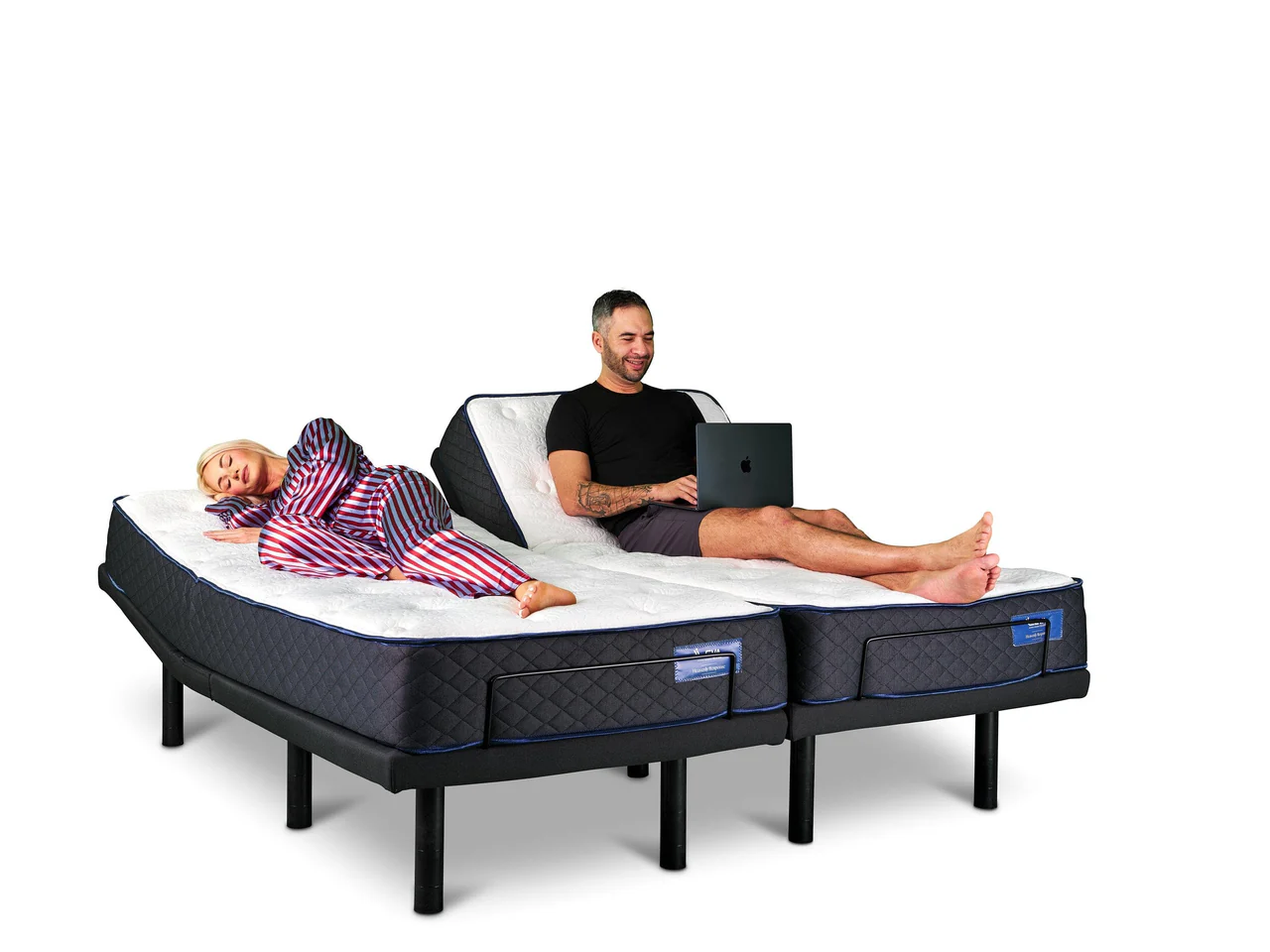
Key differentiators for couples specifically:
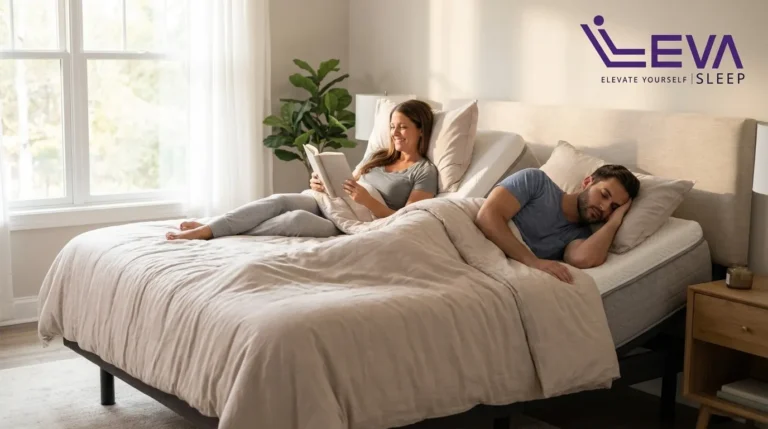
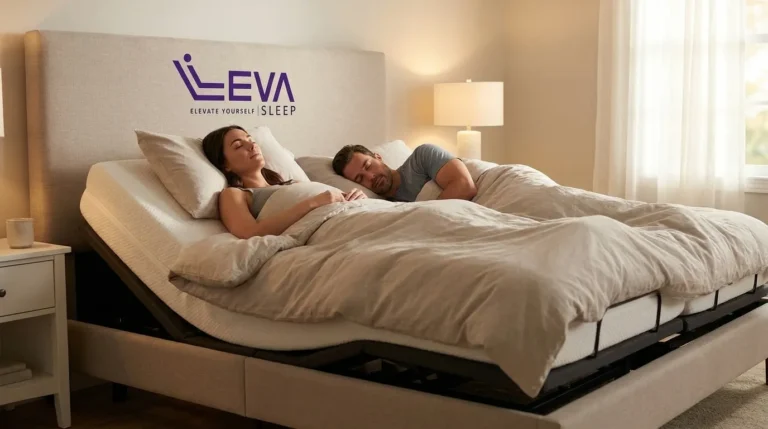
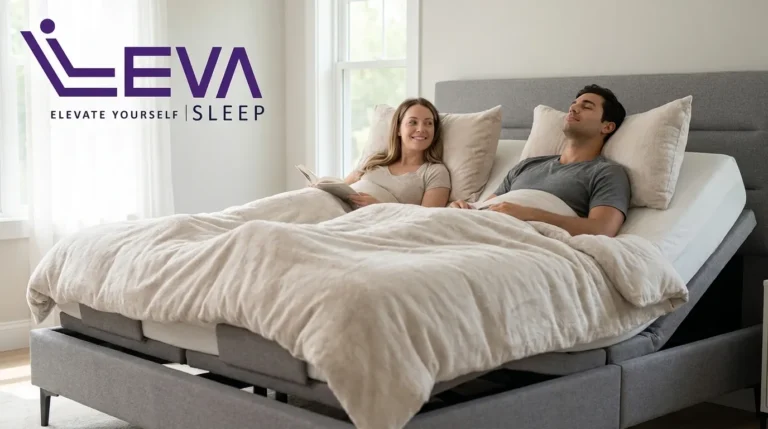
The split configuration solves the core couple problem. Split King and Split Queen bases allow each partner to set their own elevation independently, so one can elevate for snoring management while the other sleeps flat. This independence extends to operation, since German-engineered whisper-quiet motors make adjustments without the mechanical noise that disrupts light sleepers, in clear contrast to pump-based devices like Smart Nora. Because the base requires no nightly setup, unlike a MAD that must be inserted or a positional belt that must be fastened, it removes the compliance burden that causes many wearable users to drop out. Leva then makes this structural solution more attainable by pricing systems 30–50% below comparable luxury adjustable bed competitors, avoiding the premium markup of legacy brands.
Decision Matrix for Snoring Type and Couple Priorities
| Snoring Root Cause | Couple Priority | Recommended Solution Type |
|---|---|---|
| Mouth anatomy / open-mouth snoring | Individual solution, partner unaffected | MAD (SnoreRx Plus, SmartGuard RX) |
| Tongue collapse during sleep | Prefer no in-sleep device | eXciteOSA (daytime use) |
| Position-dependent (back-sleeping) | Willing to wear body device | Positional belt (Zzoma) |
| Position-dependent (back-sleeping) | No body devices, both partners’ sleep quality matters equally | Split adjustable base with head elevation (Leva Sleep) |
| Multiple causes or unknown | Staying in same bed, long-term solution without nightly compliance burden | Split adjustable base with anti-snore mode (Leva Sleep, spring 2026) |
| Nasal congestion / deviated septum | Medical referral primary, adjunct comfort solution | ENT evaluation + elevated sleep position |
Frequently Asked Questions
How long does it take for an anti-snoring wearable to show results?
MADs typically require one to two weeks of nightly use for the jaw to adapt and for snoring reduction to become consistent. Neuromuscular stimulators like eXciteOSA usually need several weeks of daily sessions before muscle tone improvements translate to reduced nighttime snoring. Positional devices and adjustable bed elevation can produce noticeable effects from the first night of correct use.
Will an anti-snoring device disturb my partner?
Most body-worn devices, including MADs, positional belts, and tongue stabilizers, are silent and do not directly disturb a partner. Sound-activated devices that use mechanical inflation or vibration can generate enough noise or movement to wake a light sleeper. Leva Sleep’s split adjustable bases use whisper-quiet motors and independent controls, so one partner’s elevation adjustments do not transfer to the other side of the bed.
Do I need a prescription for an anti-snoring device?
Over-the-counter MADs and positional belts are available without a prescription. Custom-fitted MADs fabricated by a dentist require a clinical consultation. If snoring occurs with gasping, choking, or observed breathing pauses, a sleep study is recommended before selecting any device, since these symptoms may indicate obstructive sleep apnea that needs medical treatment rather than a consumer wearable.
What makes a split adjustable bed different from a standard adjustable base?
A split adjustable base uses two independent bases placed side by side under a shared mattress or two separate mattresses. Each side has its own motor and controls, so one partner can elevate the head for snoring management while the other remains flat. Standard single adjustable bases move as one unit, which means any elevation change affects both sleepers at the same time. Leva Sleep offers both Split King and Split Queen configurations with independent app control for each side.
Is head elevation safe for long-term nightly use?
Sleeping with the head gently elevated, typically between 15 and 30 degrees, is widely used for managing snoring, mild sleep apnea, acid reflux, and post-surgical recovery. Leva Sleep’s adjustable bases are designed for nightly use and allow precise incremental adjustment so users can find the elevation that reduces snoring without creating neck or shoulder discomfort. Users with cervical spine conditions should consult a physician before selecting an elevation angle.
Conclusion
Wearable anti-snoring devices can work well when matched to the correct root cause, yet long-term compliance remains the central challenge for this category. Comfort-driven dropout, partner disturbance from reactive devices, and the nightly burden of setup all limit real-world results. For couples who want shared sleep without gadgets or compromise, Leva Sleep’s split adjustable bases provide independent, whisper-quiet head elevation that addresses positional snoring structurally, and the spring 2026 anti-snore mode adds automatic micro-adjustment for couples who prefer a fully passive solution. With white-glove delivery, pricing 30–50% below comparable luxury competitors, and a growing base of thousands of couples served, Leva Sleep focuses on couples who refuse to accept poor sleep.