Written by: Matthew Timmins, Founder and Managing Director, Leva Sleep
Key Takeaways for Couples with Back Pain
-
Smart bed systems for couples with back pain need three things: independent lumbar zoning, per-side firmness or position control, and strong motion isolation to prevent sleep divorce.
-
Sleep position and pain location drive feature needs. Side sleepers need multi-zone shoulder and hip relief, while back sleepers usually feel the most relief from zero-gravity lumbar support.
-
Split-King and Split-Queen configurations provide 74–82% better motion isolation than unified mattresses, although gap management and connector straps still matter for comfort and closeness.
-
Leva Sleep stands out with dedicated lumbar and pillow-tilt motors, spring 2026 anti-snore mode, per-side temperature control, and in-house white-glove delivery at 30–50% lower pricing than comparable competitors.
-
For couples ready to end sleep compromises, compare Leva Sleep’s Split King and Split Queen systems against your pain, space, and budget needs to find the configuration that keeps both partners comfortable and together.
What Defines a Smart Bed System for Back Pain
A smart bed system for back pain combines three core capabilities. It provides zoned lumbar support that targets specific spinal segments independently. It offers independent firmness or position adjustment so each partner controls their own side. It also delivers motion isolation that prevents one partner’s movement from disturbing the other.
Systems that deliver all three capabilities at the same time set the current standard for addressing chronic or asymmetric pain in shared sleep environments while still allowing couples to stay in the same bed.
How Preferred Sleeping Positions Affect Back-Pain Relief
Sleep position determines where pressure concentrates and which spinal segments need the most support.
-
Side sleepers experience shoulder and hip pressure that can misalign the thoracic and lumbar spine. A single-zone mattress cannot address the lower back differently from the shoulders, so multi-zone support becomes essential for side-sleeping back-pain sufferers.
-
Back sleepers benefit most from lumbar zoning and zero-gravity positioning. The zero-gravity position elevates the head and legs above the torso, distributing body weight more evenly and reducing concentrated pressure on the spine, hips, and shoulders. This position often provides more relief than any firmness adjustment on a flat surface.
-
Stomach sleepers face lumbar hyperextension risk. Slight head or foot incline adjustments on an adjustable base can reduce morning stiffness. Many patients find a 5–10 degree head or foot incline reduces morning stiffness by relieving pressure on specific spinal segments.
Each of the four systems below addresses these position-specific needs differently. This makes lumbar zone count and position range more important than brand recognition alone.
Targeting Lower Back, Shoulders, and Neck Pain
Pain location should drive feature selection. Bryte’s 16-zone Active Pressure Relief system uses up to 90 intelligent pneumatic balancers, eight zones per sleeper, that detect pressure points and automatically adjust firmness in real time, providing targeted support to shoulders, mid-back, lower back, hips, and legs independently. This level of granularity sets the benchmark for shoulder and multi-region pain.
For lower-back pain specifically, adjustable lumbar support fills the gap between the spine and the sleep surface, maintains the natural inward curve of the lower spine, reduces muscle strain, and keeps the spine properly aligned during reclining.
For spinal stenosis or post-surgical recovery, elevating the head and knees simultaneously opens the spinal canal and can significantly reduce nighttime symptoms by creating mild spinal flexion that reduces lumbar loading and nerve compression.
Leva Sleep’s adjustable bases include dedicated lumbar control and pillow tilt motors. These features allow precise targeting of the lower back and neck independently, a combination that general mattress retailers rarely stock or configure correctly.
Split-King Motion Isolation for Couples
Motion isolation is the most measurable compatibility feature for couples. Split king mattresses deliver 74–82% better motion isolation than traditional single kings according to Bryte, because vibration cannot transfer across the physically separate Twin XL surfaces. Traditional single-king innerspring mattresses transfer more movement, which can disturb light sleepers.
The trade-off comes from the gap between the two mattresses. A 2–4 inch gap between the two Twin XL mattresses is the biggest complaint in split-king setups, with 60% of couples finding it intolerable for maintaining physical closeness. Connector straps and non-skid surfaces on quality split-king bases keep the two units securely together, reducing but not fully eliminating the gap.
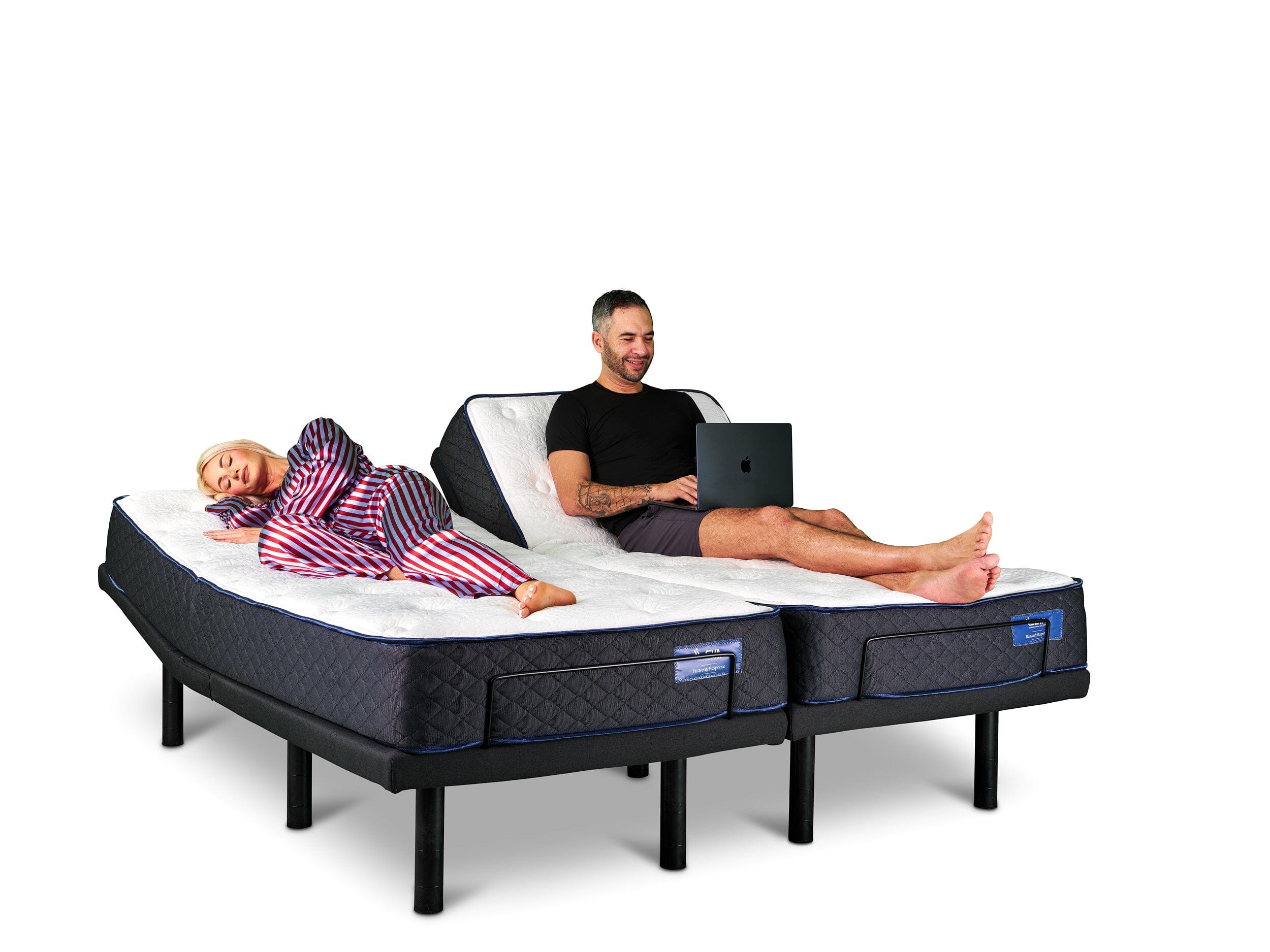
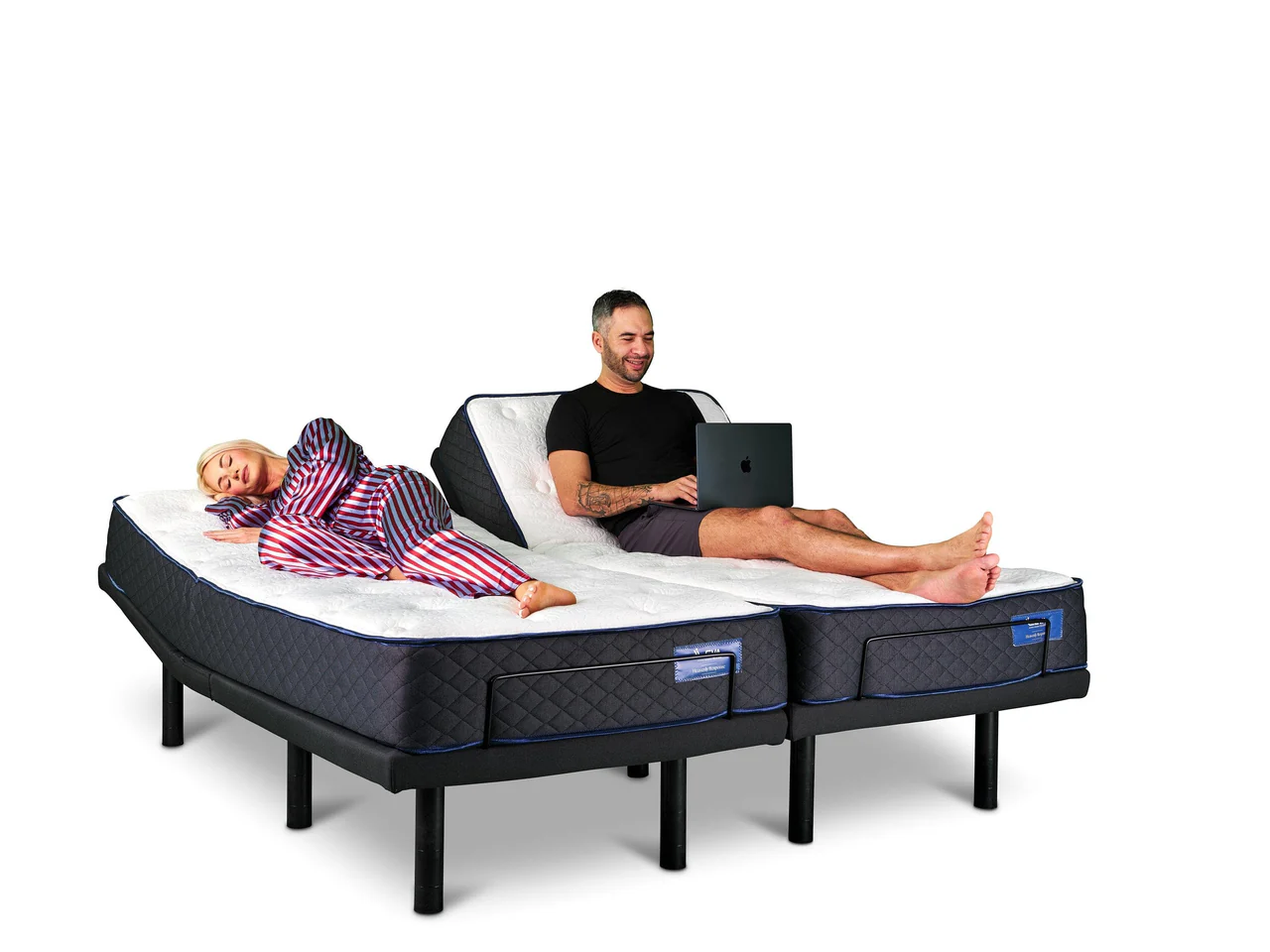
Leva Sleep offers Split King and Split Queen configurations, which provide independent adjustability in a smaller footprint that keeps partners physically closer. Whisper-quiet German motors also limit mechanical noise, so nighttime position adjustments are less likely to wake a partner.
Decision Table: Comparing Four Smart Bed Systems
|
Feature |
Sleep Number (e.g., i8 Smart Bed) |
Tempur-Pedic (TEMPUR-Ergo) |
Saatva (Solaire / Adjustable Base) |
Leva Sleep (Split King / Split Queen) |
|---|---|---|---|---|
|
Independent lumbar support |
Air-chamber firmness per side |
Adjustable base with lumbar support on select models |
Compatible with adjustable bases |
Dedicated lumbar control motor plus pillow tilt motor standard on upper-tier bases |
|
Split configuration available |
Split King (FlexFit bases) |
Split King |
Split King; no Split Queen |
Split King and Split Queen configurations |
|
Anti-snore positioning (2026) |
Smart Adjust responds to movement; no dedicated snore detection |
Snore response on select Ergo models |
Not a stated 2026 feature |
Anti-snore mode detects snoring and makes micro-adjustments to head elevation (spring 2026) |
|
Temperature control |
Climate360 dual-zone heating and cooling on select models |
TEMPUR-Breeze cooling mattress; base does not include active cooling |
Cooling cover options; no active base temperature control |
|
|
Motion isolation method |
Dual air chambers on split models; split surface provides the isolation advantage discussed above |
TEMPUR material absorbs motion; split base adds positional independence |
Individually wrapped coils (Solaire); split base reduces transfer |
Physically separate Twin XL or Split Queen surfaces plus whisper-quiet motors minimize disturbance |
|
White-glove delivery |
Available via retail partners; varies by location |
Available; retailer-dependent |
In-home delivery and setup included |
In-house white-glove delivery with bedroom setup, old bed removal, height adjustment, and product tutorial |
|
Relative price positioning |
Premium; Climate360 systems exceed $10,000 |
Premium; Ergo systems typically $4,000–$8,000+ |
Luxury; Solaire starts around $3,000+ |
30–50% lower than comparable luxury options through direct-to-consumer pricing |
Sleep Number’s air-chamber system excels at per-side firmness adjustment. Tempur-Pedic’s TEMPUR material is a benchmark for motion absorption on a unified surface, although split-base gap management still applies when using split configurations. Saatva’s Solaire offers individually wrapped coils for motion isolation and white-glove delivery as a standard inclusion, but does not offer a Split Queen.
Leva Sleep differentiates itself through the Split Queen format, dedicated lumbar and pillow tilt motors, spring 2026 anti-snore mode, and in-house white-glove delivery at a significantly lower price point than the other three systems.
Real-World Scenarios: Matching Features to Your Situation
Scenario 1 – Asymmetric lower-back pain: One partner has lumbar stenosis, and the other sleeps without pain. The spinal canal opening effect described earlier makes zero-gravity positioning particularly effective for stenosis patients. A split system with independent zero-gravity positioning on each side, such as Leva Sleep’s split bases or Sleep Number’s FlexFit, lets the affected partner use zero-gravity while the other sleeps flat.
Scenario 2 – Shoulder pressure plus snoring: One partner is a side sleeper with shoulder impingement, and the other snores. These independent problems affect different partners, so the solution requires per-side control. Multi-zone pressure relief supports the side sleeper’s shoulder, while automatic head elevation helps the snoring partner. Leva Sleep’s spring 2026 anti-snore mode handles snoring without manual adjustment, and its lumbar and pillow tilt motors let the side sleeper dial in shoulder and neck relief on their own side.
Scenario 3 – Post-surgery recovery: For post-surgical patients with spinal fusion, the fused segment is rigid and cannot flex, which makes an adjustable base essential for finding the angle that puts the least strain on the fusion site. White-glove setup, where technicians adjust base height and demonstrate positioning, becomes particularly valuable in this situation. Leva Sleep and Saatva both include this level of in-home service.
Guided Decision Checklist for Couples
-
Pain location: Identify whether pain concentrates in the lower back, shoulders, or neck. Prioritize systems with dedicated lumbar zone motors or high zone counts that match that area.
-
Sleep position mismatch: Note whether partners sleep in different positions. Look for independent head and foot adjustment per side, not only firmness control.
-
Snoring or apnea: Track whether snoring disrupts either partner. Evaluate whether anti-snore positioning works automatically or requires manual changes.
-
Room size: Measure whether a standard king feels too wide for your space. A Split Queen may provide split adjustability in a smaller footprint.
-
Temperature difference: Consider whether one partner sleeps hot and the other cold. Confirm whether temperature control works per-side or as a shared setting.
-
Delivery and setup: Decide how important professional in-home setup feels, especially for post-surgical or mobility-limited users. Verify whether white-glove service is in-house or outsourced.
-
Budget: Compare total system cost, including base, mattress, and accessories, not just the base price.
Frequently Asked Questions
Do split-king adjustable bases make noise when adjusting positions at night?
Motor noise varies significantly by brand and model tier. Basic adjustable bases, often sold as add-ons at general mattress retailers, can produce audible mechanical sounds during adjustment. Higher-end systems, including Leva Sleep’s bases, use whisper-quiet German motors engineered to minimize disturbance during nighttime adjustments. When evaluating any system, ask the retailer to demonstrate a position change at low speed and listen for motor noise before purchasing.
Can a doctor or physical therapist recommend a specific adjustable bed position for back pain?
Yes. Physicians and physical therapists commonly recommend zero-gravity positioning, with head and legs elevated above the torso, for conditions including lumbar stenosis, acid reflux, post-surgical recovery, and mild sleep apnea. For spinal fusion patients, the inability to flex the fused segment makes an adjustable base especially important for finding a pain-minimizing angle. Bring your diagnosis and any positional recommendations to a showroom consultation so a sleep specialist can map those needs to specific base features.
What maintenance do smart adjustable bed systems require?
Most adjustable bases require minimal routine maintenance. Motors on quality systems are sealed units that do not require lubrication. Remote controls and app connections should be updated when firmware updates are released. Mattresses paired with adjustable bases should be rotated according to the manufacturer’s schedule, typically every 3–6 months, although they should not be flipped unless specifically designed for it. Accessories such as fitted sheets with extra elastic and mattress protectors designed for adjustable bases reduce wear on the mattress surface during frequent position changes.
Is a Split Queen a standard size, and will standard bedding fit it?
A Split Queen is not a widely standardized size in the U.S. market, which explains why most major brands do not offer it. Leva Sleep builds Split Queen bases to customer specifications, making it one of the few providers of this configuration. Because the surface is split into two narrower sections, standard queen bedding will not fit correctly. Leva Sleep designs fitted sheets with deep pockets, extra elastic, and duvet clips specifically for split adjustable configurations, which helps bedding stay in place through position changes.
How does white-glove delivery differ between brands, and why does it matter for back-pain sufferers?
White-glove delivery ranges from basic room-of-choice placement to full in-home setup with height adjustment, product tutorials, and old bed removal. For couples managing chronic back pain or recovering from surgery, this difference can be significant. An improperly assembled base or incorrect leg height can create pressure points or make entry and exit from the bed painful. Leva Sleep’s white-glove service is performed by in-house trained professionals who adjust base height, configure the app, demonstrate positioning features, and remove the old bed, so the system works properly before the first night of use.
Conclusion: Choosing a System That Supports Both of You
The four systems compared here, Sleep Number, Tempur-Pedic, Saatva, and Leva Sleep, address back pain and partner compatibility through different combinations of lumbar zoning, split adjustability, motion isolation, and delivery experience. The right choice depends on pain location, sleep position, room size, and how much each partner’s needs diverge.
Leva Sleep’s focus on split-king and split-queen formats, combined with dedicated lumbar and pillow tilt motors, spring 2026 anti-snore mode, per-side temperature control, and in-house white-glove delivery at 30–50% below comparable luxury pricing, makes it a strong candidate for couples who want a full feature set without paying top-tier luxury prices.