Written by: Matthew Timmins, Founder and Managing Director, Leva Sleep
Key Takeaways for Couples Sharing a Bed
- Couples need sleep tracking that can isolate each partner’s data without interference from the other person in the bed.
- Partner movement and snoring can contaminate readings from microphones, radar sensors, and under-mattress devices, which leads to misattributed or blended results.
- Wearables separate data by person but cannot stop physical disturbances from a partner or correct sleep issues in real time.
- Contactless systems monitor zones instead of individuals, so true data separation and motion isolation stay difficult in shared beds.
- Leva Sleep’s split adjustable base delivers independent tracking and active correction for each partner. Explore how the system works for couples.
Why Accurate Tracking Matters for Couples in One Bed
Sleep tracking now covers far more than step counts. In 2026, standard metrics include sleep-stage detection (light, deep, and REM), overnight heart rate, SpO2 (blood oxygen saturation), and breathing index measurements, all of which appear across leading consumer devices. For couples, the core problem is simple. None of these metrics were originally designed to filter out a second person lying inches away.
Inaccurate tracking creates serious downstream consequences. A partner whose restless night is assigned to the wrong sleeper receives no useful insight. Microphone-based snoring alerts may flag the person wearing the device, even when the sound comes from the partner. Couples who base decisions about sleep positions, medical visits, or lifestyle changes on flawed data start from a corrupted baseline.
The stakes extend well beyond inconvenience. Chronic sleep disruption from a partner’s movement or snoring contributes to fatigue, reduced cognitive performance, and relationship strain. Accurate, individualized data can help address these issues. Even the highest-performing 2026 sleep trackers reach only about 80% sleep-stage accuracy compared to medical-grade polysomnography, and that figure reflects single-user conditions. In a shared bed, the margin for error grows.
For couples aged 35–70 managing differing sleep needs, snoring, joint pain, or sleep apnea, the gap between tracker reports and reality can be decisive. Accurate data can point to a targeted solution. Inaccurate data can mean years of continued disruption.
How Partner Movement and Shared Data Skew Your Results
To understand why that gap exists, look at how each tracking technology handles a second sleeper. Every major tracking approach responds differently to a partner’s presence, and each one introduces its own type of interference.
Microphone-based detection, used in smartphone apps and some wearables to identify snoring, is especially vulnerable. Accuracy in snoring detection apps drops in noisy environments, and a snoring partner creates exactly that kind of noise. Some Fitbit models use the device’s microphone to detect snoring from the wearer or from someone next to them. That design makes reliable attribution between two sleepers nearly impossible.
Radar-based contactless trackers such as the Google Nest Hub (2nd Gen), which uses low-energy radar to track movement and breathing rate along with environmental factors, sit on a nightstand and monitor the nearest sleeper. When two people share a bed, the device struggles to isolate one person’s breathing pattern from the other person’s movement field, especially when both lie within the sensor’s detection range.
Wearables avoid some cross-contamination because the sensors stay on the body. However, sleep wearables do not solve motion isolation for partners sharing a bed; a partner’s movements can still disturb sleep regardless of wearable use. The wearable may correctly record that the wearer woke at 2:14 a.m. It still cannot prevent the disturbance or identify the partner’s movement through the shared mattress as the cause.
EEG headbands such as the Muse S Athena require a reasonably still sleeping position to maintain electrode contact. A restless co-sleeper who jostles the mattress can indirectly degrade signal quality, even when the user wears a headband.
Contactless vs. Wearable: Trade-offs for Couples
Couples comparing sleep trackers should focus on three criteria. Data separation between two sleepers, tolerance for partner motion, and physical comfort during use matter most in daily life.
Data separation remains the most critical and least solved gap. Wearables assign data to the person wearing the device, which creates basic separation. Contactless under-mattress sensors and radar devices monitor a zone instead of a person. True separation then depends on physical distance or proprietary algorithms, and most consumer products do not publish dual-user validation data.
Motion tolerance appears to favor wrist-worn wearables, since the sensor moves with the wearer. In practice, physical discomfort from an inadequate mattress causes micro-arousals that reduce deep sleep time, which wearables cannot correct. Tracking a disruption is not the same as preventing it.
Comfort during use often becomes the deciding factor. Rings, wristbands, and EEG headbands add a foreign object to the sleep environment. Sleep wearables work only as supplements to a well-designed sleep environment and cannot replace a quality mattress that provides proper support, pressure relief, and motion isolation for two sleepers. Contactless systems remove wearable discomfort but reintroduce the data-separation problem.
A split adjustable base addresses accuracy gaps that no wearable can close. Visit the La Jolla showroom or shop online to see how.
Accuracy Comparison for Popular Trackers
| Device / Category | Sleep-Stage Accuracy (vs. PSG) | Partner Data Separation | Motion Tolerance for Dual Sleepers |
|---|---|---|---|
| Oura Ring 4 | ~79–82% in single-user conditions (see Wareable validation) | Body-worn; individual data only | Records wearer’s arousals; cannot prevent partner-motion disturbance |
| Apple Watch Series 11 | ~79–82% in single-user conditions (see Wareable validation) | Body-worn; individual data only | Records wearer’s arousals; cannot prevent partner-motion disturbance |
| Google Nest Hub 2nd Gen (radar) | ~79–82% in single-user conditions (see Wareable validation) | Zone-based; cannot isolate two sleepers in same detection field | Partner movement enters sensor range, with no physical isolation |
| Under-mattress contactless mats (general category) | Varies by product; no dual-user PSG validation publicly reported for 2025–2026 | Single-zone sensor; no published dual-user separation algorithm | Partner motion transmitted through shared mattress surface affects readings |
The comparison above shows why tracking alone is not enough for couples. See how Leva Sleep combines accurate split-bed tracking with active AI correction for both partners.
Subscriptions, Data Sharing, and Couples
Most leading sleep trackers in 2026 follow a hardware-plus-subscription model. The Oura Ring 4 requires a monthly membership fee for full sleep-stage breakdowns and trend analysis. Apple Watch Series 11 sleep features sit inside the Apple ecosystem and depend on iPhone ownership. These costs apply per device, so a couple that tracks independently pays twice.
Data portability and separation create additional friction. Each wearable account stays siloed, which forces couples to manually compare two sets of data across separate apps. No major consumer wearable platform in 2026 offers a native couples dashboard that displays both partners’ data side by side.
Contactless systems that monitor a shared bed face the opposite problem. One account and one data stream cover both sleepers, with no structural separation between their contributions. A night where one partner slept well and the other did not may produce an averaged or blended output that accurately reflects neither person.
For couples making health decisions about snoring interventions, sleep apnea screening, or positional changes, data that cannot be clearly tied to one individual has limited clinical value. The subscription fee is the visible cost. The hidden cost comes from acting on data that was never accurate.
How a Split Adjustable System Helps Two Sleepers
Tracking-only devices separate measurement from correction. A wearable reports that your sleep was fragmented but does nothing about the partner movement that caused it. A contactless mat records a breathing irregularity but cannot reposition the sleeper to open the airway.
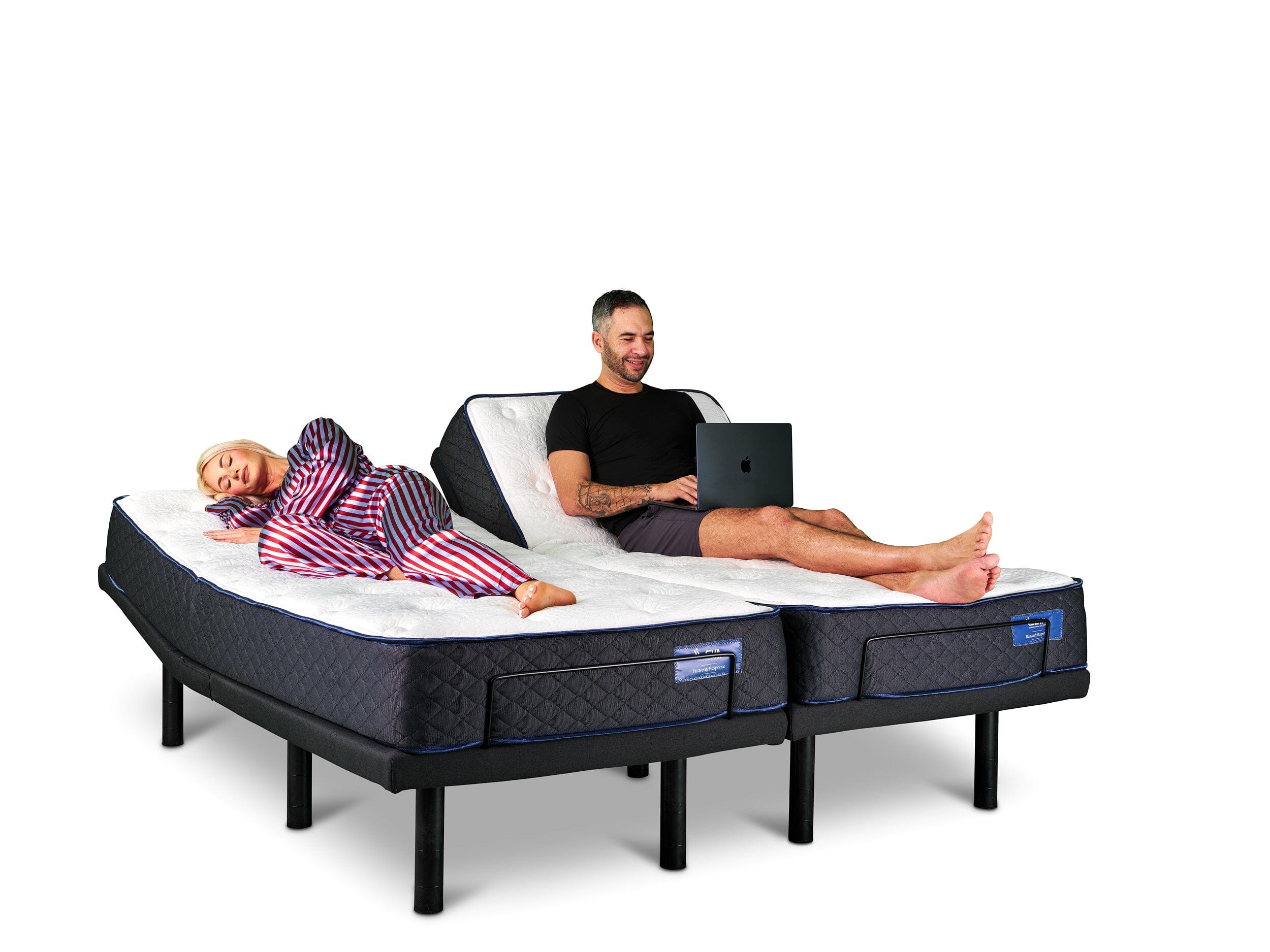
Leva Sleep’s split adjustable base tackles both sides of the problem at once. Each side of the bed operates independently, with its own elevation, lumbar support, and massage settings controlled through the Leva Sleep app. When the AI-powered system detects a snoring pattern, it triggers a micro-adjustment to the head of that side of the bed. The base gently elevates the airway without waking the sleeper or disturbing the partner.
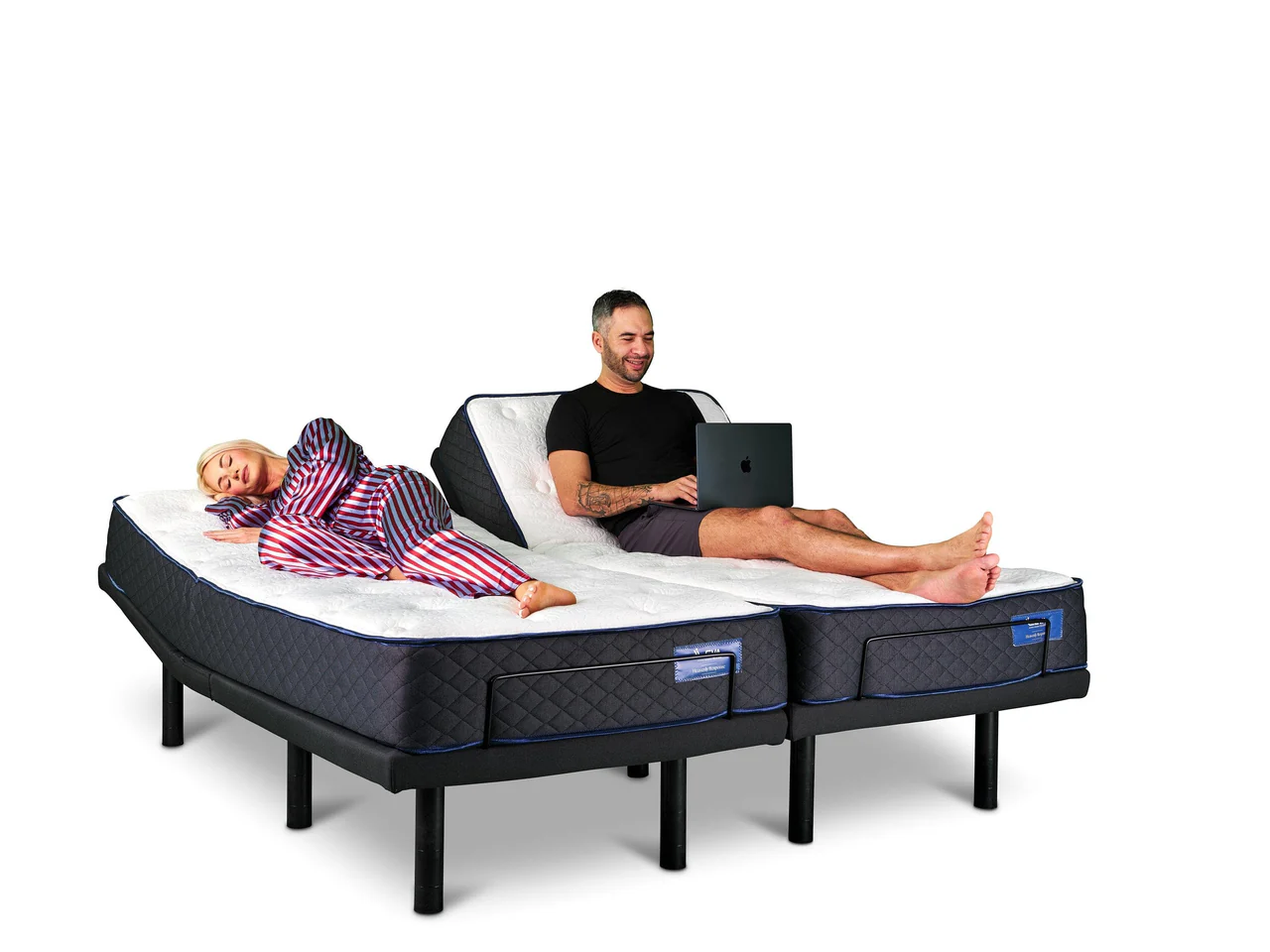
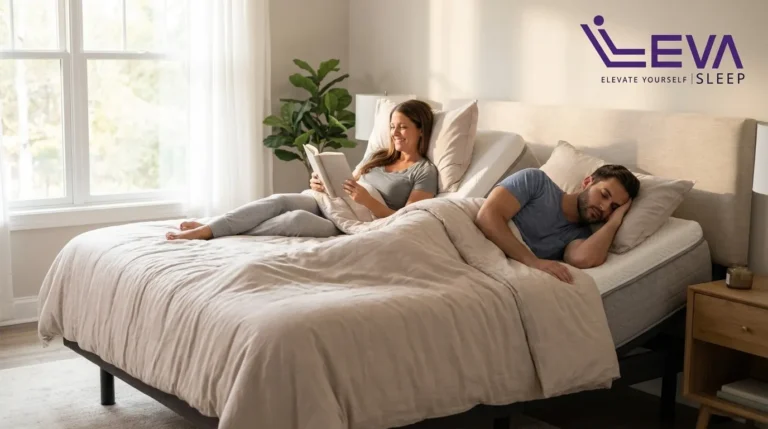
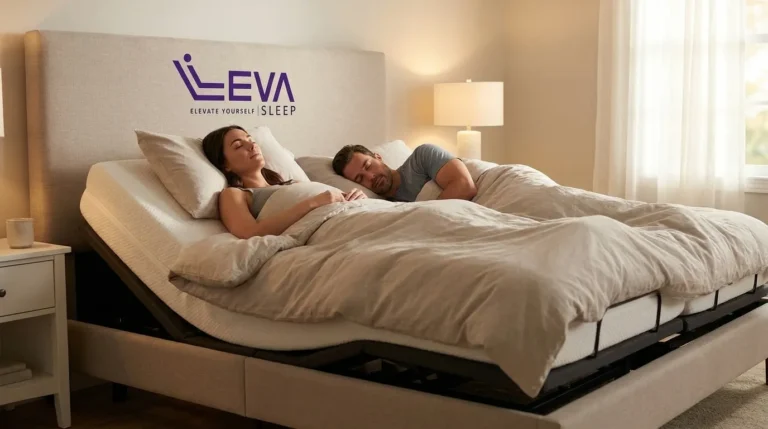
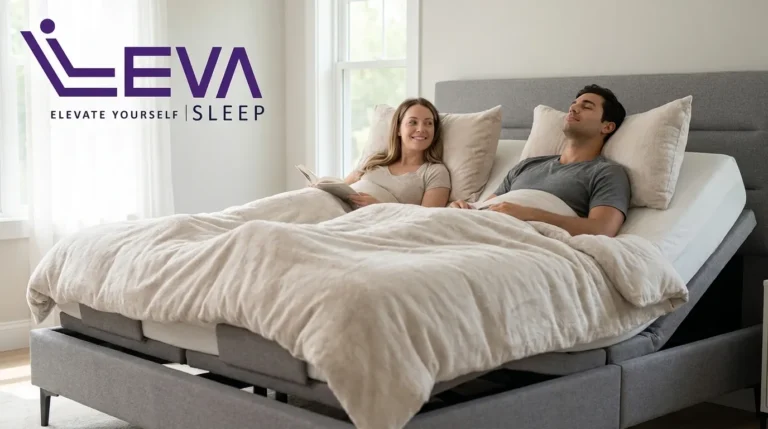
The physical split in the base prevents partner motion on one side from transferring to the other. This creates motion isolation that under-mattress sensors and wearables cannot match. The separation comes from structure, not software. A couple with one restless sleeper and one light sleeper can each maintain preferred positions and firmness levels without compromise.
Consider two scenarios. In the first, one partner has mild sleep apnea and the other sleeps cold. The split base elevates the first partner’s head to reduce airway obstruction while the second partner activates a temperature-regulating pad on their side. Both adjustments occur independently and are tracked per side. In the second scenario, one partner’s snoring triggers anti-snore mode at 3 a.m. The micro-adjustment resolves the obstruction within minutes, and neither partner fully wakes.
This capability closes a gap that no wearable or single-bed contactless tracker can bridge. The system measures and corrects, independently, for two people sharing one bed.
Checklist for Choosing a Couples Sleep System
Use the following criteria when you compare sleep tracking options for a shared bed.
- Data separation: Confirm that the system assigns sleep metrics independently to each partner instead of producing a single blended output.
- Partner-motion tolerance: Check whether the technology physically isolates each sleeper’s surface or relies only on software filtering.
- Active correction: Look for real-time responses to snoring or positional problems, not just passive recording.
- Sleep-stage accuracy benchmark: Review validation against polysomnography and, when available, data for dual-user conditions.
- Subscription and data access: Calculate the total annual cost per couple and confirm that both partners’ data can appear in a unified view.
- Comfort and wearability: Decide whether wearing a device to bed affects sleep quality for either partner.
- Integration with sleep environment: Evaluate whether the system addresses the mattress, base, and bedding together or simply adds tracking to an unoptimized surface.
Evaluate every item on this checklist against Leva Sleep’s system, built for couples who need independent tracking and active correction.
Frequently Asked Questions
Can a wearable sleep tracker separate my data from my partner’s data?
Wearables assign data to the person wearing the device, which creates basic separation. They still cannot stop a partner’s movements from disturbing your sleep, and they cannot filter out ambient noise such as a partner’s snoring from microphone-based features. The data belongs to you, but it still reflects a shared environment. A wearable measures disruption without preventing it.
How does partner snoring affect the accuracy of sleep tracking apps?
As discussed in the partner movement section, microphone-based systems cannot reliably distinguish between two snorers in the same bed. They often create false positives where your partner’s snoring appears as your own. This limitation makes snoring data from shared-bed microphone tracking unreliable for medical or behavioral decisions without other supporting evidence.
What is the difference between a split adjustable base and a standard contactless sleep mat for couples?
A standard contactless sleep mat placed under a shared mattress monitors a zone instead of an individual. It cannot physically separate two sleepers’ data streams or stop motion from one side of the bed from affecting the other. A split adjustable base is physically divided, so each side operates independently with its own surface, elevation controls, and tracking sensors. This structural separation keeps one partner’s movement, position change, or snoring response from transmitting to the other side and supports better data integrity along with an actively corrected sleep environment.
Do I need a subscription to use Leva Sleep’s tracking features?
Leva Sleep’s system functions as an integrated product rather than a hardware-plus-subscription bundle. The Leva Sleep app includes control over elevation, massage, anti-snore positioning, and AI-powered micro-adjustments as part of the system. For current pricing and feature details, visit the Leva Sleep showroom in La Jolla or view the latest information on the Leva Sleep website.
Can an adjustable base help with sleep apnea without a CPAP machine?
Head-of-bed elevation is a clinically recognized positional strategy for reducing airway obstruction linked to mild to moderate sleep apnea and snoring. Leva Sleep’s adjustable bases allow precise head elevation and include an anti-snore mode that detects snoring and initiates a gentle micro-adjustment to head position. This feature does not replace prescribed CPAP therapy for diagnosed moderate-to-severe sleep apnea, and anyone with a suspected sleep disorder should consult a physician. For couples dealing with positional snoring or mild airway obstruction, an adjustable base offers an active, non-invasive intervention that a wearable or contactless tracker cannot provide.