
Written by: Matthew Timmins, Founder and Managing Director, Leva Sleep
Key Takeaways
- Semi-reclined sleeping with the head elevated and the surgical arm supported above heart level helps reduce swelling and protects the repair in the early weeks after shoulder surgery.
- Adjustable bases with independent head, knee, and pillow-tilt motors let patients fine-tune angles and save them as presets, so middle-of-the-night position changes do not require rebuilding pillow stacks.
- Zero-gravity presets on an adjustable base closely match the semi-Fowler angles many orthopedic surgeons prescribe, providing even weight distribution and low-stress shoulder positioning without a separate wedge.
- Most patients sleep elevated for several weeks after rotator cuff repair and longer after complex procedures, with exact timelines based on surgery type and surgeon guidance.
- Leva Sleep adjustable bases provide split-base independence and app-saved presets that keep recovery positions consistent; shop Leva Sleep today to set up a recovery-focused sleep system.
Semi-Reclined Sleeping After Shoulder Surgery
Semi-reclined sleeping with the upper body elevated and the surgical arm supported is the standard starting point after shoulder surgery. This position keeps the shoulder closer to heart level, helps manage swelling, reduces the chance of rolling, and places the joint in a lower-stress alignment while the repair heals.
Adjustable Bed Positions After Rotator Cuff Surgery
Rotator cuff repair patients usually sleep the first night at home with the arm in a sling and the head elevated. The angle often decreases gradually over the next days and weeks as tissue tolerance improves and pain settles.
Manual adjustments with pillows and wedges during the night can be awkward and inconsistent, especially during groggy bathroom trips. Small errors in height or angle can place extra stress on the repair.
An adjustable base with a lumbar motor and pillow-tilt motor, like those in Leva Sleep’s lineup, lets a patient change each angle with a button press instead of rebuilding foam wedges at 3 a.m. This consistency supports the surgeon’s plan and reduces setup frustration.
Explore Leva Sleep’s adjustable bases with precise angle control for rotator cuff recovery
Step-by-Step Adjustable Bed Setup After Shoulder Surgery
The steps below turn common orthopedic guidance into a repeatable Leva Sleep setup for the first weeks of recovery.
- Set the head section to the angle prescribed for the current recovery week, using the progression table below as a general reference.
- Activate the knee-lift motor to a gentle angle to create a natural stop and reduce lower-back strain. This approach mirrors orthopedic advice to place a pillow under the knees when the upper body is elevated.
- Place a firm cradle or armrest pillow under the sling arm so the hand rests higher than the elbow and the arm stays near heart level.
- Use a low-loft head pillow that keeps the neck in a neutral position instead of flexed forward at the elevated angle.
- Place a body pillow or large standard pillow along the operated side to act as a barrier that prevents rolling onto the surgical shoulder.
- Save the exact head and knee angles as presets in the Leva app so the position returns with one tap each night, without manual fine-tuning.
Best Semi-Reclined Recovery Position for Shoulder Surgery
Dr. C. Lucas Myerson, MD, recommends a reclining chair or wedge pillow in bed for the first two to four weeks after shoulder surgery. A motorized adjustable base recreates that recliner angle in the bedroom, so patients can stay in their own bed instead of moving to a chair.
The semi-Fowler position reduces upper-body venous pooling and swelling, improves diaphragm excursion after anesthesia or interscalene block, and places the humeral head in the glenoid socket along the line of gravity for a mechanically low-stress configuration. Maintaining that therapeutic angle all night requires a bed that holds the position without constant adjustment. Couples also need a setup that protects the surgical shoulder without forcing the non-surgical partner into the same incline.
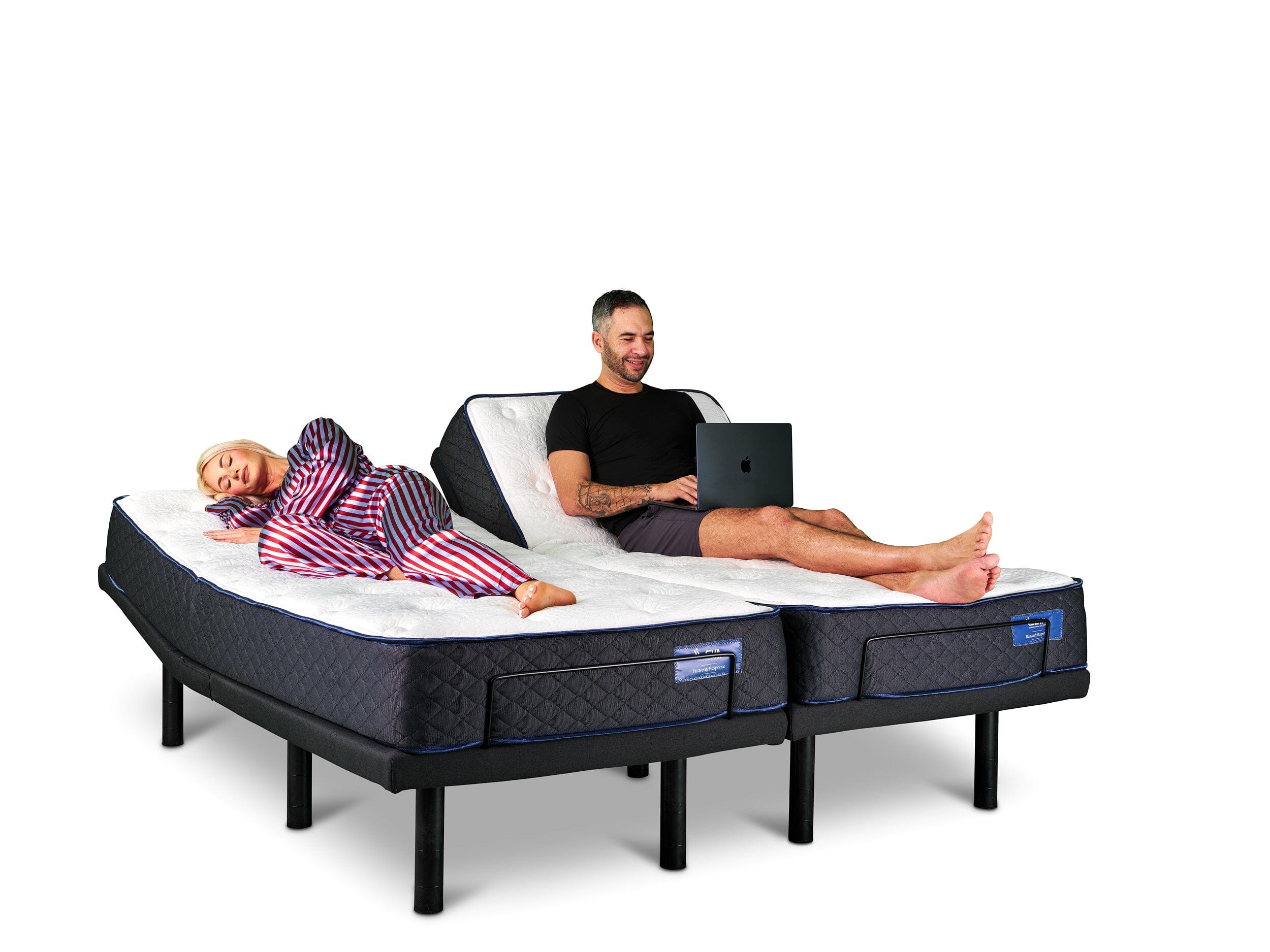
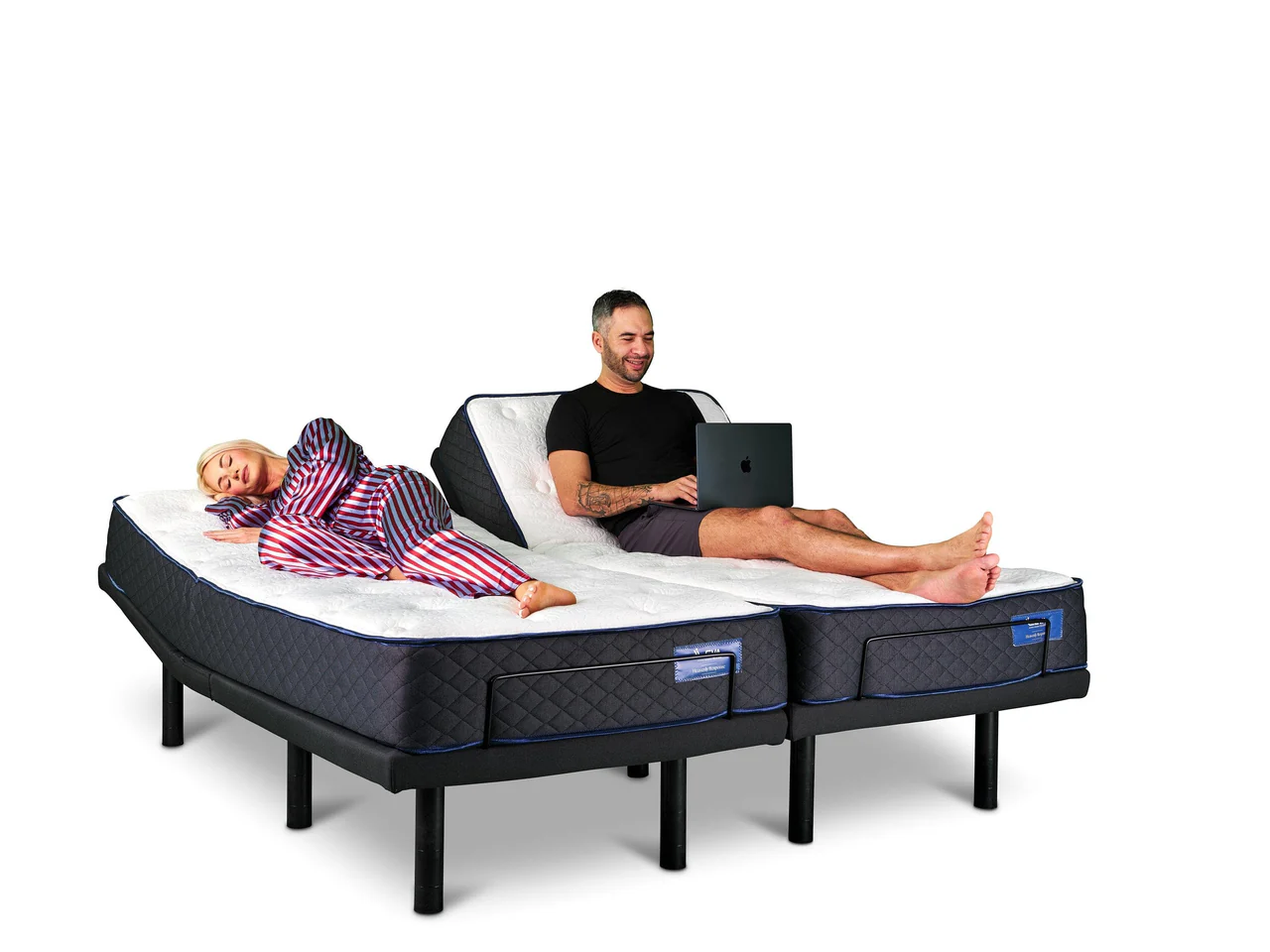
Leva’s split-base design addresses both needs. A recovering patient can raise their side to the prescribed angle while a partner remains flat or chooses a different position.
How Long You May Need to Sleep Propped Up After Shoulder Surgery
Most orthopedic surgeons keep patients in a semi-reclined position for several weeks after rotator cuff surgery and longer after complex repairs. Procedure type shapes the typical timeline:
- Arthroscopic debridement: elevated sleeping often ends after the first few weeks.
- Labrum repair (SLAP or Bankart): elevated sleeping usually continues through the protective phase.
- Rotator cuff repair: elevated sleeping often continues for several weeks, then tapers as comfort improves.
- After total shoulder arthroplasty, elevated sleeping often ends around 4 to 6 weeks.
Sleep quality frequently remains a concern during the first twelve weeks after rotator cuff surgery. Patients who maintain consistent elevated positioning often report lower pain scores and fewer nighttime awakenings.
Zero-Gravity Preset for Shoulder Surgery Recovery
Zero gravity on an adjustable base raises the head and knees so body weight spreads evenly across the mattress. This preset usually sits close to the semi-Fowler angles many orthopedic surgeons recommend for early shoulder recovery, so it often works as a practical starting point.
Because zero-gravity presets replicate the semi-Fowler angles described earlier, a Leva base can approximate that therapeutic positioning without a separate wedge. Patients should match the preset head angle to their surgeon’s current recommendation before relying on it.
Pillow Placement Under the Operative Arm on an Adjustable Bed
Correct pillow placement often makes the difference between a comfortable night and a restless one after shoulder surgery. The protocol below reflects clinical guidance and common patient experiences.
- Under the sling arm in early recovery: Stack a cradle or armrest pillow under the sling arm so the surgical arm stays fully supported while semi-reclined. A small pillow under the elbow supports the joint and helps the shoulder complex relax.
- Across the chest during healthy-side trials in mid recovery: Move the cradle pillow across the chest to support the surgical arm when resting on the healthy side. This support keeps the arm at chest height instead of hanging down or crossing the body.
- Under the surgical arm during light surgical-side trials later in recovery: Place the cradle pillow under the surgical arm so it receives support from below while preventing the shoulder from collapsing forward.
- Between the knees in all phases: A pillow between the knees keeps the pelvis and spine aligned. This alignment reduces rotational pull that could shift the operated shoulder out of its protected position.
The pillow-tilt motor on Leva bases adds fine control for head and neck support that standard wedge pillows cannot match.
Side-Sleeping Timeline After Shoulder Surgery
After rotator cuff repair, brief healthy-side trials often begin after the initial weeks, then extend gradually as comfort improves. Light surgical-side sleeping usually appears later in the timeline and increases slowly as tolerated. Many patients return to normal surgical-side sleeping after several months, while total shoulder arthroplasty and reverse TSA often require longer timelines. Patients should receive explicit clearance from their surgeon before testing any side-sleeping position.
See how Leva’s split-base design supports gradual side-sleeping transitions
Semi-Reclined Shoulder Surgery Recovery: Week-by-Week Progression
The table below shows how elevation needs usually decrease over eight weeks. Head angle starts at a higher setting in weeks 1 and 2, then steps down in stages until it becomes minimal or optional by weeks 7 and 8. Knee angle stays slightly elevated early on to prevent sliding, then tapers as the head angle lowers. This gradual change lets tissue strengthen while still protecting the repair. All timelines are general guidance, and individual surgeon instructions always take priority.
| Week | Head Angle | Knee Angle | Notes |
|---|---|---|---|
| 1–2 | Elevated as prescribed | Slight elevation | Swelling peaks early, so the shoulder should sit near or above heart level. Sling on. Cradle pillow under operative arm. |
| 3–4 | Reduced as prescribed | Slight elevation | Rotator cuff repair: elevation often reduces in weeks 2 and 3. First healthy-side trials may begin around week 3 for many repairs. |
| 5–6 | Further reduced as prescribed | Minimal elevation | Rotator cuff repair: further reduction by week 5 is common. Healthy-side rest usually extends. Sling often discontinued at night around week 6. |
| 7–8 | Minimal or optional | None | Light surgical-side trials often begin for rotator cuff repair. Hassaan et al. systematic review supports individualized protocols for large tears. |
Common Adjustable Bed Problems and Simple Fixes
- Sliding down the incline overnight: Activate the knee-lift motor to a gentle angle to create a natural stop. This approach aligns with orthopedic guidance, which recommends knee elevation at higher inclines to prevent sliding and reduce lower-back strain from the angle itself.
- Surgical arm falling forward during healthy-side rest: Lateral sleeping on the healthy side without arm support allows the surgical arm to fall forward into flexion and internal rotation, which places traction on the supraspinatus. Reposition the cradle pillow across the chest before turning.
- Neck pain at high incline angles: Add a low-loft cervical pillow and use Leva’s pillow-tilt motor to fine-tune head support separately from the main head-section angle.
- Partner disturbed by position changes: Leva’s independent split-king and split-queen controls let the recovering patient adjust their side without moving the partner’s side of the base.
- Fitted sheets pulling off at high angles: Leva’s fitted sheets use deep pockets and extra elastic designed specifically for adjustable bases at elevated angles.
- Forgetting the correct angle each night: Save the prescribed head and knee angles as named presets in the Leva Sleep app so the position returns with a single tap.
Doctor Discussion Checklist for Adjustable Bed Setup
Use this checklist at the pre-operative or first post-operative visit so the adjustable base setup matches the surgical plan.
- What head-of-bed elevation angle do you recommend for my procedure, and at which weeks should I reduce it?
- At what week may I begin brief healthy-side rest trials, and how long should each trial last?
- Do I need anti-external-rotation positioning during sleep, especially after Bankart repair or reverse TSA?
- Should I keep the sling on while sleeping, and until which week?
- What symptoms such as pain, swelling, or numbness suggest that a position has stressed the repair?
- When is it safe to attempt light surgical-side sleeping, and what pillow support do you recommend?
- Are there any reasons to avoid the zero-gravity preset, which raises both head and knees, for my procedure?
Conclusion
Extended elevated sleeping without a bed that can hold the position often pushes patients into a recliner instead of their own bedroom. Leva Sleep’s adjustable bases, with independent split controls, lumbar support, and pillow-tilt motors, turn orthopedic angle prescriptions into repeatable, app-saved presets that protect the repair every night. White-glove delivery and setup ensure the system is ready before the patient returns home, and furniture-grade design keeps the space feeling like a bedroom rather than a hospital room. Couples can share a bed throughout recovery because one side can stay at a therapeutic incline while the other remains flat or at a preferred angle.
Visit Leva Sleep’s La Jolla showroom or shop online to configure your recovery-ready adjustable base
FAQ
What is the best adjustable bed position immediately after shoulder surgery?
For the first weeks after most shoulder procedures, many surgeons recommend lying on the back with the head section raised and the knee section slightly elevated to prevent sliding. The surgical arm rests on a firm cradle or armrest pillow so the hand sits above the elbow and the elbow stays near heart level. The sling usually remains on during sleep as directed by the surgeon. This setup helps limit swelling, reduces roll-over risk, and keeps the shoulder joint in a low-stress orientation. Patients should confirm the exact angles with their surgeon because the ideal degree varies by procedure.
Can a Leva Sleep adjustable base replace a recliner for shoulder surgery recovery?
A motorized adjustable base set to an elevated angle can replace a recliner for many shoulder surgery patients. It recreates the recliner-style position that many orthopedic surgeons recommend for early recovery while keeping the patient in their own bed. Leva Sleep bases add lumbar support and a pillow-tilt motor that standard recliners do not provide, and the knee-lift motor creates a natural stop that prevents sliding down the incline overnight. Independent split controls allow a recovering patient to maintain a therapeutic incline on one side while a partner sleeps flat on the other side. White-glove delivery ensures the base is installed and calibrated before the patient returns home.
How do I save my recovery position as a preset on a Leva Sleep adjustable base?
The Leva Sleep app connects to the base through Bluetooth and lets users save named custom positions. Examples include a “Week 1 Recovery” preset with a higher head angle and slight knee lift, and a “Week 4 Recovery” preset with a lower head angle. Once saved, each preset returns with a single tap on a smartphone or the wireless remote, so patients do not need to re-dial angles after nighttime bathroom trips. This consistency matters during shoulder recovery because maintaining the same position all night supports healing as much as the initial setup. Patients can update each preset as the surgeon reduces the prescribed angle.
When is it safe to use the zero-gravity preset after shoulder surgery?
Zero gravity on an adjustable base usually positions the head and knees elevated, which often matches the angles prescribed for early shoulder recovery. Many patients find this preset comfortable and clinically appropriate during that phase. The exact head angle should still be checked against the surgeon’s current recommendation before relying on any factory preset. Patients with Bankart labrum repair or reverse total shoulder arthroplasty may have extra restrictions, such as avoiding external rotation, that require a customized angle instead of a standard zero-gravity setting.
How does Leva Sleep’s split-base design help couples during shoulder surgery recovery?
Leva Sleep’s split-king and split-queen adjustable bases give each partner a separate motor system. The recovering patient can maintain a therapeutic incline on one side while the other partner sleeps flat or chooses a different position. Quiet motor operation keeps nighttime adjustments from waking a partner. Independent controls also let the non-surgical partner use features such as massage, lumbar support, or temperature settings without changing the patient’s prescribed recovery position. This arrangement lets couples stay in the same bed throughout recovery instead of moving to separate rooms.