Written by: Matthew Timmins, Founder and Managing Director, Leva Sleep
Key Takeaways for Back-Pain-Focused Shoppers
- Adjustable bed bases can reduce chronic lower back pain by using Zero Gravity positioning to decompress the spine and improve circulation.
- Split systems with independent controls per partner are essential for couples where each person has different positioning needs.
- Key evaluation factors include comfort, adjustability, durability, noise levels, and compatibility with the right mattress type.
- Integrated split adjustable systems outperform traditional flat beds, basic bases, and most Stearns & Foster models for personalized back pain relief.
- Experience the benefits of a purpose-built split system designed for couples managing back pain—explore Leva Sleep’s split King and split Queen options.
Why Couples With Back Pain Look Beyond Flat Beds
Approximately 65 million Americans have had a recent back pain episode, and 16 million adults experience persistent or chronic back pain that limits daily activity. Among those, 60–70% of chronic back pain patients report significant sleep disturbances. For couples, the impact often doubles. One partner’s pain, snoring, or positional needs can push the other into an awkward posture or even into a separate room. Choosing the right adjustable base system becomes a health decision with direct relationship consequences. To make an informed choice, couples benefit from a clear set of criteria that connect pain relief with partner compatibility.
How to Evaluate Adjustable Bases for Back Pain
A rigorous comparison of adjustable base options should assess the following dimensions:
- Comfort and pain relief: Spinal decompression, pressure point reduction, and position-specific symptom management.
- Adjustability and personalization: Independent controls per partner, preset positions, and app-driven micro-adjustments.
- Durability and mattress compatibility: Motor longevity, flex-point sagging risk, and mattress pairing requirements.
- Noise and motion isolation: Motor decibel levels and mechanical vibration transfer between sides.
- Aesthetics: Furniture-quality design versus clinical appearance.
- Health impact: Anti-snore, lumbar support, pillow tilt, and airway management features.
- Service experience: Delivery method, setup support, and ongoing customer access.
Four Types of Sleep Systems to Compare
Four categories of sleep systems matter most for couples researching back pain solutions:
- Stearns & Foster adjustable bases (Ease and Reflexion models): Sold as premium add-ons to Stearns & Foster mattresses at traditional retailers. These bases include Zero Gravity presets and head and foot articulation.
- Traditional flat beds: The default option for most households. Flat beds offer no positional adjustment and cannot support medical recommendations for elevated sleeping positions.
- Basic adjustable bases: Entry-level motorized frames sold by general mattress retailers as secondary add-ons. These typically offer head and foot elevation but lack independent split controls, whisper-quiet motors, or app integration.
- Integrated split adjustable systems (e.g., Leva Sleep): Purpose-built split King and split Queen systems with independent controls per side, whisper-quiet German motors, app connectivity, lumbar support, pillow tilt, and anti-snore modes. These systems are designed as the primary product rather than an accessory.
Comfort and Pain Relief From Positioning
Positional therapy is the core way adjustable bases address back pain. Elevating the knees 15–30 degrees relaxes the hamstrings and reduces tugging on the lower back, providing relief for the sciatic nerve. The Sleep Foundation lists reclined positions with the torso slightly elevated among those that can ease lower-back strain.
| Option | Zero Gravity Preset | Lumbar Support | Flat Bed Limitation |
|---|---|---|---|
| Traditional flat bed | None | None | Cannot elevate head or legs, no spinal decompression |
| Basic adjustable base | Varies by model | Rarely included | Single-motor units move both partners simultaneously |
| Stearns & Foster (Ease/Reflexion) | Yes | Select models only | Shared-position limitations in non-split configurations |
| Leva Sleep split system | Yes, per side | Yes, with pillow tilt | Independent per partner, no shared-position compromise |
A randomized trial published in The Lancet assigned 313 adults with chronic low back pain to firm or medium-firm mattresses for 90 days; participants on medium-firm mattresses often experienced improvement. Adjustable bases extend this benefit by letting the sleeper fine-tune spinal angle regardless of mattress firmness.
Partner Compatibility and Independent Control
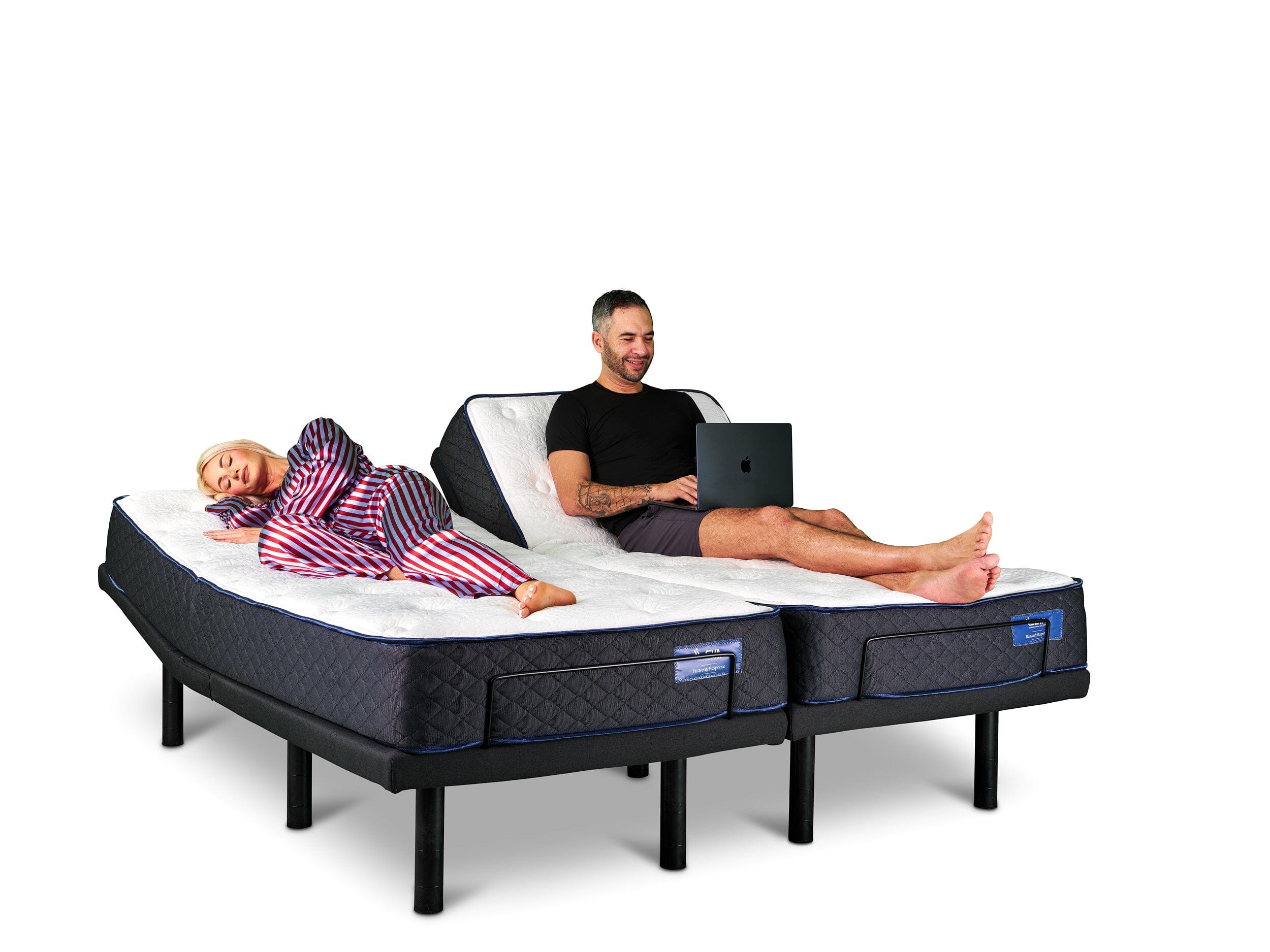
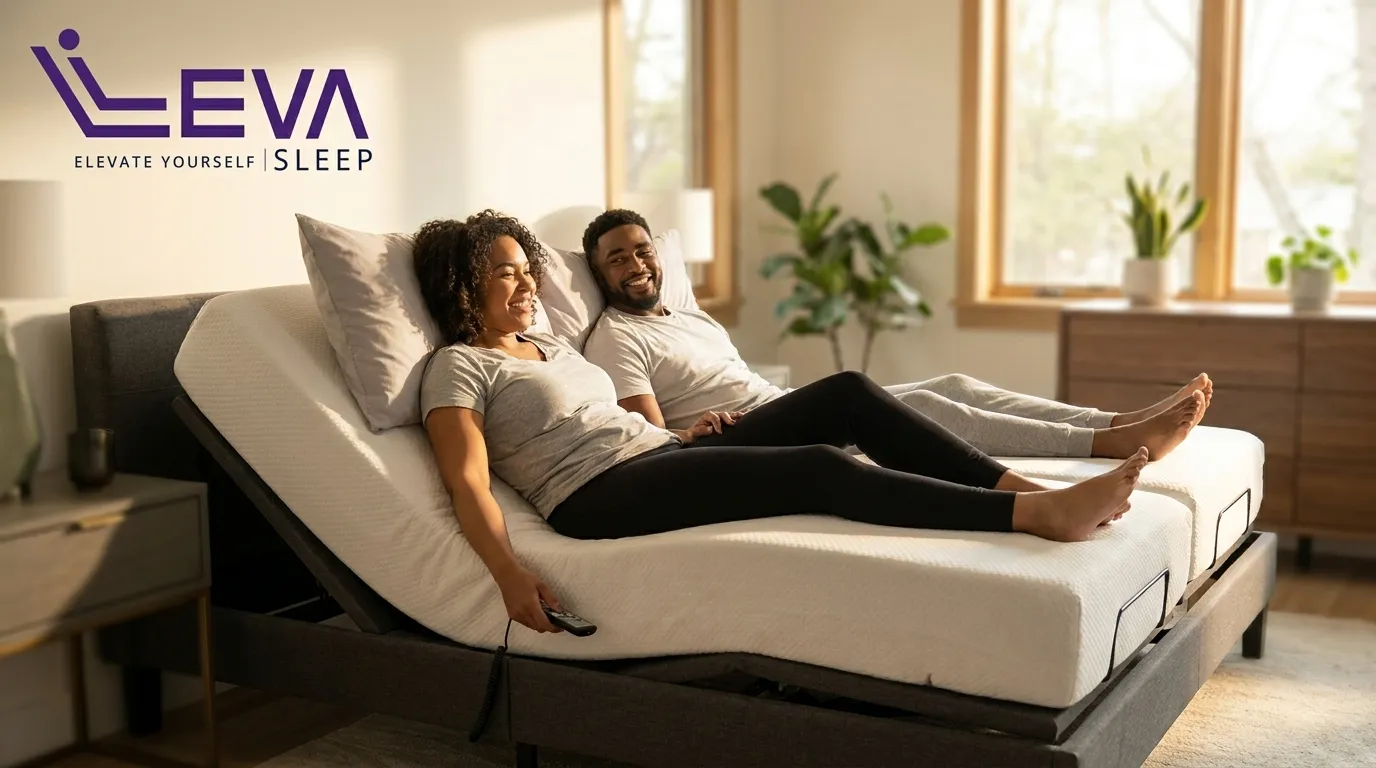
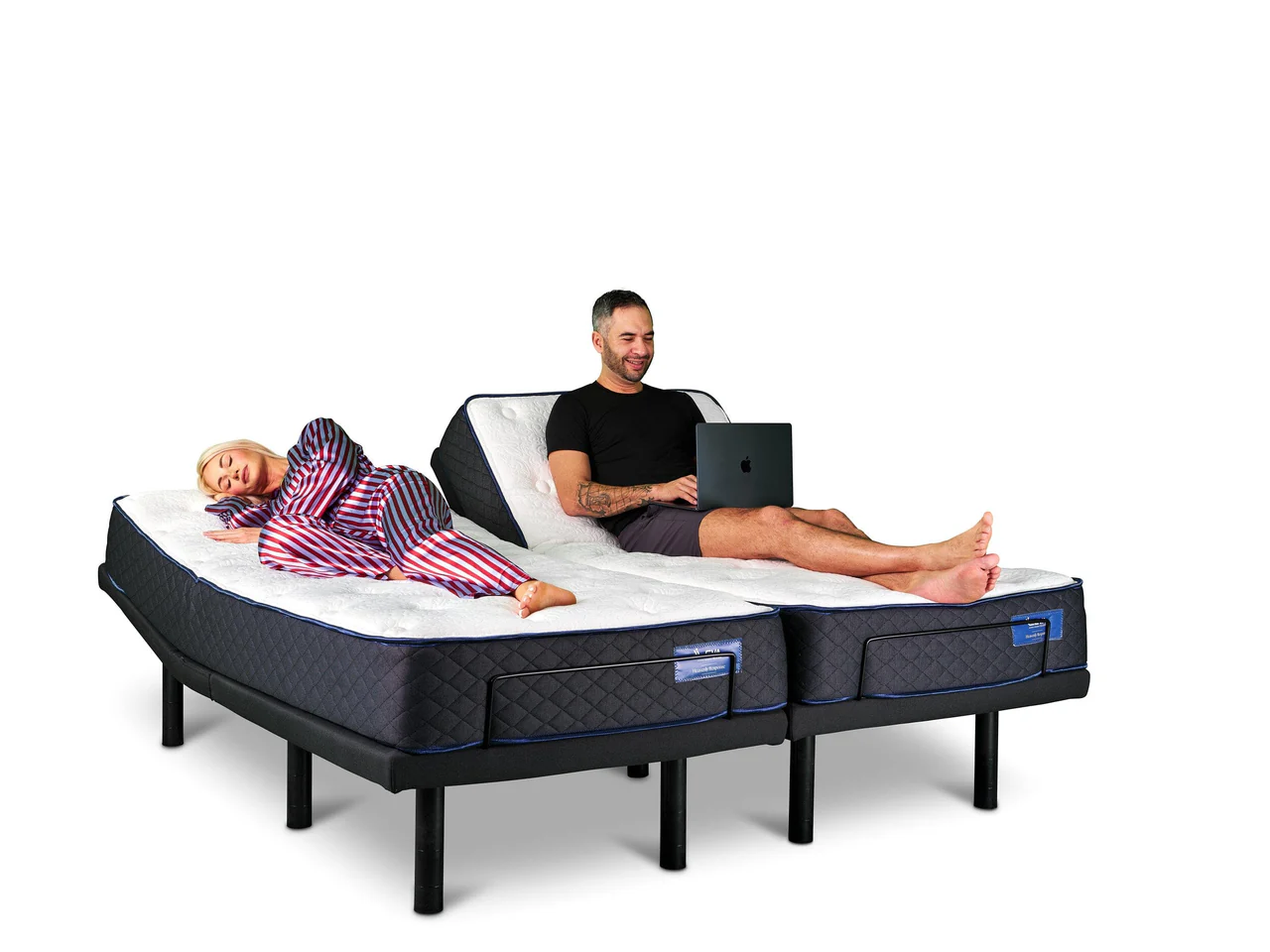
A split-king configuration with two Twin XL bases is the only real solution when one partner needs a different position, because a single-motor queen base moves as one piece and forces a shared position. This distinction separates integrated split systems from most Stearns & Foster and basic adjustable base offerings.
- Stearns & Foster Ease/Reflexion: Available in split King configurations at select retailers. Independent control depth and app integration are more limited than specialist systems. Motion transfer between sides depends on the specific model and mattress pairing.
- Basic adjustable bases: Most entry-level units are single-motor and move as one unit. Split configurations exist but often lack independent app control or anti-snore presets.
- Leva Sleep split systems: Each side operates independently through whisper-quiet German motors and the Leva Sleep app. Custom sleep positions, vibrating alarms, and anti-snore micro-adjustments are controllable per partner without mechanical connection between sides.
The anti-snore preset raises the head section to open the upper airway and can reduce snoring for many positional snorers, addressing a common cause of partner disturbance. Leva Sleep’s anti-snore mode adds automated detection and micro-adjustment, so partners stay asleep while the system responds.
Technology and Features That Matter Nightly
BedTimes Magazine’s coverage highlights the growing trend toward personalized sleep systems featuring sensor-equipped beds and app connectivity. Feature depth now separates premium systems from commodity bases.
Leva Sleep’s technology stack targets the most common complaints about adjustable bases. Whisper-quiet German motors reduce the noise that often wakes light sleepers during position changes. These motors connect to a Bluetooth app that supports custom position presets, vibrating alarms, and real-time micro-adjustments, so users avoid fumbling for a remote in the dark. Beyond basic head and foot elevation, the system includes dedicated lumbar control and a pillow tilt motor for precise head and neck positioning. An automated anti-snore mode detects snoring and adjusts the head section, and independent anti-snore presets that elevate one partner without affecting the other are a key differentiator among premium adjustable bases. Higher-end Leva Sleep configurations also integrate AI-powered sleep tracking for real-time position refinement.
Setup Experience and Everyday Use
Delivery and setup quality directly affect whether an adjustable base performs as intended from day one. Stearns & Foster bases are sold through traditional mattress retailers, and delivery standards vary by location and third-party logistics partners. Basic adjustable bases sold online often arrive as bed-in-a-box shipments that require self-assembly.
Leva Sleep offers in-house white-glove delivery for a fee. Trained professionals deliver to the bedroom, assemble the full system, adjust leg heights, provide a product tutorial, and remove the old bed. This approach removes the assembly burden and ensures every component, including base, mattress, and bedding accessories, is configured correctly before the first night of use.
Long-Term Reliability and Mattress Pairing
Durability at flex points is a documented concern for adjustable base owners. Rigid or heavy mattresses force actuators to work harder against the mattress’s own structure on every adjustment cycle, which accelerates motor wear. Traditional innerspring mattresses with rigid coil borders are incompatible with adjustable bases because repeated flexing causes permanent deformation to comfort layers and coil structure, and voids most manufacturer warranties.
Leva Sleep designs its mattresses, including all-foam and hybrid pocket coil models, specifically for use with adjustable bases. This design supports clean flex without stress on comfort layers or motor actuators. All mattresses are made in the United States.
Real-World Use Cases for Split Systems
The following scenarios show how different system types perform against specific needs:
- Chronic lower back pain: Zero Gravity positioning on a split system allows the affected partner to decompress the lumbar spine independently while the other sleeps flat. Dr. Nicholas Callahan notes that subtle movements of an adjustable base help prevent joints from locking up overnight.
- Snoring partner: The automated anti-snore feature described earlier operates without waking either partner for manual adjustment, a capability absent from Stearns & Foster and basic bases.
- Differing firmness preferences: Split configurations with independently paired mattresses allow each partner to select their preferred firmness. A single Stearns & Foster mattress across a shared base cannot support this level of personalization.
- Post-surgery recovery: Physicians including physical therapists and cardiologists recommend head-of-bed elevation 6–8 inches for acid reflux, mild obstructive sleep apnea, positional snoring, venous insufficiency, and certain lower back pain cases. Adjustable bases provide a consistent, adjustable method to maintain these positions.
- Athletic recovery: Leg elevation above heart level improves circulation and reduces overnight edema, which supports muscle repair for active individuals.
Assessing Total Value Over Time
Consumers are increasingly investing in adjustable bases and sleep systems as long-term health investments rather than short-term purchases. A total value assessment should account for:
- Learning curve: App-controlled systems require initial setup time but remove the need for physical remote management once presets are saved.
- Maintenance: Mattresses designed for adjustable use require less remediation over time than incompatible pairings that sag at flex points.
- Delivery realities: White-glove setup reduces the risk of incorrect assembly that can void warranties or shorten motor lifespan.
- Lifespan: Leva Sleep’s vertically integrated model, including local assembly, compatible mattress pairings, and purpose-built accessories, is designed to extend system longevity compared to mix-and-match retail configurations.
- Evolving health needs: A split system with independent controls adapts to changing medical needs for either partner without requiring full system replacement.
Decision Framework for Choosing a System
Use the following decision framework to match your priorities to the appropriate system type:
- Both partners need independent position control. Require a split King or split Queen with independent actuators. Eliminate single-motor bases and non-split configurations.
- Motor noise affects light sleepers. Prioritize whisper-quiet motors and verify noise specifications before purchasing Stearns & Foster or basic bases.
- Your current mattress must be adjustable-base compatible. Confirm manufacturer specifications. Rigid innerspring constructions carry high risk for flex-point sagging and warranty voidance.
- Anti-snore automation is a priority. Require app-controlled anti-snore detection, not just a manual preset.
- Lumbar support or pillow tilt is medically recommended. Verify that the specific base model includes these features, not only head and foot elevation.
- White-glove delivery and setup are desired. Confirm whether the retailer provides in-house delivery or relies on third-party logistics.
- You prefer a complete, matched system. A specialist provider offering integrated mattress-and-base pairings reduces compatibility risk.
Conclusion: When Split Systems Outperform Stearns & Foster
Stearns & Foster adjustable bases deliver Zero Gravity positioning and lumbar support that can meaningfully reduce back pain for many sleepers. The trade-offs, including motor noise reported by consumers, sagging risks when paired with incompatible mattress constructions, and shared-position limitations in non-split configurations, matter for couples with differing needs. Traditional flat beds and basic adjustable bases address even fewer of these requirements.
Integrated split systems from specialist providers resolve the core gaps through independent per-partner control, whisper-quiet operation, automated anti-snore adjustment, purpose-built mattress compatibility, and end-to-end white-glove service. For couples aged 35–70 managing chronic back pain, partner disturbance, or post-surgical recovery, the system architecture often matters as much as the mattress itself.
Frequently Asked Questions
How does Zero Gravity positioning on an adjustable base relieve lower back pain?
Zero Gravity places the body in a neutral posture with the head and legs raised above heart level, decompressing the spine and reducing pressure on the lumbar discs, particularly the L4-L5 disc space where much chronic lower back pain originates. This position also improves blood flow and oxygenation to support muscle repair during sleep. The elevation angles typically recommended are 7–10 degrees at the head and 15–20 degrees at the legs. Results vary by individual and underlying condition, and Zero Gravity is most consistently effective for spinal stenosis, sciatica, herniated discs, and general lumbar pressure rather than all forms of back pain.
What are the most common problems with split King adjustable beds?
The most frequently reported issues with split King adjustable beds include motor noise that disturbs light sleepers during position changes, a gap that forms between the two Twin XL mattresses at the center of the bed, fitted sheets that slip off during articulation, and sagging at flex points when the mattress is not specifically designed for adjustable use. Compatibility between the mattress and base is the most consequential factor. Rigid innerspring constructions resist bending, accelerate motor wear, and can void manufacturer warranties. Choosing a base with whisper-quiet motors, pairing it with a flexible all-foam or hybrid mattress, and using bedding designed for adjustable bases addresses most of these problems before they arise.
Do chiropractors and orthopedic doctors recommend adjustable beds for back pain?
Orthopedic surgeons and physical therapists generally recommend specific therapeutic positions, such as head elevation, leg elevation, or Zero Gravity posture, rather than any particular brand or model. Adjustable bases provide a consistent, repeatable method to maintain these positions throughout the night. Physicians recommend head-of-bed elevation for acid reflux, mild obstructive sleep apnea, positional snoring, and certain lower back pain cases. For sciatica and herniated discs, knee elevation of 15–30 degrees is a commonly cited recommendation. Adjustable bases function as adjunct tools for condition-specific symptom management rather than standalone cures for generalized insomnia or all forms of back pain.
What mattress types work best with adjustable bases, and does Stearns & Foster qualify?
All-foam, latex, and flexible hybrid mattresses with individually wrapped pocketed coils and without rigid perimeter borders work best with adjustable bases. These constructions flex cleanly at articulation points without stressing comfort layers or motor actuators. Traditional innerspring mattresses with rigid coil borders, a construction common in premium Stearns & Foster models, are high-risk pairings because repeated flexing causes permanent deformation and typically voids the mattress warranty. Some Stearns & Foster models are rated as adjustable-base compatible, so buyers should verify the specific model’s manufacturer specifications before pairing. Leva Sleep designs its mattresses, both all-foam and hybrid pocket coil, specifically for adjustable base use, which removes compatibility guesswork.
What is the difference between a split Queen and split King adjustable base, and which is better for couples?
A split King consists of two Twin XL mattresses on two independent bases, providing full independent control for each partner across the widest standard bed size. A split Queen divides a Queen-sized footprint into two independent halves, offering the same per-partner personalization in a more space-conscious configuration suited to smaller bedrooms. Both configurations allow each partner to set their own head and foot elevation, Zero Gravity preset, anti-snore positioning, and massage settings without affecting the other side. The right choice depends on bedroom dimensions and whether both partners prioritize maximum width or independent control within a tighter footprint. Leva Sleep is one of the few providers offering a purpose-built split Queen configuration, which makes it a practical option for couples who want independent adjustability without the full footprint of a split King.