Written by: Matthew Timmins, Founder and Managing Director, Leva Sleep
The Best Adjustable Bed Position for Lower Back Pain
The most effective adjustable bed position for lower back pain is the zero-gravity preset, which typically elevates both the head and feet by 30° (or 30–40°) to decompress the lumbar spine and reduce intervertebral disc pressure by up to 30% compared with flat sleeping. This NASA-inspired posture spreads body weight across the spine instead of concentrating load on the lower back.
Key Takeaways for Couples Managing Back Pain
- Zero-gravity positioning on an adjustable base can reduce lumbar disc pressure by up to 30% compared to flat sleeping, making it the most effective preset for lower back pain relief.
- Split adjustable bases give each partner independent head and foot control, so one sleeper can elevate for back pain or snoring while the other stays flat.
- Pairing an adjustable base with a flexible mattress, such as a medium pocket-coil or all-foam model, is essential because thicker hybrids may buckle and reduce the base’s effectiveness.
- Quiet German-engineered DC motors, dedicated lumbar support zones, and app-based anti-snore automation improve comfort and reduce sleep disruption for couples.
- Leva Sleep offers split configurations, whisper-quiet motors, and white-glove delivery; shop Leva Sleep today to find an adjustable bed tailored for back pain relief.
1. Zero-Gravity Adjustable Bed Position for Lower Back Pain Relief
The zero-gravity position elevates the torso to roughly 120 degrees and raises the legs above heart level, which maximizes spinal decompression and relieves pressure from the lumbar region and tailbone. Zero-gravity positioning reduces peak pressure on the lumbar spine and sacrum compared to a flat surface and is linked to lower intradiscal pressure.
Choose a base with a one-button zero-gravity preset instead of manual angle-by-angle adjustment, because you will likely change positions several times each night. After you confirm one-touch access, start with the standard zero-gravity preset, then fine-tune from there. For targeted lower back relief, a setting of 10–15° head elevation and 15–20° foot elevation creates a slight hip pocket that eases tension on the psoas muscles and lower lumbar discs. Begin with a 5–10° lift and increase gradually over several nights so back muscles can adapt. Consult an orthopedic specialist or physical therapist before using any fixed elevation angle, especially for herniated discs or spinal stenosis.
2. Matching Adjustable Bases and Mattresses for Back Pain Relief
Even a perfectly dialed-in zero-gravity position loses effectiveness if the mattress cannot flex smoothly with the base. An adjustable base delivers its full benefit only when paired with a mattress engineered to articulate at these angles without buckling or creating new pressure points. Thicker hybrid mattresses with strong coil systems may not flex adequately at high elevation angles, while thinner memory foam or flexible pocket-coil mattresses usually perform better on adjustable bases.
For couples, motion isolation also affects back pain management because frequent awakenings interrupt the body’s nightly repair cycle. A medium pocket-coil mattress outperforms a firm open-coil for couples where one partner moves frequently, because pocket coils isolate motion more effectively. When you test a mattress-base combination, raise the head to 45° and confirm the surface stays smooth instead of buckling at the flex zone. Leva Sleep designs its all-foam and hybrid pocket-coil mattresses specifically to articulate with its adjustable bases, and its US lineup includes premium California-made brands such as Airloom alongside curated options from Helix Sleep and Diamond Mattress, all verified for adjustable-base compatibility.
3. Split King Adjustable Beds: Independent Control for Couples
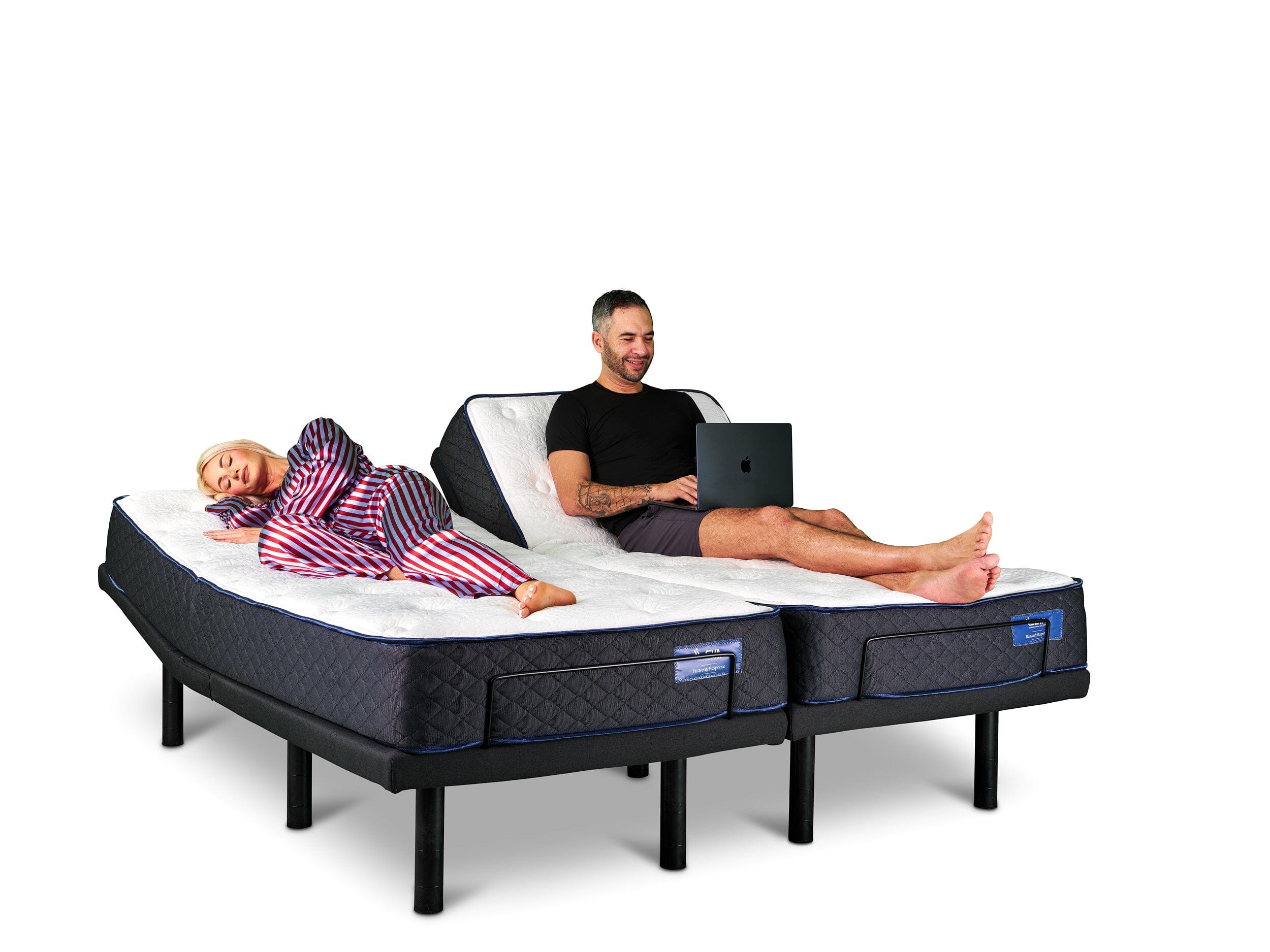
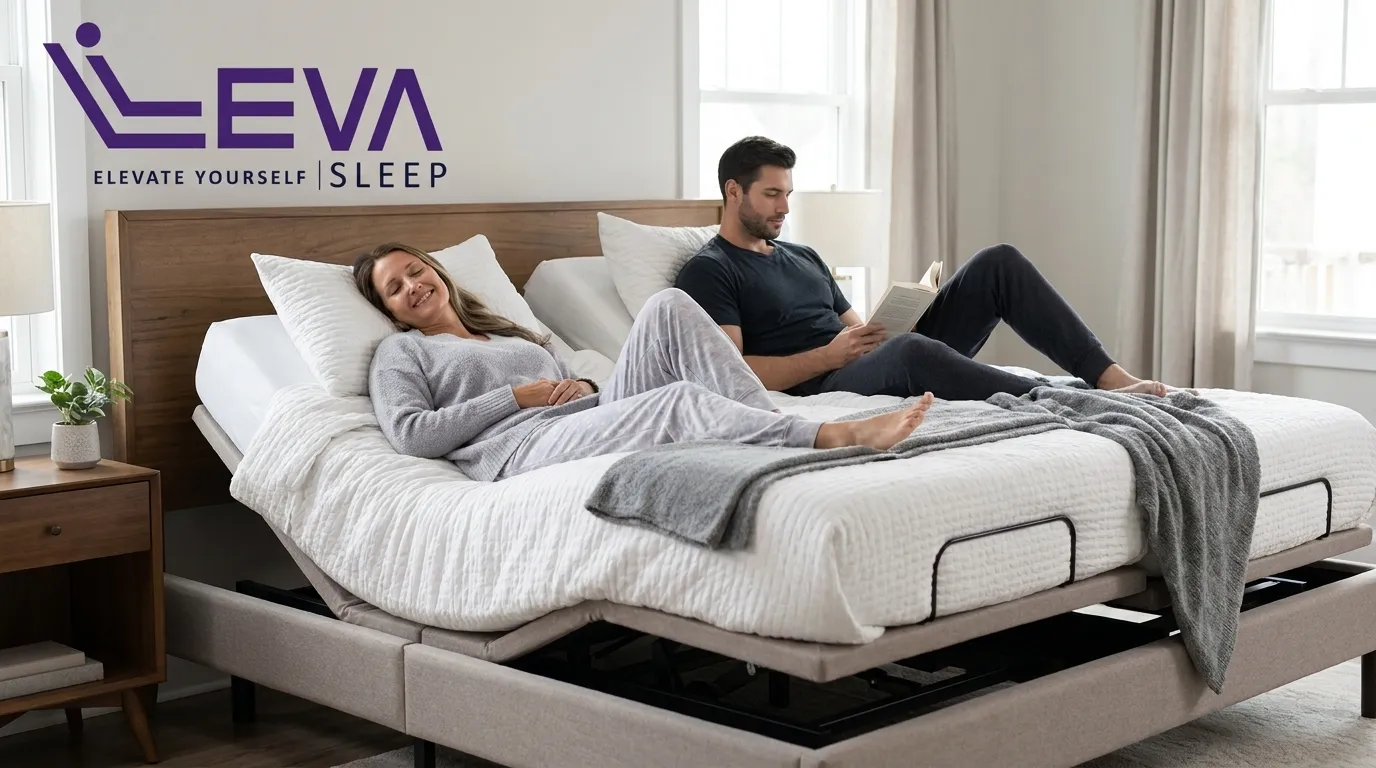
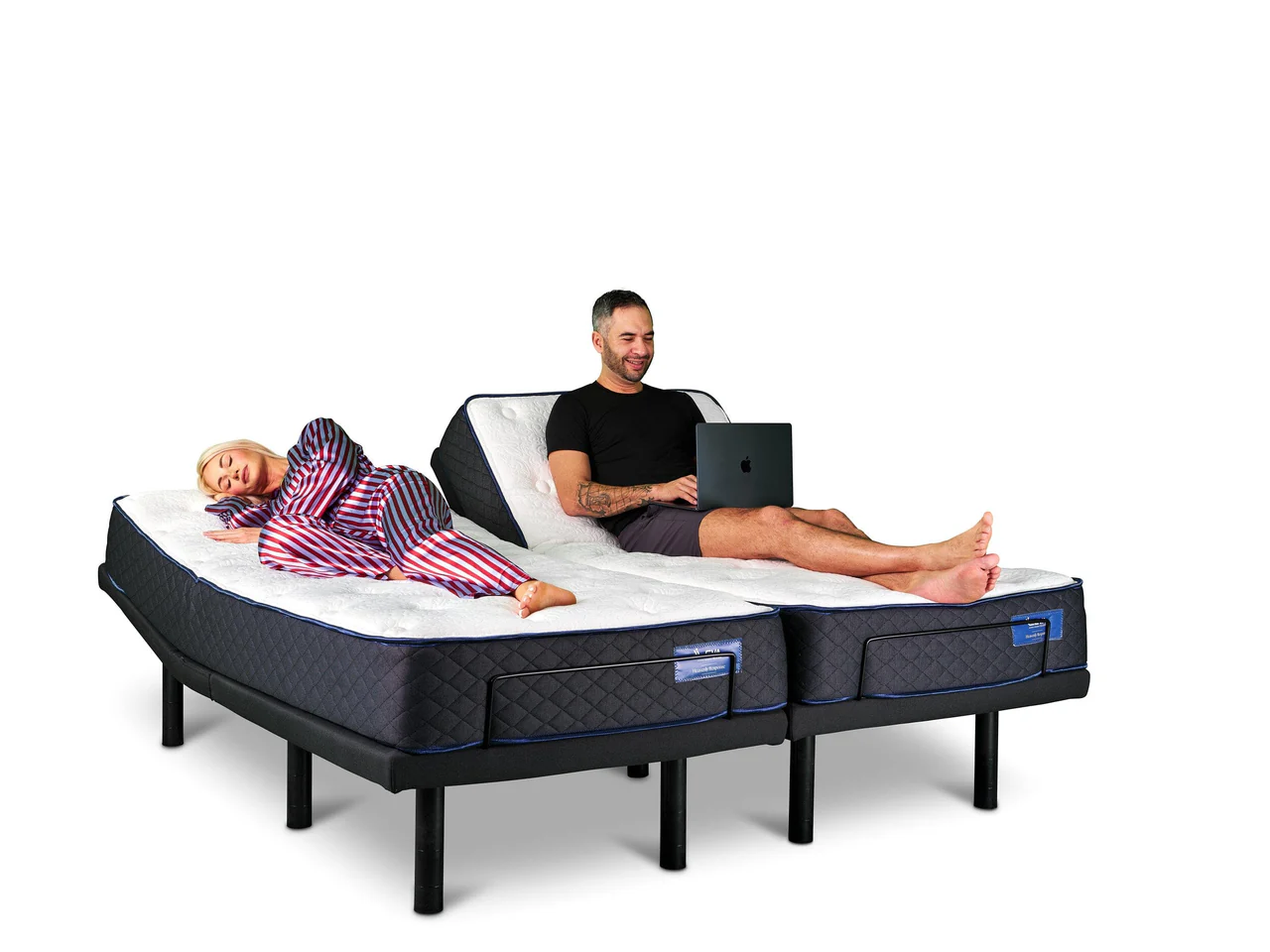
A split king adjustable bed uses two independent Twin XL motorized bases placed side by side to form a standard king footprint, so each partner can adjust head and foot elevation separately. One partner can elevate their head 15–30° for lumbar relief or 7–10° for airway support while the other remains flat. This independence lets couples support different medical needs without compromise.
Split queen configurations provide the same dual-control functionality in a smaller footprint, which helps in bedrooms where a full king does not fit. Leva Sleep is one of the few providers offering a Split Queen built to customer specifications, along with a selection of 15–20 adjustable models compared to the 3–5 typically found at general mattress retailers. When you evaluate split bases, check that the gap between the two foundations is minimal and that compatible bedding, such as deep-pocket fitted sheets with extra elastic, is available to bridge the split without sheets pulling loose during elevation.
4. Motor Noise and Weight Capacity for Shared Sleep
Quiet motors protect sleep quality when one partner adjusts position while the other rests. DC motors are recommended over AC motors for adjustable beds because they are quieter, more durable, and support weight capacities of 650–850 lbs including mattress and sleepers, which is critical for couples using heavier hybrid mattresses. Among DC options, German-engineered motors in adjustable bases operate at very low decibel levels, so partners can change positions without waking each other.
When you test a base in a showroom, activate the zero-gravity preset from a flat position and listen for motor whine, frame rattle, or mechanical grinding. Any audible noise during real-world testing usually comes from base-frame contact rather than the motors, so also confirm that the frame sits level on the floor and that the mattress retainer bar is properly seated. Leva Sleep bases use whisper-quiet German motors, a specification worth confirming on any base you consider because budget models often become much louder at maximum incline.
5. Lumbar Support Range for Targeted Back Relief
Zero-gravity positioning reduces pressure across the spine, and independent lumbar support builds on that benefit. A dedicated lumbar support feature uses a separate motor to raise a zone beneath the lower back independently of head and foot elevation, which helps maintain the spine’s natural curve through the night.
An adjustable lumbar insert that you can dial in to match the natural curve of your back provides more precise support than a simple preset incline. In extended real-world use, this independent lumbar feature is often the control people return to most for back pain relief. Evaluate lumbar range in clear increments. A base that offers 4 inches of independent lumbar travel gives far more customization than one with a fixed lumbar zone. Always consult a physician or physical therapist before setting a fixed lumbar elevation for a diagnosed spinal condition. Once you have medical guidance, you can test Leva Sleep’s independent lumbar adjustment in person at the La Jolla showroom to find your ideal support range.
6. Anti-Snore Features and App-Based Micro-Adjustments
Anti-snore presets support both airway health and back comfort for couples. An anti-snore setting raises the head about 7–10° to keep the airway open and reduce soft tissue collapse, and in a split configuration one partner can activate this mode without changing the other side. Raising the upper body to around 30° on an adjustable base can reduce the probability of airway collapse by approximately 35%.
Automated detection extends this benefit. Leva Sleep’s anti-snore mode, arriving spring 2026, will detect snoring acoustically and make small head-of-bed adjustments without manual input from either partner. App-based control adds another layer of convenience with custom sleep position presets, vibrating alarms that wake one partner without disturbing the other, and real-time adjustments from a smartphone. When you evaluate app integration, confirm Bluetooth reliability, the number of saveable presets, and whether the app supports independent dual-zone control for split configurations.
7. White-Glove Delivery, Setup, and Ongoing Support
An adjustable base system that includes foundation, mattress, bedding accessories, and app pairing requires more careful setup than a standard bed frame. A white-glove delivery service that covers bedroom placement, leg-height adjustment, mattress positioning, sheet fitting, app setup, and a product tutorial reduces the risk of incorrect assembly that could affect comfort or warranty coverage.
Leva Sleep’s in-house white-glove delivery (available for a fee) also includes removal and donation or recycling of the existing bed. This end-to-end service model, from design and local assembly to delivery and setup, clearly differs from bed-in-a-box brands that leave assembly to the customer. When you compare delivery options, ask whether the delivery team works directly for the brand or for a third-party logistics company, and whether post-delivery adjustments such as re-leveling or height changes are included.
Frequently Asked Questions
Do doctors recommend adjustable beds for back pain?
Orthopedic surgeons, physical therapists, and chiropractors frequently recommend adjustable sleeping surfaces for patients managing chronic lower back pain, sciatica, herniated discs, and spinal stenosis. The recommendation usually focuses on individualized partial recline or zero-gravity positioning rather than a specific brand. Neurosurgeons and physiotherapists support the zero-gravity position for herniated disc patients because it reduces intervertebral disc loading by distributing body weight more evenly than lying flat. Patients with degenerative disc disease benefit from the ability to change sleeping angles throughout the night as inflammation levels shift. Always consult your physician or physical therapist to determine which elevation angles are appropriate for your specific diagnosis before purchasing.
What is the best adjustable bed position for lower back pain?
The zero-gravity preset described at the beginning of this guide is the most widely recommended position for lower back pain because it decompresses the lumbar spine and reduces intradiscal pressure by distributing body weight evenly. For targeted lumbar relief, a more moderate setting of 10–15° head elevation and 15–20° foot elevation eases tension on the psoas muscles and lower lumbar discs. For sciatica specifically, elevating the knees 15–30° relaxes the hamstrings and reduces posterior pelvic tilt that pulls on the lower back. Begin with small increments of 5–10° and increase gradually over several nights so the back muscles and ligaments can adjust.
Is a split king adjustable bed worth the cost for couples with different back pain needs?
For couples where one partner needs head or leg elevation and the other does not, a split king configuration often delivers strong value. Each side operates as a fully independent Twin XL base, so one partner can use zero-gravity positioning for lumbar decompression while the other sleeps flat. The independent controls also allow one partner to activate an anti-snore preset without disturbing the other. The additional cost over a single-unit king base is usually justified when partners have meaningfully different medical or comfort needs. Leva Sleep also offers a Split Queen for smaller bedrooms, a configuration that is significantly harder to find at standard retailers.
How noisy are adjustable bed motors, and does noise affect sleep quality?
Motor noise can affect sleep quality for couples, especially when one partner adjusts position while the other is asleep. Quality adjustable bases use DC motors, which are quieter and more durable than AC motors. German-engineered DC motors operate quietly enough that position changes are nearly silent during normal use, while budget models often become noticeably louder at maximum incline. When you evaluate a base, test the full range of motion from flat to maximum head elevation and back, and listen for motor whine, frame rattle, or mechanical grinding. Any audible noise usually originates from frame contact rather than the motor itself, so also verify that the frame sits level and that all connection points are secure.
What bedding works with an adjustable bed, and why does it matter?
Standard fitted sheets are designed for flat surfaces and often pull loose when a base elevates to 30° or higher, which creates a bunched, uncomfortable sleeping surface. Adjustable-bed-specific bedding uses deeper pockets, extra elastic, and reinforced corners to maintain a secure fit at any elevation angle. For split configurations, separate fitted sheets on each Twin XL mattress prevent one partner’s sheet from pulling when the other side adjusts. Duvet clips keep a shared duvet from sliding when the two sides sit at different angles. Leva Sleep designs its entire bedding accessory line, including sheets, mattress protectors, and duvets, specifically for adjustable bases, so sleepers can use significant elevation without re-making the bed each morning.
Conclusion
Across all seven features, effective back pain relief from an adjustable base depends on precise positional range, a mattress that flexes smoothly with the base, independent split control for couples, quiet motors that protect shared sleep, dedicated lumbar support, responsive anti-snore technology, and professional setup that brings everything together from the first night.
Leva Sleep addresses each of these needs through a vertically integrated system with whisper-quiet German motors, 15–20 adjustable models including Split Queen and Split King configurations, mattresses made in America and paired specifically for adjustable-base use, anti-snore automation arriving spring 2026, and in-house white-glove delivery at 30–50% less than many comparable luxury competitors. Over eight years and more than 25,000 customers, that combination has consistently moved people from waking in pain to waking restored.