Written by: Matthew Timmins, Founder and Managing Director, Leva Sleep
Key Takeaways for Snoring Relief
- Adjustable mattresses with motorized bases reduce snoring by elevating the head 10–30° to keep airways more open.
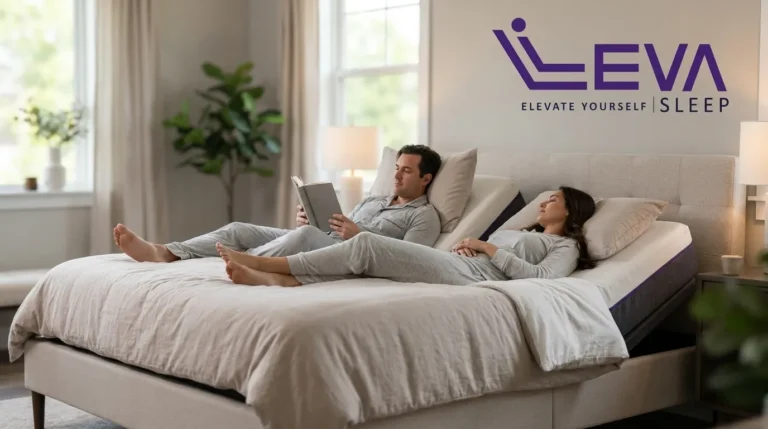
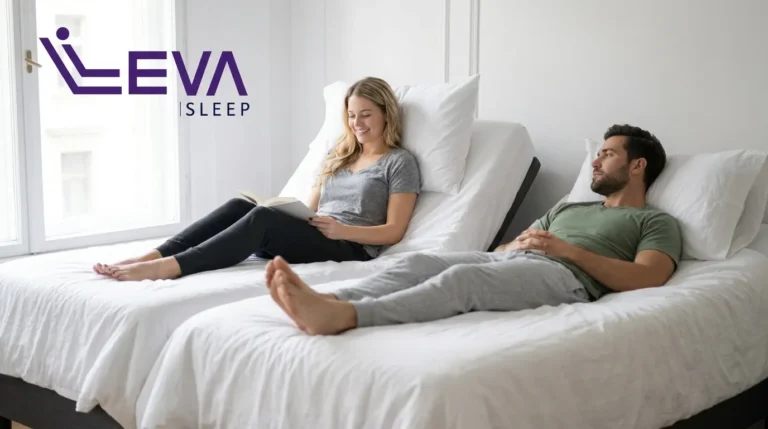
- Split configurations give each partner independent controls so one can use an anti-snore incline without disturbing the other.
- Head elevation at 10–15° often helps light snoring, while 20–30° or Zero Gravity presets support moderate to heavy snorers.
- Leva Sleep’s 2026 anti-snore mode uses sensors and whisper-quiet motors to make automatic micro-adjustments without waking either partner.
- Explore Leva Sleep’s adjustable bases online or visit the La Jolla showroom to test snoring relief settings in person.
How Adjustable Beds Reduce Snoring
Snoring occurs when soft tissues in the throat relax and partially block the airway during sleep. On a flat mattress, gravity pulls those tissues downward and narrows the passage. Head and torso elevation on an adjustable base uses gravity in reverse, preventing soft-tissue collapse, shifting the tongue and jaw forward, and promoting sinus drainage to reduce mouth breathing.
About 25% of adults snore regularly while roughly 45–50% snore at least occasionally, so positional therapy applies to a large share of couples. Given this prevalence, sleep medicine specialists identify positional therapy via head elevation as one of the most effective non-invasive treatments for habitual snoring in otherwise healthy individuals.
Adjustable bases do not cure every type of snoring. If snoring persists despite positional changes, or if apnea symptoms such as gasping are present, experts recommend seeking medical evaluation rather than relying on positional adjustments alone. For couples whose primary problem is positional snoring, a quality adjustable base often delivers noticeable relief on the first night.
The relationship cost of untreated snoring can be high. Chronic sleep disruption from a partner’s snoring increases the risk of anxiety, depression, and relationship conflict, and can lead to separate sleeping arrangements and reduced intimacy. Nightly sleep-wake concordance between partners is associated with better daily marital interactions the following day, so solving the snoring problem supports both sleep quality and relationship health.
Finding the Right Angle to Reduce Snoring
Head elevation is often recommended as a first-line lifestyle intervention for snorers because it can reduce snoring frequency. On an adjustable base, lower angles around 10–15° often help light snoring, while higher angles between 20–30° support moderate to heavy snorers.
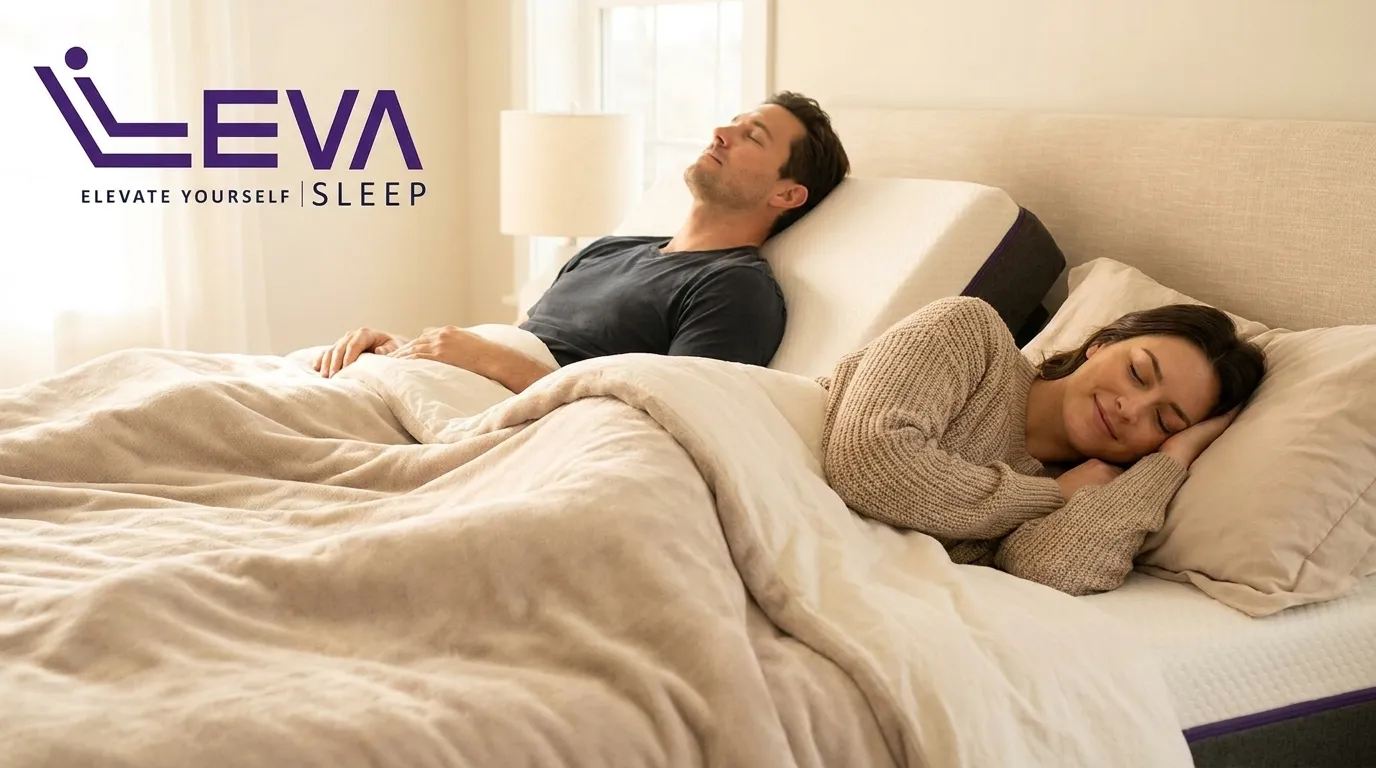
Head elevation on an adjustable base provides snoring relief by changing airway position. Raising the head shifts the angle of the throat and helps keep the airway more open for many mild to moderate snoring or sleep apnea cases. This simple mechanical change uses gravity to support easier airflow through the night.
The Zero Gravity preset, which elevates both head and legs simultaneously, serves as an effective anti-snore position by reducing spinal pressure and maximizing airway openness beyond head elevation alone. If a standard anti-snore preset at 10–15° provides only partial relief, Zero Gravity is a logical next step before seeking further medical evaluation.
Choosing an Adjustable Mattress for Snoring Couples
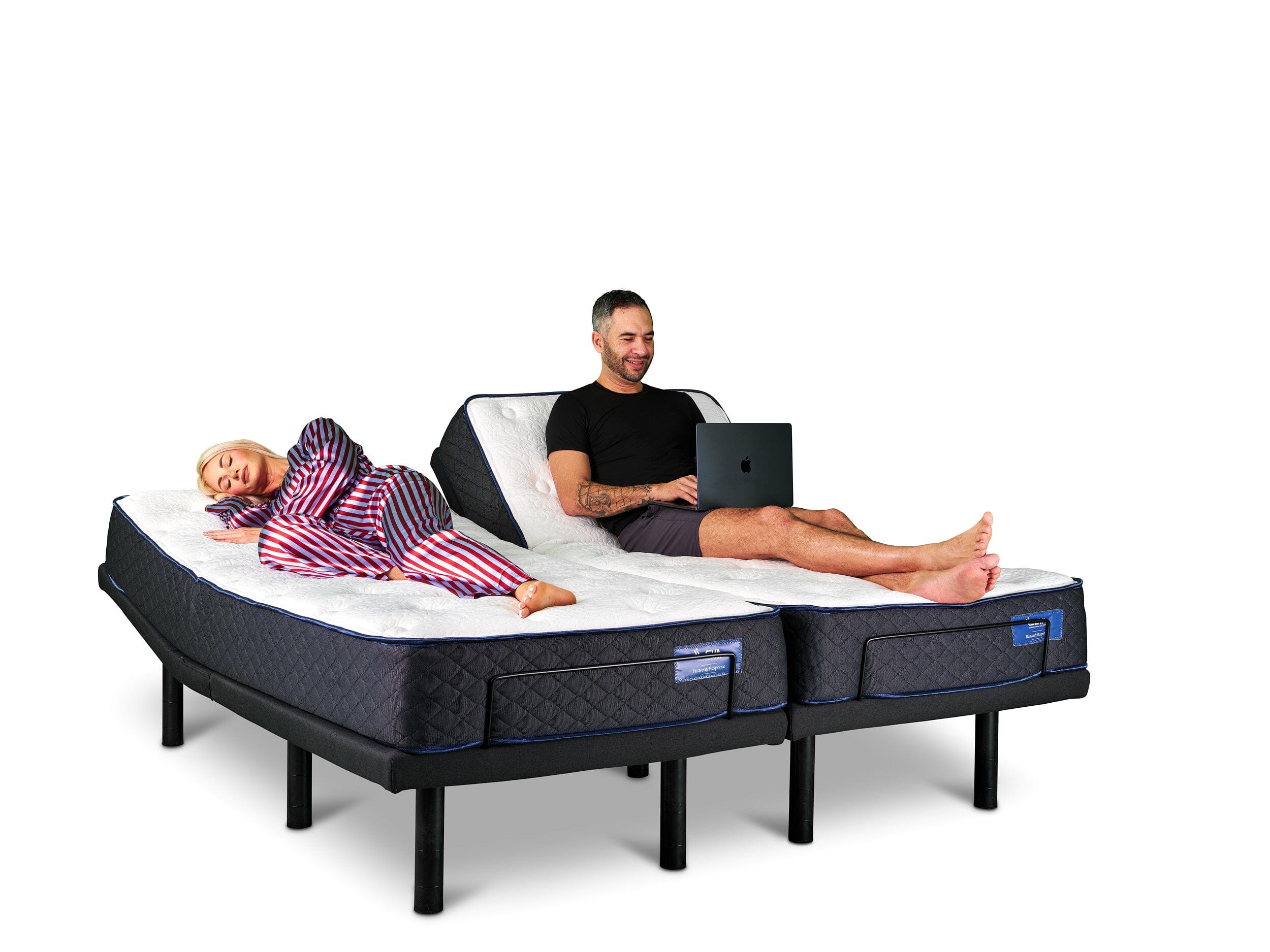
For couples, independent control is the key feature. Split King adjustable bases with independent controls allow one partner to use an anti-snore incline such as 20 degrees while the other remains flat, providing motion isolation without partner disruption.
Mattress construction must also match the base. Memory foam, hybrid mattresses with individually wrapped pocket coils, and latex mattresses are compatible with adjustable bases because they flex without damage, while traditional innerspring mattresses with rigid border wires are incompatible as they fail to bend properly and risk motor damage. Confirming compatibility before purchase prevents premature wear and mechanical issues.
Leva Sleep’s split adjustable systems pair whisper-quiet German motors with all-foam and hybrid pocket-coil mattresses engineered specifically for articulation. This pairing creates smooth elevation to the precise angle needed without waking a sleeping partner. Visit Leva Sleep online or in La Jolla to compare split systems designed for couples who snore.
Inside Leva’s 2026 Anti-Snore Mode
Leva Sleep’s anti-snore mode, launching spring 2026, detects snoring through integrated sensors and makes micro-adjustments to the head of the bed to open the airway without waking either partner. The system connects through the Leva Sleep app via Bluetooth so users can set sensitivity thresholds, review nightly adjustment logs, and save preferred anti-snore positions as one-touch presets.
The whisper-quiet German motors that power Leva bases are a deliberate engineering choice. Older or entry-level adjustable bases often use motors that produce audible noise during adjustment, which can wake a partner. Leva’s motors operate below the threshold of sleep disruption, so a micro-adjustment at 2 a.m. typically goes unnoticed by the non-snoring partner.
Tempur-Pedic’s Snore Response™ feature raises the bed once approximately 12 degrees in response to detected snoring in otherwise healthy individuals who snore due to body positioning. Leva’s 2026 system builds on this concept with continuous micro-adjustment capability and app-based personalization instead of a single fixed-angle response.
Split Queen vs Split King for Snoring Partners
A Split King consists of two Twin XL bases placed side by side inside a standard King frame, giving each partner a fully independent 38-inch-wide zone. A Split Queen divides a standard Queen into two 30-inch-wide independent zones, and Leva Sleep builds this configuration to customer specifications.
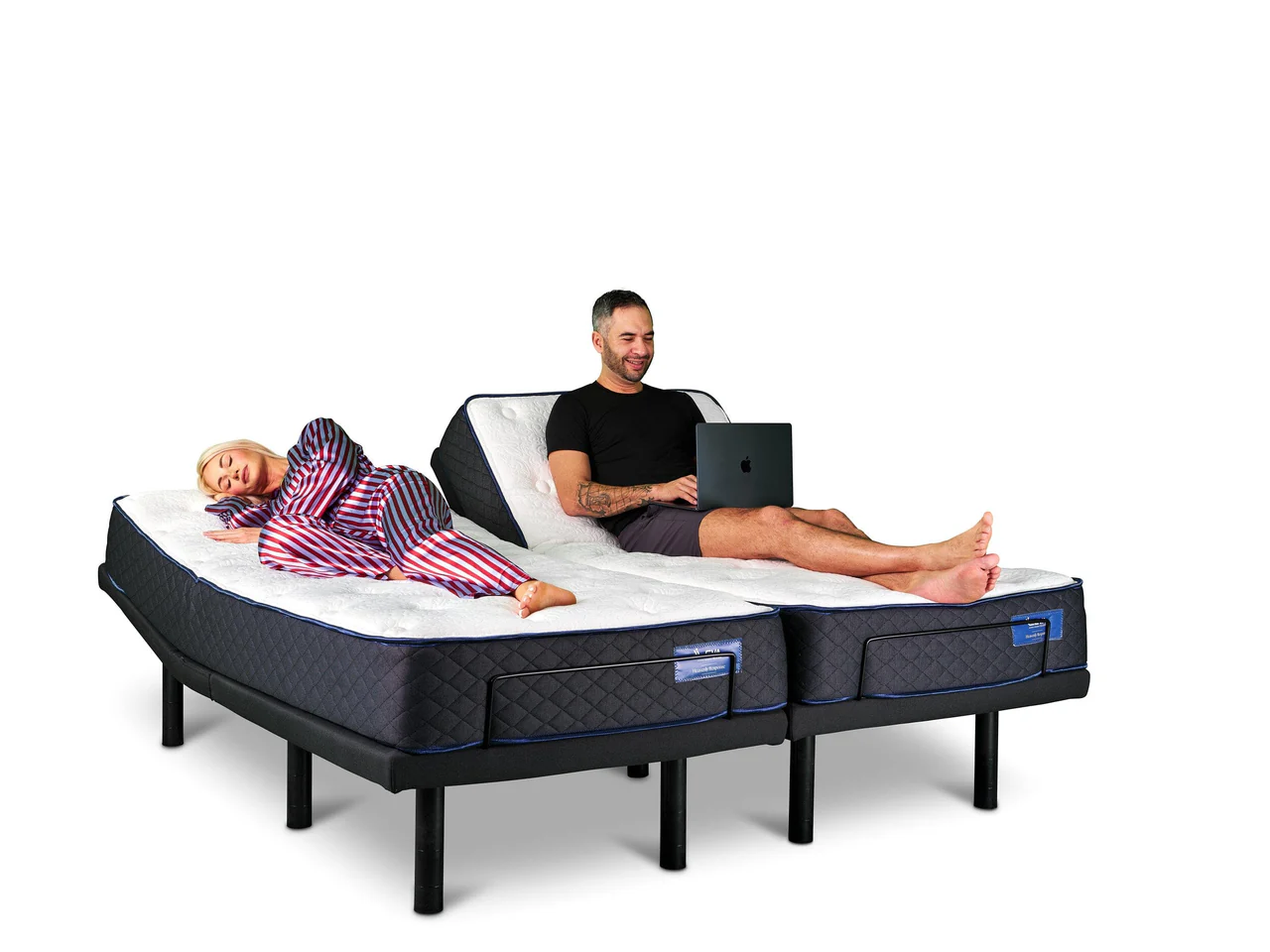
Both configurations allow each partner to set independent head elevation, foot elevation, lumbar support, massage intensity, and, with the 2026 anti-snore mode, automated snoring response. The split design also keeps one side of the bed still when the other partner adjusts position at night.
Couples in smaller master bedrooms who cannot accommodate a King footprint often choose the Split Queen. Couples who prioritize maximum individual sleeping width tend to select the Split King. Leva’s showroom in La Jolla carries both configurations for in-person evaluation, and the team provides guided comparisons based on room dimensions and individual sleep profiles. Schedule a visit or browse Split Queen and Split King options online to see which layout fits your space and sleep style.
Anti-Snore Feature Comparison: Leva vs Tempur-Ergo vs Saatva
| Feature | Leva Sleep (2026) | Tempur-Ergo Smart Base | Saatva Adjustable Base |
|---|---|---|---|
| Anti-snore mechanism | Sensor-detected micro-adjustments via app | AI monitors heart rate and blood oxygen, then raises head ~12° once per snoring event | Anti-snore preset via wireless remote |
| Split configuration available | Split Queen and Split King | Split Queen and Split King | Split King |
| Motor noise | Whisper-quiet German motors | Not independently rated in cited sources | Quiet motors designed for light sleepers |
| White-glove delivery | In-house, includes setup, tutorial, and old-bed removal | Varies by retailer | Varies by retailer |
Mattress Compatibility and Bedding for Adjustable Bases
A high-quality flexible mattress paired with an adjustable base can reduce snoring volume and frequency almost instantly for habitual snorers by maintaining neutral spinal alignment and open airways. To achieve this, the mattress must flex through the full elevation range without resistance or damage.
Adjustable bases from multiple manufacturers are compatible with memory foam, latex, and hybrid mattresses that use individual pocket coils, provided the mattress is flexible enough to bend without damage during head and foot adjustments. Leva’s all-foam and hybrid pocket-coil mattresses are engineered and tested specifically for use with its adjustable bases, and the company’s U.S. lineup includes premium California-made brands such as Airloom alongside Diamond Mattress and 3Z Brands.
Standard bedding often struggles on adjustable bases. Fitted sheets can pop off at elevation angles above 15°, and duvets bunch unevenly when two sides sit at different heights. Leva designs its bedding suite, including deep-pocket fitted sheets with extra elastic, duvet clips for split configurations, and mattress protectors, specifically for articulating bases. These accessories function as part of a complete sleep system rather than as add-ons.
Delivery and Setup for Split Adjustable Systems
Delivery and setup problems are the most frequent complaints about adjustable bases purchased from general retailers. Bases may arrive unassembled, motors may not be calibrated, leg heights may not match the room, and no one may explain the app or remote. These issues become more complex on split configurations because two independent bases must align precisely inside a single frame.
Leva’s in-house white-glove delivery service addresses these points directly. Trained professionals deliver to the bedroom, assemble the base and frame, adjust leg heights to the customer’s preference, pair the app, walk through every feature including the anti-snore mode, and remove the old bed for donation or recycling. The service is available for a fee and is scheduled as a confirmed appointment rather than a broad delivery window.
For couples investing in a split adjustable system to solve a snoring problem that has already strained their relationship, a smooth setup experience matters. A base that is incorrectly assembled or an app that is never configured cannot deliver the elevation precision needed for snoring relief. Contact Leva Sleep to arrange white-glove delivery and ensure your anti-snore features work correctly from night one.
Step-by-Step Decision Checklist for Couples
Before purchasing an adjustable base for snoring reduction, walk through each of the following checkpoints.
- Snoring severity: Light snorers typically need 10–15° of head elevation. Moderate to heavy snorers should look for bases that reach 20–30° and include a Zero Gravity preset.
- Split configuration: Confirm whether a Split Queen or Split King fits the room and whether both partners need independent elevation or only one.
- Motor noise: Ask for a live demonstration of motor sound at the showroom, or request a decibel rating from the manufacturer before purchasing online.
- Mattress compatibility: Verify that the mattress is all-foam, latex, or a hybrid with individually wrapped pocket coils. Avoid traditional innerspring mattresses with rigid border wires.
- Anti-snore automation: Decide whether a manual preset is sufficient or whether sensor-based micro-adjustment is needed for a partner who cannot operate a remote during the night.
- Bedding system: Confirm that fitted sheets, mattress protectors, and duvets are designed for the elevation range the base will use.
- Delivery and setup: Check whether white-glove in-room setup is available and whether it includes app configuration and a product tutorial.
Next Steps for Couples Considering an Adjustable Base
Couples whose snoring is positional, meaning louder when lying flat and reduced when propped on pillows, are strong candidates for an adjustable base as a primary intervention. Evaluating bases in person, testing elevation angles, and confirming mattress compatibility before purchase reduces the risk of a mismatch. Leva Sleep’s La Jolla showroom carries 15–20 adjustable models, including Split Queen and Split King configurations, and the team provides guided comparisons based on individual sleep profiles and room dimensions.
Individuals whose snoring is accompanied by gasping, choking, or witnessed breathing pauses should consult a physician or sleep medicine specialist before relying on positional therapy alone. An adjustable bed should not be considered a replacement for proper medical attention for diagnosed sleep apnea; individuals experiencing symptoms should consult a healthcare provider before purchasing one. An adjustable base can complement a treatment plan recommended by a physician, but it does not replace evaluation of underlying conditions.
Frequently Asked Questions
Can an adjustable mattress completely eliminate snoring?
An adjustable base with head elevation reduces snoring by keeping the airway open through gravity, and many users experience significant or complete relief from positional snoring at angles between 10 and 30 degrees. Results depend on the cause of snoring. Positional snorers, who snore primarily when lying flat, respond most reliably to elevation therapy. Snoring caused by nasal obstruction, obesity, or obstructive sleep apnea may require additional medical treatment. An adjustable base works best as a highly effective first-line intervention for positional snoring, not as a guaranteed cure for every snoring cause.
What is the difference between a Split Queen and a Split King adjustable base?
A Split King uses two Twin XL bases inside a standard King frame, giving each partner a 38-inch-wide independent zone. A Split Queen fits a standard Queen footprint while creating two 30-inch zones within that space. Both configurations allow each partner to control head elevation, foot elevation, lumbar support, and massage settings independently. The Split Queen suits smaller master bedrooms or couples who prefer a Queen footprint, while the Split King provides more individual sleeping width. Leva Sleep builds Split Queen bases to customer specifications so couples can gain independent controls without moving up to a full King.
Will my current mattress work with an adjustable base?
Mattress compatibility depends on the internal construction. All-foam, latex, and many hybrid mattresses with individually wrapped pocket coils flex through the elevation range of an adjustable base without damage. Traditional innerspring mattresses with rigid border wires cannot bend properly and may damage both the mattress and the base motor. Before purchasing an adjustable base, confirm the mattress type. If the current mattress is incompatible, pairing a new flexible mattress with the adjustable base is usually the most reliable approach.
How loud are adjustable base motors, and will they wake my partner?
Motor noise varies significantly across adjustable base brands and price points. Entry-level bases often use motors that produce audible grinding or whirring sounds during adjustment, which can wake a light sleeper. Premium bases use quieter motor technology that operates below the threshold of sleep disruption. Leva Sleep’s bases use whisper-quiet German motors specifically chosen to allow nighttime micro-adjustments, including automated anti-snore responses, without disturbing the non-adjusting partner. When evaluating any adjustable base, request a live motor demonstration at the showroom or ask the manufacturer for a decibel rating at full-speed adjustment before purchasing.
When should a couple see a doctor instead of buying an adjustable base for snoring?
An adjustable base works well as a first-line solution when snoring is positional, meaning it is louder when lying flat and reduced when the head is elevated. Medical evaluation is recommended when snoring is accompanied by gasping, choking, or witnessed pauses in breathing during sleep, because these symptoms suggest obstructive sleep apnea, a condition that carries documented cardiovascular and metabolic risks if left untreated. Daytime sleepiness, morning headaches, and difficulty concentrating despite adequate sleep time are additional indicators that warrant a physician consultation. An adjustable base can complement a medically supervised treatment plan, but it does not replace diagnosis or treatment of underlying sleep disorders.