Written by: Matthew Timmins, Founder and Managing Director, Leva Sleep
Key Takeaways for Side Sleepers with Back Pain
- Back pain affects nearly 40% of U.S. adults, and mattress choice directly influences whether pain improves or worsens overnight.
- The Aireloom Luxetop Plush offers strong initial pressure relief for side sleepers but risks lumbar misalignment as its plush layers compress over 12–24 months.
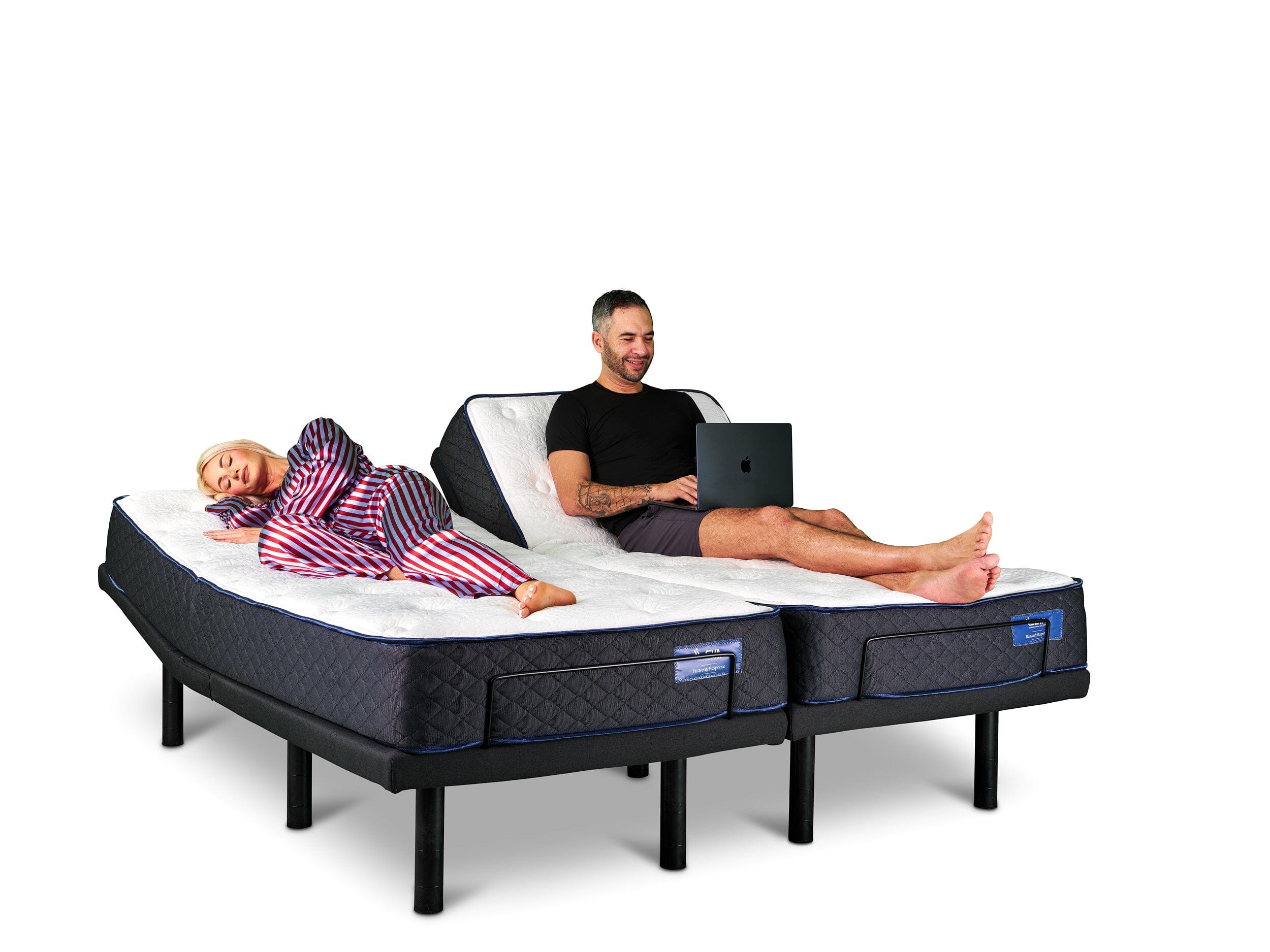
- Adjustable bases with independent leg elevation counteract sinkage by creating a hip pocket that offloads lumbar discs and psoas muscles.
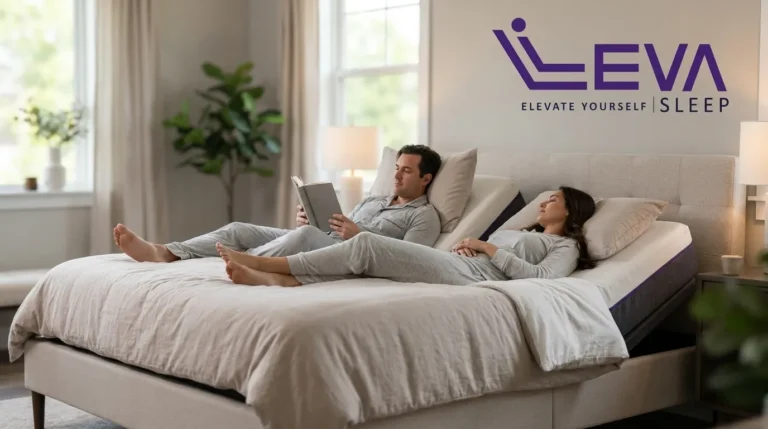
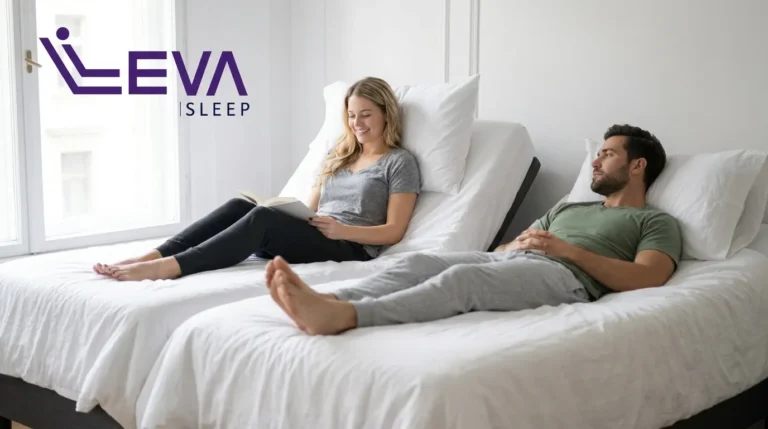
- Split adjustable bases allow each partner to customize head and leg positions, solving the one-size-fits-all limitation of flat plush mattresses for couples.
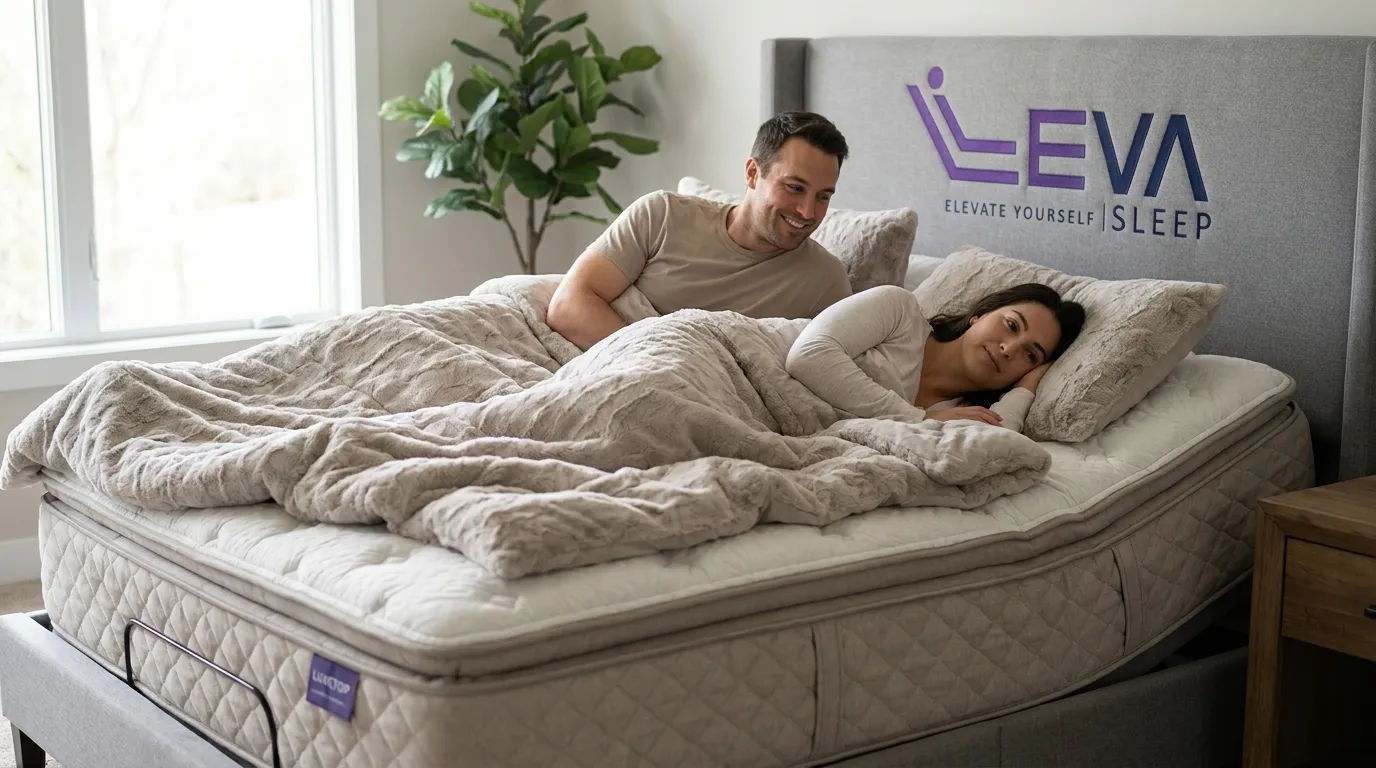
- Leva Sleep pairs the Luxetop Plush with whisper-quiet split bases—explore Leva Sleep’s Aireloom systems to protect spinal alignment for years.
How Aireloom Luxetop Plush Mattresses Affect Back Pain
The Aireloom Luxetop Plush behaves differently based on body weight and primary sleep position. This weight-based breakdown reflects patterns reported across owner communities on GoodBed and public forums.
Under 130 lb: Lighter side sleepers typically experience sustained pressure relief at the hip and shoulder without significant sinkage. The plush comfort layers compress proportionally, and the underlying support core maintains enough pushback to keep the spine reasonably neutral. For this weight range, a flat Luxetop Plush configuration carries the lowest back-pain risk.
130–230 lb: Sleepers in this range usually get the most balanced performance on a flat base during the first year. Owners frequently report excellent comfort in the first 12 months. After 12–18 months, forum threads on Reddit’s r/Mattress document recurring complaints of a “hammock effect” in the lumbar zone, where the hips sink deeper than the shoulders, rotating the pelvis and increasing disc pressure. This pelvic rotation pulls on the psoas muscles and loads the lumbar discs asymmetrically. Adding an adjustable base that elevates the legs 15–20 degrees counteracts this rotation by creating a hip pocket that offloads the psoas muscles and lumbar discs, a positioning principle supported by adjustable-base ergonomics research.
Over 230 lb: Heavier side sleepers compress plush comfort layers more completely, which speeds up the timeline to problematic sinkage. For this weight range, a standalone flat Luxetop Plush carries a measurable back-pain risk beyond the first year. Pairing the mattress with an adjustable base that provides independent lumbar support and leg elevation becomes a functional necessity rather than an optional upgrade.
Plush Mattresses and Back Pain Over Time
Plush mattresses provide genuine short-term benefits for side sleepers. The softer surface allows the hip and shoulder to sink in, reducing the peak pressure that a firmer mattress would create at those bony prominences. This initial relief is real and measurable.
The long-term picture becomes more complicated. Plush comfort layers, particularly those built around pillow-top constructions, compress unevenly over time. The areas that bear the most weight, typically the hips for side sleepers, develop permanent indentations faster than lower-load zones. Once that asymmetric compression sets in, the mattress no longer holds the spine in a neutral lateral position.
As the pelvis drops, the lumbar spine curves laterally, and the intervertebral discs experience sustained asymmetric loading throughout the night. For couples where one partner weighs significantly more than the other, this problem compounds. The heavier partner’s side degrades faster, and on a non-split configuration, that degradation can affect the center zone of the mattress that both partners share.
The 12–24 month window is the period most commonly cited in owner reports as when plush mattresses transition from pain-relieving to pain-contributing for side sleepers with pre-existing lumbar conditions. An adjustable base does not reverse comfort-layer compression, but it does compensate for it. Elevating the knees or upper body minimizes lower back pressure and promotes healthier posture throughout the night, even when the mattress surface itself has begun to show wear.
Chiropractor-Backed Mattress Guidance for Back Pain
This owner-reported pattern aligns with clinical recommendations from sleep health professionals. Clinical guidance on mattress selection for back pain consistently points toward medium-firm to medium-plush surfaces that contour to the spine’s natural curves without allowing excessive sinkage. The specific recommendation for side sleepers with back pain is a mattress that relieves pressure at the hip and shoulder while maintaining enough support to keep the lumbar spine from collapsing laterally.
Chiropractors and physical therapists increasingly pair mattress recommendations with adjustable base guidance. Adjustable bases can help align the spine and take pressure off the joints, and can also keep airways open by elevating the upper body. Raising the feet or head on an adjustable base improves comfort and alignment when a mattress alone does not adequately support the spine or when pressure builds up.
For couples with differing body weights, the clinical case for a split adjustable base is particularly strong. One partner may need more leg elevation to manage lumbar disc pressure while the other requires only minimal head elevation for shoulder relief. A single flat mattress, even a premium plush model, cannot deliver two different support profiles simultaneously. A split adjustable base can.
Memory foam, latex, and hybrid mattresses with pocketed coils are the mattress types compatible with adjustable bases, because they flex without damage as the base inclines, unlike traditional innerspring mattresses with connected coils. The Aireloom Luxetop Plush, as a hybrid construction, meets this compatibility requirement.
Flat Plush vs. Split Adjustable Systems for Spinal Alignment
The table below compares a standalone Aireloom Luxetop Plush on a flat base against the same mattress paired with a Leva Sleep split adjustable base. Every data point reflects owner-reported patterns and clinically documented adjustable-base benefits cited in this article.
| Criterion | Standalone Luxetop Plush (Flat Base) | Luxetop Plush + Leva Split Adjustable Base | Source Basis |
|---|---|---|---|
| Spinal Alignment (Side Sleepers, 130–230 lb, Year 1) | Neutral to near-neutral, comfort layers compress proportionally | Neutral, leg elevation offloads lumbar discs and psoas muscles independently per partner | Vaya Sleep |
| Spinal Alignment (Side Sleepers, 130–230 lb, Year 2+) | Compromised, asymmetric hip sinkage rotates pelvis and increases disc pressure | Maintained, adjustable positioning compensates for comfort-layer compression | Reddit r/Mattress owner reports |
| Partner Independence | None, both partners share a single surface and single support profile | Full, each side adjusts head and leg elevation independently via app control | Leva Sleep product specifications |
| Motor Noise | Not applicable | Whisper-quiet German motors, designed for nighttime adjustments without sleep disruption | Leva Sleep product specifications |
| Long-Term Durability of Back Support | Declines as comfort layers compress, no mechanical compensation available | Base positioning compensates for mattress wear, lumbar support adjustable independently | SleepEZ |
How Leva Sleep’s 2026 Aireloom Partnership Reduces Sinkage Risk
Leva Sleep carries Aireloom as part of its curated U.S. lineup of California-made premium brands and sells every Aireloom mattress alongside its proprietary adjustable base systems. This integration matters because the sinkage problem described throughout this article is not a defect in the Luxetop Plush. It is a structural limitation of any flat plush mattress used without positional compensation.
Leva’s split adjustable bases address four specific failure points of a flat plush configuration for side-sleeping couples with back pain. First, independent leg elevation on each side creates the hip pocket described earlier, preventing lumbar disc loading without forcing both partners into the same position. Second, independent head elevation on each side reduces shoulder crush pressure for the side sleeper without forcing the other partner into the same position.
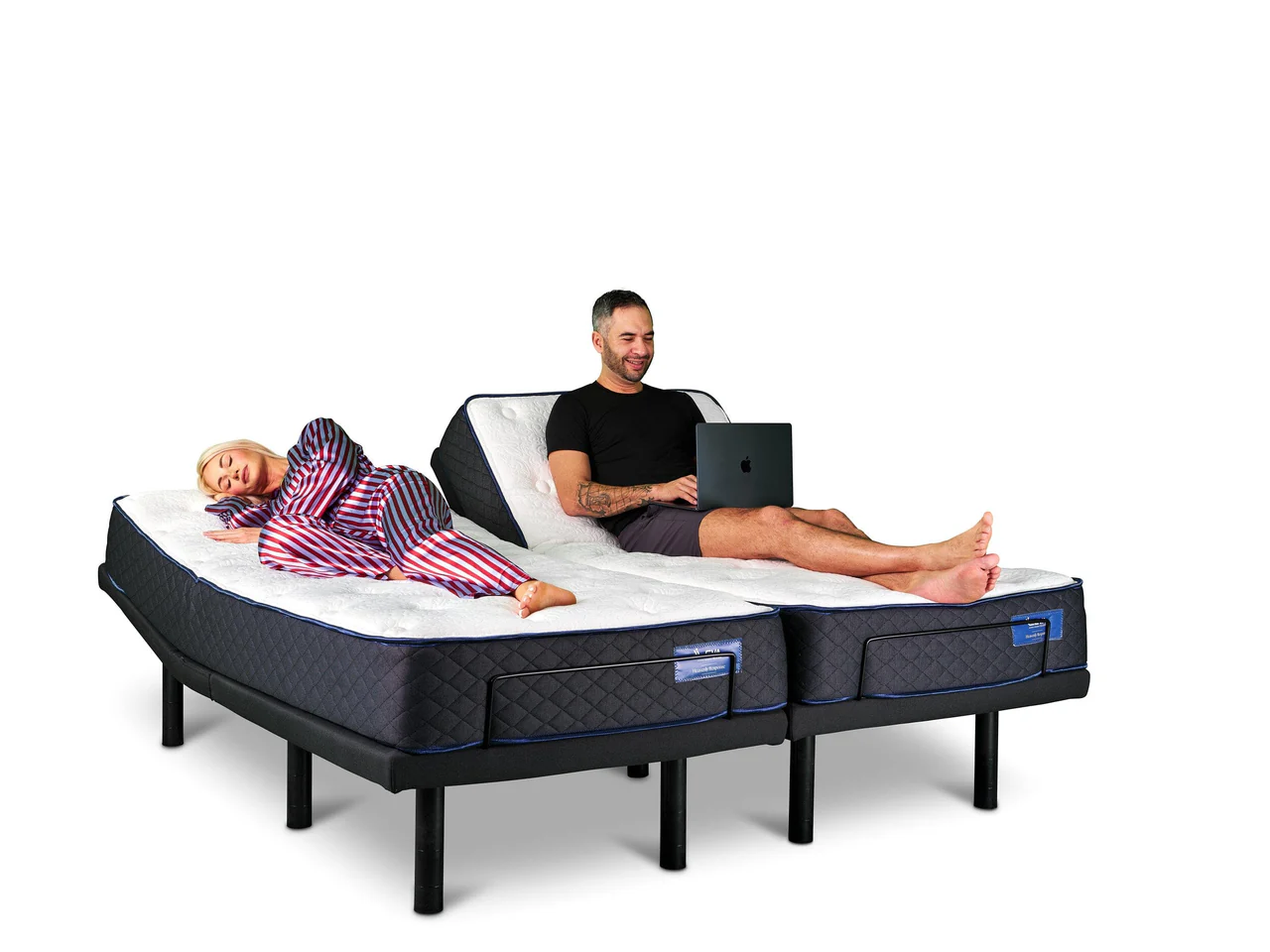
Third, the whisper-quiet German motors allow nighttime adjustments without waking either partner. Fourth, the Leva Sleep app enables each partner to save and recall their optimal position, which removes the friction of manual adjustment.
The Zero Gravity preset, available on Leva’s bases, places the body with head and legs elevated above heart level, promoting neutral spinal alignment, spinal decompression, and improved blood flow for muscle repair during sleep. For couples where one or both partners carry lumbar disc issues, this preset alone represents a clinically meaningful improvement over any flat mattress configuration.
Leva’s white-glove delivery service includes in-home setup, leg-height adjustment, a full product tutorial, and removal of the existing bed. This service helps ensure the system is calibrated correctly from the first night.
Frequently Asked Questions About Plush Mattresses and Leva Bases
How long before plush mattresses typically show sinkage that affects back pain?
Most plush mattresses begin showing measurable comfort-layer compression between 12 and 24 months of regular use. The timeline accelerates for sleepers over 200 pounds and for couples where one partner is significantly heavier than the other, since the heavier side compresses faster and can affect the shared center zone.
Early signs include a visible body impression when the mattress is unoccupied, a sensation of rolling toward the center of the bed, and morning stiffness or lower back pain that was not present in the first months of ownership. Adding an adjustable base does not reverse existing compression but does provide positional compensation that can restore effective spinal alignment despite surface wear.
Can side sleepers over 230 lb safely use the Luxetop Plush?
Side sleepers over 230 pounds can use the Aireloom Luxetop Plush, but a flat base configuration carries a higher risk of accelerated sinkage and lumbar misalignment than it does for lighter sleepers. For this weight range, pairing the Luxetop Plush with a split adjustable base from day one, rather than waiting for sinkage symptoms to appear, is the more protective approach.
Independent leg elevation creates a hip pocket that offloads lumbar disc pressure regardless of how the comfort layers compress over time. Leva Sleep’s split configurations allow the heavier partner to dial in more aggressive leg and lumbar support without affecting the lighter partner’s side of the bed.
What observable signs indicate it is time to add an adjustable base?
Four signs consistently precede the decision to add an adjustable base to a plush mattress setup. The first is recurring morning lower back stiffness or pain that resolves within an hour of waking, a pattern that suggests the sleeping surface is not maintaining neutral spinal alignment. The second is a visible body impression in the mattress surface that persists when unoccupied.
The third is one partner waking the other through nighttime repositioning, which often indicates that one side is no longer comfortable in a static flat position. The fourth is a growing preference for sleeping in a recliner or propped up on pillows, which signals that the body is seeking the positional relief that an adjustable base provides mechanically.
Do Leva Sleep bases work with the Aireloom Luxetop Plush without voiding the warranty?
Leva Sleep sells the Aireloom Luxetop Plush as part of its integrated sleep system and pairs it directly with its adjustable bases. Because the Luxetop Plush is a hybrid construction with pocketed coils and flexible foam layers, it is designed to flex with an adjustable base without structural damage.
Customers considering this pairing should confirm warranty terms directly with Leva Sleep at the time of purchase, as warranty coverage for mattresses used on adjustable bases depends on the specific base model and usage conditions. Leva’s in-house specialists can clarify compatibility and warranty details for any specific configuration during a showroom consultation or online inquiry.
Conclusion: When a Split Adjustable Base Becomes Essential
The Aireloom Luxetop Plush is a high-quality mattress that delivers real pressure relief for side sleepers, particularly in the first year of ownership and for sleepers under 200 pounds. The documented risk comes from a flat-base configuration that prevents individualized positional compensation as comfort layers compress over time. For couples with differing body weights, pre-existing lumbar conditions, or back pain that has returned after an initial period of relief, a split adjustable base provides structural support that a mattress alone cannot match.
Leva Sleep’s 2026 lineup pairs the Luxetop Plush with whisper-quiet, app-controlled split bases in both king and queen configurations, delivering independent elevation for each partner without the noise, limited adjustability, or clinical aesthetic of traditional adjustable beds. Consulting a physician or physical therapist about specific lumbar conditions before changing a sleep setup remains advisable for anyone managing diagnosed disc or nerve pathology.