
Written by: Matthew Timmins, Founder and Managing Director, Leva Sleep
Key Takeaways
- Side sleepers with back, hip, or shoulder pain carry most of their weight at the shoulder and hip on flat mattresses, which disrupts spinal alignment and fragments sleep.
- Adjustable bases restore alignment by raising the head to ease shoulder compression and elevating the feet to cradle the hips and limit lumbar rotation.
- Zero-gravity positioning and zoned medium-firm mattresses work together to spread weight evenly and keep lumbar support consistent during elevation changes.
- Split bases with independent controls and quiet German motors give couples personalized positioning without sacrificing comfort or adding disruptive noise.
- Leva Sleep offers specialized adjustable bases and zoned mattresses designed for side sleepers; explore the full collection to find your optimal pressure-relief configuration.
The Problem: Why Side Sleepers Wake Up in Pain
Side sleepers on flat, non-contouring surfaces place most of their body weight on the shoulder and hip. Neither joint is built to handle that level of compressive force for hours at a time. The shoulder collapses inward and rotates the cervical spine out of neutral alignment. The hip sinks unevenly, tilting the pelvis and straining the lumbar vertebrae. The top leg often slides forward, which twists the lower spine and adds rotational stress to the existing pressure.
This pattern creates a cycle of micro-awakenings as the nervous system signals the body to move away from pain. Over time, those brief awakenings accumulate into chronic fatigue, lower pain tolerance, and reduced daytime performance. For couples, the challenge compounds because two people with different body weights, shoulder widths, and pain locations share one flat surface that rarely suits either person well.
The Solution: How Adjustable Bases Restore Spinal Alignment
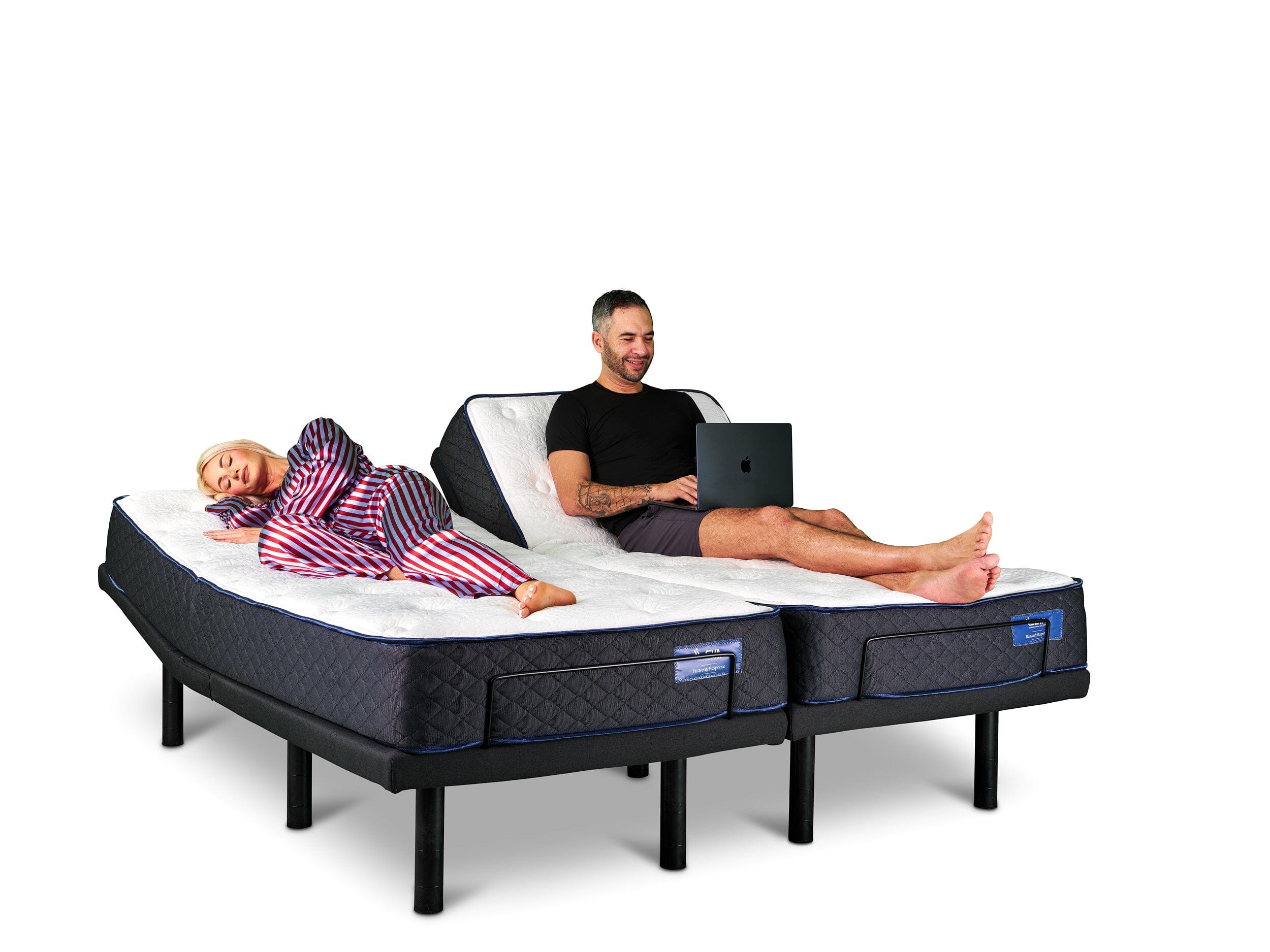
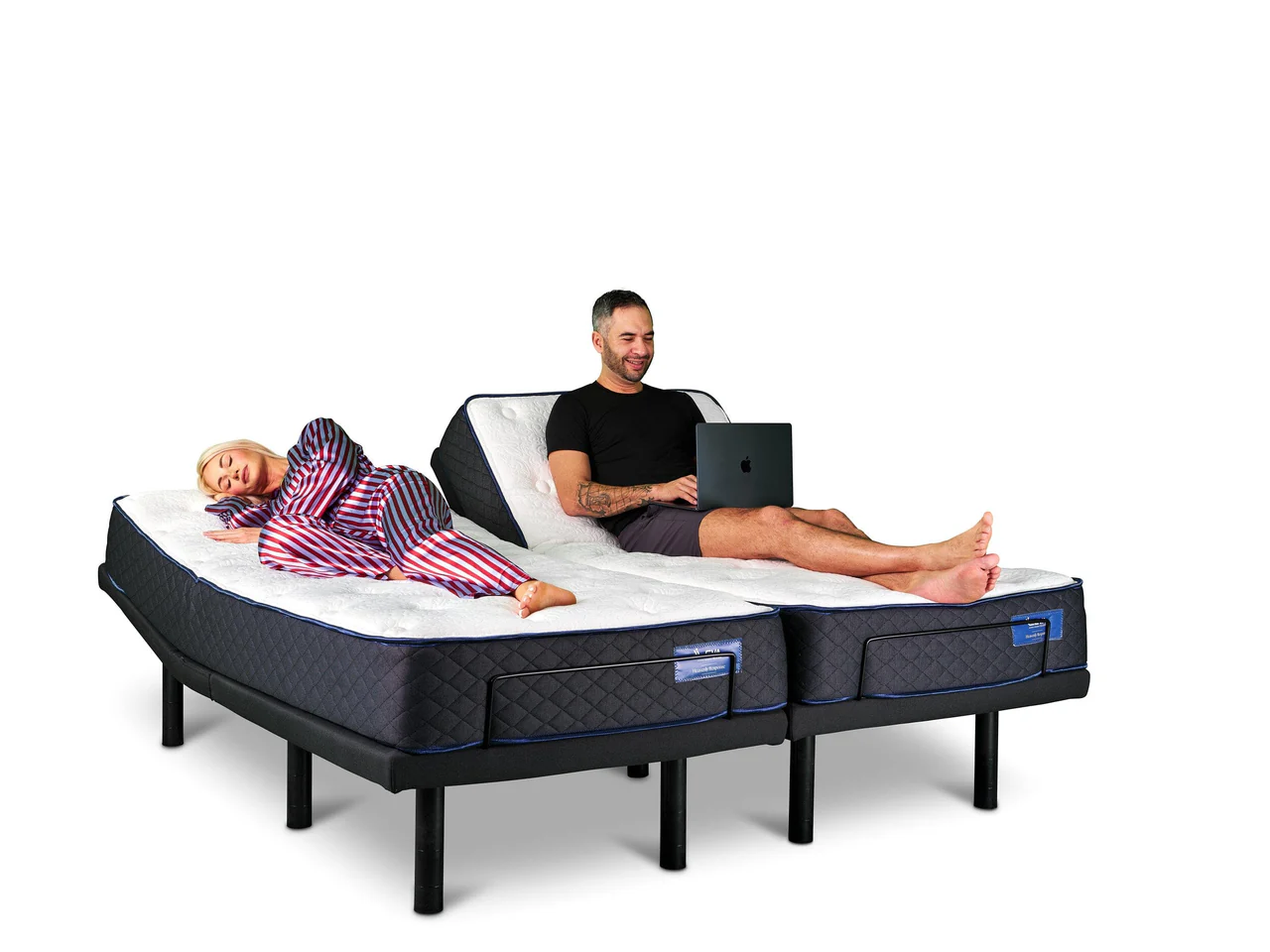
Raising the head section slightly on an adjustable base eases pressure on the bottom shoulder, and raising the foot section creates a cradle for the hips that keeps the top leg from sliding forward and twisting the lower spine. That mechanical change addresses the two main failure points of flat-bed side sleeping at the same time.
Zero-gravity positioning, created by lifting both the head and legs above heart level, encourages neutral posture, spinal decompression, and smoother blood flow that eases lower-back strain. For side sleepers, a modified zero-gravity angle spreads weight across more surface area, which lowers peak pressure at the shoulder and hip while allowing the sleeper to remain on their side.
To put these principles into practice, start with elevation ranges that match your primary pain location. The table below shows recommended head and foot angles that balance pressure relief with spinal alignment. Use these ranges as starting points, then fine-tune based on your body and mattress response.
| Pain Location | Recommended Head Elevation | Recommended Foot Elevation |
|---|---|---|
| Hip / Pelvis | 10–20° | 15–25° |
| Shoulder | 15–25° | 5–15° |
| Lower Back / Lumbar | 20–30° | 20–30° (zero-gravity) |
Quality adjustable bases should provide at least 60–70 degrees of head elevation and 35–45 degrees of foot elevation to support effective zero-gravity positioning. Confirm that the base you are considering offers these ranges before you buy.
Leva Sleep’s adjustable bases use quiet German-engineered motors that move into position smoothly without the grinding noise common in entry-level bases. Many models include a dedicated lumbar-control motor for precise lower-back support that works independently from head or foot elevation. Several also add a pillow-tilt motor that adjusts the upper head section to fine-tune cervical alignment, a feature usually reserved for specialist adjustable-bed retailers.
Mattress Firmness and Construction Guidelines for Side Sleepers
An adjustable base cannot fix a mattress that feels too firm at the shoulder or too soft under the lumbar spine. Side sleepers with back pain typically do best on a medium-firm mattress, usually rated 5–6 on a 10-point scale. This firmness allows the shoulder and hip to sink slightly into the comfort layer while the support core keeps the lumbar region aligned.
Zoned construction improves on a uniform feel by placing softer zones at the shoulder and hip and firmer zones at the waist and lumbar area. This zoning works with elevation: the base sets the spinal position, and the mattress contours to the body within that position. Hybrid mattresses that pair pocket coils with a foam or latex comfort layer often perform well on adjustable bases because the individually wrapped coils flex with the base without creating pressure ridges.
All-foam mattresses with high-density support cores also pair well with adjustable bases when the foam bends easily at the head and foot hinges. Traditional innerspring mattresses with interconnected coil systems resist articulation and can suffer damage over time, and many manufacturers void warranties when those models are used on adjustable bases.
Leva Sleep’s U.S.-made mattress lineup, including models from Airloom, Diamond Mattress, and Helix Sleep, is curated specifically for adjustable-base use. Each pairing is checked for flex compatibility, zoned support, and pressure relief at the shoulder and hip.
Couple Considerations: Split Bases and Independent Controls
The mattress and base guidelines above focus on a single sleeper with consistent needs. For couples, the situation changes. When two partners share a bed and one or both sleep on their side with pain, a single adjustable base forces a compromise because one person’s ideal elevation rarely matches the other’s. Split configurations solve this by dividing the base at the center and giving each partner independent control over head elevation, foot elevation, lumbar support, and massage intensity.
Split King setups place two Twin XL bases side by side within one shared frame, which is the most common format. Split Queen setups, which are less common and usually sold through specialists, use two narrower bases to create the same independence in a smaller footprint. This format works well in bedrooms where a King size does not fit.
When you compare split systems, check that the gap between the two bases stays small and that the mattresses sit flush across the top. App-based Bluetooth control lets each partner save custom positions, set vibrating alarms that do not wake the other side, and adjust positions without searching for a remote in the dark.
Leva Sleep is a Split Queen and Split King specialist, with 15–20 adjustable base models compared to the 3–5 options at many general mattress stores. Leva’s systems are priced below many comparable luxury competitors by removing retail middlemen and assembling locally.
Practical Buying Criteria: Noise, Durability, and Bedding Compatibility
Motor noise meaningfully affects real-world comfort. A base that hums or clicks during position changes can wake a light sleeper or disturb a partner who has already settled. When you compare bases, ask for decibel ratings or request a live demonstration in a showroom. Quiet German-engineered motors currently set the standard for low-noise operation in adjustable bases.
Durability starts with the motor warranty. Look for at least five years of coverage, which signals confidence in long-term performance. That warranty matters because a base used nightly for position changes completes thousands of articulation cycles each year, and motors rated for fewer than 10,000 cycles may show performance issues within three to four years. Frame construction also influences longevity. Steel frames usually outlast particleboard structures, which can warp under repeated articulation stress.
Standard fitted sheets are cut for flat mattresses and often pull free from the corners when the head or foot section rises. That movement disrupts sleep and shortens the life of the sheets. Deep-pocket sheets with reinforced elastic, designed for adjustable bases, stay in place through elevation changes. Duvet clips keep the comforter from bunching when split bases move to different angles.
Leva Sleep designs bedding accessories specifically for adjustable-base use, including fitted sheets with extra elastic, duvet clips, and remote pockets. Leva also offers optional white-glove delivery that includes in-room setup, leg-height adjustment, old-bed removal, and a full product walkthrough.
What Type of Bed Is Best for Side Sleepers with Back Pain?
An adjustable base paired with a medium-firm, zoned mattress works best for most side sleepers with back pain. The adjustable base addresses the mechanical problems of flat sleeping, such as shoulder compression, hip pressure, and lumbar rotation, through targeted head and foot elevation. The zoned mattress then provides differential contouring that a uniform surface cannot match. For couples with different needs, a split configuration adds independent control while keeping both partners in one shared bed.
Which Adjustable Bed Is Best for Back Pain?
The most effective adjustable bed for back pain combines the elevation ranges discussed earlier with a lumbar-control motor for targeted lower-back support. A zero-gravity preset that lifts both head and legs above heart level helps create decompression. Programmable memory positions add convenience because the sleeper can return to their preferred angle each night with a single button press.
Which Adjustable Bed Is Best for Side Sleepers?
Side sleepers benefit most from an adjustable base that offers independent head and foot elevation, a lumbar motor, and a pillow-tilt feature that fine-tunes cervical alignment. Quiet motor operation matters for side sleepers who wake easily during position changes. The base should pair with a medium-firm hybrid or zoned foam mattress that allows the shoulder and hip to contour while keeping the lumbar region supported. For couples, a split configuration with app control usually provides the most practical long-term setup.
What Firmness Is Best for Back and Side Sleepers?
Medium-firm, around 5–6 on a 10-point scale, is the most common target for side sleepers with back pain. Softer mattresses allow too much hip and shoulder sink, which pulls the spine out of alignment. Firmer mattresses create pressure points at the shoulder and hip that trigger frequent repositioning. Zoned construction, with softer zones at the shoulder and hip and firmer zones at the waist, improves on a uniform medium-firm feel by matching support to each body region.
Setup, Maintenance, and Long-Term Use
Setup can be a real concern for people with mobility limits or significant pain. Adjustable bases are heavy, and professional installation reduces the risk of injury during assembly. After installation, confirm that the base height allows the user to sit on the edge and stand up without strain. Adjustable legs help dial in a comfortable height.
Ongoing maintenance stays simple. Wipe the base frame with a dry cloth, check the power cable connection every few months, and make sure the mattress retainer bar remains secure. Deep-pocket sheets should be washed according to the manufacturer’s instructions because high-heat drying can shorten the life of reinforced elastic. Mattress protectors designed for adjustable bases include stretch panels at the flex points and help prevent moisture damage where the mattress bends.
Conclusion: Key Decision Factors and Next Steps
Side sleepers with back, hip, or shoulder pain can focus on five main criteria when they evaluate an adjustable sleep system. These include head and foot elevation range, lumbar-control capability, motor noise level, mattress zoning and flex compatibility, and split configuration options for couples. A system that checks all five boxes addresses the mechanical causes of side-sleeper pain instead of masking them with extra cushioning alone.
Leva Sleep integrates these elements into a specialist-curated system that includes quiet German-engineered motors, lumbar and pillow-tilt control, U.S.-made zoned mattress pairings, Split Queen and King configurations, purpose-built bedding, and optional white-glove delivery. With more than 25,000 customers and eight years focused on adjustable bases, Leva offers product depth and guidance that general mattress retailers rarely match.
Frequently Asked Questions
Can an adjustable base actually reduce hip and shoulder pain for side sleepers, or does the mattress do most of the work?
Both components matter, and each solves a different part of the problem. The adjustable base changes the geometry of the sleep surface. Raising the head reduces shoulder compression, and raising the foot cradles the hip and limits rotation in the lower spine. The mattress then contours to the body within that improved position. A zoned medium-firm mattress on a flat base reduces pressure compared with a firm uniform mattress, but it cannot correct the rotational strain that flat sleeping places on the lumbar spine. An adjustable base without a suitable mattress improves alignment but still allows pressure points to form at the shoulder and hip. The combination of targeted elevation and a flex-compatible, zoned mattress delivers results that neither component can achieve alone.
Is a Split Queen or Split King adjustable base worth the additional cost for couples?
For many couples, a split configuration becomes the most practical long-term choice. This is especially true when one or both partners have back, hip, or shoulder pain, or when snoring, temperature preferences, or firmness needs differ. A single adjustable base forces both partners into the same position, which rarely suits both people. Split bases allow each partner to set their own head elevation, foot elevation, lumbar support, and massage intensity. The price difference between a single and split base is real, but it often remains lower than the cost of a second mattress, a separate guest-room setup, or the health impact of years of poor sleep. Leva Sleep’s Split Queen option also brings independent control to rooms where a King footprint does not fit.
What should I look for in bedding when using an adjustable base?
Standard fitted sheets are sized for flat mattresses and tend to pull loose from the corners when the head or foot section rises. Deep-pocket fitted sheets with reinforced elastic on all four sides stay in place through significant elevation changes. Look for sheets with at least 18–21 inches of pocket depth and elastic that runs around the full perimeter. For couples using a split base, duvet clips keep the comforter from bunching or sliding when each side moves to a different angle. A mattress protector designed for adjustable bases, with stretch panels at the flex points, protects the mattress without restricting movement. Leva Sleep designs its bedding line specifically for adjustable-base use, including fitted sheets, duvet clips, and integrated remote pockets.
How do I know if my current mattress is compatible with an adjustable base?
Flexibility provides the main compatibility test. The mattress needs to bend at the head and foot hinge points without resistance or lasting deformation. Innerspring mattresses with interconnected coil systems, such as offset or Bonnell coils, do not flex cleanly and can be damaged by repeated articulation. Pocket-coil hybrids and all-foam mattresses with flexible support cores are usually compatible. Always check the mattress manufacturer’s warranty, because some brands void coverage if the mattress is used on an articulating base without explicit approval. When you buy a new system, choosing a mattress and base from the same specialist retailer ensures that compatibility has already been confirmed. Leva Sleep’s mattress lineup is curated for use with its adjustable bases, which removes guesswork.
What is zero-gravity positioning, and is it actually useful for side sleepers or only back sleepers?
Zero-gravity positioning raises both the head and legs above heart level and spreads body weight across the full mattress surface instead of concentrating it at the heaviest points. Engineers originally developed this position for back sleepers to decompress the lumbar spine, but side sleepers benefit as well. In a modified zero-gravity position, the hip cradle created by foot elevation reduces rotational pull on the lower spine. A modest head elevation eases shoulder compression. Side sleepers usually choose a shallower head angle than back sleepers, which relieves shoulder pressure without pushing the neck forward. Most quality adjustable bases include a programmable zero-gravity preset. Side sleepers can save a modified version of that preset as their personal position and return to it each night with one button.