
Written by: Matthew Timmins, Founder and Managing Director, Leva Sleep
Key Takeaways
- Traditional flat mattresses cannot handle different firmness needs, snoring, or conditions like back pain and reflux for many couples aged 55–70.
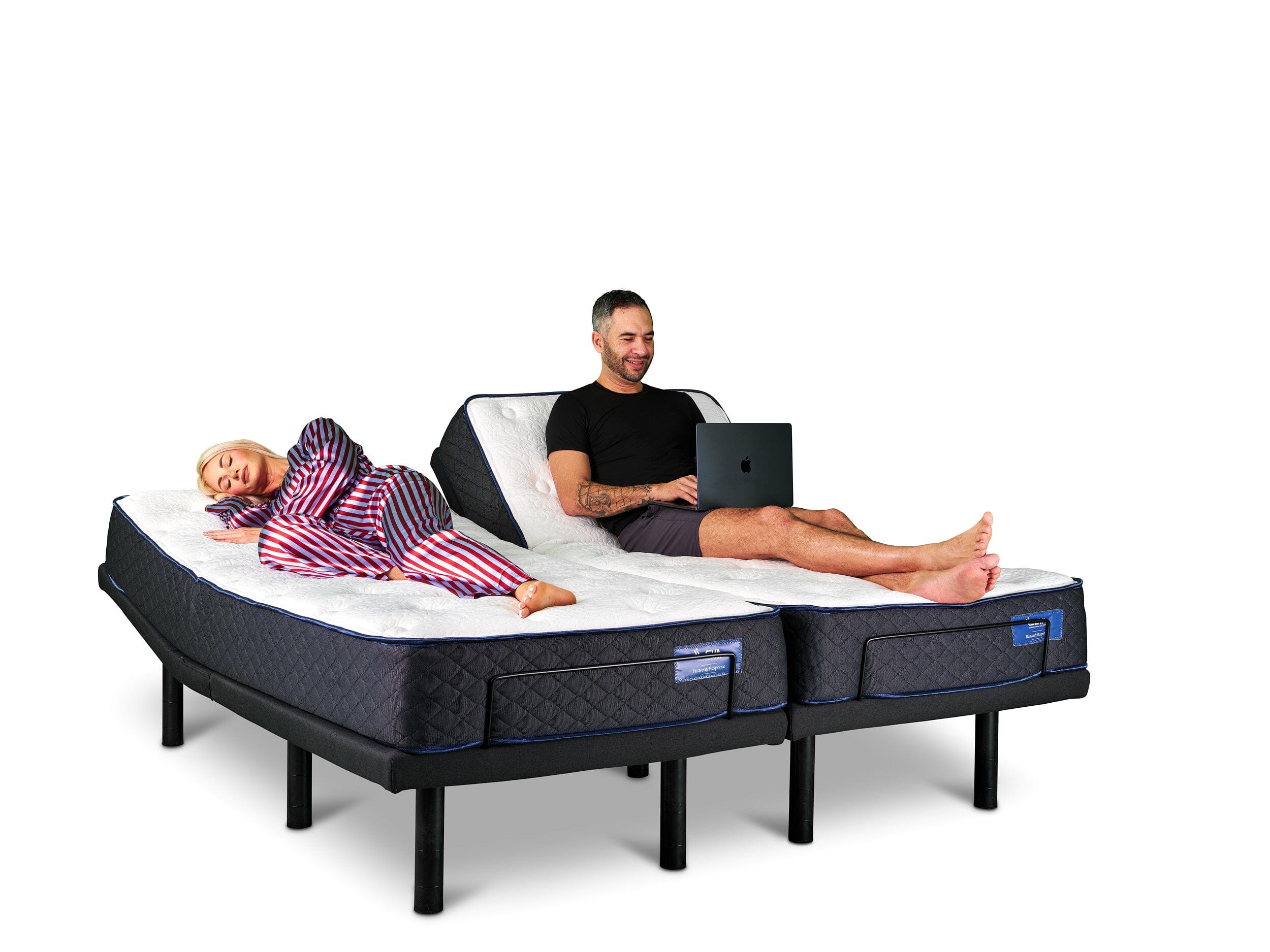
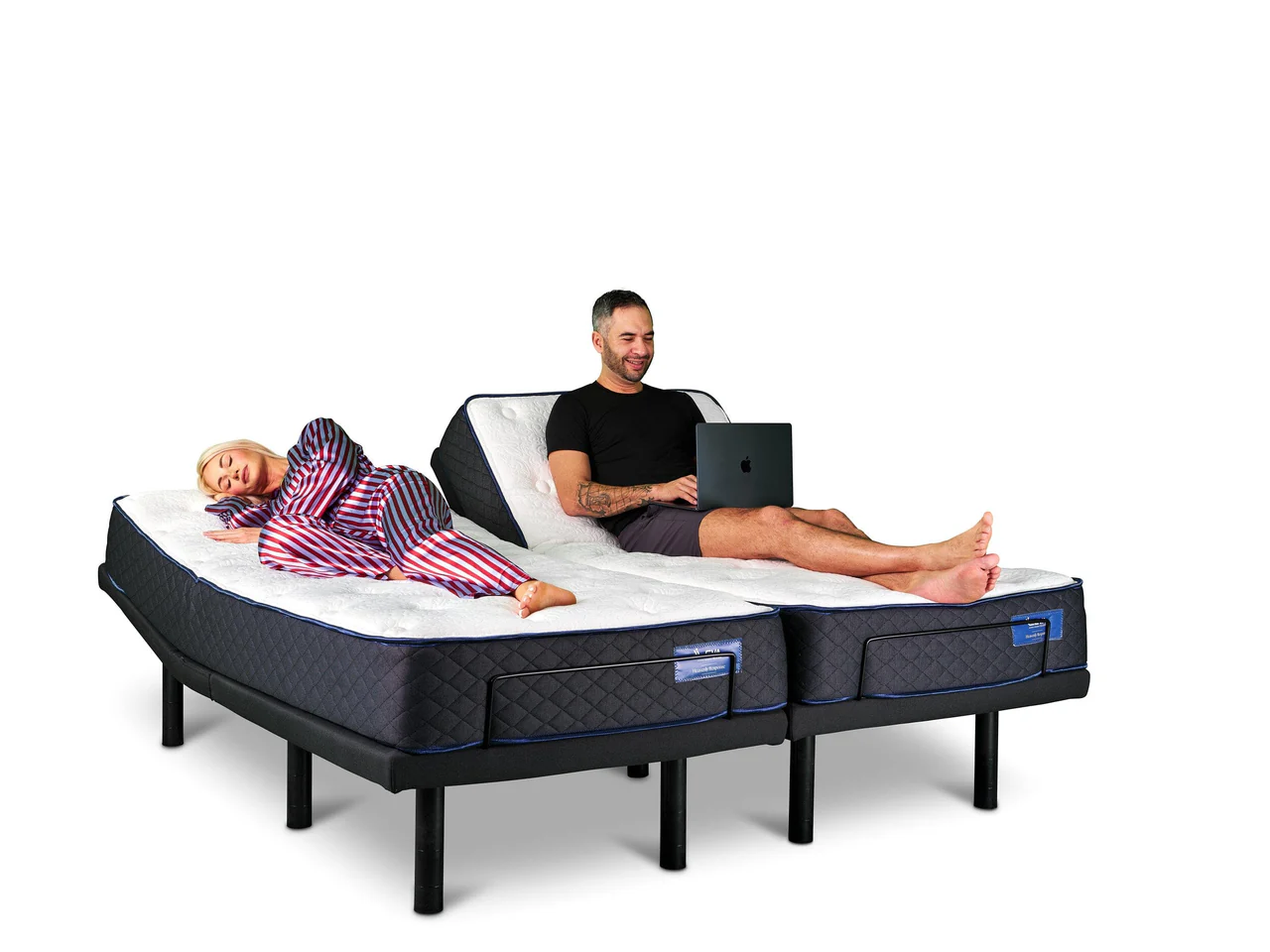
- Integrated split adjustable systems give each partner independent head and foot elevation, firmness selection, and strong motion isolation in one shared bed.
- Medical research links head elevation and zero-gravity positioning with a 67% reduction in acid reflux, up to 45% lower apnea-hypopnea index, and less back pain for seniors.
- Medicare does not cover consumer adjustable beds; only qualifying hospital beds prescribed for specific medical conditions may receive Part B coverage in 2026.
- Leva Sleep offers customized Split King and Split Queen adjustable systems with white-glove delivery, so you can visit Leva Sleep today and find a setup that matches your health and space needs.
Why Flat Mattresses Fail Couples with Different Sleep Needs
Thirty percent of people aged 55–64 say they rarely or never wake up feeling rested, the highest proportion of any age group. Age-related sleep issues drive much of this problem. Obstructive sleep apnea affects about 35.9% of older adults worldwide according to a 2023 meta-analysis of 39 studies, and 55% of people over 60 admit to snoring. At the same time, 35% of couples argue about mattress firmness, so a single shared surface often forces a compromise that satisfies neither partner.
A flat mattress cannot elevate the head to ease snoring, cannot raise the legs to support circulation, and cannot give each partner a different firmness level. Basic adjustable bases improve on flat beds by adding elevation, yet many move both sides together, use louder motors, and are sold as afterthoughts by general retailers. Integrated split systems, the third category, address seven criteria independently for each sleeper: comfort and support, adjustability and personalization, noise and motion isolation, health and medical compatibility, durability and maintenance, aesthetics and bedroom integration, and service and delivery.
Choosing an Adjustable Bed for Couples with Different Needs
Comparing flat mattresses, basic adjustable bases, and integrated split systems on comfort, adjustability, and motion isolation reveals clear differences. The following criteria help couples decide which category fits their situation.
Comfort and Support
A flat mattress offers one firmness level across the entire surface. A basic adjustable base adds head and foot elevation but usually relies on a single motor system, so both sides move together. An integrated split system pairs two independent adjustable bases with separately chosen mattresses. Each partner can select their own firmness, elevation angle, and lumbar support.
Only memory foam, latex, or pocketed-coil hybrid mattresses are compatible with adjustable bases, because they can flex repeatedly without damage. Traditional innerspring mattresses with rigid border wires can bend out of shape and suffer permanent damage when used on an articulating base.
Adjustability and Personalization
A Split King configuration uses two independent Twin XL platforms, each 38 × 80 inches, with separate motor systems. Each sleeper controls head incline, foot elevation, and presets on their own side. In the same spirit, Split Queen options place two separate mattresses within a standard queen frame. This layout gives couples in smaller bedrooms a way to keep independent control without moving to a king-size footprint. Neither configuration is possible on a flat mattress or a single-motor basic base.
Noise and Motion Isolation
Split King mattresses deliver 74–82% better motion isolation than single kings, because vibration cannot transfer between two separate Twin XL surfaces. Basic adjustable bases with a single motor system transfer movement across the entire bed. Flat mattresses offer no mechanical isolation at all. For couples where one partner moves frequently at night, the physical separation of a split configuration provides the strongest motion control.
How Adjustable Beds Support Common Senior Health Concerns
Medical research supports adjustable bed use for several conditions that frequently affect adults over 55.
Back Pain
Many people with chronic back pain report less pain and better sleep when they use an adjustable bed. The National Council on Aging notes that “pressure relief” is the primary goal for seniors with back pain. Adjustable beds support this goal by distributing weight more evenly through leg and head elevation. The zero-gravity position, with the head and knees slightly elevated, reduces pressure on the lumbar spine by spreading body weight more evenly. This positioning can decompress intervertebral discs and ease morning pain and stiffness.
Acid Reflux and GERD
A randomized controlled trial in the Journal of Gastroenterology and Hepatology found that head-of-bed elevation reduced esophageal acid exposure time by 67% and significantly reduced reflux symptoms in GERD patients. This reduction occurs because, as sleep medicine physician Dr. Dustin Cotliar explains, “By creating an angled position where the esophagus is positioned above the stomach, gravity assists in keeping stomach contents where they belong.” However, the angle matters. Research shows that 15 to 30 degrees of head elevation provides optimal reflux reduction, while less than 15 degrees produces minimal benefit.
Sleep Apnea and Snoring
A study in Sleep and Breathing found that 30-degree head elevation reduced the apnea-hypopnea index (AHI) by an average of 31% in patients with positional obstructive sleep apnea. Souza et al. (2017) in the Journal of Clinical Sleep Medicine reported that head-of-bed elevation of about 7.5 degrees reduced the AHI by up to 45% in similar patients. Anti-snore presets on advanced adjustable bases use this principle and automatically tilt the head section to help open the airway. Older adults with symptoms of OSA should consult a healthcare provider before purchasing, because an adjustable bed supports but does not replace medical treatment.
Circulation and Mobility
Leg elevation of 10–20 degrees on an adjustable base improves lower-leg circulation and reduces edema, which can help older adults with circulatory conditions. Adjustable beds also assist people with limited mobility by lifting them from lying to a seated position. This support reduces spinal strain when getting out of bed.
Medicare Coverage Rules for Adjustable and Hospital Beds in 2026
Medicare coverage for adjustable beds remains narrower than many seniors expect. The key distinction lies between consumer adjustable bases and Medicare-qualifying hospital beds.
What Medicare Covers
Medicare Part B may cover hospital beds as durable medical equipment when a doctor states they are medically necessary and prescribes them for home use. Beds needed only for comfort or convenience do not qualify. When a physician documents a qualifying medical condition, Medicare Part B treats the hospital bed as Durable Medical Equipment and applies standard cost-sharing rules.
What Medicare Does Not Cover
Consumer adjustable beds do not qualify for Medicare coverage. Stylish adjustable bases sold at mattress retailers for comfort or convenience remain non-covered items, even when they provide health benefits.
2026 Eligibility Criteria and Documentation Requirements
The 2026 Medicare Part B deductible is $283. After the deductible, Medicare pays 80% of the approved amount and the patient pays 20%. Qualifying conditions include:
- Severe circulatory problems or respiratory conditions that require head elevation to breathe safely
- Need to keep the head of the bed elevated more than 30 degrees most of the time because of congestive heart failure, chronic pulmonary disease, or aspiration risk
- Paraplegia or quadriplegia, and severe arthritis that requires frequent position changes
A face-to-face physician visit in 2024 or later, within six months before ordering, and a Written Order Prior to Delivery are required for certain hospital bed HCPCS codes. Missing this documentation is the leading cause of claim denials. Medicare Advantage plans may use different coverage rules and approved suppliers than Original Medicare, so beneficiaries need to confirm details with their plan. FSA or HSA funds may reimburse adjustable bed purchases with a physician’s Letter of Medical Necessity tied to a documented condition such as chronic back pain, GERD, or circulation issues, even when the bed comes from a standard retailer.
Transform your sleep with Leva Sleep by visiting the La Jolla showroom or shopping online today.
Split Queen vs Split King for Smaller Bedrooms
The choice between Split Queen and Split King depends on bedroom footprint, the need for independent control, and how the bed fits with existing furniture.
Footprint
A standard king measures 76 × 80 inches. A Split King adjustable bed uses two independent Twin XL mattresses, each 38 × 80 inches, placed side by side. Together they match the 76 × 80-inch footprint of a standard king. A Split Queen uses two 30 × 80-inch mattresses within a standard 60 × 80-inch queen frame, which saves meaningful space in bedrooms where a king configuration will not fit. Split Queen options appear less often than Split King and offer fewer mattress choices. Leva Sleep is one of the few U.S. specialists that builds Split Queen adjustable systems to customer specifications.
Independent Control
Both Split King and Split Queen configurations provide fully independent head and foot elevation for each partner. A Split King with two independent Twin XL bases allows one partner to use a 20–30 degree anti-snore incline while the other sleeps flat. Separate mattresses prevent movement from transferring between sides. The same principle applies to a Split Queen. Each side articulates on its own, so the partner who snores can sleep elevated while the other remains flat.
The Gap Question
Industry professionals describe the 2–4 inch gap in Split King setups as the most common complaint, with 60% of couples finding it disruptive to closeness. Couples can address this gap with foam bridge connectors, king-sized mattress toppers, and purpose-designed split sheets. Partners who value physical closeness should test these solutions in a showroom and decide whether the trade-off feels acceptable.
Decision Framework
- Choose Split King if your bedroom allows a 76-inch-wide footprint and both partners have distinct health or firmness needs.
- Choose Split Queen if the bedroom cannot accommodate a king footprint but you still need independent elevation.
- In either case, verify mattress compatibility with the guidelines discussed earlier, because traditional innerspring mattresses cannot flex safely on adjustable bases.
Explore Leva Sleep’s Split King and Split Queen configurations at the La Jolla showroom or online.
Durability, Style, and Delivery for Adjustable Systems
Durability and Maintenance
Flat mattresses contain no mechanical parts but lose support over time and cannot adjust as bodies change. Basic adjustable bases introduce motors and electronics that can fail, and models sold as add-ons by general retailers often rely on lower-grade components. Integrated split systems from specialists use higher-specification motors. Leva Sleep’s bases use whisper-quiet German motors and are engineered for repeated articulation. Queen-size adjustable bed bases typically weigh 120–250 pounds, with many models below 150 pounds. Once assembled, they are difficult to move, so professional setup supports both longevity and safety.
Aesthetics and Bedroom Integration
Hospital-style adjustable beds often look clinical, which clashes with bedrooms designed as relaxing living spaces. Consumer-grade integrated split systems from sleep specialists aim for a furniture-quality appearance. Many use upholstered frames and low-profile bases that work with standard bed skirts and headboards, so the room keeps a residential look.
Service and Delivery Experience
Many adjustable bases recommended for seniors include White Glove delivery, where a team assembles the bed. This service helps older adults who have mobility limitations. “Bed in a box” delivery leaves assembly of a 120–250 pound base to the customer, which can feel overwhelming. Leva Sleep’s in-house white-glove delivery includes bedroom placement, full assembly, leg-height adjustment, a product tutorial, and removal of the old bed.
Comparison Table: Traditional Flat vs Basic Adjustable vs Integrated Split Systems
| Criterion | Traditional Flat Mattress | Basic Adjustable Base | Integrated Split System |
|---|---|---|---|
| Comfort & Support | Single firmness for both partners, no elevation | One elevation angle for both sides, limited firmness choice | Independent firmness per side |
| Adjustability & Personalization | None | Single motor, both sides move together | Separate motor systems, independent head, foot, and lumbar control per side |
| Noise & Motion Isolation | No mechanical noise, no motion isolation | Motor noise varies, motion transfers across shared surface | 74–82% better motion isolation than single kings, whisper-quiet motors available |
| Health & Medical Compatibility | No positioning capability for reflux, apnea, or back pain | Basic elevation, limited anti-snore or zero-gravity presets | AHI reduced up to 45% with head elevation, zero-gravity decompresses lumbar spine |
| Durability & Maintenance | No mechanical components, degrades without adjustment capability | Entry-level motors, often sold as add-ons by general retailers | Specialist-grade motors designed for repeated articulation, purpose-built mattresses |
| Aesthetics & Bedroom Integration | Traditional flat mattresses work with standard bed frames and maintain a conventional bedroom appearance. Basic adjustable bases vary widely in aesthetics, and many models look clinical or institutional. Integrated split systems from specialists like Leva Sleep are designed as furniture-quality pieces with upholstered frames that blend into residential bedrooms. | ||
| Service & Delivery | Standard delivery, customer assembles | Often “bed in a box,” customer assembles 150–200 pound base | White-glove delivery with professional assembly, helpful for seniors with mobility limitations |
Decision Checklist for Elderly Couples
This checklist helps couples match their health needs, space, and budget to the right sleep system.
- Confirm whether you and your partner need different firmness levels. If yes, a split configuration becomes essential.
- Check whether either partner snores or has diagnosed or suspected sleep apnea. If yes, independent head elevation becomes a medical priority.
- Note any chronic back pain, acid reflux, or circulation issues. If present, zero-gravity and leg-elevation presets carry clear clinical relevance.
- Measure your bedroom to see if it accommodates a 76-inch-wide footprint. If not, evaluate Split Queen options.
- Consider whether professional delivery and setup matter given any mobility limitations. If they do, confirm white-glove service before you buy.
- Ask your physician whether your conditions might qualify for Medicare DME coverage. If you have not done this, schedule a visit before purchasing.
- Test the gap between split mattresses in a showroom. If you have not tried it, do so before committing to a split configuration.
Frequently Asked Questions
Do doctors recommend adjustable beds for seniors with back pain or sleep apnea?
Medical evidence supports adjustable bed use for specific conditions. For back pain, the zero-gravity position distributes body weight more evenly, decompresses intervertebral discs, and reduces lumbar pressure. These effects matter for seniors with spinal stenosis, herniated discs, or arthritis. For sleep apnea and snoring, head-of-bed elevation between 20 and 30 degrees has reduced the apnea-hypopnea index meaningfully in patients with positional obstructive sleep apnea in clinical studies. For acid reflux, head elevation of 15 to 30 degrees uses gravity to keep stomach acid away from the esophagus, a first-line lifestyle recommendation in gastroenterology guidelines. Seniors should consult a healthcare provider before purchasing, because adjustable beds complement but do not replace medical treatment for conditions such as OSA.
Will Medicare pay for an adjustable bed for a senior in 2026?
Medicare Part B covers semi-electric hospital beds classified as Durable Medical Equipment when a physician documents medical necessity under LCD L33820. The 2026 Part B deductible is $283. After that, Medicare pays 80% and the beneficiary pays 20%. Qualifying conditions include congestive heart failure, COPD, severe GERD that requires head elevation above 30 degrees, post-stroke mobility impairment, and ALS. Consumer adjustable bases, including premium models with app control, massage, and anti-snore presets, do not qualify for Medicare coverage because they lack side rails, a medical-grade frame, and DME classification. FSA and HSA funds may cover a consumer adjustable base when a physician provides a Letter of Medical Necessity. Medicare Advantage plans vary, so beneficiaries should confirm details with their specific plan.
What is the difference between a Split King and a Split Queen for seniors?
As detailed earlier, a Split King uses two Twin XL mattresses, each 38 × 80 inches, for a 76 × 80-inch total footprint. A Split Queen uses two 30 × 80-inch mattresses within a 60 × 80-inch frame. Both layouts provide independent head and foot elevation, separate firmness choices, and strong motion isolation. The main difference lies in bedroom space. Split Queen fits where a king cannot, while Split King offers more surface area and more mattress options. Couples should test both configurations in a showroom and decide which footprint and center gap feel more comfortable.
Can an adjustable bed reduce snoring without a CPAP machine?
Head-of-bed elevation ranks among the most studied non-invasive approaches for positional snoring and mild obstructive sleep apnea. Elevating the head 20 to 30 degrees keeps the soft palate and tongue from falling backward during sleep, which reduces airway narrowing. Clinical research has demonstrated meaningful reductions in the apnea-hypopnea index in patients with positional OSA using head elevation, as discussed earlier. For mild cases, head elevation on an adjustable base can supplement prescribed treatments. It does not replace CPAP in moderate-to-severe OSA. A split adjustable configuration lets the snoring partner sleep elevated while the non-snoring partner remains flat, so neither person must compromise their preferred position. Anyone with suspected sleep apnea should obtain a sleep study before relying on positional therapy alone.
Conclusion: Matching Your Health and Relationship Priorities
For couples aged 55–70 who face different firmness needs, snoring, back pain, acid reflux, or mobility limitations, evidence points away from flat mattresses and toward integrated split adjustable systems. Peer-reviewed research in gastroenterology, sleep medicine, and orthopedics supports head elevation, zero-gravity positioning, and independent control. Relationship dynamics also benefit. Sleeping apart does not represent the only alternative to “sleep divorce.” A split adjustable system lets both partners share one bed while each sleeps in the position their body requires.
Leva Sleep has spent more than eight years and served over 25,000 customers in this specific category. The company offers 15 to 20 adjustable models, compared with the 3 to 5 models typical at general retailers. Split Queen and Split King configurations are built to customer specifications and use whisper-quiet German motors, purpose-designed bedding, and in-house white-glove delivery. Mattresses are made in America, prices run 30 to 50% below comparable luxury competitors, and the La Jolla showroom allows couples to test split configurations, feel the center gap, and find the elevation angles that work for their conditions before committing.
Transform your sleep with Leva Sleep by visiting the La Jolla showroom or shopping online today.