Written by: Matthew Timmins, Founder and Managing Director, Leva Sleep
Key Takeaways
- Traditional flat beds offer no elevation, so snoring relief depends on shifting pillows that provide inconsistent airway support.
- Basic single-sided adjustable bases allow head elevation but move both partners together, often trading one sleep disruption for another.
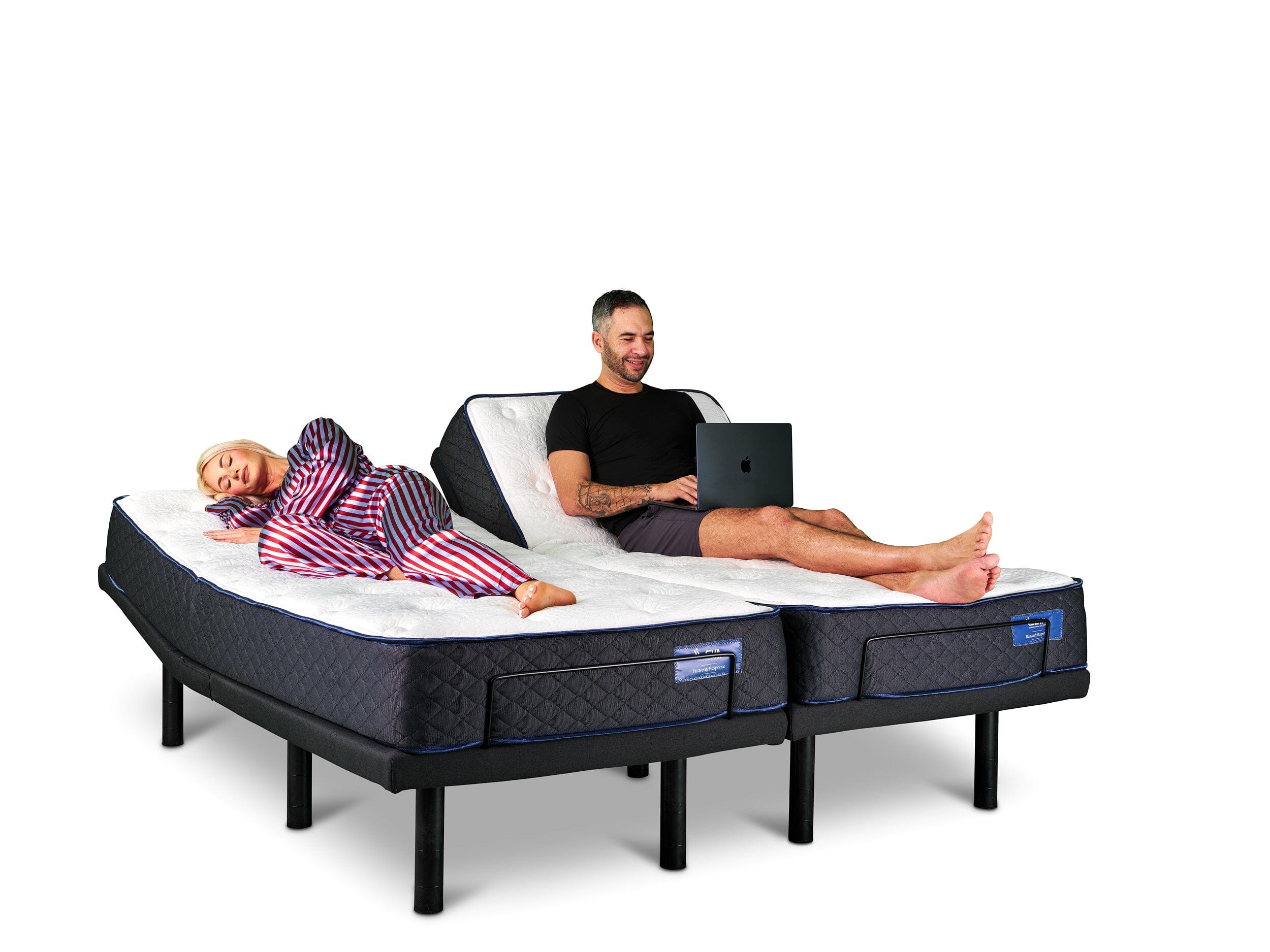
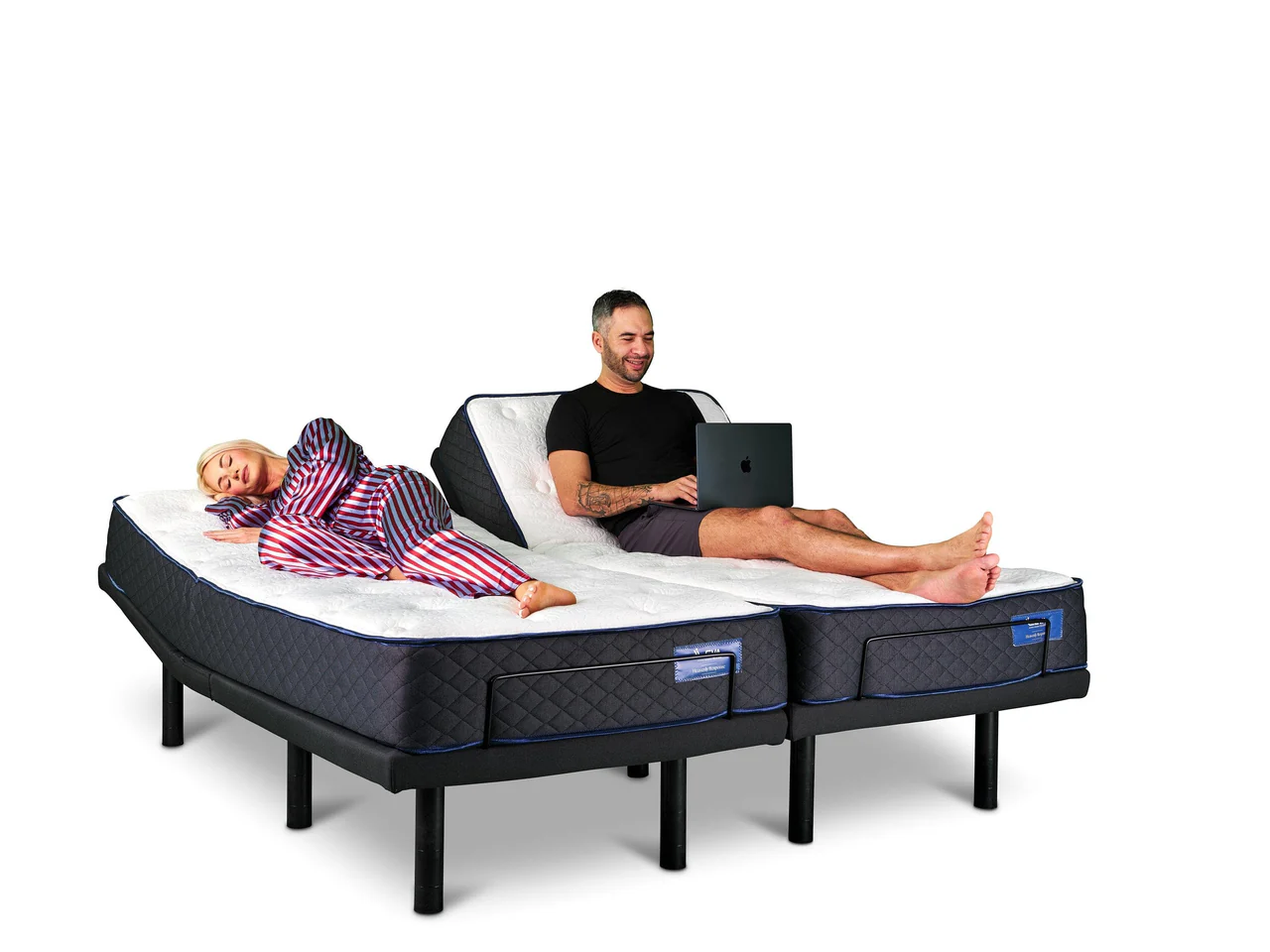
- Integrated split adjustable systems deliver independent per-side control, automatic snore detection, and zero-gravity presets that keep airways open without disturbing a partner.
- Premium brushless DC motors operating below 40 decibels enable quiet nighttime micro-adjustments, while white-glove delivery and long-term durability improve overall value.
- Leva Sleep’s split adjustable bases combine these advanced anti-snore features with white-glove service; shop online or visit the La Jolla showroom today to experience the difference.
Seven Core Comparison Criteria for Anti-Snore Bases
Every option in this guide is evaluated against the same seven criteria. Comfort and airway support covers head elevation angles, zero-gravity positioning, and lumbar reinforcement. Partner compatibility and independence addresses whether each side of the bed can move without disturbing the other. Technology and real-world response examines automatic snore detection, preset modes, motor noise, and app integration. Setup and daily use covers delivery, installation, and ongoing control. Long-term value considers motor durability and adaptability to changing health needs. Aesthetics addresses bedroom integration, including how the base looks with existing furniture and hides mechanical components. Service and delivery covers the end-to-end purchase experience. Readers should weight these criteria according to their own priorities before reaching a final decision.
Three Bed Categories Couples Should Compare
Three categories are evaluated here. Traditional flat beds include standard innerspring, foam, and hybrid mattresses on fixed frames with no elevation capability. Basic single-sided adjustable bases are motorized frames sold as a single unit, typically with head and foot elevation but shared controls and limited smart features. Integrated split adjustable systems are dual-zone bases, available in Split Queen and Split King configurations, where each side operates independently with dedicated motors, app control, and advanced features such as automatic snore detection and lumbar support. See these categories side by side at Leva Sleep’s La Jolla showroom or explore detailed specs online.
Comfort and Airway Support for Snoring Relief
Head elevation supports snoring relief by using gravity to keep the airway more open. Traditional flat beds cannot achieve any elevation, so airway management relies on pillows, which shift during the night and provide no consistent angle. Basic single-sided adjustable bases can reach elevation targets but apply the same angle to both partners simultaneously.
Integrated split systems allow each side to be set independently, which becomes especially useful with advanced positioning modes. The zero-gravity position, with head and feet elevated and knees slightly above the heart, places the body in a neutral cradle that reduces spinal pressure while keeping the airway as open as possible, making it effective for snoring relief beyond its back-pain benefits. Lumbar support motors, available on higher-end split bases, maintain lower-back curvature when the head is raised. This support prevents the spine from rounding forward as elevation increases. Traditional flat beds and most basic single-sided bases lack dedicated lumbar adjustment entirely.
The following table summarizes how each category handles the core comfort and airway support features that matter for snoring relief:
| Criterion | Traditional Flat Bed | Basic Single-Sided Base | Integrated Split System |
|---|---|---|---|
| Head elevation for snoring | None | Yes, shared angle | Yes, independent per side |
| Zero-gravity preset | No | Some models | Yes, per side |
| Dedicated lumbar support | No | Rare | Yes, on premium models |
Test zero-gravity and lumbar support in person at Leva Sleep or compare configurations online.
Partner Compatibility and Independence in Shared Beds
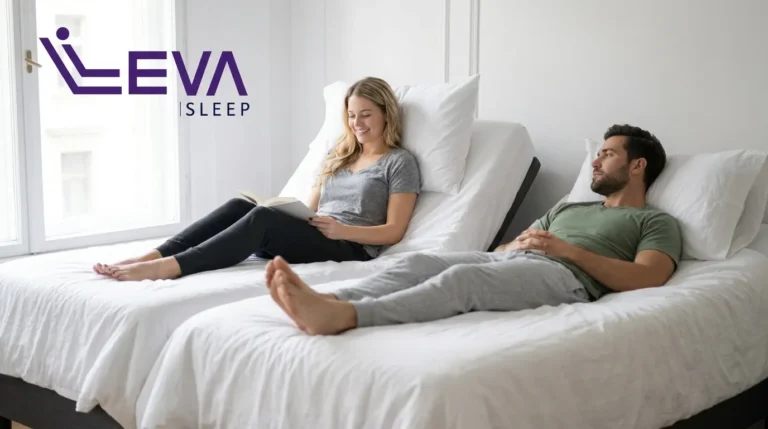
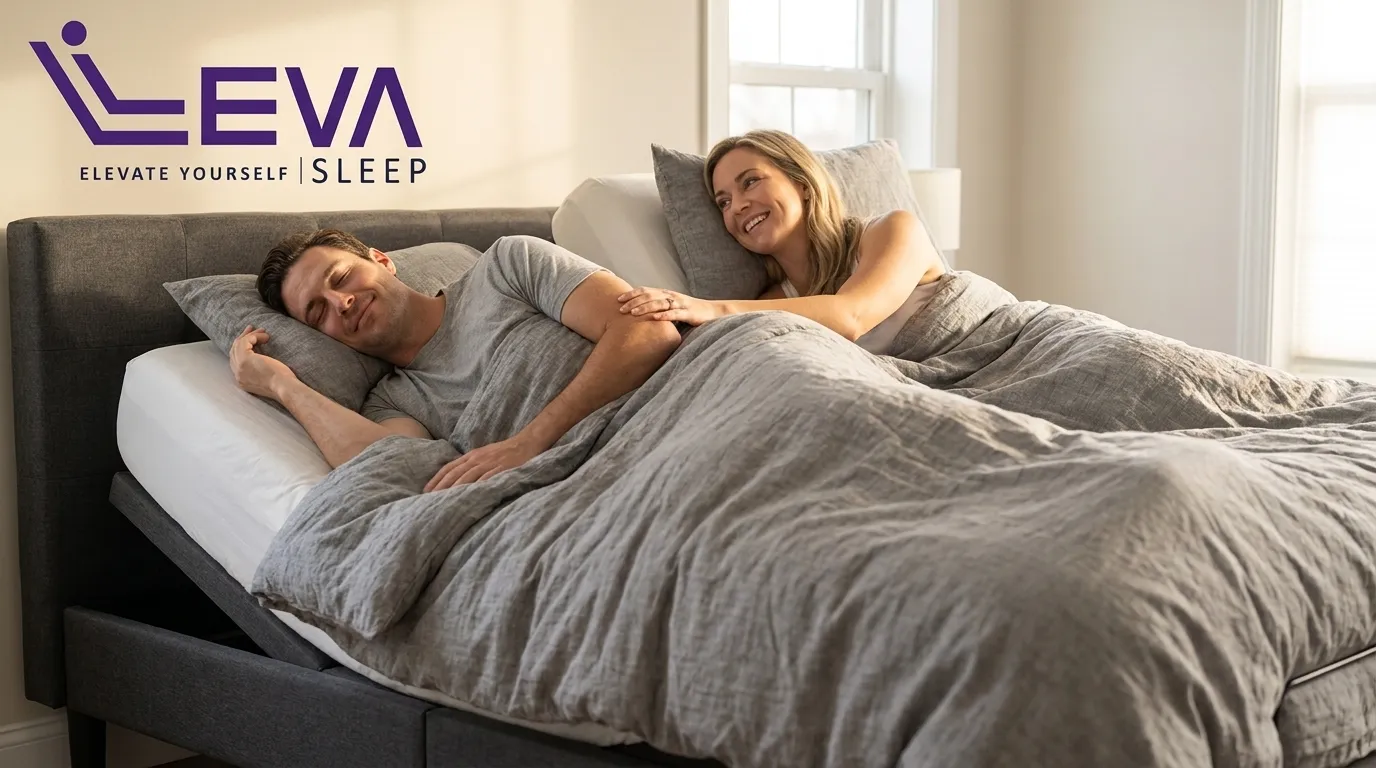
The “sleep divorce” pattern, where one partner relocates to another room to escape snoring or movement, is a documented relationship stressor. The root mechanical cause is a shared sleep surface that cannot respond to two people’s needs simultaneously. Traditional flat beds offer no solution. Basic single-sided adjustable bases improve on flat beds but remain a single unit. When one partner adjusts elevation, the other side moves identically, creating its own disruption.
Integrated split systems address this directly. Each half of the base has its own motor assembly, so one partner can elevate to an anti-snore angle while the other remains flat. In non-split configurations, one partner’s position change affects both sleepers and can disrupt sleep continuity. For couples with differing firmness preferences, temperature needs, or medical requirements, independent-side control provides a clear mechanical path to genuine co-sleeping compatibility. Leva Sleep’s Split Queen configuration extends this independence to smaller room footprints where a Split King is impractical. Beyond the mechanical split, the technology layer determines whether that independence feels seamless or becomes another source of disruption.
Technology and Real-World Response at Night
Automatic snore detection systems use vibration or sound sensors embedded in the base or a paired app to identify snoring patterns and trigger a micro-adjustment, typically a gentle head elevation of 10–30 degrees, without waking the sleeper. A dedicated anti-snore preset tilts the head just enough to open the airway without making the sleeper feel as if they are sitting up. Traditional flat beds have no detection or response capability. Basic single-sided bases may include a manual anti-snore preset button but generally lack automatic sensor-driven response.
Motor noise during nighttime adjustments is a critical variable because automatic snore detection only helps if the movement itself does not wake anyone. Premium adjustable bases with brushless DC motors operate at 30–40 decibels, equivalent to a whisper, making them suitable for nighttime micro-adjustments without waking a sleeping partner. Mid-range bases often produce 40–50 decibels, comparable to a refrigerator hum, while budget models with AC motors reach 50–60 decibels or higher. The 2012 Journal of Physiological Anthropology paper examined effects of thermal environment, not sound, on sleep and circadian rhythm. Brushless DC motors maintain consistent quiet operation longer than brushed motors, which can increase in noise over time as carbon brushes wear. This consistency matters for couples who expect nightly automatic adjustments for years.
The motor is only half the equation, because the control interface determines whether those quiet adjustments happen at the right time. App-based control allows couples to save custom positions, schedule adjustments, and review sleep-tracking data. One-touch presets such as zero-gravity, anti-snore, and flat reduce the friction of nighttime adjustments compared to manual remote cycling. Evaluate whether a base’s app supports per-side control, firmware updates, and integration with wearables before purchasing.
Setup, Service, and Daily Use
Traditional flat beds require minimal setup but offer no ongoing adjustability. Basic single-sided adjustable bases typically arrive via freight or standard delivery and require self-assembly. Adjustable bases are electro-mechanical devices with motors, hinges, and cables that operate nightly for years, creating potential noise and reliability concerns during position changes. These concerns are best addressed at setup by trained technicians rather than discovered months later. Leva Sleep’s white-glove delivery service includes in-room setup, leg-height adjustment, old-bed removal, and a product tutorial, which reduces the risk of installation errors that degrade long-term performance.
Long-Term Value and Durability
Durability in adjustable bases depends mainly on motor type and frame construction. Brushless DC motors last longer than brushed motors and produce less vibration, though they typically cost more than comparable brushed-motor models. For couples who plan to use automatic nightly micro-adjustments for years, the premium is justified by consistent performance. The brushless motors discussed earlier also support quieter operation over time, which protects sleep quality as the base ages.
Split systems adapt well to changing health needs. They support post-surgery recovery, acid reflux management, or evolving firmness preferences without requiring a full bed replacement. Traditional flat beds offer no comparable adaptability.
Design and Aesthetics in the Bedroom
Aesthetics influence whether couples feel comfortable placing an adjustable base in a primary bedroom. Traditional flat beds usually hide frames behind headboards, footboards, or platform designs, so mechanical components are not visible. Basic single-sided adjustable bases can look more utilitarian, especially when metal legs and exposed frames sit higher than surrounding furniture.
Integrated split systems from premium brands often include upholstered side rails, recessed legs, and wall-hugger designs that keep nightstands within reach. These details help the base blend with existing decor instead of looking like medical equipment. Leva Sleep’s split bases are designed to pair with modern bedroom styles while still providing full mechanical functionality.
Couples Use-Cases
- One partner snores: Automatic snore detection on a split base adjusts only the snoring side, leaving the other partner undisturbed.
- Differing firmness needs: Split bases paired with independent mattress halves allow each partner to select their preferred feel without compromise.
- Mild sleep-apnea positioning: Consistent head elevation at 10–30 degrees, maintained automatically, supports airway patency throughout the night.
- Post-surgery recovery: Adjustable elevation and lumbar support accommodate medical positioning requirements while maintaining bedroom aesthetics.
Decision-Framework Checklist for Couples
The checklist below highlights five decision-critical priorities drawn from the seven-criterion framework. Use it as a quick filter, then revisit the full criteria for final selection.
| Priority | Traditional Flat Bed | Basic Single-Sided Base | Integrated Split System |
|---|---|---|---|
| Automatic snore detection | No | Rare | Yes |
| Independent partner control | No | No | Yes |
| Whisper-quiet motor (<40 dB) | N/A | Some models | Yes (premium models) |
| Zero-gravity preset | No | Some models | Yes, per side |
| White-glove delivery | Varies | Rarely included | Yes (Leva Sleep) |
Frequently Asked Questions
What elevation angle is most effective for reducing snoring in an adjustable bed?
Head elevation can help reduce snoring by using gravity to prevent soft throat tissues from collapsing into the airway. Most adjustable bases with an anti-snore preset target a modest angle so the sleeper is not aware of the position change during the night.
Does automatic snore detection on an adjustable base wake up the snoring partner?
Well-engineered automatic snore detection systems are designed to make micro-adjustments gradually enough that the snoring partner remains asleep. The effectiveness depends on motor noise levels and the speed of the adjustment. Bases with brushless DC motors operating below 40 decibels are well suited for this purpose, because louder motors can cause the very disruption the feature is meant to prevent.
What is the difference between a Split Queen and a Split King adjustable base?
A Split King consists of two Twin XL mattresses side by side on two independent bases, totaling 76 inches wide. A Split Queen consists of two narrower halves totaling 60 inches wide, making it suitable for smaller bedrooms where a Split King would not fit. Both configurations allow each partner to control elevation, massage, and other settings independently. Leva Sleep offers a Split Queen built to customer specifications.
How long do the motors in a premium adjustable base typically last?
Brushless DC motors, used in premium adjustable bases, maintain consistent performance longer than brushed DC motors, which can become noisier over time as internal carbon brushes wear down. For couples using automatic nightly adjustments, brushless motors represent a better long-term investment despite a higher upfront cost. Regular maintenance, such as tightening bolts and adding felt pads to reduce structural creaking, also extends the functional lifespan of any adjustable base.
Can an adjustable base replace a CPAP machine for sleep apnea?
An adjustable base is not a medical device and is not a substitute for a CPAP machine prescribed for diagnosed obstructive sleep apnea. However, consistent head elevation can reduce the frequency and severity of airway obstruction for mild cases and can complement prescribed therapy by improving baseline airway positioning. Anyone with a diagnosed sleep disorder should consult their physician before modifying their treatment approach.
Conclusion: Choosing the Right Anti-Snore Base for Two
Traditional flat beds cannot address snoring mechanically. Basic single-sided adjustable bases introduce elevation but apply it to both partners simultaneously, which often trades one disruption for another. Integrated split adjustable systems, particularly those with automatic snore detection, whisper-quiet brushless motors, independent lumbar support, and per-side app control, are the only category that addresses snoring, partner independence, and long-term spinal health in a single platform.
Couples evaluating these options should prioritize motor noise specifications, the availability of automatic detection versus manual presets, and whether the base is available in a split configuration that fits their room. Leva Sleep’s 2026 split systems, backed by five years of adjustable-base specialization as the company enters its 5th year of business, and supported by white-glove delivery, represent a performance-and-value combination that general mattress retailers are not positioned to match. Visit the La Jolla showroom to experience these features in person or start building your split system online today.