Written by: Matthew Timmins, Founder and Managing Director, Leva Sleep
Key Takeaways for Couples with Back Pain
- Back pain and partner sleep conflicts often push couples into sharing a single flat mattress that cannot meet two different spinal and firmness needs at the same time.
- Active lumbar support, split adjustability, zero-gravity positioning, anti-snore automation, and zero motion transfer are five core smart-bed features that target back pain for couples.
- Adjustable beds with independent head and foot elevation let each partner reach a neutral spinal position without waking or disturbing the other sleeper.
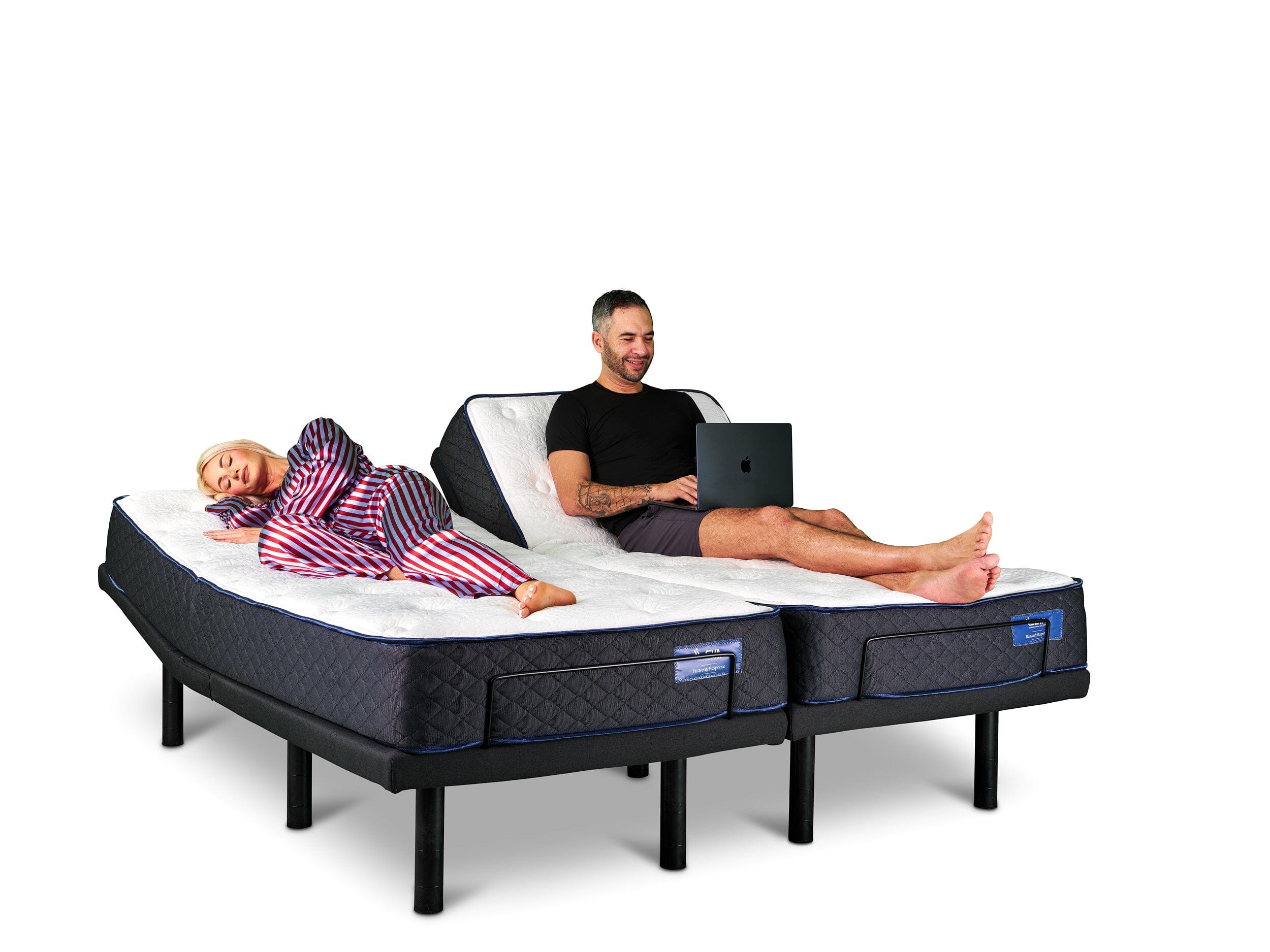
- Split configurations such as Split King and Split Queen provide stronger motion isolation and more personalized comfort than traditional single mattresses.
- For hands-on guidance choosing a setup, schedule a visit to Leva Sleep’s La Jolla showroom or start exploring systems online.
The Problem: Flat Mattresses and Conflicting Back-Pain Needs
A flat mattress applies the same surface pressure across the body, regardless of weight distribution, spinal curvature, or medical condition. In a couple where one partner has lumbar disc issues and the other sleeps hot and light, a single flat surface cannot resolve both problems at once. One partner accepts inadequate support, the other accepts disrupted sleep from motion transfer, and both accumulate sleep debt over time.
Studies have shown that light sleepers wake more often on mattresses with poor motion isolation. Halstead.ca does not provide an analysis claiming that sixty-five percent of couples disagree on mattress comfort, yet many couples still share a mattress that is wrong for at least one partner.
Basic adjustable bases sold as add-ons at general mattress retailers address elevation but rarely offer independent split control, whisper-quiet motors, active lumbar adjustment, or anti-snore automation. This feature gap matters because the mechanical benefits of elevation are only fully realized when each partner can configure their own side without disturbing the other, a capability that requires the advanced features most basic bases lack.
Key Mattress Features That Help Relieve Back Pain
The following table highlights five smart-bed features that directly address common back-pain mechanisms for couples, along with the research or ergonomic reasoning behind each one.
| Feature | Back-Pain Mechanism Addressed | Clinical or Ergonomic Basis |
|---|---|---|
| Active Lumbar Support | Fills the lumbar curve gap between mattress and lower back | Dr. Raj Dasgupta: elevating head or legs keeps the spine aligned and alleviates muscle strain |
| Split Adjustability (Head + Foot) | Allows each partner to achieve spinal neutral independently | Raising legs slackens hamstrings and hip flexors, rotating the pelvis to neutral and offloading lumbar vertebrae |
| Zero-Gravity Elevation | Decompresses lumbar spine and reduces sciatic nerve pressure | A 2014 IOSR Journal study concluded zero-gravity eases spinal pressure and reduces lower back muscle tension |
| Anti-Snore Automation | Opens airway via head elevation, reducing apnea events | Research has shown that head elevation can reduce the apnea-hypopnea index |
| Zero Motion Transfer | Prevents partner movement from fragmenting sleep architecture | Split configurations deliver 74–82% better motion isolation than single kings per Sleep Foundation lab tests |
Adjustable beds maintain the spine’s natural S-curve by adapting to the cervical, thoracic, and lumbar regions rather than forcing a straight line on a flat surface. For lower back pain, raising the foot section 15–20 degrees and the head section 10–15 degrees creates a slight pocket for the hips that reduces tension on the psoas muscles and lumbar discs. For upper back and neck pain, elevating the head section by 30 degrees while keeping feet flat or slightly raised reduces pull on the trapezius muscles.
How Adjustable Beds Support Back Pain Relief
The clinical and ergonomic evidence for elevation is consistent. The zero-gravity position, originally developed by NASA for astronaut neutral body posture, alleviates pressure on the spine, evenly distributes body weight, and improves breathing and blood flow when the upper body is inclined approximately 30 degrees with a 128-degree torso-to-thigh angle. A 2022 in-home intervention study analyzing over 1,000 nights of data found that sleeping on an incline was associated with a 7% drop in snoring duration.
Dr. Joe Tedesco, DPT, OCS, notes that if a mattress does not adequately support the spine, raising the feet or head on an adjustable base can help improve comfort and alignment. Dr. Raj Dasgupta explains that elevating the head or legs can ease symptoms of arthritis or sciatica by improving circulation and reducing swelling.
For sciatica, the zero-gravity position opens space in the lower vertebral foramina, reducing pressure on the sciatic nerve. Adjustable beds also facilitate disc imbibition, or rehydration of spinal discs, by enabling micro-adjustments that keep the spine from being overextended or overflexed under tension. One practical calibration method uses breath: after positioning, a deep breath and exhale should produce a sensation of the body settling into the mattress with no muscular effort required to hold alignment. Back ligaments typically require 7 to 14 days to adjust to a new sleeping posture, so gradual changes work best.
One important caveat concerns stomach sleepers. Dr. Tedesco cautions that strict stomach sleepers may experience increased spinal extension and misalignment from elevation, and zero-gravity positioning is not recommended for stomach sleepers as it may hyperextend the back. Individuals with specific diagnoses should consult a physician before selecting a positioning protocol.
Best Bed Setups for Couples with Different Firmness Needs
Once you understand how elevation and positioning support back pain relief, the next step is choosing a configuration that works for two different sleepers. Split king beds consist of two Twin XL mattresses (38 × 80 inches each) that allow each sleeper to customize comfort, firmness, and adjustable base settings independently. Split king configurations deliver 74–82% better motion isolation than single kings because partners sleep on physically separate mattresses, making vibration transfer impossible across the gap.
For couples in smaller bedrooms or those who find a standard king footprint too large, Leva Sleep offers a Split Queen configuration, a rarer format that most general retailers do not stock. Split Queen delivers the same independent control and motion isolation benefits in a more space-conscious form factor, built to customer specifications.
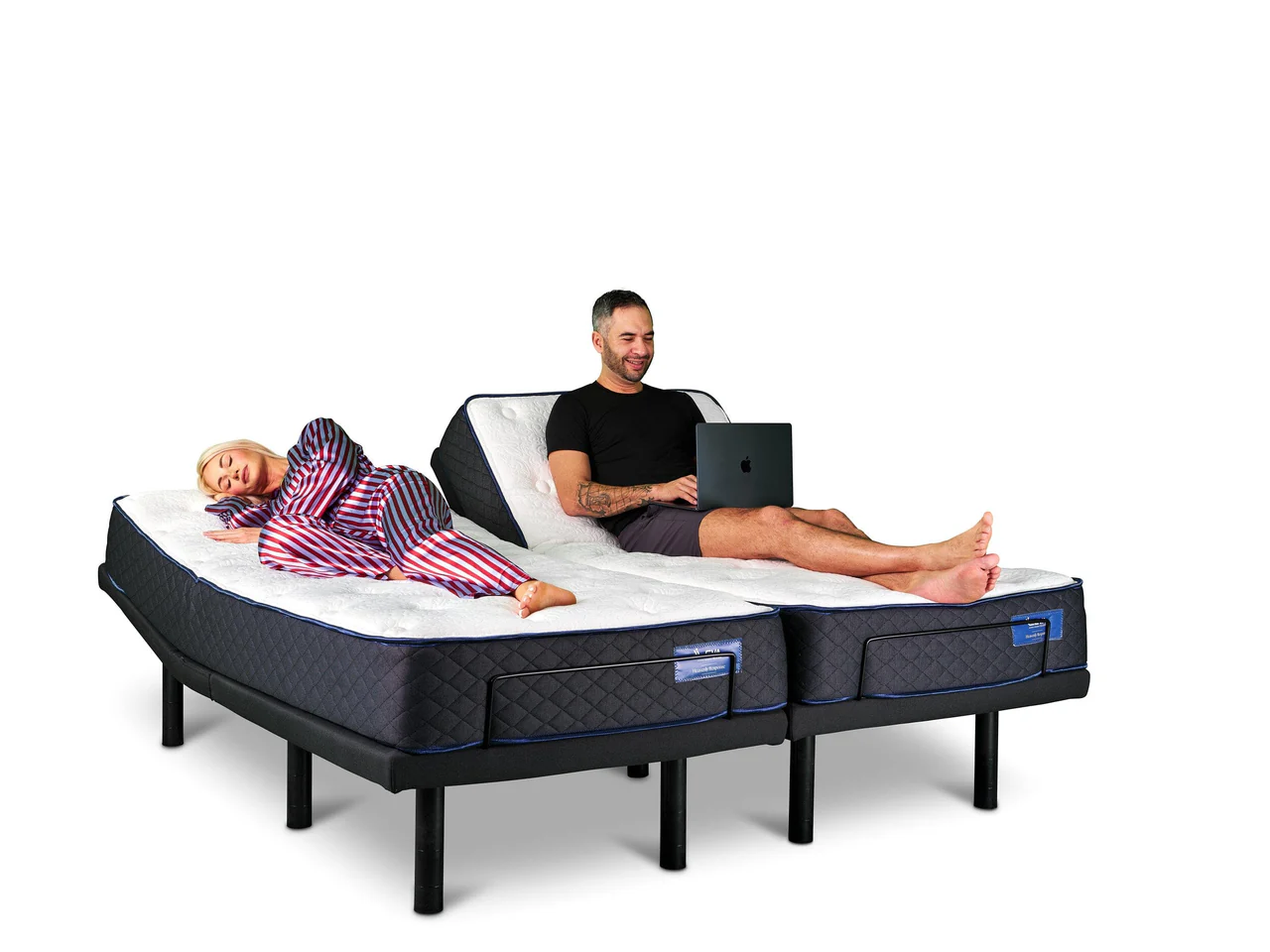
The primary concern couples raise about split configurations is the gap between mattresses. The 2–4 inch gap between split king mattresses is the most common complaint, with 60% of couples finding it intolerable for maintaining physical closeness. Leva’s systems address this through precision-fit bedding accessories, including fitted sheets with deep pockets and extra elastic and duvet clips that maintain coverage across both sides, which minimizes the functional impact of the gap during sleep.
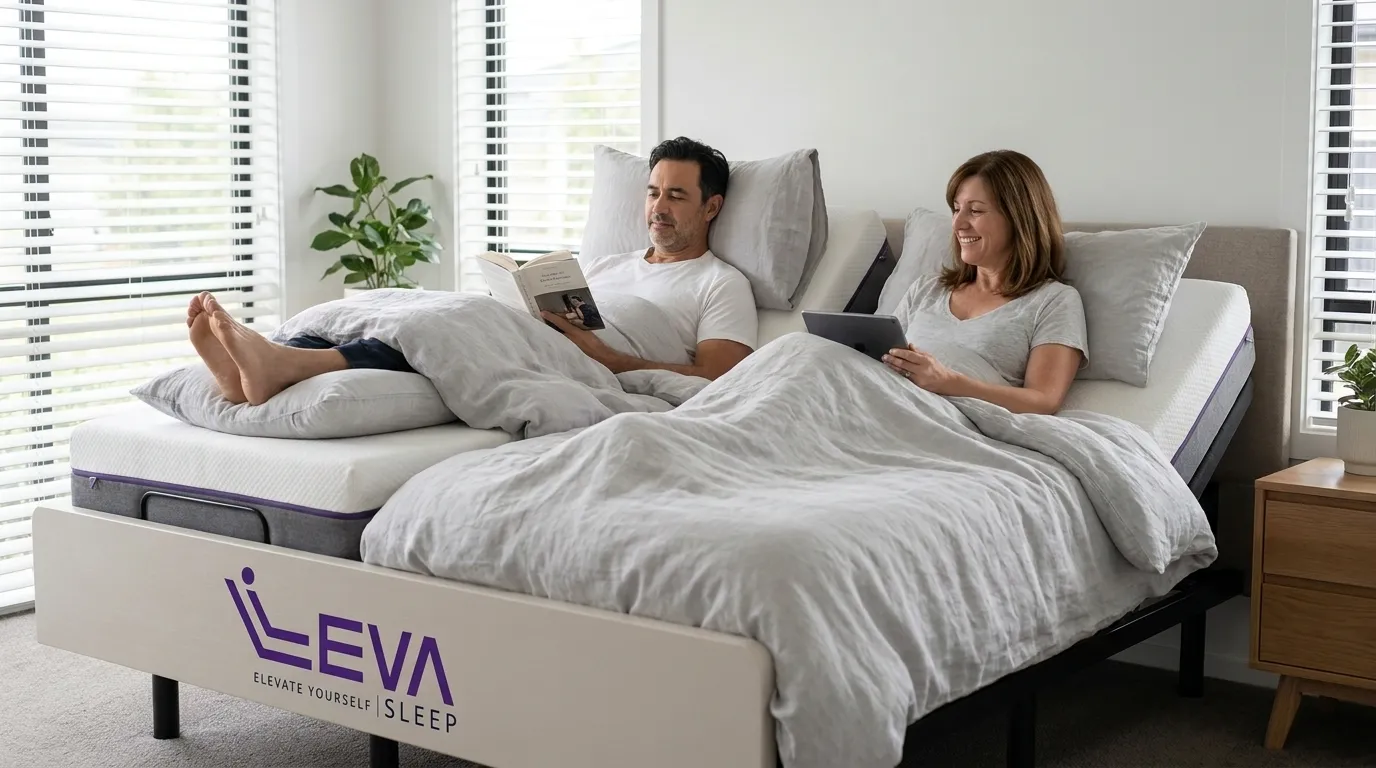
Leva’s split adjustable bases use whisper-quiet German motors to reduce disruptive noise during position changes. Adjustable base movements on split configurations do not disturb the other sleeper, so one partner can elevate their head for reading or anti-snore positioning without motor sound or mattress movement registering on the other side.
Doctor-Recommended Adjustable Bed Features for Couples
Several criteria matter when you compare adjustable bed systems: number of available models, mattress compatibility, feature depth such as lumbar control, anti-snore, and temperature regulation, delivery and setup quality, and total cost relative to comparable products.
Against these criteria, Leva’s higher-end bases include active lumbar control for precise lower back support, a pillow tilt motor for head and pillow adjustment, full app control via Bluetooth for custom sleep positions and vibrating alarms, and a heating and cooling pad for individual temperature regulation. An anti-snore mode detects snoring and makes micro-adjustments to the head of the bed automatically. A pilot study found snoring was stopped in 67% of interventions with head elevation, and a 2012 study in the Journal of Gastroenterology and Hepatology found that bed head elevation reduced esophageal acid exposure and led to some relief from heartburn and sleep disturbance in patients with nocturnal gastroesophageal reflux, a secondary benefit relevant to many back-pain sufferers who also experience acid reflux.
Leva’s white-glove delivery service includes in-room setup, leg height adjustment, product tutorial, and removal of the old bed. This service contrasts with many bed-in-a-box brands that leave assembly to the customer and offer no on-site calibration. Leva’s U.S. mattress partnerships include Airloom (California-made luxury), Diamond Mattress, 3Z Brands (including Helix Sleep), and legacy brands including Tempur-Pedic and Serta, all pairable with Leva’s proprietary adjustable bases.
Frequently Asked Questions
How loud are the motors on Leva Sleep’s adjustable bases?
Leva Sleep’s adjustable bases use whisper-quiet German motors engineered to minimize noise during position changes. This design choice helps prevent motor sound from waking a sleeping partner when one side adjusts. Standard adjustable bases sold at general retailers often use lower-grade motors that produce noticeable mechanical noise. When you evaluate any adjustable base, ask the retailer to demonstrate a full head and foot elevation cycle in the showroom before purchasing.
Do I need to replace my existing mattress to use a Leva adjustable base?
Most foam and hybrid pocket-coil mattresses work with adjustable bases, but traditional innerspring mattresses with rigid border wires usually do not. Leva Sleep designs its own mattresses, both all-foam and hybrid, specifically to flex with adjustable bases without sacrificing support or durability. If you already own a compatible mattress, a Leva specialist can assess compatibility during a showroom consultation or online inquiry. For couples purchasing a complete system, Leva’s integrated mattress-and-base pairings are calibrated to work together from day one.
Is a Split Queen a viable alternative to a Split King for couples?
Yes. A Split Queen uses two mattresses that together measure 60 × 80 inches, the same footprint as a standard queen, with independent adjustable bases on each side. It delivers the same core benefits as a Split King, including independent elevation, zero motion transfer, and separate firmness settings, in a smaller footprint suited to bedrooms where a king-size frame is impractical. Leva Sleep is one of the few U.S. providers that builds Split Queen configurations to customer specifications, which makes it a meaningful option for couples who want full split adjustability without changing their room layout.
How long do adjustable bed systems last, and what maintenance is required?
High-quality adjustable bases with precision motors and steel frames are designed for long-term daily use. Leva Sleep’s systems are engineered with durability as a core requirement. Routine maintenance is minimal and includes periodic inspection of motor connections, keeping the underframe clear of obstructions, and using bedding designed for adjustable bases, such as deep-pocket fitted sheets with extra elastic, to prevent fabric stress on the mattress during elevation cycles. Leva’s white-glove setup ensures all components are correctly installed from the start, which reduces the risk of mechanical issues caused by improper assembly.
When should a couple consult a physician before purchasing an adjustable bed?
Couples managing diagnosed conditions such as obstructive sleep apnea, herniated discs, post-surgical recovery, severe scoliosis, or circulatory disorders should consult a physician or physical therapist before selecting a positioning protocol. An adjustable base can complement medical treatment for many of these conditions, but the elevation angles and lumbar settings that help most vary by diagnosis. Leva Sleep’s specialists can provide detailed feature information to share with a healthcare provider, supporting a joint decision about which system configuration best fits individual medical needs.
Conclusion: Matching Smart-Bed Features to Real Couple Sleep Needs
The documented costs of poor sleep for couples, including relationship strain, chronic pain, daytime fatigue, and sleep divorce, can improve with the right system. A split adjustable base with active lumbar support, zero-gravity positioning, whisper-quiet independent motors, anti-snore automation, and zero motion transfer addresses the core mechanical problems of flat mattresses and basic adjustable frames. These features function as a baseline requirement for couples where both partners have distinct spinal and comfort needs.
Leva Sleep’s integrated split systems, available in Split King and the space-conscious Split Queen, are built around this exact problem set. They are backed by eight years of specialization, more than 25,000 customers served, U.S.-made mattresses, white-glove delivery, and a 30–50% price advantage over comparable luxury competitors.