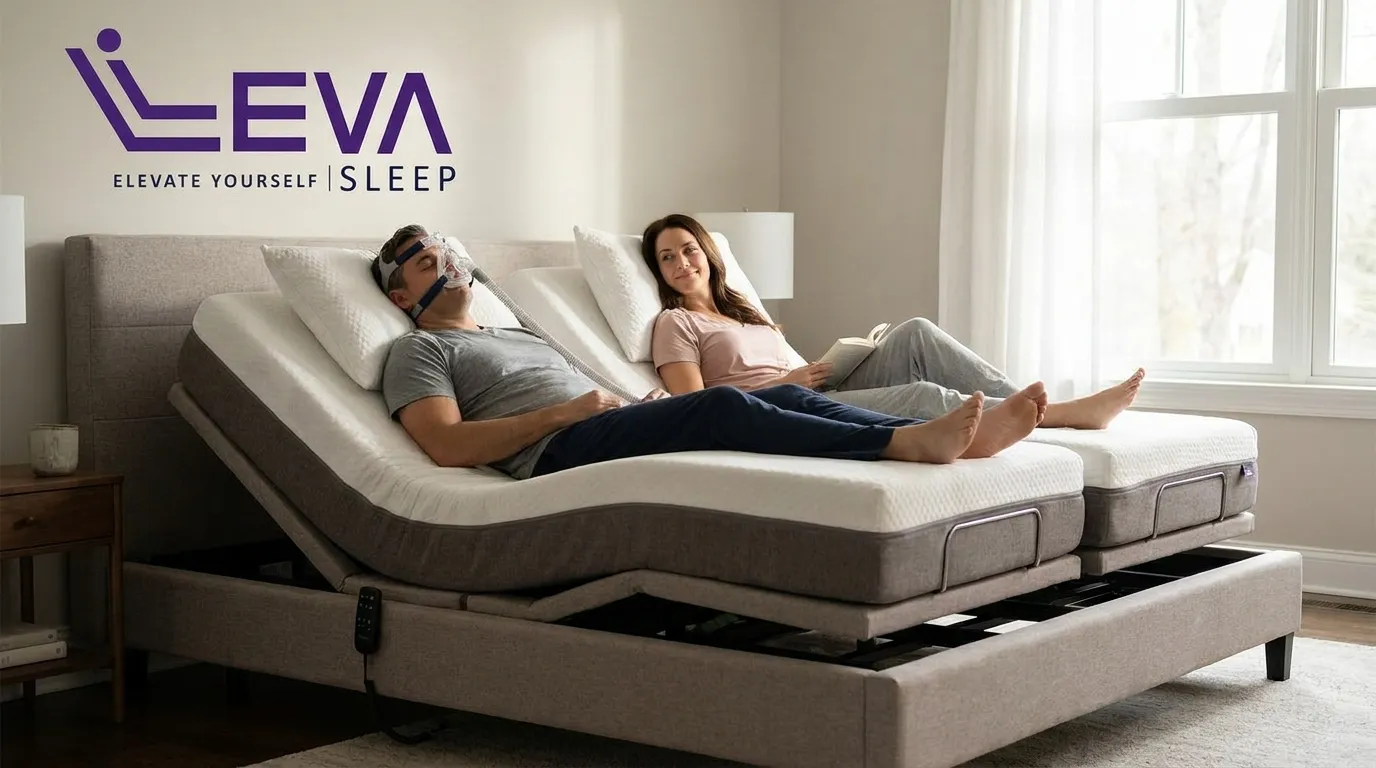
Written by: Matthew Timmins, Founder and Managing Director, Leva Sleep
Key Takeaways for Couples with Sleep Apnea
-
Smart adjustable bases can reduce sleep apnea events by elevating the head 10–15 degrees to help prevent airway collapse and snoring.
-
2026 anti-snore automation uses sensors to detect breathing disruptions and trigger small head adjustments without waking either partner.
-
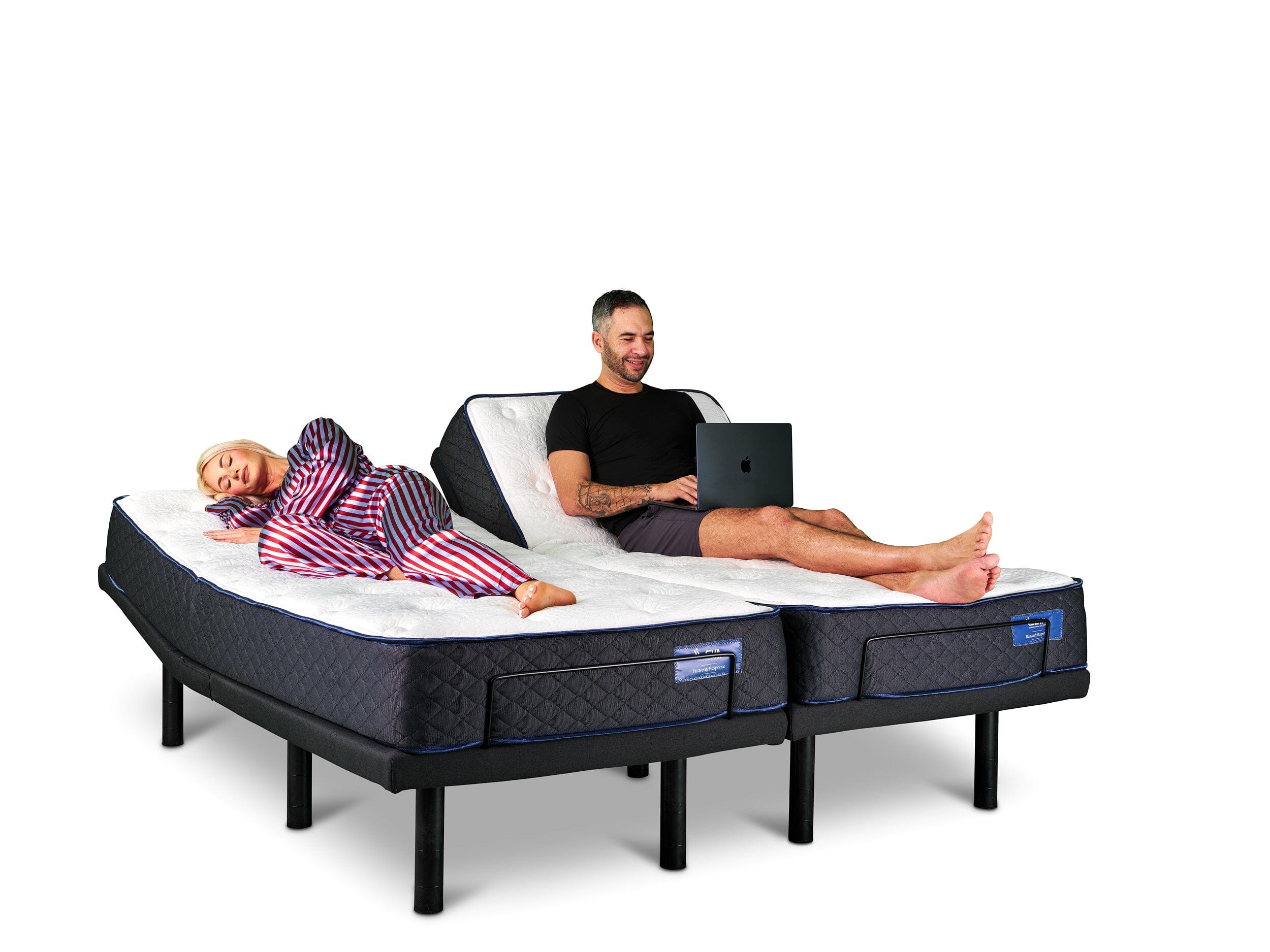
Split Queen configurations give each partner independent elevation in a standard queen footprint, which helps when bedroom space is tight.
-
Key evaluation factors for couples include motor noise levels, CPAP compatibility, white-glove delivery, and per-side automation on split bases.
-
Explore Leva Sleep’s Split Queen and Split King options with whisper-quiet motors and 2026 anti-snore features to find a setup that matches your sleep apnea needs.
How to Evaluate Adjustable Bases as a Couple
Split-Queen Sizing for Smaller Bedrooms: A Split Queen places two 30-inch mattresses on independent bases inside a standard queen footprint. This layout gives each partner control over their own side while keeping the overall bed size compact. It works well for couples in smaller master bedrooms who need independent elevation but do not want or cannot fit a king. Leva Sleep is one of the few specialists offering Split Queen adjustable bases built to customer specifications, which creates a clear advantage when floor space is limited.
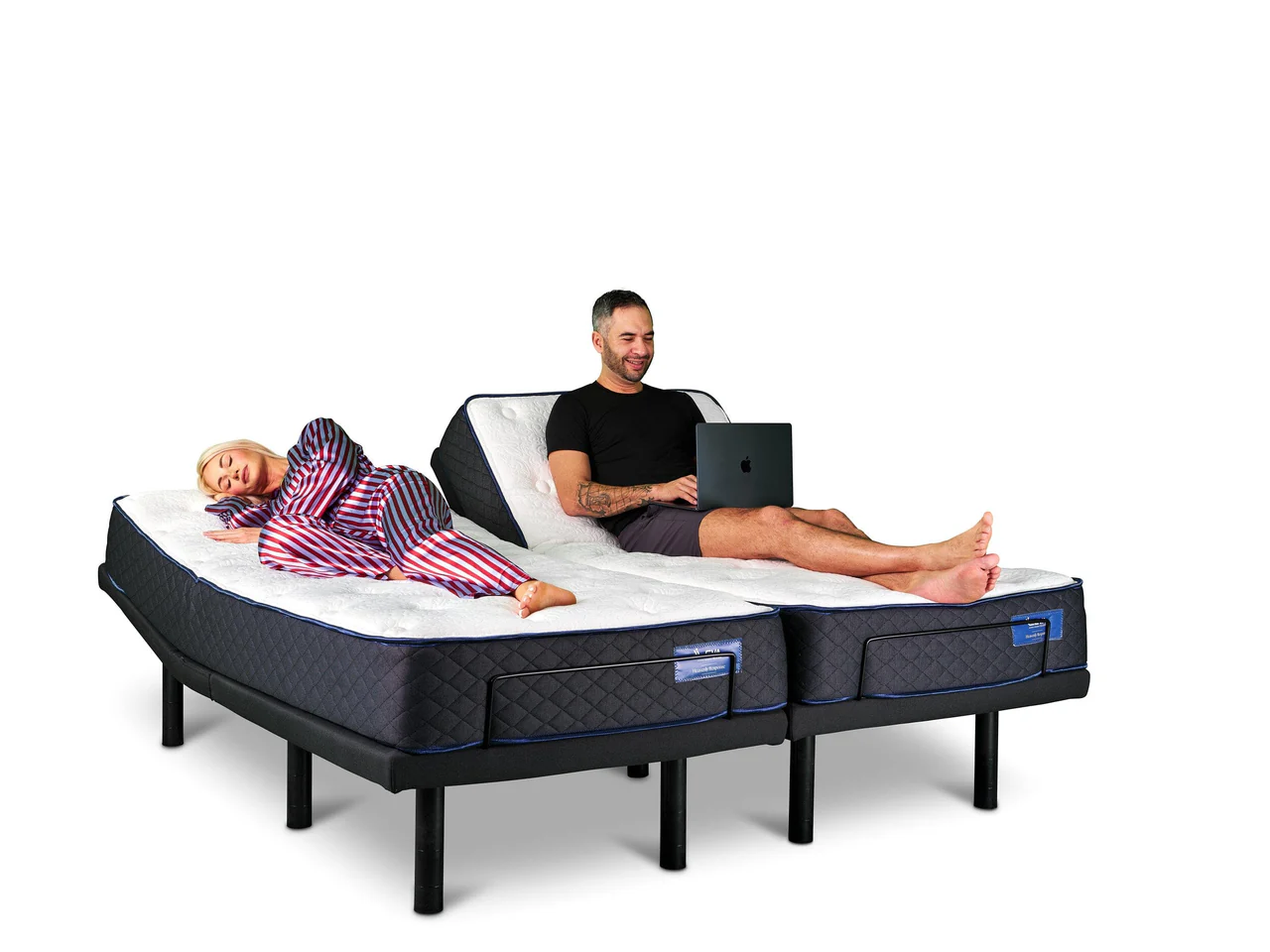
2026 Anti-Snore Automation for Each Side: Current-generation systems rely on passive microphone arrays or contact-based sensors to detect snoring. Leva Sleep’s anti-snore mode, arriving spring 2026, detects snoring and makes micro-adjustments to the head of the bed to reduce or eliminate snoring events. When you compare bases, confirm whether the automation triggers independently per side on a split configuration or applies a shared response to both partners. That distinction matters when only one partner snores and the other wants to stay flat.
CPAP Integration and Real-World Use: CPAP users need a stable, flat-to-slightly-elevated surface that supports a reliable mask seal and clean hose routing. Because many masks lose their seal beyond a modest incline, verify that the base’s head elevation range stays within the angle your specific mask can handle. Then confirm that the base includes a dedicated accessory shelf or hose management clip so the hose does not pull when you raise the head. Zero-gravity presets, which elevate both head and foot, change body position enough to affect mask fit, so test this setting with your CPAP running before you commit to a final configuration.
Head-to-Head Comparison of Leading Options
With those couple-focused criteria in mind, the table below shows how four leading adjustable base systems perform on the features that matter most for sleep apnea and shared beds. Only Leva Sleep combines Split Queen availability with independent per-side anti-snore automation, which is especially useful when bedroom space is limited and only one partner needs elevation. All data points come from publicly available manufacturer specifications and support documentation. Where a specification is not publicly disclosed, the cell is marked as not published.
|
Feature |
Leva Sleep Split System |
Sleep Number FlexFit |
Saatva Adjustable Base+ |
|
|---|---|---|---|---|
|
Anti-snore preset angle |
Micro-adjustment (spring 2026) |
Not published |
Not published |
|
|
Automation type |
App-controlled + snore detection |
SleepIQ biometric (manual override) |
Manual preset only |
|
|
Motor noise |
Whisper-quiet German motors |
Not published (dB) |
Soft hum during adjustment (normal per Sleep Number support) |
Not published (dB) |
|
Split Queen availability |
Split King only |
Split King only |
||
|
White-glove delivery |
Yes (in-house, includes setup and old bed removal) |
Available via retail partners |
Available via retail partners |
Yes (third-party) |
No independent decibel ratings for competitor motors are publicly available, so you should evaluate motor noise in person or through verified owner reviews rather than relying on marketing claims alone.
Split Configurations for Different Partner Needs
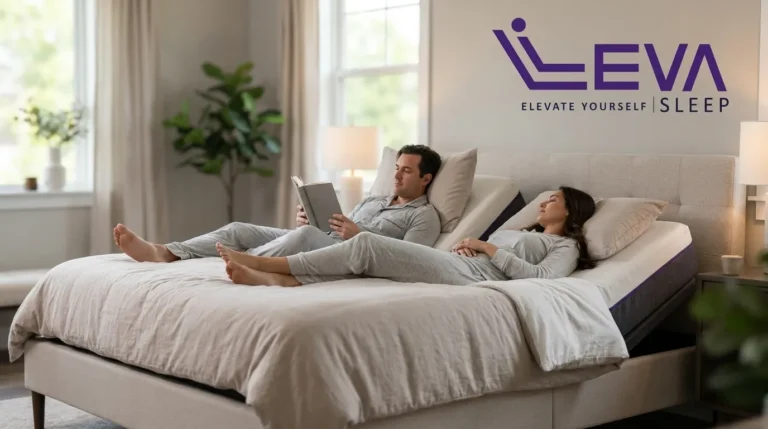
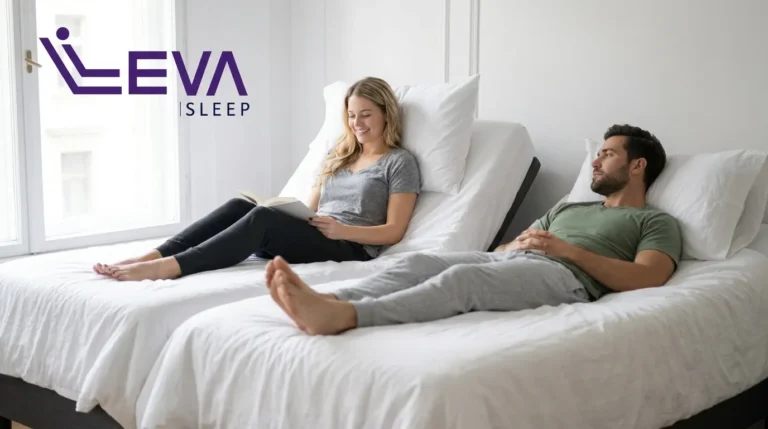
A split adjustable bed lets one partner remain at a 20-degree incline for snoring or sleep apnea relief while the other sleeps flat or at a different angle on an independent base. Split configurations also improve motion isolation because the separate mattresses prevent one partner from feeling the other’s repositioning during sleep.
For couples where only one partner requires elevation, a split system removes the forced compromise that a single shared base creates. Leva Sleep’s Split Queen and Split King bases provide independent app control for elevation, massage, and lumbar support on each side. The Leva Sleep app lets each partner save custom sleep positions, set vibrating alarms independently, and receive individual anti-snore micro-adjustments without triggering the other side’s motor. This design directly addresses the most common reason couples consider separate beds: one partner’s medical positioning needs disrupting the other’s sleep.
Noise, Stability and Overnight Performance
Motor noise during automated adjustments often becomes a major complaint with basic adjustable bases. Sleep Number’s support documentation notes that a soft air or humming sound during adjustment is normal operation and suggests vibration-absorbing materials under base legs and white noise machines to mask operating sounds. A base that needs these workarounds to avoid waking a partner undercuts the purpose of quiet anti-snore automation.
When you evaluate any base for overnight noise, ask for an in-person demonstration at the full elevation range, not just a partial raise. Notice whether the motor sound continues throughout the movement or only at startup. Then check frame stability at maximum head elevation by applying lateral pressure to the mattress surface. Flex or wobble at elevation signals structural limits that can worsen with nightly use. Leva Sleep’s whisper-quiet German motors are engineered to operate below typical sleep disruption thresholds, and the La Jolla showroom lets you compare noise and stability under realistic conditions.
Experience Leva’s low-noise motors and solid frame design in person or via a guided demo.
CPAP Compatibility and Zero-Gravity Positioning
CPAP users integrating an adjustable base should confirm three practical factors that work together: hose routing at elevated angles, mask seal integrity across the elevation range, and base surface stability during pressure delivery. Most full-face and nasal masks maintain seal integrity at head elevations up to approximately 15 degrees, while higher angles depend on the specific mask model. Testing your mask at the intended sleep angle before purchase gives you a clear picture of real-world comfort.
Zero-gravity positioning, which elevates both head and foot to distribute body weight across the base, can reduce pressure on the lumbar spine and lower extremities and may improve circulation during sleep. For CPAP users, this change in torso angle means hose length and routing often need adjustment. Confirm that the base includes an accessory shelf or integrated hose clip at the head panel so the hose stays secure. Leva Sleep’s bases support zero-gravity presets and work with standard CPAP hose management accessories.
Check Leva’s CPAP-friendly features and hose management options before you finalize a base.
Value, Delivery and Long-Term Ownership
Total cost of ownership for a smart adjustable base includes more than the sticker price. Delivery fees, setup labor, bedding replacement costs, and motor longevity all shape the five-year value of any system. Many retail adjustable bases arrive as freight shipments that require self-assembly, and standard fitted sheets often fail on elevated positions, which adds hidden expense and hassle.
Leva Sleep’s vertically integrated model, which covers design, assembly, and delivery in-house, removes the retail markup that can raise competitor pricing by 30–50%. White-glove delivery includes bedroom setup, leg height adjustment, a product tutorial, and old bed removal for a clear, upfront fee. Leva-designed bedding, such as deep-pocket fitted sheets with reinforced elastic and duvet clips for split configurations, reduces the need to keep replacing standard bedding that wears out on adjustable bases. Motor longevity follows German engineering standards, with whisper-quiet motors built for nightly cycling instead of occasional manual adjustment.
2026 Buying Checklist for Couples
-
Confirm head elevation range reaches the angles discussed earlier for your snoring or apnea severity.
-
Verify that anti-snore automation operates independently on each side of a split configuration.
-
Request an in-person motor noise demonstration at the full elevation range before you buy.
-
Check Split Queen availability if your bedroom cannot accommodate a king footprint.
-
Test CPAP mask seal integrity at the base’s zero-gravity and anti-snore preset angles.
-
Confirm white-glove delivery includes full setup, not just threshold drop-off.
-
Evaluate bedding compatibility, since standard fitted sheets rarely perform well on adjustable bases.
-
Compare total cost of ownership, including base price, delivery, bedding, and warranty terms.
-
Ask whether the app controls each side independently and supports custom position memory for both partners.
Frequently Asked Questions
What head elevation angle is best for sleep apnea on an adjustable bed?
Most sleepers with light snoring find relief at 10–15 degrees of head elevation. Those with moderate to heavy snoring or more significant airway obstruction typically benefit from 20–30 degrees. The right angle varies by individual anatomy, sleep position, and apnea severity, so starting at a lower elevation and increasing gradually over several nights works well for most people.
Can a split adjustable base help if only one partner has sleep apnea?
Yes. A split configuration lets the partner with sleep apnea or snoring elevate their side independently while the other partner sleeps flat or at a preferred angle. This setup removes the forced compromise of a single shared base and preserves sleep quality for both people without requiring separate beds.
Is a smart adjustable base compatible with a CPAP machine?
Most adjustable bases work with CPAP machines, but real compatibility depends on the specific mask model and the elevation angle you plan to use. Nasal and full-face masks generally maintain their seal at elevations up to approximately 15 degrees. CPAP users should test mask fit at the intended sleep angle before committing to a configuration and confirm that the base includes hose management features for elevated positions.
What is a Split Queen adjustable base and why is it rare?
A Split Queen uses two 30-inch independent bases inside a standard queen footprint, so each partner can control their side’s elevation, massage, and positioning separately. This size is rare because most manufacturers only offer split configurations in king sizes. Leva Sleep builds Split Queen bases to customer specifications, which makes it one of the few sources for this configuration in the U.S. market.
How do I verify that an adjustable base motor is quiet enough not to disrupt sleep?
Request a live demonstration at the retailer’s showroom and ask the sales associate to run the motor through its full elevation range, not just a partial raise. Listen for continuous humming versus brief startup noise, and decide whether the sound level would wake a light-sleeping partner. Leva Sleep’s La Jolla showroom lets you evaluate whisper-quiet German motors under realistic conditions.
Conclusion: Matching a Smart Base to Your Shared Bed
The best smart adjustable bed for sleep apnea relief in 2026 gives each partner independent elevation, uses automated snore detection that responds without waking either sleeper, and fits the actual bedroom footprint. Single-base solutions often force one partner to accept the other’s medical positioning needs. Split Queen and Split King systems with per-side automation remove that compromise and keep couples in the same bed.
Leva Sleep’s 2026 anti-snore automation, whisper-quiet German motors, Split Queen availability, and in-house white-glove delivery address the main gaps that competing bases leave open, while often delivering a 30–50% lower total cost than premium retail alternatives. With over 25,000 customers and eight years of adjustable base specialization, Leva Sleep focuses on couples who want airway health and shared sleep in the same solution.
Transform your sleep with Leva Sleep by visiting the La Jolla showroom or shopping online.