Written by: Matthew Timmins, Founder and Managing Director, Leva Sleep
Key Takeaways for Couples Dealing with Snoring
- Snoring creates serious relationship strain, and surveys list it as a leading reason couples sleep apart or even divorce.
- Mandibular advancement devices (MADs) can reduce snoring but often cause jaw pain, compliance problems, and intimacy disruption in shared beds.
- Popular mouth guards like SnoreRx Plus, ZQuiet, SleepRight, and ApneaRx each have unique designs but still place the full burden on the snoring partner.
- Adjustable bed elevation offers a no-mouthpiece solution that supports both partners without nightly compliance or oral discomfort.
- Couples who want a comfortable, shared-bed snoring solution without mouthpieces can explore Leva Sleep’s split adjustable bases at Leva Sleep’s split adjustable bases.
Shared-Bed Strategies When One Partner Snores
Common first-line interventions include side sleeping, avoiding alcohol before bed, treating nasal congestion, and elevating the head during sleep. Clinical guidelines emphasize diagnosing the underlying cause of snoring before selecting a treatment, since snoring driven by nasal congestion responds differently than snoring caused by airway collapse. For couples who want to stay in the same bed, practical solutions reduce nightly effort for both partners and preserve physical closeness.
Why Your Partner’s Snoring Triggers So Much Anger
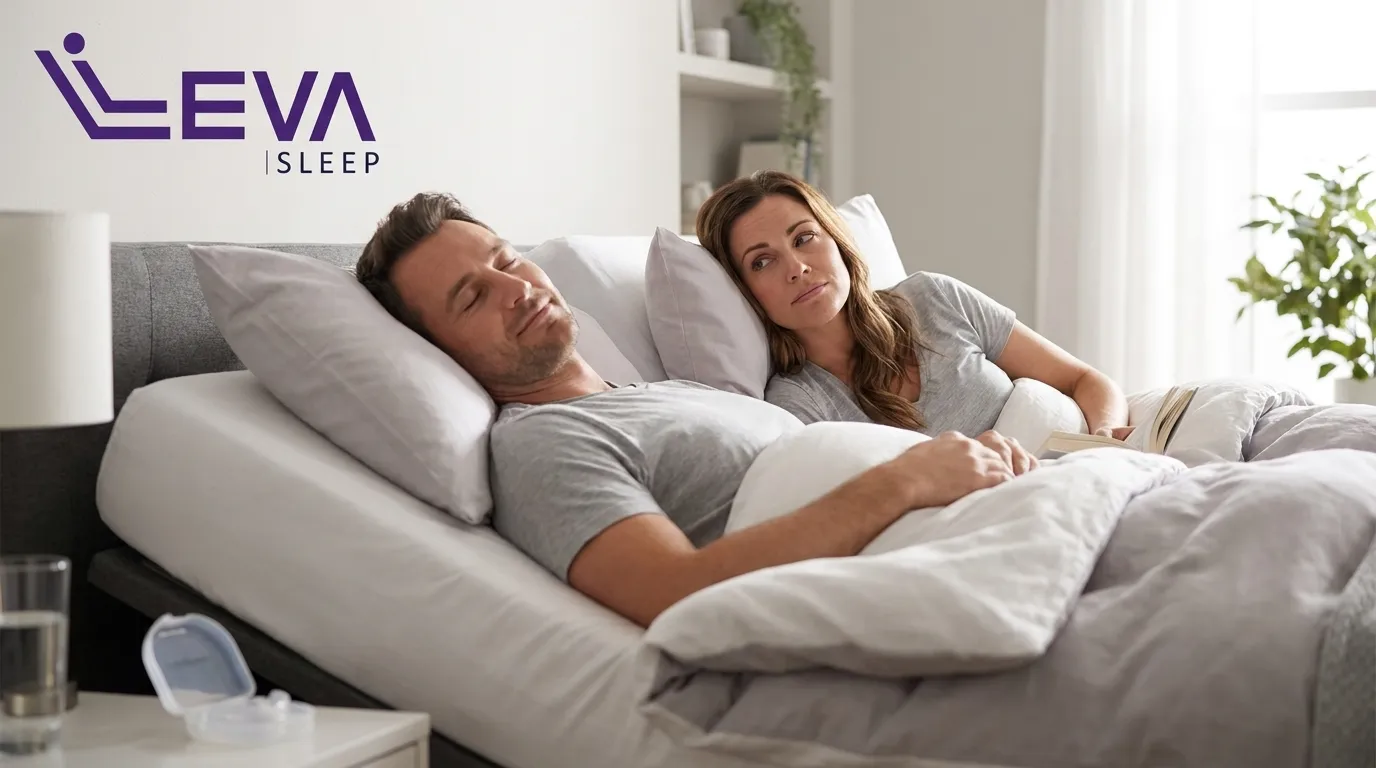
The anger comes from sleep deprivation as much as from emotion. Non-snoring partners are significantly more likely to feel tired and drowsy during the day, and chronic sleep loss weakens emotional regulation, patience, and stress tolerance. Repeated awakenings from a sound you cannot control, while your partner sleeps through it, compound frustration over time. Snoring often pushes couples into separate rooms and increases relationship strain. The anger signals that the problem needs a real solution, not just earplugs.
That need for a real fix leads many couples to explore anti-snoring devices such as mouth guards and other oral appliances.
Do Snoring Mouth Guards Work for Couples Sharing a Bed?
MADs can reduce snoring intensity and frequency in many users with mild to moderate snoring. However, discomfort can lead users to discontinue use of their oral appliance. For couples, this compliance challenge becomes more complex. The snoring partner must wear the device every night, clean it daily, and replace it periodically, while the non-snoring partner receives no direct comfort benefit from that effort. Results also depend heavily on fit, jaw anatomy, and the root cause of snoring.
Mouth Guard Options for Snoring Couples
1. SnoreRx Plus
The SnoreRx Plus is a boil-and-bite MAD with micro-adjustable jaw advancement in 1 mm increments, making it one of the more customizable over-the-counter options available. MADs like the SnoreRx Plus are among the most effective and widely used solutions for snoring because they reposition the jaw to open airways. For couples, only the snoring partner wears the device, so the non-snoring partner’s sleep depends entirely on whether the snorer remembers to use it and tolerates it through the night.
The SnoreRx Plus requires nightly insertion, morning removal, and regular cleaning. Side effects including jaw discomfort, tooth pain, and TMJ discomfort are most common during the first two months of use. Some users also report increased salivation and difficulty speaking or drinking water while wearing the device. Given these potential side effects, couples evaluating this option should focus on criteria that reduce discomfort risk and allow trial-and-error: adjustability range in millimeters of jaw advancement, boil-and-bite versus custom fit, the return or trial policy, and any existing TMJ issues that could make jaw advancement painful.
2. ZQuiet
ZQuiet uses a hinged, two-piece design that allows the mouth to open and close more naturally during sleep, which many users find less restrictive than rigid one-piece MADs. Two-piece designs often feel more flexible and comfortable, although they may be less effective for people who sleep on their backs. ZQuiet ships two trays at different advancement levels, so users can start conservatively and increase advancement if needed.
In a shared bed, ZQuiet’s compliance burden matches other MADs. The snoring partner must wear it every night for the non-snoring partner to benefit. Poorly fitted or bulky night guards may push the jaw and tongue backward, narrowing the airway and actually increasing snoring. Couples considering ZQuiet should weigh the two-tray advancement system versus single-size competitors, the soft thermoplastic material versus harder acrylic alternatives, the subscription or replacement schedule, and whether the snoring partner is a back sleeper, where two-piece designs may underperform.
3. SleepRight Snore Aid
The SleepRight Snore Aid uses a tongue and lip seal system rather than pure jaw advancement. This design places it closer to a tongue-retaining device (TRD) in function. TRDs hold the tongue forward without advancing the jaw and may be suitable for people with TMJ disorders or limited jaw mobility, though some users experience tongue soreness or difficulty maintaining suction.
Couples dealing with a snoring partner who has existing jaw pain or extensive dental work may find the SleepRight design worth a closer look. The tongue-suction mechanism requires an adjustment period and does not feel comfortable for everyone. Key evaluation points include TMJ contraindications that rule out jaw-advancing devices, the device’s material safety certifications, the length of the trial period, and whether the design allows normal lip closure during sleep, which affects both comfort and partner intimacy.
4. ApneaRx
ApneaRx is a boil-and-bite MAD with a dial-based advancement system that allows incremental adjustment without re-boiling the device. Mandibular advancement splints are a treatment option for obstructive sleep apnea and for patients who cannot tolerate CPAP. The ApneaRx dial system makes it easier to fine-tune advancement over time compared to fixed boil-and-bite competitors.
Mandibular advancement splints are not suitable for individuals with significant TMJ disorders or certain dental conditions. For couples, the dial adjustment offers a practical advantage because it reduces the need to re-boil and refit when comfort changes. It still does not remove the fundamental requirement that the snoring partner wear the device consistently. Helpful evaluation criteria include the precision of the dial system, durability over at least 12 months of nightly use, whether a dentist consultation is recommended before use, and the manufacturer’s guidance on when to seek a sleep study instead of self-treating.
Decision Flowchart for Choosing a Snoring Approach
[Graphic placeholder: Decision flowchart — Does your partner have TMJ issues? → Yes: Consider TRD or elevation therapy. No: Does snoring worsen on their back? → Yes: Prioritize positional therapy or two-piece MAD. No: Is nightly device compliance realistic long-term? → No: Consider adjustable bed elevation. Yes: Evaluate custom-fitted MAD with dentist.]
This decision path highlights a central theme for couples. Long-term success depends on comfort, jaw health, sleep position, and whether nightly device use feels realistic for your household.
Why Mouth Guards Often Fall Short for Shared Sleep
Every mouth guard reviewed above places the entire compliance burden on the snoring partner, and as noted earlier, discomfort drives many users to quit within the first year. High non-adherence rates to CPAP, driven by comfort and lifestyle issues, are pushing patients toward alternative positional solutions. Beyond compliance, MADs can create intimacy friction because they alter appearance, restrict speech, and introduce a nightly ritual that feels clinical instead of relaxing. None of these devices improve the non-snoring partner’s sleep environment directly. Positional therapy, especially head-of-bed elevation, works differently, and that difference matters for couples.
Alternative: Adjustable-Bed Elevation Solutions
Elevating the head during sleep via an adjustable bed can open the airway and reduce snoring, and experts specifically recommend against using a higher pillow alone because it allows the neck to bend and promotes continued friction. Sleep specialist Michael J. Breus, Ph.D., states that adjustable beds help with snoring because they take gravity out of the equation and help move the tongue forward. Head-of-bed elevation appears among positional therapy approaches that may reduce airway collapse from gravity in position-dependent snorers without requiring wearable devices or nightly compliance tools.
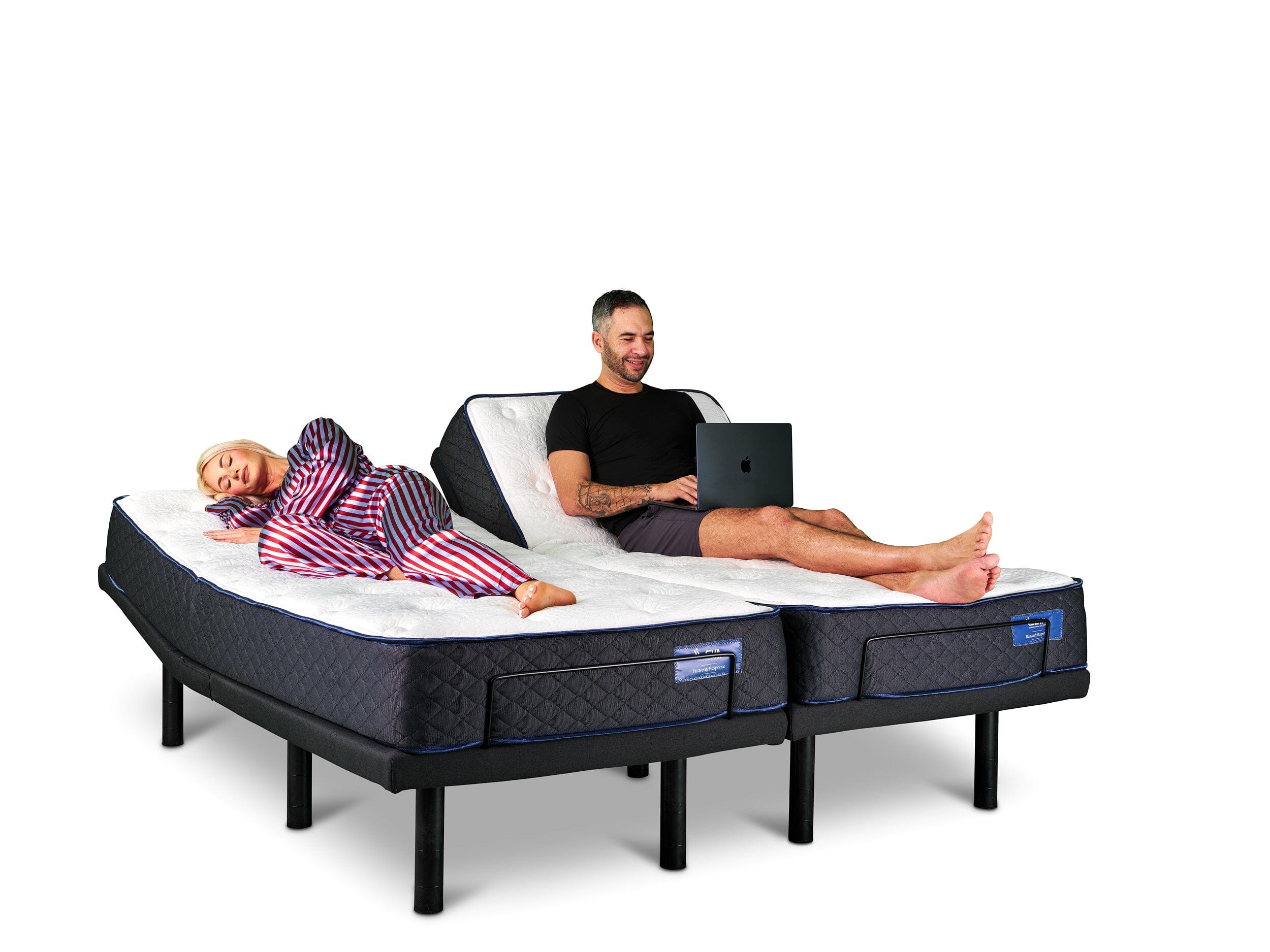
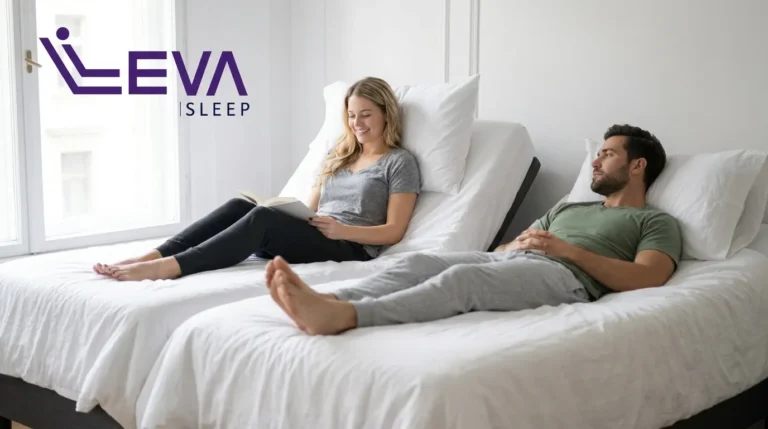
Leva Sleep’s split King and split Queen adjustable bases address the shared-bed snoring problem at the system level. Each side of the bed operates independently through the Leva Sleep app, so the snoring partner can sleep with their head gently elevated while the non-snoring partner maintains a flat position or any elevation they prefer. No one inserts a device, advances a jaw, or performs a nightly mouthpiece ritual.
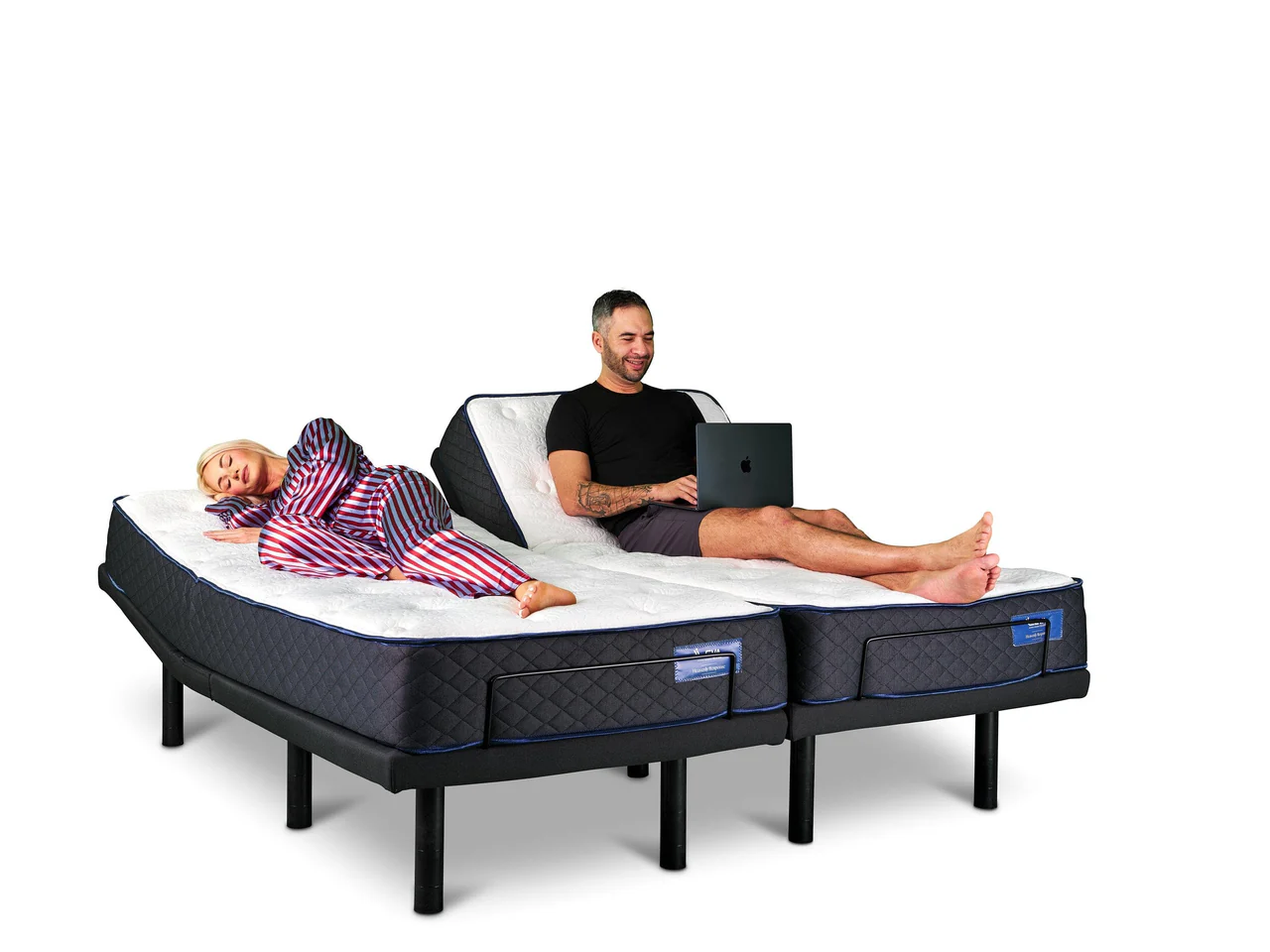
Leva’s bases use whisper-quiet German motors, which keeps mechanical noise from disrupting shared sleep. The spring 2026 anti-snore mode will detect snoring and make automatic micro-adjustments to the head of the bed, opening the airway without waking either partner. Adjustable beds provide customizable head and foot elevation with multiple angles, unlike wedge pillows that offer only one or two fixed angles of elevation, which makes them more effective for tailoring to individual respiratory and sleep-related needs.
Leva’s mattresses are made in the United States and engineered specifically to flex with adjustable bases, which matters because standard mattresses can resist elevation and reduce effectiveness. White-glove delivery includes professional setup, old bed removal, and a full product tutorial. Leva’s pricing runs 30–50% below comparable luxury competitors by removing retail middlemen. The La Jolla showroom allows couples to test split configurations in person before purchasing.
Frequently Asked Questions
Is head-of-bed elevation safe for both partners to use every night?
Yes. Sleeping with the head gently elevated is a well-established positional therapy used for snoring, acid reflux, and mild sleep apnea. Unlike mouth guards, it requires no device worn on or in the body, so there are no contraindications related to jaw anatomy, dental work, or TMJ health. With a split adjustable base, each partner controls their own elevation independently, so one partner’s therapeutic position does not affect the other’s comfort or spinal alignment.
How quickly does head elevation reduce snoring?
Many users notice a reduction in snoring on the first night of elevated sleeping, particularly when snoring is position-dependent and worsens when lying flat on the back. Results vary based on the root cause of snoring. Snoring driven by nasal congestion, obesity, or severe obstructive sleep apnea may require additional interventions alongside positional therapy. If snoring persists despite consistent head elevation, a sleep study is the appropriate next step to rule out moderate-to-severe OSA.
When should a couple see a doctor instead of trying a mouth guard or adjustable bed?
A doctor or sleep specialist should be consulted if the snoring partner experiences gasping, choking, or observed breathing pauses during sleep, excessive daytime sleepiness, morning headaches, or difficulty concentrating. These signs may indicate obstructive sleep apnea, which requires formal diagnosis and may need CPAP or other medical treatment. Mouth guards and positional therapy work best for mild-to-moderate snoring and mild OSA, but they do not replace medical evaluation when more serious symptoms appear.
Does insurance cover snoring mouth guards or adjustable beds?
Custom-fitted oral appliances prescribed by a dentist or sleep specialist for diagnosed obstructive sleep apnea are sometimes covered by medical insurance or Medicare, depending on the plan and diagnosis code. Over-the-counter mouth guards are generally not covered. Adjustable beds are typically not covered by standard health insurance, though they may qualify for HSA or FSA spending in some cases when purchased for a documented medical condition. Consult your insurer and a tax advisor for specifics.
Can a split adjustable base work on a standard bed frame or mattress?
Split adjustable bases require mattresses specifically designed to flex with elevation, since standard innerspring or rigid foam mattresses can crack or resist movement, which reduces both comfort and effectiveness. Leva Sleep’s mattresses are engineered to pair with their adjustable bases, and the white-glove delivery team ensures every component works together correctly from the first night. Couples upgrading from a standard frame should plan to replace both the base and the mattress for best results.
Conclusion: Choosing a Snoring Fix That Works for Both of You
Snoring mouth guards offer a legitimate first-line option for many individuals, and the four reviewed here represent common choices for couples. Every MAD, however, places the full compliance burden on the snoring partner, introduces jaw discomfort risk, and leaves the non-snoring partner’s sleep environment unchanged. Couples who want to stay in the same bed without nightly device rituals often find that head-of-bed elevation with a split adjustable base supports both partners at once, with no insertion, no jaw advancement, and no ongoing compliance struggle.
Leva Sleep’s split King and Queen bases, whisper-quiet motors, independent app controls, and upcoming anti-snore mode create a comprehensive shared-bed snoring solution at a competitive price point. Over 25,000 customers and eight years of adjustable sleep experience support that claim.