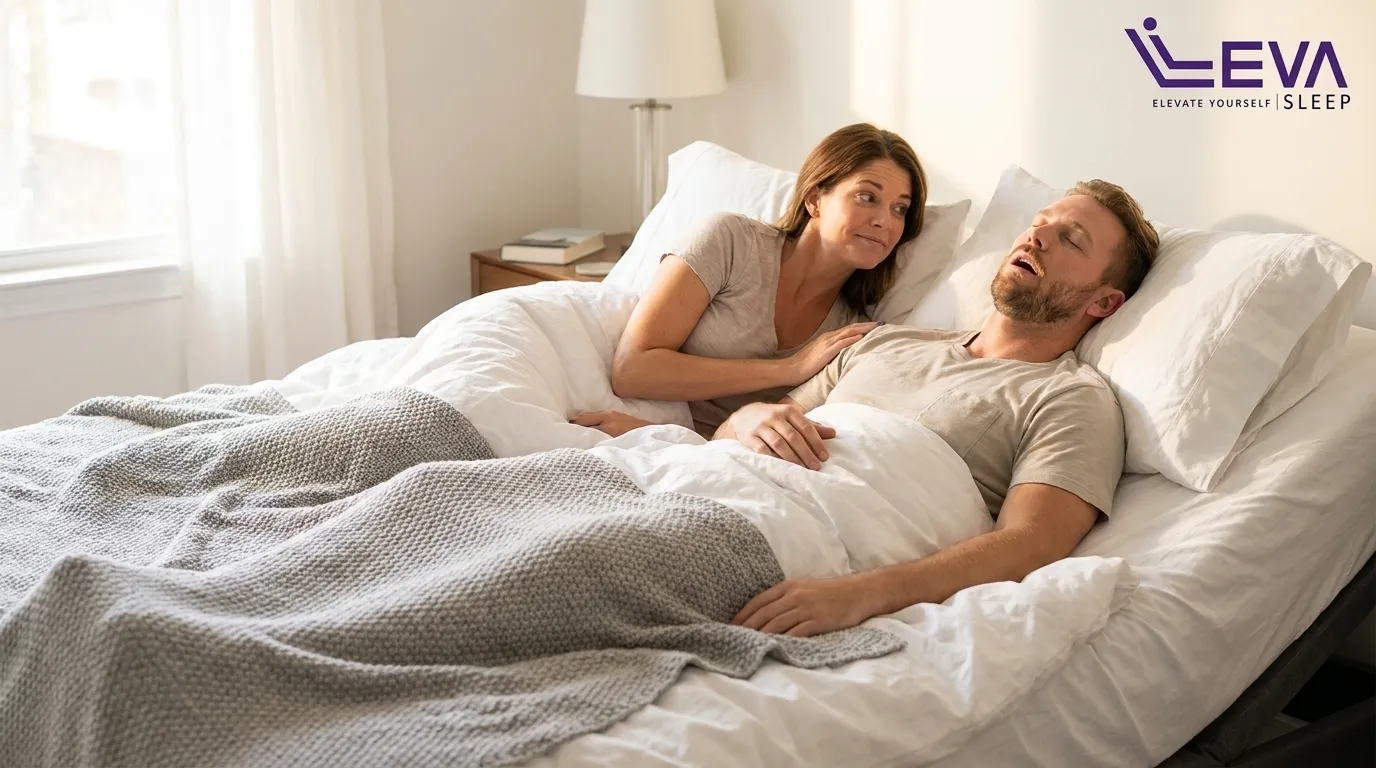
Written by: Matthew Timmins, Founder and Managing Director, Leva Sleep
Key Takeaways for Snoring Couples
- Snoring affects up to 40% of men and 24% of women, often causing exhaustion, resentment, and relationship strain for couples sharing a bed.
- Start with a medical evaluation to rule out obstructive sleep apnea before trying home remedies or devices.
- Positional therapy, lifestyle changes, and nasal adjustments can reduce snoring but often fall short for moderate-to-severe cases.
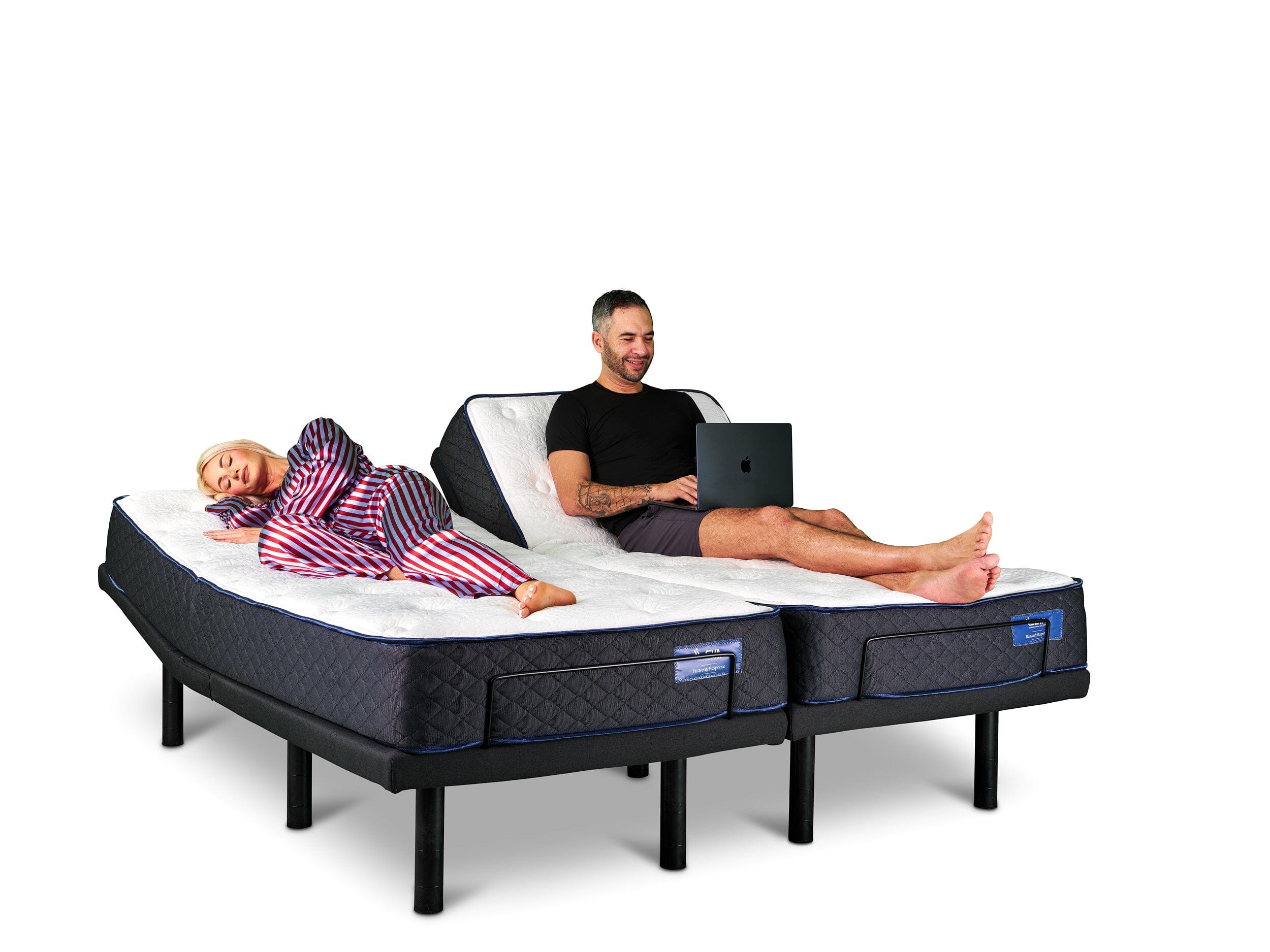
- Split adjustable bases with anti-snore automation provide a mask-free, quiet option that lets each partner control their side independently.
- Leva Sleep offers premium split adjustable bases designed for couples; discover your ideal sleep solution today.
Rule Out Sleep Apnea Before Trying Home Fixes
Before trying any home remedy, schedule a physician evaluation. Only about 12% of adults have obstructive sleep apnea, while up to half snore regularly, and a 2015 AASM economic modeling report estimated that nearly 80% of U.S. adults with obstructive sleep apnea remain undiagnosed. Snoring that goes unscreened can hide a condition that raises cardiovascular risk and causes chronic oxygen deprivation during sleep.
A sleep study, conducted in a lab or at home with a take-home device, determines whether apnea is present and how severe it is. That result shapes every later decision about treatment. Positional fixes and lifestyle changes may be enough for primary snoring. Moderate-to-severe apnea usually requires a prescribed intervention.
Positional Therapy and Side-Sleeping Strategies
Positional snorers, whose airway obstruction worsens when lying on the back, often benefit from changing sleep position as a first step. Positional therapy options include the tennis ball trick (sewing a tennis ball into the back of a T-shirt), specialized body or cervical pillows, and wearable vibration devices that prompt side-sleeping without waking the user. These approaches allow partners to remain in the same bed.
Positional therapy can reduce snoring and obstructive events during sleep, though it is often insufficient by itself to fully resolve obstructive sleep apnea. It works best as one layer in a broader strategy rather than a standalone solution.
Nasal and Lifestyle Changes That Reduce Snoring
Weight loss, regular exercise, and avoiding alcohol and sedatives before bed are recognized first-line management components for snoring and obstructive sleep apnea. Modest weight loss can significantly reduce the Apnea-Hypopnea Index score in obstructive sleep apnea patients.
Discuss these additional steps with a physician:
- Nasal strips or internal dilators to reduce nasal resistance
- Allergy management to address chronic nasal congestion
- Oropharyngeal (mouth and throat) exercises that may reduce snoring severity by strengthening airway muscles
- Timing alcohol consumption at least three to four hours before bed
These adjustments carry no equipment cost, produce no noise, and require no changes to the shared sleep environment. Couples often use them as natural starting points.
Why Earplugs and White-Noise Apps Fall Short Long-Term
Earplugs change the listener’s perception of noise, not the snorer’s airway. Foam earplugs can cause ear canal discomfort over a full night, and many users wake to reinsert or remove them, which defeats the purpose. White-noise apps mask some frequencies but rarely cover the low-frequency rumble of heavy snoring. They also do nothing for the snorer’s oxygen levels or sleep quality.
Neither approach treats the underlying cause. Many CPAP patients discontinue use due to discomfort, noise, or claustrophobia, which shows that any solution requiring consistent nightly compliance faces real adherence challenges. Masking strategies that leave the snorer’s health unaddressed rarely work over time.
Comparison: CPAP, Positional Devices, and Split Adjustable Bases
The table below compares five treatment approaches based on their key trade-offs, including effectiveness, adherence challenges, and impact on the partner’s sleep. Use this overview to match each option to your apnea severity and your comfort with equipment or surgery.
| Solution | Key Trade-offs |
|---|---|
| CPAP therapy | Highly effective for moderate-to-severe apnea, yet many patients discontinue use due to mask discomfort, noise, and claustrophobia. Requires nightly mask wear and bedside equipment. |
| Oral appliance therapy (MAD) | Silent, portable, and requires no electricity, suited for mild-to-moderate apnea. Long-term studies show high adherence rates, with more nightly hours of use than CPAP patients. Custom fitting required. |
| Inspire implant therapy | Mask-free, implantable device. Ninety percent of bed partners reported no or only soft snoring after treatment, with a 79% reduction in sleep apnea events at five years. Surgical procedure, covered by most commercial insurers, Medicare, and VA. |
| Positional therapy devices | Low cost and quiet. Often insufficient as a standalone treatment for obstructive sleep apnea. Most effective for positional snorers without significant apnea. |
| Split adjustable base with anti-snore automation | No mask and no noise from the treatment itself. Each partner controls their own side independently via app. Gently elevates the snorer’s head to open airways and addresses positional snoring without waking either partner. One-time purchase that requires a compatible mattress and adequate room size. |
Adjustable Elevation as a Couple-Friendly Alternative
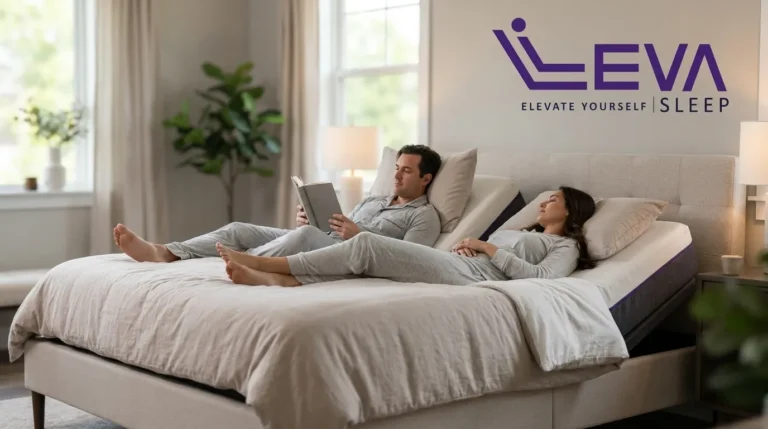
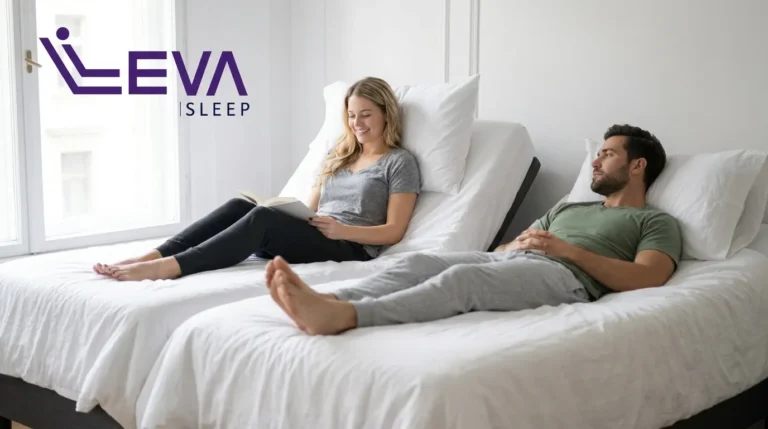
The comparison above highlights a unique combination for split adjustable bases: no mask, no treatment noise, and independent partner control. That combination explains why, in 2026, many consumers seek adjustable bases, separate firmness zones, and app control in sleep systems to handle different partner preferences within a single bed. Split King and Split Queen configurations place two independently controlled bases side by side under a shared headboard. Each partner adjusts head elevation, foot elevation, lumbar support, and massage settings without affecting the other side.
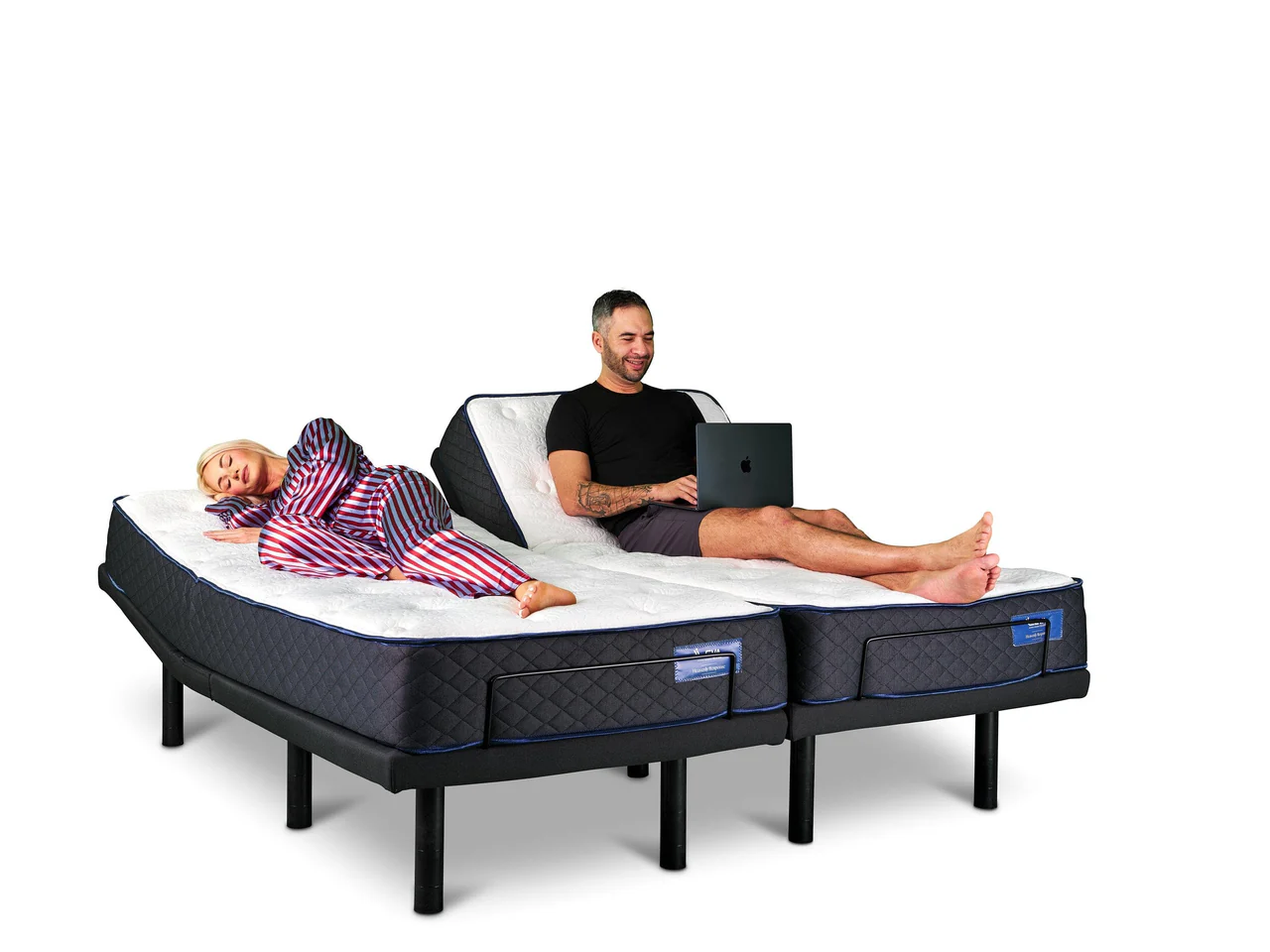
Anti-snore automation in current-generation systems uses built-in sensors to detect snoring and then makes micro-adjustments to head elevation automatically, often before the snorer or their partner fully wakes. Modern sleep systems include anti-snore presets that automatically raise head elevation, programmable positions, and app-based snoring tracking.
When evaluating a split adjustable base, start with features that affect nightly use, then confirm compatibility with your bedding and space:
- Motor noise: Request a live demonstration at a showroom, because whisper-quiet motors should be inaudible from the opposite side of the bed during adjustment.
- App reliability: After confirming the base is physically quiet, test Bluetooth connectivity range and check whether the app requires a subscription for core features.
- Bedding compatibility: Once you know the base and app work as promised, confirm that fitted sheets, mattress protectors, and duvets are designed for adjustable bases, since standard bedding pulls loose at elevation.
- Room dimensions: Before purchasing, remember that a Split King uses the same footprint as a standard King, while a Split Queen offers a more space-conscious option for smaller rooms.
- Delivery and setup: Finally, choose white-glove delivery by trained professionals, which ensures correct assembly, leg-height calibration, and a full product tutorial for a system with multiple motors and app integrations.
The global sleep aid technology market stood at roughly $103.5 billion in 2025 and is projected to reach $136 billion by 2030. This growth reflects broad recognition that sleep quality is a health priority worth real investment.
What Real Couples Say About Snoring and Shared Sleep
Forum discussions on snoring and shared sleep reveal consistent themes. Partners of snorers describe lying awake for hours, nudging their spouse repeatedly, and feeling guilty about the resentment that builds. Snorers describe embarrassment, helplessness, and fear that the relationship is moving toward separate bedrooms.
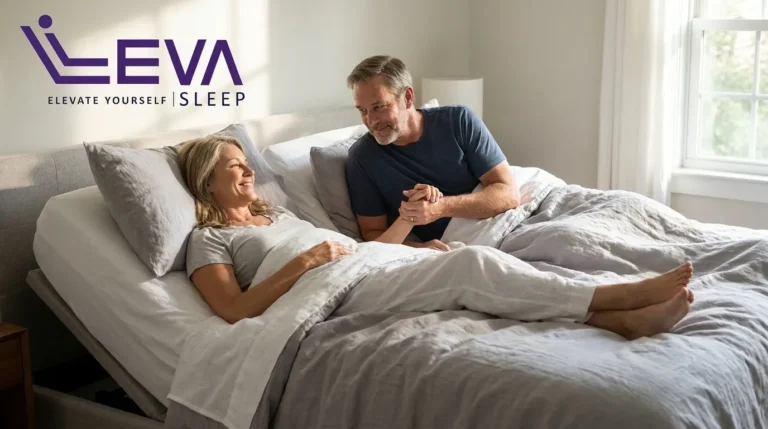
Two questions appear most often in these conversations. Many ask whether anything works without a mask. Others want to know whether they can stay in the same bed if one partner needs head elevation. Couples who move to split adjustable bases frequently report that the ability to raise one side independently, without disturbing the other, is the feature that keeps them from sleeping apart. The absence of mask noise and hose management often matters as much as the elevation itself.
Frequently Asked Questions
Do I need a doctor’s clearance before using an adjustable base for snoring?
A physician evaluation is strongly recommended before relying on any device, including an adjustable base, to manage snoring. If snoring is a symptom of undiagnosed obstructive sleep apnea, positional elevation alone may reduce events but is unlikely to resolve the condition. A sleep study determines severity and guides the appropriate treatment plan. An adjustable base can complement medical treatment but should not replace a clinical diagnosis.
Will a split adjustable base fit my existing headboard and bed frame?
Most split adjustable bases are designed to work with standard headboard brackets and can pair with a compatible bed frame or operate freestanding with legs. Split King configurations use two Twin XL bases side by side. Split Queen uses two custom-width bases. Headboard compatibility depends on the bracket system of the specific base model. A specialist retailer can confirm compatibility before purchase and handle installation during white-glove delivery.
How loud are the motors during adjustment?
Motor noise varies significantly by model and manufacturer. Premium systems use German-engineered whisper-quiet motors that are designed to be inaudible from the opposite side of the bed. The most reliable way to evaluate noise is a live demonstration in a showroom, where you can hear the motor at full elevation range under realistic conditions. Avoid purchasing based only on online specifications, because “quiet” is subjective without a direct comparison.
What kind of maintenance does a split adjustable base require?
Adjustable bases require minimal ongoing maintenance. Periodic checks of the motor connections, remote or app pairing, and frame integrity are standard. Keeping the area beneath the base clear of debris protects the motor housing. Bedding designed specifically for adjustable bases, with deep pockets and reinforced elastic, reduces wear on the mattress and base caused by sheets pulling during elevation cycles. Most reputable manufacturers offer multi-year warranties on motors and frames.
Is an adjustable base covered by health insurance?
Adjustable bases are generally not covered by standard health insurance as durable medical equipment unless prescribed for a specific qualifying condition and purchased through a medical supplier. Some flexible spending accounts (FSA) or health savings accounts (HSA) may allow reimbursement when a physician documents medical necessity, such as documented sleep apnea or acid reflux. Confirm eligibility with your plan administrator and obtain written documentation from your physician before purchase.
Conclusion: Restorative Sleep Together
Snoring is a solvable problem for many couples. The path forward starts with ruling out sleep apnea, continues with lifestyle and positional adjustments, and, for couples who want a technology-forward solution that requires no mask and no separate bedroom, often leads to a split adjustable base that gives each partner full independent control of their sleep environment.
Leva Sleep has spent more than eight years, serving over 25,000 customers as a specialist in this category. With Split King and Split Queen configurations, whisper-quiet German motors, anti-snore automation, app-controlled independent positioning, and white-glove delivery and setup, Leva’s systems are engineered for couples who refuse to compromise on shared sleep. Transform your sleep with Leva Sleep by visiting the La Jolla showroom or shopping online today.