Written by: Matthew Timmins, Founder and Managing Director, Leva Sleep
Key Takeaways
- Wedge pillows create a fixed 30–45° incline that can modestly reduce mild positional snoring but cannot be adjusted after purchase.
- The cliff effect from a wedge on a shared mattress often disrupts the non-elevated partner’s sleep surface and comfort.
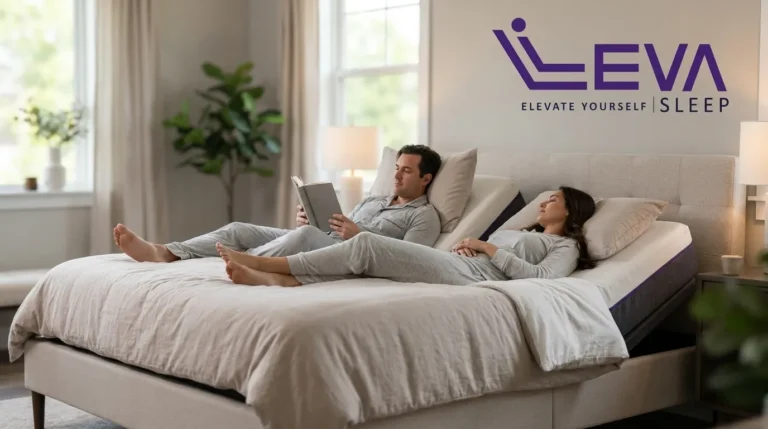
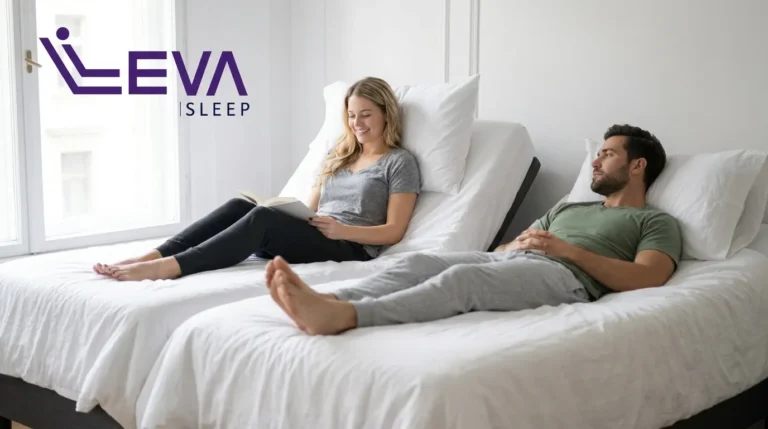
- Split adjustable bases remove the cliff effect by letting each partner raise or lower their side independently throughout the night.
- Leva Sleep’s whisper-quiet motors and automatic anti-snore mode provide dynamic, silent adjustments that static wedges cannot match.
- For couples seeking a long-term solution, explore Leva Sleep’s split adjustable bases to enjoy personalized elevation without partner disturbance.
How Wedge Pillows and Split Adjustable Bases Actually Work
Wedge pillows are triangular foam inserts placed beneath the upper body to create a fixed incline. Common options include the MedCline Reflux Relief System, the Brentwood Home Zuma Therapeutic Foam Wedge, the Helix Wedge Pillow, and various generic memory-foam wedges from mass retailers. Each uses dense foam to hold a fixed angle, typically between 30 and 45 degrees, and is designed primarily for a single sleeper.
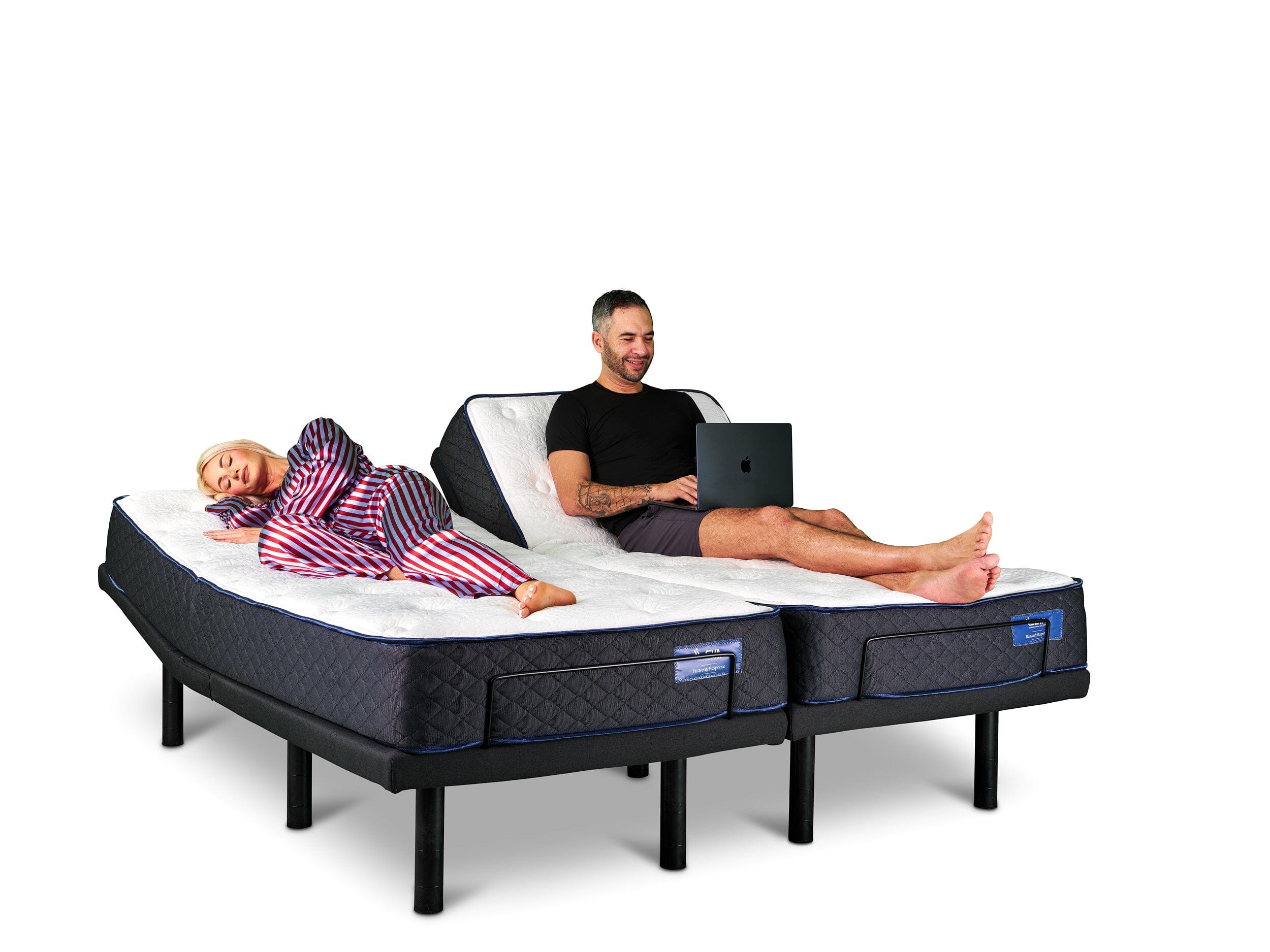
Split adjustable bases are motorized bed frames that allow independent head and foot elevation for each side of a shared mattress. Split King configurations use two Twin XL mattresses side by side. Split Queen configurations, less common in the market, use two narrower mattresses. Both configurations let each partner set a different elevation, massage intensity, and in advanced models, a different firmness profile, all controlled via app or remote.
Elevation Science for Sleep Apnea
A 2017 study in Sleep Breath found that head-of-bed elevation reduced the apnea-hypopnea index in patients with obstructive sleep apnea. The study by de Barros Souza et al. showed that an elevation range of 30 to 45 degrees helps balance airway opening and sleeping comfort for positional snorers.
An elevation range of 30 to 45 degrees can support airway patency for many positional snorers. A wedge pillow delivers this angle statically, because the angle is fixed at manufacture and cannot be adjusted after purchase. A split adjustable base delivers the same range dynamically, allowing micro-adjustments throughout the night or in response to detected snoring events. An adjustable base raises the upper body in a cleaner, more stable way than stacking pillows, which often bends the neck too sharply, and maintains that position through the night rather than only at sleep onset.
Elevation alone does not replace CPAP therapy. Upright sleep does not address moderate to severe obstructive sleep apnea or central sleep apnea, and a sleep study remains the most reliable way to determine severity and guide treatment.
Couple Sharing Mechanics and the Cliff Effect
When one partner places a wedge pillow on a shared flat mattress, the incline creates an abrupt height difference at the edge of the wedge, often called the cliff effect in sleep forums and consumer reviews. The non-elevated partner lies on a flat surface immediately beside a raised slope. This setup can cause the elevated partner to roll toward the center of the bed and press against the other person throughout the night.
A whole-bed wedge or non-split adjustable base used for inclined sleeping may disturb a bed partner, and independently adjustable sides are recommended to avoid partner disruption. A split adjustable base eliminates the cliff effect because each side of the mattress elevates independently within its own frame section, with no shared incline surface between partners.
This comparison table summarizes how wedges and split bases behave on a shared bed.
| Criterion | Wedge Pillow | Split Adjustable Base |
|---|---|---|
| Elevation range | Fixed 30–45° | Adjustable 0–60°+, independently per side |
| Partner disruption from elevation | High, shared surface creates cliff effect | None, independent frame sections |
| Positional sliding | Common without non-slip base | Mattress retained by frame |
Do Wedge Pillows Actually Help with Sleep Apnea?
For mild positional obstructive sleep apnea, wedge pillows provide a measurable but limited benefit. The Sleep Breath study mentioned earlier showed this effect, though the reduction was modest and limited to positional cases.
Wedge pillows do not cure snoring and provide only modest improvement when snoring is caused by nasal obstruction, allergies, or substantial body weight on the neck and chest. They are not indicated as stand-alone treatments for moderate or severe obstructive sleep apnea. Wedge pillows can have limited compatibility with CPAP masks, which restricts their usefulness for the many diagnosed patients who require mask therapy alongside positional support.
Real-World Limitations of Wedge Pillows for Couples
Wedge pillows take up significant bed space and present a practical drawback for couples sharing a bed. They make it difficult to change sleeping positions during the night, and many wedge pillows slide down the bed unless they have a non-slip bottom. The most common reason people abandon wedge pillows is shoulder discomfort during side sleeping, as the lower shoulder bears body weight on the incline and the firm foam compresses the joint.
For couples, these limitations interact and compound. One partner’s wedge occupies shared mattress space, which reduces room for the other sleeper. When the snoring partner shifts position, the fixed angle cannot adapt, so the sleeper may roll off the wedge or press harder against their partner. At the same time, the cliff effect at the wedge edge keeps disturbing the non-elevated partner’s sleep surface, creating a second, ongoing source of disruption.
Explore split adjustable bases that eliminate the cliff effect and partner disruption.
Key Negatives of a Wedge Pillow
The documented negatives of wedge pillows fall into two categories: biomechanical and couple-specific. On the biomechanical side, wedge pillows can cause neck and shoulder strain if the angle is too steep, with some users experiencing discomfort during long-term nightly use. Sleeping on an incline can produce side effects including achy muscles from unnatural positions, and headaches, neck pain, or back pain. Wedge pillows are not ideal for stomach or side sleepers who do not need elevation, which limits positional compatibility.
On the couple-specific side, the cliff effect, partner rolling, space consumption, and the inability to independently adjust elevation for each partner represent structural limitations that no single-user wedge design can resolve. A wedge pillow is engineered for one body on one surface. A shared bed introduces variables it was never designed to handle.
Advantages of Split Adjustable Systems for Couples
Split adjustable bases address the main structural limitations of wedge pillows by design. Independent controls eliminate the cliff effect, because each partner selects a different head and foot elevation without affecting the other side, so there is no shared incline surface to create a height step. Leva Sleep’s systems use whisper-quiet German motors to solve the noise problem that affected earlier adjustable bases, so elevation changes do not wake the non-adjusting partner. The anti-snore mode detects snoring and makes micro-adjustments to the head of the bed automatically, which removes the need for manual intervention during the night.
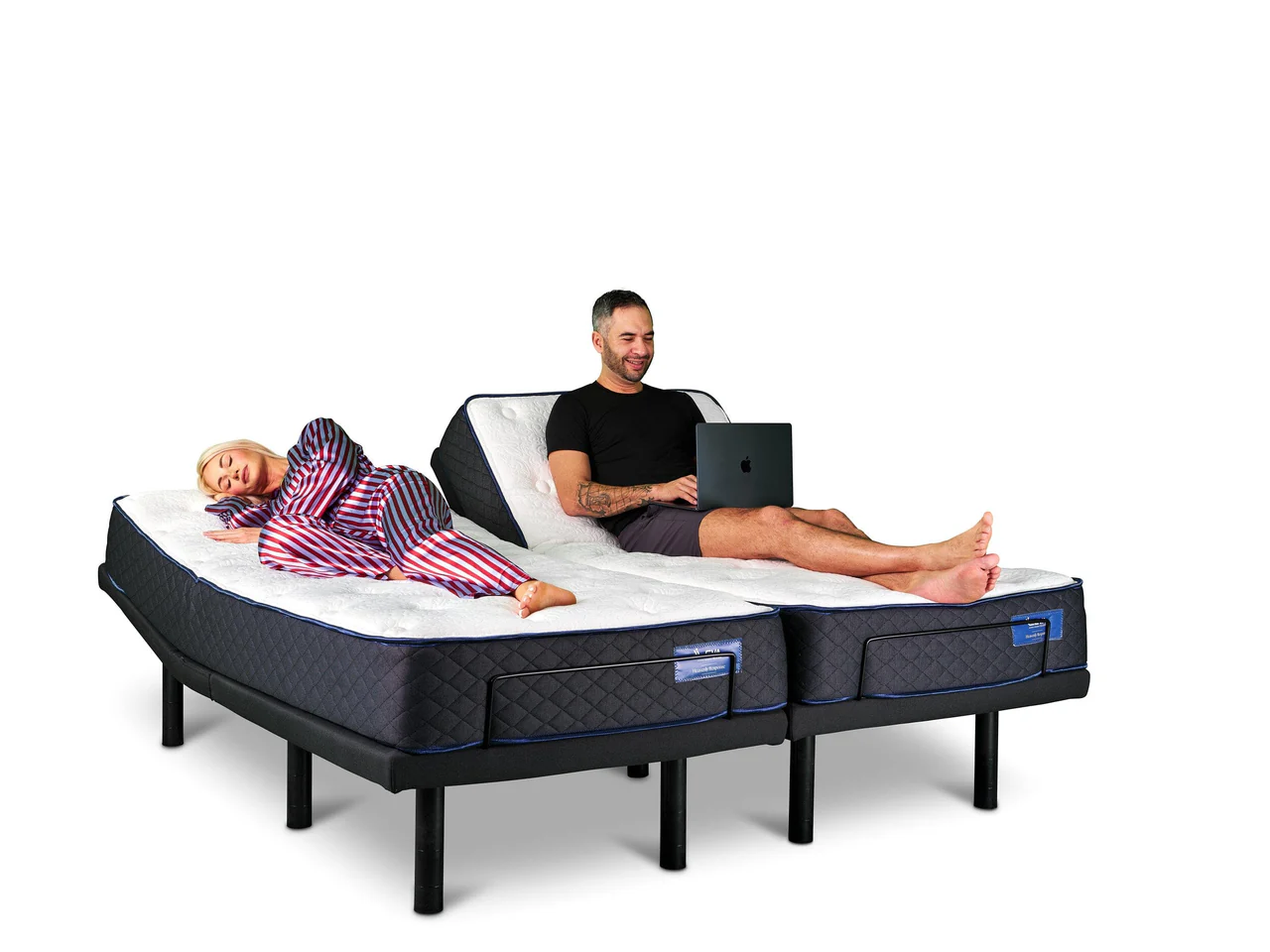
Raising the upper body can help keep the airway in a more favorable position through the night rather than only when first falling asleep. This continuous elevation addresses the core limitation of a static wedge, which only positions the airway correctly at sleep onset but cannot adapt as the sleeper moves. Head-of-bed elevation only works if the mattress can bend with it; otherwise bunching, lift-off near the lower back, or a strained feel may occur, a problem Leva addresses by pairing its bases exclusively with mattresses engineered for adjustable use, including all-foam and hybrid pocket-coil options made in the United States.
Leva Sleep also designs all bedding accessories, including fitted sheets with deep pockets and extra elastic, duvet clips, and mattress protectors, specifically for adjustable bases. This approach prevents the sheet slippage that commonly disrupts elevated sleep positions.
Choosing a Wedge Pillow for Sleep Apnea
When evaluating wedge pillows for sleep apnea, focus on four criteria. The pillow should maintain a consistent 30–45° angle through the night without sliding. It should be compatible with CPAP mask use. It should accommodate side sleeping without compressing the lower shoulder. It should also work on one side of a shared bed without creating a disruptive cliff effect for the other partner.
Wedge pillows are best suited for back sleepers and individuals with acid reflux because they elevate the torso at a 30° to 45° angle using gravity to prevent soft tissues of the throat from collapsing. Options like the MedCline and Brentwood Home Zuma are frequently cited for their foam density and angle consistency, but none resolve the couple-compatibility problem. For a single sleeper with mild positional snoring and no partner, a quality wedge pillow is a low-cost starting point. For a couple sharing a bed, the structural limitations described above make a split adjustable base the more durable and effective solution.
When Combining a Wedge Pillow with a Split Base Makes Sense
That said, there are niche scenarios where a wedge pillow can supplement a split adjustable base rather than replace it. A partner recovering from surgery who requires a steeper angle than the base’s maximum range could use a wedge on top of an already elevated base section. A traveler who uses a split base at home might carry a wedge pillow for hotel stays. Some CPAP users find that a contoured wedge placed on an elevated base section improves mask seal by reducing neck flexion beyond what the base angle alone achieves.
Outside these edge cases, combining both products on a shared bed adds cost and complexity without resolving the fundamental incompatibility of a static wedge on a shared sleep surface.
See how Leva’s split bases adapt to your unique sleep needs.
Cost, Lifespan, and Practical Tradeoffs
A quality wedge pillow costs between $50 and $200 and requires replacement as the foam compresses over time. There is no delivery complexity, but there is also no setup support, no compatibility guarantee with existing bedding, and no adjustment capability after purchase.
A Leva Sleep Split King or Split Queen adjustable base represents a larger upfront investment, offset by a lifespan measured in decades rather than years and by the elimination of recurring wedge replacement costs. Leva’s direct-to-consumer model removes retail markup, delivering luxury-grade engineering at 30–50% less than comparable competitors. White-glove delivery includes professional setup, old bed removal, product tutorials, and real-time height adjustments, a level of service that does not exist in the wedge pillow market. For couples who have already cycled through multiple wedge pillows without resolving snoring or partner disruption, the total cost of continued wedge purchases often approaches or exceeds the cost of a permanent adjustable solution.
Decision Guide for Common Couple Scenarios
The matrix below helps couples match their situation to the most practical elevation solution.
| Couple Scenario | Wedge Pillow | Leva Split Adjustable Base |
|---|---|---|
| One partner snores; other sleeps flat | Partial fix; cliff effect disrupts non-snoring partner | Independent elevation; no cliff effect; anti-snore mode |
| Both partners need different firmness | Does not address firmness | Split configuration with independent mattress selection per side |
| One partner uses CPAP | Only partially CPAP compatible | Stable elevation supports mask seal; no sliding |
| Mild positional snoring, single sleeper, budget-limited | Reasonable starting point | Superior long-term solution when budget allows |
| Differing temperature needs | Not applicable | Compatible with split heating and cooling pads per side |
Conclusion: Why Split Adjustable Bases Win for Couples
Wedge pillows deliver a fixed, single-user elevation that addresses mild positional snoring under specific conditions. They are not indicated as stand-alone treatments for moderate or severe obstructive sleep apnea or for snoring accompanied by breathing pauses, choking, or severe daytime sleepiness. For couples sharing a bed, the cliff effect, positional sliding, shoulder strain, and inability to independently adjust elevation represent structural limitations that wedge pillows cannot overcome by design.
Split adjustable bases with independent controls, whisper-quiet motors, and 2026 anti-snore technology resolve each of these limitations while maintaining the shared sleep environment that couples value. For health-conscious couples between 35 and 70 managing snoring, mild sleep apnea, or differing sleep needs, a split adjustable system is the more durable, medically aligned, and relationship-preserving long-term investment.
Visit Leva Sleep online or in the La Jolla showroom to experience split adjustable bases in person.
Frequently Asked Questions
Do wedge pillows actually help with sleep apnea?
Wedge pillows provide measurable but limited benefit for mild positional obstructive sleep apnea, particularly in back sleepers whose symptoms worsen when lying flat. Clinical studies published in the Journal of Clinical Sleep Medicine and Sleep and Breathing support head-of-bed elevation in the 30–45 degree range as a supplementary intervention for mild cases. Wedge pillows do not replace CPAP therapy for moderate or severe sleep apnea, are only partially compatible with CPAP masks, and do not address central sleep apnea. Anyone experiencing breathing pauses, choking during sleep, or severe daytime sleepiness should consult a sleep specialist before relying on positional therapy alone.
What are the negatives of a wedge pillow for couples?
For couples sharing a bed, wedge pillows create several documented problems. The cliff effect, an abrupt height difference at the edge of the wedge, can cause the elevated partner to roll toward the center of the bed and press against the other person. The wedge occupies significant shared mattress space, limits position changes during the night, and frequently slides out of position without a non-slip base. Shoulder discomfort from side sleeping on a firm foam incline is the most common reason users abandon wedge pillows. None of these issues are resolved by choosing a higher-quality wedge, because they are structural limitations of the single-user, static-angle design.
Which wedge pillow is best for sleep apnea?
When evaluating wedge pillows for sleep apnea, the key criteria are angle consistency through the night, CPAP mask compatibility, shoulder comfort during side sleeping, and whether the pillow can be used on one side of a shared bed without disrupting the other partner. Wedge pillows with dense, high-resilience foam and non-slip bases perform better on angle retention and sliding. However, no wedge pillow resolves the couple-compatibility problem, and all wedge pillows are rated only partially compatible with CPAP equipment in clinical comparisons. For couples, a split adjustable base addresses all of these criteria simultaneously and represents a more complete solution than any single wedge product.
Can a split adjustable base work with a CPAP machine?
Yes. A split adjustable base elevates the head of the bed to the clinically supported 30–45 degree range while keeping the mattress stable and the sleeper’s body in a consistent position throughout the night. This stable, continuous elevation supports CPAP mask seal more reliably than a wedge pillow, which can slide and shift the head position during sleep. Leva Sleep’s systems pair adjustable bases with mattresses specifically engineered to flex without bunching or lifting at the lower back, which maintains the elevation angle and reduces the neck flexion that can compromise mask fit. The anti-snore mode on Leva’s 2026 systems also makes automatic micro-adjustments, which can reduce snoring events independently or in combination with CPAP use.
How does Leva Sleep’s Split Queen differ from a standard Split King?
A Split King uses two Twin XL mattresses placed side by side in a standard King frame, making it the most widely available split configuration on the market. A Split Queen uses two narrower mattresses in a Queen-sized frame, a configuration that is significantly less common and that most retailers do not offer. Leva Sleep builds Split Queen bases to customer specifications, providing the full benefits of independent elevation, independent firmness selection, and independent controls in a more space-conscious footprint. This design makes the Split Queen particularly relevant for couples in smaller bedrooms or those who prefer a Queen-sized bed but do not want to sacrifice the personalization that a split configuration provides.