
Written by: Matthew Timmins, Founder and Managing Director, Leva Sleep
Key Takeaways for Back-Pain Couples
- Chronic back pain affects roughly 16 million American adults, and split king adjustable beds with independent lumbar lift and zero-gravity positioning provide targeted relief that flat mattresses cannot.
- Key evaluation criteria for couples include lumbar adjustability, motor noise levels, mattress pairing compatibility, and delivery experience when comparing Tempur-Pedic, Saatva, Nectar, and Leva Sleep.
- Common split king issues like sheet slippage and motor noise become manageable with purpose-built accessories and whisper-quiet German motors engineered for low sound.
- Leva Sleep offers independent lumbar lift, zero-gravity presets, and curated mattress pairings at 30–50% lower cost than premium competitors while maintaining full support for back-pain sufferers.
- Experience superior lumbar support and personalized positioning—explore Leva Sleep’s split king systems to find the best adjustable bed for chronic back pain.
Why Clinicians Recommend Adjustable Beds for Back Pain
Orthopedic physical therapist Karena Wu, P.T., D.P.T., states that adjustable beds with zero-gravity positioning help people with chronic back and neck pain, GERD, snoring, or asthma by allowing customized upper-body elevation. The biomechanical rationale behind that recommendation is well documented.
Research shows a reduction in intradiscal pressure in the reclined zero-gravity position compared to seated positions, which removes compressive lumbar loading and reduces paraspinal electromyographic (EMG) activity. Lower EMG activity means the muscles around the lumbar spine truly relax instead of bracing against load.
No 2025 PLoS One smart-bed comfort study on zero-gravity positions exists; the sole 2025 PLoS One paper examines standing positions, gluteus medius activation, and lumbar lordosis in low-back-pain developers. Sleep consultant and occupational therapist Annie Schlecht notes that long-term zero-gravity sleeping supports spinal alignment, reduces inflammation, and helps the nervous system shift into true rest and repair.
When you evaluate any split king system, confirm a documented lumbar lift range, a true zero-gravity preset, and independent controls for each side. These engineering details turn clinical evidence into nightly relief for both partners.
Real-World Split King Problems to Watch For
While the medical benefits are clear, everyday usability determines whether couples keep using these features long term. Forum complaints about split king systems cluster around two recurring issues: sheet slippage during elevation and motor noise that wakes a sleeping partner.
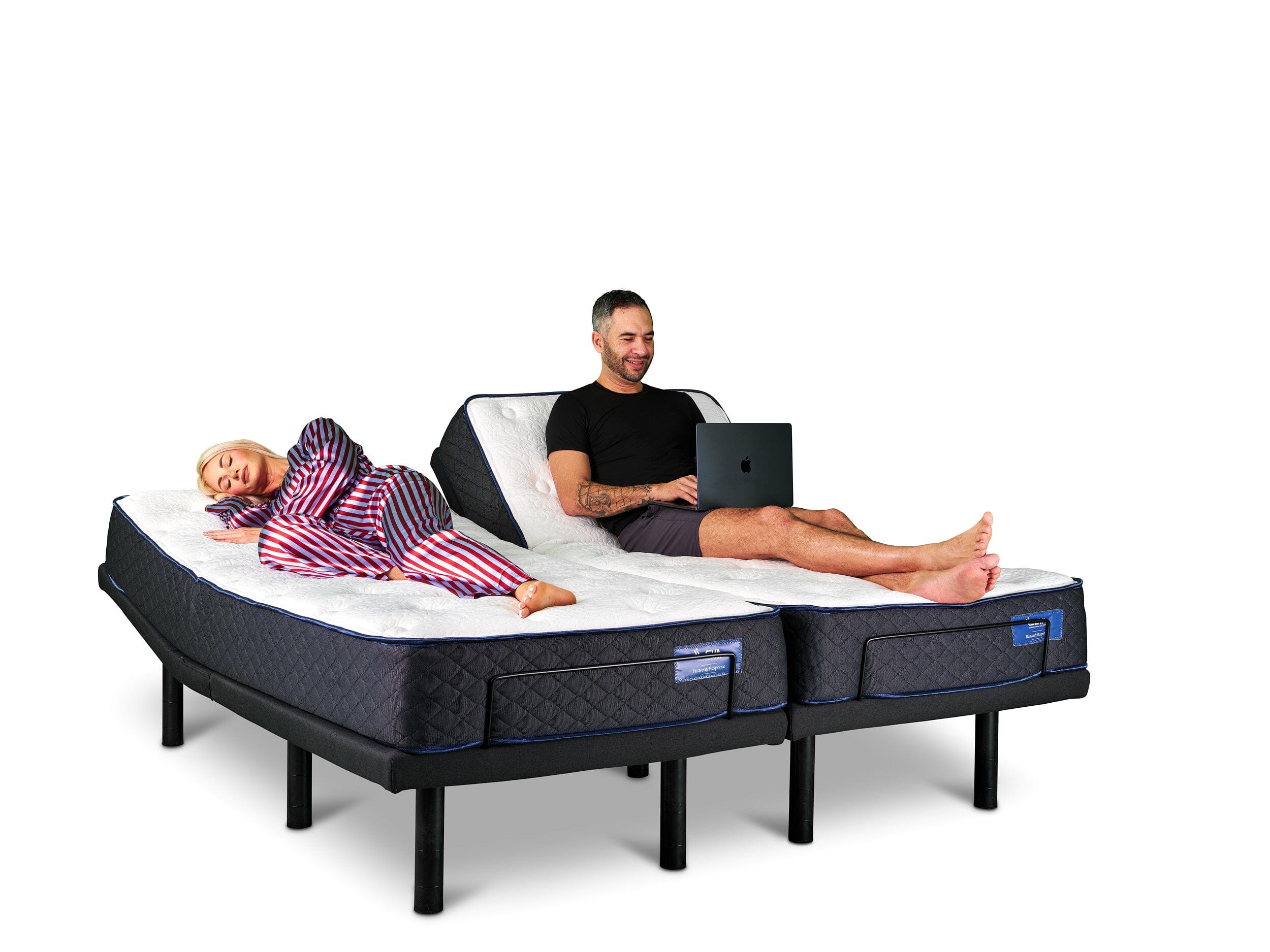
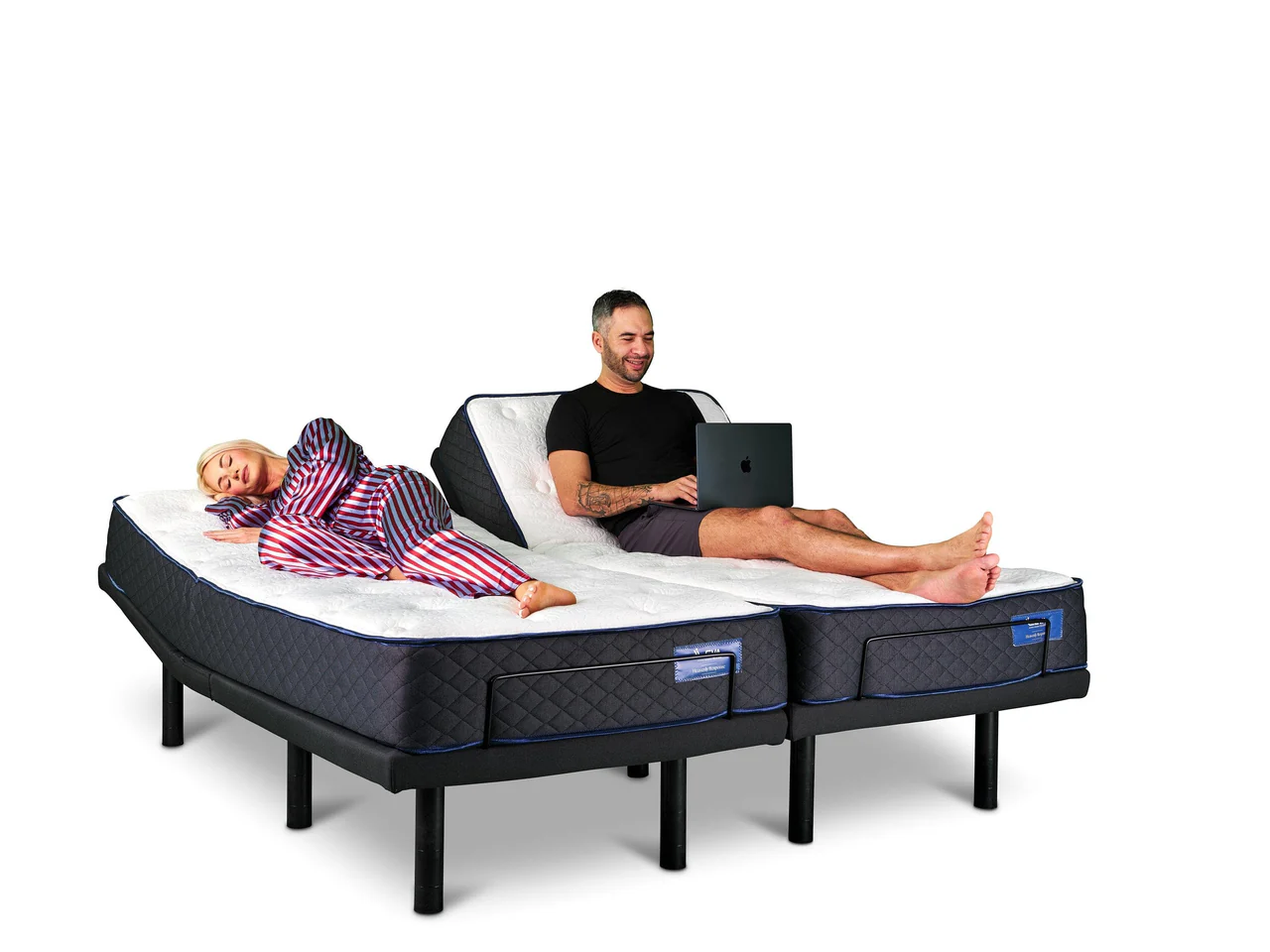
Because each Twin XL mattress in a split king moves independently, two separate Twin XL fitted sheets are required on the bottom; a single king sheet cannot accommodate independent movement and will pop off under elevation. Helpful solutions include mattress connector straps, foam gap-filler wedges, and king-size toppers that bridge both sides. Leva Sleep addresses this at the product level with fitted sheets that use extra-deep pockets and reinforced elastic designed for adjustable bases, plus duvet clips that keep bedding in place when positions differ.
Motor noise often becomes the second dealbreaker for couples. Good Housekeeping Institute Textiles Lab testing confirmed that split king bases require two separate motors, and budget-tier actuators can create grinding or whirring sounds that carry across the room. When you compare bases, ask for decibel ratings or request an in-person or video demonstration of a 2 a.m.-style adjustment. Leva Sleep uses whisper-quiet German motors engineered for minimal acoustic output.
The table below maps each brand against the four evaluation criteria. Every data point is sourced; where a figure is not publicly disclosed by a brand, the cell notes that.
| Brand | Lumbar Adjustability | Motor Noise | Mattress Pairing Options | Delivery Experience |
|---|---|---|---|---|
| Tempur-Pedic | TEMPUR-Ergo Smart Base raises head ~12° automatically when snoring is detected, dedicated lumbar lift zone not publicly specified | Not publicly disclosed in decibels | Two Twin XL TEMPUR mattresses; mix-and-match feels available | Standard white-glove available; pricing varies by retailer |
| Saatva | Head and foot elevation; dedicated lumbar lift not publicly specified | Not publicly disclosed in decibels | Saatva-brand mattresses; limited third-party pairing guidance | In-home delivery and setup included on most orders |
| Nectar | Head and foot elevation; lumbar lift not listed in published specs | Not publicly disclosed in decibels | Nectar-brand foam mattresses; compatibility with third-party mattresses not specified | Standard doorstep delivery; white-glove available for fee |
| Leva Sleep | Independent lumbar lift control per side; zero-gravity preset; pillow tilt motor; anti-snore mode (spring 2026) | Whisper-quiet German motors; decibel rating not published but engineered for minimal acoustic output | 15–20 adjustable models; U.S.-made all-foam and hybrid pocket-coil mattresses; curated pairings with Airloom, Helix, Diamond Mattress, and others | In-house white-glove delivery for a fee: bedroom setup, leg-height adjustment, product tutorial, old-bed removal |
Mattress Pairings That Work Best on Split King Bases
Not every mattress flexes safely on an adjustable base, so compatibility matters as much as comfort. When you evaluate mattress options, use these criteria.
- Flexibility: All-foam and individually wrapped pocket-coil hybrids articulate cleanly through head and foot elevation. Bonnell or offset coil mattresses can resist bending and may stress the base motor over time.
- Pressure relief: The primary goal for back-pain sufferers is pressure relief, achieved when the base elevates legs and head to distribute weight more evenly across the lumbar region. A mattress with zoned support layers strengthens that effect.
- Independent movement compatibility: Each Twin XL in a split king must move without transferring motion to the other side. Mattresses with interconnected coil systems undermine this requirement.
Tempur-Pedic’s proprietary TEMPUR material is designed for its own bases and performs well on elevation but limits pairing flexibility. Saatva and Nectar each restrict recommended pairings to their own brand ecosystems. Leva Sleep offers U.S.-made all-foam and hybrid pocket-coil mattresses engineered for adjustable bases, plus curated pairings with California-made Airloom, Helix Sleep, and Diamond Mattress, giving couples a wide range of pressure-relief profiles without compatibility risk.
What Split King Owners Actually Complain About
Real owner feedback on forums and review platforms highlights the same pain points repeatedly. The list below maps each complaint to a Leva Sleep solution.
- Fitted sheets pop off during elevation. Leva’s fitted sheets use extra-deep pockets and reinforced elastic designed for adjustable-base movement, which removes the need for improvised fixes.
- Motor noise wakes the non-adjusting partner. Leva’s whisper-quiet German motors are selected for low acoustic output, so a 2 a.m. position change does not become a 2 a.m. alarm.
- The gap between Twin XL mattresses is uncomfortable. Leva offers gap-filler accessories and connector solutions as part of its integrated accessory line.
- Remote controls get lost in bedding. Leva’s bedding includes dedicated remote pockets sewn into the side panels.
- One partner’s adjustment wakes the other. Independent app-controlled bases let each side adjust silently and separately through the Leva Sleep app.
Medical Positioning Features That Target Lower Back Pain
Building on the intradiscal pressure reduction discussed earlier, independent lumbar lift goes further by actively filling the natural lumbar gap rather than relying only on full-body tilt. This targets the lower back directly in a way that basic elevation-only systems cannot.
Leva Sleep’s pillow tilt motor allows individualized cervical positioning on top of lumbar and head elevation, supporting the full spinal column from sacrum to occiput. The anti-snore mode launching spring 2026 detects snoring and makes micro-adjustments to the head of the affected partner’s side only, which addresses the airway component of sleep-disordered breathing that often worsens back-pain fatigue.
2026 Price and Delivery Comparison
Five-year ownership cost gives the clearest picture of value for a sleep system. Tempur-Pedic Split King configurations with the TEMPUR-Ergo Smart Base typically retail around $4,200 before accessories and delivery fees. Saatva’s adjustable split king packages sit in a similar luxury tier. Nectar offers lower entry pricing but with fewer lumbar features and more limited white-glove options.
When comparing options, consider how each brand performs on lumbar adjustability, motor noise, mattress pairing compatibility, and delivery experience. Leva Sleep’s direct-to-consumer model, which designs and assembles systems locally without retail markup, delivers comparable or superior lumbar adjustability at 30–50% less than Tempur-Pedic or Saatva. White-glove delivery, which includes bedroom setup, leg-height calibration, a product tutorial, and old-bed removal, is available for a fee and is performed by trained in-house professionals rather than third-party contractors. Over five years, the combination of lower acquisition cost and durable, purpose-built accessories produces a materially lower total cost of ownership.
Buyer Checklist for Couples with Chronic Back Pain
Use this checklist to evaluate any split king system before purchasing. Start with therapeutic features for back pain, then confirm noise, compatibility, and long-term cost.
- Lumbar lift range: Does the base offer a dedicated lumbar lift zone with a documented range of motion, or only full-body head and foot elevation? This is the primary therapeutic feature for lower back pain.
- Zero-gravity preset: Is the zero-gravity angle (approximately 35° head, 25° foot) a one-touch preset on each side independently? Without this, you may struggle to reach the clinically effective position each night.
- Motor noise: Ask the retailer for decibel ratings or request an in-person or video demonstration of a 2 a.m.-style adjustment. Loud motors undermine independent positioning by waking your partner.
- Sheet retention: Does the brand offer purpose-built fitted sheets with reinforced elastic, or will you need aftermarket solutions that may not stay in place?
- Mattress compatibility: Is the recommended mattress an all-foam or pocket-coil hybrid that flexes cleanly through the full range of motion without stressing the base?
- Delivery and setup: Is white-glove delivery performed by in-house professionals, and does it include old-bed removal and basic calibration?
- Five-year cost: Add base price, mattress, accessories, and delivery to compare total ownership cost across brands instead of focusing only on sticker price.
Conclusion
For couples aged 40–65 managing chronic lower back pain, independent lumbar lift, zero-gravity positioning, whisper-quiet motors, and purpose-built accessories are essential rather than optional. Leva Sleep’s Split King system satisfies every evaluation criterion, including lumbar adjustability, motor noise, mattress pairing, and delivery, at 30–50% lower cost than Tempur-Pedic or Saatva. That combination makes it the most complete and cost-transparent choice available in 2026.
Frequently Asked Questions
Do doctors actually recommend adjustable beds for chronic back pain?
Many orthopedic physicians, physical therapists, and sleep medicine specialists do recommend adjustable bases for patients with chronic lower back pain, particularly when the goal is reducing lumbar compression during sleep. The clinical rationale centers on zero-gravity positioning, which can decompress the lumbar disc space and reduce the electrical activity of the paraspinal muscles. This means the spine is unloaded and the muscles surrounding it can fully relax rather than brace against gravity. Doctors are more likely to recommend a system with independent lumbar lift, which actively supports the natural curve of the lower back, than a basic base that only tilts the full body. If your physician has recommended elevated sleeping for back pain, acid reflux, or sleep apnea, a split king system with dedicated lumbar control offers the most precise way to follow that guidance for two people with different positioning needs.
What split king adjustable bed problems should couples watch for before buying?
The two most common complaints from split king owners are sheet slippage and motor noise. Because each Twin XL mattress moves independently, a standard king fitted sheet will not stay on during elevation; two separate Twin XL sheets with deep pockets and reinforced elastic are required. The center gap between the two mattresses is a secondary concern, and connector straps, foam wedge fillers, and bridge pads are standard solutions. Motor noise is the second major issue, since budget-tier actuators can produce grinding or whirring sounds loud enough to wake a sleeping partner during a 2 a.m. position adjustment. Before purchasing, ask for a decibel rating or request a live demonstration of the motors at full travel speed. Also confirm that the brand’s accessory line includes remote pockets sewn into the bedding, since loose remotes are a persistent minor frustration reported by long-term owners.
Which mattress type works best with a split king adjustable base for back pain?
All-foam mattresses and individually wrapped pocket-coil hybrids are the two categories that perform best on adjustable bases. Both flex cleanly through head and foot elevation without stressing the motor or creating pressure ridges at the bend points. Bonnell coil and offset coil mattresses resist articulation and can shorten motor life over time. For back pain specifically, look for a mattress with zoned support layers that feel firmer in the lumbar zone and softer under the shoulders and hips, so the mattress amplifies the pressure-relief effect of the zero-gravity position rather than working against it. Independent movement compatibility is also critical in a split king, since each Twin XL must articulate without transferring motion or tension to the other side, which rules out any mattress with an interconnected coil system spanning the full width. Confirm with the retailer that the mattress is explicitly rated for use on an adjustable base before purchasing.
How does Leva Sleep compare to Tempur-Pedic and Saatva on total five-year cost?
Tempur-Pedic’s premium split king systems start around $4,200, while Saatva positions at a similar luxury price point. Both brands sell through retail channels that add margin to the final price. Leva Sleep designs and assembles its systems locally and sells direct to the consumer, which removes retail markup. The result is a 30–50% lower acquisition cost for a system with comparable or superior lumbar adjustability, whisper-quiet German motors, and a curated accessory line built specifically for adjustable bases. When you add purpose-built fitted sheets, gap fillers, and remote pockets, items that Tempur-Pedic and Saatva customers often purchase separately from third parties, Leva’s total five-year ownership cost stays materially lower. White-glove delivery by Leva’s in-house team (available for a fee) includes the full setup and tutorial described earlier, plus old-bed removal.
Is a split king adjustable bed worth it if only one partner has back pain?
A split king system works especially well for couples where only one partner has a medical positioning need. The independent controls let the partner with chronic back pain dial in a precise zero-gravity angle and lumbar lift setting every night, while the other partner sleeps completely flat or at a different elevation without any mechanical linkage between the two sides. This separation removes the most common reason couples abandon shared adjustable beds, which is one partner’s position change disturbing the other. The anti-snore mode available on Leva Sleep’s system (launching spring 2026) extends this benefit further, since micro-adjustments to the snoring partner’s head position happen automatically without waking either sleeper. For couples where one person has back pain and the other has no positioning needs at all, the non-adjusting side can simply remain flat while the other side operates as a fully featured therapeutic base.