
Written by: Matthew Timmins, Founder and Managing Director, Leva Sleep
Key Takeaways
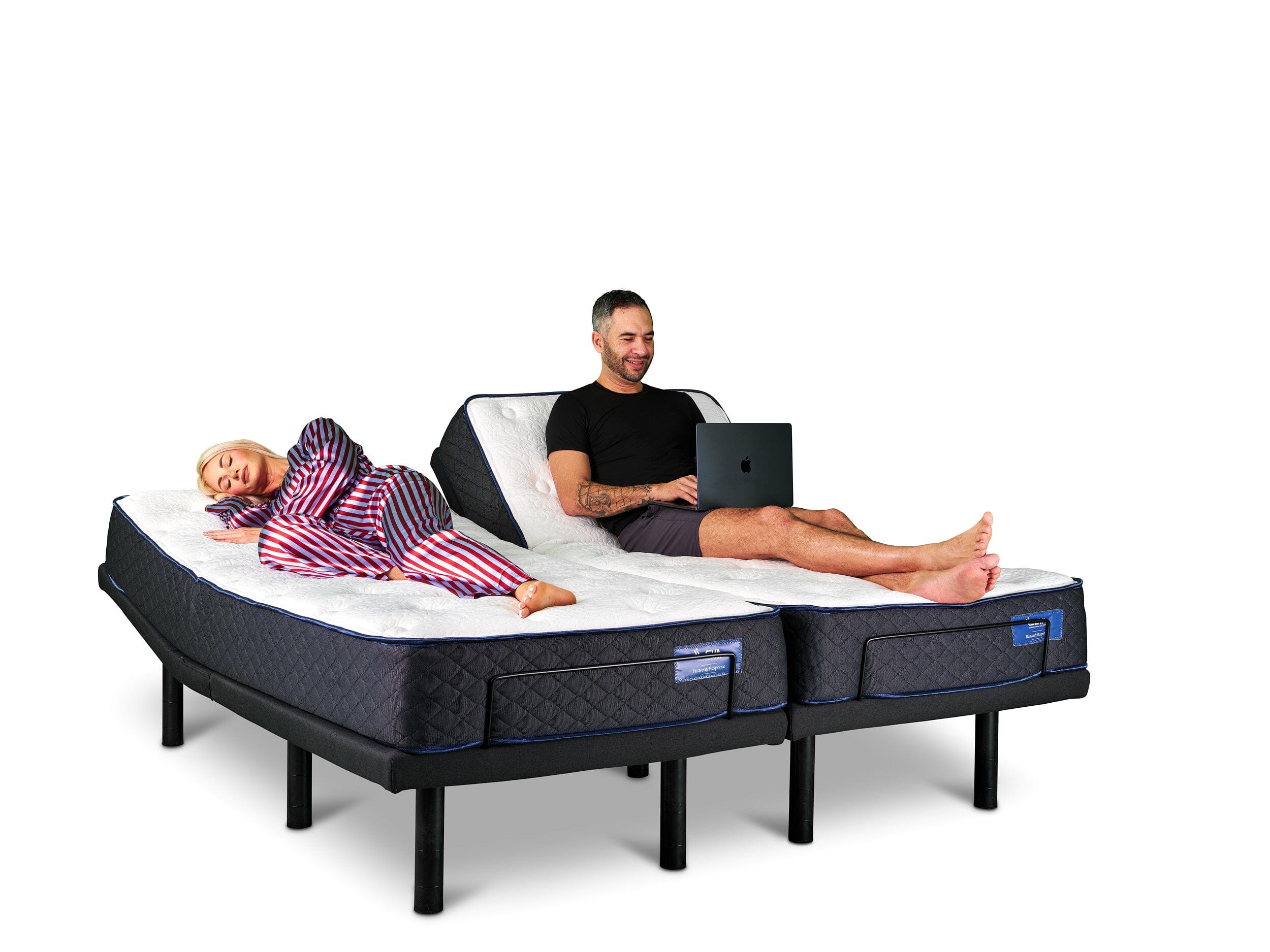
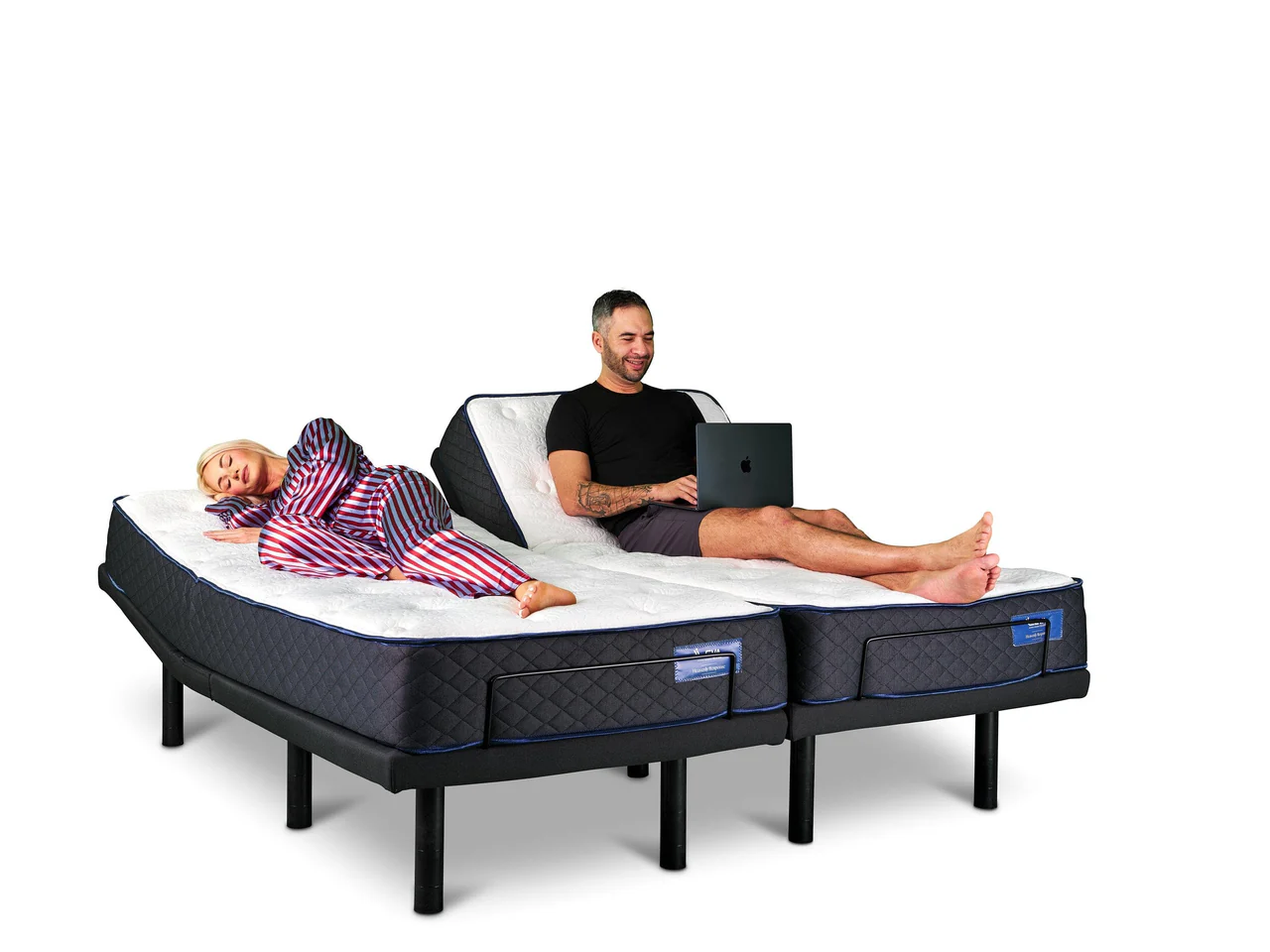
- Split-queen adjustable bases give each partner independent head, foot, and lumbar control, which reduces sleep disturbances.
- Six core evaluation criteria guide smart choices: lumbar support, independent adjustability, mattress compatibility, noise isolation, motor durability, and white-glove delivery.
- Features such as whisper-quiet German motors, adjustable lumbar zones, anti-snore positioning, and app-controlled profiles support back-pain relief and partner comfort.
- Professional setup, deep-pocket fitted sheets, and duvet clips address everyday issues like base misalignment and sheet slippage in split configurations.
- Leva Sleep specializes in premium split-queen systems; shop online or visit the La Jolla showroom today to compare configurations in person.
How Split-Queen Beds Compare for Back-Pain Relief
Three broad product categories serve couples seeking back-pain relief: traditional flat beds, basic single-motor adjustable bases, and fully integrated split-queen systems.
Before comparing these categories, focus on the six evaluation criteria that matter most for back-pain relief in a split-queen system:
- Lumbar support quality and adjustability
- Independent adjustability for each partner
- Mattress compatibility across foam and hybrid designs
- Noise and motion isolation between sides
- Motor durability and warranty coverage
- White-glove delivery with professional setup
Traditional flat beds provide no elevation, no lumbar targeting, and no independent positioning. Spinal alignment depends entirely on mattress firmness, which cannot change without replacing the mattress.
Basic single-motor adjustable bases add head and foot articulation but rely on one motor across the full width. Both partners move together, so independent adjustability disappears. Lumbar support, when available, stays fixed instead of micro-adjustable. Motion isolation remains limited because the entire platform moves as a single unit.
Fully integrated split-queen systems address all six criteria. Each half of the mattress rests on its own articulating base with independent head, foot, and lumbar controls. Motor technology in 2026 models, including whisper-quiet German motors used in Leva Sleep systems, operates below perceptible noise thresholds. Accessories such as deep-pocket fitted sheets with reinforced elastic and duvet clips are engineered for split configurations, which solves the sheet-slippage problem that plagues basic setups.
Comfort Features That Target Back Pain
Knee elevation between 15 and 30 degrees relaxes the hamstrings and eases pulling on the lower back, which can provide immediate relief for the sciatic nerve in patients with sciatica or herniated discs. A split-queen base lets one partner maintain this knee-elevation angle while the other remains flat, which a shared single-motor platform cannot do.
Zero-gravity presets distribute body weight evenly across the base and reduce pressure on the lumbar spine. Lumbar-specific micro-adjustment then raises a targeted support zone directly beneath the lower back. Tempur-Pedic’s Ergo Power Base includes a lumbar reinforcement bar that users raise or lower to support the spine, which helps people living with back pain or sleeping on a mattress that feels too soft.
Many patients with osteoarthritis experience less joint locking when they use the subtle movements of an adjustable base, according to Dr. Nicholas Callahan. Split-queen systems allow the partner with osteoarthritis to activate gentle massage or micro-movement cycles while the other side remains still.
Partner Compatibility in Shared Bedrooms
Split-king configurations offer the same independent adjustability as split-queen systems but use a 76-inch-wide footprint, which is 16 inches wider than a standard queen. Couples in smaller rooms, or couples who prefer to sleep closer together, often choose the split-queen format because it preserves shared space while keeping independent control.
Motion isolation in a true split-queen system starts with structure. The two bases are mechanically separate, so one partner adjusting position at 2 a.m. creates no perceptible movement on the other side. This experience differs from a single queen mattress on a shared base, where any articulation ripples across the full surface.
Independent app-controlled settings let each partner save preferred positions. One partner can store a lumbar-elevated profile for disc pain, while the other saves a flat profile. Both recall their settings quickly without negotiation or compromise.
Key Technology and Comfort Features
The 2026 generation of split adjustable bases adds features that directly support back-pain relief and partner compatibility.
- Whisper-quiet motors use German engineering that keeps operation below audible thresholds, and this quiet performance continues even during frequent adjustments. Saatva’s adjustable base motors also focus on quiet operation, which helps light sleepers.
- Adjustable lumbar support appears in models such as the Reverie 9T, which offers adjustable-degree lumbar support with quiet high-definition dual motors. Tempur-Pedic’s TEMPUR-Ergo ProSmart Base also provides adjustable lumbar support.
- Pillow tilt features in the Leggett & Platt Prodigy 2.0, which includes independent neck support alongside dual-motor head-and-foot articulation. Leva Sleep systems include pillow-tilt motors as a standard feature on higher-tier bases.
- Anti-snore positioning in Leva Sleep systems detects snoring and makes micro-adjustments to the head of the bed to reduce airway obstruction. Sleep Number’s FlexFit 2 Smart Base includes Partner Snore technology that lets one partner raise the other’s head independently via a button press.
- App-controlled lumbar micro-adjustments in Leva Sleep’s Bluetooth app store custom sleep positions, enable vibrating alarms, and allow real-time lumbar adjustments without reaching for a physical remote.
Setup, Bedding, and Everyday Use
Split-queen bases arrive as two separate units that must align precisely within a compatible bed frame. Most couples benefit from professional setup, because misaligned bases create a gap or ridge at the center of the sleeping surface and can undermine comfort and spinal alignment.
Leva Sleep’s white-glove delivery service sends trained professionals to the bedroom, assembles both base units, adjusts leg heights to the customer’s preferred frame height, provides a full product tutorial, and removes the old bed. Saatva also offers free in-home white-glove delivery and setup, which shows that professional installation is becoming standard in the premium adjustable-base segment.
Sheet slippage is the most common everyday complaint with adjustable bases, and many couples need guidance on bedding. See the FAQ section below for specific fitted-sheet and duvet solutions that keep bedding in place on split configurations.
Long-Term Reliability and Durability
Motor quality strongly influences the operational lifespan of any adjustable base. Whisper-quiet German motors used in Leva Sleep systems are engineered for high duty-cycle use, which means frequent position changes over years of nightly use without noticeable performance loss. Premium split-queen systems also rely on steel frame construction, which supports consistent articulation under the combined weight of the mattress and sleepers.
When you evaluate long-term durability, consider several related factors that together predict lifespan. Start with motor warranty length and what it covers, including parts, labor, or both, because this reveals the manufacturer’s confidence in the design. Next, look at frame material and weld quality at articulation points, since these stress points determine whether the base maintains alignment over years of movement. Weight capacity per side, not just total capacity, shows whether each motor is sized correctly for real-world use. Finally, review the manufacturer’s stated duty-cycle rating for the motor, which describes how many adjustment cycles the motor can perform before performance begins to decline.
Real-World Health Profiles and Use Cases
Different health profiles highlight different features within the six-criteria framework.
- Chronic lower-back pain calls for motorized lumbar micro-adjustment and a generous knee elevation range. Confirm that the base supports at least 15 degrees of foot articulation.
- Snoring-related disruption benefits from anti-snore mode with automatic head elevation and independent partner controls, so the non-snoring partner stays undisturbed.
- Different firmness preferences require strong mattress compatibility. Confirm that the base works with both all-foam and hybrid pocket-coil constructions so each side can use a different mattress if needed.
- Post-surgery recovery depends on accurate zero-gravity presets, smooth motor articulation without jerking, and white-glove setup that avoids lifting during recovery.
- Athletic recovery often relies on multi-wave massage programs and programmable elevation profiles that can be recalled quickly after late training sessions.
Total Value and Everyday Practicalities
A split-queen adjustable system usually involves a short learning period. Most couples spend one to two weeks dialing in preferred positions before app-stored profiles feel automatic. Ongoing maintenance stays simple, with occasional inspection of the frame’s articulation points and keeping the motor area clear of dust and debris.
Changing health needs affect long-term value. A base purchased for lower-back pain may later support acid reflux, post-surgical elevation, or sleep apnea management. Systems with a broad feature set, including lumbar control, anti-snore mode, pillow tilt, and app programmability, adapt to evolving medical needs without replacement.
For couples in smaller bedrooms or apartments, the split-queen format preserves the queen footprint while delivering split-king functionality. This flexibility suits living spaces that cannot accommodate a full king while still providing independent adjustability for each partner.
Explore Leva Sleep’s full range of split-queen systems and accessories.
Guided Decision Framework for Couples
Use the checklist below to align your priorities with the right configuration. For each criterion, decide whether it is a requirement, a preference, or not relevant to your situation.
- At least one partner has diagnosed lower-back pain, sciatica, or a herniated disc → Require motorized lumbar micro-adjustment and 15–30 degree knee elevation.
- Snoring disrupts either partner’s sleep → Require anti-snore mode with independent head elevation per side.
- Both partners need different elevation angles at the same time → Require true split-queen or split-king independent bases and remove single-motor options from consideration.
- Bedroom space is limited → Prefer split-queen over split-king to keep the queen footprint.
- Professional setup matters due to physical limitations or complexity → Require white-glove delivery with in-room assembly and height adjustment.
- Long-term health needs are likely to change → Prefer a base with the full 2026 feature set, including lumbar, pillow tilt, anti-snore, and app control, instead of a feature-limited entry model.
Couples who mark three or more requirements in the list above usually benefit from a fully integrated split-queen system with independent lumbar control. Leva Sleep focuses on this configuration across a wide range of adjustable base models.
Find your ideal configuration at Leva Sleep’s La Jolla showroom or online.
Frequently Asked Questions
What is the difference between a split queen and a split king adjustable bed?
A split queen consists of two twin XL-equivalent halves, each approximately 30 inches wide, that together occupy a standard queen footprint of 60 by 80 inches. A split king uses two twin XL bases side by side within a 76-by-80-inch king frame. Both configurations provide fully independent adjustability per side. The practical difference is width. Split-queen systems fit in rooms where a king-sized frame feels too large, and they keep partners physically closer together on the sleeping surface. Couples who prioritize shared space and closeness while maintaining independent lumbar control often find the split-queen format the better fit.
Do doctors recommend elevated sleeping positions for back pain?
Orthopedic and sleep medicine professionals frequently recommend elevated positioning for specific conditions. Knee elevation between 15 and 30 degrees reduces tension on the hamstrings and decompresses the lumbar spine, which can help with sciatica and herniated disc pain. Head elevation is commonly recommended for acid reflux, mild sleep apnea, and post-surgical recovery. The key clinical distinction involves adjustability and repeatability. A fixed wedge pillow approximates the benefit but cannot be fine-tuned the way a motorized adjustable base can. Patients with osteoarthritis may also benefit from subtle movement cycles on higher-end bases, which help prevent joint stiffness overnight. Always consult a physician or physical therapist for guidance specific to your diagnosis before choosing a positioning protocol.
How noisy are split adjustable base motors, and will they wake my partner?
Motor noise varies significantly by manufacturer and model tier. Entry-level bases with basic DC motors can produce audible humming or clicking during articulation. Premium 2026 systems, including those using whisper-quiet German motors, operate below the threshold most sleepers find disruptive. When you evaluate a base, ask the retailer for the motor’s decibel rating during operation and, when possible, test it in a showroom. Leva Sleep’s La Jolla showroom allows couples to experience motor noise levels firsthand before purchasing. In a split-queen configuration, each motor operates independently, so one partner adjusting position does not activate the other side’s motor.
How do I prevent fitted sheets from slipping off a split adjustable base?
Standard fitted sheets are not designed for the range of motion an adjustable base creates. When the head or foot section elevates, the mattress surface changes shape and standard elastic often loses grip. The most effective solution uses fitted sheets engineered for adjustable bases. These sheets feature deeper pockets, reinforced elastic around the full perimeter, and sometimes corner straps. Leva Sleep designs its bedding accessories with these features as standard. Duvet clips also help by preventing the top cover from bunching at the center gap between the two split halves when partners hold different elevation angles. Purchasing bedding from the same specialist as the base ensures all components are tested together.
What mattress firmness works best with a split adjustable base for back pain?
Mattress firmness for use with an adjustable base involves two main considerations: spinal alignment on a flat surface and flexibility to articulate without resistance. For back-pain relief, medium to medium-firm constructions are most often recommended because they support the lumbar curve without creating pressure points at the hips and shoulders. All-foam mattresses flex easily with adjustable bases and suit frequent position changes. Hybrid pocket-coil mattresses provide more responsive support and work with most premium adjustable bases, as long as the coil gauge is not so rigid that it resists articulation. Leva Sleep offers both all-foam and hybrid pocket-coil mattresses designed and tested specifically for use with its adjustable bases, which removes compatibility guesswork when you buy the base and mattress together.
Choosing the Right Split-Queen System for Your Needs
The evaluation framework described earlier, from lumbar support through white-glove delivery, helps couples move from broad category comparison to specific model selection based on their health profiles and space constraints. Traditional flat beds and single-motor bases fall short on independent adjustability, which makes them poor fits for couples with different spinal needs.
Couples with chronic lower-back pain, snoring disruption, or post-surgical recovery needs usually benefit from systems that combine motorized lumbar micro-adjustment, anti-snore positioning, pillow tilt, and app-controlled profiles within a queen footprint that preserves shared sleeping space. Long-term value comes from choosing a base whose feature set can adapt to changing health needs over years of use, not just the condition present at the time of purchase.
Explore split-queen options and complete systems at Leva Sleep online or in the La Jolla showroom.