
Written by: Matthew Timmins, Founder and Managing Director, Leva Sleep
Key Takeaways
- Adjustable beds reduce spinal disc pressure and support overnight disc rehydration through zero-gravity positioning.
- Independent head and foot elevation allows precise micro-adjustments that can relieve lower-back pain, sciatica, and spinal stenosis.
- Split configurations let couples maintain different therapeutic positions without disturbing each other’s sleep.
- Key engineering features, including quiet motors, lumbar-control motors, and pillow-tilt motors, address common complaints about noise, setup, and compatibility.
- Leva Sleep’s adjustable bases and mattresses are engineered specifically for back-pain relief and couple-friendly sleep.
How Adjustable Positions Ease Lower Back Pain
Positional decompression is the core mechanism behind adjustable-bed relief. Raising the head and foot sections independently changes the angle of the spine relative to gravity, reduces lumbar compression, and shifts pressure off sensitive structures. A flat mattress, by contrast, holds the spine in one position all night, which creates uneven pressure on the lower back, hips, and shoulders.
The zero-gravity position replicates NASA’s Neutral Body Posture. You reach it by raising the upper body to roughly 120° and the knees to 45°, creating a 128-degree thigh-to-torso angle that minimizes joint pressure and spinal load. At this position, discs can increase height by up to 3% in stature after exposure to microgravity, which illustrates how unloading the spine affects disc hydration.
Shoppers who evaluate adjustable beds for back pain should confirm that the base offers independent head and foot elevation, a zero-gravity preset, and the ability to make micro-adjustments throughout the night. When reviewing clinical studies, focus on peer-reviewed sources such as publications in Spine and verify sample size, study duration, and outcome measures like the Oswestry Disability Index. Surface electromyography studies also provide insight into muscle activity changes with different sleep positions.
The table below summarizes starting positions for common spinal conditions. Individual needs vary, so treat these as starting points and adjust gradually over several nights.
| Condition | Head Elevation | Knee Elevation |
|---|---|---|
| Lumbar Spinal Stenosis | to promote flexion | to reduce nerve compression |
| Degenerative Disc Disease | to minimize shear forces | to support the spine |
| Sciatica / Herniated Disc | to relieve pressure | to relax the hamstrings |
| General Lower Back Pain (Zero-Gravity) | as needed for decompression | to achieve neutral body posture |
While these positions offer therapeutic benefits for many users, adjustable beds also come with limitations that buyers should understand.
Limitations and Risks of Adjustable Beds for Back Pain
Extreme elevation of head or foot sections can create discomfort rather than relief, and back pain remains highly individual, so a position that helps one person may worsen symptoms in another. If pain occurs while using an adjustable base, the angle may be too steep, the mattress may not be compatible with the base, or the base may need repositioning.
Beyond positioning errors, practical engineering issues create additional barriers to effective use. Noisy motors disrupt light sleepers during position adjustments, which becomes especially frustrating for couples. This couples challenge grows when non-split configurations force both partners to share a single elevation setting, which removes the personalized positioning that provides therapeutic benefit.
Setup friction also plays a role. Assembling a heavy base without professional help often leads to incorrect installation that undermines health benefits before the user even begins adjusting positions. Patients recovering from spinal fusion surgery should confirm with their surgeon whether head or foot elevation angles are safe, because some fusion protocols require strict flat positioning during early healing.
These limitations reflect engineering and configuration problems, not inherent flaws in adjustable sleep systems. Whisper-quiet motors, split configurations with independent controls, and professional white-glove setup address each concern directly.
Adjustable Bed vs. Recliner for Back Pain Relief
Many patients with spinal stenosis sleep better in a recliner than in a flat bed because recliners naturally create slight hip and knee flexion. However, a recliner is a static device. It cannot raise the head and knees independently, cannot be fine-tuned in small increments, and does not provide the full mattress surface area needed to distribute pressure across the heels, sacrum, and shoulder blades.
An adjustable base provides the independent head and foot elevation needed for zero-gravity positioning, which a wedge pillow or stacked pillows cannot replicate because pillows cannot raise the legs independently and tend to shift overnight. The same logic applies to recliners, which approximate a helpful angle but cannot sustain precise, personalized positioning across a full night of sleep on a supportive mattress surface.
When comparing options, consider whether elevating the legs 10–15 cm above heart level increases venous return and reduces morning stiffness. Look for controlled trials that measure inflammatory markers and stiffness scores to see whether an adjustable base delivers these outcomes more reliably than a recliner’s fixed geometry.
Beyond comparing adjustable beds to alternatives like recliners, many shoppers also want to know how these bases work with different sleep positions.
Side Sleeping on an Adjustable Bed
Side sleeping works well with adjustable bases when the configuration supports lateral spinal alignment. For side sleepers with degenerative disc disease, placing a pillow between the knees keeps the hips, pelvis, and spine aligned and prevents the spine from elongating unevenly. On an adjustable base, slight knee elevation creates a similar effect mechanically and reduces the need for a knee pillow that can shift overnight.
A pillow-tilt motor, available on higher-end adjustable bases, allows the head section to angle independently of the main head elevation and supports the cervical spine in a neutral lateral position. This feature helps side sleepers whose shoulder width creates a gap between the neck and a flat mattress surface. Dr. Raj Dasgupta notes that adjustable bases help reduce pressure points in the back, hips, or shoulders while keeping the spine aligned, and this benefit applies to side sleepers as well as back sleepers.
Once individual comfort is addressed, couples often face a different challenge: sharing one bed when each person needs a different position.
How Split Adjustable Bases Support Couples
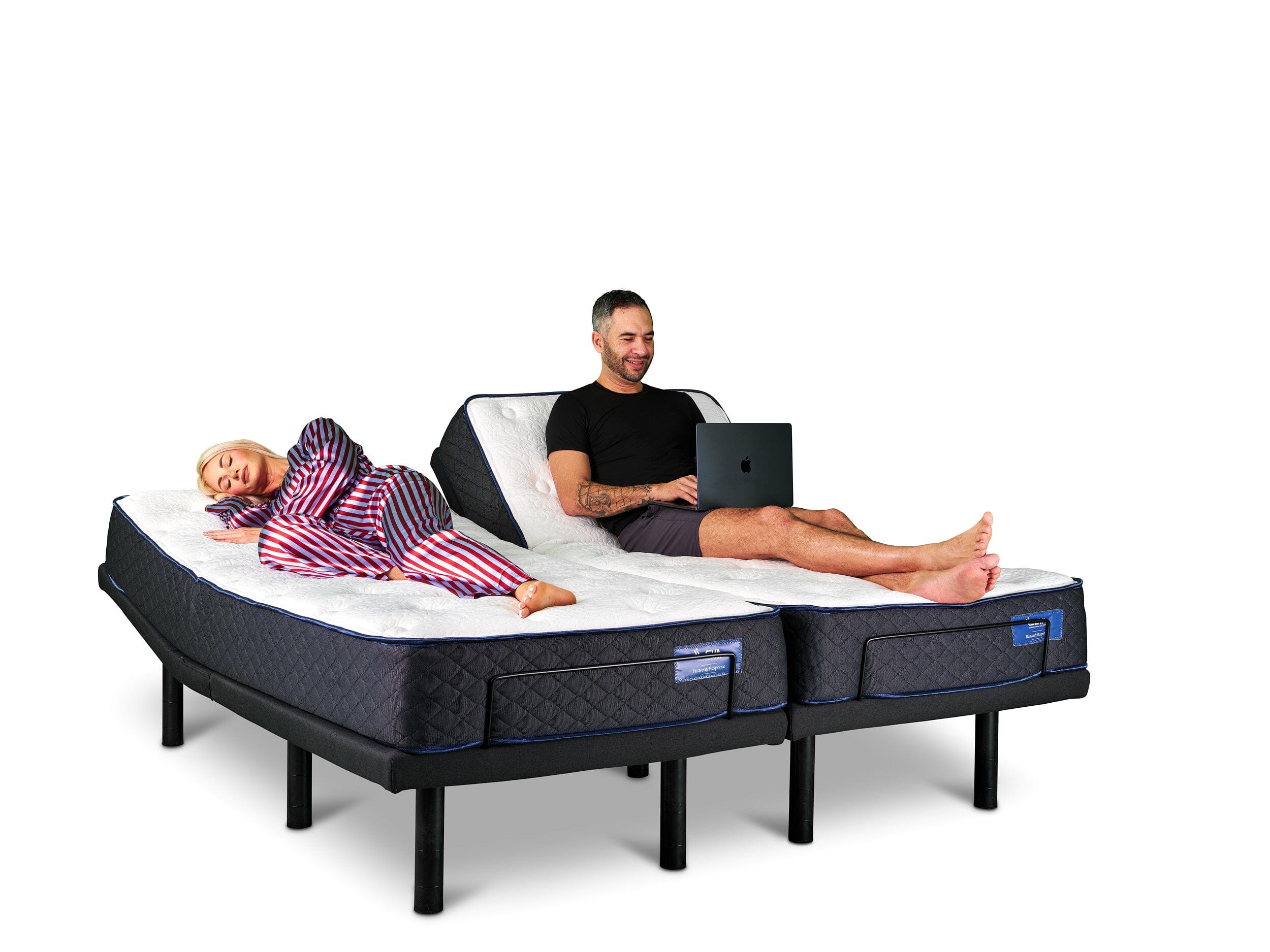
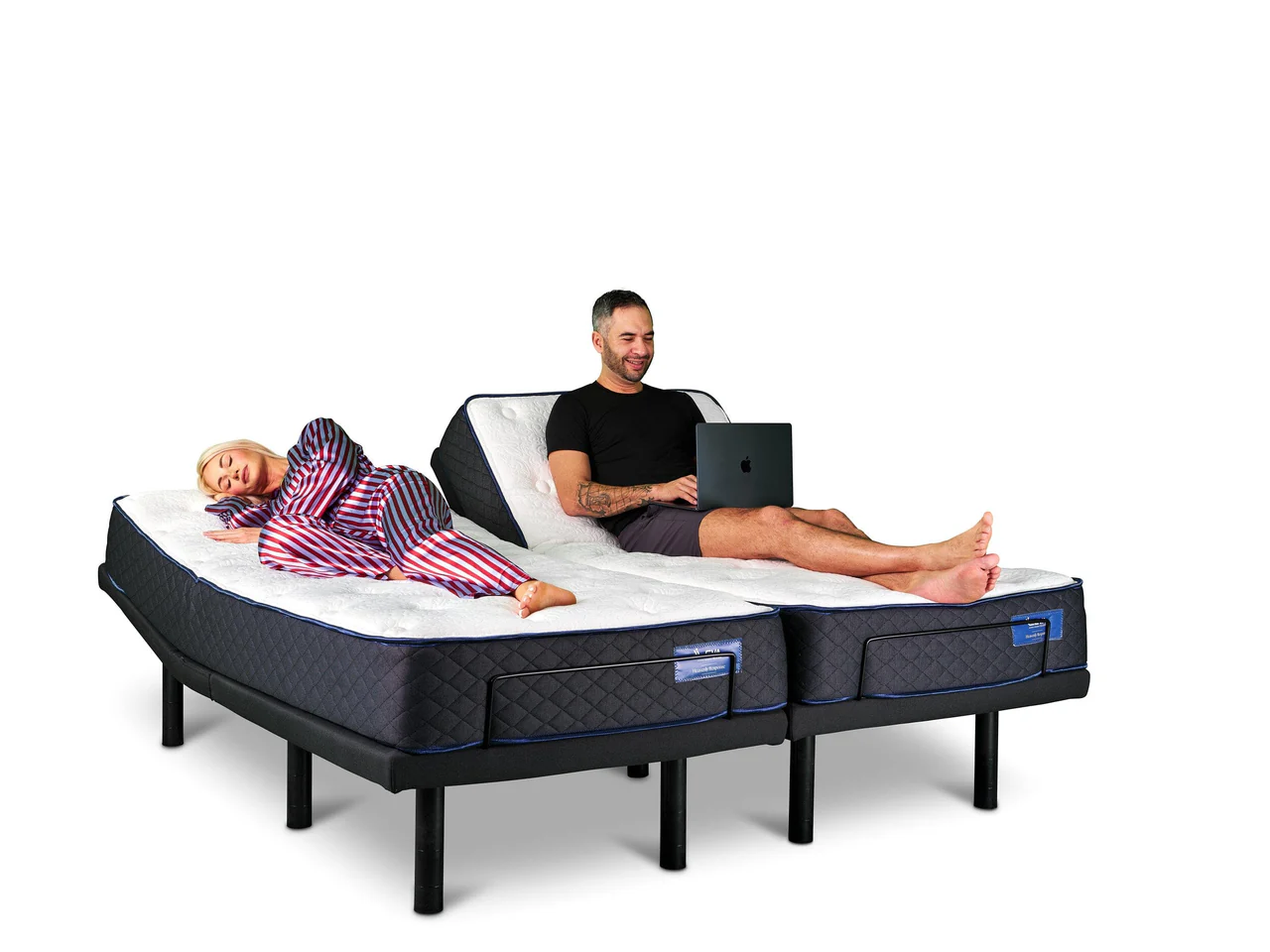
Couples most often abandon adjustable beds when a shared base forces one partner’s elevation preference on the other. A Split King or Split Queen base removes this conflict. Each side operates on independent controls, independent motors, and independent elevation profiles, so one partner can sleep in zero-gravity for lumbar decompression while the other lies flat.
Leva Sleep’s Split King and Split Queen systems are engineered specifically around this problem. Key features include:
- Whisper-quiet German motors that adjust position without waking a sleeping partner
- App-controlled anti-snore mode that detects snoring and makes micro-adjustments to the head of the bed to reduce airway obstruction
- Lumbar-control motor for precise lower-back support independent of overall head elevation
- Pillow-tilt motor for cervical spine positioning, particularly useful for side sleepers
- Full Bluetooth app control with custom sleep position memory, vibrating alarms, and real-time adjustments
- In-house white-glove delivery that includes bedroom setup, leg-height adjustment, product tutorial, and old-bed removal
Leva Sleep also designs all bedding accessories, including fitted sheets with deep pockets and extra elastic, duvet clips, and mattress protectors, specifically for adjustable bases so sheets stay in place when the base elevates. The mattresses paired with Leva bases are made in the United States and engineered to flex with the base rather than resist it.
Experience these features in person at the La Jolla showroom or explore the full collection online.
Key Questions for Any Adjustable-Bed Provider
Targeted questions help you choose an adjustable base that truly supports back-pain relief instead of creating new frustrations. Use the following criteria to evaluate any provider:
- Motor noise specification: Ask for decibel ratings or request a live demonstration. Motors that exceed conversational noise levels (roughly 60 dB) will disrupt a partner’s sleep during position changes.
- Split configuration availability: Confirm whether the base is available in Split King and Split Queen sizes with fully independent controls on each side, not a shared remote with zone presets.
- Elevation range: Verify that the base reaches at least 60–70° of head elevation and 35–45° of foot elevation to achieve a true zero-gravity position.
- Mattress compatibility: Confirm that the mattress is designed to flex with the base. A mattress engineered for a flat foundation will resist elevation and reduce the therapeutic benefit.
- Delivery and setup process: Ask whether delivery includes in-room setup, leg-height adjustment, and a product walkthrough, or whether the customer handles assembly.
- Return and trial policy: Understand the trial period, return logistics, and whether the provider manages disassembly and pickup.
Frequently Asked Questions
What angle should an adjustable bed be set to for lower back pain?
The appropriate angle depends on the underlying condition, as outlined in the positioning table above. Start with the recommended elevation for your specific diagnosis, then increase gradually over several nights based on comfort. Consulting a physician or physical therapist before settling on a fixed angle is advisable, particularly for post-surgical patients.
Are adjustable beds actually worth it for chronic back pain, or are they just a marketing claim?
Evidence for adjustable beds is meaningful, although it needs context. When evaluating claims, look for peer-reviewed studies that measure outcomes like disability scores and sleep quality in zero-gravity sleep compared with flat sleeping. A prospective study of chronic back pain patients on an adjustable airbed reported that 95% experienced pain improvement with an average pain decrease of 32%. Research suggests adjustable base use can improve back pain, yet these beds function as positioning aids for symptom management during sleep. They do not correct disc disease, muscle strain, or structural deformities, and they work best as part of a broader treatment plan that includes medical diagnosis and, when appropriate, physical therapy.
Can a split adjustable bed help if my partner and I have different sleep needs?
A split adjustable base is designed for partners with different sleep needs. Each side of the bed operates independently, so one partner can sleep in zero-gravity for lumbar decompression while the other lies flat or uses a different elevation profile. This design removes the common complaint that one partner’s therapeutic position forces discomfort on the other.
Beyond elevation, split systems with independent controls also allow each partner to use different massage settings, lumbar support levels, and pillow-tilt angles. For couples where one partner snores, an anti-snore mode on the snoring partner’s side can make micro-adjustments to head elevation without disturbing the other side of the bed.
Do adjustable beds help with spinal stenosis specifically?
Adjustable beds can support spinal stenosis management by promoting lumbar flexion. Spinal stenosis involves narrowing of the spinal canal that compresses nerves, and positions that encourage slight lumbar flexion are clinically preferred because flexion can open the spinal canal. Lying flat forces the spine into extension, which narrows these spaces further, the same reason many stenosis patients instinctively lean forward on a walker or shopping cart for relief.
An adjustable base set to promote a flexed posture can replicate this relief throughout the night. Many patients with spinal stenosis report that this positioning provides more consistent relief than a recliner, which approximates the angle but cannot be fine-tuned and does not provide full mattress support for pressure distribution.
What should I look for in a mattress to pair with an adjustable base for back pain?
The mattress must flex with the base instead of resisting elevation. Innerspring mattresses with rigid border rods are generally incompatible with adjustable bases. All-foam mattresses and hybrid mattresses with individually wrapped pocket coils are standard pairings because they bend without structural damage.
Firmness also matters. A mattress that is too soft allows the spine to sink out of alignment even when the base is correctly positioned, while a mattress that is too firm creates pressure points at the hips and shoulders. Medium-firm surfaces are most commonly cited for back pain management.
Mattress sizing must match the split configuration. A Split King requires two Twin XL mattresses, while a Split Queen requires two custom-width mattresses, a configuration that fewer providers offer.
Conclusion
Doctors recommend adjustable beds for back pain because these systems enable precise spinal positioning that a flat mattress cannot provide. Proper positioning reduces pressure on spinal discs, helps open the spinal canal in stenosis patients, relaxes muscles, and supports overnight disc rehydration. Evidence supporting zero-gravity and elevated-knee positioning is clinically meaningful, although adjustable beds remain a symptom-management tool rather than a structural cure. Consult a physician or physical therapist before selecting angles for a specific diagnosis, particularly following spinal surgery.
Find the right adjustable base for your back pain relief at Leva Sleep.