Written by: Matthew Timmins, Founder and Managing Director, Leva Sleep
Key Ways Adjustable Beds Help Snoring Couples
- Snoring affects up to 40% of men and 24% of women, disrupting sleep, causing fatigue, and straining relationships.
- Sleep medicine physicians recommend elevating the head of the bed between 7.5 and 30 degrees so gravity helps keep the airway open.
- Adjustable beds provide precise, consistent elevation that works more reliably than wedge pillows or bed risers for nightly snoring relief.
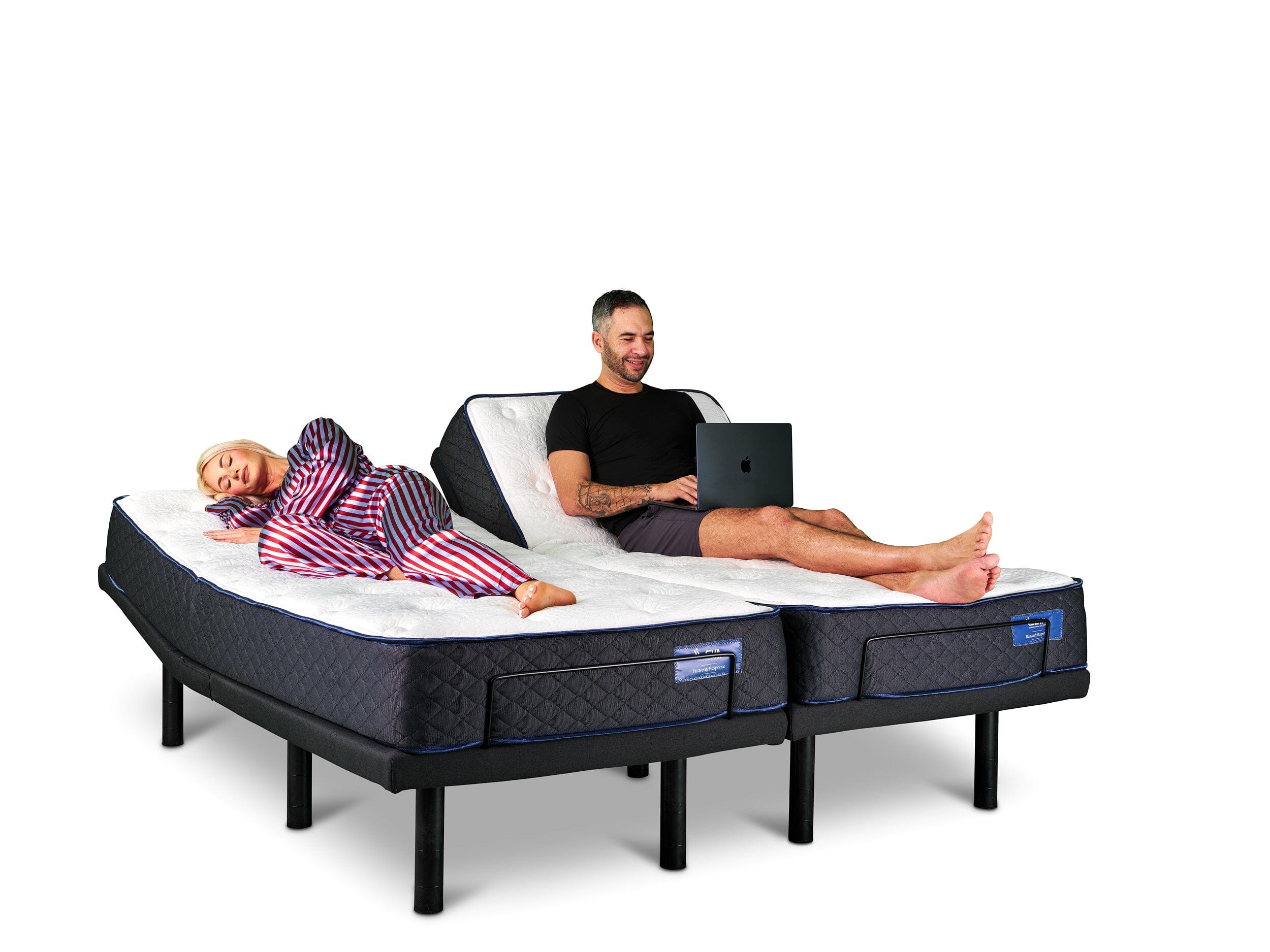
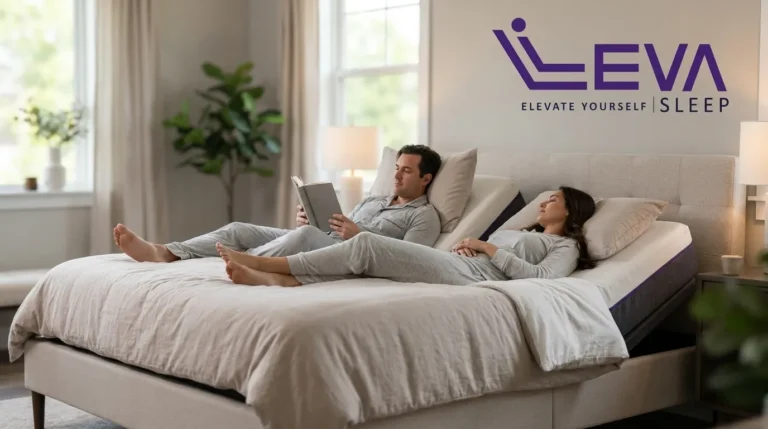
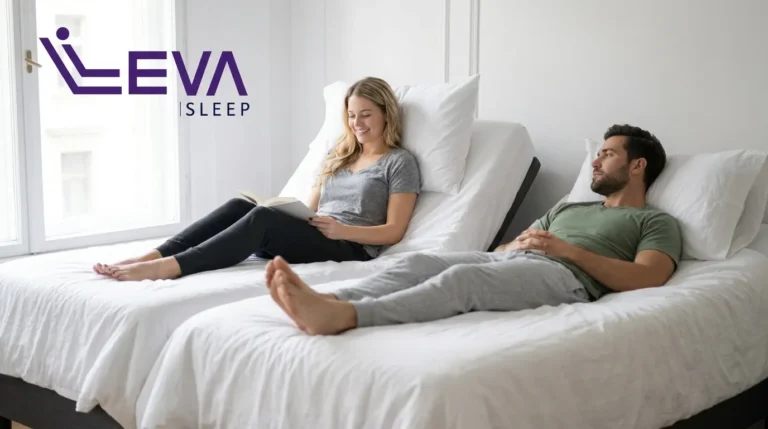
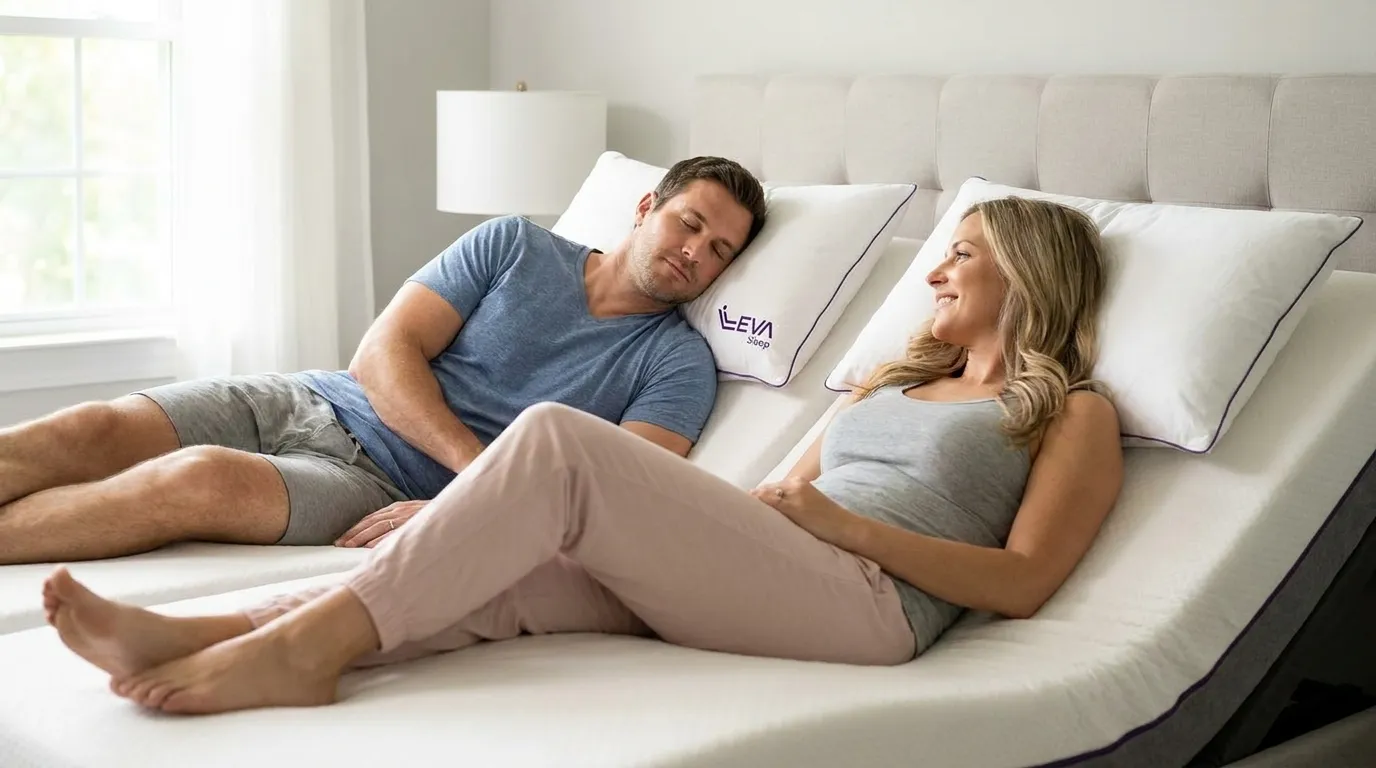
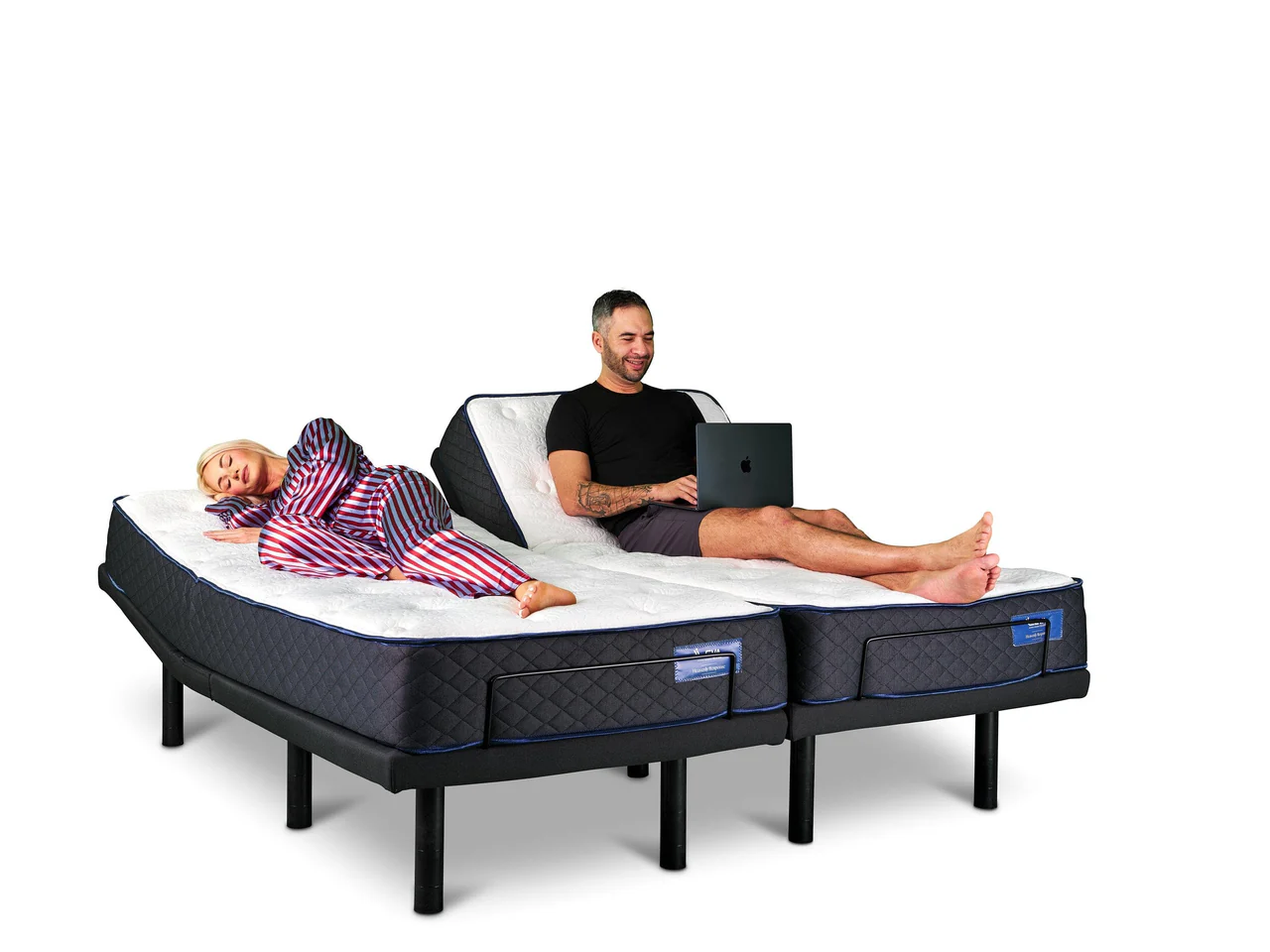
- Split King and Split Queen adjustable systems let one partner sleep at an anti-snore incline while the other remains flat, so neither has to compromise.
- Leva Sleep’s Split King and Split Queen systems feature whisper-quiet motors, independent app control, and an upcoming 2026 anti-snore mode—explore split systems designed for couples to reclaim shared, restorative sleep.
The Medical Case for Adjustable Beds and Snoring Relief
Sleep medicine physicians often recommend elevating the head of the bed to reduce snoring because gravity can help keep the airway more open. This elevation is achievable with an adjustable bed, bed risers, or a wedge pillow. Sleeping in a slightly reclined position may also help reduce snoring and mild sleep apnea.
The clinical literature supports these recommendations. Ravesloot et al. (2012) reviewed positional therapy for position-dependent snoring and OSA in Sleep and Breathing, while Souza et al. (2017) examined head-of-bed elevation effects in OSA patients. A 2024 systematic review by Moffa et al. examined positional therapy for snoring, reinforcing the body of evidence accumulated over the prior decade.
Finding the Best Adjustable Bed Position to Reduce Snoring
Elevation angle strongly influences snoring relief. Head elevation below 15 degrees does not sufficiently counteract gravitational effects on the airway for snoring reduction, while angles above 35 to 40 degrees are typically uncomfortable for sustained sleep and may cause the sleeper to slide toward the foot of the bed. The practical target range sits between 7.5 and 30 degrees. Most sleep specialists identify 10 to 20 degrees as the comfortable sweet spot for nightly use.
A peer-reviewed in-home study published in PMC found that participants sleeping at a 12-degree incline using an adjustable bed base for four weeks experienced a 7% relative reduction in objective snoring duration, 4% fewer awakenings, and 5% more time in deep sleep compared to four weeks of flat sleeping. That 12-degree angle represents a moderate starting point. Heavier snorers may benefit from progressing toward 20 to 30 degrees.
Elevation method also affects results. Experts recommend against simply sleeping with a higher pillow to reduce snoring, as this still allows the neck to bend, which promotes friction and allows snoring to continue. Elevation must raise the entire upper body from the waist up, via wedge pillow, adjustable base, or bed risers, not just the head with pillows, to avoid neck strain and to effectively reduce snoring by improving airway position. An adjustable base achieves full-torso elevation reliably and repeatably every night.
Adjustable Beds vs. CPAP for Mild Sleep Apnea
For positional snorers without a confirmed sleep apnea diagnosis, the elevation approach described above offers a well-supported, non-invasive intervention. Clinical research agrees that positional therapy is one of the most effective non-invasive treatments for habitual snoring. The Zero Gravity position, with head and feet elevated and knees slightly above the heart, functions as an effective anti-snore position by reducing spinal pressure and maximizing airway openness.
The calculus changes when obstructive sleep apnea (OSA) is involved. Head elevation reduces mild apnea events but does not provide the continuous airway pressure that CPAP delivers. Head elevation addresses obstructive sleep apnea but does not resolve central sleep apnea, which stems from the brain failing to signal the muscles that control breathing.
When an Adjustable Bed Is Not Enough for Sleep Apnea
Certain clinical presentations require medical intervention beyond positional therapy. The following situations warrant physician evaluation before relying on elevation alone:
- Severe OSA patients with AHI above 30 should not rely on an adjustable bed as sufficient treatment. CPAP is the clinical standard of care.
- Non-positional snorers, who snore in all positions, likely have anatomical issues such as enlarged tonsils, deviated septum, or nasal polyps, where head elevation helps less.
- Loud, chronic snoring paired with gasping, choking, or daytime exhaustion points toward apnea and warrants a medical evaluation rather than a positional fix alone.
- For moderate to severe OSA, CPAP remains the clinical standard of care. Never discontinue CPAP without consulting your sleep specialist.
For mild positional OSA, elevation alone may be sufficient only if determined by a sleep specialist via sleep study, not self-diagnosis. An adjustable base can also complement CPAP therapy by making the mask more comfortable and reducing the number of events that require intervention.
Split King Adjustable Beds for Couples Who Snore
A split king adjustable bed consists of two Twin XL mattresses placed side by side on independent adjustable bases, enabling the snorer to remain at a 20-degree incline while the non-snorer sleeps perfectly flat. This configuration eliminates the core compromise that standard king beds impose on couples with different sleep needs.
Leva Sleep’s Split King and Split Queen systems are purpose-built for this scenario. Each side operates independently via the Leva Sleep app, allowing micro-adjustments to head elevation, foot elevation, lumbar support, and pillow tilt without disturbing the other partner. Whisper-quiet German motors ensure that a 2 a.m. position change does not become a 2 a.m. wake-up call for the non-snoring partner. Leva’s anti-snore mode, shipping in 2026, detects snoring and makes automatic micro-adjustments to the head of the bed. This feature delivers the clinically supported elevation angle without requiring the snorer to wake up and manually adjust. White-glove delivery includes in-home setup, leg-height calibration, and a full product tutorial, so the system performs correctly from the first night.
Leva also offers a Split Queen configuration, a rarity in the market, for couples who want independent adjustability in a more space-conscious footprint. All Leva mattresses are made in the United States and designed specifically to flex with adjustable bases, preventing the sheet-popping and mattress-sliding that plague generic mattress-and-base combinations.
How Leva Sleep Compares on Snoring Features
The table below compares key snoring-relevant features across five adjustable base brands. Every data point is drawn from publicly available product specifications or independent reviews. Price positioning reflects queen-size configurations where available.
| Brand / Model | Automatic Snore Detection | Independent Split Controls | Motor Noise | Price Positioning (Queen) |
|---|---|---|---|---|
| Leva Sleep Split System | Yes, 2026 anti-snore mode with app micro-adjustments | Yes, Split King and Split Queen with independent app control per side | Whisper-quiet German motors | Premium; 30–50% below comparable luxury competitors |
| Tempur-Pedic TEMPUR-Ergo Smart Base | Yes, Sleeptracker-AI raises head ~12° automatically upon snoring detection | Yes, Split King/Cal King option available | Not independently verified in cited sources | $1,999–$2,199 depending on the retailer |
| Helix (via 3Z Brands) | Not listed in cited sources | Split King available; per-side independent control | Not independently verified in cited sources | Mid-range |
| Saatva | Not listed in cited sources | Split King available | Not independently verified in cited sources | Premium |
| GhostBed | Not listed in cited sources | Queen bases move as a single unit; Split King required for independent control | Not independently verified in cited sources | Mid-range; broad wholesale distribution |
2026 Update: Automatic snore-response technology now appears across the premium adjustable base category. Tempur-Pedic’s Sleeptracker-AI raises the head approximately 12 degrees upon sustained snoring detection. Sleep Number’s FlexFit 3 includes Partner Snore™ automation. Leva Sleep’s 2026 anti-snore mode delivers app-controlled micro-adjustments with whisper-quiet German motors, combining automated response with manual override precision at Leva’s competitive price point.
Practical Evaluation Criteria for Couples
Couples shopping for an adjustable base for snoring relief can use the following checklist before purchasing:
- Motor noise: Quality adjustable beds use brushless DC motors or low-noise lift systems that operate nearly silently, which matters for both partners’ sleep. Request a live demonstration or ask for decibel ratings before committing.
- Independent controls: The ability to customize each side independently makes the split king the clear choice for couples in which only one partner needs the anti-snore angle, because a standard king mattress would force both partners to sleep at the same incline.
- Mattress compatibility: Confirm the mattress is designed to flex with the base. Leva’s American-made mattresses, available in all-foam and hybrid pocket coil, are engineered specifically for adjustable bases, preventing bunching and slippage at elevation.
- Elevation range and presets: Verify the base reaches the clinically relevant 7.5 to 30-degree range and includes a dedicated anti-snore preset. An anti-snore preset typically raises the head to around 7 degrees automatically and is a convenient feature for snoring issues.
- Delivery and setup experience: A split adjustable base involves two separate motors, two remotes or app profiles, and precise leg-height calibration, all of which must be configured correctly to deliver the promised snoring relief. White-glove delivery by trained professionals eliminates setup errors that compromise performance from night one.
See Leva’s split adjustable bases in person at the La Jolla showroom or configure your system online.
Frequently Asked Questions
Do doctors officially recommend adjustable beds for snoring?
Sleep medicine physicians recommend head-of-bed elevation as a clinically supported, non-invasive intervention for positional snorers. Elevating the head of the bed can reduce snoring by helping gravity keep the airway open. An adjustable base is one of the most reliable ways to achieve and maintain that elevation nightly. Physicians also advise that persistent or loud snoring accompanied by gasping or daytime exhaustion warrants a formal sleep study to rule out obstructive sleep apnea before relying on positional therapy alone.
Can I test a wedge pillow before investing in an adjustable base?
A wedge pillow is a reasonable low-cost starting point for evaluating whether head elevation reduces your snoring. A 7 to 8-inch wedge, approximately 30 degrees, suits light snoring and mild reflux. If you notice improvement after two to four weeks, that result strongly suggests that an adjustable base, which delivers more precise, repeatable, and comfortable elevation, will provide sustained benefit. Wedge pillows have limitations. They shift during sleep, cannot be independently adjusted per partner, and do not offer the full-torso elevation that an adjustable base provides. If the wedge produces no improvement, consult a sleep specialist before assuming elevation is ineffective, because non-positional snoring may have anatomical causes.
Will my health insurance cover an adjustable bed for snoring or sleep apnea?
Standard health insurance plans in the United States do not typically cover adjustable bed bases as durable medical equipment for snoring or sleep apnea. CPAP machines and related supplies are more commonly covered when prescribed following a sleep study. Some flexible spending accounts (FSAs) or health savings accounts (HSAs) may allow adjustable base purchases if accompanied by a letter of medical necessity from a physician, but eligibility varies by plan. Consult your insurance provider and physician for guidance specific to your coverage. Leva Sleep’s pricing makes the investment more accessible without relying on insurance reimbursement.
How loud are the motors on a split adjustable base, and will they wake my partner?
Motor noise is one of the most common complaints about basic adjustable bases sold as add-ons at general mattress retailers. Premium adjustable bases use brushless DC motors engineered for near-silent operation. Leva Sleep’s systems use whisper-quiet German motors specifically selected to allow one partner to adjust their side without disturbing the other, which is critical when the adjustment responds to snoring at 2 a.m. When evaluating any adjustable base, ask for a live motor demonstration at the showroom or request a decibel specification from the manufacturer before purchasing.
What elevation angle should I start with if I am new to sleeping on an adjustable base?
Most sleep specialists recommend beginning at 10 to 12 degrees of head elevation for the first one to two weeks. This moderate incline is comfortable for most sleepers, allows the body to adapt to the new position, and still delivers measurable snoring reduction. Research supports this starting point. The same study that demonstrated snoring reduction at 12 degrees, mentioned earlier, found this angle comfortable enough for sustained four-week use while still improving sleep quality. If snoring persists at 12 degrees, gradually increase toward 20 to 30 degrees, the range most commonly associated with significant AHI reduction in clinical studies. Avoid exceeding 35 to 40 degrees for sustained sleep, because most people find higher angles uncomfortable and may slide toward the foot of the bed.
Conclusion: Reclaim Shared Sleep Tonight
Snoring does not have to be an inevitable feature of aging or shared sleep. Doctor-recommended head elevation, delivered precisely and quietly through a split adjustable base, addresses the gravitational root cause of positional snoring, reduces nighttime awakenings for both partners, and can help couples avoid separate bedrooms. The clinical evidence supporting 7.5 to 30 degrees of head-of-bed elevation is consistent across multiple peer-reviewed studies, and leading sleep medicine physicians at major academic medical centers endorse the approach for positional snorers and those with mild OSA under physician supervision.
Leva Sleep’s 2026 Split King and Split Queen systems bring together the silent motor technology, independent app-controlled positioning, automatic anti-snore micro-adjustment, American-made mattresses, and white-glove delivery. This package reflects a complete implementation of what the research recommends, without the typical luxury markup. Over 25,000 customers and eight years of specialized adjustable base expertise back every system Leva delivers.
Start your journey to quieter nights and better sleep. Leva’s team is ready to help you find the right split system for your needs.