Written by: Matthew Timmins, Founder and Managing Director, Leva Sleep
Key Takeaways for Couples Comparing GhostBed and Leva Sleep
- Independent positioning helps couples with different back pain or sleep needs avoid nightly compromises that reduce comfort for both partners.
- Leva Sleep split systems add targeted lumbar support, zero-gravity presets, and pillow tilt, which go beyond GhostBed’s basic head and foot elevation.
- Quiet German-engineered motors and a true split design keep adjustments isolated to one side, so the non-adjusting partner stays asleep.
- White-glove in-home delivery, matched mattresses, and integrated accessories create a low-effort setup that standard freight delivery cannot match.
- Discover the full range of Leva Sleep Split King and Split Queen systems designed for couples with back pain at Leva Sleep.
Why Couples Considering GhostBed Need Independent Positioning
Approximately 33–39% of U.S. adults aged 45–64 experience back pain in any 3‑month period, and about 70% of chronic low back pain sufferers report sleep disturbance. When both partners carry some version of this burden, or when one snores and the other does not, a single adjustable base with shared controls forces a compromise that serves neither person well. For couples, the most relevant evaluation criteria are independent positioning, lumbar and zero‑gravity precision, motor noise at night, mattress compatibility, and the quality of delivery and setup.
Comfort and Pain Relief Features: GhostBed vs. Leva Sleep
GhostBed’s adjustable base offers basic head and foot elevation, which improves comfort compared with a flat bed. Clinical evidence for back pain relief, however, points to more advanced positioning features.
Multiple studies demonstrate the therapeutic value of adjustable positioning:
- Roughly 89% of people with chronic back pain reported less pain when using an adjustable bed [source needed].
- The zero‑gravity position reduces 75% of spinal pressure versus flat lying and is recommended by many orthopedic specialists for lower back pain, sciatica, or post‑surgery recovery.
- Leva Sleep systems include independent lumbar control, pillow tilt, and programmable zero‑gravity presets, which are absent or limited on GhostBed’s single base model.
- GhostBed’s base is distributed broadly through wholesale channels, including Costco, which limits product specialization and post‑sale support.
For couples where one or both partners have chronic lower back pain, a base that precisely positions the lumbar spine offers a clinically meaningful advantage over one that only elevates the head and feet.
Independent Adjustability for Couples with Different Needs
GhostBed offers a single adjustable base, so both partners share the same head and foot angle. About 15% of Americans sleep separately from their bed partner consistently, and 20% do so occasionally, often because of snoring or conflicting sleep needs. A shared‑control base can accelerate that outcome.
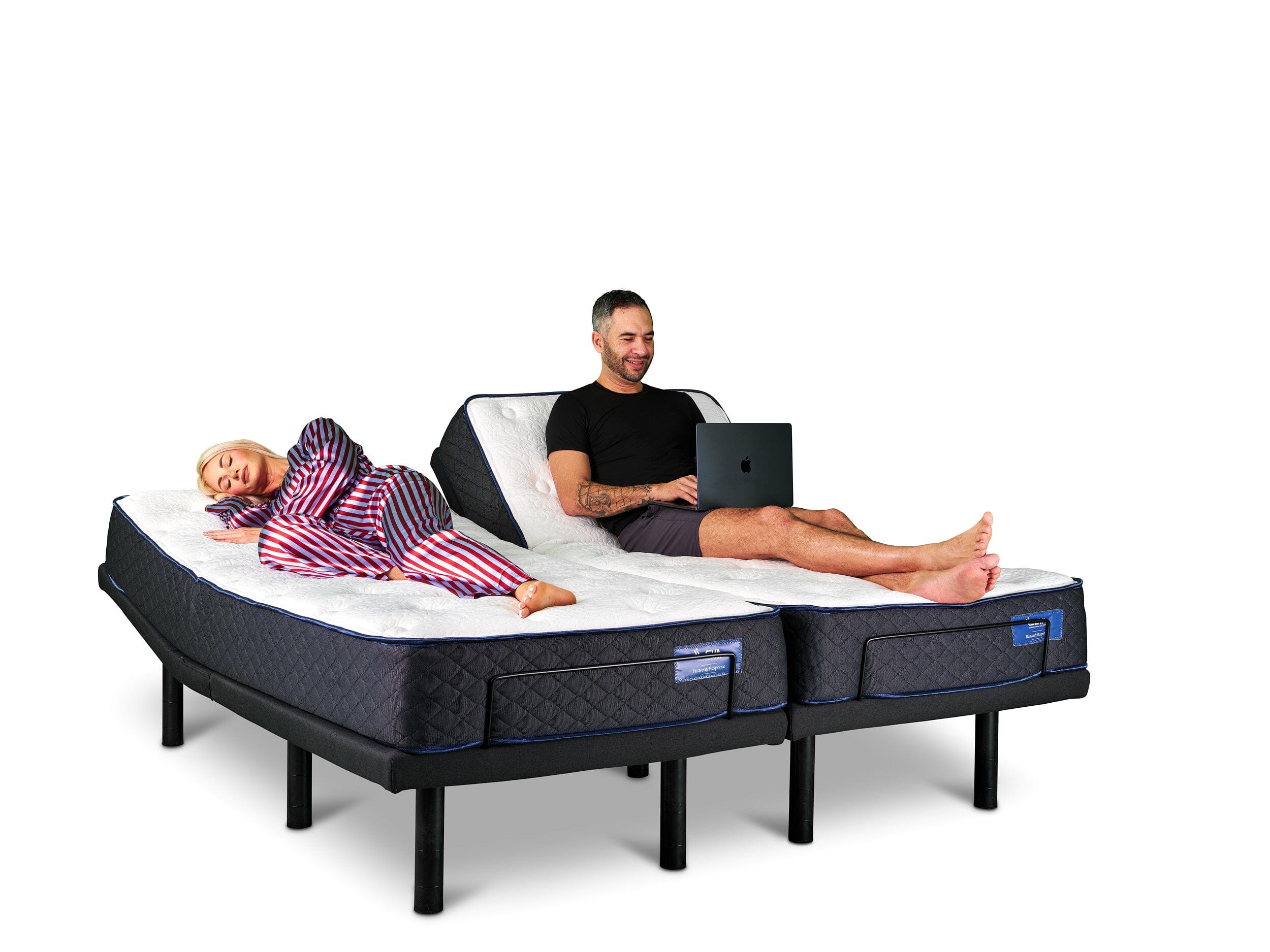
Leva Sleep’s Split King and Split Queen systems place two independent motorized bases side by side. Each partner controls head elevation, foot elevation, lumbar support, and massage settings through the Leva Sleep app or a dedicated remote. One partner can use the zero‑gravity preset for lower back decompression while the other remains flat. One can raise the head section to reduce snoring while the other sleeps undisturbed. This split architecture addresses the root cause of “sleep divorce” by giving each person full control.
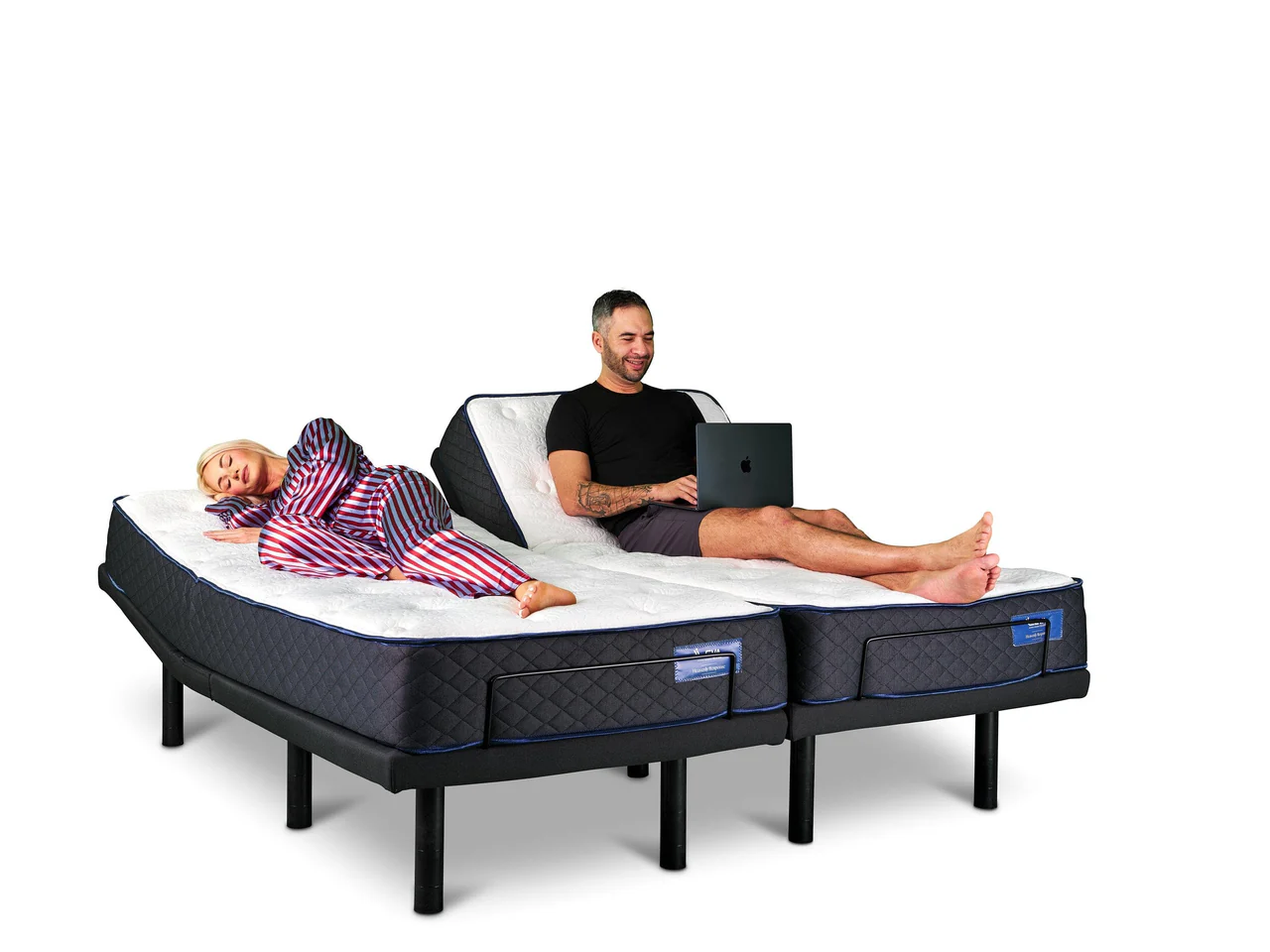
Explore Leva Sleep’s Split King and Split Queen systems with independent controls
Noise and Motion Isolation During Nighttime Adjustments
Motor noise during nighttime adjustments often goes unmentioned in reviews, yet it affects real‑world sleep quality. Research in the Journal of Physiological Anthropology shows that sounds as low as 40 decibels can disturb sleep in sensitive individuals, and budget AC motors in adjustable bases can reach 50–60 decibels, which is loud enough to pull a partner from deep sleep into lighter stages.
Ask each manufacturer for the decibel rating of their motor during a full elevation cycle and compare those numbers. Leva Sleep systems use brushless German motors that operate below the 40 dB disturbance threshold. GhostBed’s base uses a single motor system without the same specification transparency or the split‑motor design that keeps vibration on one side.
On a Leva Split King or Split Queen, when one partner adjusts position at 2 a.m., the other side does not move, and the motor sound stays below the level that typically disrupts sleep.
Targeted Lumbar and Zero‑Gravity Positioning
Reclining reduces intradiscal pressure by 50–80% compared with upright standing, a result later confirmed by MRI‑based disc pressure measurements. The American Academy of Sleep Medicine recommends slightly raising the head and knees to ease lower back strain, which adjustable bases with zero‑gravity presets can provide consistently.
Leva Sleep’s higher‑tier bases add a dedicated lumbar control that raises a support bar under the lower back for targeted alignment, plus a pillow‑tilt motor for independent neck positioning. Physical therapist Dr. Joe Tedesco notes that patients with lumbar stenosis or spinal arthritis benefit from slight foot elevation on adjustable bases because it limits excessive spinal extension and decreases lumbar pressure. GhostBed’s base offers head and foot articulation but lacks the granular lumbar control that these clinical recommendations support.
Mattress and Accessory Integration with Adjustable Bases
An adjustable base performs only as well as the mattress and bedding system that sits on top of it. Split King adjustable bases require flexible mattresses such as memory foam, latex, or modern hybrids with pocketed coils. Traditional innerspring mattresses with interconnected coils can be damaged by repeated articulation.
Leva Sleep designs its all‑foam and hybrid pocket‑coil mattresses, made in the United States, to flex smoothly with its adjustable bases. Leva also produces purpose‑built accessories, including fitted sheets with deep pockets and extra elastic to prevent slippage, duvet clips that keep each side separate when partners use different angles, and remote pockets integrated into the bedding. GhostBed pairs its base with its own mattress line, but its accessory ecosystem and integration with split configurations are more limited.
Delivery and Setup Experience for Couples with Back Pain
A complete sleep system only works well when the installation process brings all components together correctly. GhostBed ships its adjustable base through standard freight delivery, leaving assembly and setup to the buyer. For a couple in their 40s or 50s managing back pain, assembling two motorized units, two mattresses, and a full bedding setup can be a significant physical strain.
Leva Sleep offers in‑house white‑glove delivery for a fee. Trained professionals bring the system to the bedroom, assemble it, adjust leg heights to the preferred bed height, walk through app setup and preset programming, and remove and donate or recycle the old bed. This service remains under Leva’s direct control rather than being handed off to a generic third‑party logistics provider.
Long‑Term Value and Total Cost of Ownership
Leva Sleep’s direct‑to‑consumer model, local assembly, and removal of retail middlemen allow it to offer premium‑specification adjustable systems at roughly 30–50% less than comparable luxury competitors. The systems carry substantial frame warranties, and the low‑noise German motors are built to the longer‑warranty standard that correlates with better motor quality and quieter performance over time. GhostBed’s broad wholesale distribution model, including Costco, emphasizes volume over specialization, which can limit both advanced features and depth of post‑sale support.
Compare Leva Sleep’s complete pricing and warranty details
Key Limitations of GhostBed Adjustable Bases for Couples
GhostBed’s adjustable base works as a basic option for a single sleeper or a couple with nearly identical sleep needs. For couples with different back pain profiles, snoring on one side, or different preferred elevation angles, several structural limitations appear:
- A single shared motor system means both partners move together or neither moves.
- No independent lumbar control limits precise spinal positioning for the partner who needs extra support.
- Standard freight delivery places the full assembly burden on the buyer.
- The wholesale distribution model often connects buyers with generalist retailers instead of adjustable‑base specialists.
- No split queen option exists, which restricts couples in smaller rooms who still need independent control.
Do Doctors Recommend Adjustable Beds for Back Pain?
The American Academy of Sleep Medicine recommends slightly raising the head and knees to ease lower back strain, a position that adjustable bases can provide reliably. Dr. Raj Dasgupta, a quadruple board‑certified physician in pulmonary, sleep, internal, and critical care medicine, notes that an adjustable base can align the spine, take pressure off joints, and reduce pain symptoms of arthritis or sciatica by improving circulation and reducing swelling.
A 2001 study found that microgravity reduces sleep‑disordered breathing in humans, which supports spinal alignment and reduces joint stress. Physical therapists following APTA clinical guidelines translate this general positioning advice into specific angles, recommending reclining to 120–135 degrees with slight knee elevation for patients with degenerative disc disease and chronic lower back pain.
Why Split Configuration Matters for Couples with Different Needs
When only one partner needs an anti‑snore incline, a standard king adjustable base forces both sleepers into the same elevated position, while a split king allows fully independent angles. The same principle applies to post‑surgery recovery, where one partner may need sustained knee or head elevation that would be uncomfortable for the other. It also applies to differing firmness preferences, where a Journal of Chiropractic Medicine study found that matching mattress firmness to individual body weight and sleep position reduces back pain.
A split configuration functions as a requirement, not a luxury upgrade, when two people with different bodies share a bed and one person’s therapeutic positioning would otherwise harm the other’s sleep.
Real‑World Couple Scenarios with Split Adjustable Systems
These scenarios show how independent split adjustable systems resolve common couple sleep conflicts.
Chronic lower back pain on one side: One partner uses the Leva zero‑gravity preset, with the head at 30–45 degrees and feet elevated about 15 degrees, for lumbar decompression. The other remains flat. Each partner chooses a position based on comfort and medical need.
Snoring disrupting the non‑snoring partner: The Leva app detects snoring and makes a small adjustment to the head of the snoring partner’s side, raising it 7–12 degrees to open the airway. The non‑snoring partner’s side stays still.
Post‑surgery recovery: One partner requires sustained knee elevation and a specific head angle during recovery. The other partner sleeps in a preferred flat position. The German‑engineered motor system allows the recovering partner to adjust at night without waking the other.
Differing firmness and temperature preferences: Each side of the Leva Split King can use a different mattress, such as one all‑foam for pressure relief and one hybrid for firmer support, paired with Leva’s temperature‑regulating bedding accessories, each controlled independently.
Decision Checklist: Choosing Between GhostBed and Leva Sleep
Use the following criteria to map your priorities to the right system. Each point represents a separate requirement, so decide which ones apply to you, then compare how each base addresses those needs.
- Noise sensitivity: If either partner is a light sleeper, apply the 40 dB threshold discussed earlier when comparing motor specifications. Leva’s German motors meet this standard, while GhostBed’s single‑motor specification is not published at this level of detail.
- Independent lumbar control: If one partner has lower back pain that needs precise positioning, choose a base with a dedicated lumbar support bar. Leva offers this feature; GhostBed does not.
- Split configuration: If partners have different elevation needs because of snoring, back pain, reflux, or post‑surgery recovery, a split system becomes necessary. GhostBed does not offer a split queen, while Leva does.
- White‑glove delivery: If assembly and setup pose a challenge because of physical limits or preference, Leva’s in‑house white‑glove service provides a simpler experience.
- Mattress and accessory integration: If you want a complete system where every component is designed to work together, Leva’s vertically integrated model, including base, mattress, and bedding, delivers that cohesion.
- Budget: If price is the primary driver and independent control is not needed, GhostBed’s base serves as a functional entry point. However, for couples with back pain and differing needs, this initial savings can be misleading, because the long‑term cost of poor sleep and inadequate positioning often exceeds the upfront price difference.
Frequently Asked Questions
Can a split king adjustable base help if only one partner has back pain?
A split king adjustable base works especially well when only one partner has back pain. The partner with back pain can use zero‑gravity positioning, with head and legs elevated to decompress the lumbar spine, while the other partner remains flat. Independent controls keep the therapeutic position available to the person who needs it without forcing the other into an uncomfortable angle. Leva Sleep’s Split King systems include programmable presets so the back‑pain position can be recalled with a single button press.
How loud are adjustable base motors during nighttime adjustments?
Motor noise varies significantly by motor type. Brushless DC motors, used in Leva Sleep systems, typically operate around 30–40 decibels, similar to a whisper. Budget AC motors can reach 50–60 decibels, which is loud enough to pull a light sleeper from deep sleep into lighter stages. For couples sharing a bed, motor type and decibel rating become critical specifications. Ask any manufacturer for the measured decibel level during a full elevation cycle before purchasing.
What is the difference between a Split King and a Split Queen adjustable base?
A Split King uses two Twin XL mattresses, each 38 inches wide by 80 inches long, on two independent motorized bases, creating a combined 76‑by‑80‑inch surface, the same size as a standard king. A Split Queen uses two narrower mattresses on two independent bases to create a 60‑by‑80‑inch footprint. Split Queens are less common, which limits mattress and accessory options for many brands. Leva Sleep is one of the few providers that builds Split Queen systems to customer specifications, giving couples independent control in a more space‑conscious configuration.
Does anti‑snore mode on an adjustable base actually work?
Anti‑snore positioning on adjustable bases works by elevating the head 7–15 degrees, which repositions the soft palate and tongue to reduce airway obstruction. This approach helps with positional snoring, which occurs or worsens when lying flat. It does not treat snoring caused by obstructive sleep apnea, which requires medical evaluation and treatment. Leva Sleep’s anti‑snore mode detects snoring and makes automatic micro‑adjustments to the head of the affected partner’s side without manual input or disturbing the other partner.
What mattresses are compatible with Leva Sleep’s Split King and Split Queen adjustable bases?
Adjustable bases require mattresses that can flex repeatedly without damage. Memory foam, latex, and hybrid mattresses with individually wrapped pocket coils all work well. Traditional innerspring mattresses with bonded or interconnected coils are not suitable and can be damaged by articulation. Leva Sleep designs its own all‑foam and hybrid mattresses specifically for use with its adjustable bases and also curates compatible mattresses from premium partners including Airloom, Helix Sleep, and Tempur‑Pedic. Every mattress in Leva’s lineup can be evaluated for adjustable‑base compatibility at the La Jolla showroom.
Conclusion: Leva Sleep as a Clear Choice for Quiet, Independent Relief
For couples aged 40–60 researching a GhostBed adjustable base for back pain relief, the decision often comes down to whether both partners truly share the same sleep needs. Most couples do not, which makes a single‑motor shared base a structural mismatch. Leva Sleep’s Split King and Split Queen systems provide quiet German motor technology, independent lumbar and zero‑gravity controls, purpose‑built mattresses and accessories, and in‑house white‑glove delivery, all at roughly 30–50% less than comparable luxury competitors. After more than eight years and 25,000 customers, Leva Sleep focuses specifically on solving these couple‑sleep challenges.
Visit Leva Sleep online or in the La Jolla showroom to design your split adjustable system