Written by: Matthew Timmins, Founder and Managing Director, Leva Sleep
Key Takeaways From Long-Term Owners
- Long-term reviews show that simple head and foot adjustability improves comfort and reduces pain, while extras like massage, voice controls, and app tracking are usually abandoned within a year.
- Mechanical issues such as air leaks, motor noise, and middle-of-bed sagging are the most common complaints with full smart beds, while quality split bases avoid many of these problems.
- Clinical evidence confirms that head and leg elevation helps conditions like GERD, snoring, and back pain, and these benefits come from the base mechanics, not from AI or app features.
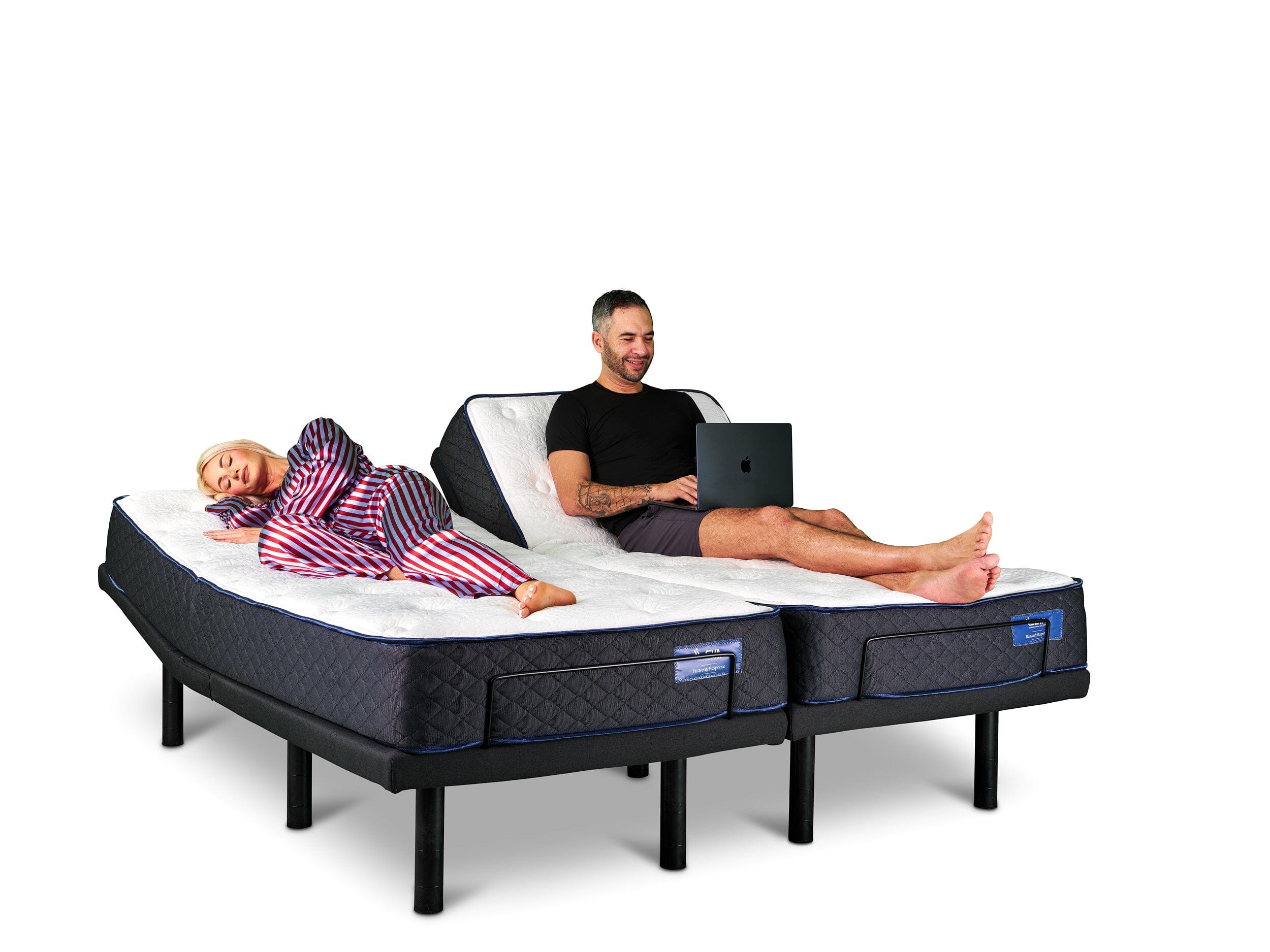
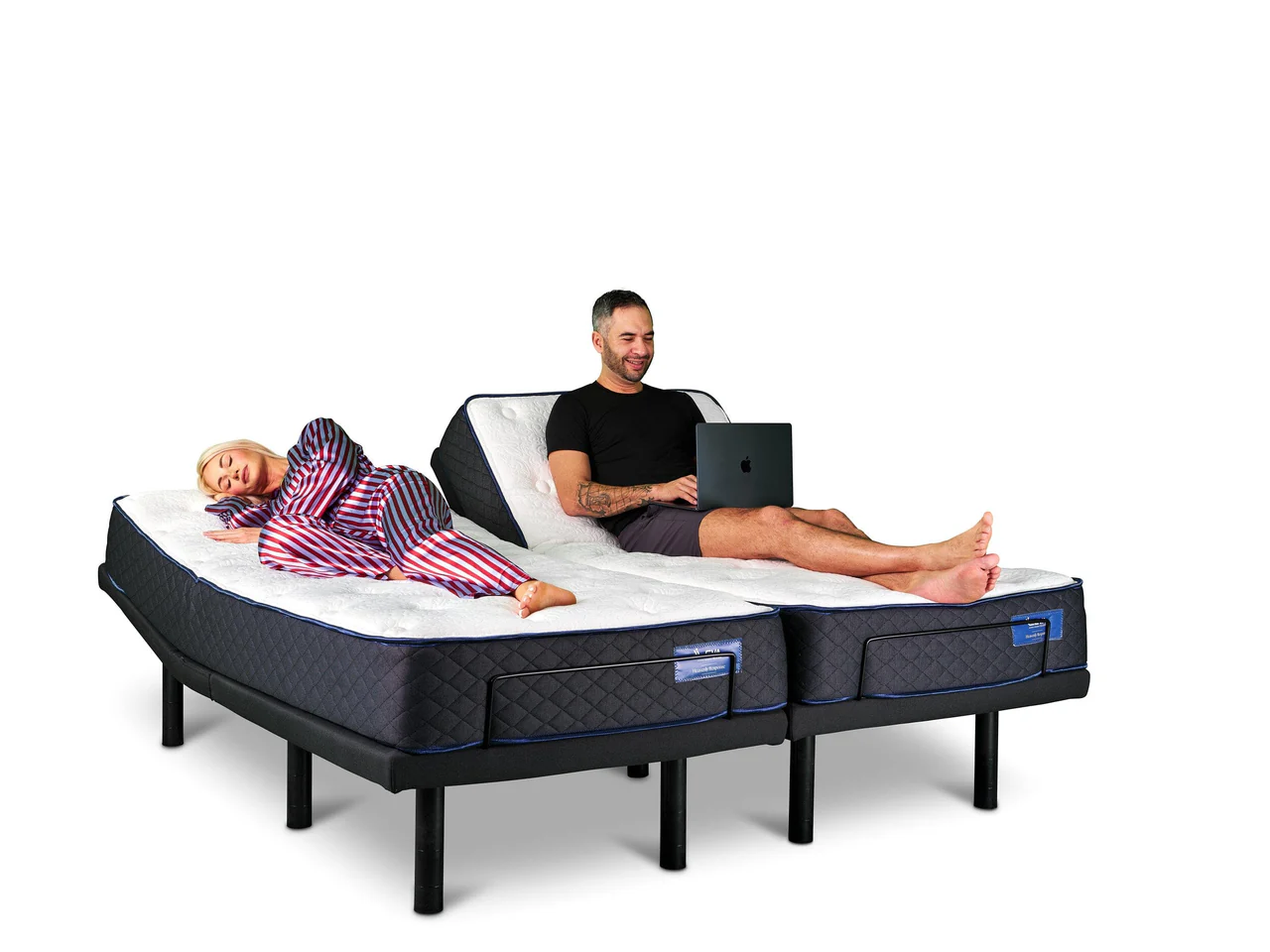
- Split adjustable bases with independent controls work best for couples with different sleep preferences, because each partner can adjust their own side without compromise.
- Leva Sleep offers reliable split adjustable systems with whisper-quiet motors and white-glove delivery, giving couples a practical path to long-term comfort and support when they shop Leva Sleep.
Real-World Drawbacks of Smart Adjustable Beds
Owner complaints on Reddit threads and product review forums cluster around a predictable set of mechanical and usability failures. Air chambers in air-bladder smart beds often develop slow leaks within the first year, which forces owners to recalibrate or schedule professional service. Middle-of-bed sagging appears frequently in reviews of models that use a single non-split king frame, because the center carries more weight over time. Motor noise also comes up again and again, as owners describe grinding or clicking sounds during position changes that wake a light-sleeping partner.
Feature abandonment shows up just as clearly. Luxury adjustable bases priced $1,600–$3,000+ add dual-zone massage, voice-activated controls, and AI sleep tracking, but these smart features exceed the core articulation needed for health benefits, and owners usually stop using them once the novelty fades. Representative owner sentiment on product pages follows the same pattern. Users praise adjustability and pressure relief yet rarely mention returning to massage or voice features after the first few weeks.
Paying a large premium for smart extras therefore delivers limited long-term value. A quality split base handles the positioning work that actually improves sleep and avoids many of the failure points that generate the most negative long-term reviews.
Clinical Evidence for Adjustable Bases in Older Adults
Clinical evidence supports head and leg elevation for several conditions common in adults over 50. A randomized controlled trial published in the Journal of Gastroenterology and Hepatology found that head-of-bed elevation reduced supine reflux time and acid clearance time and provided some relief from heartburn and sleep disturbance in patients with nocturnal GERD. A separate study in Sleep and Breathing reported that head elevation can reduce the apnea-hypopnea index in patients with positional obstructive sleep apnea.
About 89% of people with chronic back pain reported less pain when using an adjustable bed. Board-certified emergency medicine physician Dustin Cotliar, MD, MPH, notes that raising the upper body 6 to 8 inches uses gravity to reduce backflow of stomach contents toward the esophagus for back sleepers with acid reflux.
These benefits all come from the base’s articulation mechanics, including head elevation, foot elevation, and zero-gravity positioning, not from AI sensors or app connectivity. A well-engineered split adjustable base delivers the full clinical benefit while avoiding the cost and complexity of a full smart system. For couples, these clinical advantages matter even more when partners have different medical needs or sleep preferences.
Best Adjustable Bed Setups for Couples With Different Needs
Independent split controls matter most for couples, regardless of which condition drives the purchase. Real-world scenarios highlight why this feature becomes essential rather than optional.
- Chronic back pain: One partner may need zero-gravity positioning with the head at 30–45 degrees and knees above heart level, while the other prefers to sleep flat. A standard king base forces a compromise that helps neither partner consistently.
- Snoring partner: Most sleep specialists recommend 10–30 degrees of head elevation for snoring relief, with 20–30 degrees providing significant gravitational assistance for moderate to heavy snorers. As noted earlier, head elevation provides snoring relief through mechanical positioning. A split base lets the snoring partner elevate while the other remains flat.
- Post-surgery recovery: Leg elevation reduces edema and pressure on healing joints. The recovering partner often needs frequent position changes, while the other partner may prefer a stable flat position.
- Temperature differences: Split configurations allow each side to pair with independent temperature-regulating bedding layers without affecting the other partner’s comfort.
A Split King configuration using two Twin XL adjustable bases side by side allows each partner independent head and foot control, which makes it a practical solution for couples with differing sleep preferences. Leva Sleep also offers a Split Queen for smaller rooms, a configuration that general mattress retailers rarely stock.
Long-Term Reliability: Smart Beds Compared With Split Bases
Quality adjustable bases use long-lasting steel frames with expected lifespans of 10–20 years, although motors or electronics may eventually need service. As electronics become more complex, failure points increase. The table below summarizes owner-reported patterns by category.
| Base Category | Mechanical Durability After 12–24 Months | Typical Owner Complaint |
|---|---|---|
| Full smart bed (air-bladder + AI sensors) | Air leaks and recalibration needs reported within the first year by multiple forum users | Air chamber leaks, loud pumps, middle sagging on non-split kings, high service costs |
| Mid-range single adjustable base | Steel frame holds well, with motor wear reported on lower-quality units after heavy use | Cannot accommodate a partner with different position needs, motor noise on budget models |
| Split adjustable base (quality motors) | Independent steel frames distribute load evenly, and quiet motors reduce wear-related noise complaints | Center gap between split mattresses, requires a compatible flexible mattress |
Owner behavior patterns show clear feature abandonment in full smart beds, as app and voice controls often fall out of use after the initial weeks. Mid-range bases see occasional use of massage and USB features, while split bases show consistent long-term use of core articulation features such as zero-gravity and anti-snore positioning.
Leva Sleep’s eight-year focus on adjustable systems and 30–50% price advantage over comparable luxury competitors gives buyers access to steel-frame durability and German-engineered motors without paying for smart-system complexity that most owners eventually stop using.
Delivery, Setup, and Maintenance in Everyday Homes
Owner feedback consistently identifies delivery and setup as major pain points for adjustable beds. Quality adjustable bases for Queen size typically weigh 135–187 lbs depending on the model and features, so curbside or threshold delivery rarely works for most households. Assembly requires connecting motor harnesses, setting leg heights, pairing remotes or apps, and confirming that the mattress stays secure, which “bed in a box” delivery models leave entirely to the customer.
Leva Sleep’s in-house white-glove delivery service covers every stage. Trained professionals deliver to the bedroom, assemble the base and mattress, adjust leg heights to the customer’s preference, provide a full product tutorial, and remove the old bed through donation or recycling. Because Leva assembles its systems in the regions it serves, the delivery team understands the specific configurations instead of relying on third-party contractors with limited product knowledge.
Decision Guide: Full Smart System or Quality Split Base?
Start by identifying your primary need. When pain or a medical condition drives the purchase, core articulation through head and foot elevation and zero-gravity positioning delivers the clinical benefit, so a quality split base usually covers the requirement.
If you are shopping as a couple with different position needs, independent split controls become non-negotiable, because a standard king base or non-split smart bed cannot support two distinct positions at once. After you decide whether you need split functionality, consider long-term reliability. Fewer electronic components mean fewer failure points, so prioritize motor quality and frame rating over AI sensors.
Budget also plays a role. Entry-level bases priced $500–$800 deliver the full health benefits for back pain, GERD, and snoring without smart-system markups. Setup and ongoing support matter as well. White-glove delivery and a specialist retailer with 15–20 adjustable models typically outperform generalist retailers that offer only a few options.
Leva Sleep’s split Queen and King systems, couples-first design, and specialist support address each of these decision points for buyers who want reliable long-term performance.
Conclusion: What Owners Actually Value Over Time
Evidence from owner reports and clinical research points in the same direction. The adjustable base delivers lasting value through mechanical positioning, while most smart extras fade from use within a year. Couples who prioritize independent control, mechanical reliability, and clear pricing have a strong alternative in Leva Sleep’s split adjustable systems, which focus on long-term performance instead of short-lived novelty features.
Frequently Asked Questions
Are smart adjustable beds worth the extra cost over a standard split adjustable base?
For most couples, smart adjustable beds do not justify the extra cost. The health benefits associated with adjustable beds, including reduced back pain, snoring relief, GERD management, and improved circulation, come from the base’s ability to elevate the head and feet, not from AI sensors, voice controls, or app-based sleep tracking. Smart features add significant cost and introduce additional electronic components that can fail over time. A quality split adjustable base with independent controls for each partner delivers every positioning benefit at a substantially lower price point. The exception involves buyers with a specific, documented need for a smart feature, such as automatic anti-snore adjustment for a partner who cannot be woken, and who accept the higher maintenance profile that comes with more complex electronics.
What should couples look for when evaluating an adjustable bed for two people with different sleep needs?
Couples should focus first on independent split control, which allows each side of the bed to move in head and foot position without affecting the other side. Motor noise levels come next, because a loud motor during a 2 a.m. position change will wake a light sleeper. Frame load rating also matters. A quality base should support 650–850 lbs combined to handle the weight of two sleepers, the mattress, and bedding without straining motors over time.
Mattress compatibility deserves attention as well. Memory foam, latex, and pocketed-coil hybrids flex reliably with adjustable bases, while traditional innerspring mattresses with border wires usually do not. Finally, couples should confirm whether the retailer offers split Queen or split King configurations, since not all retailers stock both, and split Queen remains rare even though it fits many bedrooms better than a split King.
Do adjustable beds actually help with snoring and sleep apnea, or is that marketing?
Clinical evidence supports the use of adjustable beds for snoring and some forms of sleep apnea. Raising the head of the bed 4 to 6 inches, which corresponds to a 10–30 degree incline on most adjustable bases, keeps airways more open by preventing soft tissues in the throat from collapsing, which reduces snoring for many users. For positional obstructive sleep apnea, 30-degree head elevation has been shown in peer-reviewed research to reduce the apnea-hypopnea index meaningfully.
The zero-gravity position, which elevates both the head and feet with knees slightly above heart level, provides additional airway-opening benefit and reduces spinal pressure. These outcomes come entirely from the mechanical positioning of the base, not from smart-bed technology. Couples where one partner snores gain the most from a split configuration, which allows the snoring partner to elevate while the other remains flat.
How long do adjustable bed bases typically last, and what are the most common failure points?
Steel-frame adjustable bases from quality manufacturers carry 10–20 year limited warranties and are expected to last 8–15 years or longer under normal household use. Motors and electronic control boards represent the most common failure points, and both become more likely to need service as system complexity increases. Full smart beds with air-bladder systems add air pumps and chambers as additional failure points, and air leaks rank among the most frequently reported long-term complaints in owner forums.
Simpler split bases with fewer electronic components have fewer parts that can fail. When evaluating any adjustable base for long-term reliability, buyers should ask about the motor warranty specifically, confirm that replacement parts are available domestically, and verify that the retailer has in-house service capability rather than relying on third-party repair networks.
What makes Leva Sleep different from buying an adjustable base at a general mattress retailer?
General mattress retailers usually stock only a few adjustable base models as add-ons to their mattress inventory. Leva Sleep builds its business around adjustable sleep systems as the primary category, offering 15–20 models and eight years of specialization in couples-focused configurations. That depth of inventory allows buyers to evaluate split Queen options, compare motor specifications across multiple price points, and receive guidance from staff whose expertise centers on adjustable systems rather than mattresses in general.
Leva also designs its own bedding accessories, including fitted sheets with deep pockets and extra elastic, duvet clips, and mattress protectors, specifically for adjustable bases, which solves the common problem of sheets popping off during position changes. The in-house white-glove delivery service, which includes bedroom-level setup, leg-height adjustment, product tutorial, and old-bed removal, provides another advantage that many general retailers and direct-to-consumer “bed in a box” brands do not match.