Written by: Matthew Timmins, Founder and Managing Director, Leva Sleep
Key Takeaways About Adjustable Beds
- Adjustable beds use electric motors and hinge points to raise and lower the head and foot sections, so each sleeper can choose a comfortable angle instead of lying flat.
- Core components include linear actuators, dual motors, hinge points, and a control box that together deliver precise, quiet, and repeatable positioning.
- Popular presets such as zero-gravity and anti-snore positions relieve spinal pressure, reduce snoring, and support better breathing and circulation.
- Memory-foam and pocket-coil hybrid mattresses flex safely on adjustable bases, while traditional innersprings are incompatible and can fail quickly.
- Leva Sleep combines whisper-quiet German motors, app-controlled presets, and U.S.-assembled mattresses designed specifically for its bases—shop Leva Sleep today to experience personalized comfort.
How Adjustable Beds Work: Motors, Hinges, and Controls
Every adjustable base follows the same basic design. Each motor controls a specific adjustment zone such as head, foot, lumbar, or pillow tilt through linear actuators mounted at precise positions on a steel frame. The numbered components below explain how a complete system functions.
- Linear actuators. A DC motor connected to a threaded rod extends and retracts through a gear system to push or pull bed sections into position, engineered to lift 500+ pounds.
- Dual motors. Most bases use one motor for the head section and one for the foot section, which allows true independent adjustment of each end.
- Hinge points. One hinge sits under the upper-back area and one under the knee. When the head section elevates, the platform articulates at the upper-back hinge to angles between 30 and 60 degrees depending on the setting.
- Control box. The control box is the central electronic unit that manages motor sequencing, travel limits, memory presets, and safety cutoffs while handling simultaneous motor commands.
Among these four components, motor quality has the greatest impact on long-term reliability. Quality motors in adjustable bases are built for durability and draw power only during adjustment. Premium adjustable bed frames use brushless DC motors that generate less heat, operate more quietly, and last longer than traditional brushed motors. Leva Sleep systems use whisper-quiet German motors operating under 30 decibels, roughly the volume of a quiet library, so position changes rarely wake a sleeping partner.
Modern premium bases also focus on convenient control. App and Bluetooth integration has become standard on higher-end systems and gives sleepers quick access to their favorite positions. Leva Sleep’s app lets couples save custom positions, set wake-up inclines, and control each side of a split base independently from a smartphone.
Zero-Gravity and Anti-Snore Presets Explained
Modern adjustable bases store one-touch preset positions that the motor system executes automatically. The most clinically relevant presets include the following options.
- Zero Gravity. This preset elevates the head to 30–45 degrees and raises the knees above heart level, distributing pressure evenly across the body to relieve spinal compression. Originally developed by NASA, this position distributes body weight evenly, reduces pressure on the lower back and joints, and supports faster sleep onset.
- Anti-Snore. This preset raises the head to approximately 7–10 degrees to help keep the airway open and reduce snoring.
- Lumbar Support. Premium models add a third hinge at the lumbar area for precise lower back support, independent of head or foot elevation.
- Pillow Tilt. A dedicated motor adjusts only the top of the head section, which fine-tunes neck angle without changing the full head elevation.
- Flat / Reset. This preset returns all sections to a neutral sleeping surface with a single button press.
These presets still rely on manual activation from the sleeper or partner. Leva Sleep’s anti-snore detection mode goes further by automating the response. Onboard sensors detect snoring and trigger small head-section adjustments automatically, without anyone needing to wake up and press a button. An AI sleep-tracking layer then logs nightly position data and suggests refinements over time.
Mattress Compatibility and Side-Sleeping Comfort
Memory foam and all-foam mattresses work especially well on adjustable bases because they have no rigid components, contour to any angle, and avoid pressure points at the fold. Hybrid mattresses with individually pocketed coils also flex safely because each coil moves independently, while hybrids using Bonnell or continuous coil systems resist bending and can permanently deform. Mattresses between 8 and 14 inches thick are typically recommended for adjustable beds.
Traditional innerspring mattresses with a full steel coil unit running edge to edge are incompatible and often crack at the bend point, sometimes within days. Leva Sleep designs its mattresses, available in all-foam and pocket-coil hybrid configurations and assembled in the United States, specifically for use with its adjustable bases. This approach removes compatibility guesswork for the buyer.
Side sleepers can stay comfortable on an adjustable base with the right settings. A slight head raise reduces shoulder compression, and a lumbar preset helps maintain spinal alignment. Leva’s pillow-tilt motor lets side sleepers fine-tune neck support without a full head-section raise.
Common Cons of Adjustable Beds and Practical Fixes
Adjustable bases introduce a few practical challenges, and each one has a straightforward fix.
- Motor noise. Budget bases often use worm gear motors that run louder. Premium linear actuators from brands such as OKIN and Linak deliver noise levels below 35 dB and high duty cycles. Leva’s German motors sit at the quiet end of this premium range.
- Fitted sheet slippage. Standard sheets are cut for flat mattresses and tend to pop off at elevated angles. Leva designs fitted sheets with deep pockets and extra elastic specifically for articulating bases.
- Duvet separation on split bases. When two sides sit at different angles, a standard duvet bunches and leaves gaps. Leva’s duvet clips keep coverage consistent across both sides regardless of position.
- Partner disturbance from adjustments. Split adjustable bases use two separate units placed side by side, which allows each side to adjust independently through dedicated motors and control systems, so one partner’s position change does not move the other side.
- Higher upfront cost. Adjustable bases typically cost more than flat frames because they pass through multiple distributors and retailers, and each step adds margin. Leva’s vertically integrated model, which covers design, assembly, and delivery, removes those intermediary markups and delivers premium engineering at 30–50% less than comparable luxury competitors.
What Doctors Say About Adjustable Beds for Apnea and Reflux
A 2017 study of 52 patients with obstructive sleep apnea found that 7.5-degree head-of-bed elevation can reduce the apnea-hypopnea index and improve oxygen saturation. Ravesloot et al. (2017) in Sleep and Breathing concluded that positional therapy is undervalued for position-dependent snoring and mild-to-moderate OSA, with consistent evidence that head elevation reduces snoring intensity and frequency.
Gastroenterologists recommend elevating the upper body 6 to 8 inches, approximately a 30-degree incline, for acid reflux and GERD to use gravity to keep stomach acid down, a positional strategy that adjustable beds achieve precisely without wedge slippage. The American College of Gastroenterology recommends head elevation of 6–8 inches as a non-pharmacological intervention for nighttime reflux in GERD patients and notes that adjustable bases provide this elevation more effectively than wedge pillows.
Pulmonologists mention head elevation as a legitimate adjunct therapy for sleep apnea but state that it does not replace CPAP in moderate-to-severe cases. Leva Sleep systems provide precise, repeatable positioning at clinically studied angles for mild cases without the discomfort of a mask. Anyone with suspected moderate-to-severe apnea should pursue a formal sleep study before relying on positional therapy alone.
Split Configurations for Couples: Ending Sleep Compromise
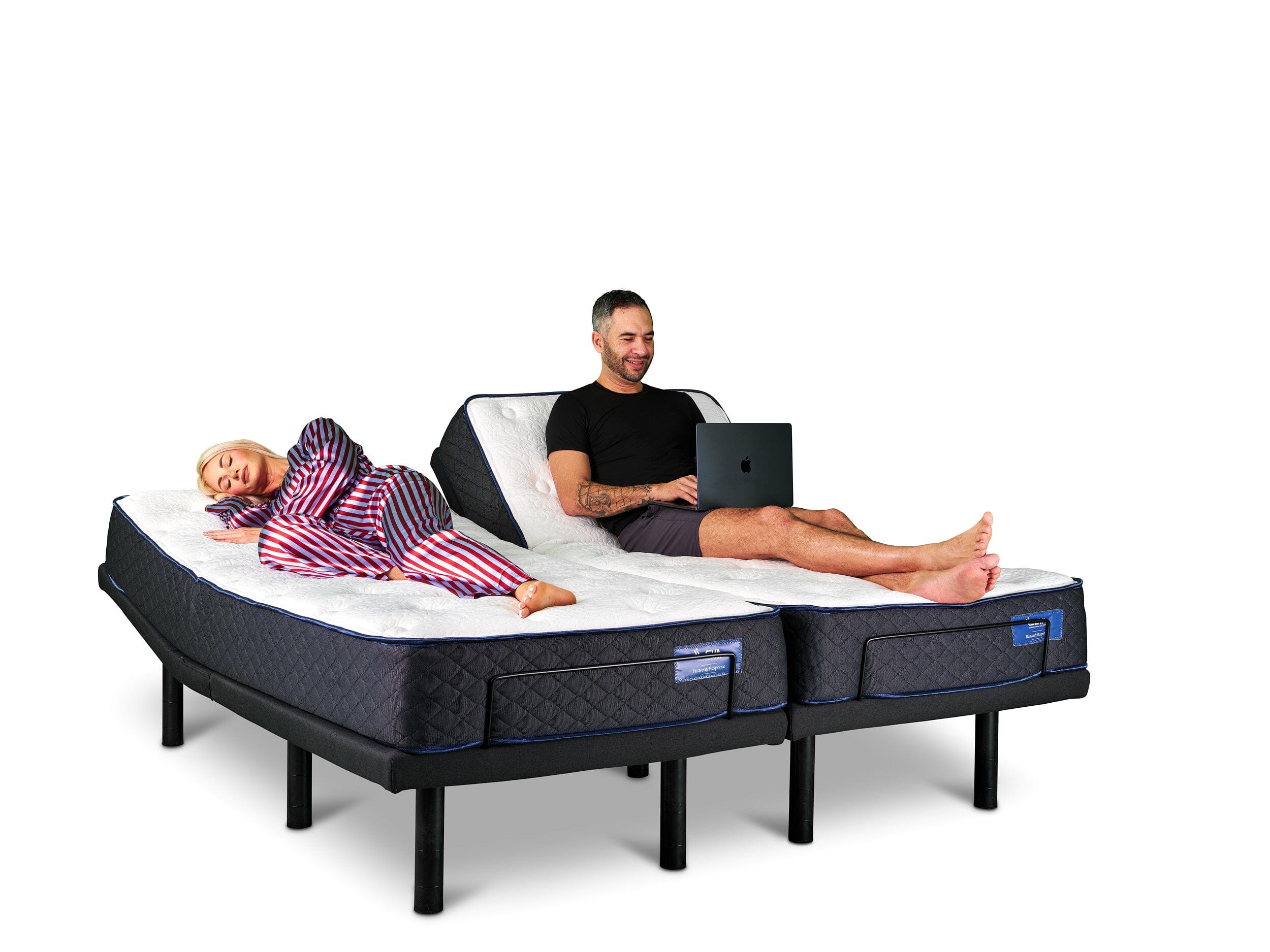
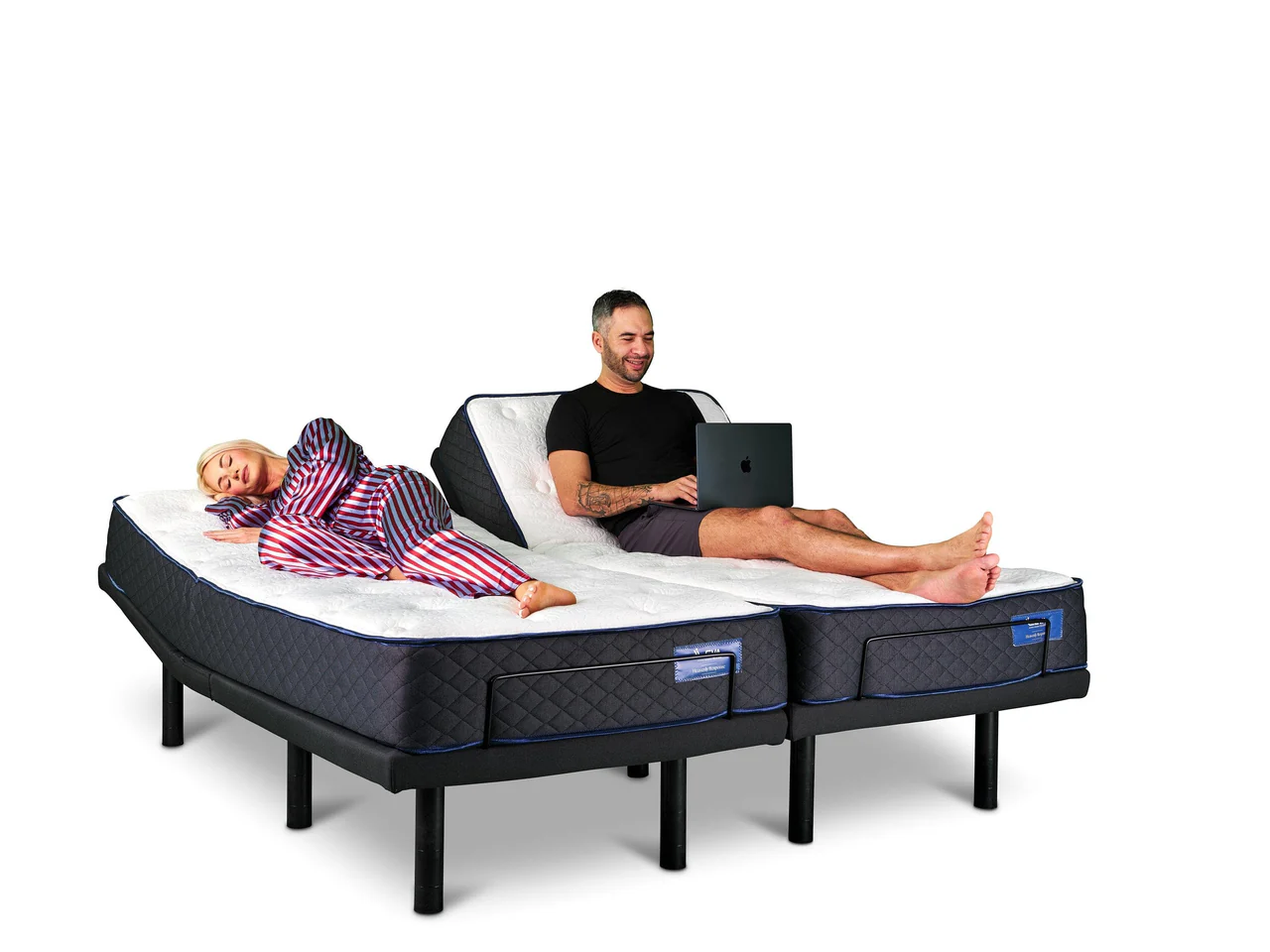
About 31% of U.S. adults have chosen sleep divorce, meaning they sleep in a separate bed or room, and the rate reaches 39% among adults aged 35–44. Split adjustable bases address many of the comfort conflicts that drive this decision. A split king configuration, which uses two twin XL bases placed side by side, is the most popular adjustable bed setup among couples and allows each partner full independent control over head and foot elevation while keeping the bed united.
Leva Sleep also offers Split Queen configurations for rooms where a full king footprint does not fit. Many couples using split king adjustable beds report better sleep quality because each person can choose their own angle. With Leva’s independent app controls, one partner can activate the anti-snore preset or zero-gravity position at 2 a.m. without creating movement on the other side of the bed.
Delivery and Setup: White-Glove Service vs. Bed-in-a-Box
An adjustable base system that includes the frame, mattress, bedding accessories, and app pairing benefits from professional setup. Bed-in-a-box delivery places the burden of assembly, leg-height calibration, and app setup entirely on the customer and can leave buyers stuck if components do not align correctly.
Leva Sleep’s white-glove delivery service, available for a fee, sends trained professionals directly to the bedroom. The team handles old-bed removal, including donation or recycling, full assembly of the base and mattress, leg-height adjustment for the customer’s preferred bed height, accessory fitting, and a complete product tutorial before they leave. Every component, including base, mattress, sheets, and duvet clips, is verified to work together before the crew departs. For a system as integrated as a split adjustable base, that setup experience becomes part of the product.
Frequently Asked Questions
What are the cons of an adjustable bed?
The most common drawbacks include higher upfront cost compared to a flat frame, bedding that does not fit articulating mattresses, and budget motors that produce noticeable noise during adjustments. A split configuration also requires compatible mattresses, typically all-foam or pocket-coil hybrids, rather than traditional innersprings. Each of these issues has a direct solution through Leva Sleep’s vertically integrated pricing, purpose-built bedding line, quiet German motors, and U.S.-assembled mattresses designed specifically for adjustable bases.
How does the mattress stay on an adjustable bed?
Most adjustable bases include retainer bars at the foot of the frame that prevent the mattress from sliding downward when the head section elevates. Leva bases pair with mattresses that use non-slip base fabrics for additional grip. The combination of retainer bars, non-slip materials, and a properly sized mattress keeps the sleeping surface stable through repeated articulation cycles.
Is it okay to sleep on your side on an adjustable bed?
Side sleeping works well on adjustable bases when the angles and mattress match the sleeper’s body. A slight head-section raise reduces shoulder compression, and a lumbar preset maintains spinal alignment along the side of the body. Leva’s pillow-tilt motor allows independent neck-angle adjustment for side sleepers without requiring a full head-section elevation. The key is pairing the base with a pressure-relieving mattress, either all-foam or a soft-to-medium pocket-coil hybrid, that cushions the shoulder and hip contact points regardless of base angle.
What do doctors say about adjustable beds?
Physicians recommend specific elevation positions for different conditions. Gastroenterologists suggest 6–8 inches of upper-body elevation for nighttime acid reflux and GERD. Sleep specialists often recommend head-of-bed elevation as a supplemental strategy for mild obstructive sleep apnea or positional snoring, especially for patients who cannot tolerate CPAP. Physical therapists favor a slight knee-up, head-up zero-gravity position for lower back pain because it reduces lumbar pressure. Vascular specialists recommend leg elevation above heart level for venous insufficiency and post-surgical swelling. For details on the clinical studies behind these recommendations, see the “What Doctors Say About Adjustable Beds for Apnea and Reflux” section above.
What is the lifespan of an adjustable bed?
Quality motors in adjustable bases are designed for many years of use at typical adjustment frequency. Premium linear actuators from established motor manufacturers sit at the higher end of that range. The steel frame itself, when robot-welded and powder-coated, is engineered to outlast the motor components. Leva Sleep bases use German motors and aircraft-grade steel frames, and the company backs its systems with manufacturer warranties. Mattress lifespan on an adjustable base depends on compatibility, and a properly matched all-foam or pocket-coil hybrid will last as long as it would on any quality foundation.
Choosing the Right Adjustable Bed System
Choosing an adjustable base means weighing several connected factors. Motor quality and noise level influence whether position changes disturb a sleeping partner. Preset availability, including zero gravity, anti-snore, lumbar, and pillow tilt, determines how precisely the system addresses specific health needs. Split configuration options affect whether couples can maintain independent settings. Mattress compatibility affects long-term durability and comfort. Delivery and setup quality influence whether the system functions as designed from the first night. Price relative to the feature set shapes overall value.
Leva Sleep offers 15–20 adjustable models, compared to the 3–5 typically found at a standard mattress retailer, along with a curated lineup of compatible U.S.-assembled mattresses, purpose-built bedding accessories, and white-glove delivery. Its anti-snore detection and AI sleep-tracking features place it at the leading edge of what adjustable beds can provide. Couples in the San Diego area can evaluate every model in person at the La Jolla showroom before committing.
Transform your sleep with Leva Sleep by visiting the La Jolla showroom or shopping online today.