Written by: Matthew Timmins, Founder and Managing Director, Leva Sleep
Key Takeaways
- Zero-gravity positioning elevates your head, torso, and legs to reduce disc pressure, open the airway, and support healthier circulation.
- Smart adjustable beds use whisper-quiet German motors and independent head, foot, lumbar, and pillow-tilt actuators for precise, personal positioning.
- Head elevation between 10–30 degrees at the torso (not just the neck) can reduce snoring, while leg elevation above heart level helps limit overnight swelling.
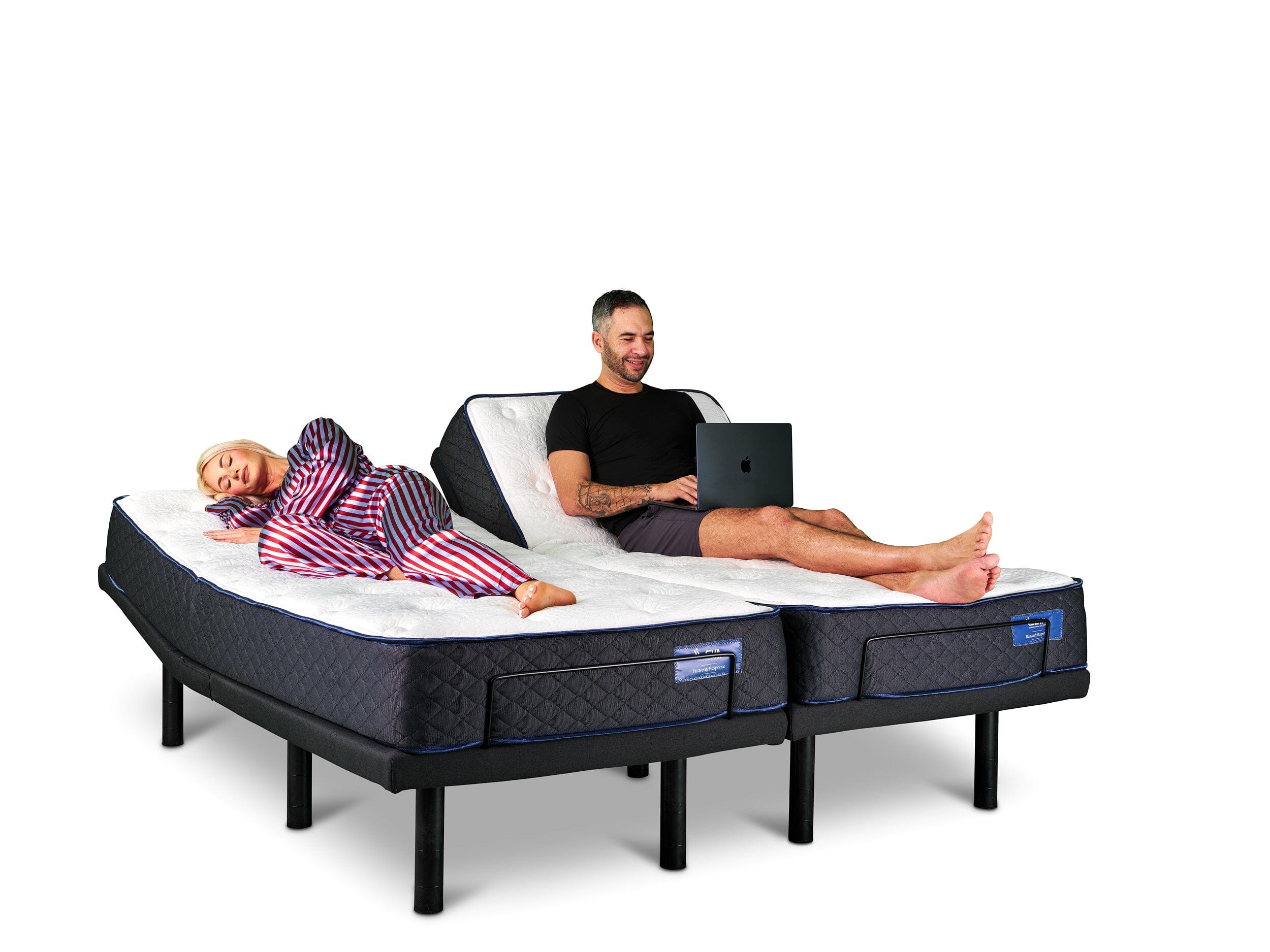
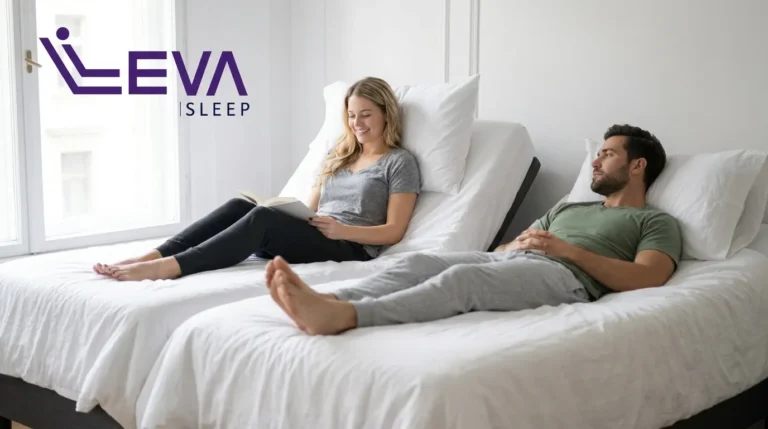
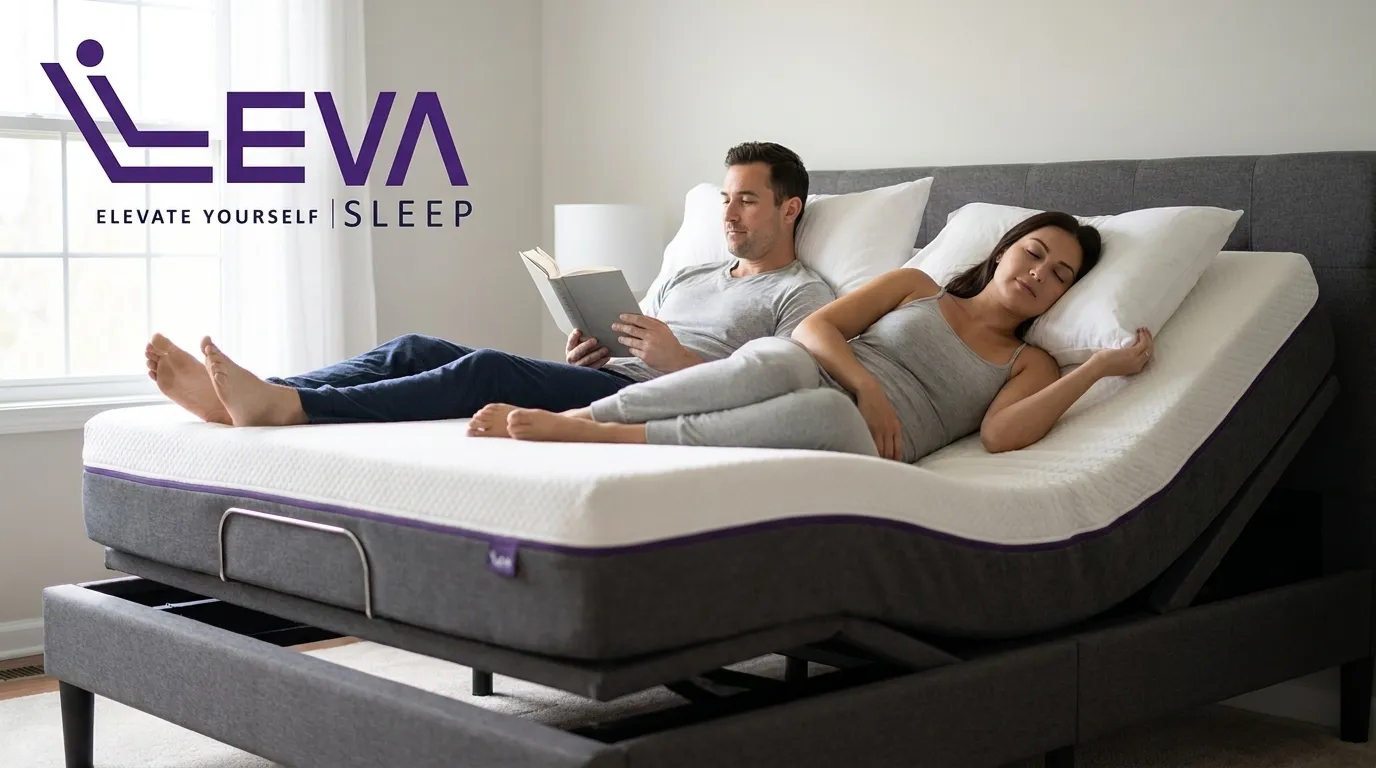
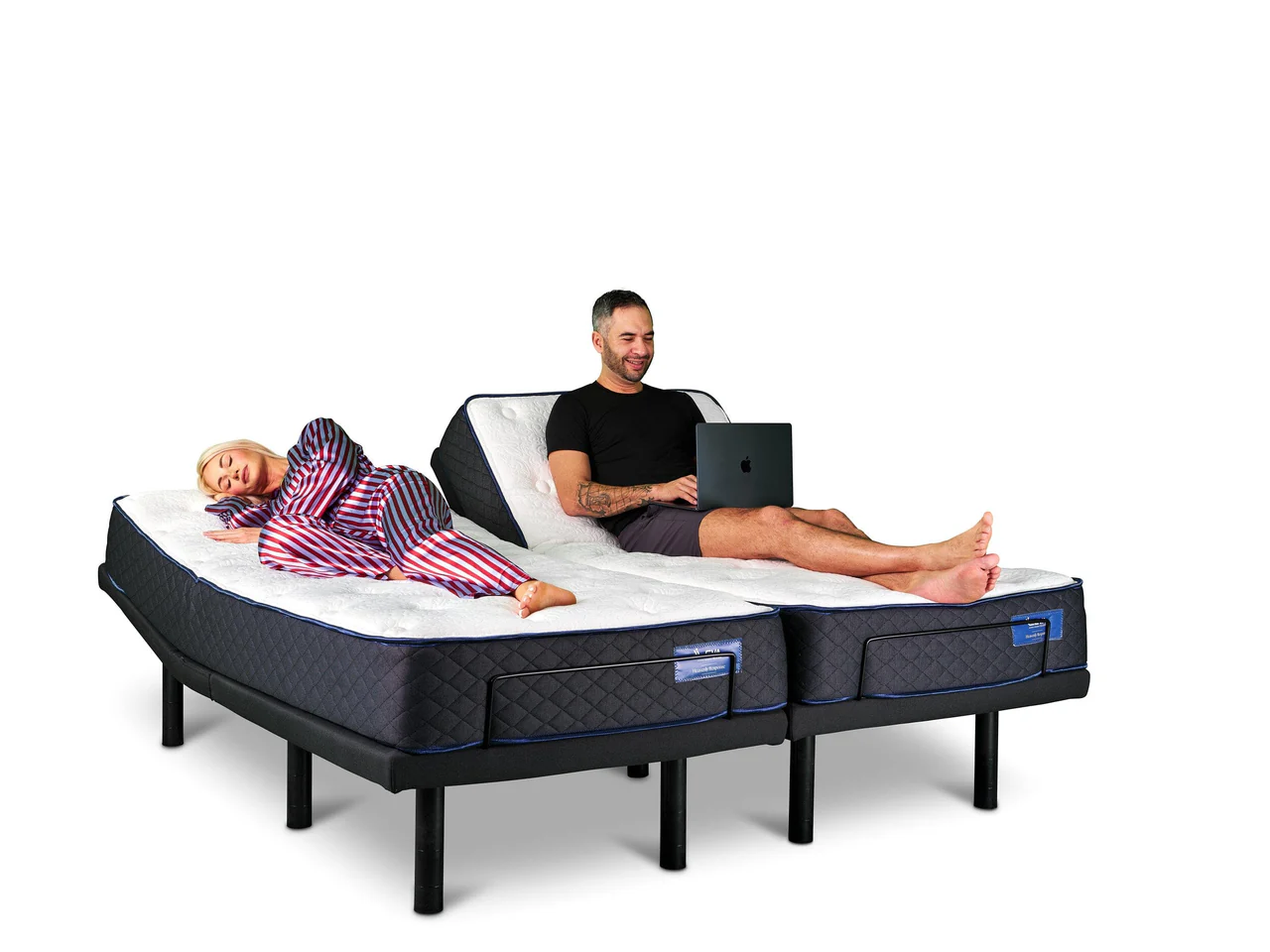
- Split Queen and Split King bases let each partner adjust their own side without disturbing the other, which works especially well for couples.
- Experience the benefits of zero-gravity sleep and independent adjustability with Leva Sleep’s adjustable base systems.
Safety First: Medical Considerations Before You Adjust
Smart adjustable beds act as positioning tools, not medical devices. Talk with a physician or licensed sleep specialist before using head or foot elevation if you have diagnosed obstructive sleep apnea requiring PAP therapy, congestive heart failure, severe gastroesophageal reflux disease with Barrett’s esophagus, deep vein thrombosis or active clotting disorders, post-surgical recovery with positional restrictions, or spinal instability after vertebral fracture or fusion. Elevation angles that help one condition can aggravate another, so you need individualized clinical guidance before changing your baseline sleep posture.
Step 1: Zero-Gravity Positioning to Reduce Disc Pressure
Zero-gravity positioning unloads your lumbar spine by elevating the torso and legs at the same time. This shift moves compressive forces away from the nucleus pulposus of each intervertebral disc. Peer-reviewed research shows that adjustable positioning can reduce intradiscal pressure and support better spinal alignment than flat supine postures. Participants with chronic low-back complaints reported lower pain scores and fewer nighttime awakenings.
Leva Sleep’s whisper-quiet German motors drive a dual-articulation frame that raises the head section and foot section along independent arcs. Each motor receives positional feedback through an encoder that tracks angle in one-degree increments, so the system can hold a programmed zero-gravity preset through the night. Pressure-mapping data from a sensor mat between sleeper and mattress shows that the zero-gravity angle lowers peak-pressure points at the sacrum and heels, which are the two areas most prone to tissue ischemia during long periods of flat supine sleep.
Step 2: Torso Elevation to Help Open the Airway
Torso elevation between 10 and 30 degrees shifts the soft palate, tongue base, and surrounding pharyngeal tissue forward and downward. This shift reduces the chance of airway collapse during inspiration. Clinical guidance on positional airway management confirms that this elevation must occur at the torso, not only at the neck. Pillow-only elevation creates cervical flexion that can worsen obstruction instead of relieving it.
A motorized base raises your entire upper body along a smooth mechanical curve, which creates biomechanically correct torso elevation. Stacked pillows cannot maintain that alignment consistently through a full night. For couples where one partner’s snoring disrupts the other’s sleep, independent head elevation on a split base lets the snoring partner adjust their side while the other side stays still.
Step 3: Leg Elevation to Support Venous Return
Leg elevation between 10–20 degrees above heart level uses gravity to assist venous blood flow from the lower extremities back toward the right atrium. This position reduces hydrostatic pressure in the distal veins. StatPearls authors Shivik K. Patel, Calin Manea, and Scott M. Surowiec report that leg elevation above the heart can reduce venous pressure and edema and help prevent recurrent ulceration in patients with chronic venous insufficiency.
Sleepers without diagnosed venous disease benefit from the same gravitational effect. Many notice less overnight ankle swelling, less leg heaviness on waking, and sometimes lower nocturnal blood pressure from reduced peripheral vascular resistance. Leva Sleep’s foot-section motor holds the programmed angle independently of the head section, so you can combine flat-torso positioning with elevated legs or any other combination that fits your physiology.
Step 4: Fine-Tuning with Lumbar and Pillow-Tilt Adjustments
Higher-tier Leva Sleep bases add two more independent actuators for detailed support. A lumbar support motor inflates or deflates a contoured zone beneath your lower back, and a pillow-tilt motor adjusts the uppermost section of the head panel by a few degrees independent of the main head angle. The lumbar actuator lets you add targeted support without changing overall torso elevation, which helps side-sleepers who drift onto their backs during the night.
The pillow-tilt motor fine-tunes cervical alignment so your neck stays neutral as the main head angle changes. This feature addresses the crimping risk described in torso-elevation research. In a Split King or Split Queen configuration, each partner controls their own lumbar zone and pillow tilt, which prevents adjustment vibration from transferring across the bed. Leva Sleep’s Split Queen option gives couples in smaller rooms independent adjustability without the footprint of a Split King.
Comparison Table: Flat vs. Elevated Sleep Positions
The table below compares how common sleep positions affect intradiscal pressure, airway resistance, and venous return. Review it to see why zero-gravity positioning delivers the most complete set of physiological benefits.
Step 5: What Really Happens When the Bed Moves at Night
Most first-time adjustable-base users worry about motor noise. Leva Sleep’s German-engineered motors run quietly, well below the level that typically triggers cortical arousal during light sleep stages. Position changes from anti-snore mode or a programmed schedule occur gradually instead of snapping into place, which avoids the startle response associated with older relay-driven motors.
Structural design limits partner disturbance from vibration. In a Split Queen or Split King configuration, the two bases do not share a rigid center connection, so motor movement on one side does not travel through the frame to the other. Each base rests on its own leg set, and a split-compatible fitted sheet with deep pockets and reinforced elastic bridges the gap between mattresses. Leva Sleep engineers this bedding specifically for adjustable systems.
If a preset feels uncomfortable during the night, the wireless remote or Leva Sleep app can return the base to flat with a single button press. Users who notice shoulder impingement at higher head angles should lower elevation in 5-degree steps until the discomfort resolves instead of giving up on elevation.
Step 6: Limits of What Adjustable Technology Can Solve
Positional adjustment cannot replace CPAP or BiPAP therapy for moderate-to-severe obstructive sleep apnea. Head elevation lowers airway resistance but does not prevent apnea events in patients with significant anatomical obstruction or central apnea components. An adjustable base also does not treat insomnia disorder, circadian rhythm disruption, restless legs syndrome, or periodic limb movement disorder, which need behavioral or pharmacological care.
Elevation cannot fix a mattress that lacks proper pressure relief. The base and mattress work as a system, and an incompatible mattress will reduce the benefits of positional change. Zero-gravity positioning also does not fit every post-surgical recovery plan, so you must follow your surgeon’s positional restrictions before using any preset.
Step 7: How to Measure Whether Your Bed Is Helping
Sleepers who want to evaluate adjustable positioning should track results for at least two weeks before deciding on effectiveness. Wearable devices that report resting heart rate, heart rate variability, and sleep-stage distribution give you a baseline before the first change and a comparison set after. Pain diaries that use a 0–10 numeric rating scale, completed right after waking, capture shifts in morning back, hip, and shoulder discomfort more reliably than memory alone.
Partner feedback on snoring frequency, recorded with a smartphone app on the nightstand, offers an independent measure of airway improvement. Daily ankle circumference measured at the same time each morning tracks edema changes from leg elevation. For users whose adjustable base connects with AI sleep-tracking platforms, the system can log position angle against sleep-stage data in real time and support small angle changes toward the setting that maximizes deep-sleep duration for that individual.
Start tracking your sleep metrics with a Leva Sleep adjustable base and see the difference in your own data.
Frequently Asked Questions
Can a smart adjustable bed replace a CPAP machine for sleep apnea?
No. Head-of-bed elevation reduces upper-airway resistance and may lower snoring frequency in positional snorers, but it does not create the continuous positive airway pressure needed to prevent apnea events in patients with diagnosed moderate-to-severe obstructive sleep apnea. Leva Sleep’s anti-snore mode and zero-gravity positioning work as complementary tools for mild positional snoring or as part of a broader sleep-hygiene plan, but they do not replace a prescribed PAP device. Always follow the treatment plan from a board-certified sleep physician.
What is the difference between a Split Queen and a Split King for couples?
A Split King pairs two Twin XL mattresses on two independent bases for a total width of 76 inches, which matches a standard King. A Split Queen pairs two mattresses on two independent bases at a total width of 60 inches, which matches a standard Queen footprint. Both layouts give each partner full control of head angle, foot angle, lumbar support, pillow tilt, and massage.
The Split Queen works better for couples in smaller bedrooms or for partners who prefer closer proximity. The Split King fits couples who want maximum individual surface area. Leva Sleep builds Split Queen configurations to order so couples can gain independent adjustability without needing a King-sized room.
How long before I notice changes in back pain or snoring?
Many sleepers notice a change in morning back-pain scores within three to seven nights of consistent zero-gravity positioning. Results vary based on the cause of pain, mattress compatibility, and how accurately the elevation angle has been set. Partners often notice snoring reduction within the first week when head elevation occurs at the torso instead of only at the neck.
Wearable-reported metrics such as nighttime awakenings or heart rate variability usually need two full weeks of consistent positioning before the trend becomes clear against normal night-to-night variation.
Will the motors wake me or my partner when the bed adjusts automatically?
Leva Sleep’s whisper-quiet German motors operate below the acoustic threshold commonly linked with cortical arousal during light sleep. Automatic adjustments, including those from the spring 2026 anti-snore mode, occur gradually, which further lowers the chance of waking either sleeper. In a Split Queen or Split King configuration, mechanical isolation between the two bases keeps one side’s motor activity from sending vibration to the other side’s sleeping surface.
Conclusion
Adjustable positioning addresses several sleep-quality factors at once, including spinal load, airway openness, circulation, and partner compatibility. Flat sleep and stacked pillows cannot match this level of control. The key lies in precise, independent control of each adjustment zone, which is why Leva Sleep’s four-actuator system and split-base configurations can deliver measurable results.
Evaluate your current sleep posture, track at least two weeks of wearable and pain-diary data after your first position change, and use partner snoring feedback as an objective benchmark for airway improvement. Explore Leva Sleep’s full range of adjustable bases and Split Queen configurations to find the system that fits your space and your sleep goals.