Written by: Matthew Timmins, Founder and Managing Director, Leva Sleep
Key Takeaways for Back Pain and Couples
- Spinal alignment drives back pain relief. Latex and Aireloom mattresses offer passive support, while adjustable bases add active elevation-based correction that flat surfaces cannot provide.
- Firmness needs shift with body weight and sleep position. Lighter side sleepers usually need softer surfaces, while heavier back sleepers need firmer support to keep hips from sinking.
- Latex mattresses often last 10–20 years with strong sag resistance. Aireloom hybrids typically deliver 8–10 years of structural integrity when paired with proper foundation support.
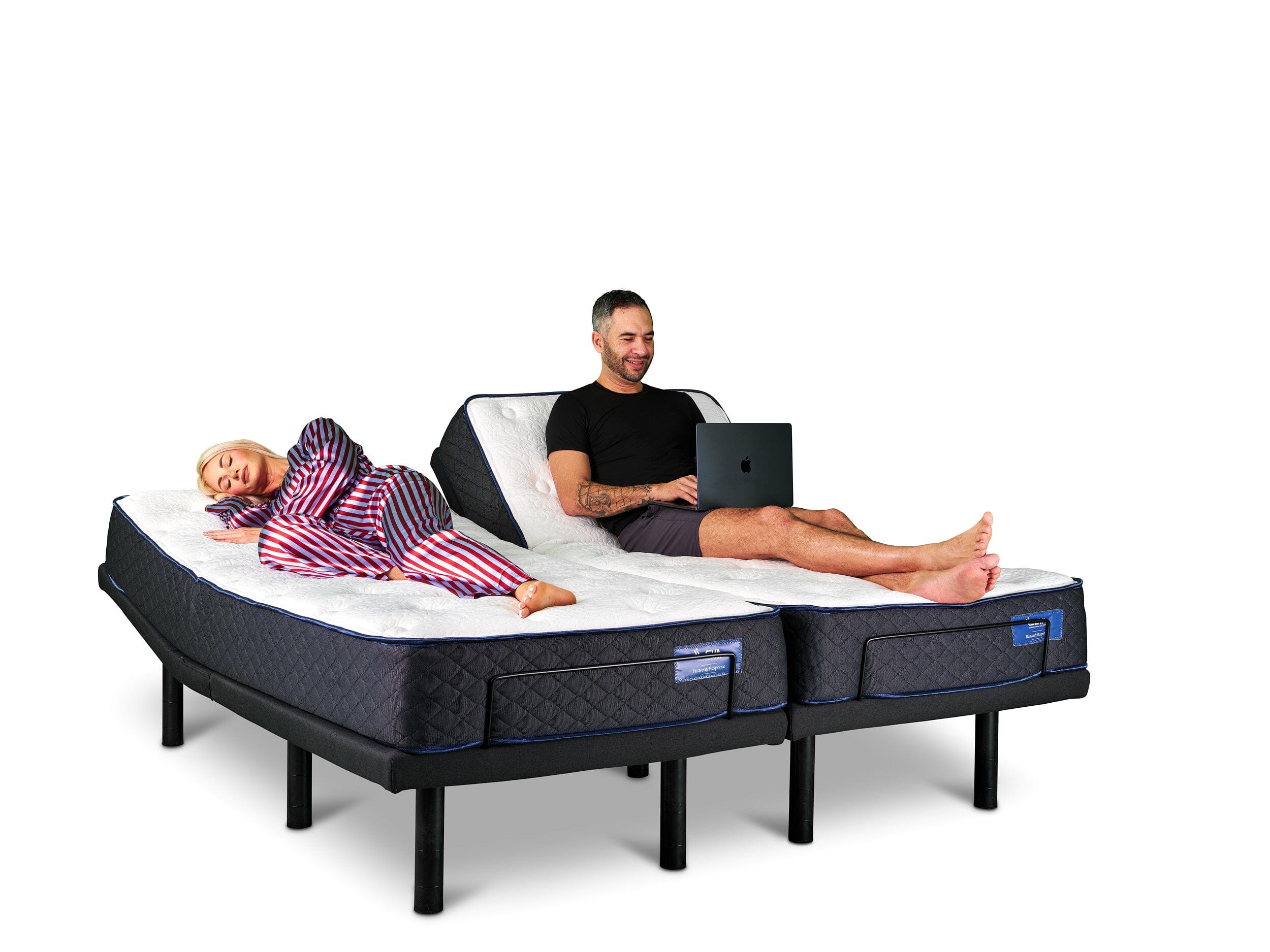
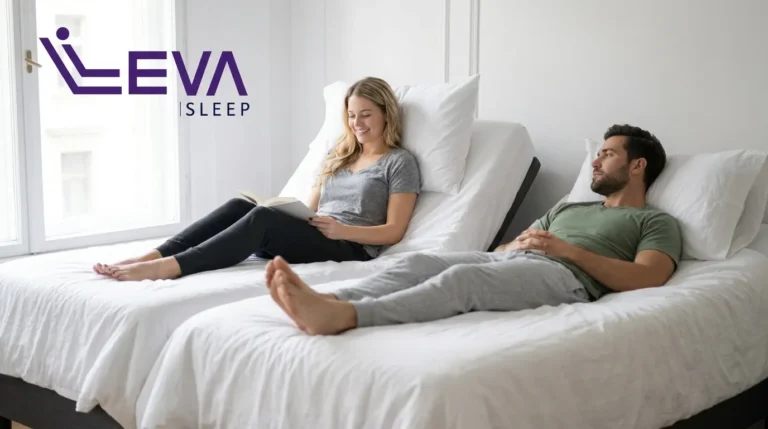
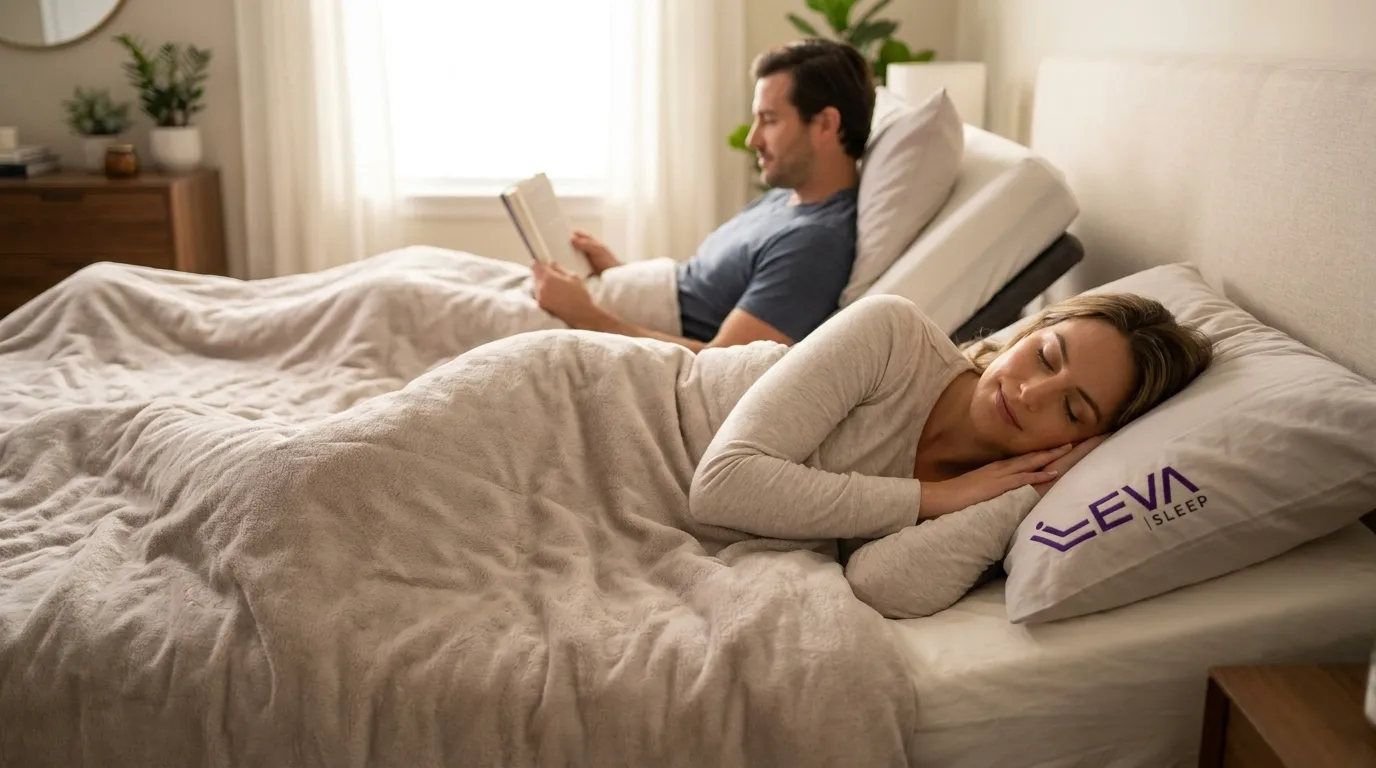
- Couples with different firmness needs or sleep positions often struggle on a single flat mattress. Split adjustable configurations allow independent customization while sharing one bed.
- Leva Sleep’s adjustable Aireloom hybrid systems combine premium materials with independent elevation, lumbar control, and split setups to target back pain and partner compatibility. Explore Leva Sleep’s adjustable Aireloom options today.
Spinal Alignment Comfort: Latex vs Aireloom vs Adjustable Hybrid
Spinal alignment during sleep directly affects back pain. Board-certified spinal surgeon Gbolahan Okubadejo, MD, FAAOS, explains that a good sleep surface keeps the spine in a natural, straight line in any position and is one of the simplest ways to protect the back and avoid waking up in pain.
- Latex: Latex contours to the body yet stays responsive, which supports spinal alignment and makes position changes easier without the “stuck” feel of memory foam. Latex can feel too firm for sharp, acute pain because it does not cradle as deeply as memory foam.
- Aireloom: Aireloom’s hand-tufted, California-crafted construction delivers plush contouring through premium comfort layers and excels at following the body’s curves. Very plush setups can let heavier sleepers’ hips sink below the lumbar region, which creates a reverse arch and extra strain.
- Leva’s Adjustable Aireloom Hybrid: Pairing an Aireloom mattress with Leva’s adjustable base adds independent lumbar control plus head and foot elevation. Raising the torso on an adjustable base can help widen disc spaces and relieve nerve root impingement in early-stage stenosis. This mechanical advantage does not exist on any flat mattress, regardless of material.
One limitation to consider: latex and Aireloom on flat bases rely only on passive material properties for alignment. Active elevation-based correction requires an adjustable base.
Pressure Relief by Sleep Position and Body Weight
Optimal firmness for back pain depends on sleep position and body weight. Lighter sleepers under 130 lbs usually need softer settings around 3–5 on a 10-point scale. Average-weight sleepers between 130 and 230 lbs often do best on medium to medium-firm, around 5–6. Heavier sleepers over 230 lbs typically need firmer support in the 7–8 range to prevent excessive sinking. These ranges frame how latex, Aireloom, and adjustable bases perform for different sleepers.
- Latex (side sleepers): Responsive latex lets shoulders and hips compress naturally. Side sleepers usually sleep best on a medium-soft to medium-firm surface that cushions shoulders and hips without letting the body sink too deeply. Latex often achieves this for average-weight side sleepers, yet it can feel too firm for lighter side sleepers.
- Aireloom (back sleepers): Aireloom’s layered comfort system suits back sleepers who want plush contouring. Back sleepers should choose a medium-firm surface that supports the spine’s natural curve without sagging, since a mattress that is too soft can let the hips sink too far and strain the lower back. Softer Aireloom models may not provide enough support for heavier back sleepers.
- Leva’s Adjustable Aireloom Hybrid: Elevating the legs above heart level can improve venous return, reduce inflammation, and ease morning stiffness. Elevation helps compensate for firmness mismatches that passive materials alone cannot fully resolve.
Keep in mind: a flat latex or Aireloom mattress demands very accurate firmness selection at the start. An adjustable base adds positional correction that widens the comfort range of any mattress.
Durability, Sagging, and Long-Term Support
- Latex: Natural latex mattresses typically last 10–20 years with proper care, and Dunlop-process latex often lasts longer than Talalay because of its denser composition. Natural latex tends to resist sagging the longest, often 10–15 years, compared with high-quality hybrids with pocketed coils at about 8–10 years.
- Aireloom: Aireloom uses premium coil systems and hand-tufted comfort layers. Hybrid designs with individually encased coils resist metal fatigue longer than interconnected innerspring systems. In hybrid mattresses, individually encased coils in higher-quality systems usually hold up longer than lower-gauge wire systems that face metal fatigue sooner.
- Leva’s Adjustable Aireloom Hybrid: The adjustable base functions as a separate mechanical component with its own lifespan. Leva’s whisper-quiet German motors are engineered for long-term use. The mattress follows Aireloom’s durability profile, while the base adds positional features that a mattress alone cannot match.
A study in the Journal of Chiropractic Medicine found that replacing mattresses older than five years improved sleep quality and back pain, even when the old mattresses showed no obvious defects. Durability and functional adequacy do not always align.
Partner Compatibility and Shared Comfort
Durability matters for each sleeper, yet couples also need a setup that respects two different bodies and preferences.
- Latex (flat): A single latex mattress locks both partners into one firmness level. Many couples have different firmness preferences based on body weight, sleep position, and medical conditions, and couples who compromise on a single firmness often report lower sleep quality than those with individualized support.
- Aireloom (flat): Aireloom’s range of firmness options lets couples choose a middle ground, yet one flat surface still forces compromise when one partner needs firm lumbar support and the other needs plush hip relief.
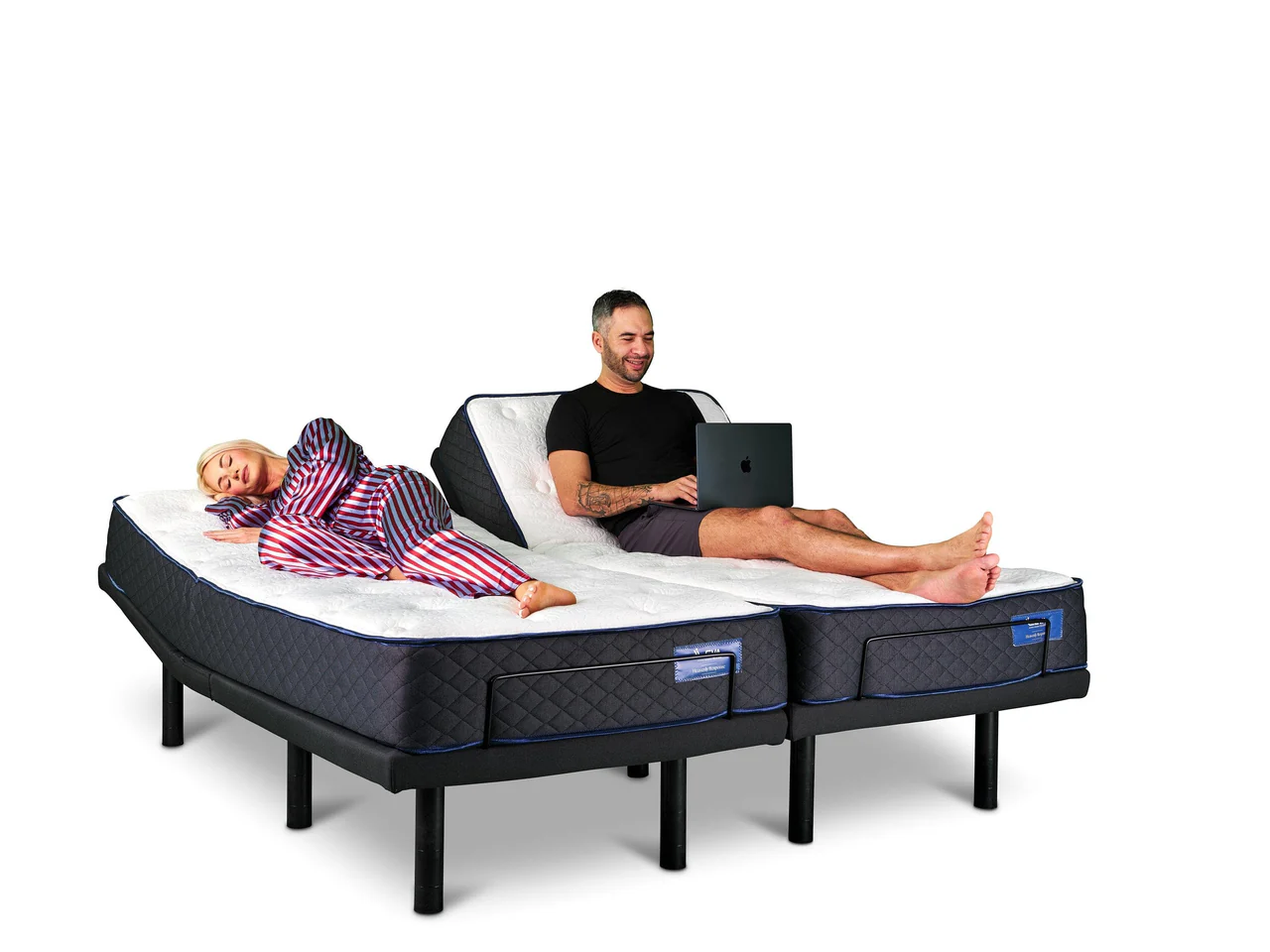
- Leva’s Split Adjustable Aireloom Hybrid: Leva’s Split King and Split Queen setups place two independent bases side by side, each with separate elevation, lumbar control, and massage settings. Adjustable bases with independent head and foot motors let each partner choose different elevation angles, which supports couples with differing sleep needs or back-pain requirements while staying in the same bed.
This approach has one drawback: split configurations create a small center gap between mattress halves. Leva addresses this with purpose-designed bedding accessories, including deep-pocket fitted sheets and duvet clips engineered for adjustable bases.
Adjustability and Nightly Personalization
- Latex: Latex mattresses do not provide mechanical adjustability. Firmness stays fixed after purchase. Some models offer flippable or zoned layers, yet any change requires manual repositioning and still does not affect elevation.
- Aireloom (flat): Aireloom mattresses come in several firmness tiers, but the choice happens once. The mattress cannot adapt to nightly changes in pain levels or shifting sleep position preferences.
- Leva’s Adjustable Aireloom Hybrid: Research has shown benefits of zero-gravity positioning for reducing back pain and improving deep sleep compared with flat sleep. Leva’s app-controlled bases offer custom sleep position presets, anti-snore mode, vibrating alarms, and real-time micro-adjustments, which flat mattress systems cannot provide.
The key constraint here: adjustability introduces mechanical complexity. Leva reduces this concern with whisper-quiet German motors and an integrated app, yet buyers should decide whether they feel comfortable with a technology-based sleep system.
Delivery, Setup, and Ongoing Convenience
- Latex: Latex mattresses are heavy and dense, so professional delivery usually makes sense. Many latex brands rely on third-party carriers that offer limited setup support.
- Aireloom: Aireloom sells through authorized retailers with varying delivery standards. Access to white-glove service depends on the specific retailer.
- Leva’s Adjustable Aireloom Hybrid: Leva manages the entire delivery process in-house. For a fee, trained professionals deliver to the bedroom, assemble the base and mattress, adjust leg heights, provide a product tutorial, and remove old beds through donation or recycling. This end-to-end control removes the assembly burden that often comes with adjustable base purchases.
Long-Term Value and Changing Health Needs
- Latex: Latex carries a high upfront cost that spreads over a 10–20-year lifespan. There are no mechanical components to service. Value remains straightforward yet static, since the mattress cannot adapt as health needs change.
- Aireloom: Aireloom’s premium pricing reflects California craftsmanship and material quality. Lifespan aligns with high-quality hybrid benchmarks. Long-term value depends on whether the chosen firmness still fits as the sleeper’s body or health conditions evolve.
- Leva’s Adjustable Aireloom Hybrid: The initial investment combines mattress and base costs. Leva’s direct-to-consumer model often delivers pricing 30–50% below comparable competitors by removing retail markups. Adjustable systems can adapt to evolving medical needs, while a flat mattress cannot.
Real-World Scenarios for Common Pain Profiles
The following scenarios connect typical pain patterns to the features that matter most in each setup.
- Chronic lower back pain (back sleeper, 180 lbs): Zero-gravity positioning can reduce lumbar paraspinal muscle activity compared with flat supine. A medium-firm latex or Aireloom mattress supplies passive support. Adding an adjustable base then provides active decompression that neither flat option can match.
- Side-sleeping hip pressure (lighter sleeper, under 130 lbs): Latex can feel too firm for this profile. A softer Aireloom model with a split adjustable base lets the lighter partner fine-tune elevation on their side without affecting the other side.
- Snoring partner: Elevating the head on an adjustable base can help open the airway and reduce apnea events, which lowers micro-arousals that affect cortisol and pain pathways. No flat mattress, latex or Aireloom, offers this mechanical airway support. Leva’s anti-snore mode adds automated detection and micro-adjustment.
- Differing firmness needs: One partner needs firm lumbar support, while the other needs plush hip relief. A single flat mattress, regardless of brand, forces compromise. The sleep quality gap between compromised and individualized firmness becomes most obvious here. Leva’s Split King or Split Queen configuration solves this while keeping partners in the same bed.
Decision Framework Checklist for Your Situation
Use these criteria to match your body type, pain profile, and relationship needs to the right configuration.
- Body weight under 130 lbs, side sleeper: Prioritize a softer comfort layer. Decide whether a flat Aireloom or a split adjustable hybrid gives you the right softness on your side.
- Body weight 130–230 lbs, back sleeper: Medium-firm latex or Aireloom supports passive alignment. Add an adjustable base if morning stiffness continues even after choosing an appropriate mattress.
- Body weight over 230 lbs: Firmer support becomes essential to prevent excessive sinking. A hybrid with zoned coils plus an adjustable base offers both structural support and positional correction.
- Partners with different firmness preferences: A split adjustable configuration is the only setup that removes firmness compromise without separate beds.
- Snoring or mild sleep apnea: Head elevation on an adjustable base provides a mechanical airway intervention. A flat mattress of any material does not change airway positioning.
- Chronic lower back pain with nerve involvement: Evaluate adjustable bases with independent lumbar control and zero-gravity presets alongside your mattress material choice.
- Priority on durability and simplicity: Natural latex on a flat base offers the longest passive lifespan with no mechanical components to maintain.
Frequently Asked Questions
What firmness level is best for lower back pain?
The clinical consensus points to medium-firm as the best range for most people with chronic lower back pain. A 2003 randomized controlled trial in The Lancet assigned 313 adults with chronic low-back pain to firm or medium-firm mattresses. After 90 days, the medium-firm group reported significantly less pain and disability. A 2021 systematic review in the Journal of Orthopaedics and Traumatology confirmed that medium-firm mattresses generally outperform both soft and extra-firm options, though individual responses vary with body weight and sleep position. Lighter sleepers usually need a softer surface within the medium range, while heavier sleepers need firmer support to keep the hips from sinking below the lumbar spine. An adjustable base adds positional correction that widens the effective range of any mattress firmness by letting the sleeper fine-tune elevation instead of relying only on material properties.
How long before an Aireloom mattress starts to sag?
Aireloom mattresses use premium coil systems and hand-crafted comfort layers that place them in the high-quality hybrid category. As discussed earlier, Aireloom’s pocketed coil construction typically falls in the 8–10 year range for high-quality hybrids. This assumes proper foundation support. Individually encased coils resist metal fatigue longer than interconnected innerspring systems. Sagging greater than 1–2 inches signals a loss of support and suggests that spinal alignment is being compromised during sleep. Proper foundation support, including a compatible adjustable base, is essential because inadequate support speeds up comfort layer compression regardless of mattress quality. Leva’s adjustable bases are engineered to provide stable, even support across the mattress surface, which helps protect the mattress structure over time.
Does sleeping with the head elevated actually help spinal alignment?
Yes, within specific elevation ranges. Research has shown that zero-gravity positioning can produce greater improvements in disability scores and increases in deep sleep compared with flat sleep. Electromyography data shows that zero-gravity positioning can reduce lumbar paraspinal firing compared with flat supine. Raising the torso on an adjustable base can help widen disc space and relieve nerve root impingement in early-stage stenosis. The zero-gravity position, with legs elevated above heart level and the torso at an angle, distributes weight more evenly and reduces pressure on the lower back and tailbone. These benefits depend on position and require an adjustable base. No flat mattress, regardless of material, can reproduce them.
Can couples with different sleep needs stay in the same bed?
A split adjustable configuration offers the most direct solution. Many couples have different mattress firmness preferences based on body weight, sleep position, and medical conditions. Couples who compromise on a single firmness often report lower sleep quality than those with individualized support. A Split King or Split Queen adjustable base places two independent bases side by side, each with separate elevation, lumbar control, massage, and app-based settings. This setup lets one partner sleep in zero-gravity for back pain while the other sleeps flat, or allows each partner to choose a different mattress firmness on their side. Leva Sleep specializes in this configuration and offers purpose-designed bedding accessories, including deep-pocket fitted sheets and duvet clips, so the split setup feels like one unified, comfortable sleep surface.
Are hybrid mattresses compatible with adjustable bases?
Modern hybrid mattresses with individually pocketed coils are generally compatible with adjustable bases because the independently wrapped coils move without structural damage at the base’s articulation points. Traditional innerspring mattresses with interconnected coils are not compatible, since the rigid coil grid resists bending and can be damaged by repeated articulation. Latex layers and high-density foam comfort layers also flex without permanent deformation, which makes latex hybrids well-suited for adjustable base pairing. Leva Sleep designs its mattress lineup, including Aireloom hybrid models, specifically to work with adjustable bases so that comfort layers, coil systems, and base articulation points stay aligned for long-term compatibility. Buyers considering any hybrid mattress for use with an adjustable base should confirm that the coil system uses individually encased rather than interconnected coils.
Conclusion: Matching Your Mattress to Health and Relationship Needs
Latex mattresses provide durable, responsive spinal alignment with a lifespan that often outlasts most alternatives. Aireloom mattresses deliver California-crafted plush contouring and premium material quality. Both work well for individual sleepers who have dialed in the right firmness for their body weight and sleep position. Couples dealing with chronic back or hip pain, different firmness preferences, snoring, or sleep apnea usually need more than a flat mattress, regardless of brand. The mechanical advantages of zero-gravity positioning, independent lumbar control, and split elevation only come from an adjustable base system.
Leva Sleep’s adjustable Aireloom hybrids combine Aireloom’s material quality with independent elevation, app-based personalization, and split configurations so both partners can address their individual needs without separate beds. With in-house white-glove delivery, Leva offers specialist expertise that general mattress retailers typically do not provide.