Written by: Matthew Timmins, Founder and Managing Director, Leva Sleep
Key Takeaways for Couples in 2026
- Split configurations with independent controls let each partner choose their own head or foot elevation without disturbing the other.
- Automated anti-snore features that detect snoring and adjust the head section without manual input provide the most consistent relief.
- Quiet, high-quality motors reduce the noise complaints that many couples report with standard adjustable bases.
- Leva Sleep stands out with true Split Queen options, U.S.-made mattresses designed for articulation, and an automated anti-snore mode scheduled for spring 2026.
- Couples who want premium features at a lower price point can explore Leva Sleep’s split adjustable systems today.
1. Tempur-Pedic Ergo Smart Base: AI Snore Detection at a Premium Price
The Tempur-Pedic Ergo Smart Base uses Sleeptracker-AI sensor technology that monitors breathing and movement and then raises the head when it detects snoring. Split configurations are available for king sizes. Motor noise is clearly audible during adjustment, and light sleepers often notice it at night. The base carries a 25-year limited frame warranty, while electronics receive shorter coverage. Real-world drawbacks include a high retail price, reliance on a proprietary app, and the need to use Tempur-Pedic mattresses for full feature access, which restricts choice and raises total system cost.
2. Saatva Adjustable Base Plus: Massage and White-Glove Delivery
Saatva’s Adjustable Base Plus offers full-body massage and a wireless remote. Split king configurations are available for couples who want independent control. Anti-snore positioning requires manual activation, so a partner must turn it on instead of the system responding automatically to snoring. Motor noise is moderate. The frame has a 25-year warranty, while motors and electronics receive shorter coverage. White-glove delivery is included and sets Saatva apart from many direct-to-consumer brands, but couples still face a higher price without automated snoring detection.
3. Nectar Premier Adjustable Base: Mid-Range Features for Budget-Conscious Couples
The Nectar Premier Adjustable Base provides head and foot elevation plus USB charging ports. It comes in split king for independent control. Anti-snore support is limited to a preset head-elevation position instead of true sensor-driven automation. Motor noise is generally low to moderate. The warranty is shorter than premium competitors. Nectar positions this base as a mid-range option, which keeps it accessible but less suitable for couples managing active snoring or sleep apnea.
4. GhostBed Adjustable Base: Wholesale Availability with Noise Trade-Offs
GhostBed’s adjustable base offers head and foot articulation, massage, and a wireless remote. Split configurations are not consistently available across all sizes, which limits independent control for couples who share a queen or king. Anti-snore automation is not listed as a feature. Many user reviews mention noticeable motor noise. GhostBed sells through wholesale partners such as Costco, so the buying and setup experience depends on the retailer, and white-glove delivery is not standard. Warranty terms also vary by retail channel.
5. Sleep Number 360 Smart Bed: Fully Integrated but Highly Proprietary
The Sleep Number 360 combines an adjustable base with a proprietary air-chamber mattress system, so you cannot pair it with a different mattress. Each side of a split king has independent firmness control through the SleepIQ app. The system tracks sleep data and can adjust firmness during the night. Anti-snore elevation is available as a responsive feature. Many owners report pump and motor noise during automatic adjustments. Long-term concerns focus on air chambers and pumps that may require service. The total system cost is high, and the proprietary ecosystem creates ongoing dependence on Sleep Number components.
6. Purple Adjustable Base: Compatible with GelFlex but Manual for Snoring
Purple’s Premium Smart Base supports head and foot elevation and uses a wireless remote. It is designed for Purple’s GelFlex Grid mattresses but works with many other models. Split configurations are available for king sizes. Anti-snore automation is not included, so couples must manually raise the head for snoring relief. Motor noise is moderate. The frame carries a limited warranty. Purple’s base serves as a practical mid-range choice but lacks sensor-driven snore control and true split queen sizing for couples with more complex needs.
7. Leva Sleep Split Queen & Split King Systems: Quiet Motors and True Split Options
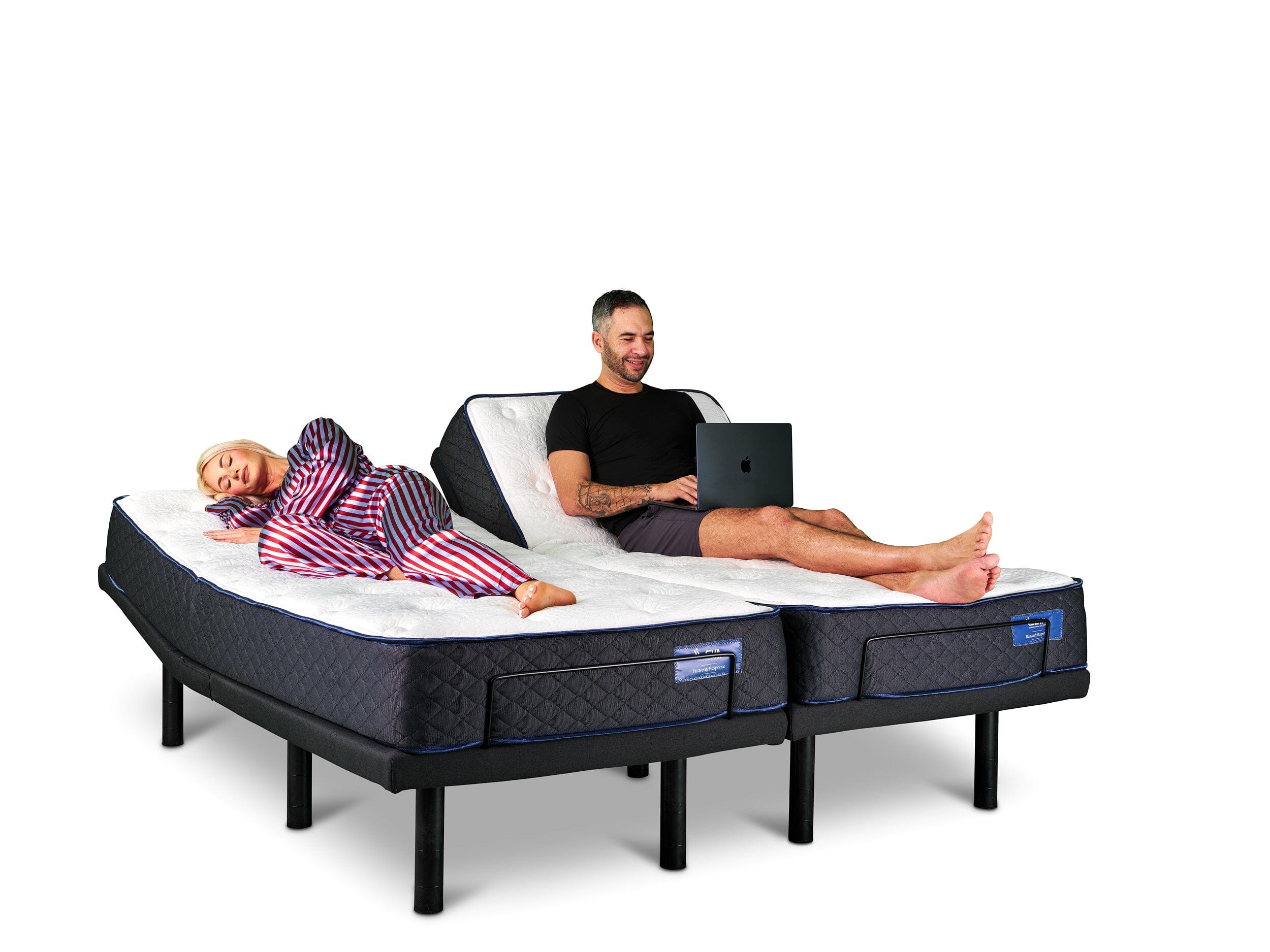
Leva Sleep focuses on adjustable bases and offers a broad range of models tailored for couples. Both Split Queen and Split King configurations are available, and each side operates independently for elevation, massage, and firmness. This matters most for Split Queen, a size that most competitors do not offer as a true split system.
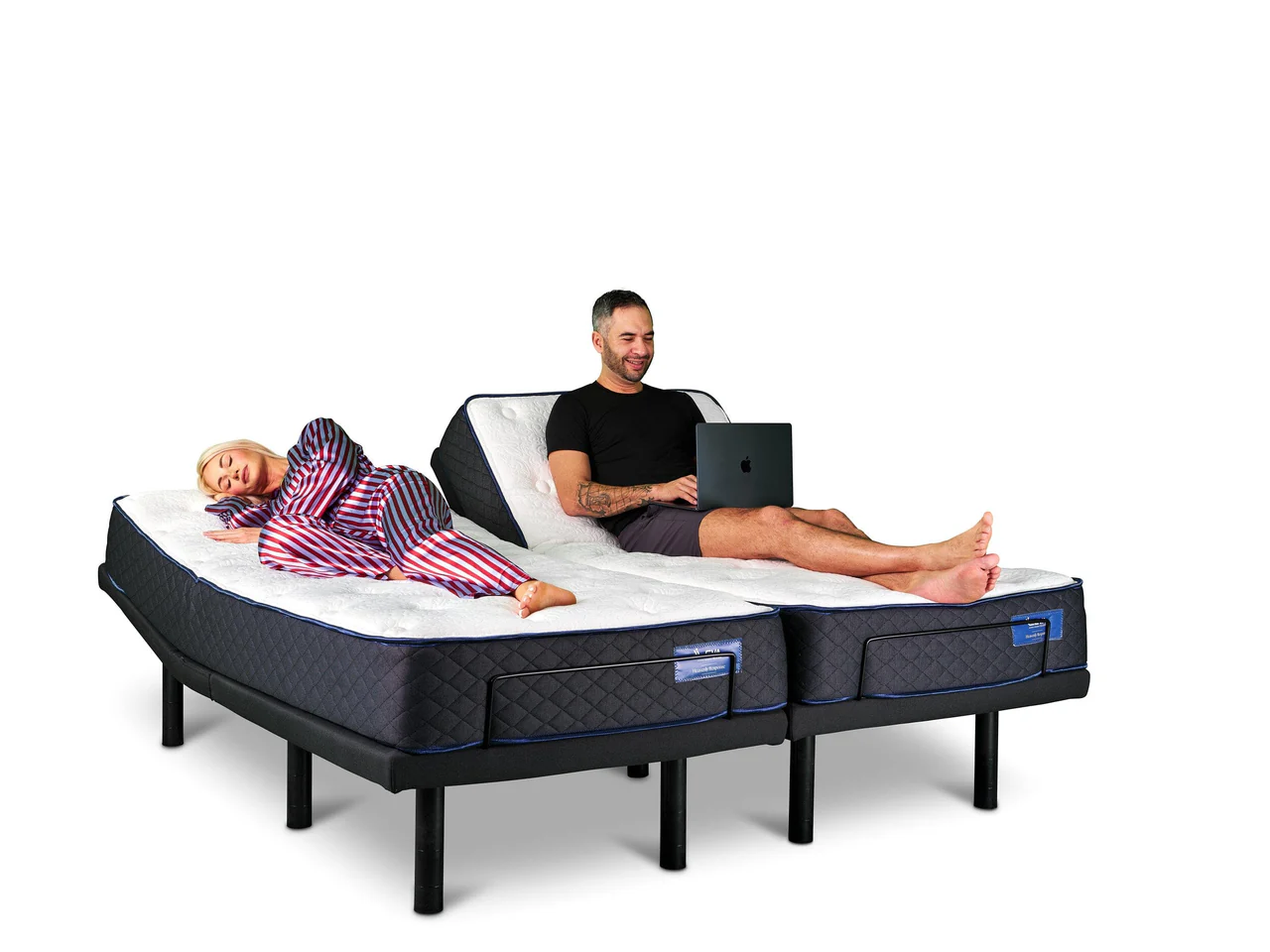
All Leva bases use very quiet German motors that are engineered to reduce disruption during nighttime adjustments. An anti-snore mode planned for spring 2026 will use micro-sensors to detect snoring and then make small automatic head adjustments that aim to open the airway without waking either partner.
Leva’s mattresses are manufactured in the United States and are built to flex with adjustable bases. This design helps prevent foam separation and coil damage that can occur when standard mattresses sit on articulating frames. The accessory line includes deep-pocket fitted sheets with reinforced elastic, duvet clips that keep split configurations aligned, and remote pockets that keep controls within reach. The Leva Sleep app offers Bluetooth control, custom position memory, and vibrating alarm functions. Pricing typically runs well below comparable Tempur-Pedic or Saatva systems, and in-house white-glove delivery is available as an add-on.
Side-by-Side Comparison: Snoring Relief, Noise, Split Sizes and Warranty
The comparison below highlights how few brands offer true Split Queen systems and how rare automated snoring detection remains, even in premium models. Use it to match snoring control, noise level, and split sizing to your specific sleep needs.
| Model | Snoring Reduction | Noise Level | Split Options | Warranty (Frame) |
|---|---|---|---|---|
| Tempur-Pedic Ergo Smart Base | Automatic AI-triggered head elevation | Audible during adjustment | Split King only | 25-year limited |
| Saatva Adjustable Base Plus | Manual head elevation only | Moderate | Split King only | 25-year limited |
| Nectar Premier Adjustable Base | Preset head elevation, not automated | Low to moderate | Split King only | Limited (shorter than premium tier) |
| GhostBed Adjustable Base | No anti-snore feature listed | Moderate to high (user-reported) | Limited availability | Varies by retailer |
| Sleep Number 360 Smart Bed | Responsive head elevation via app | Pump/motor noise during auto-adjust | Split King (proprietary system) | Limited (varies by component) |
| Purple Adjustable Base | Manual head elevation only | Moderate | Split King only | Limited |
| Leva Sleep Split Systems | Automated anti-snore mode planned; head elevation available now | Very quiet German motors | Split Queen & Split King | Confirm current terms at levasleepusa.com |
Note: Electronics and motor coverage often differ from frame warranties. Review current warranty documents from each manufacturer before you buy.
Couples-Specific Needs: True Split Control and Split Queen Sizing
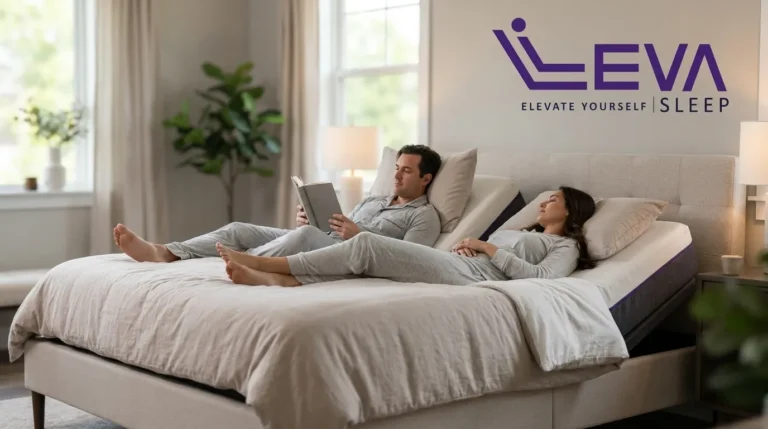
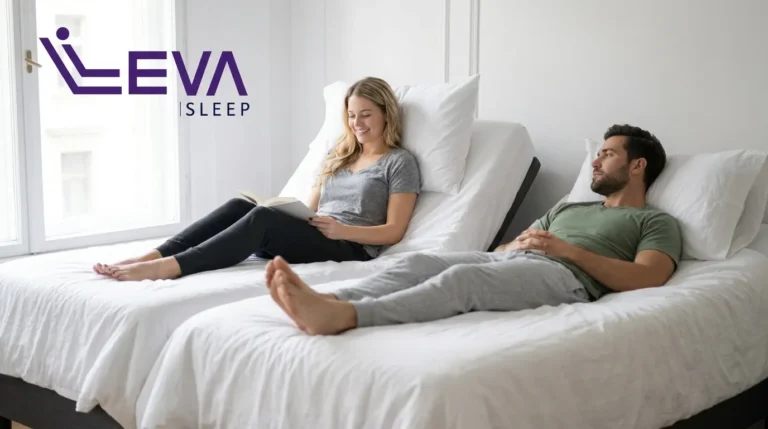
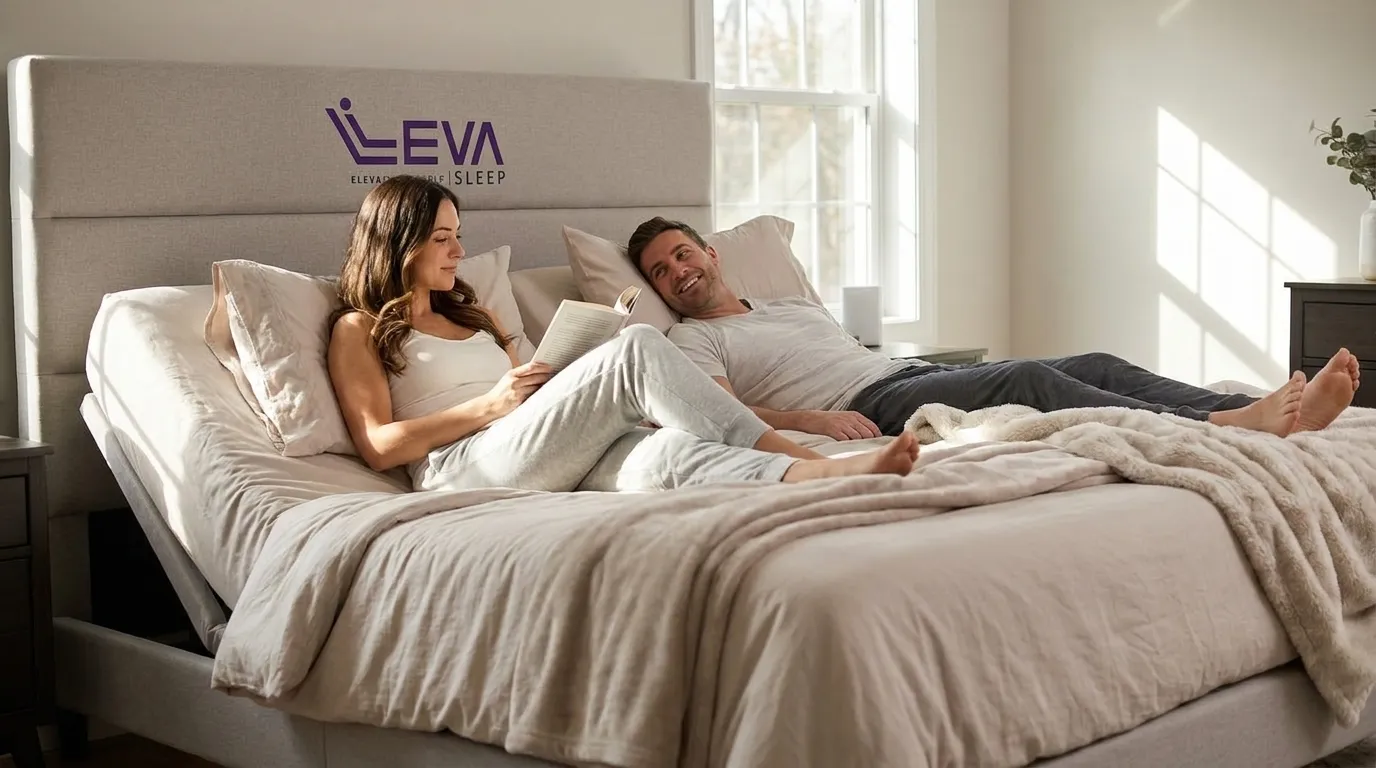
A single adjustable base under one shared mattress uses one motor to move both sides. When one partner raises the head, both partners move. Couples with different elevation needs, such as one managing acid reflux and the other preferring a flat surface, rarely find this workable. True split configurations place two independent bases side by side, each with its own motor, controls, and elevation range.
Split King is the most common format but requires a king-sized bedroom. Split Queen serves couples in smaller rooms or those who prefer sleeping closer together, yet very few manufacturers offer it. Leva Sleep is one of the only specialists that builds Split Queen systems to order.
Independent firmness and temperature control add another layer of comfort. When each side can be set to a different firmness and temperature, neither partner has to compromise their ideal sleep environment.
Value & Reliability: Pricing, Delivery and Medical Use
Smart adjustable bases from premium brands usually retail between $1,000 and $2,500 for a queen. Leva Sleep’s systems are typically priced well below comparable Tempur-Pedic or Saatva setups by using direct-to-consumer sales and in-house assembly.
Long-term reliability depends on motor lifespan, electronics coverage, app support, and mattress compatibility with repeated bending. Proprietary ecosystems that only work with one brand’s mattress can create higher replacement costs later.
For seniors and post-surgical patients, elevated head and leg positions can reduce joint pressure and improve circulation. Many orthopedic and sleep medicine specialists recommend adjustable positioning for sleep apnea, acid reflux, and recovery after hip or knee surgery. Anyone with a specific medical condition should confirm suitability with their physician before choosing a model.
Delivery quality affects the overall experience. Standard direct-to-consumer shipping often leaves assembly to the customer. Leva Sleep’s in-house white-glove service includes bedroom delivery, full setup, leg height adjustment, a product walkthrough, and removal of the old bed, which helps couples who prefer not to handle heavy furniture.
Explore Leva’s white-glove delivery and direct pricing at the La Jolla showroom or online.
Buying Checklist for Smart Adjustable Beds
Start by confirming the base configuration. You need two independent bases side by side, not one base with a split mattress on top. Once you confirm true split capability, evaluate motor quality and noise. Request a live demonstration or watch user video reviews, because loud motors are a common complaint during nighttime adjustments.
Next, look at snoring support. Distinguish between automated anti-snore systems that use sensors and manual presets that only raise the head to a fixed position. Then review electronics coverage separately from the frame warranty so you understand how long motors, remotes, and control boxes are protected.
Assess how dependent the system is on an app. Consider which features stop working if the app is discontinued or your phone’s operating system changes. Confirm that your mattress is rated for adjustable use, since repeated articulation can damage standard foam or innerspring designs over time.
Compare delivery and setup. Decide whether you want white-glove service or can manage curbside or threshold delivery. For medical use, such as sleep apnea, post-surgery recovery, or senior mobility, speak with a physician about the right elevation range and firmness before you buy.
Finally, compare total system cost across brands. Include the base, a compatible mattress, and any required accessories, and verify current pricing and warranty terms directly with each manufacturer because promotions change often.
Frequently Asked Questions
What are the long-term downsides of smart adjustable beds?
Common long-term concerns include motor wear after years of nightly use, electronics that may lose support if a manufacturer retires an app or firmware, and mattress damage when a mattress is not designed for an adjustable base. Proprietary ecosystems that only work with one brand’s mattress can also raise replacement costs when the mattress wears out. Couples can reduce these risks by choosing bases with clearly defined motor and electronics warranties, mattresses engineered for adjustable use, and brands with a history of stocking parts. Leva Sleep addresses these issues by designing its mattresses for articulation and handling service directly instead of routing support through third-party retailers.
What do doctors say about adjustable beds for hip surgery recovery or seniors?
Many orthopedic surgeons and physical therapists recommend adjustable positioning after surgery. Elevating the legs can reduce swelling and pressure on the hip joint, while raising the head can make it easier to sit up without straining the surgical area. For seniors, adjustable bases can reduce the effort required to get in and out of bed, which supports fall prevention. Sleep medicine physicians often recommend head elevation for obstructive sleep apnea, acid reflux, and chronic snoring. The right elevation angle and firmness vary by condition and anatomy, so patients should confirm the best setup with their care team. Leva Sleep’s specialists can align base and mattress choices with medical recommendations for post-surgical and senior customers.
How effectively do smart adjustable beds reduce snoring and sleep apnea?
Raising the head of the bed between about 7 and 15 degrees can reduce snoring by changing the position of the soft palate and tongue and easing airway obstruction. For mild to moderate obstructive sleep apnea, positional therapy with head elevation is a recognized complement to other treatments, but it does not replace CPAP for moderate or severe cases. Automated anti-snore features work best when they detect snoring quickly and adjust elevation precisely. Manual presets rely on the snoring partner to activate the feature before sleep, which is less consistent. Leva Sleep’s planned anti-snore mode for 2026 is designed to detect snoring and make small automatic adjustments that aim to open the airway without waking either partner. Anyone with diagnosed sleep apnea should discuss positional therapy as a supplement to their prescribed treatment with a sleep physician.
Are split adjustable beds worth it compared with a single-base setup?
For couples with different sleep preferences or medical needs, a true split configuration usually provides the only way to achieve independent control without disturbing each other. A single adjustable base moves both sides at once, so one partner’s preference always dominates. Split systems give each side its own motor, elevation range, firmness, and often temperature control.
The main trade-off is a small center gap between the two mattresses. Most couples find this minor when they use the right bedding. Deep-pocket fitted sheets with strong elastic and purpose-built duvet clips, such as those in Leva Sleep’s accessory line, bridge the gap effectively. For couples considering separate bedrooms due to snoring, pain, or temperature differences, a split adjustable system often provides a more relationship-friendly and cost-effective alternative.
Conclusion: How to Choose the Right Smart Adjustable Bed in 2026
The seven models in this guide cover the main options couples will see when shopping for smart adjustable beds in 2026. Tempur-Pedic and Saatva deliver strong warranties and familiar branding but charge premium prices and limit mattress flexibility. Nectar and Purple offer more affordable entry points without automated snoring support. Sleep Number provides deep integration but locks buyers into a proprietary ecosystem. GhostBed appears widely in retail stores but lacks robust split capability and automated snore control for couples with active sleep disruption.
Leva Sleep occupies a distinct position as a specialist with many models, true Split Queen availability, and the advanced split and anti-snore features described earlier, while keeping pricing well below many premium systems. Couples in the San Diego area can test configurations in person at the La Jolla showroom, which helps when choosing a system they will use every night.
Always confirm current pricing, warranty details, and feature availability with each manufacturer, since specifications and promotions change regularly.