
Written by: Matthew Timmins, Founder and Managing Director, Leva Sleep
Key Takeaways
- OSA severity and whether it is positional guide whether CPAP or head-of-bed elevation should be the first treatment choice.
- Head elevation with an adjustable bed can lower AHI in many people with mild-to-moderate positional OSA and often supports better long-term use than CPAP masks.
- CPAP remains the standard for moderate-to-severe or non-positional OSA, yet many patients struggle with comfort and nightly consistency.
- Split adjustable bases let couples manage OSA individually while still sharing a bed, supporting both airway health and partner sleep quality.
- Leva Sleep’s split adjustable bases provide quiet, programmable elevation tailored for couples managing positional sleep apnea together.
How OSA Severity and Position Shape Your Treatment Options
OSA severity is classified by AHI: mild (5–14 events/hour), moderate (15–29 events/hour), and severe (30+ events/hour). In approximately 56–75% of patients with OSA, the frequency and duration of apneas are influenced by body position, meeting criteria for positional OSA. Up to 75% of all OSA patients have positional OSA triggered by sleeping on the back. The table below maps severity and positional pattern to treatment options supported by current evidence and highlights a key pattern: mild positional OSA often responds well to elevation-based therapy alone, while moderate and severe cases usually need CPAP as the main treatment, with elevation as a helpful add-on.
| OSA Severity | Positional Pattern? | Primary Evidence-Based Option | Role of Elevation/Positional Therapy |
|---|---|---|---|
| Mild (AHI 5–14) | Yes | Positional therapy or lifestyle change | Side sleeping + 7–15° head elevation often resolves symptoms fully without CPAP |
| Mild (AHI 5–14) | No | CPAP or oral appliance | Limited benefit, elevation does not address non-positional anatomy |
| Moderate (AHI 15–29) | Yes | CPAP first-line, positional therapy adjunct | Positional setup combining side sleeping and head elevation yields 40–60% AHI improvement |
| Severe (AHI 30+) | Any | CPAP (gold standard) | Positional therapy alone rarely brings AHI into a normal range, can reduce total burden as adjunct |
How Head-of-Bed Elevation Reduces Sleep Apnea Events
Head elevation reduces the gravitational collapse of upper airway tissues, decreasing apnea events in patients with obstructive sleep apnea. A 2017 study in Sleep and Breathing found that head-of-bed elevation can reduce AHI in patients with positional OSA. A separate systematic review showed that positional therapy can lower AHI in positional OSA, so elevation-based setups can meaningfully help many apnea sufferers.
Sleeping with the upper body elevated at a 30- to 45-degree angle may help reduce airway blockages, and some studies suggest slightly elevating the head of the bed may reduce OSA severity without affecting sleep cycles. Sleep specialists commonly reference an elevation of around 30 to 45 degrees at the head for meaningful positional benefit, while smaller inclines of 10–15 degrees from wedge pillows tend to produce more modest results.
An adjustable bed provides consistent, even upper-body elevation that maintains proper spinal alignment, unlike stacked pillows which shift during sleep, cause neck hyperextension or flexion, and leave the lower back unsupported. Leva Sleep’s adjustable bases deliver programmable elevation through whisper-quiet German motors, with a pillow tilt motor for precise head positioning and an anti-snore mode (arriving spring 2026) that detects snoring and makes micro-adjustments to the head of the bed automatically. These features target the mechanical root of positional airway collapse without a mask, hose, or pressurized air.
CPAP vs Adjustable Elevation for Mild OSA Couples
For couples, the choice between CPAP and elevation-based therapy involves more than AHI numbers, because adherence, comfort, partner disturbance, and cost all shape real-world success. The table below compares CPAP and head-elevation adjustable bases across five dimensions relevant to couples evaluating mild-to-moderate positional OSA management. All figures are drawn from cited sources, and metrics that cannot share a common unit are explained in the text that follows.
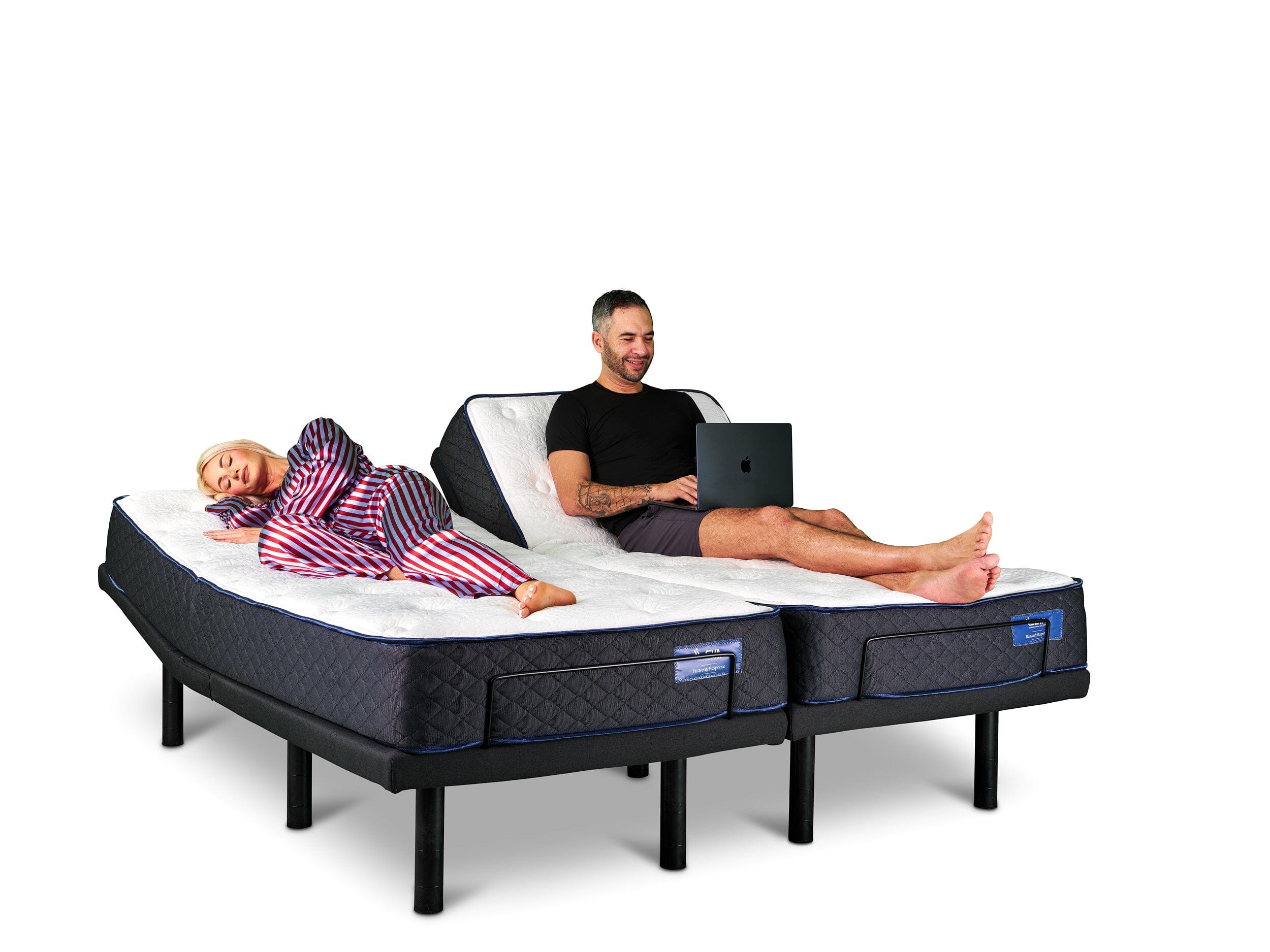
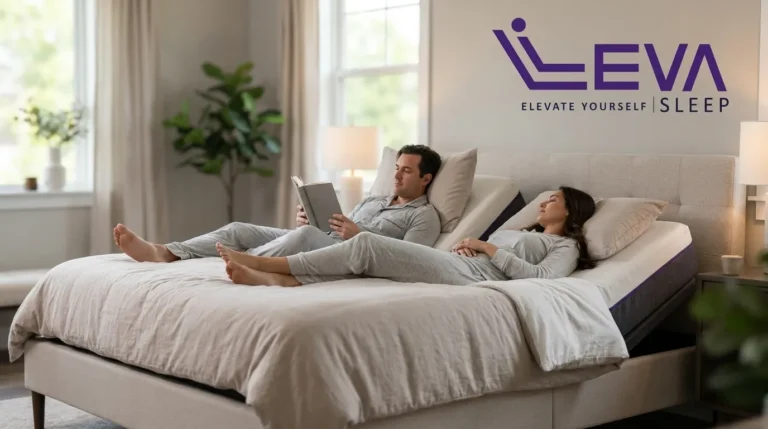
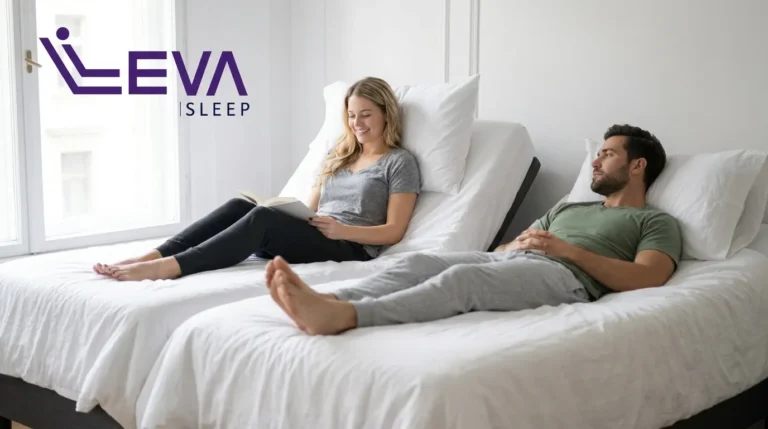
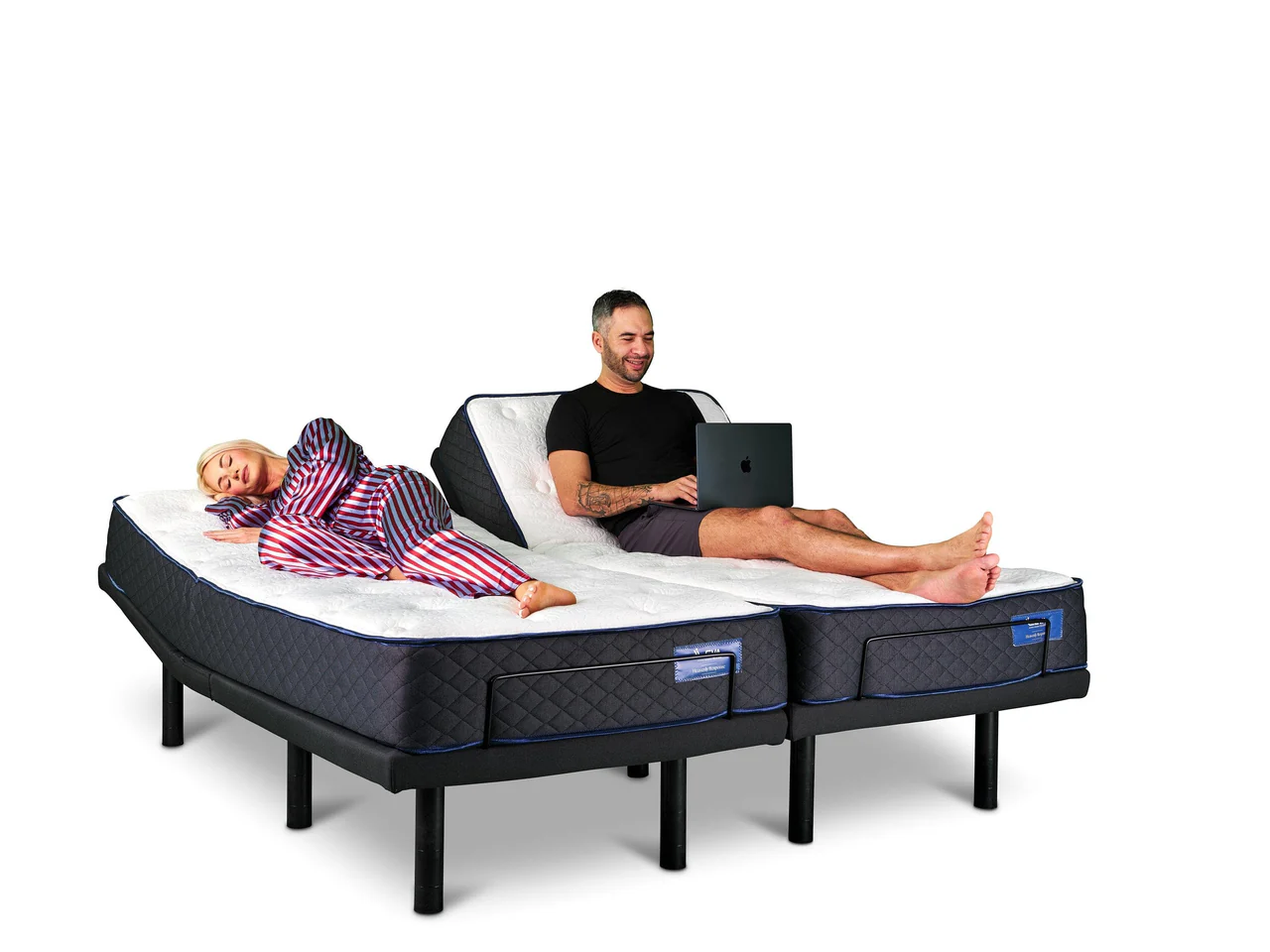
For couples where one partner has mild positional OSA and the other is a light sleeper, CPAP noise and mask movement can disrupt both people. Split King and Split Queen configurations give each partner fully independent elevation, massage, and temperature controls, so one side can run an anti-snore elevation profile while the other remains flat.
Anti-Snore Adjustable Beds and Mask-Free Comfort
Over 60% of OSA patients do not use CPAP enough to see benefits due to poor real-world adherence, with some studies reporting long-term rates below 30%. The 2026 Pavlov Randomized Controlled Trial, presented at the ATS International Conference, found that positional therapy was not only effective and comparable to CPAP, but also better tolerated, supporting its role as a valuable alternative for patients who struggle with CPAP adherence. More than two-thirds of patients with positional OSA maintained side-sleeping behavior and controlled their OSA without any active treatment after six months, with effects persisting one year after stopping therapy, which shows how durable these behavioral changes can be.
Mask-related barriers to CPAP adherence include claustrophobia, skin irritation, dry mouth, and noise. Elevation-based therapy removes mask contact entirely, which eases these issues for many people. Adjustable bases add lumbar control for lower back support during elevated sleeping, a pillow tilt motor for precise cervical positioning, and optional temperature integration so each partner maintains their preferred thermal environment, creating a more comfortable setup that people are more likely to use consistently.
How Sleep Apnea Disrupts Couples’ Sleep and Connection
Bed partners of people with untreated OSA lose approximately one hour of sleep per night and experience frequent arousals that mirror the patient’s respiratory events. Snoring severity can correlate with the bed partner’s reported marital dissatisfaction. Survey data indicate that many couples affected by OSA eventually sleep in separate rooms.
Split adjustable systems directly address these couple dynamics. Independent controls mean the partner with OSA can elevate their head to the clinically relevant 30–45 degree range while the other partner sleeps flat. Whisper-quiet motors reduce mechanical noise that disrupts light sleepers. The result is a shared bed that supports both partners instead of forcing a choice between health and togetherness.
Decision Framework for CPAP vs Adjustable Bed Systems
This decision framework helps you and your sleep physician decide whether elevation therapy, CPAP, or a combination fits your situation, with the goal of matching treatment to severity, positional pattern, and real-world use.
- Confirm OSA severity via sleep study. Mild positional OSA (AHI 5–14, supine-dominant) is the strongest candidate for elevation-based therapy. Moderate-to-severe or non-positional OSA usually requires CPAP as the primary intervention.
- Identify positional pattern. Positional therapy is most effective when OSA is mild to moderate and clearly position-dependent, which requires a formal sleep study to characterize severity and positional pattern.
- Assess CPAP adherence history. Many U.S. CPAP starters do not consistently meet the ≥4 hours/night adherence threshold long term. Documented intolerance or non-adherence strengthens the case for positional alternatives that patients may find easier to use.
- Evaluate partner impact. If snoring or CPAP noise is driving sleep divorce, a split adjustable system can support the patient’s airway while also improving the partner’s sleep quality.
- Review insurance coverage. Coverage affects the real cost of each option. CPAP is generally covered when clinical criteria are met, which makes it low-cost or free for many patients. As noted in the comparison above, adjustable bases are not covered under most commercial policies, so the full purchase price becomes an out-of-pocket expense that you must weigh against the comfort and adherence advantages.
- Consider combination therapy. An adjustable base does not interfere with a CPAP mask or hose and can make elevated positions more comfortable to maintain. For moderate cases, pairing CPAP with elevation can improve comfort and may allow lower pressure settings.
Transform your sleep with Leva Sleep by visiting the La Jolla showroom or shopping online today.
Frequently Asked Questions
Can I combine an adjustable bed with CPAP?
Yes. An adjustable base is fully compatible with CPAP therapy. Elevating the head of the bed can make it easier to maintain the mask seal, reduce pressure required at a given AHI level, and improve comfort for back sleepers who use CPAP. Leva Sleep’s split configurations allow the CPAP user to elevate their side independently while the partner remains flat, which reduces the compromise that pushes many couples toward separate sleeping arrangements.
Is positional therapy effective for non-positional OSA?
No. Positional therapy, including head-of-bed elevation, produces meaningful AHI reduction only when OSA events are predominantly triggered by the supine position. For non-positional OSA, where events occur equally in all positions, the anatomical causes are not gravity-dependent, and elevation provides little to no benefit. A formal sleep study that reports both overall AHI and positional AHI is necessary before choosing positional therapy as a primary approach.
How long does it take to transition from CPAP to elevation therapy?
There is no single transition timeline, and any change in OSA treatment should be supervised by a sleep physician. The 2026 Pavlov RCT, discussed earlier, showed that many patients maintained behavioral changes and OSA control months after active positional therapy stopped. Individual response still varies by OSA severity, positional pattern, and anatomy. Patients should complete a follow-up sleep study to confirm AHI control before discontinuing CPAP.
Does head elevation help central sleep apnea?
No. Central sleep apnea (CSA) occurs when the brain fails to send proper signals to the breathing muscles, so the problem is not mechanical airway collapse. Positional changes, including head elevation, do not address the neurological origin of CSA and provide no documented benefit for this condition. CSA requires evaluation and treatment by a sleep specialist, typically with adaptive servo-ventilation or other pressure-based therapies.
Will insurance cover an adjustable base for sleep apnea?
As discussed earlier, most major commercial insurers do not cover adjustable bases for OSA treatment as of 2026. UnitedHealthcare’s April 2026 medical policy classifies positional OSA devices, including adjustable beds used for supine avoidance, as unproven and not medically necessary, citing insufficient long-term efficacy evidence. CPAP therapy remains the primary insured treatment when clinical adherence criteria are met. Patients should verify their specific plan benefits and talk with their physician about documentation options, while planning for adjustable bases as an out-of-pocket purchase.
Conclusion and Next Steps for Couples With Positional OSA
For mild-to-moderate positional OSA, head-of-bed elevation via a premium split adjustable system offers clinically meaningful AHI reduction, strong tolerability, and couple-friendly design that CPAP’s mask-based approach often cannot match on comfort or partner dynamics. CPAP remains the evidence-based gold standard for moderate-to-severe and non-positional cases, and many patients benefit from combining both approaches. The right choice depends on confirmed OSA severity, positional pattern, adherence history, and partner impact, which a sleep physician can help you evaluate.
Split King and Split Queen adjustable bases deliver independent elevation, whisper-quiet motors, lumbar control, pillow tilt, anti-snore micro-adjustment, and app-based personalization, all engineered for couples who want both shared sleep and individual health. With over 25,000 customers served and 15–20 adjustable models available at 30–50% below comparable luxury competitors, Leva Sleep offers specialist expertise that general mattress retailers cannot match.