Written by: Matthew Timmins, Founder and Managing Director, Leva Sleep
Key Takeaways
- Chin straps only help a narrow group of mouth-breathing snorers and do not address airway collapse or nasal obstruction.
- Clinical studies show chin straps rarely reduce snoring or apnea symptoms and often cause discomfort, slippage, or TMJ flare-ups.
- Positional therapy such as head elevation and side sleeping provides broader, evidence-based relief and usually works better for couples.
- Split adjustable bases let each partner control their own sleep position, which reduces snoring without disrupting the other person’s rest.
- Explore Leva Sleep’s adjustable bases and visit the La Jolla showroom or shop online today.
The Problem: Snoring, Strained Sleep, and Chin Strap Limits
A 1992 Danish population study found that about 44% of males and 28% of females aged 30–60 snore regularly. The impact reaches far beyond noise. Sleep deprivation caused by a partner’s snoring is linked to daytime fatigue, poor concentration, low mood, reduced libido, and higher cardiovascular risk.
A ResMed global survey of 30,026 adults across 13 countries reported that 18% of couples sleep separately because of snoring and restlessness. A 2025 American Academy of Sleep Medicine survey of 2,007 U.S. adults found that 31% have tried a sleep divorce, with adults aged 35–44 most likely at 39%. Yet about one in four couples who try sleeping apart eventually return to sharing a bed, most often because they miss each other. Separate rooms act as a short-term workaround rather than a lasting solution.
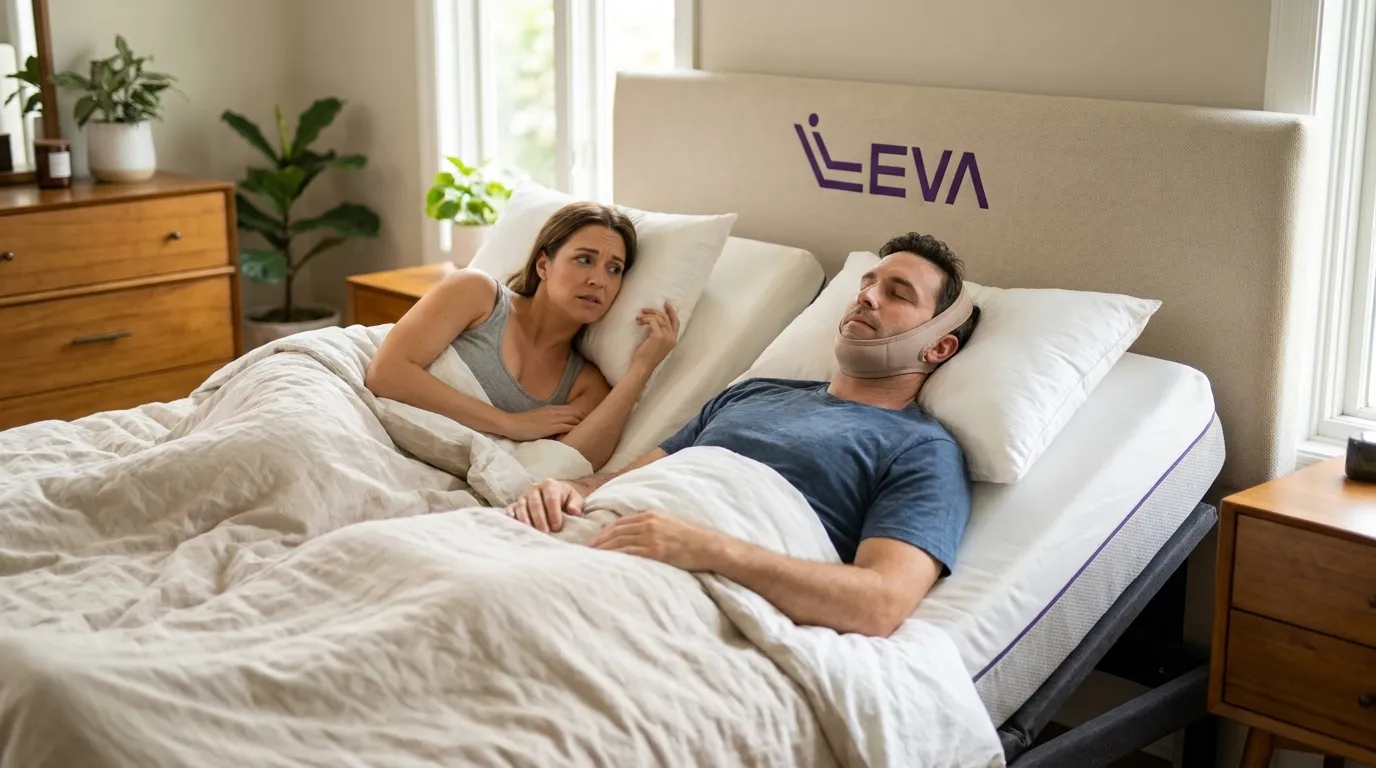
Many couples buy a chin strap before considering more comprehensive options. A chin strap supports the jaw to keep the mouth closed during sleep, which encourages nasal breathing and can reduce mild snoring caused by mouth breathing. Mouth breathing, however, represents only one snoring cause. Chin straps do not reposition the jaw or treat airway obstruction and are not suitable for moderate to severe snoring or sleep apnea. For most snorers with tongue-base collapse, excess throat tissue, or nasal obstruction, a chin strap leaves the true problem untouched.
Clinical Evidence: How Chin Straps Compare to Positional Therapy
Research shows that a chin strap alone does not reduce snoring or sleep apnea symptoms, even in people with mild obstructive sleep apnea. A Journal of Clinical Sleep Medicine study (Bhat et al., 2014) found chin straps ineffective as standalone therapy for obstructive sleep apnea and unhelpful for snoring. For pure snoring without apnea, smaller studies and clinical experience suggest more consistent benefit in mouth breathers.
The table below shows why chin straps rarely solve snoring for most people. They mainly target mouth breathing and ignore airway collapse, nasal blockage, and sleep apnea, while positional therapy supports multiple snoring causes.
| Snoring Cause | Chin Strap Utility | Positional Therapy Utility | Notes |
|---|---|---|---|
| Mouth breathing (simple snoring) | Most consistent benefit; best-suited use case | Head elevation and side sleeping reduce snoring across causes | Chin strap may help if no nasal obstruction is present |
| Tongue-base / airway collapse | No benefit; chin strap does not reposition the jaw or treat airway obstruction | Side sleeping can reduce snoring in position-dependent cases | Positional therapy is the primary conservative option |
| Nasal obstruction | Counterproductive; forces breathing through a compromised airway | Head elevation improves airflow and reduces snoring | Medical evaluation for structural causes recommended |
| Mild obstructive sleep apnea | See clinical evidence above | Positional therapy comparable to CPAP for positional OSA in the 2026 Pavlov trial (Cano-Pumarega, ATS) | Medical supervision required for any apnea treatment |
Side Effects and Discomfort with Chin Straps
Upward pressure from a chin strap can aggravate temporomandibular joint (TMJ) pain in people with existing jaw issues. Straps can shift during sleep if not fitted correctly, which reduces their ability to keep the jaw closed. The material also loses elasticity over time, so effectiveness often declines with prolonged use.
Additional documented limitations include:
- Skin irritation and pressure marks from poorly fitted straps
- Increased breathing difficulty for people with chronic nasal blockage, allergies, or a deviated septum
- Claustrophobic feelings when a chin strap is combined with a CPAP mask
- An adaptation period of three to seven nights before jaw restriction feels tolerable
These side effects and limits make chin straps a poor long-term solution for most couples. They can also hide a more serious sleep disorder if used instead of proper evaluation.
When to See a Doctor About Snoring
Chin straps should never replace medical treatment when sleep apnea is suspected. Cleveland Clinic advises that if a partner’s snoring keeps you awake, treat it as a possible sign of a sleep disorder and encourage a medical visit. Concerning symptoms include witnessed breathing pauses, gasping or choking during sleep, excessive daytime sleepiness, and morning headaches. A board-certified sleep medicine physician can order a sleep study, separate primary snoring from obstructive sleep apnea, and recommend appropriate care.
Relationship Considerations for Couples Facing Snoring
A Mayo Clinic study found that bed partners of people with sleep apnea lose about one hour of sleep per night. When the snorer received treatment, the partner’s sleep quantity and quality improved. That sleep loss has measurable relational consequences. Research from the American Academy of Sleep Medicine showed that sleep deprivation reduces empathic accuracy, so tired partners struggle to read each other’s feelings.
A 2020 study in Frontiers in Psychiatry used polysomnography on couples and found that bed-sharing partners had higher REM sleep percentages, fewer REM disruptions, and longer uninterrupted REM periods than those sleeping apart. Separate rooms protect individual sleep but sacrifice these physiological and emotional benefits of co-sleeping. As noted earlier, many couples who separate bedrooms eventually return to co-sleeping, which highlights how much closeness matters beyond sleep mechanics.
The decision flowchart below gives couples a simple path to choose next steps based on snoring pattern and severity.
Couples’ Snoring Decision Flowchart
- Snoring only when sleeping on the back → Yes: Start with positional therapy such as side sleeping and head elevation with an adjustable base. No: Continue to step 2.
- Snoring mainly through an open mouth with no nasal symptoms → Yes: A chin strap may offer modest benefit; trial for two weeks. No: Continue to step 3.
- Witnessed apneas, gasping, or excessive daytime sleepiness present → Yes: Seek medical evaluation before using any device. No: Continue to step 4.
- Snoring persists despite positional changes and lifestyle adjustments → Yes: Consult an ENT or sleep specialist. Consider an adjustable sleep system with independent head elevation for both partners. No: Continue monitoring and refining sleep position.
The Solution: Split Adjustable Bases for Snoring Couples
Switching from flat back sleeping to back sleeping with the head elevated can reduce snoring, cut awakenings, and increase deep sleep time. Raising the head of the bed 15–30 degrees keeps the airway more open by changing the throat angle, which reduces vibration of the tongue, soft palate, and uvula. The most effective ways to achieve this elevation are a wedge pillow or lifting the entire head of the bed, not stacking extra pillows that bend the neck.
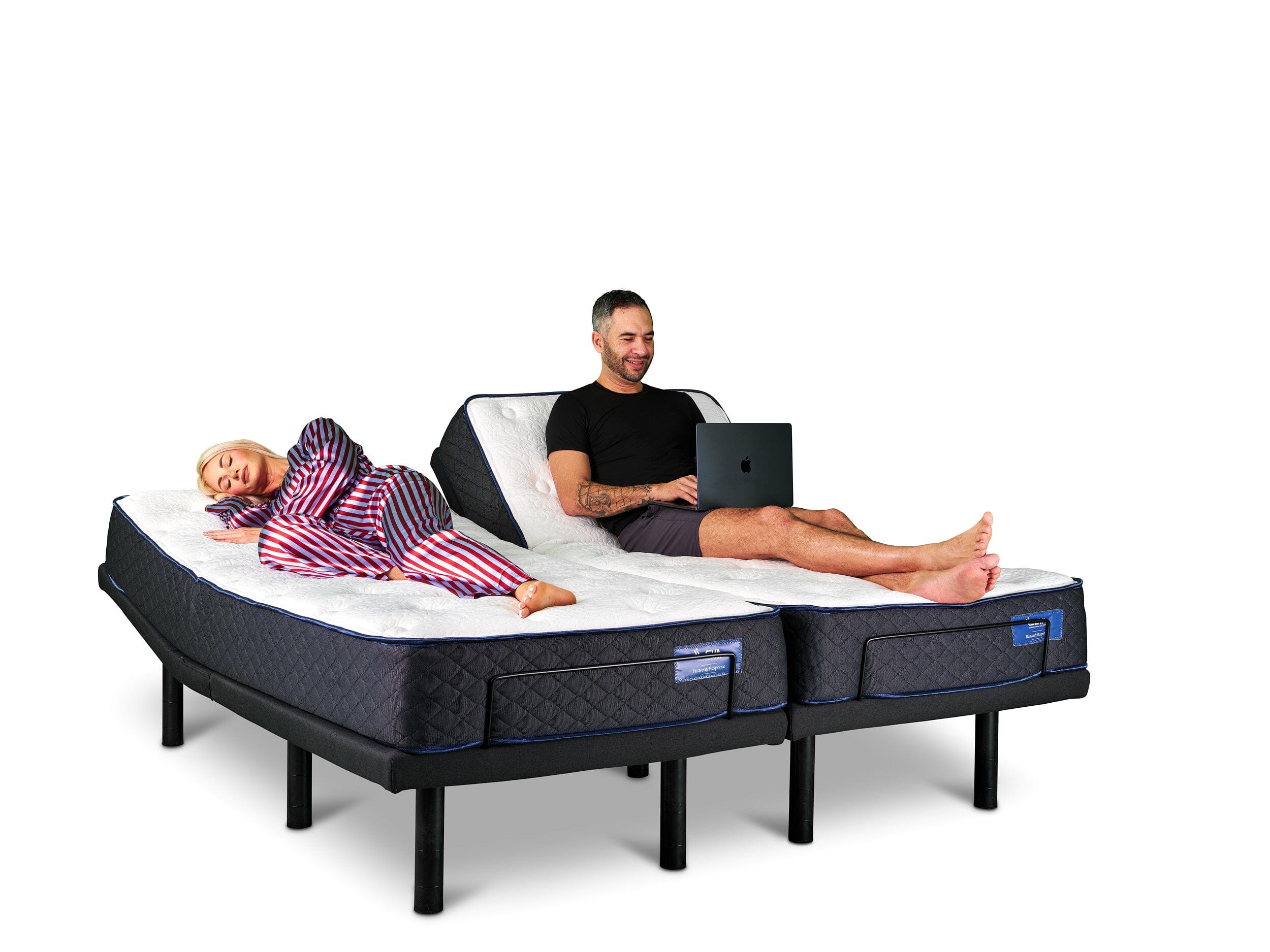
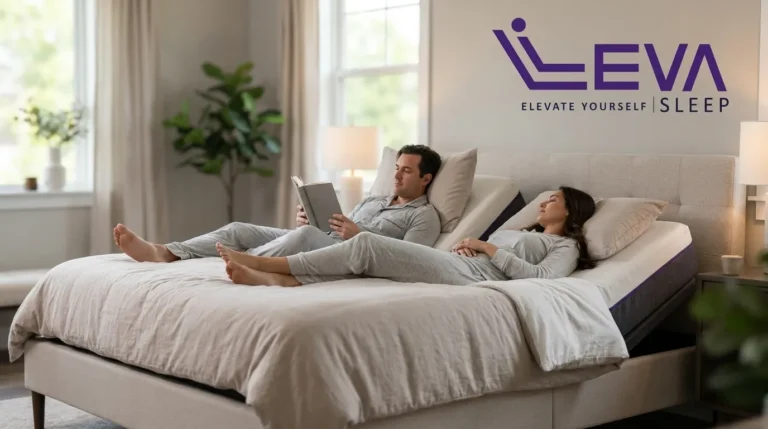
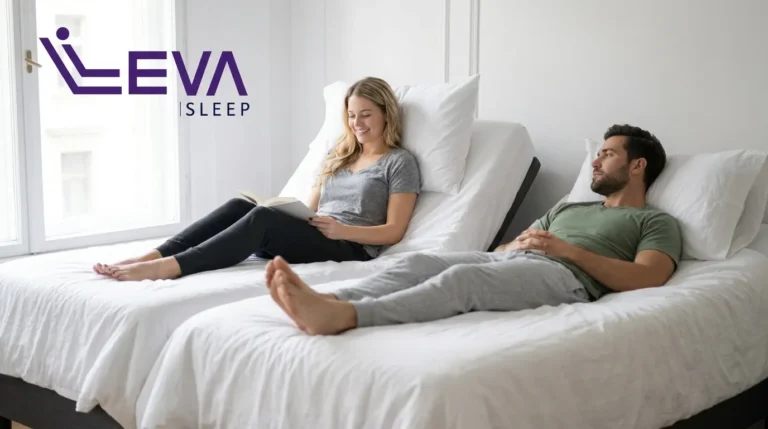
For couples, a single inclined surface affects both sleepers. Experts recommend a wedge that fits only one side of the bed to avoid disturbing the partner. Leva Sleep’s Split King and Split Queen adjustable bases solve this directly. Each side moves independently, so the snoring partner can elevate their head while the other partner keeps a flat or different position.
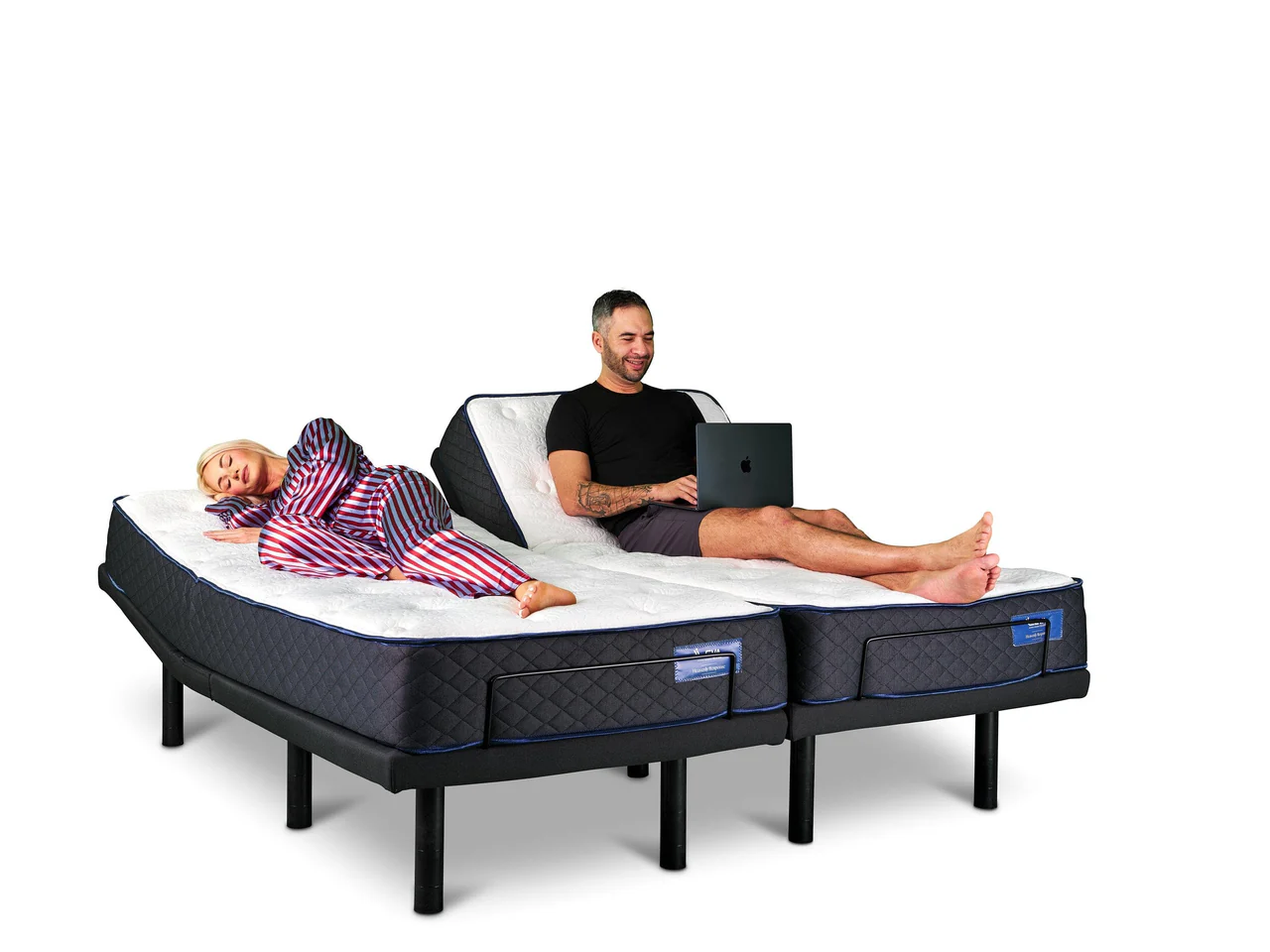
Leva Sleep’s systems use whisper-quiet German motors and app-controlled positioning. An anti-snore mode, arriving spring 2026, will detect snoring and make small automatic head adjustments. The split design means both partners control their own side for firmness, elevation, massage, and temperature without compromise. For couples using CPAP, head elevation can improve CPAP effectiveness and comfort, so an adjustable base works alongside therapy rather than replacing it.
Leva Sleep has served more than 25,000 customers over eight years. The showroom offers 15–20 adjustable base models, compared with the three to five models common at general mattress stores. Customers also find American-made mattresses, bedding tailored for adjustable bases, and in-house white-glove delivery and setup.
Frequently Asked Questions
Do chin straps work for mouth breathing during sleep?
Chin straps help most consistently in simple snorers who breathe through their mouth and have no nasal obstruction or airway collapse. By keeping the jaw closed, they promote nasal breathing, which can soften snoring in this specific group. People with nasal congestion, a deviated septum, or structural airway problems often feel worse because a chin strap forces air through an already narrow passage.
Can a chin strap treat sleep apnea?
No. Chin straps are not approved as a treatment for obstructive sleep apnea by any major regulatory body. Clinical research shows they do not lower apnea-hypopnea index scores, even in mild OSA. Doctors sometimes pair chin straps with CPAP to reduce mask air leaks when using nasal or nasal pillow masks. That use should always follow medical guidance. Replacing prescribed CPAP therapy with a chin strap alone creates a health risk.
What are the most common side effects of wearing a chin strap?
Common side effects include TMJ aggravation or jaw discomfort from constant upward pressure and skin redness or pressure marks from poor fit. Slippage during sleep can remove any benefit and cause frustration. People with nasal obstruction may notice more breathing difficulty. Strap materials also stretch over time, so users need periodic replacement. Many people require three to seven nights to adapt, and some never feel comfortable with jaw restriction.
What are the best alternatives to chin straps for couples dealing with snoring?
Positional therapy offers the strongest non-invasive support for most snorers. Side sleeping can reduce snoring in position-dependent cases. The head elevation described earlier improves airway stability and sleep continuity. For couples, a split adjustable base lets the snoring partner elevate their head without changing the other partner’s surface. Mandibular advancement devices, prescribed by a dentist, can help tongue-base snoring. Persistent or severe snoring should always be evaluated by a sleep medicine physician or ENT specialist.
Is an adjustable bed compatible with CPAP therapy?
Yes. Head elevation with an adjustable base can increase CPAP comfort and effectiveness. Elevation reduces the downward pull on airway tissues, which can lower the pressure needed for effective CPAP and reduce mask leaks. Couples where only one partner uses CPAP benefit from a split adjustable base, since each side operates independently and the CPAP user’s position does not affect the other partner.
How does sleep divorce affect long-term relationship health?
Research consistently links sleep deprivation to reduced empathic accuracy, so tired partners misread each other’s emotions more often and argue more. Bed-sharing couples also show higher REM sleep percentages and longer uninterrupted REM periods than couples sleeping apart, which suggests real physiological benefits to co-sleeping. As noted earlier, many couples who try separate bedrooms eventually return to one bed. Addressing the root cause of snoring, rather than relocating, protects both sleep quality and emotional closeness.
Conclusion: Choosing a Snoring Strategy That Supports Your Relationship
Chin straps fill a narrow role. They offer modest benefit for simple mouth-breathing snorers without nasal obstruction or sleep apnea. For most couples, snoring stems from airway collapse, tongue-base obstruction, or positional factors that a jaw strap cannot fix. Side effects such as TMJ strain, slippage, material wear, and worsened breathing for nasal snorers further limit real-world use.
Positional therapy has a stronger evidence base. Head elevation of 15–30 degrees, achieved most reliably with an adjustable base instead of stacked pillows, stabilizes the airway, supports deeper sleep, and works alongside CPAP when needed. For couples, a split adjustable base removes the central conflict. Each partner can adjust their own position independently, which reduces snoring without sacrificing shared sleep.
Any ongoing snoring, witnessed apneas, or excessive daytime sleepiness should prompt a visit with a board-certified sleep medicine physician before relying on consumer devices.