Written by: Matthew Timmins, Founder and Managing Director, Leva Sleep
Key Takeaways for Split King Adjustable Sheets
-
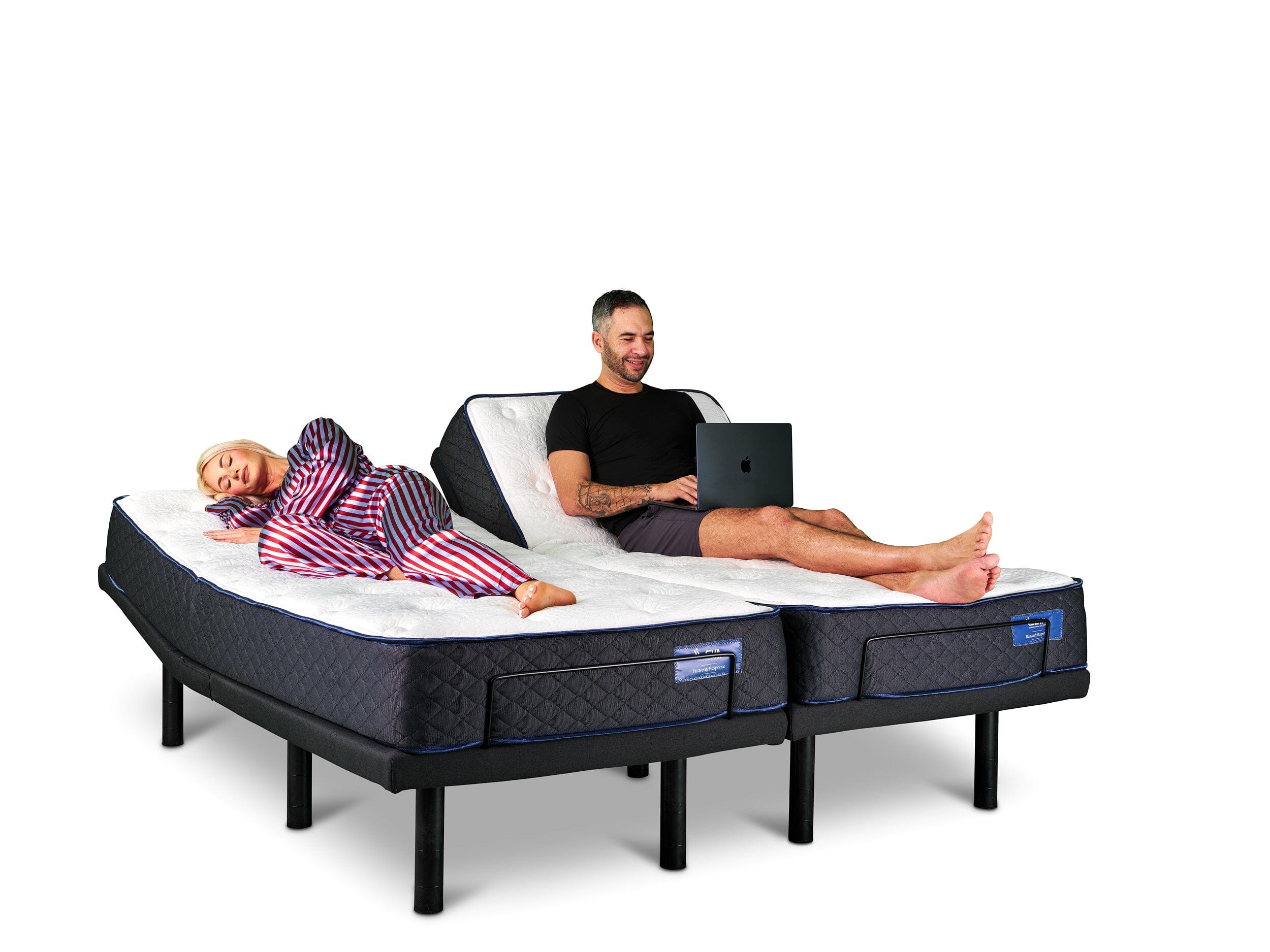
A split king adjustable bed uses two Twin XL mattresses, so you need two Twin XL fitted sheets plus one king flat sheet or duvet for shared coverage.
-
Standard king fitted sheets do not work on split king bases because they cannot separate at the center, which causes corners to pop off when either side elevates.
-
Effective split king sheets use deep pockets of at least 14 inches, strong full-perimeter elastic, and flexible fabrics that stay secure through repeated elevation.
-
Hot sleepers sleep more comfortably on breathable materials such as percale cotton or bamboo viscose, and a split king lets each partner choose a different fabric.
-
Leva Sleep offers premium split king sheets engineered for adjustable bases, so you can complete your adjustable sleep system with sheets that match the base.
Choosing the Right Sheets for a Split King Bed
The correct sheet set for a split king bed uses two Twin XL fitted sheets and one king flat sheet. Each Twin XL fitted sheet covers one mattress independently and allows each side to elevate at the head or foot without pulling the other side loose. The king flat sheet or duvet rests across both mattresses when the bases are flat and is usually removed or swapped for individual covers when partners sleep at different elevations. Some couples prefer two separate Twin XL top sheets for complete independence.
Standard king fitted sheets are sized for a single 76-inch-wide mattress. They cannot separate at the center, so elevation on one side creates tension across the entire sheet and pulls the corners off. Purpose-built split king sheet sets are sold as two-piece fitted sets that solve this problem by treating each mattress as its own surface.
Why Split King Adjustable Beds Need Specialized Sheets
A split king adjustable bed needs sheets designed specifically for articulation. Pocket depth and elastic construction are the two core requirements. A Twin XL mattress on an adjustable base usually measures between 10 and 14 inches in profile, yet elevation at the head or foot increases the effective corner depth as the mattress bends. A sheet with a standard 9- to 12-inch pocket will pull free at the corners when the base moves.
Reinforced elastic that wraps around all four sides of the fitted sheet, instead of only at the corners, spreads tension evenly as the mattress flexes. Sheets built for adjustable bases also use stronger elastic bands and tighter weave structures at stress points so they maintain grip through nightly movement.
Couples who try standard king sheets on a split king base often report the same issues. Sheets bunch under the mattress, corners detach during the night, and the bed needs full re-making every morning. These problems come from structural mismatch, not personal preference.
Managing the Center Gap on a Split King
A small gap usually appears between the two Twin XL mattresses on a split king base when the bases are flat. Most couples do not roll into this gap while sleeping. The gap feels most noticeable when sitting at the center of the bed or when one or both bases elevate and the mattresses shift slightly apart.
Several simple accessories reduce the gap. A split king mattress bridge or connector pad fills the center seam and creates a more unified surface. When both bases stay flat, a king-size mattress topper placed across both Twin XL mattresses also bridges the gap effectively. For couples who sleep on their own side and use independent elevation settings, the gap becomes a minor factor in daily use.
Deep-Pocket Construction for Split King Sheets
Deep-pocket construction plays the central role in how split king sheets perform on an adjustable base. The following specifications define what “deep pocket” means for this setup.
-
Pocket depth: Deep pockets of 14 inches or more are often recommended for adjustable mattresses. Mattresses 13-17 inches thick typically require deep-pocket sheets (14-17 inches deep), while extra-deep pockets of 18+ inches suit only thicker mattresses or models with substantial pillow-tops or toppers.
-
All-around elastic: Elastic should run around the full perimeter of the fitted sheet, not just the corners. Corner-only elastic tends to fail under articulation stress.
-
Elastic band width: Wider elastic bands of at least 1.5 inches spread tension more evenly and resist snapping over time.
-
Anchor bands or straps: Some purpose-built sheets add internal anchor straps that cross underneath the mattress and prevent upward movement during elevation.
-
Fabric stretch: Materials with natural stretch, such as jersey knit or fabrics with a small amount of elastane, move with the mattress instead of fighting against it.
Leva Sleep designs its fitted sheets with deep pockets, robust elastic, and articulation-friendly fabrics specifically for use with its adjustable bases, so the sheets function as part of a coordinated sleep system.
Comparing Top Split King Sheet Options for Adjustable Beds
The table below compares four split king sheet options using criteria that matter most for adjustable bed performance. You can use these same criteria to evaluate any sheet set before you buy.
|
Option |
Pocket Depth |
Elastic Type |
Material |
Remote Pocket |
|---|---|---|---|---|
|
Leva Sleep Alpine Pure Cotton Adjustable Bed Sheet Set |
Deep pockets |
Full-perimeter reinforced elastic |
No |
|
|
Generic Deep-Pocket Cotton Set (standard retail) |
Deep pockets |
Corner elastic only |
No |
|
|
Bamboo-Derived Viscose Split King Set |
16 inches |
Corner elastic |
Bamboo viscose |
No |
|
Jersey Knit Split King Set |
Corner elastic, fabric stretch compensates partially |
Cotton jersey knit |
No |
Note: Pocket depth figures reflect commonly advertised specifications in this category. Confirm current details with each manufacturer before purchasing, because product lines change.
Cooling Sheet Materials for Split King Hot Sleepers
Temperature control in split king sheets depends on fiber type and weave density. Different materials handle heat and moisture in distinct ways.
-
Percale-weave cotton: A one-over-one-under weave creates a crisp, breathable fabric that encourages airflow. Thread counts between 200 and 400 usually balance breathability and durability.
-
Bamboo-derived viscose or lyocell (Tencel): These fibers wick moisture efficiently and feel cool to the touch, which suits hot sleepers who also want softness.
-
Linen: Linen breathes well and wicks moisture, and it softens with washing. It appears less often in deep-pocket adjustable-bed formats but exists through specialty makers.
-
Microfiber: Microfiber feels lightweight and costs less, yet it traps more heat than natural fibers. Look for moisture-wicking microfiber blends if you choose this material.
-
Sateen-weave cotton: Sateen feels smooth and soft but uses a denser weave than percale, which reduces airflow. It works better for cool sleepers.
Couples with different temperature needs gain a clear benefit from a split king. Each partner can select a separate sheet material that matches personal comfort without affecting the other side.
Step-by-Step Fit Test on an Articulating Base
Testing sheet fit on your own adjustable base reveals how a set will perform over time. Use the following steps before you commit to long-term use.
-
Measure mattress depth at rest. Measure from the top surface to the bottom of the mattress, including any topper. Add 2 inches to find the minimum pocket depth you need.
-
Install the fitted sheet and elevate the head to maximum. Watch for any corner lift or surface tension. A properly fitted sheet stays flush.
-
Elevate the foot section. Repeat your observations, because foot elevation creates different tension points than head elevation.
-
Run both elevations together. Zero-gravity position, where head and foot elevate at once, creates the highest stress on sheet corners. A sheet that holds here will hold in other positions.
-
Check the center seam area. On a split king, confirm that each fitted sheet stays on its own mattress and does not pull toward the center gap when the base moves.
-
Sleep on the sheets for three nights. Mechanical tests show immediate fit problems, yet nightly use exposes gradual slippage or elastic fatigue. A sheet that needs re-tucking every morning lacks the pocket depth or elastic strength your mattress requires.
Budget, Mid-Range, and Premium Split King Sheet Choices
Price differences between budget and premium split king sheets reflect specific construction decisions rather than simple brand markup.
Budget options (under $60 for a two-piece fitted set) usually rely on corner-only elastic, 14- to 15-inch pocket depths, and standard microfiber. These sets work acceptably for adjustable bases used mostly in flat or low-elevation positions. They do not stay reliable for couples who use full articulation every night.
Mid-range options ($60–$120) often add full-perimeter elastic and deeper pockets in the 15–16 inch range. Natural fiber choices appear at this level. These sets suit moderate adjustable base use.
Premium options ($120 and above) typically include reinforced full-perimeter elastic, 18-inch or deeper pockets, anchor straps, remote pockets, and performance materials. Leva Sleep’s purpose-built sheets fit this tier and pair with Leva adjustable base systems as a coordinated sleep solution. Couples who use independent elevation settings nightly usually find that premium sheets are the only category that prevents ongoing sheet slippage.
Common Split King Sheet Problems and Fixes
Problem: Corners pop off during the night.
Fix: The pocket depth does not match the mattress thickness plus articulation range. Replace the sheet with a deep-pocket model that uses full-perimeter elastic.
Problem: Sheet bunches under the mattress.
Fix: The sheet is oversized for the Twin XL mattress. Confirm the label shows Twin XL, not full or queen, because some retailers mislabel sets.
Problem: Sheet pulls toward the center gap.
Fix: The two fitted sheets do not act independently. Tuck each sheet fully under its own mattress before elevation. An anchor strap under the mattress also prevents sideways movement.
Problem: Sheet feels tight across the surface when elevated.
Fix: The fabric does not stretch enough. Switch to a jersey knit or a material with elastane, or choose a deeper pocket that leaves more slack for articulation.
Problem: Remote falls off the side of the bed.
Fix: Use a sheet with an integrated side remote pocket so the adjustable base remote stays within reach without a separate organizer.
Conclusion: Building a Reliable Split King Sheet Setup
Split king bed sheets form a specialized category, not a simple variation of standard king bedding. The two-Twin-XL layout of a split king adjustable base calls for fitted sheets with 15- to 18-inch deep pockets, strong full-perimeter elastic, and materials that handle nightly articulation without slipping. Hot sleepers benefit from breathable natural fibers or moisture-wicking blends, and each side can fine-tune temperature control independently. Couples who use full elevation settings regularly usually need premium-tier sheets with anchor bands and remote pockets for consistent performance.
Leva Sleep designs its sheets as part of a complete adjustable sleep system that includes the base, so the components work together instead of acting as separate purchases. That integration often marks the difference between sheets that stay put and sheets that need constant adjustment.
Explore Leva Sleep’s full range of split king sheets, adjustable bases, and sleep accessories, including the split king adjustable base, to build a sleep system where every component supports the others. Visit the La Jolla showroom to test the full system in person, or browse the complete collection online.
Frequently Asked Questions
Can I use a regular king fitted sheet on a split king adjustable bed?
No. A standard king fitted sheet is built for a single 76-inch-wide mattress and cannot support independent articulation on a split king base. When one side elevates, the sheet tightens across the full surface and pulls free at the corners. A split king setup needs two separate Twin XL fitted sheets, one for each moving mattress, with deep pockets and full-perimeter elastic to stay secure during elevation.
What pocket depth do I need for split king sheets on an adjustable base?
Most split king setups work best with the 14- to 17-inch deep-pocket range described earlier in this guide. Measure your mattress at rest from top to bottom, including any topper, then add 2 inches to account for the extra depth created when the base elevates. That total gives you the minimum pocket depth needed for a secure fit through all articulation positions. Full-perimeter elastic then keeps the sheet in place as the mattress bends.
Do both sides of a split king need the same sheets?
No. A split king uses two independent Twin XL mattresses, so each side can use a different sheet set. This flexibility helps couples with different sleep preferences. One partner who sleeps hot might choose a bamboo-derived or percale-weave sheet for airflow, while the other selects a softer sateen or microfiber option. Each fitted sheet simply needs the correct pocket depth and elastic strength for its mattress and elevation habits.
What is a remote pocket on split king sheets, and do I need one?
A remote pocket is a small fabric sleeve sewn into the side of a fitted sheet that holds the adjustable base remote within easy reach. On a split king adjustable bed, each side usually has its own remote or app-connected controller for elevation, massage, and other features. Without a dedicated pocket, remotes often fall between the mattress and frame or off the side of the bed. Sheets with integrated remote pockets prevent this and keep controls accessible without extra organizers.
How often should split king sheets be replaced on an adjustable base?
Split king sheets on an adjustable base face more mechanical stress than sheets on a flat bed because the elastic and fabric flex with every movement. Budget sheets with corner-only elastic often show fatigue within six to twelve months of nightly use on an active base. Premium sheets with reinforced full-perimeter elastic and anchor bands usually last longer under repeated articulation. Check the elastic for stretching or fraying every six months, and replace sheets when corners no longer stay in place through a full zero-gravity elevation cycle.