Written by: Matthew Timmins, Founder and Managing Director, Leva Sleep
Key Takeaways
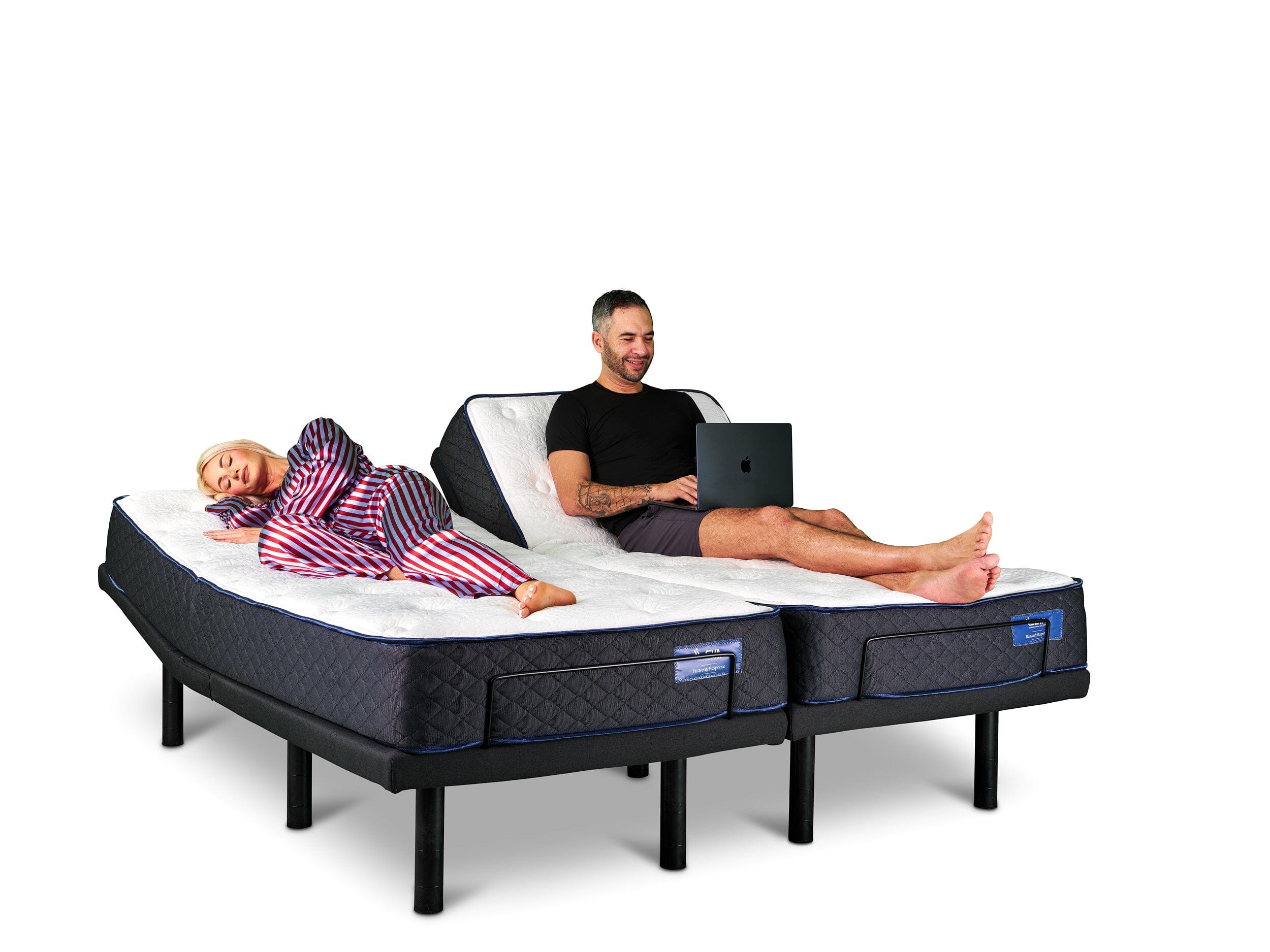
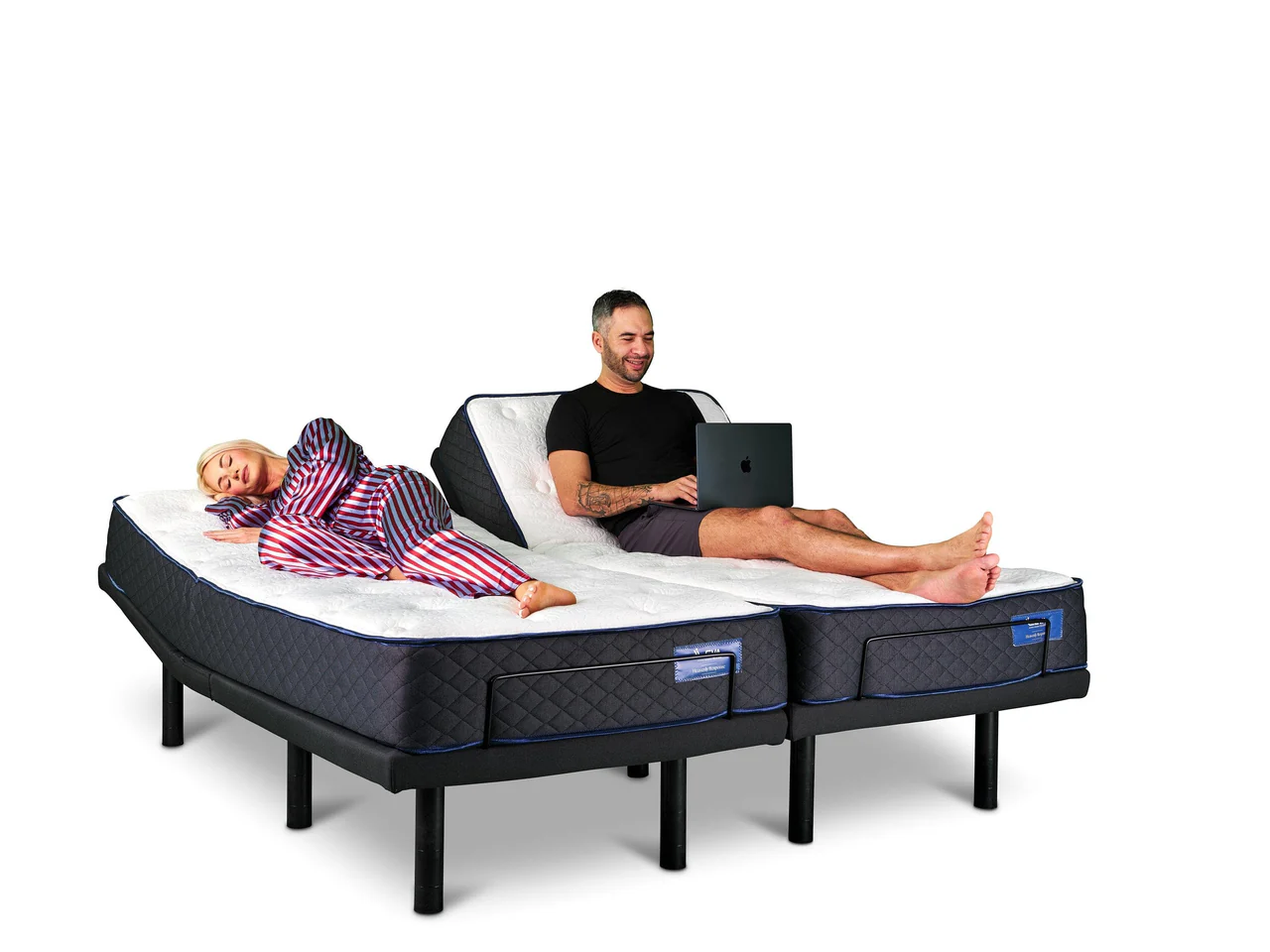
- A split king uses two Twin XL mattresses on independent adjustable bases, which keeps motion transfer low and comfort settings personal for each partner.
- Couples dealing with snoring, tossing, different firmness needs, or sleep apnea gain the most from this setup while still sharing one bed footprint.
- The 2–4 inch center gap can be reduced with bridge pads, toppers, and deep-pocket sheets, though cuddling still takes some planning and the right accessories.
- Premium systems like Leva Sleep include quiet motors, white-glove setup, and integrated accessories that solve the most common split king complaints.
- For couples ready to protect both sleep quality and connection, explore Leva Sleep’s premium split king options today.
Split King Pros and Cons at a Glance
The comparison below shows how a premium split king addresses the main limits of traditional and basic adjustable kings, especially for motion isolation, independent control, and medical positioning.
| Criteria | Traditional Flat King | Basic Adjustable King | Premium Split King (e.g., Leva Sleep) |
|---|---|---|---|
| Motion isolation | Memory foam: ~5–10% transfer, innerspring: ~20–30% transfer | Single-surface, motion still crosses sides | Near-zero transfer between sides |
| Independent elevation | None | Limited or shared head adjustment | Full independent head and foot control per side |
| Firmness customization | Uniform across both sides | Uniform across both sides | Separate mattress per partner, any firmness combination |
| Motor noise | N/A | Variable, often disruptive | Near-silent German motors (Leva Sleep) |
| Gap between sides | None | None | 2–4 inches, reducible with bridge pads and deep-pocket sheets |
| Medical positioning | None | Basic head tilt only | Precise elevation for reflux, apnea, and post-surgery recovery |
| Setup experience | Standard delivery | Often bed-in-a-box | White-glove in-home assembly and tutorial |
| Typical cost range | $3,000–$8,500+ | $3,000–$8,500+ | $4,800–$14,000+ |
How Cuddling Works on a Split King
Physical closeness remains possible on a split king, but the center gap requires deliberate management. Think about how that gap interacts with your favorite sleeping positions and whether bridge solutions feel comfortable for you. Everyday physical touch between partners lowers cortisol and blood pressure, so managing the gap supports health as well as comfort.
The gap feels most disruptive for couples who naturally drift toward the middle of the bed. Cuddling works smoothly when both partners stay on one side, while meeting in the center usually needs a bridge solution. Gap fillers help to a point but rarely remove the issue entirely, and many couples describe cuddling as “possible but not natural.”
The main difference between a basic split king and a premium integrated system lies in how well the gap is engineered away. Leva Sleep designs purpose-built accessories, including foam bridge pads, connector straps, and deep-pocket fitted sheets with extra elastic, that reduce the gap without giving up independent adjustability. When both bases share a unified frame and a king-size mattress topper spans the surface, the bed looks and feels like a single unit while you rest.
See how Leva Sleep’s integrated bridge accessories solve the gap problem, then test the full system at the La Jolla showroom or explore options online.
Real Downsides of a Split King Bed
A split king has real limitations that couples should weigh carefully before buying.
- The center gap. The gap is often called “the biggest complaint” and can feel like a ridge underfoot when you move across the bed at night.
- Higher upfront cost. Two mattresses and two adjustable bases raise the total investment to $4,800–$14,000+, compared to $3,000–$8,500+ for a standard king setup.
- Bedding complexity. Standard king sheets do not fit two independent Twin XL bases that elevate at different angles, so you need specialized deep-pocket sheets with reinforced elastic.
- Motor noise on budget models. Basic adjustable bases can grind or click during adjustment. Premium systems with quiet motors avoid this, so buyers should confirm motor quality before purchase.
- Aesthetic integration. Entry-level split king setups can look clinical. A premium integrated system with furniture-quality design solves this for couples who choose a brand that treats aesthetics as a core engineering goal.
These downsides become manageable with the right system and accessories, which is why working with a specialist instead of a general mattress retailer matters.
Split King vs. Standard King for Couples
Many partners wake each other up through snoring, movement, or different comfort needs, even on a large mattress. A standard king solves space but not those underlying disruptions, which come from motion, noise, and firmness mismatches.
Couples often disagree on firmness. Side sleepers usually need more cushioning, while back sleepers often need more support. A single king forces compromise, and a split king removes that trade-off by giving each partner a tailored surface.
These four couple profiles highlight where a split king shines:
- The mismatched sleepers. One partner needs a plush foam surface for hip pressure relief, while the other needs a firm hybrid for lumbar support. A standard king means choosing one or settling for a medium that suits neither, while a split king lets each person pick their own mattress.
- The snorer and the light sleeper. Bed partners of people who snore lose about an hour of sleep per night. Independent head elevation on the snoring partner’s side opens the airway without forcing the other partner to change position.
- The restless mover. Sleepers shift many times per night. On a standard king, that motion travels across the mattress, while on a split king it stops at the seam.
- The post-surgery recovery couple. One partner may need leg elevation and head tilt for recovery while the other sleeps flat. A split king adjustable base supports both needs at the same time.
Practical Ways to Fill the Split King Gap
Closing the center gap works best with a layered strategy. No single product removes it completely, but combining tools creates a surface that behaves like one bed while you sleep.
- Foam bridge pad. A purpose-cut foam insert fills the channel between mattresses. It works well for flat sleeping positions, compresses slightly under weight, and keeps the surface more continuous.
- King-size mattress topper. A single topper that spans both Twin XL surfaces unifies the feel and hides the gap. Toppers about 2–3 inches thick work best, though they limit independent adjustability at very high elevation angles.
- Connector straps. Fabric or Velcro straps hold the two bases together and prevent sideways drift that can widen the gap overnight. Most premium adjustable bases include these straps.
- Deep-pocket fitted sheets with reinforced elastic. Standard sheets tend to pop off elevated bases. Sheets built for adjustable beds, with extra-deep pockets and full-perimeter elastic, stay anchored at any angle. Leva Sleep includes these in its integrated accessory line.
- Duvet clips. When partners elevate at different angles, a shared duvet can bunch or slide. Duvet clips with adjustable tension keep coverage steady on both sides.
Each of these tools improves part of the gap problem, and the strongest results come from using them together. The most effective approach is buying a system where the frame, bridge accessories, and bedding are engineered as one package instead of piecing together mismatched components.
Is a Split King Adjustable Base Worth It?
Many Americans eventually sleep in a separate bed or room to cope with a partner’s habits. The cost to a relationship from separate bedrooms, disrupted routines, and less intimacy often exceeds the price of a quality split king adjustable system.
The medical positioning benefits have strong support. Raising the upper body by 6 to 8 inches uses gravity to reduce the backflow of stomach contents toward the esophagus during sleep, according to board-certified physician Dr. Dustin Cotliar. A study in Sleep and Breathing found positional therapy that included head elevation reduced sleep apnea episodes by an average of 32%. Adjustable bases act as comfort tools that support, but do not replace, doctor-prescribed treatment.
Leva Sleep’s value proposition stays very specific. The company offers 15–20 adjustable base models instead of the 3–5 found at standard retailers, uses German motors chosen for near-silent operation, provides white-glove in-home delivery and setup, and prices systems about 30–50% below comparable luxury competitors. Couples who tried a basic adjustable base and found it noisy, limited, or poorly integrated often see those issues resolved when they move to a premium system.
Split king configurations now hold a significant share of the adjustable bed frame market, which reflects how many couples have weighed the trade-offs and chosen independent adjustability over a single shared surface.
Compare Leva Sleep’s 15-20 base models and near-silent motors at the La Jolla showroom or online.
Decision Checklist: Match Your Needs to the Right Bed
Use this checklist to connect your specific sleep challenges to the bed setup that solves them. Each row reflects a common couple scenario, and the columns show which option delivers enough support.
| Your Situation | Traditional Flat King | Basic Adjustable King | Premium Split King (Leva Sleep) |
|---|---|---|---|
| Both partners share same firmness preference and sleep undisturbed | Sufficient | Unnecessary | Unnecessary |
| One partner snores occasionally | Insufficient | Partial relief | Full independent head elevation per side |
| Chronic motion transfer waking light sleeper | Insufficient | Insufficient (single surface) | Near-complete isolation |
| Differing firmness needs (one soft, one firm) | Insufficient | Insufficient | Independent mattress selection per side |
| GERD or acid reflux requiring head elevation | Insufficient | Partial (shared elevation) | Independent elevation without disturbing partner |
| Post-surgery recovery requiring leg and head positioning | Insufficient | Limited | Full articulation per side |
| Couple prioritizes cuddling and center-of-bed contact | Best | Good | Good with bridge pad and topper, needs gap management |
| Dissatisfied with noisy or jerky basic adjustable base | N/A | Source of dissatisfaction | Near-silent German motors, smooth articulation |
Frequently Asked Questions
How loud are split king adjustable bases at night?
Motor noise varies widely by brand and price. Budget adjustable bases often use lower-grade motors that grind or click during position changes, which can wake a light sleeper. Premium systems use much quieter motors, and Leva Sleep’s bases rely on German-engineered units chosen for near-silent operation. When you evaluate any adjustable base, ask the retailer to run a full head and foot elevation cycle in the showroom. If you hear the motor clearly from across the room, you will hear it in a quiet bedroom at night.
Will specialized sheets stay on when both sides are elevated?
Standard fitted sheets are built for flat mattresses and usually pull free when a base elevates, especially at the corners. Sheets designed for adjustable beds use deeper pockets, often 18–21 inches, and full-perimeter elastic that grips the mattress at any angle. Leva Sleep designs its fitted sheets to match its adjustable bases, which keeps the sheet anchored whether one side lies flat and the other rises to 45 degrees. When buying sheets from another brand, check the pocket depth and confirm that they are rated for adjustable base use.
Can independent head elevation help mild sleep apnea or reflux?
Head elevation works as a recognized positional tool for both conditions. For GERD, raising the upper body by 6–8 inches uses gravity to reduce acid backflow toward the esophagus, a recommendation supported by gastroenterologists and sleep medicine physicians. For mild positional sleep apnea, head elevation can lessen airway obstruction by shifting soft tissue. Research shows positional therapy can cut sleep apnea episodes significantly, and the 32% reduction mentioned earlier reflects that potential. Adjustable bases are comfort tools, not FDA-approved medical devices, so anyone with diagnosed sleep apnea should follow their physician’s plan, which may include CPAP. Head elevation can support but not replace prescribed treatment.
Does a split king affect relationship intimacy long-term?
Research links co-sleeping with relationship quality. Studies show that couples who sleep while touching often report higher relationship happiness than those who do not. Other research finds that couples sleeping in separate bedrooms face a higher risk of emotional loneliness. A split king keeps both partners in the same bed, which preserves the proximity and routine that support intimacy, while the center gap still needs active management through bridge pads, toppers, and positioning. Couples who value center-of-bed contact should test gap-closing accessories before buying and try the full setup in a showroom.
What maintenance is required for quiet motors?
Split king adjustable bases can last a decade or longer with simple care. Maintenance includes checking power cords for wear, dusting motor housings to prevent heat buildup, and using silicone lubricant on pivot points if squeaking starts. Avoid petroleum-based lubricants, which can damage plastic parts. Leva Sleep’s white-glove delivery includes a full tutorial on maintenance, and the company’s specialist team remains available for follow-up support, which offers more guidance than typical bed-in-a-box brands that rely on basic chat or phone queues.
How does white-glove delivery differ from bed-in-a-box options?
Bed-in-a-box delivery leaves compressed components at the door or curb, and the customer must move, unbox, assemble, and dispose of the old bed. For a split king adjustable system with two heavy bases, two mattresses, a frame, and several accessories, self-assembly can be physically demanding and increases the risk of setup errors that affect performance. Leva Sleep’s white-glove delivery, available for a fee, sends trained professionals into the bedroom to assemble every component, set leg height to the customer’s preferred level, connect and test the app and remote controls, provide a full product tutorial, and remove the old bed for donation or recycling. The result is a fully functional sleep system on the first night with no guesswork.
Conclusion: Choose the System That Protects Both Sleep and Connection
A split king adjustable base makes sense for couples whose shared sleep suffers from snoring, motion transfer, mismatched firmness needs, or medical positioning requirements. This configuration delivers near-complete motion isolation, independent elevation, and per-partner firmness control that a standard king cannot match. The trade-offs, including the center gap, higher cost, and bedding complexity, stay manageable when you use the right accessories and choose a system engineered as a single whole instead of a mix of random parts.
System quality ultimately drives the experience. A basic split king from a general retailer can introduce noisy motors, weak gap management, and limited adjustability that undercut the core benefits. A premium integrated system from a specialist like Leva Sleep, with the near-silent motors discussed earlier, purpose-built bedding, white-glove setup, and 15–20 base models to match each couple’s needs, delivers the full value this configuration can offer.
Couples in Southern California who face snoring, pain, or mismatched sleep needs can test the full system at the La Jolla showroom before committing, which online-only retailers cannot match.
Schedule your La Jolla showroom visit to test the full split king system or explore Leva Sleep’s options online.