Written by: Matthew Timmins, Founder and Managing Director, Leva Sleep
Key Takeaways for StarSleep Orin Buyers
- The StarSleep Orin is a 90° rotating transfer bed that helps seniors and mobility-limited users move from lying to seated with minimal caregiver assistance.
- Core features include automated rotation, head and foot elevation, massage, warming functions, and a washable air mattress in an upholstered, home-style frame.
- Total cost includes the base price plus mattress replacement over time, accessories, delivery, installation, and whether you buy, finance, or use a rental-to-own model.
- Compared with standard adjustable beds, the Orin excels at transfer assistance but lacks split configurations and premium mattress choices for couples or complex sleep needs.
- For seniors and caregivers comparing safer sleep options, explore Leva Sleep to see rotating beds alongside full-featured adjustable systems for long-term mobility and comfort.
How the StarSleep Orin Rotating Bed Works in Daily Use
The Orin RotateStand Adjustable Hospital Bed provides 90-degree automated rotation at the push of a button, along with adjustable head and foot positions, massage and heat controls, a washable air mattress, privacy positioning, a child lock, and tool-free setup. The rotation mechanism moves the entire sleeping surface laterally until the user’s legs drop toward the floor and their torso is upright at the bed edge, which significantly reduces the physical effort required for a standing transfer.
Many turn beds use remote controls, support rails, and powered assistance to help users sit up or rotate toward the bed edge. These features let users participate more actively in repositioning and build independence. The Orin’s integrated side rails act as a grab point once rotation is complete, so the user can push to standing with less reliance on a caregiver.
Example morning transfer workflow: A caregiver enters the room and confirms the user is awake and alert. The caregiver lowers the bed height using the remote, then activates the 90° rotation sequence. The platform rotates the user to the seated edge position. The caregiver positions a walker or wheelchair at the bedside. The user grips the side rail and, with minimal assist, stands and transfers to the mobility device. The caregiver does not perform a manual lift at any point in this sequence.
Turn beds reduce caregiver physical strain and the number of caregivers required for repositioning tasks. They also help protect patient dignity during movement.
StarSleep Orin Pricing and Cost Factors
Rotating transfer beds sit in a specialized segment of the durable medical equipment market, and pricing reflects that. Theraposture Orbit rotating beds, a comparable category product, are available for rental or outright purchase, with payment required only after an in-home professional assessment and trial period if the user decides to keep the bed. This rental-to-own or trial-based model is common for rotating beds and has a major impact on total cost calculations.
Several variables affect final cost for the Orin or similar systems. These include mattress type, because the Orin’s washable air mattress carries a replacement cost over time. Optional accessories such as extended side rails or remote upgrades add to the price. Delivery and installation fees, plus the choice between outright purchase, financing, or rental, also change the overall budget. Buyers should request itemized quotes from authorized distributors and confirm whether in-home assessment fees are included or billed separately.
Explore adjustable bed options at Leva Sleep to compare total cost of ownership across different mobility and comfort needs.
StarSleep Orin vs. Regular Adjustable Beds for Home Use
Turn beds are a specialized type of hospital bed for users with very limited mobility, and they add lateral rotation to support transfers. Standard adjustable beds, by contrast, raise and lower the head and foot sections but do not rotate the sleeping surface. This distinction helps clarify which product category fits a specific user’s needs.
The table below compares the Orin’s transfer-focused features with standard adjustable bases, so you can see where each option works best.
| Feature | StarSleep Orin (Rotating Transfer Bed) | Standard Adjustable Base | Notes |
|---|---|---|---|
| Transfer rotation | 90° automated lateral rotation to bed edge | None | Core function of turn beds |
| Head/foot elevation | Yes, adjustable | Yes, independent head and foot | Standard adjustable bases often provide finer incremental control |
| Pressure relief | Washable air mattress included | Depends on paired mattress | Turn beds support blood flow and help reduce pressure on skin areas |
| Couple/split configuration | Not available, single-user platform | Available in Split King and Split Queen | Rotating platform cannot be split |
| Bedroom aesthetics | Upholstered home-friendly frame | Furniture-quality design options available | Both categories have moved away from clinical-style designs |
| Primary use case | Mobility-limited users who need transfer assistance | Comfort, positioning, snoring, pain relief | Different clinical and lifestyle applications |
Rotation becomes necessary when a user cannot move from lying to seated without physical lift assistance. When the main goal is pain relief, spinal alignment, snoring reduction, or couple comfort customization, a standard adjustable base usually meets those needs more completely and at lower cost.
Does Medicare Cover the StarSleep Orin?
Medicare coverage for rotating transfer beds remains complex and often inconsistent. Medicare Part B covers durable medical equipment only when a physician certifies medical necessity, the equipment is used in the home, and the supplier is Medicare-enrolled. Rotating beds face an additional documentation burden, because the clinical justification must show that the rotation function specifically addresses a diagnosed condition that a standard hospital bed or manual repositioning cannot manage.
In practice, many rotating transfer beds fall outside standard DME reimbursement schedules. As a result, they are often denied or require a lengthy prior authorization process. Caregivers seeking coverage should obtain a detailed letter of medical necessity from the treating physician, document the user’s functional limitations clearly, and confirm the supplier’s Medicare enrollment status before ordering. Private long-term care insurance policies vary, and some cover assistive bed equipment under home modification or adaptive equipment riders. Medicaid waiver programs in certain states may offer additional pathways. Consulting a DME billing specialist before purchase helps clarify realistic coverage expectations.
StarSleep Orin Reviews and Real-World Drawbacks
Turn beds work especially well for seniors with limited mobility, post-surgical patients, individuals with neuromuscular conditions, long-term bedridden patients, and those at high risk of pressure sores. They also reduce injury risk for caregivers. User feedback across this category consistently highlights reduced caregiver fatigue and improved user dignity as primary benefits. Caregivers often report that starting a transfer without a second person present creates a meaningful quality-of-life improvement for everyone involved.
While users value the transfer assistance, several practical limitations appear in typical homes. Space requirements top the list. The 90° rotation arc needs clear floor space on the transfer side of the bed, so standard bedroom layouts with nightstands close to the bed often need furniture reconfiguration. This spatial constraint connects directly to installation challenges. The Orin is marketed as tool-free to set up, yet the air mattress system and rotation mechanism still require correct assembly and periodic calibration, which leads many users to budget for professional setup.
Once installed, the rotation motor produces audible mechanical sound during transfers. This noise usually feels acceptable during planned daytime transfers but can bother light sleepers in shared rooms during nighttime repositioning. The included washable air mattress focuses on pressure relief and hygiene rather than plush comfort. It does not match the feel of premium foam or hybrid mattresses, and upgrade choices are limited by the rotating platform’s size and design.
The single-user design also affects couples. The rotating platform is engineered for one person, so it does not support split configurations. Couples who share a bed and have only one partner with mobility needs may prefer a split adjustable base, which allows one side to remain conventional while the other side supports more advanced positioning.
Frequently Asked Questions
Is the StarSleep Orin suitable for users with Parkinson’s disease or post-stroke recovery?
The Orin’s automated rotation reduces the physical demand of transfers, which benefits users with Parkinson’s disease who experience rigidity or freezing episodes, and post-stroke patients with hemiplegia or significant weakness on one side. The key consideration is whether the user can safely grip the side rail and bear partial weight once rotated to the edge position. Users with severe weakness on both sides or significant cognitive impairment may still need caregiver assistance at the standing phase of the transfer. An occupational therapist assessment before purchase is strongly recommended for both conditions.
Will the StarSleep Orin fit through standard home doorways and into typical bedrooms?
Standard US interior doorways measure 32 inches in clear width. Rotating transfer beds usually arrive in components and are assembled in the room, which avoids the doorway clearance problems that affect fully assembled hospital beds. The more important space constraint is the rotation arc. The bed needs unobstructed floor space on the transfer side equal to the bed’s length. In smaller bedrooms, this may require moving the bed away from one wall entirely. Measure the room and map the rotation clearance zone before ordering.
How loud is the Orin during rotation and during sleep?
The rotation motor produces mechanical noise during the transfer sequence. This sound is noticeable but does not match the sustained volume of older hospital bed motors. During sleep, when no motorized function is active, the bed remains silent. The air mattress system may create minor inflation sounds if it auto-adjusts overnight, although this varies by unit and settings. Users in shared rooms or facilities with light sleepers nearby should factor in the rotation noise when planning transfer timing.
What is the expected durability and typical lifespan of the StarSleep Orin?
Motorized medical bed systems in this category are generally built for multi-year residential use, and commercial-grade units are rated for higher cycle counts. The rotation mechanism and air mattress experience the most wear. The air mattress may need replacement based on use frequency and maintenance. Motor assemblies in quality rotating beds are designed for thousands of rotation cycles. Buyers should confirm the manufacturer’s warranty terms, check whether the motor and air system have separate coverage, and verify parts availability in their region before purchasing.
Choosing a Sleep System for Long-Term Mobility and Comfort
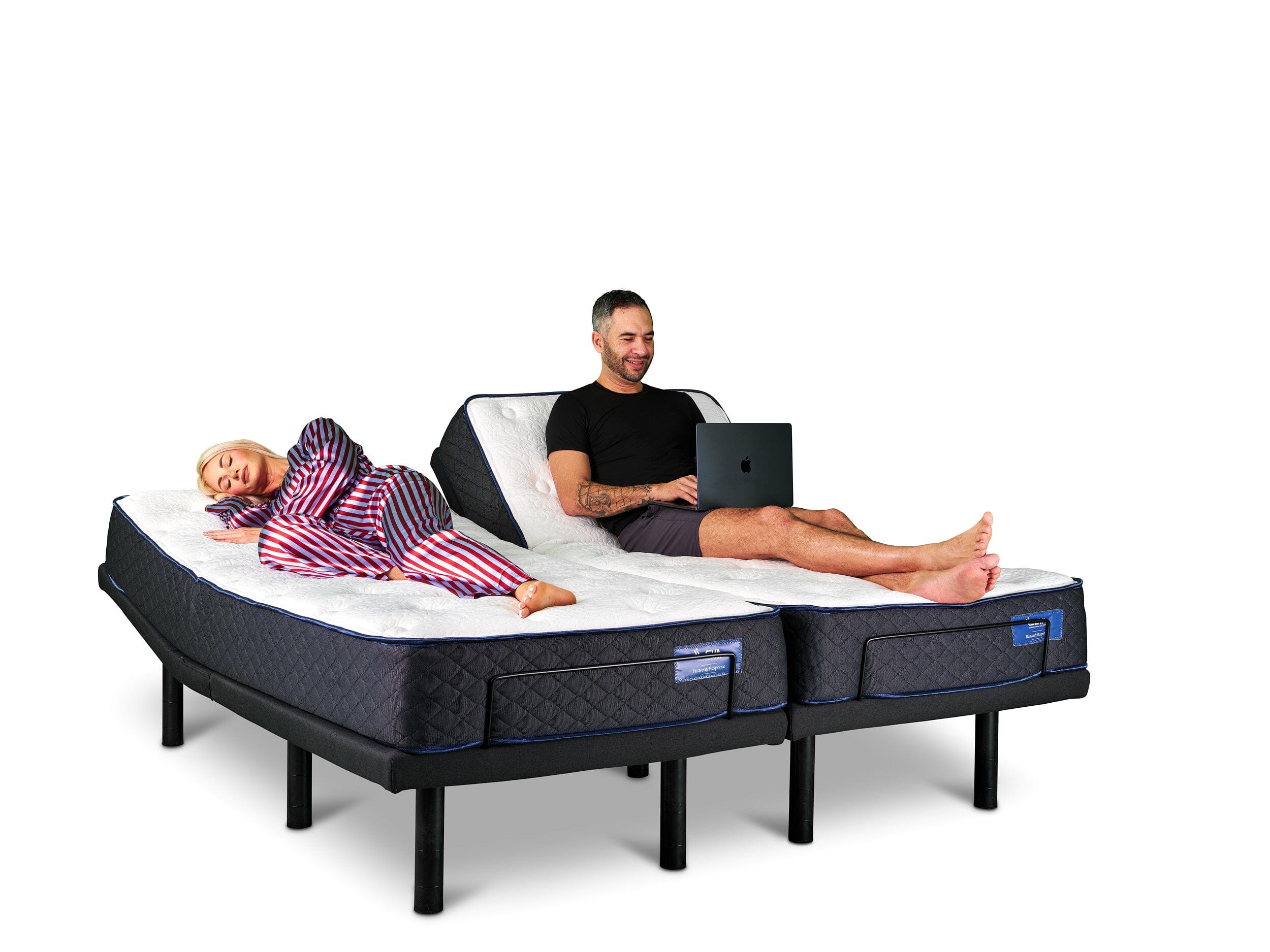
The StarSleep Orin focuses on a specific clinical need: automated transfer rotation for users who cannot safely move from lying to seated without mechanical help. For users whose needs match that profile, it delivers a purpose-built solution. However, users whose primary goals include independent head and foot elevation control, couple-specific customization, very quiet motors, premium mattress comfort, or snoring and sleep apnea support will find that a rotating transfer bed does not cover all of those requirements. Full adjustable sleep systems serve that broader range of needs and offer split configurations so each partner can control their own side.
Leva Sleep specializes in this adjustable category, with 15–20 base models that feature whisper-quiet German motors, split King and split Queen options, lumbar support, anti-snore positioning, and white-glove delivery and setup across Southern California. For caregivers and seniors deciding whether rotation is the right solution or whether a comprehensive adjustable system fits better, Leva Sleep’s La Jolla showroom provides hands-on comparison across the full range of options. Visit Leva Sleep’s La Jolla showroom to compare rotating beds with full adjustable systems in person, or shop the complete collection online.