
Written by: Matthew Timmins, Founder and Managing Director, Leva Sleep
Key Steps to Reduce Partner Snoring
- Partner snoring is the top cause of sleep divorce in the U.S. A clear plan using positional, lifestyle, and sound-masking steps can keep couples in the same bed.
- Immediate actions such as side sleeping with a body pillow, nasal strips or saline rinses, a four-hour alcohol cutoff, and white-noise machines often deliver noticeable relief within days.
- Tracking snoring frequency, awakenings, and relationship tension for two weeks turns vague frustration into data that guides what to try next.
- When basic interventions are not enough, independent head elevation on a split adjustable base offers research-backed relief without separate bedrooms.
- Explore Leva Sleep solutions online or at the La Jolla showroom to see adjustable bases designed for couples.
Step-by-Step Plan to Help Your Husband Stop Snoring
An estimated 90 million Americans snore, and chronic snoring affects roughly 40% of adult men. The following steps focus on causes you can change at home.
- Establish side sleeping with a body pillow. Place a full-length body pillow along the snoring partner’s back. The physical barrier makes rolling onto the back uncomfortable. Lateral sleeping significantly reduces both snoring rate and apnea-hypopnea index (AHI) in patients with mild obstructive sleep apnea. Within one to three nights, many partners hear quieter breathing when side sleeping is maintained.
- Clear nasal congestion before bed. A saline nasal rinse clears mucosal congestion and provides immediate mechanical relief. For snorers with allergic rhinitis, a topical nasal corticosteroid such as fluticasone addresses inflammation that saline alone cannot resolve, and randomized controlled trials support this approach in that group. External nasal dilator strips reduce nasal airflow resistance and increase the cross-sectional area of the nasal valve, which helps most when snoring starts in the nose rather than the throat. Many partners notice less mouth breathing and less morning dryness.
- Set a four-hour alcohol cutoff. Alcohol relaxes upper airway muscles for several hours after consumption, so avoiding alcohol within four hours of sleep reduces snoring risk. Many people notice snoring improvement within days after shifting drinking habits to meet this cutoff.
- Keep a consistent sleep schedule. Sleep deprivation deepens slow-wave sleep, when airway muscle tone is lowest. A regular bedtime reduces the amount of recovery slow-wave sleep and often softens snoring intensity. Couples frequently notice fewer episodes of the loudest snoring in the first sleep cycle.
- Schedule a physician visit if loud snoring continues. Persistent loud snoring despite these changes calls for screening for obstructive sleep apnea. See the apnea screening section below for specific warning signs.
Why Partner Snoring Triggers So Much Anger
A Mayo Clinic study found that bed partners of people with sleep apnea lose roughly one hour of sleep per night due to snoring. Repeated micro-arousals build a sleep debt that heightens emotional reactivity. The anger reflects a physiological response to chronic sleep loss, not a personal failing. The following non-blaming scripts help couples talk about snoring without escalating conflict.
- Script 1 — Morning debrief: “I woke up a few times last night and had trouble getting back to sleep. I want us to figure this out together so we can both feel rested.”
- Script 2 — Requesting a position change mid-night: “Hey, can you roll to your side? It helps a lot.” A calm, brief request prevents the resentment that builds when the woken partner lies silent and frustrated.
- Script 3 — Proposing a structured experiment: “I found a two-week plan that tracks what actually works. Can we try it together before we consider anything drastic?”
Many couples who tried sleeping in separate rooms returned to a shared bed after the snoring partner received treatment. This pattern shows that the problem is solvable and that sharing a bed again is a realistic goal.
How to Sleep Next to a Snoring Partner Tonight
While the snoring partner works through the steps above, the non-snoring partner can protect their own sleep with these strategies.
- Use foam earplugs rated NRR 32 or higher. Roll, insert, and hold each plug until it expands for a proper seal. Check fit by whether normal conversation sounds muffled. Discomfort usually signals the wrong size, so try small or regular options as needed.
- Add a white-noise machine at ear height. White noise reduces how often intermittent snoring sounds cause awakenings. Place the device between the bed and the bedroom door instead of right beside your head to create an even sound field without harsh volume.
- Fine-tune your own sleep environment. A cooler room (65–68°F), blackout curtains, and a steady pre-sleep routine raise your arousal threshold. With a higher threshold, snoring sounds are less likely to wake you fully.
- Sleep on the far side of the bed. Extra distance softens sound. Even 18 additional inches between partners can noticeably reduce perceived snoring volume.
- Turn the clock away. Clock-watching after a snoring-related awakening activates the stress response and lengthens wake time. Turn the display away or cover it so you are not tempted to check the time.
Natural Ways to Reduce Partner Snoring
These natural approaches target airway narrowing, tissue laxity, and nasal obstruction, which are common drivers of snoring.
- Refine side sleeping with the right pillow height. Build on the side-sleeping habit described earlier by choosing a pillow that keeps the neck neutral, neither flexed nor extended. Neutral alignment keeps the airway more open in the side position.
- Apply nasal strips correctly. Use the nasal strips introduced earlier and place them across the nasal bridge, not too high or low, so they can lift the nasal valves effectively.
- Rinse with saline every night. Isotonic saline irrigation before bed clears allergens and mucus that narrow nasal passages. This helps especially when snoring worsens during allergy season.
- Maintain the four-hour alcohol cutoff. Keep the same cutoff you set earlier. Consistent timing matters, because even occasional late-night drinks can undo progress.
- Work toward a healthy body weight. Extra tissue around the throat narrows the airway. Even modest weight loss in overweight snorers often reduces AHI and snoring frequency, though the exact change depends on individual anatomy.
How to Block Out Snoring While Changes Take Effect
Natural and behavioral interventions take time to work, often several weeks. During this period, the non-snoring partner needs reliable sound-masking tools.
- Combine earplugs with white noise. Earplugs blunt high-frequency snoring spikes, while white noise covers the lower-frequency rumble that still passes through foam. Together they cover a wider range of sound than either option alone.
- Choose a comfortable noise profile. Pink noise, which has equal energy per octave, usually sounds softer than pure white noise and is easier to tolerate for long periods. Fan-based machines create a similar sound. After 10 minutes, the sound should feel neutral rather than irritating.
- Try sleep headphones or a pillow speaker. Flat sleep headphones or a pillow speaker let you play white noise, rain sounds, or brown noise without disturbing your partner. Check comfort by lying on your side for 30 minutes with the device in place.
- Add light soundproofing around the bed. A heavy curtain on a hallway wall, a draft stopper under the door, and a filled bookshelf on an adjacent wall all cut down on extra noise that can combine with snoring to wake you.
- Create a rescue protocol together. Agree ahead of time that the non-snoring partner can gently nudge the snorer to change position. A simple, pre-agreed signal such as a light shoulder touch removes guesswork and reduces mid-night tension.
Two-Week Snoring Log Before Considering Separate Rooms
A structured two-week tracking experiment shows which interventions actually help before you decide on separate bedrooms. Each night, record three metrics on a 1–5 scale: snoring frequency (1 = rare, 5 = constant), partner awakenings (1 = none, 5 = five or more), and relationship tension the next morning (1 = none, 5 = significant). Add only one new intervention every three to four days so you can link score changes to specific actions.
| Night Range | Intervention Added | Metrics to Track (1–5 scale) |
|---|---|---|
| Nights 1–3 (Baseline) | No changes; record current state | Snoring frequency / Partner awakenings / Morning tension |
| Nights 4–6 | Body pillow for side sleeping + four-hour alcohol cutoff | Snoring frequency / Partner awakenings / Morning tension |
| Nights 7–9 | Add nasal strip or saline rinse | Snoring frequency / Partner awakenings / Morning tension |
| Nights 10–12 | Add white-noise machine + earplugs for non-snoring partner | Snoring frequency / Partner awakenings / Morning tension |
| Nights 13–14 | Add modest head elevation (wedge or adjustable base) | Snoring frequency / Partner awakenings / Morning tension |
A steady downward trend in all three scores across two weeks shows that the plan is working. If scores stay flat or worsen after night 12, head elevation and, if needed, a physician evaluation become the logical next steps.
When Basic Steps Fall Short: Head-Elevation Solutions
Souza et al. (2017) in Sleep and Breathing found that 7.5° head-of-bed elevation reduced OSA severity by an average of 31.8% in patients with mild to moderate obstructive sleep apnea. Raveshoot et al. (2017) in Sleep and Breathing reported that positional therapy remains underused for position-dependent snoring and mild-to-moderate OSA, even though head elevation consistently reduces snoring intensity and frequency.
Research supports head elevation for lowering snoring and AHI. The angle must balance effectiveness with comfort so people can maintain the position all night. Stacking standard pillows does not achieve this safely, because elevating only the head with stacked pillows can worsen snoring and cause neck pain, so whole-bed elevation or a wedge pillow is preferred.
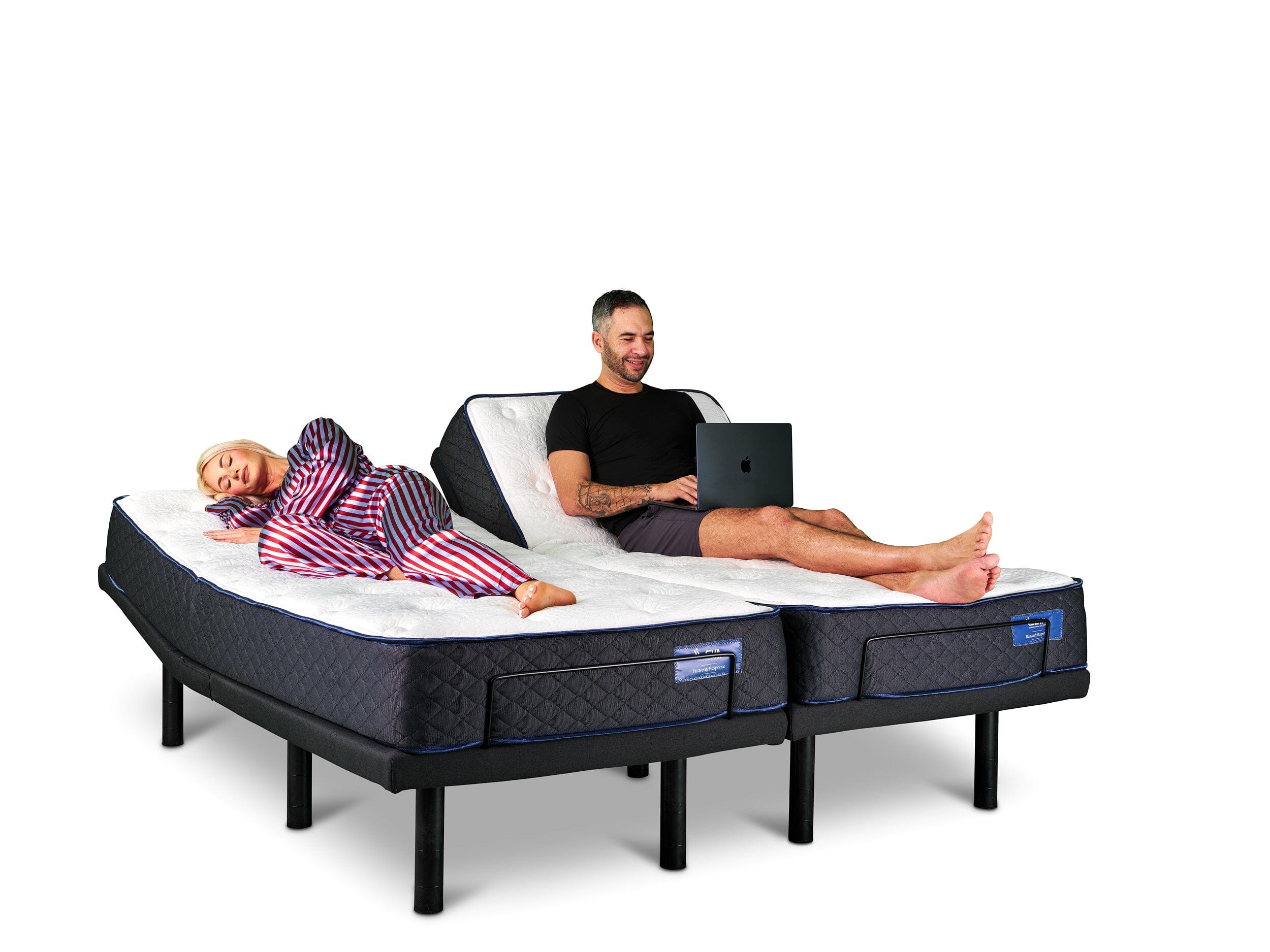
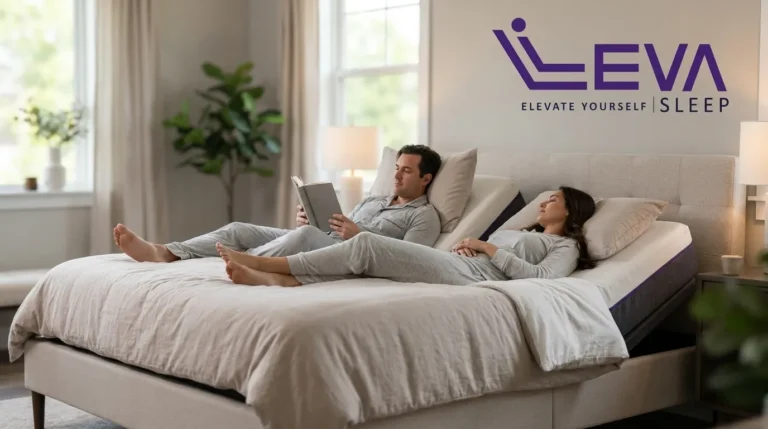
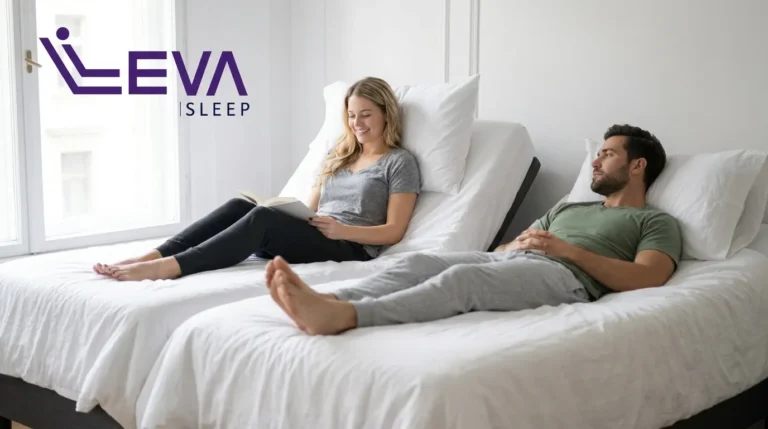
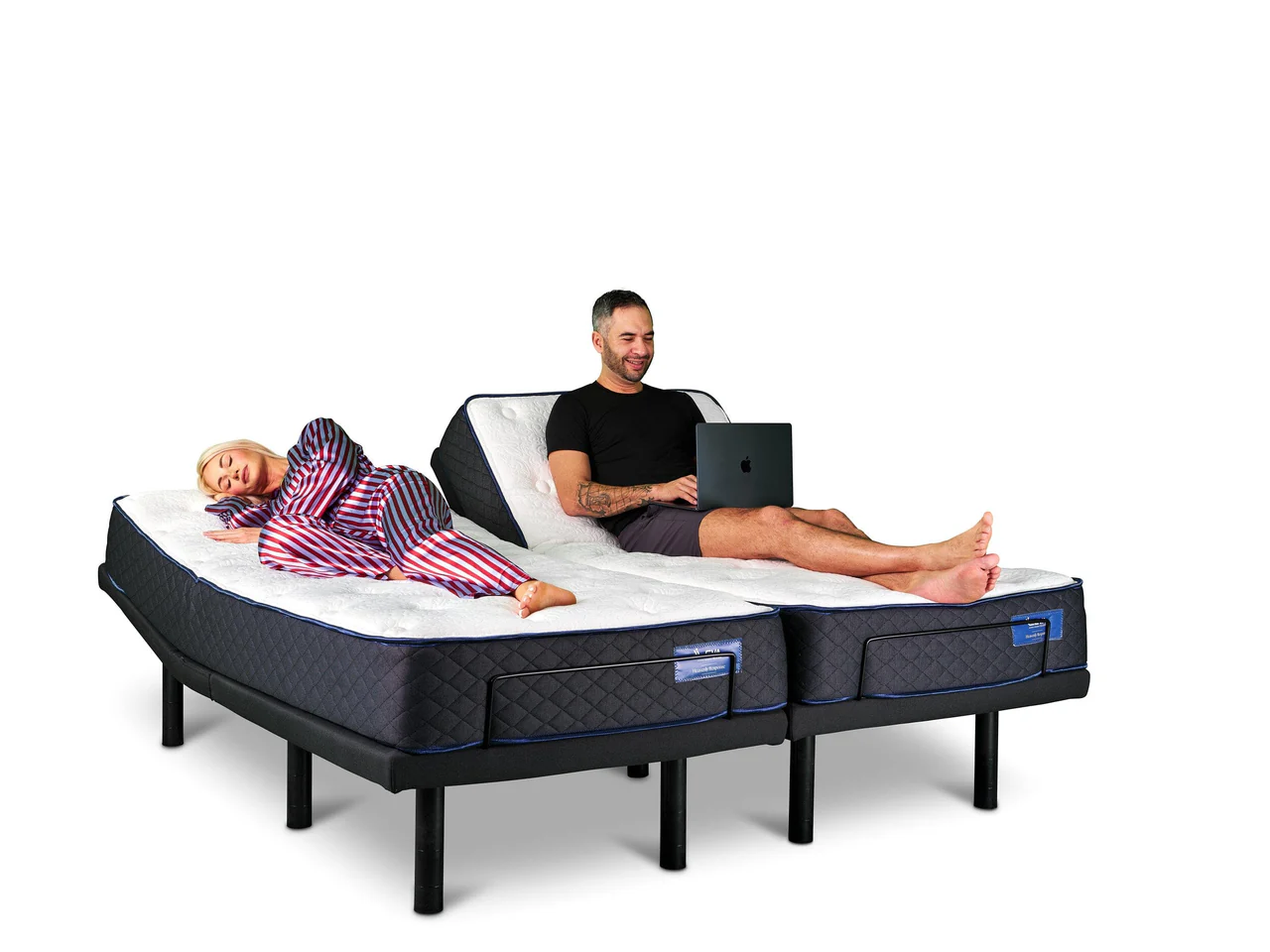
The most precise solution for couples is a split adjustable base with independent controls. A split configuration allows one partner to elevate the head for snoring or apnea relief while the other sleeps flat, preserving independent positioning in a shared bed. Leva Sleep’s Split King and Split Queen adjustable bases provide this flexibility, with whisper-quiet motors and app-based control so elevation changes do not wake the non-snoring partner. An anti-snore mode that detects snoring and makes small head adjustments is in development as a future feature.
See Leva Sleep’s split adjustable bases to explore independent head elevation options for couples.
When Snoring Signals Possible Sleep Apnea
Head elevation and positional therapy help with snoring and mild positional sleep apnea. The warning signs below indicate that a medical evaluation, not another pillow change, should come next.
- Witnessed breathing pauses or gasping during sleep
- Excessive daytime sleepiness despite adequate time in bed
- Morning headaches three or more times per week
- Loud snoring audible through a closed door
- Hypertension that is difficult to control
- Frequent nighttime urination without another explanation
Any of these symptoms calls for a referral to a sleep medicine physician for polysomnography or a home sleep apnea test. Positional therapy and adjustable bases can support, but not replace, medically supervised apnea treatment.
Common Snoring Fixes That Backfire
- Pillow stacking for elevation. Multiple standard pillows flex the neck forward, increasing pharyngeal closing pressure and worsening snoring instead of easing it. A wedge pillow or adjustable base elevates the entire torso and keeps the neck in a safer position.
- Incorrect alcohol timing. Finishing a drink too close to bedtime keeps blood alcohol levels high at sleep onset. Alcohol consumed near bedtime can significantly affect snoring. Aim for a cutoff of at least three to four hours, not one to two.
- Earplug discomfort from poor insertion. Foam earplugs that are not rolled and compressed before insertion fail to seal the ear canal and block little sound. A good fit allows the plug to expand and fill the canal within 30 seconds.
- Using nasal strips for throat-based snoring. Nasal strips help with nasal-valve obstruction. Snoring that starts in the soft palate or oropharynx will not change with nasal dilation. Test the source by pinching the nose and breathing through the mouth; if snoring continues, the origin is oropharyngeal.
- Quitting after one night. Positional changes usually take three to seven nights to feel natural. Judging any single intervention after one night gives unreliable feedback.
Pro Tips for Better Results and Less Conflict
- Place the white-noise machine strategically. Position it at mattress height between the bed and the bedroom door, not on the nightstand beside your ear. This setup masks snoring from the direction of the hallway and door without blasting sound directly at you.
- Position the body pillow for lasting side sleep. Tuck the body pillow under the snoring partner’s top knee and behind their back. The back support prevents rolling onto the back, and the under-knee support maintains hip rotation that keeps the body on its side even during deep sleep. Together, these contact points create a stable side-sleeping posture.
- Pair nasal strips with healthy humidity. Dry air thickens nasal mucus and raises nasal resistance. A bedroom humidifier that keeps relative humidity around 40–50% strengthens the airway-opening effect of nasal strips and saline rinses.
- Treat the two-week log as a shared project. Couples who track together often feel less blame, because the data replaces accusations. The log makes the problem concrete and shows progress to both partners.
Frequently Asked Questions
Is head elevation safe if my partner has mild sleep apnea?
Head-of-bed elevation is generally safe and helpful for mild positional sleep apnea. Multiple studies report meaningful reductions in apnea-hypopnea index at elevation angles between 7.5 and 30 degrees, with no reported harm to sleep architecture. Elevation still does not replace a physician-supervised treatment plan. Anyone with diagnosed sleep apnea should discuss positional therapy with a sleep medicine provider before relying on it as a main strategy. For moderate to severe apnea, CPAP remains the standard of care, and elevation works best as a complement.
Can a split adjustable base be used with a CPAP machine?
Yes, a split adjustable base works well with CPAP therapy. Elevating the head slightly, usually 10 to 20 degrees, can improve CPAP mask seal by reducing time spent fully on the back, which is the position most linked to mask leaks and pressure loss. The non-CPAP partner’s side of a split base stays fully independent. Leva Sleep’s adjustable bases support this setup, and the quiet motors allow position changes without waking a partner who is already asleep with a mask on.
How long does it take to get used to sleeping elevated?
Most people adapt to modest head elevation in the 10 to 20 degree range within three to seven nights. During the first few nights, some people notice the incline or feel mild lower-back sensitivity as the body adjusts. Starting at a lower angle, such as 10 degrees, and increasing gradually over one to two weeks usually reduces discomfort. Leva Sleep’s app-based controls make small adjustments easy, and the white-glove setup service includes a position tutorial so couples finish the delivery appointment with a comfortable starting angle.
Will different positions on a split base hurt intimacy?
A split adjustable base does not lock partners into different positions all night. Both sides can return to flat at any time, and the independent controls let one partner elevate while the other stays flat without mechanical pull between sides. Many couples find that better sleep, with fewer snoring-related awakenings and less resentment, improves relationship quality more than the bed configuration affects it. The split design supports individualized sleep while still supporting closeness.
Discover how Leva Sleep’s split bases support personalized sleep and shared connection.
Conclusion: A Shared Plan to Stay in the Same Bed
Stopping partner snoring without separate bedrooms works best as a stepwise process rather than a single fix. Evidence supports starting with side-sleeping and a body pillow, a four-hour alcohol cutoff, nasal support with strips or saline rinses, and sound masking with white noise and earplugs. A two-week tracking log turns frustration into data and highlights which changes reduce snoring, awakenings, and morning tension. When these steps are not enough, independent head elevation on a split adjustable base, supported by clinical evidence from Souza et al. (2017) and Raveshoot et al. (2017), offers a stronger intervention while keeping both partners in the same bed. Persistent loud snoring with warning signs calls for medical evaluation for obstructive sleep apnea. Incremental changes, tracked together, give couples a reliable path to stay connected and sleep well.
Start your journey to better sleep together by exploring Leva Sleep’s solutions for couples.