Written by: Matthew Timmins, Founder and Managing Director, Leva Sleep
Key Takeaways
- Snoring often pushes couples toward separate rooms, and many eventually miss sharing a bed enough to return.
- Always rule out obstructive sleep apnea with a clinical evaluation before trying positional or lifestyle fixes for snoring.
- Simple changes like side sleeping, reducing alcohol, and weight loss can reduce snoring intensity while you pursue long-term solutions.
- Head-of-bed elevation using an adjustable base is a proven mechanical fix that opens the airway and reduces snoring more effectively than extra pillows alone.
- Leva Sleep’s split adjustable bases give each partner independent control and help couples stay together—explore split systems designed for couples.
Rule Out Sleep Apnea Before You Tackle Snoring
Medical evaluation comes first, before any positional or lifestyle changes. Loud snoring is a primary symptom that prompts evaluation for obstructive sleep apnea (OSA), and a formal sleep study is required to distinguish simple snoring from sleep apnea before you try positional changes. Breathing pauses, gasping, morning headaches, and daytime sleepiness are red flags that call for prompt clinical attention, not a new pillow.
Cigna’s Sleep Disordered Breathing Diagnosis and Treatment Guidelines (V1.0.2026) require a comprehensive clinical evaluation documenting snoring and related symptoms before a sleep study is considered medically necessary. Home sleep apnea testing (HSAT) is widely available and often covered when clinical suspicion exists. Individuals confirmed to have mild sleep apnea (AHI of 5–14 events per hour) may benefit from lifestyle changes or positional therapy, while moderate to severe cases typically require CPAP or other interventions. Ruling out OSA guides every next step and keeps your snoring plan safe and appropriate.
Short-Term Lifestyle Tweaks That Reduce Snoring
Simple lifestyle changes can dial down snoring while you wait for testing or plan long-term fixes. For people who snore more when sleeping on their back, switching to side sleeping can reduce snoring, supported by special pillows, posture alarms, or even sewing a tennis ball into the back of a pajama shirt. Alcohol within three hours of bedtime relaxes throat muscles and worsens airway collapse, so cutting back or cutting it out is a low-cost first move.
Nasal strips can help when snoring starts in the nose, but Dr. Sandip Sachar notes they may not help if snoring originates in the throat. Weight loss reduces soft-tissue pressure on the airway and supports overall health, not just quieter nights. These measures act as bridges that reduce symptoms for now but do not fix the underlying cause. The structural positioning problem that drives most snoring in shared beds requires a mechanical solution, which is why head-of-bed elevation matters so much.
How Snoring Pushes You Toward Separate Rooms
Snoring slowly erodes sleep and connection for both partners. A Mayo Clinic study found that bed partners of people with sleep apnea lose roughly one hour of sleep per night due to snoring. Over months, that loss creates chronic sleep deprivation in the non-snoring partner, which fuels irritability, reduced empathy, and emotional distance.
Over one-fourth of couples who try a sleep divorce eventually return to sharing a bed, with more than one-third citing missing their partner as the primary reason. The separation often backfires, because the emotional cost of sleeping apart grows over time. Separate rooms signal an unresolved positioning problem rather than a true solution. The real goal is to remove the snoring trigger so you can keep the shared bed.
Head Elevation as a Simple Mechanical Fix
The clinical data on head-of-bed elevation is clear and specific. A 2017 study of 52 patients with mild to moderate OSA tested a 7.5-degree head-of-bed elevation and found it reduced the apnea-hypopnea index by about 32%.
Raising the head of the bed helps keep the airway open and reduces the collapse that contributes to snoring. A wedge pillow can approximate this angle but cannot be adjusted, cannot serve two partners with different needs, and cannot integrate into a full sleep system. An adjustable base solves all three limitations and gives you precise, repeatable elevation.
How Split Adjustable Bases Help Couples Sleep Together
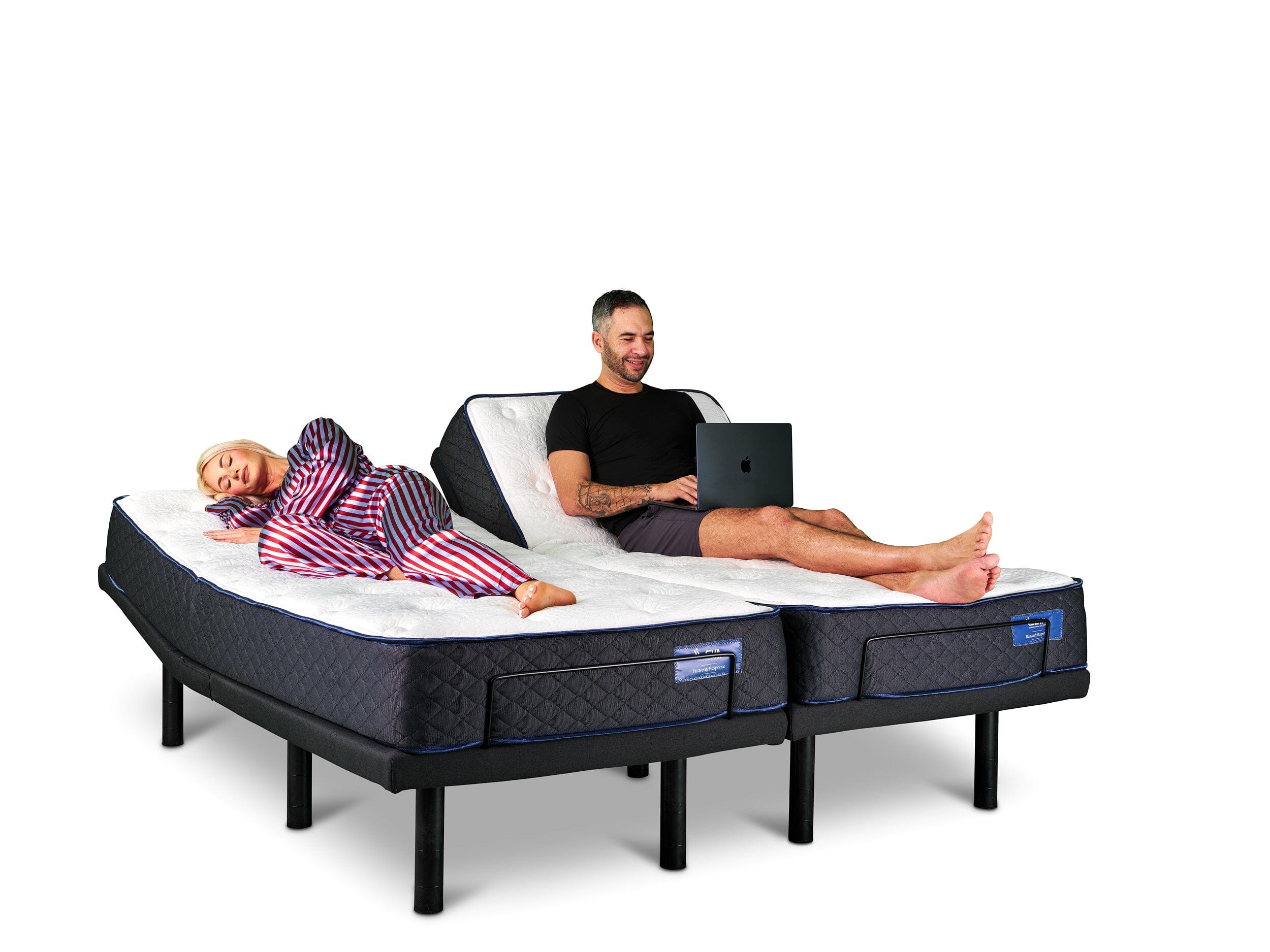
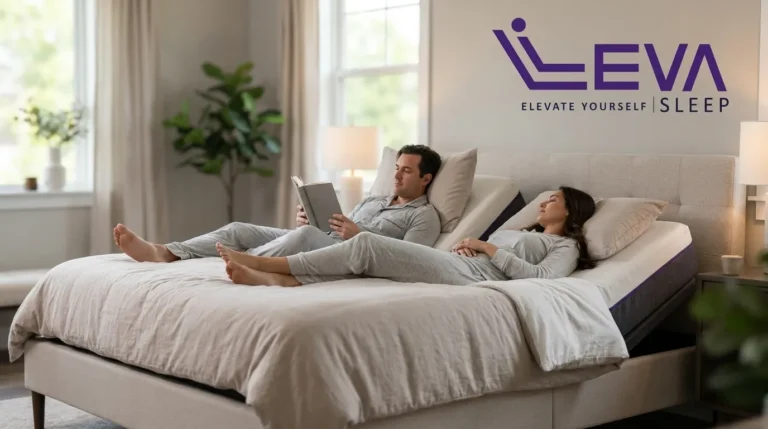
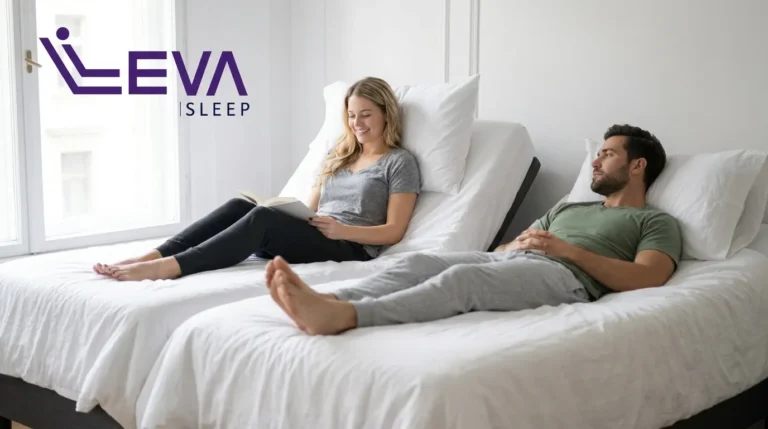
A split adjustable base gives each partner independent control of head elevation, foot elevation, lumbar support, and pillow tilt, without disturbing the other side of the bed. Leva Sleep’s split systems come in Split Queen and Split King configurations and use whisper-quiet German motors that avoid vibration and noise transfer across the split. An app-controlled anti-snore mode (arriving spring 2026) will detect snoring and make small head adjustments automatically, without waking either partner.
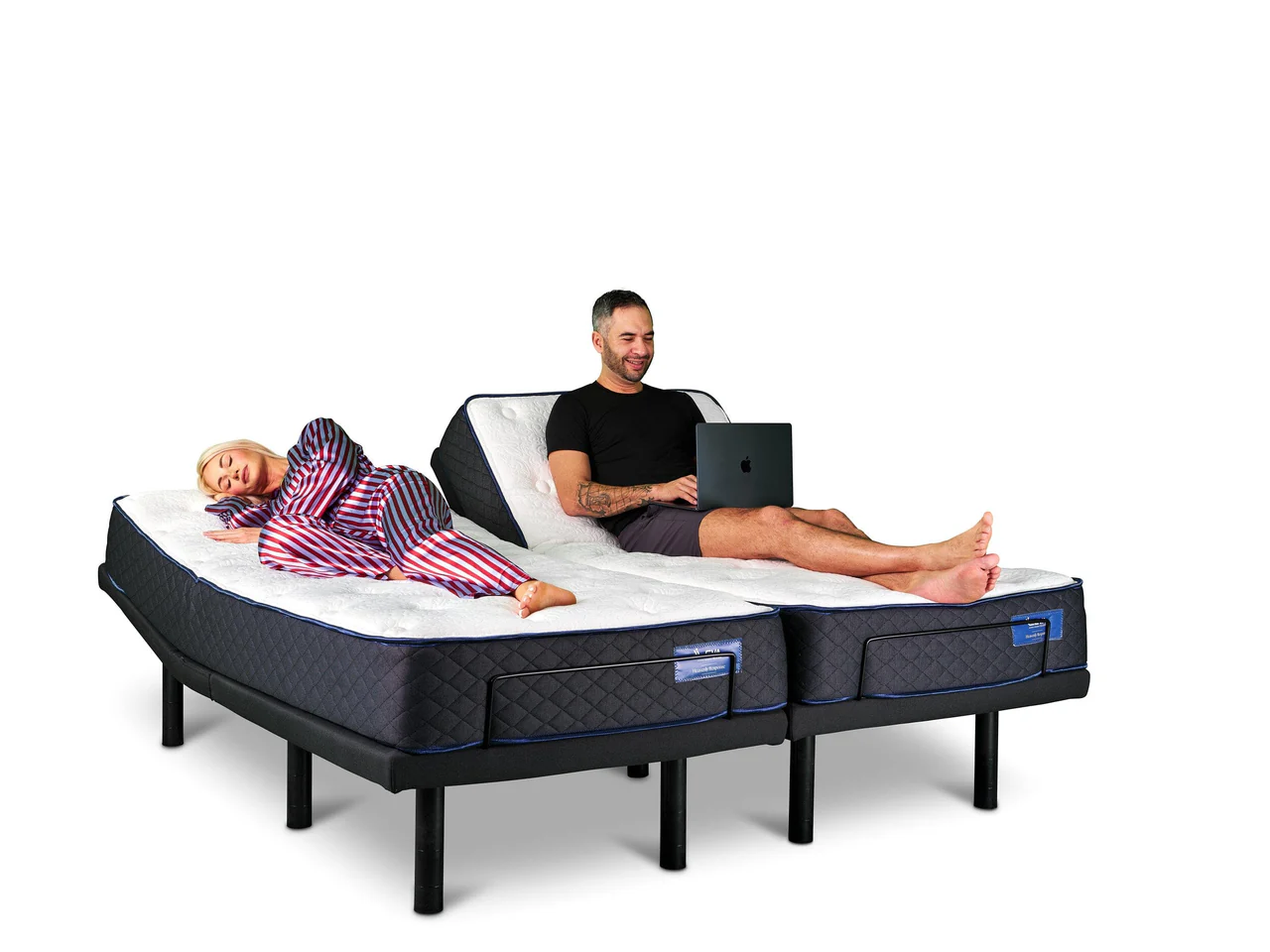
Leva’s systems are built specifically for couples. Lumbar and pillow-tilt motors let each partner fine-tune spinal alignment on their own side, and all bedding accessories—fitted sheets with extra elastic, duvet clips, mattress protectors—are designed to stay put through significant elevation changes. White-glove delivery includes professional setup, leg-height adjustment, a full product walkthrough, and removal of the old bed. You receive a complete sleep environment rather than a mechanical add-on left at the curb.
Comparing Flat Beds, Add-Ons, and Split Adjustable Systems
Four criteria matter most when you compare snoring solutions: motor noise, bedroom aesthetics, bedding compatibility, and long-term usability. The table below shows how flat mattresses, basic adjustable add-ons, and integrated split systems stack up across these four dimensions, highlighting why a purpose-built split system is the only option that addresses all of them at once.
| Criterion | Flat Mattress | Basic Adjustable Add-On | Integrated Split Adjustable System (e.g., Leva Sleep) |
|---|---|---|---|
| Motor Noise | No motor, no noise | Older or basic bases can have loud motors or jerky movements that disrupt sleep | Whisper-quiet German motors, minimal vibration transfer across split |
| Bedroom Aesthetics | Standard furniture appearance | Often clinical or institutional in appearance | Furniture-quality design engineered to integrate into modern bedrooms |
| Bedding Compatibility | Standard fitted sheets fit without issue | Standard sheets frequently slip off during elevation | Purpose-built sheets with deep pockets and extra elastic, duvet clips maintain separation |
| Long-Term Usability | No elevation adjustment, snoring position unchanged | Limited adjustability, typically 3–5 models at general retailers | 15–20 adjustable models, app control, anti-snore mode (spring 2026), independent partner settings |
Compare Leva’s full range of split adjustable systems.
Real Couples, Real Results With Split Bases
A couple in their mid-50s in San Diego, one a light sleeper and one a chronic back-sleeper prone to snoring, reported that after switching to a split adjustable base with independent head elevation, the non-snoring partner stopped waking multiple times per night within the first week. The snoring partner, elevated at approximately 7–8 degrees, noticed less morning throat dryness and no longer woke to find a partner already in another room.
A couple in their early 40s in La Jolla, where one partner runs hot and the other cold, paired a split adjustable base with temperature-regulating bedding on each side. The snoring that had nearly sent them to separate rooms eased with consistent head elevation. Both partners returned to the same sleep schedule within the first month.
These stories match what Leva Sleep has seen across more than 25,000 customers: when both partners can control their own side of the bed, the pressure to sleep apart fades.
Frequently Asked Questions
Do I need a sleep study before buying an adjustable base for snoring?
A sleep study is strongly recommended before you treat snoring with any intervention, including positional therapy. Snoring can signal obstructive sleep apnea, a condition that carries cardiovascular and neurological risks when untreated. A home sleep apnea test or in-lab polysomnography clarifies whether your snoring is positional or apnea-related, and that diagnosis shapes which solutions make sense. Mild OSA often responds well to head elevation, while moderate to severe OSA typically requires CPAP. Leva Sleep’s systems support medical treatment but never replace a clinical diagnosis.
Will the motors on a split adjustable base wake my partner when I adjust my side?
Motor noise can be a real issue with basic adjustable bases sold as simple add-ons. Leva Sleep’s systems use whisper-quiet German motors chosen to minimize sound and vibration transfer across the split. Each side adjusts independently, so one partner can change elevation without the other feeling or hearing much movement. If motor noise bothered you with a previous base, reviewing motor specifications and verified noise reviews is a smart step before you choose any new system.
Will fitted sheets stay on an adjustable base when the head is elevated for snoring?
Standard fitted sheets usually slip off at meaningful elevation angles because they were not designed for moving bases. Leva Sleep designs its fitted sheets with deep pockets and extra elastic so they stay in place through significant head and foot elevation. Duvet clips keep the two sides of a split system separate when partners use different elevation settings. Bedding made for adjustable bases solves this common frustration far better than stretching standard sheets.
Can a split adjustable base address both snoring and temperature differences between partners?
Yes. A split adjustable base solves the positioning problem that fuels snoring and also lets each partner control their own sleep environment. Leva Sleep’s systems work with temperature-regulating bedding and heating or cooling pads on each side of the split, so one partner can sleep cool while the other sleeps warm. Both snoring and temperature conflict grow out of the same issue: a flat, shared bed that forces compromise. A split system removes that forced compromise.
Is there a trial period, and does insurance cover an adjustable base for snoring?
Leva Sleep offers trial periods, with specific terms listed at the La Jolla showroom and on the website. Insurance coverage is uncommon, because adjustable bases are usually not classified as durable medical equipment for snoring alone. When a physician documents medical necessity, such as positional therapy for confirmed mild OSA or acid reflux, some plans may offer partial reimbursement for parts of the system. Checking with your insurer and physician before purchase helps clarify options. Leva Sleep’s team can provide product documentation to support any insurance inquiry.
Get answers to your specific questions at the La Jolla showroom.
Conclusion: A Clear Path Back to the Same Bed
Snoring is primarily a positioning problem. Gravity pulls soft tissue into the airway when the head lies flat, and that collapse produces the sound that quietly erodes your relationship one sleepless night at a time. Couples who sleep apart report sleeping 37 minutes more per night on average, yet over one-fourth eventually return to the same bed because closeness matters. You do not have to choose between sleep and connection when you address the cause instead of separating.
The path stays simple and practical. First, rule out sleep apnea with a clinical evaluation. Next, use lifestyle bridges while you wait for results. Then address the mechanical root cause with a split adjustable base that gives each partner independent head elevation, firmness, and temperature control. That is what Leva Sleep’s systems are designed to deliver for couples who refuse to accept poor sleep or separate rooms as permanent.