
Written by: Matthew Timmins, Founder and Managing Director, Leva Sleep
Key Takeaways for Sleeping with Joint Pain
- Zero-gravity positioning on adjustable bases elevates the head and knees above heart level to distribute weight more evenly and reduce pressure on the spine, hips, and knees.
- Evidence is strongest for back and hip pain relief, while results vary for arthritis and for side sleepers who may need different positioning strategies.
- Premium split adjustable systems with independent controls, quiet motors, and app-based micro-adjustments offer the most practical overnight solution for couples.
- Research and user experiences point to reduced morning stiffness, less tossing and turning, and better spinal alignment when people maintain consistent elevation throughout the night.
- Explore Leva Sleep’s adjustable systems in the La Jolla showroom or shop the collection online.
The Problem: How Chronic Joint Pain Disrupts Sleep
Adults between 45 and 65 experience a disproportionate share of chronic joint pain in the United States. Many people with hip osteoarthritis report ongoing sleep problems. Poor sleep quality can worsen joint pain and make it harder to fall asleep for those with hip or knee osteoarthritis.
On a standard flat mattress, the heels, sacrum, and shoulder blades bear most of the body’s weight. That concentrated load forces frequent repositioning throughout the night. Sleep becomes fragmented and the body misses the deeper repair stages it needs. For couples, the problem compounds. One partner’s movement or elevation needs disrupt the other, and basic adjustable beds with shared controls or noisy motors often create more conflict than comfort.
The Solution: Zero-Gravity Positioning on Adjustable Bases
The Zero Gravity position, originally developed by NASA, places the body with legs elevated above heart level to achieve neutral body posture, spinal decompression, and improved blood flow for muscle repair during sleep. As Dr. Harish Chafle, Senior Consultant at Gleneagles Hospitals, explains, “Zero gravity position means lying with your head and legs slightly elevated, knees bent. It mimics the neutral body posture astronauts use in space to reduce spinal pressure.”
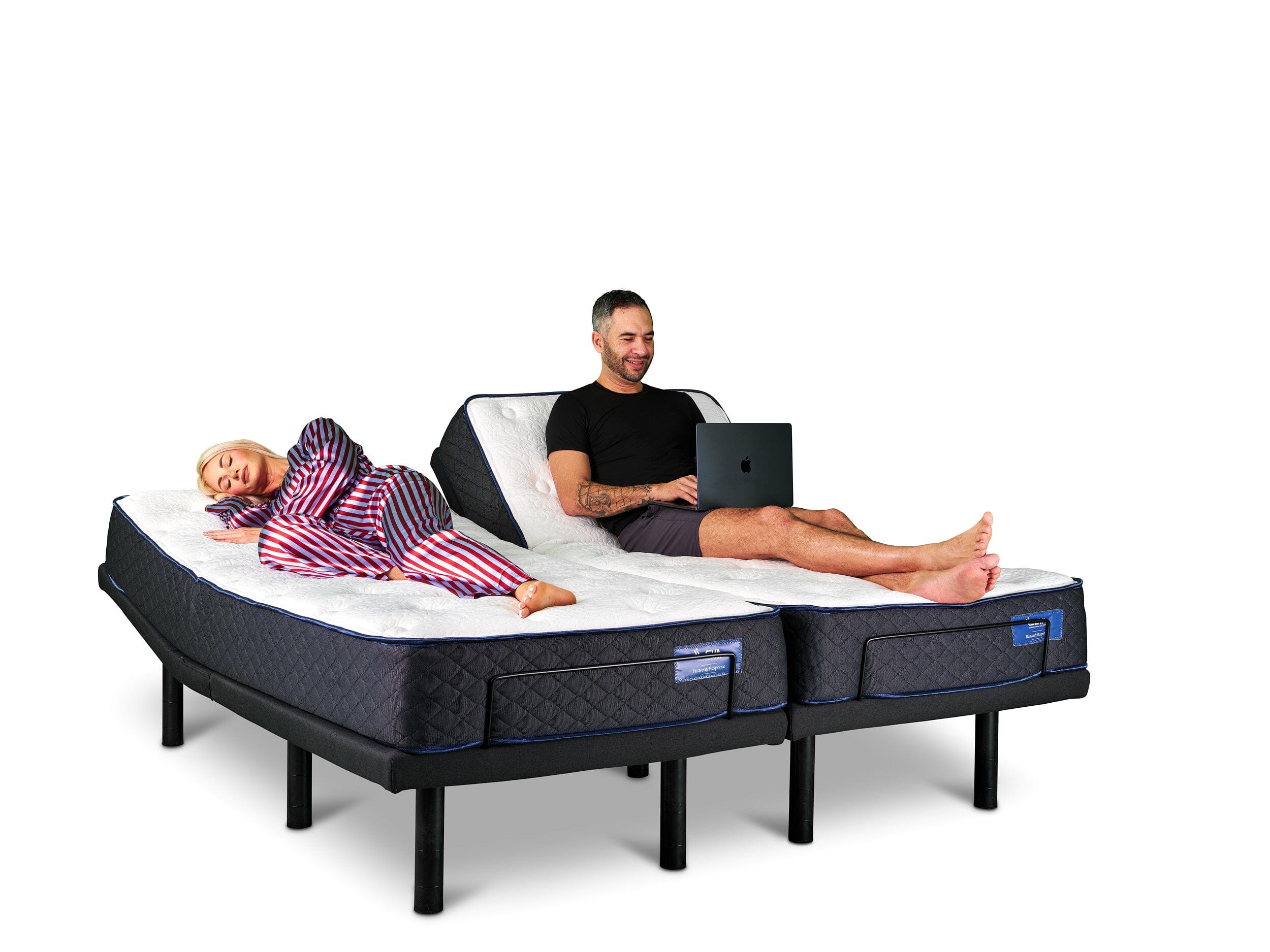
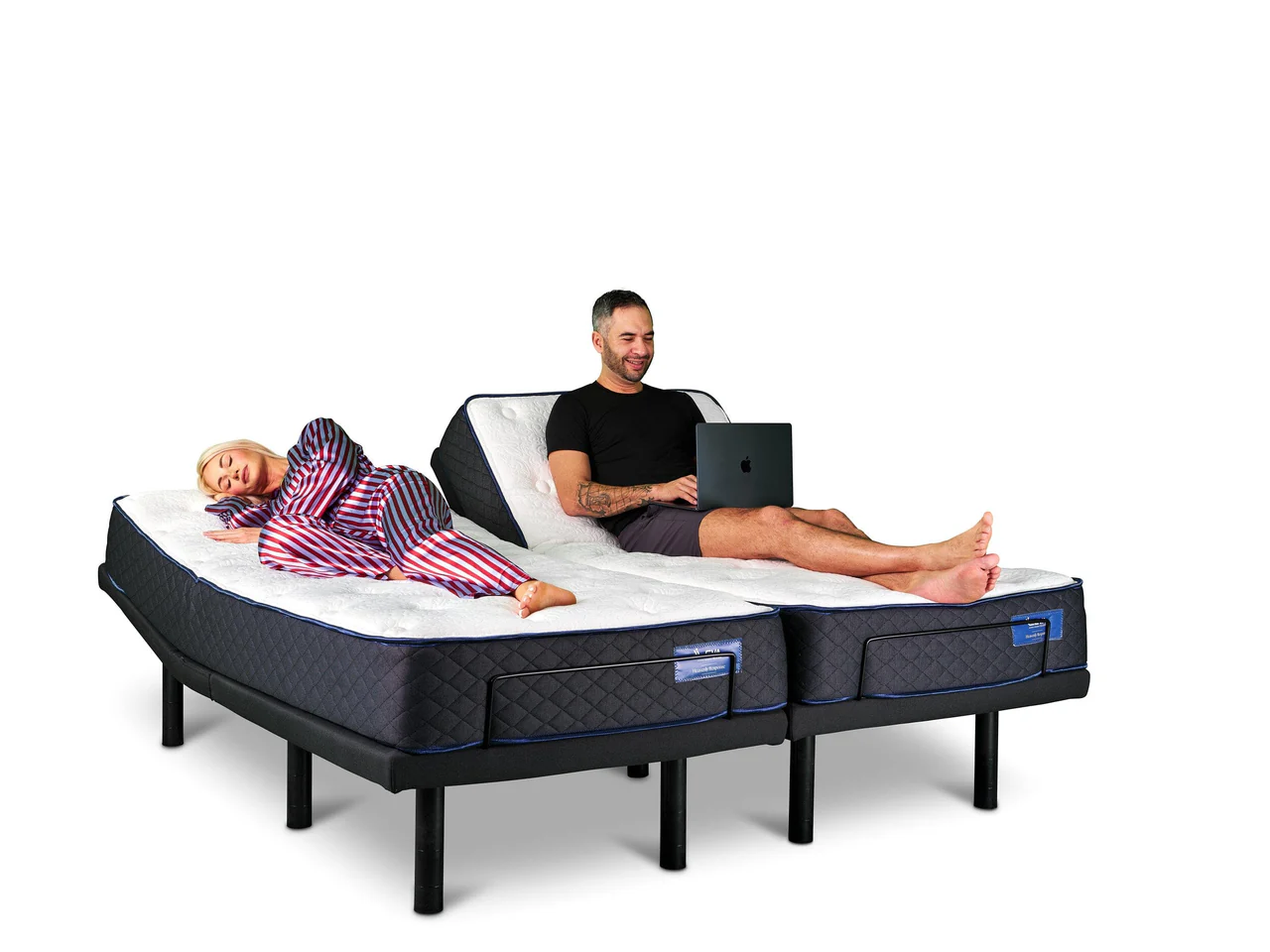
Leva Sleep’s split adjustable bases apply this position with independent controls for each partner, whisper-quiet German motors, and app-controlled micro-adjustments. Each side of the bed can be tuned to a different elevation angle, firmness pairing, or massage setting, so one partner’s therapeutic positioning does not disturb the other’s sleep.
How Zero-Gravity Positioning Reduces Pressure on Joints
Adjustable beds improve spinal alignment by bringing the bed surface to the body’s natural contours, which allows muscles to relax more fully during the repair stage of the sleep cycle. Flat mattresses can cause the lumbar spine to bow downward or create gaps that force muscles to stay active through the night.
The mechanical benefits of elevation work through several pathways:
- Elevating the legs can reduce lumbar intervertebral disc pressure compared to flat sleeping.
- The zero-gravity position reduces spinal disc pressure by approximately 25–30% versus flat lying, depending on the elevation angle.
- Elevating the knees can help relieve sciatic nerve pain.
- The zero-gravity position places the spine in slight flexion, which opens the spinal canal and reduces nerve compression for patients with spinal stenosis and herniated discs.
- Elevating the leg so the knee is slightly higher than the heart helps fluid drain away from the joint, which can reduce swelling and pressure.
What the Research Actually Shows about Position and Pain
Research published in The Journal of Physical Therapy Science indicates that poor sleep posture is a leading contributor to waking spinal symptoms such as morning stiffness and aches. A landmark study in The Lancet found that medium-firm mattresses were more effective at reducing back pain than very firm mattresses by providing a better balance of support and pressure relief.
Together, these findings suggest that both surface firmness and body positioning matter for spinal health. When researchers look specifically at knee outcomes, the evidence becomes less direct. A 2020 Journal of Rheumatology study recommended that adults with knee osteoarthritis walk at least 10 minutes a day, while no 2018 JAMA study examined sleep position and joint pressure reduction for hip or knee pain.
This gap means that knee-specific claims about zero-gravity positioning rely more on mechanical principles and clinical experience than on large controlled trials. Sleep consultant and occupational therapist Annie Schlecht notes that “short-term, people notice less tossing and turning and deeper comfort. Long-term, it supports spinal alignment, reduces inflammation, and helps the nervous system shift into true rest and repair.” However, Erin Flynn-Evans, director of the Fatigue Countermeasures Laboratory at NASA Ames Research Center, cautions that many sleep claims about zero-gravity positions are exaggerated in marketing, and NASA’s research documents posture in space rather than prescribing how people should sleep on Earth.
Which Joints Benefit Most and Where Results Vary
Back and spine: Evidence is strongest here. Adjustable beds provide notable benefits for conditions such as spinal stenosis, sciatica, and herniated discs by enabling flexion-based or knee-elevated positions.
Hips: Back sleeping with a pillow under the knees evenly distributes body weight and minimizes stress on the hip joints. Elevation on an adjustable base recreates this position consistently without manual pillow adjustments through the night.
Knees: Sleeping on the back with one or two pillows under the knees keeps the joint slightly flexed, which reduces pressure through the joint surfaces and often helps general knee pain and osteoarthritis. Adjustable bases maintain this angle reliably across the full night.
Arthritis: Results vary by joint and severity. For patients with osteoarthritis and rheumatoid arthritis, raising the head section of an adjustable bed eases entry and exit from bed by reducing strain on arthritic joints and may improve morning stiffness through better blood flow during sleep. However, Dr. Chafle notes that people with advanced arthritis or significant hip stiffness may experience worsened joint stiffness from prolonged knee bending in the zero-gravity position.
Safety Guidelines for Sleeping in Zero Gravity All Night
For most back sleepers, maintaining a moderate zero-gravity angle throughout the night is realistic. Sleeping in that position every night is unlikely for anyone other than full-time back sleepers, and side or stomach sleeping in a zero-gravity configuration can cause serious inflammation and pain.
The most common mistake with zero-gravity sleeping is overdoing elevation, especially at the head, which can strain the neck and disrupt breathing. Physicians advise consulting a doctor before using the zero-gravity position all night for people with advanced arthritis, significant hip stiffness, certain shoulder injuries, severe glaucoma, or cardiac conditions.
Side-Sleeping vs. Back-Sleeping with Adjustable Bases
Back sleeping works best with zero-gravity elevation. Studies show that the supine position minimizes spinal deviation, meaning vertebrae are less likely to rotate or tilt unnaturally, which supports neutral spinal alignment.
Side sleeping presents different challenges. For side sleepers, raising the head and foot sections on an adjustable base reduces crushing pressure on the bottom shoulder and prevents the top leg from sliding forward to twist the lower spine, a common source of morning hip and back pain on flat mattresses. However, side sleepers and stomach sleepers are usually better served using adjustable bases as a tool for lounging or recovery while awake rather than sleeping overnight in a strict zero-gravity position.
A firm pillow between the knees remains a key complement for side sleepers, since side sleeping with a firm pillow between the knees keeps the hips stacked and prevents pelvic rotation that pulls on the lower back.
Customization Over Presets: Why Independent Controls Matter for Couples
A single preset zero-gravity angle cannot serve two people with different body weights, joint conditions, and sleep positions. One partner may need 20 degrees of leg elevation for knee osteoarthritis, while the other requires only a slight head incline for snoring. A shared control system forces one person to accept the other’s setting or wake their partner for adjustments.
Leva Sleep’s split bases address this directly. Each side operates independently through the Leva Sleep app, allowing micro-adjustments to head elevation, foot elevation, lumbar support, and massage intensity without disturbing the other partner. Dr. Nicholas Callahan notes that many patients with osteoarthritis find that the subtle movements of an adjustable base help prevent the joints from locking up overnight, which requires precise, quiet motor control rather than coarse preset positions.
See how independent controls feel in person at Leva Sleep or compare split configurations online.
Doctor Guidance and When to Add Other Therapies
Mayo Clinic recommends back sleeping with a pillow placed under the knees to relax back muscles and maintain the natural curve of the lower back. An adjustable base automates this recommendation with consistent, calibrated elevation. Physicians typically recommend combining positional therapy with other modalities because elevation addresses mechanical pressure but not underlying inflammation, muscle weakness, or insomnia patterns.
- Physical therapy and targeted strengthening exercises for the affected joint to correct muscle imbalances that positioning alone cannot fix
- Anti-inflammatory medication or topical treatments as prescribed to reduce inflammation that elevation may ease but not remove
- CBT-I (Cognitive Behavioral Therapy for Insomnia), which produced a medium-sized reduction in insomnia severity for people with knee and hip osteoarthritis in a meta-analysis of randomized controlled trials
- Medium-firm mattress selection, since research published in The Lancet found that medium-firm mattresses provide an effective balance of support and pressure relief for back pain and arthritis patients
Real-User Experiences with Adjustable Bases for Joint Pain
Forum discussions and verified review platforms consistently surface several themes among adults using adjustable bases for joint pain. Users with lower back pain and sciatica most often report meaningful overnight relief. People with hip pain describe less need to reposition during the night. Users with knee osteoarthritis note less morning swelling when they maintain leg elevation.
Recurring complaints focus on basic or entry-level systems. Common issues include motor noise that wakes partners, limited angle ranges that prevent finding a comfortable position, and preset buttons that cannot be fine-tuned. Users who upgrade to split systems with app control report fewer partner conflicts and more ability to dial in position incrementally over several nights.
Comparison: Flat Mattresses vs. Basic Adjustable Bases vs. Premium Split Systems
The following comparison highlights how premium split adjustable systems address the core limitations of flat mattresses and basic adjustable bases, especially for pressure relief, partner comfort, and quiet nighttime adjustments.
| Feature | Flat Mattress | Basic Adjustable Base | Premium Split Adjustable Base |
|---|---|---|---|
| Pressure Relief | Fixed surface with no elevation capability | Distributes weight more evenly through head and leg elevation, with a limited angle range on many models | Micro-adjustable elevation and lumbar support zones allow precise angle control to maximize pressure reduction |
| Noise | Silent | Motor noise varies, and many entry-level models use audible actuators that can disrupt a partner’s sleep | Whisper-quiet motors designed for minimal acoustic disruption during nighttime adjustments |
| Aesthetics | Standard furniture profile, compatible with most bed frames and headboards | Functional but often utilitarian in appearance, with limited compatibility with decorative bed frames | Furniture-quality design engineered to integrate with modern bedroom environments and compatible with premium mattress brands |
| Partner Compatibility | No independent adjustment, one surface for both sleepers | Shared controls on most models, with some split versions that often lack independent app control or fine-tuning | Fully independent controls per side, with app-controlled micro-adjustments so each partner can set elevation, massage, and firmness without disturbing the other |
Frequently Asked Questions
How long does it take to feel relief from joint pain with a zero-gravity base?
Most users notice a change in morning stiffness and overnight comfort within one to two weeks of consistent use. The body usually needs several nights to adapt to a new sleep position, and the optimal elevation angle often requires gradual fine-tuning. Starting with a moderate elevation and adjusting slowly tends to work better than jumping to the steepest setting.
Can both partners use different positions on a split adjustable base?
Yes. A split king or split queen adjustable base gives each partner a fully independent surface. One person can sleep in a zero-gravity position with significant leg elevation for knee pain, while the other sleeps nearly flat or with only slight head elevation for snoring. Leva Sleep’s app-controlled bases allow each side to be saved as a custom preset, so neither partner needs to reset positions manually each night.
Is zero-gravity positioning safe for people with arthritis?
For most people with mild to moderate arthritis, moderate zero-gravity elevation is safe and may reduce morning stiffness by improving circulation during sleep. People with advanced arthritis, significant hip stiffness, or certain shoulder conditions should consult a physician before sleeping in an elevated position all night. Prolonged knee bending can aggravate stiffness in some individuals, and the ideal angle varies by joint involvement and severity.
Do I need a special mattress to use an adjustable base?
Standard innerspring mattresses with rigid support structures do not work well with adjustable bases because they cannot flex with the base’s movement. All-foam mattresses and hybrid mattresses with individually wrapped pocket coils are appropriate pairings. Leva Sleep designs and sources mattresses specifically engineered to work with its adjustable bases, and its bedding accessories, including deep-pocket fitted sheets with extra elastic, are built to stay in place even at higher elevation angles.
What is the difference between a zero-gravity preset and a custom elevation setting?
A zero-gravity preset is a factory-programmed angle, typically around 26 degrees at the head with a complementary angle at the foot, intended to approximate neutral body posture. A custom elevation setting lets the user adjust head and foot angles independently in small increments to match their anatomy, joint condition, and sleep position. For people with joint pain, the factory preset offers a helpful starting point, while the real therapeutic benefit often comes from fine-tuning the angle to the individual.
Conclusion: Selecting an Adjustable System That Eases Joint Pain
Zero-gravity positioning on an adjustable base provides a clinically grounded way to reduce joint pressure during sleep. Evidence is strongest for lower back pain, sciatica, and hip discomfort in back sleepers. Knee osteoarthritis often benefits from consistent leg elevation that pillows alone rarely maintain through the night. Arthritis outcomes vary and depend on severity and which joints are involved.
When you evaluate a system, focus on elevation range and precision, motor noise level, mattress compatibility, and, for couples, the availability of fully independent controls. A shared-control base or a noisy motor can undermine the therapeutic benefit by waking the partner who does not need the same position.
Leva Sleep’s split adjustable bases address each of these criteria with app-controlled micro-adjustments per side, whisper-quiet German motors, mattresses engineered for adjustable use, and white-glove delivery that ensures correct setup from the first night. With over 25,000 customers and eight years of specialization in adjustable sleep systems, Leva offers expertise that general mattress retailers rarely match.