
Written by: Matthew Timmins, Founder and Managing Director, Leva Sleep
Key Takeaways for Aireloom Owners
- Aireloom plush and pillow-top models often develop visible body impressions within one to three years, earlier than the five-to-eight-year average lifespan of quality innerspring mattresses.
- Sagging beyond 1.5 inches disrupts spinal alignment and increases pressure on the lower back, hips, and shoulders during sleep.
- Showroom firmness often feels different at home because Aireloom mattresses sit on firm risers in stores, so many owners experience unexpected softness and misalignment after purchase.
- Adjustable bases can compensate for existing sagging by allowing independent head and foot elevation, which helps restore more neutral spinal curves without immediate mattress replacement.
- Talk with the Leva Sleep team online or in the La Jolla showroom to match your Aireloom setup to your back support needs.
Do Aireloom Mattresses Sag Easily?
Aireloom plush and pillow-top models rank among the most frequently cited mattresses for premature body impressions. Owner reports from forum threads and review aggregators describe visible indentations appearing within one to three years, well ahead of the five-to-eight-year average lifespan typical of innerspring mattresses. Tufted construction concentrates compression at fixed points, so plush comfort layers wear out locally before the coil system itself fails.
How Sagging Aireloom Mattresses Trigger Lower Back Pain
Once a mattress develops a body impression, the spine no longer rests in a neutral position. A sagging mattress throws off spinal alignment and increases pressure on the lower back, hips, and shoulders, which leads to discomfort and poorer sleep. The surface sinks under the heaviest body segments, usually the hips and lower back, and holds the spine in a flexed or bent position for six to eight hours each night.
A permanent body impression greater than approximately 1.5 inches is the threshold at which sagging is considered structurally significant enough to compromise spinal alignment. For couples, the problem grows more severe. Two sleepers accelerate center-core collapse through the hammock effect, which causes both partners to roll toward the middle of the bed. Owner reports from Aireloom plush-model buyers consistently describe this pattern emerging within the timeframe mentioned earlier.
Why Aireloom Firmness Feels Different at Home
Many Aireloom owners describe a clear gap between showroom feel and at-home feel. Retailers display Aireloom mattresses on firm platform risers, which makes the surface feel more supportive. At home, a standard box spring or flexible slatted base allows more give, so the same mattress often feels noticeably softer within the first 30 to 90 days as comfort layers break in.
Side sleepers often notice new shoulder and hip pain when a mattress that felt supportive in the store becomes too soft to maintain lateral spinal alignment at home. Back sleepers feel the lower back sinking below its natural curve. Mattresses built with lower-density foams or less durable spring systems tend to weaken faster, which amplifies the showroom-to-home feel gap over time.
Best Aireloom Firmness Choices for Back Pain Relief
Choosing the right Aireloom firmness means matching your body weight and main sleep position to a specific comfort tier. The table below gives general guidance based on ergonomic principles and owner-reported outcomes. Test each option by lying in your primary sleep position for at least ten minutes in-store and confirm that your lower back keeps its natural inward curve without sinking or arching.
| Firmness Tier | Best For (Sleep Position) | Best For (Body Weight) | Back Pain Risk |
|---|---|---|---|
| Plush / Pillow-Top | Side sleepers | Under 150 lbs | Higher — sinks under hips and lower back, disrupting spinal alignment |
| Luxury Firm | Back and combination sleepers | 150–230 lbs | Lower — maintains lumbar curve for most body types in this range |
| Firm | Stomach and back sleepers | Over 230 lbs | Moderate — a surface that feels too firm can create gaps that keep muscles active overnight |
Aireloom Warranty Challenges With Sagging Claims
Aireloom’s limited warranty covers defects in materials and workmanship, but tufted construction complicates sagging claims. Tufting buttons and pre-existing surface contours make it hard to create a flat baseline for measurement, and warranty inspectors often cite these features when they deny claims. Owners report that visible and functionally disruptive impressions sometimes fail to qualify.
Improper foundation support creates another common denial reason. Improper mattress support can void manufacturer warranties and directly contribute to premature sagging. Owners who use older box springs, widely spaced slats, or frames without a supported center section often see their claims denied on foundation grounds, even when wear is obvious.
Aireloom Sagging vs Adjustable Base Support
Given these warranty hurdles and the reality that many Aireloom owners see impressions within the first few years, an adjustable sleep system offers a practical workaround. Instead of fighting for coverage or replacing the mattress right away, an adjustable base addresses the functional consequence of sagging, which is lost spinal alignment, while you keep the current mattress.
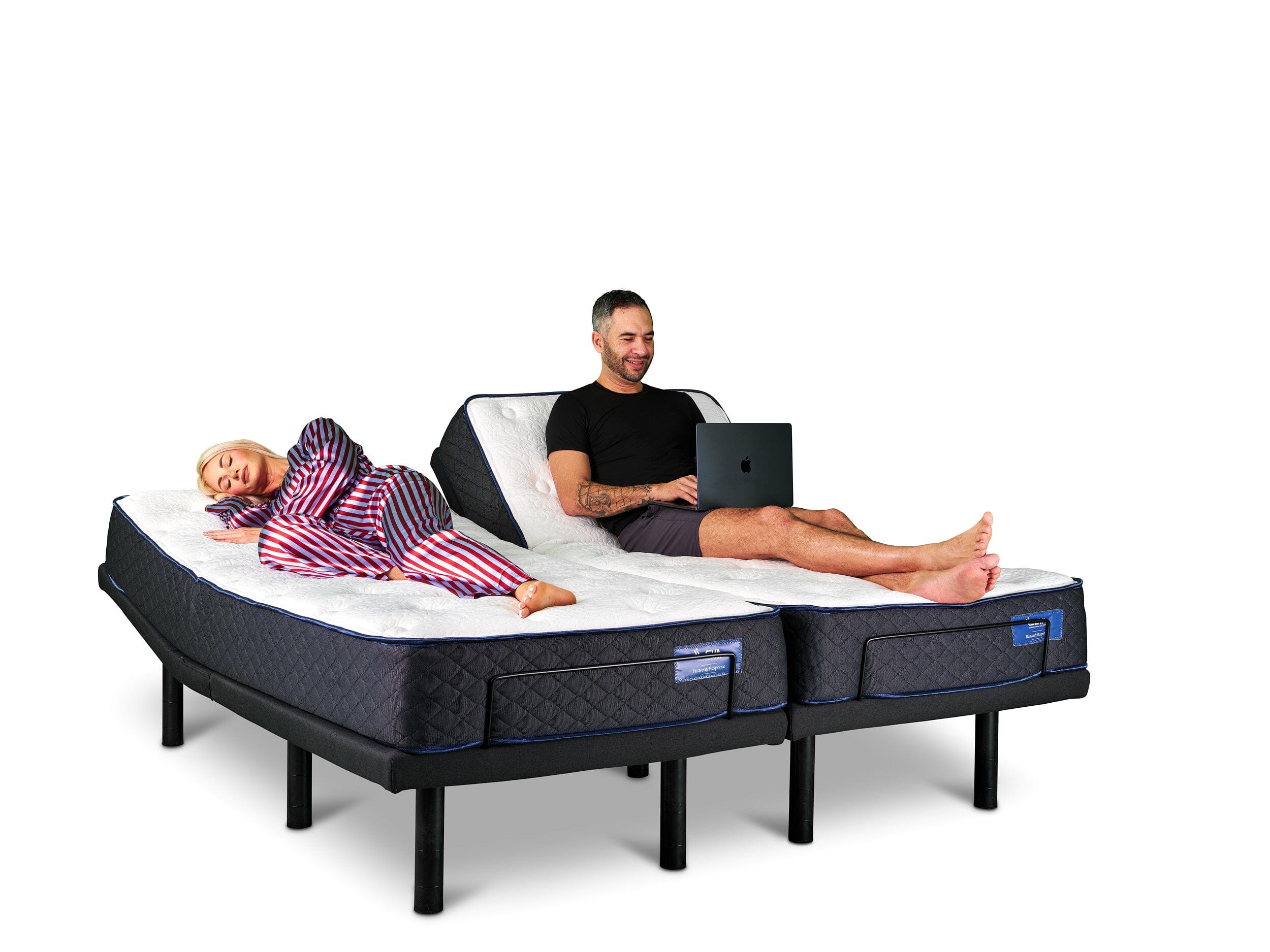
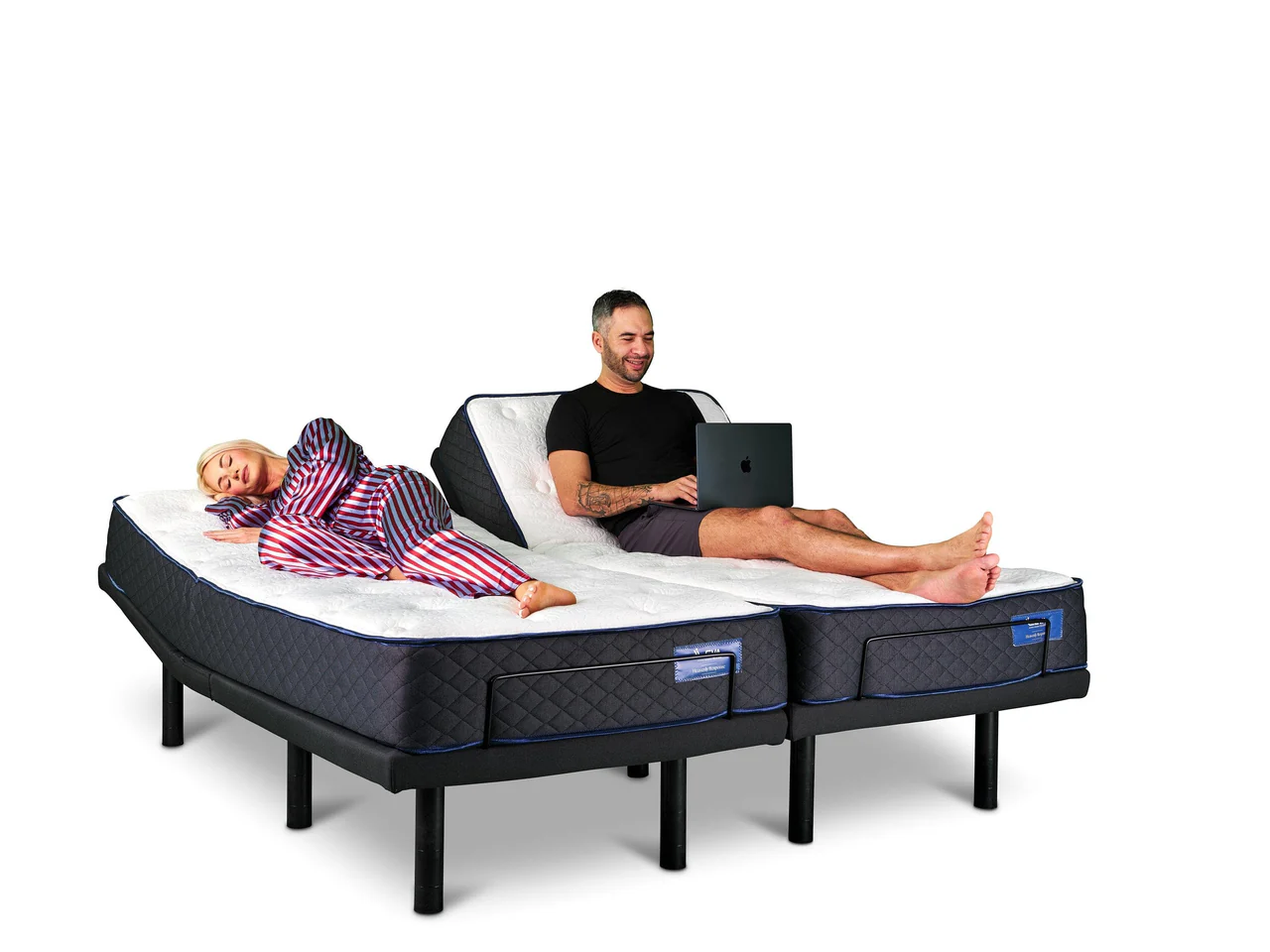
Elevating the legs or torso redistributes body weight and reduces stress on the hips, knees, shoulders, and lower back, which helps offset the uneven surface created by body impressions. For couples, a split adjustable base lets each partner set independent head and foot elevation, so one sagging surface no longer forces a shared compromise. Leva Sleep adjustable systems work with Aireloom hybrid models that use pocketed coils, since hybrid mattresses with pocketed coils flex safely on adjustable bases.
Step-by-Step Plan to Improve Sagging Without Replacing
- Verify foundation compatibility. Confirm your base provides continuous or closely slatted support with gaps no wider than three inches. Solid foundations, platform beds, slatted bases with proper spacing, or adjustable bed frames designed for mattress compatibility distribute weight evenly and extend mattress life.
- Rotate on a quarterly schedule. Without rotation, a mattress loses support in the first two years and develops body impressions that can reach the warranty threshold by years three to four. To slow this wear pattern, rotate the mattress 180 degrees head-to-foot every three months.
- Add a mattress protector. A waterproof mattress protector shields foams and fibers from moisture and spills. When you combine a protector with quarterly rotation and proper foundation support, you extend average mattress life and keep comfort layers more resilient.
- Use micro-positioning with an adjustable base. Set slight head elevation between 10 and 15 degrees and leg elevation between 15 and 20 degrees to shift pressure away from existing body impressions. This approach does not reverse sagging, but it restores more functional spinal alignment on the surface you already have.
- Avoid edge loading. Repeatedly sitting on the edges of a mattress concentrates weight in one area and leads to edge breakdown and sagging over time. Sit toward the center when possible and use a chair or bench for long periods of sitting.
Flat Mattress vs Split Adjustable Base: Practical Comparison
| Feature | Flat Mattress Only | Split Adjustable Base + Mattress |
|---|---|---|
| Spinal Support | Fixed surface, cannot compensate for body impressions or lumbar gaps | Independent elevation helps maintain neutral spinal curves despite surface wear |
| Partner Customization | Single shared surface with one firmness and elevation for both sleepers | Independent head and foot elevation on each side, so every partner controls their own position |
| Mattress Longevity | Body impressions can reach the warranty threshold by years 3–4 without rotation and proper support | High-quality adjustable frames often last 10–15 years, and compatible mattress wear spreads out more evenly through repositioning |
| Back Pain Management | Sagging concentrates pressure on the lower back, hips, and shoulders | Elevation reduces pressure on the lower back and supports the spine’s natural curve |
Research Summary: Benefits of Head-of-Bed Elevation
The Zero Gravity preset raises the head and legs above heart level to create neutral body posture, decompress the spine by allowing the lower back to settle into the mattress, and improve oxygenation by opening the chest cavity. For Aireloom owners dealing with body impressions, this position shifts load away from worn zones on the mattress surface.
For sciatica and herniated discs, elevating the knees 15 to 30 degrees relaxes the hamstrings, reduces posterior pelvic tilt, and quickly decreases tugging on the lower back and sciatic nerve. When you apply these findings at home, choose a base with whisper-quiet motors to avoid sleep disruption during adjustments. Confirm the base height works with your existing bedroom furniture. Verify that your Aireloom model uses pocketed coils rather than connected Bonnell coils before pairing it with an adjustable base, since traditional innerspring mattresses with connected coils can break when repeatedly bent.
Frequently Asked Questions
Do Aireloom warranties cover sagging that appears within the first two years?
Aireloom’s limited warranty covers body impressions that exceed the depth defined earlier, measured on an unoccupied mattress. Claims that appear within the first two years still qualify for review, but tufted surface construction and foundation requirements remain the two most common reasons for denial. Document the impression with photographs from multiple angles and confirm that your foundation meets the manufacturer’s specifications before you file.
Should I consult a physician before using an adjustable base for back pain?
Consult a physician or physical therapist before changing your sleep position if you have a diagnosed spinal condition such as stenosis, a herniated disc, or post-surgical hardware. Adjustable bases provide symptom management and positional support rather than structural correction. A healthcare provider can recommend specific elevation angles for your condition and confirm whether positional therapy fits with your current treatment plan.
Are Leva Sleep adjustable bases noisy during position adjustments?
Leva Sleep bases use whisper-quiet German motors engineered to minimize sound during movement. This design choice addresses one of the most common complaints about traditional adjustable bases, where motor noise wakes a partner when one sleeper changes position during the night.
Does Leva Sleep offer a Split Queen adjustable base for smaller bedrooms?
Leva Sleep is one of the few providers offering a Split Queen adjustable base built to customer specifications. This configuration delivers independent elevation control for each partner in a more space-conscious footprint than a Split King, which makes it a practical choice for couples in smaller bedrooms who still want personalized sleep positioning.
Can an adjustable base extend the usable life of a sagging Aireloom mattress?
An adjustable base does not remove existing body impressions, but it offsets their effect by repositioning your body relative to the worn surface. When you combine an adjustable base with quarterly mattress rotation, a waterproof protector, and a compatible solid foundation, you address the three main drivers of accelerated wear. This strategy can extend the time before full mattress replacement while improving spinal alignment in the meantime.
Conclusion: A Practical Path Forward for Aireloom Owners
Common Aireloom mattress complaints for back pain and sagging follow a predictable pattern. Plush-model body impressions appear within the first few years, spinal alignment deteriorates, warranty claims run into measurement and foundation obstacles, and couples end up managing discomfort on a mattress that no longer feels like it did in the showroom. An adjustable sleep system tackles the alignment problem directly by redistributing pressure, compensating for surface wear, and giving each partner independent positional control without forcing immediate mattress replacement.
When you pair an adjustable base with a consistent rotation schedule, proper foundation support, and a quality mattress protector, you extend mattress life and support more restorative sleep. Work with Leva Sleep online or in the La Jolla showroom to build an Aireloom-compatible setup that reduces back pain and improves nightly comfort.