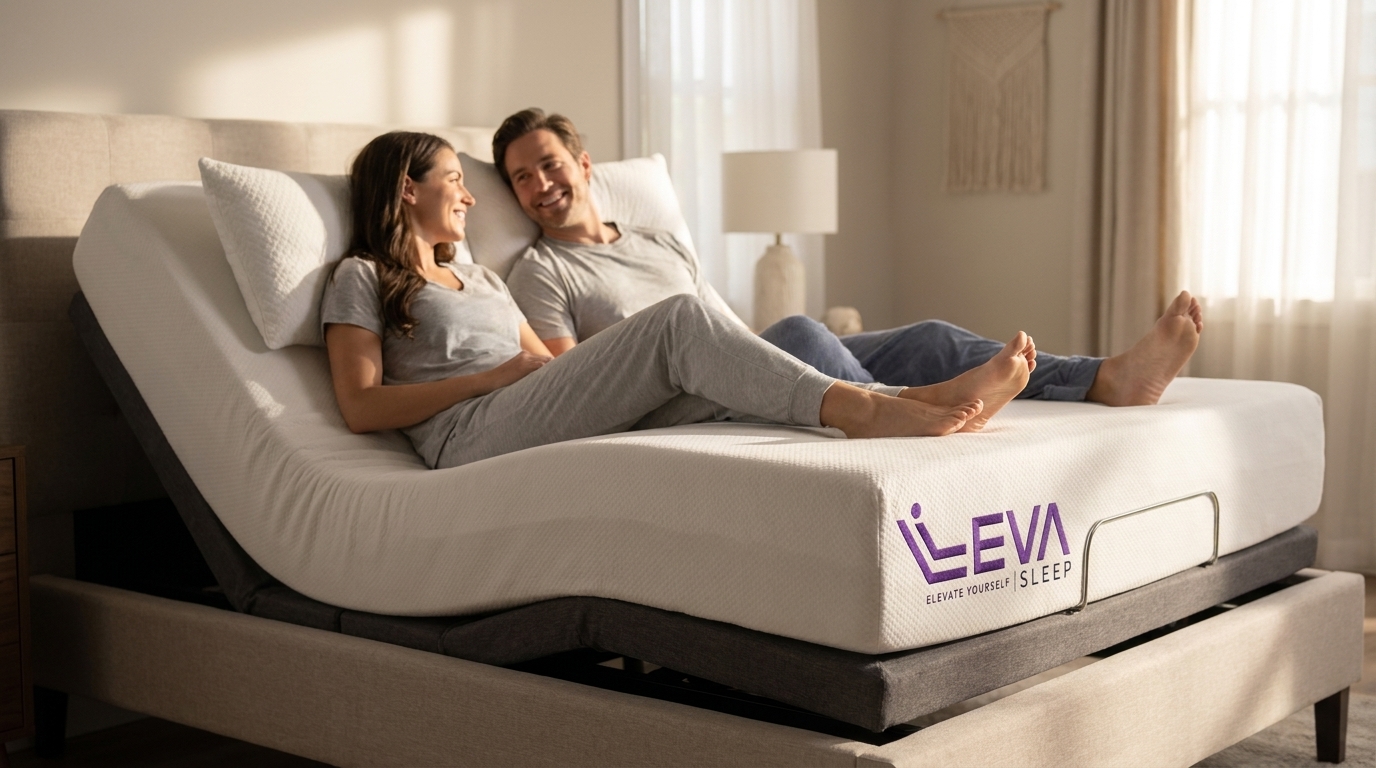
Written by: Matthew Timmins, Founder and Managing Director, Leva Sleep
Key Takeaways
- Elevating the head 30-45 degrees reduces sleep apnea events by 30-50% by counteracting gravity on throat tissues.
- Side sleeping with gentle elevation maximizes airway opening, cutting apnea events in half for many patients.
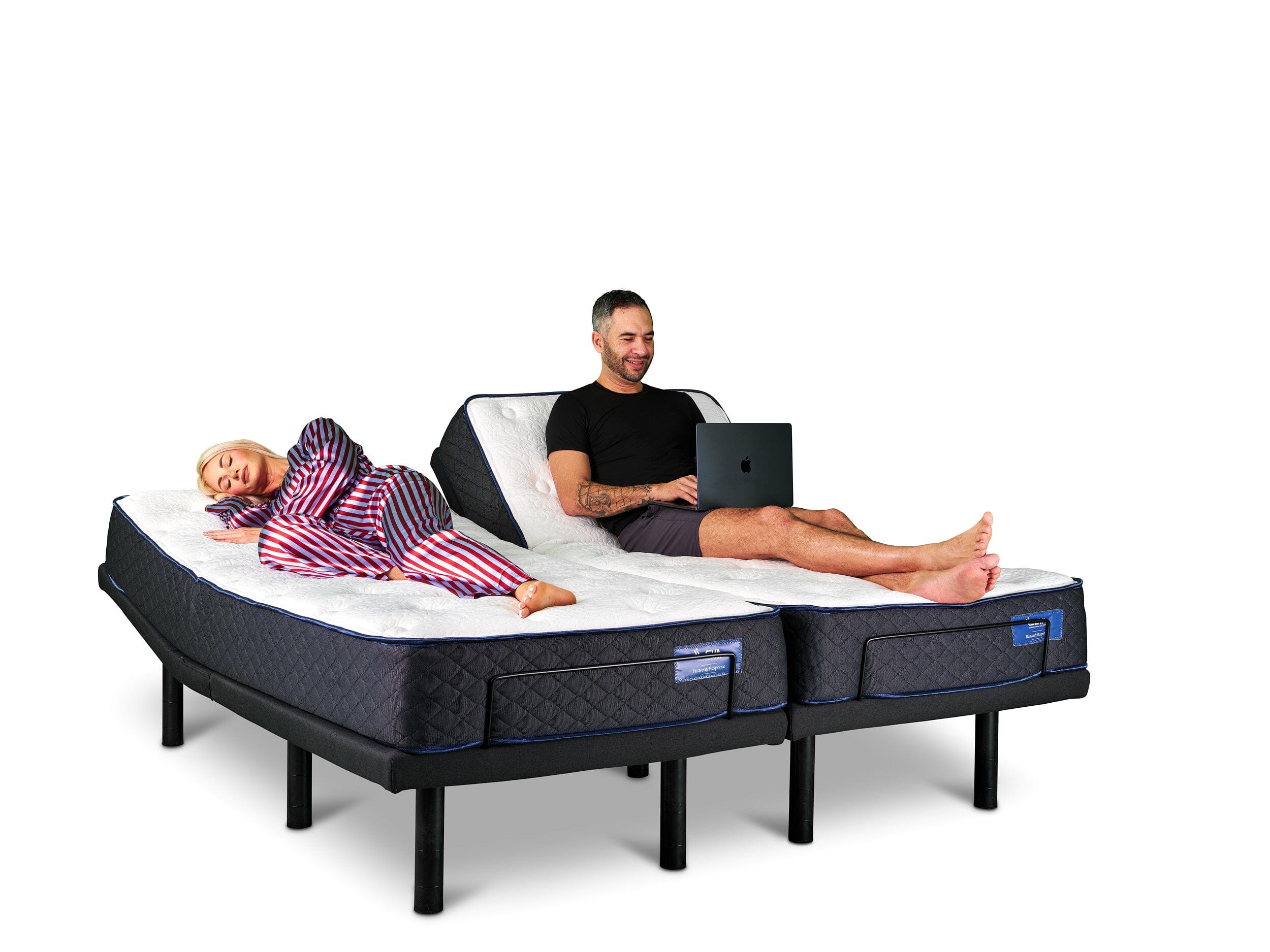
- Zero-gravity and split configurations allow couples to adjust positions independently without compromising comfort.
- Leva Sleep’s anti-snore technology and app controls provide automated, precise adjustments that support continuous sleep.
- Upgrading to a Leva Sleep split adjustable base helps both partners sleep better together and reduces the risk of sleep divorce.
7 Adjustable Bed Positions That Support Sleep Apnea Relief
1. Elevated Head Position (30-45 Degrees)
The core position for sleep apnea relief raises the head and upper torso to counteract gravity on throat tissues. Elevating the upper body helps keep the airway open by limiting gravity’s pull on the tongue and throat, even for back sleepers. This approach works better than stacking pillows, which bend the neck without meaningfully changing the throat angle.
To use this position, gradually raise the head section of your adjustable base until you find a comfortable angle within the 30-45 degree range. Start with a lower elevation and increase in small steps over several nights so your body can adjust. This gradual approach makes precision control valuable, and Leva Sleep’s smartphone app allows micro-adjustments that fine-tune the angle instead of jumping between fixed presets.
- Benefits: Reduces apnea events, improves oxygen saturation, decreases snoring
- Best for: Back sleepers, mild to moderate sleep apnea, CPAP users seeking lower pressure settings
- Considerations: May cause initial discomfort, requires a short adjustment period
2. Side Sleeping with Elevation
Lateral sleeping is the best position for obstructive sleep apnea as it prevents gravity from pulling the tongue and soft tissues toward the back of the throat. Gentle head elevation on the side further improves airway shape for many people with sleep apnea. For patients with positional sleep apnea, side sleeping can bring the apnea-hypopnea index into the normal range.
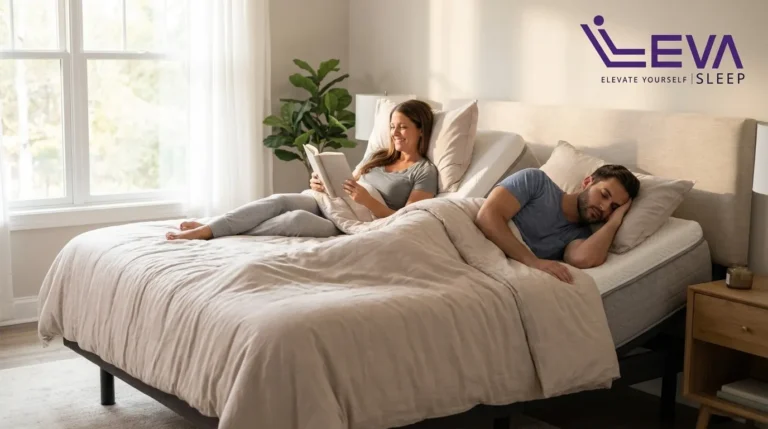
Lie on your side and maintain a 15-30 degree head elevation. Leva Sleep’s lumbar support feature helps keep your spine aligned in this position, and pillow tilt adds targeted neck support. With a split base, your partner can remain flat if they prefer, so each person can follow their own ideal setup.
- Benefits: Maximum airway opening, reduced snoring, improved sleep quality
- Best for: Positional sleep apnea, severe cases, people who naturally side sleep
- Considerations: Requires proper pillow support, may benefit from a body pillow for stability
3. Zero-Gravity Position
The zero-gravity position elevates both the head and legs to spread body weight evenly and ease pressure on the cardiovascular system. This NASA-inspired posture places the body in a neutral position that reduces spinal stress while maintaining the head elevation needed for airway support. This combination of spinal comfort and airway alignment explains why inclined positions often improve oxygen levels and reduce apnea events compared with flat sleeping.
Use the zero-gravity preset on your Leva Sleep base, which typically sets a 120-130 degree angle between torso and thighs. Then adjust the settings with the app until you reach a comfortable, sustainable posture. This position suits couples when one partner has sleep apnea and the other struggles with circulation problems or back pain.
- Benefits: Improved circulation, reduced back pressure, enhanced breathing
- Best for: Multiple health conditions, circulation issues, back pain combined with sleep apnea
- Considerations: May feel unfamiliar at first, not suitable for stomach sleepers
4. Reverse Trendelenburg Position
This medical positioning method raises the entire bed at the head end, creating a gentle slope that supports drainage and reduces upper airway congestion. Elevating the upper body prevents the tongue and soft palate from collapsing into the airway, improving airflow and reducing nighttime symptoms. People who live with both sleep apnea and acid reflux often respond well to this setup.
Adjust your Leva Sleep base to create a 5-15 degree incline across the full mattress surface. This subtle angle maintains natural spinal alignment while using gravity to keep airways clearer. For couples, a split base lets one partner use this gentle slope while the other remains flat or chooses a different elevation, so both can follow their own comfort and medical needs.
- Benefits: Reduces acid reflux, improves sinus drainage, maintains spinal alignment
- Best for: Combined sleep apnea and GERD, sinus congestion, post-surgical recovery
- Considerations: Subtle effect, often works best when combined with other positions
These first four positions show how different elevation strategies support sleep apnea through varied angles and pressure relief. To apply these positions with precise control on each side of the bed, Leva Sleep’s split adjustable bases provide the flexibility to fine-tune every incline for each partner.
5. Anti-Snore Auto-Adjust Position
Leva Sleep’s upcoming 2026 anti-snore technology introduces automated support for snoring and mild sleep apnea. The system tracks snoring patterns and makes small head adjustments that respond in real time without fully waking the sleeper. A gentle incline reduces snoring volume and frequency compared to flat sleeping, and automation keeps the angle in an effective range all night.
The sensors monitor breathing and slowly raise the head section when snoring appears. These gradual movements can shorten or stop snoring episodes while preserving sleep continuity. Over time, the technology learns each person’s patterns, which improves accuracy and reduces how noticeable the adjustments feel.
- Benefits: Automated intervention, reduced partner disturbance, improved sleep continuity
- Best for: Chronic snorers, tech-focused users, couples seeking minimal disruption
- Considerations: Requires an adaptation period, available spring 2026
6. CPAP-Optimized Position
Adjustable bases can strengthen CPAP therapy by holding the upper body in a stable, elevated position. The mix of head elevation and CPAP often allows lower pressure settings, which can improve comfort and long-term use. CPAP users benefit from upper body elevation as gravity partially supports airway patency.
Raise the head 20-35 degrees and route the CPAP hose through Leva Sleep’s integrated hose management system. This setup reduces kinks and tension that might weaken therapy. The stable surface also limits mask shifting that often occurs with stacked pillows, which helps maintain a consistent seal through the night.
- Benefits: Lower CPAP pressures, improved mask seal, fewer therapy side effects
- Best for: Established CPAP users, people with mask leaks, those with pressure intolerance
- Considerations: Requires CPAP equipment, consult a sleep physician before changing pressure settings
7. Split Couple Setup
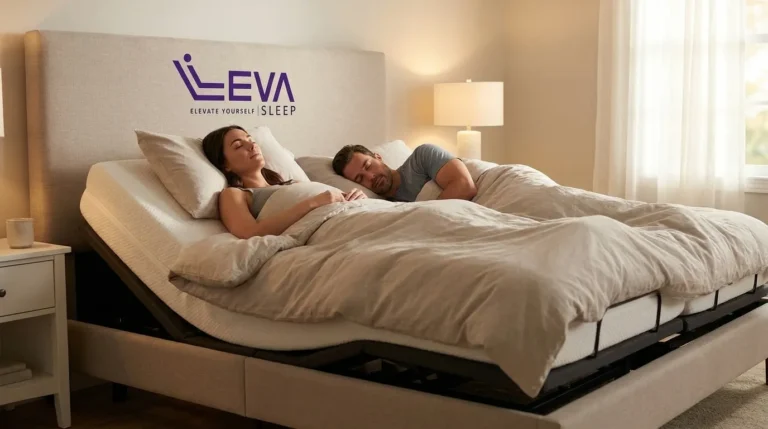
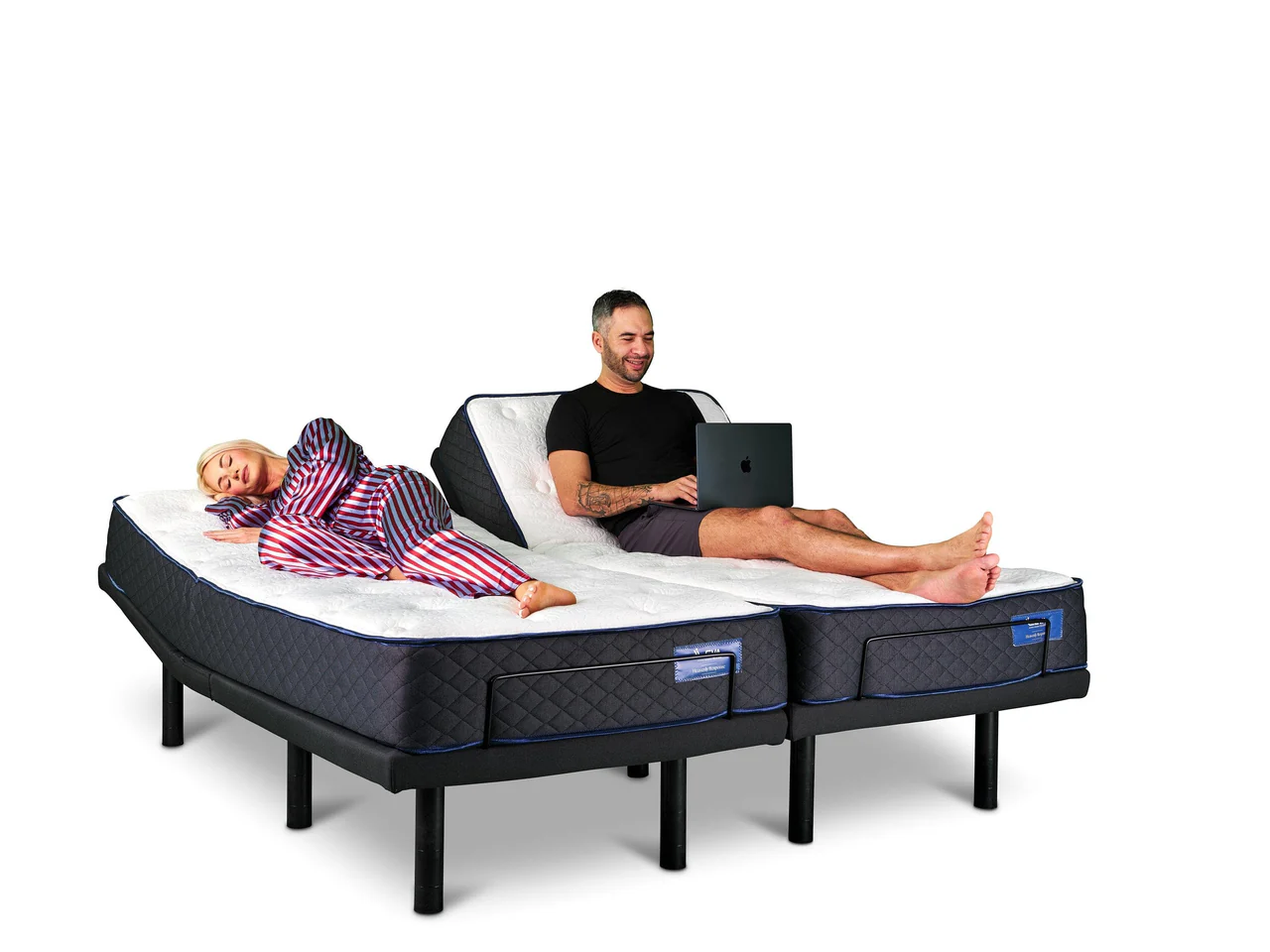
The split couple setup gives each partner independent control so no one has to compromise on health or comfort. Approximately 50-60% of people with obstructive sleep apnea have position-dependent symptoms, which makes personalized positioning a key part of treatment. Leva Sleep’s Split Queen and King bases let each partner choose their own elevation and features.
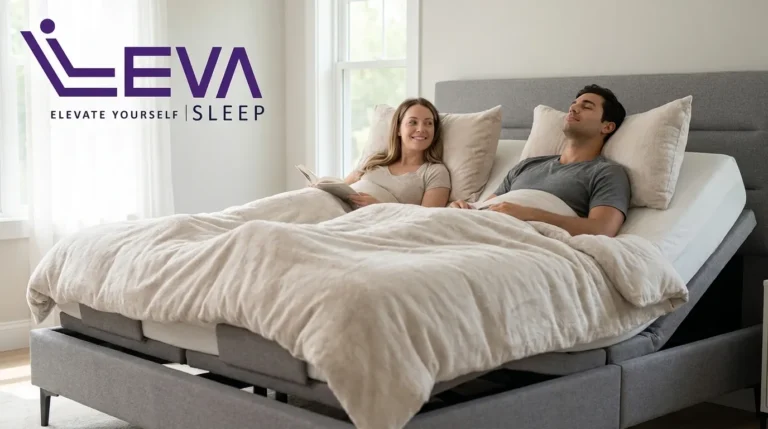
One partner can use anti-snore elevation while the other stays flat, or both can select different therapeutic positions at the same time. The split design includes separate app controls, massage options, and temperature settings, so each person can fine-tune their side. This approach has helped thousands of couples avoid “sleep divorce” while still addressing serious health concerns.
- Benefits: No compromise required, relationship support, individualized therapy
- Best for: Couples with different needs, varying sleep apnea severity, relationship-focused solutions
- Considerations: Higher initial investment, requires coordination for shared bedding
Flat vs Elevated: How Positioning Affects Sleep Apnea
Sleeping flat on the back worsens sleep apnea symptoms as gravity pulls relaxed tongue and throat tissues into the airway, potentially doubling the number of sleep apnea events. Elevation consistently outperforms flat positioning by countering gravitational forces that promote airway collapse. Across the positions above, raised setups improve oxygen saturation and reduce apnea events more reliably than flat sleeping.
Best Adjustable Bed Position for Side Sleepers
Side sleepers with sleep apnea usually benefit most from lateral positioning plus 15-30 degrees of head elevation. This pairing combines the natural airway advantages of side sleeping with extra gravitational support. Leva Sleep’s lumbar support and pillow tilt features help keep the spine aligned in this posture and reduce the neck strain that often comes from stacking traditional pillows.
Adjustable Bed Anti-Snore Positions
Effective anti-snore positioning usually involves 20-40 degrees of head elevation, with the ideal angle depending on each person’s anatomy. Leva Sleep’s upcoming automated anti-snore mode will detect snoring and adjust the head section in real time, creating a personalized response that adapts as you change positions during the night.
Sleeping Upright with Sleep Apnea
Very upright positions above 60 degrees can sometimes eliminate apnea events but often reduce comfort and overall sleep quality. Moderate elevation between 30 and 45 degrees usually offers a better balance between airway protection and restfulness. Leva Sleep’s split bases let each partner test different angles without forcing the same upright posture on both sides of the bed.
Real Couples’ Experiences with Leva Sleep
Stories from real couples show how these positions translate into everyday life. Sarah and Mike from San Diego had started sleeping in separate rooms because of Mike’s severe snoring and Sarah’s need for a flat surface. After installing a Leva Sleep Split King, Mike now uses anti-snore elevation while Sarah keeps her side flat. Sarah shares that they are sleeping in the same room again and both feel more rested.
Another couple, Jennifer and David, discovered that David’s CPAP therapy worked better with gentle elevation, which allowed lower pressure settings and a more comfortable mask fit. The split configuration kept Jennifer’s sleep undisturbed while David’s treatment improved, giving both partners better nights and more energy during the day.
FAQ
Can Adjustable Beds Replace CPAP for Sleep Apnea?
Adjustable beds support CPAP therapy rather than replace it for moderate to severe sleep apnea. For mild cases, positional therapy with an adjustable bed may reduce symptoms significantly, but patients should speak with their sleep physician before stopping any prescribed treatment. Leva Sleep’s systems enhance CPAP effectiveness by improving comfort and maintaining stable elevated positioning.
What’s the Best Angle for Sleep Apnea Relief?
The most effective elevation angle for many people with sleep apnea falls between 30 and 45 degrees, with some individual variation. Begin at about 30 degrees and slowly increase until you reach an angle that eases symptoms while still feeling comfortable. Leva Sleep’s precise controls make it easier to fine-tune and save your personal ideal position.
Are Split Adjustable Beds Worth It for Couples?
Split adjustable beds often prove invaluable when one partner has sleep apnea and the other has different sleep needs. As described in the split couple setup above, the investment in relationship harmony and individual health usually pays off through better daily energy and fewer health complications. Many couples find that the ability to personalize each side of the bed justifies the higher upfront cost.
How Does Leva Sleep Compare to Competitors?
Leva Sleep offers 15-20 adjustable base models compared with 3-5 at many traditional retailers, along with features such as whisper-quiet German motors, smartphone app control, and upcoming anti-snore technology. The company’s focus on adjustable beds, combined with 30-50% cost savings versus many premium competitors, delivers strong value and specialized support for people managing sleep apnea.
How Do I Set Up My Leva Sleep System for Sleep Apnea?
Leva Sleep’s white-glove delivery service includes professional setup, guidance on positioning, and app configuration tailored to sleep apnea relief. The team provides hands-on training so you understand each feature and know how to use the available positions for the greatest therapeutic benefit.
Conclusion
Sleep apnea affects millions of couples, yet the right adjustable bed positions can ease symptoms and protect relationships. Elevated and customized setups outperform flat sleeping for airway support, and split configurations let both partners reach their own comfort level. Visit Leva Sleep’s La Jolla showroom or explore split configurations online to find the system that lets both you and your partner sleep better together. Precision-engineered adjustable bases with advanced anti-snore technology can help you move from nightly compromise to shared, restorative sleep.