Written by: Matthew Timmins, Founder and Managing Director, Leva Sleep
Key Takeaways for Snoring Couples
-
Snoring disrupts sleep for more than 60% of partners. Adjustable beds with head elevation reduce snoring by keeping airways open, per Sleep and Breathing studies.
-
Split configurations like queen and king allow independent adjustments, so one partner elevates to reduce snoring while the other sleeps flat.
-
Leva Sleep leads this category with whisper-quiet German motors, a unique split queen option, and AI anti-snore detection launching spring 2026.
-
Top alternatives such as Tempur-Pedic and Saatva offer presets but lack Leva’s specialized couples technology and value-focused pricing.
-
Couples can upgrade sleep quality and reduce snoring with Leva Sleep’s split adjustable beds and personalized consultations.
Top 7 Adjustable Bed Frames for Couples Who Snore
Seven adjustable bed frames stand out for reducing snoring while keeping couples comfortable: Leva Sleep Split Queen/King (best overall), Tempur-Pedic Ergo, Saatva Lineal, Sleep Number 360, Ghostbed, Leggett & Platt Prodigy, and Lucid L300. Leva Sleep leads this group with its exclusive split queen option, AI anti-snore technology arriving spring 2026, and couples-focused expertise built over 8 years and 25,000+ customers.
1. Leva Sleep Split Queen/King – Best for Couples with Snoring
Leva Sleep’s adjustable bases provide a comprehensive anti-snoring solution for couples, with whisper-quiet German motors and the industry’s only split queen configuration. These motors enable precise head elevation that helps keep airways open, which forms the mechanical foundation for snoring reduction. Building on this precision, the upcoming AI anti-snore mode (spring 2026) will detect snoring patterns and make micro-adjustments to improve airway positioning without manual input.
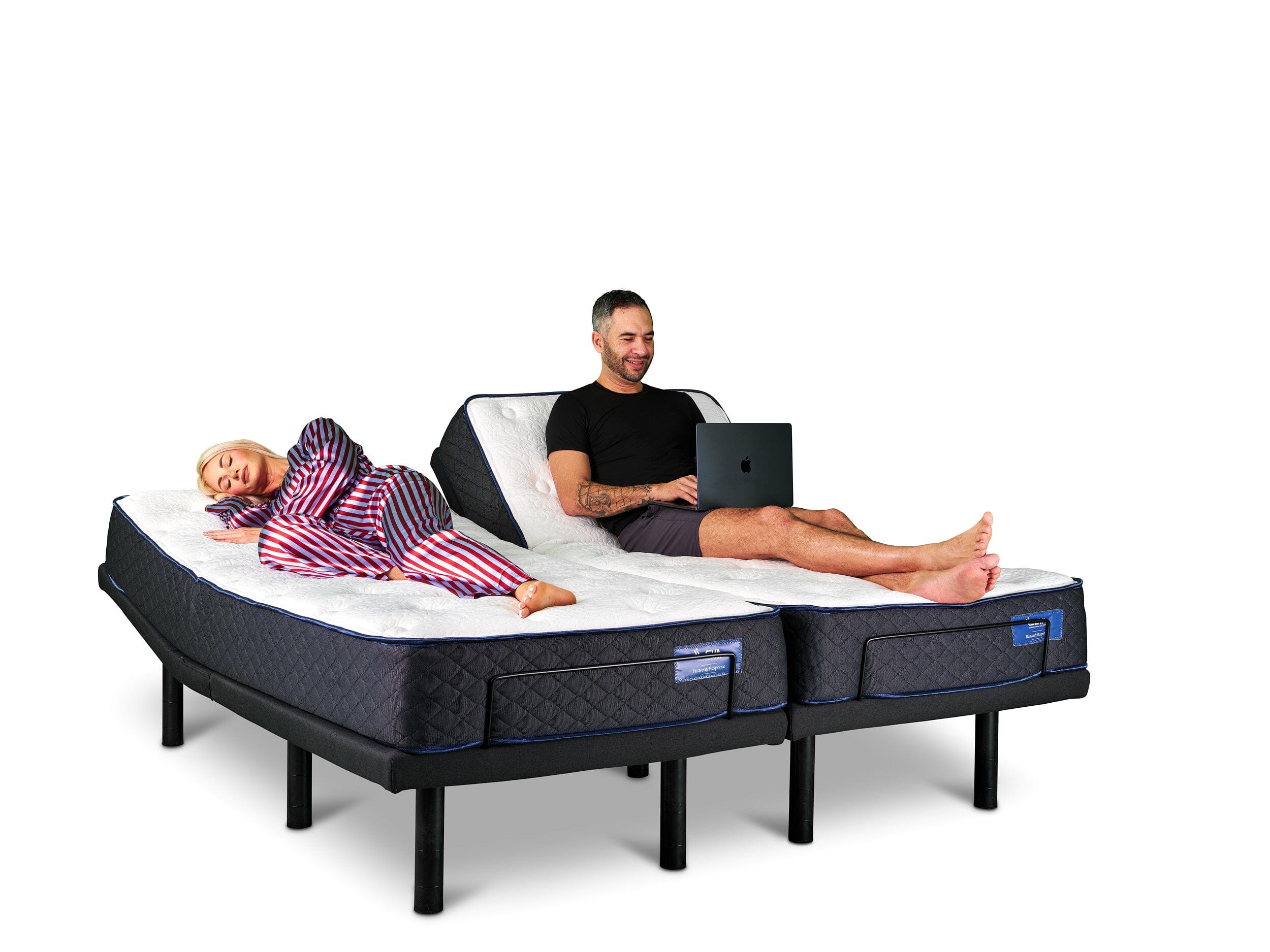
The split configuration gives each partner independent control, which matches the reality that one partner may need elevation to reduce snoring while the other prefers a flat surface, with minimal motion transfer and fewer sleep interruptions. Leva’s specialized bedding supports this setup with fitted sheets that use extra elastic and remote pockets tailored to adjustable bases.
Consider Sarah and Mike, a couple from La Jolla who struggled with Mike’s snoring for years. After switching to Leva’s split queen system, Sarah reports uninterrupted sleep, while Mike’s snoring decreased by 80% with a gentle 15-degree elevation. The quiet motors allow these adjustments without waking either partner.
2. Tempur-Pedic Ergo Smart Base
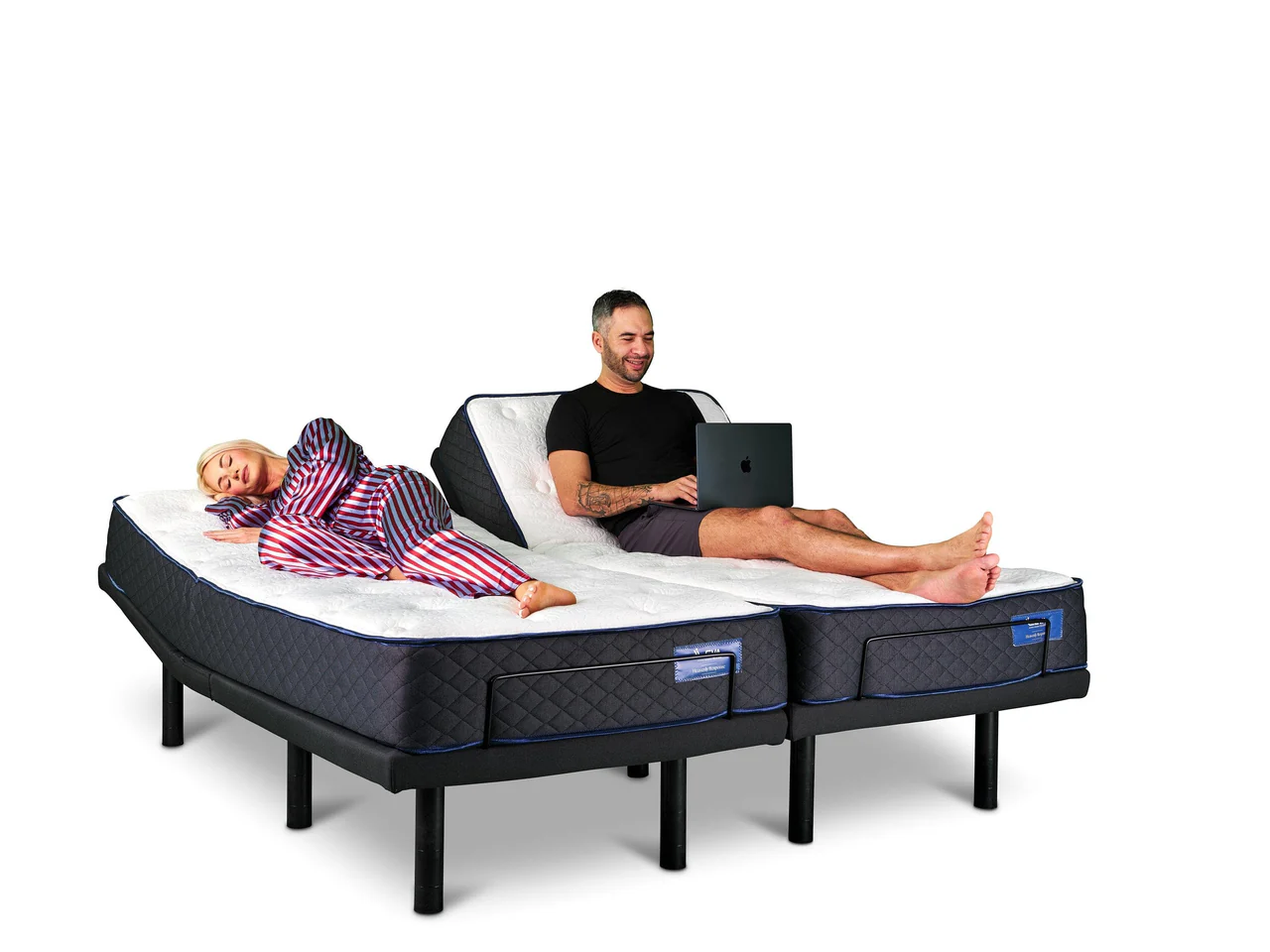
Tempur-Pedic’s Ergo Smart Base delivers dependable anti-snore positioning through preset elevation modes, available in split King and California King sizes. A one-touch anti-snore preset raises the head section to reduce airway obstruction and lessen snoring. The system, however, does not include AI detection or a split queen option, which sets Leva Sleep apart for couples in smaller spaces.
The Ergo Smart Base adds massage functions and under-bed lighting, yet its motors operate with more noticeable noise than Leva’s German engineering. The premium price range of $2,100–$4,200 reflects brand positioning more than specialized anti-snoring innovation.
3. Saatva Lineal Adjustable Base
Saatva’s Lineal base offers solid anti-snoring support through programmable positions and split King and California King configurations. Preset elevation angles aim to improve airflow and reduce snoring intensity for many users. The base, however, stops at manual presets and does not offer AI detection or app-based micro-adjustments that define newer anti-snore systems.
Saatva highlights luxury materials and craftsmanship, yet its snoring relief remains tied to user-controlled positioning. The $1,045–$2,598 price range places it in the premium tier without the couples-focused design depth that Leva Sleep provides.
4. Sleep Number 360 Smart Bed
Sleep Number 360 FlexFit smart bases feature Partner Snore technology on Split King and FlexTop King sizes, which lets you manually raise your partner’s head with a button press to reduce snoring. This feature introduces helpful partner control, yet the broader system focuses more on firmness adjustment than on targeted anti-snore elevation.
The split king configuration supports independent firmness settings, but snoring relief relies on air chamber changes instead of the elevation methods that research identifies as especially effective. Full anti-snore functionality often pushes total system pricing above $5,000.
5. Ghostbed Adjustable Base
Ghostbed’s adjustable base supplies basic anti-snore support through manual head elevation. The split king configuration allows each partner to adjust independently, though the base does not include dedicated anti-snore presets or automated detection. Couples receive fundamental elevation benefits but not advanced technology.
Ghostbed focuses on affordability and broad retail access, yet its snoring performance remains modest compared to specialized systems. The $999–$1,998 price range reflects core functionality rather than a complete couples-focused anti-snore solution.
6. Leggett & Platt Prodigy 2.0
Leggett & Platt’s Prodigy 2.0 delivers dependable mechanical elevation for snoring relief in a split king setup. Preset positions aim to improve breathing and reduce snoring intensity for many sleepers. The base uses standard motors that create more audible noise than higher-end alternatives, which can matter for light sleepers.
The Prodigy 2.0 offers solid value in the $1,500–$2,500 range, yet it does not include specialized anti-snore technology or deep couples-centric design. It suits couples who want basic elevation benefits and can accept standard motor noise levels.
7. Lucid L300 Adjustable Base
Lucid’s L300 base offers entry-level snoring relief through simple head elevation in split configurations. Basic preset positions aim to reduce snoring, though they lack the fine-tuned precision and quiet operation of premium systems. The L300 works well for budget-conscious couples who want a first step beyond a flat mattress.
At $345–$600, the L300 stands as the most affordable option on this list for couples addressing snoring. The basic motor design and limited presets, however, provide only modest improvement over traditional flat sleeping surfaces.
How Adjustable Bed Bases Reduce Snoring for Couples
Adjustable bed bases reduce snoring by applying proven elevation principles. As noted earlier, raising the head and upper body helps keep airways open, yet the underlying mechanism involves gravity and anatomy. Elevation shifts the tongue and soft tissues forward, which reduces airway narrowing and vibration that create snoring sounds.
Split configurations add a key advantage for couples by enabling independent customization so one partner can elevate while the other remains flat, with minimal motion transfer. This independence solves a common conflict: the snoring partner needs elevation, while the other may sleep best on a flatter surface. Split bases resolve this tension without separate beds, which preserves the physical closeness many couples value.
Advanced systems build on these fundamentals with AI technology that detects snoring patterns and makes micro-adjustments throughout the night. Leva Sleep’s upcoming AI features will refine head positioning automatically, which represents the next stage in anti-snore bed design.
Buying Guide: Choosing an Adjustable Bed for Snoring Couples
Couples choosing an adjustable bed for snoring relief should focus on split configurations, motor quality, anti-snore features, and mattress compatibility. Split queen bases like Leva Sleep’s exclusive model suit smaller bedrooms while still providing independent control for each partner. Split king setups offer maximum space and adjustment range but require a larger room footprint.
Motor quality directly affects sleep continuity, since whisper-quiet German motors like those in Leva Sleep systems allow adjustments without waking either partner. Budget ranges typically start near $1,500 for basic elevation and can exceed $5,000 for AI-enabled systems. Within this landscape, Leva Sleep delivers luxury-level features at 30–50% below comparable competitors through a direct-to-consumer model, which positions its advanced technology in a mid-range price tier instead of the highest bracket.
Mattress compatibility also matters, as many experts recommend zero-gravity positioning to support airway opening and spinal alignment. Bedding designed specifically for adjustable bases prevents issues such as fitted sheets slipping during elevation changes.
FAQ
Do adjustable beds stop snoring?
Adjustable beds significantly reduce snoring for many people by elevating the head and upper body to keep airways open during sleep. This elevation limits throat tissue collapse from gravity, which addresses a primary mechanical cause of snoring. Results vary by individual, yet most users see meaningful improvement at elevation angles between 7 and 15 degrees. Leva Sleep’s systems support this range with precise controls and upcoming AI detection that maintains effective positioning.
What is the best split queen adjustable bed for couples snoring?
Leva Sleep offers the market’s only split queen adjustable bed built specifically for couples dealing with snoring. The split queen configuration combines independent elevation control with a space-efficient footprint, so one partner can use an ideal anti-snore angle while the other keeps preferred settings. This size solves the common challenge of limited bedroom space while preserving the benefits of split adjustability.
What anti-snore technology will be available in 2026?
Anti-snore technology in 2026 will center on AI-powered detection systems that identify snoring patterns and adjust head position automatically. Leva Sleep’s upcoming AI anti-snore mode reflects this direction, using sensors to detect snoring onset and then gradually change elevation to keep airways open without waking either partner. This continuous, automated adjustment removes the need for manual changes during the night.
How does Leva Sleep compare to Tempur-Pedic for snoring?
Leva Sleep delivers more specialized anti-snoring support than Tempur-Pedic by focusing on couples, using whisper-quiet German motors, and offering a unique split queen size. Tempur-Pedic provides dependable elevation, yet Leva Sleep’s adjustable bed focus produces more advanced anti-snore features at substantially lower prices. Upcoming AI detection and years of couples-centered experience give Leva an edge over general mattress brands.
Is a split king adjustable bed worth it for snoring?
Split king adjustable beds often provide strong value for couples who need snoring relief and maximum flexibility. This configuration allows one partner to use precise anti-snoring elevation while the other maintains a different position, which removes nightly compromise. Independent motion isolation limits disturbances during adjustments, and the larger surface supports varied sleeping positions. For couples with enough bedroom space, split king systems frequently represent the most capable option for snoring management.
Conclusion: Ending Couples Snoring with the Right Split Adjustable Bed
The most effective adjustable bed frames for couples in 2026 combine proven elevation science with advanced technology and split designs that protect relationship closeness. Leva Sleep leads this space with its exclusive split queen option, whisper-quiet German motors, upcoming AI anti-snore detection, and deep couples expertise built over years of focused work.
Alternatives such as Tempur-Pedic and Saatva offer helpful elevation but stop short of Leva Sleep’s specialized couples solutions and stronger value. Leva’s direct-to-consumer model and white-glove delivery create a smooth experience from consultation through setup.
Ready to end snoring disruptions? Schedule your personalized split queen consultation in our La Jolla showroom or start your online assessment now to restore peaceful, shared sleep.