Written by: Matthew Timmins, Founder and Managing Director, Leva Sleep
Key Takeaways
- Smart adjustable bases work best with flexible mattresses such as memory foam, latex, or pocketed-coil hybrids that bend cleanly without fighting the base or wearing out early.
- The most reliable mattress thickness for adjustable bases falls between 10 and 13 inches, which balances pressure relief with flexibility and platform stability.
- Split King or Split Queen setups let each partner adjust their side independently while limiting motion transfer and preventing bunching along the center seam.
- Breathable covers, open-cell foams, and optional heating or cooling pads help manage temperature when elevation compresses foam layers and traps heat.
- Leva Sleep offers US-made mattresses and accessories engineered specifically for adjustable bases; shop online or visit the La Jolla showroom today to build a complete system.
1. Mattress Types That Work With Smart Bases
Not every mattress construction tolerates repeated bending. Memory foam compresses and expands without resistance, making it the most forgiving construction for frequent position changes and the material that contours most naturally to a base's movements. Latex offers comparable flexibility with more responsive bounce, though it behaves differently under repeated articulation than foam does.
Hybrid mattresses built with individually wrapped pocketed coils are also compatible with adjustable bases for long-term use, because the independent coils flex with the base rather than resisting it. Traditional connected-coil innersprings are not suitable, because the rigid coil network fights the base's movement and accelerates wear on both the mattress and the motor. When evaluating a hybrid, confirm that the coil layer uses individually pocketed springs, not a continuous or Bonnell coil system.
Leva Sleep's mattress lineup reflects these requirements. The company offers both all-foam and pocketed-coil hybrid options that are engineered specifically for adjustable bases, not adapted from flat-bed designs after the fact.
2. Ideal Mattress Thickness for Adjustable Bases
Once you select a compatible construction type, thickness becomes the next factor that affects flexibility and motor performance. Many manufacturers recommend a mattress thickness of 10 to 12 inches for use with adjustable beds, because thicker mattresses can reduce flexibility and durability when the base is repeatedly adjusted. A mattress in the 10–13 inch range usually provides enough comfort layers for pressure relief without adding so much mass that the motor must work against significant resistance at each elevation change.
Mattresses below 10 inches often lack sufficient support layers for heavier sleepers or those with joint pain. Mattresses above 13 inches introduce two additional problems. The edge of the mattress may overhang the base platform during elevation. Thick comfort layers can also become stiff enough that the mattress resists the articulation angle instead of conforming to it. Very thick latex mattresses over 14 inches may feel stiff on some bases. When reviewing product specifications, prioritize models in the 10–13 inch window and confirm that the manufacturer explicitly approves the mattress for adjustable base use.
3. Coil Construction Details That Protect Your Base
Individually wrapped pocketed coils flex independently during elevation changes, while traditional connected-coil innersprings risk damage under the same conditions. For couples using a split base, independent coil movement becomes even more important. Each side of the mattress must articulate on its own without transmitting tension across the center seam to the other side.
When inspecting a hybrid mattress, ask the manufacturer for the coil gauge and the coil count per square foot. A lower gauge number indicates a thicker, more durable wire that better withstands the repeated flexing an adjustable base demands. Reinforced edges in mattresses help prevent sagging when sections are elevated on adjustable bases, supporting long-term stability during repeated use. Beyond the coils themselves, edge reinforcement often separates mattresses designed for adjustable bases from models adapted from flat-bed production lines.
Criteria 1 through 3, which include construction type, thickness, and coil design, establish whether a mattress can physically survive on an adjustable base. A mattress that passes all three checkpoints is ready for evaluation on the configuration and comfort criteria that follow. Explore Leva Sleep's adjustable-base mattress collection to see how these construction details perform in real-world use.
4. Split Configurations for Independent Control
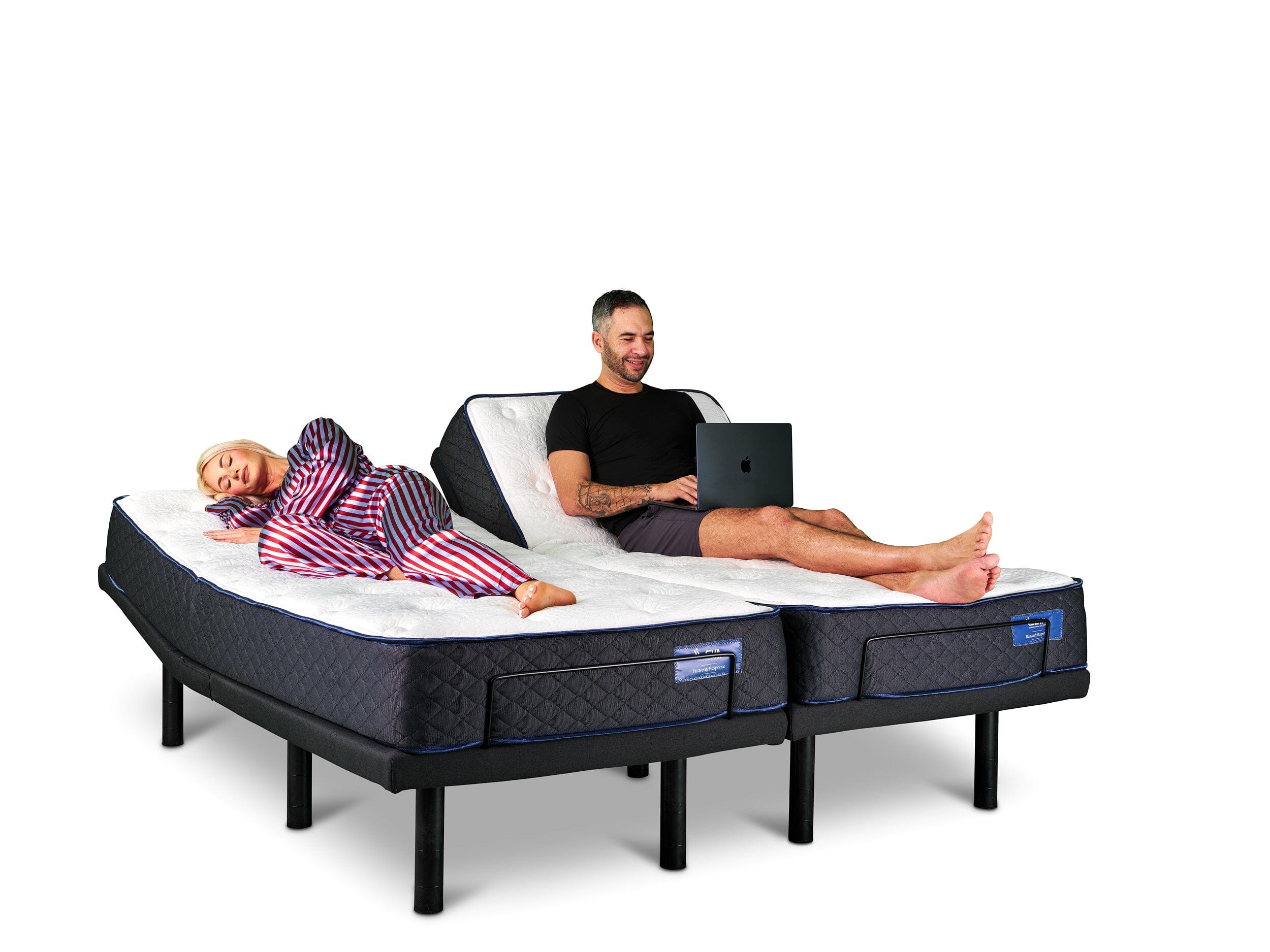
A Split King configuration consists of two Twin Long mattresses that together form a king-sized bed, enabling each partner to select an independent mattress feel while sharing the same bed frame. The Split King format uses two separate Twin XL mattresses, typically on split adjustable bases, to minimize motion transfer between partners so each side can be adjusted independently without disturbing the other.
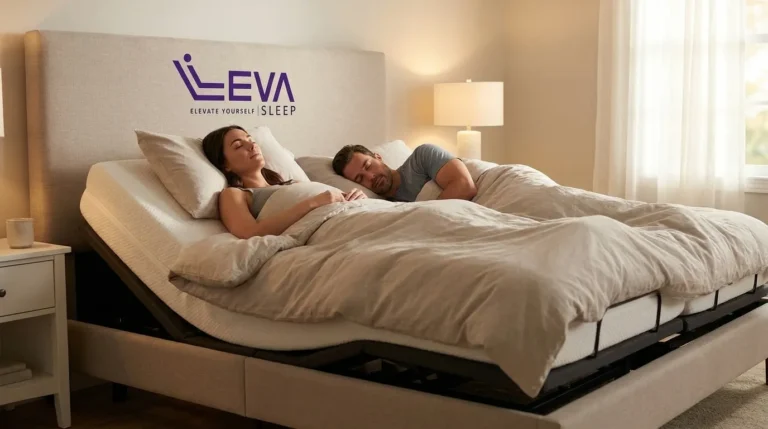
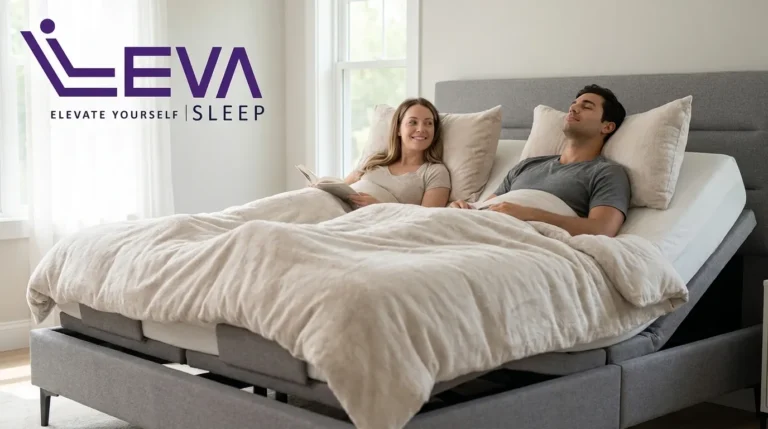
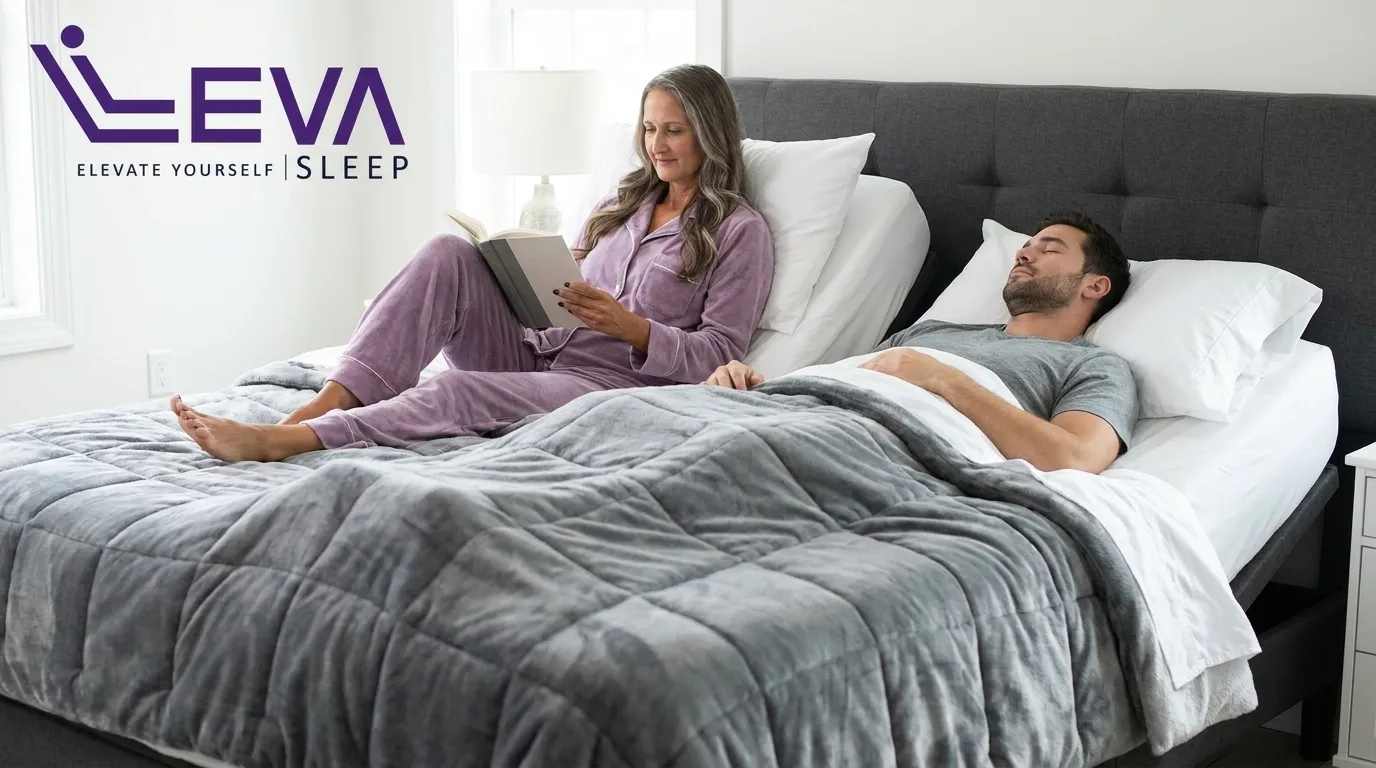
When paired with a Split King adjustable base, each sleeper can independently elevate their head and legs without affecting their partner's position, which allows one partner to sit upright for reading or working while the other remains flat. For couples in smaller rooms, Leva Sleep also offers a Split Queen configuration, a format that most general mattress retailers do not carry. Both split formats eliminate the bunching and resistance that occur when a single unsplit mattress sits on a dual-zone base and must flex in two different directions at once.
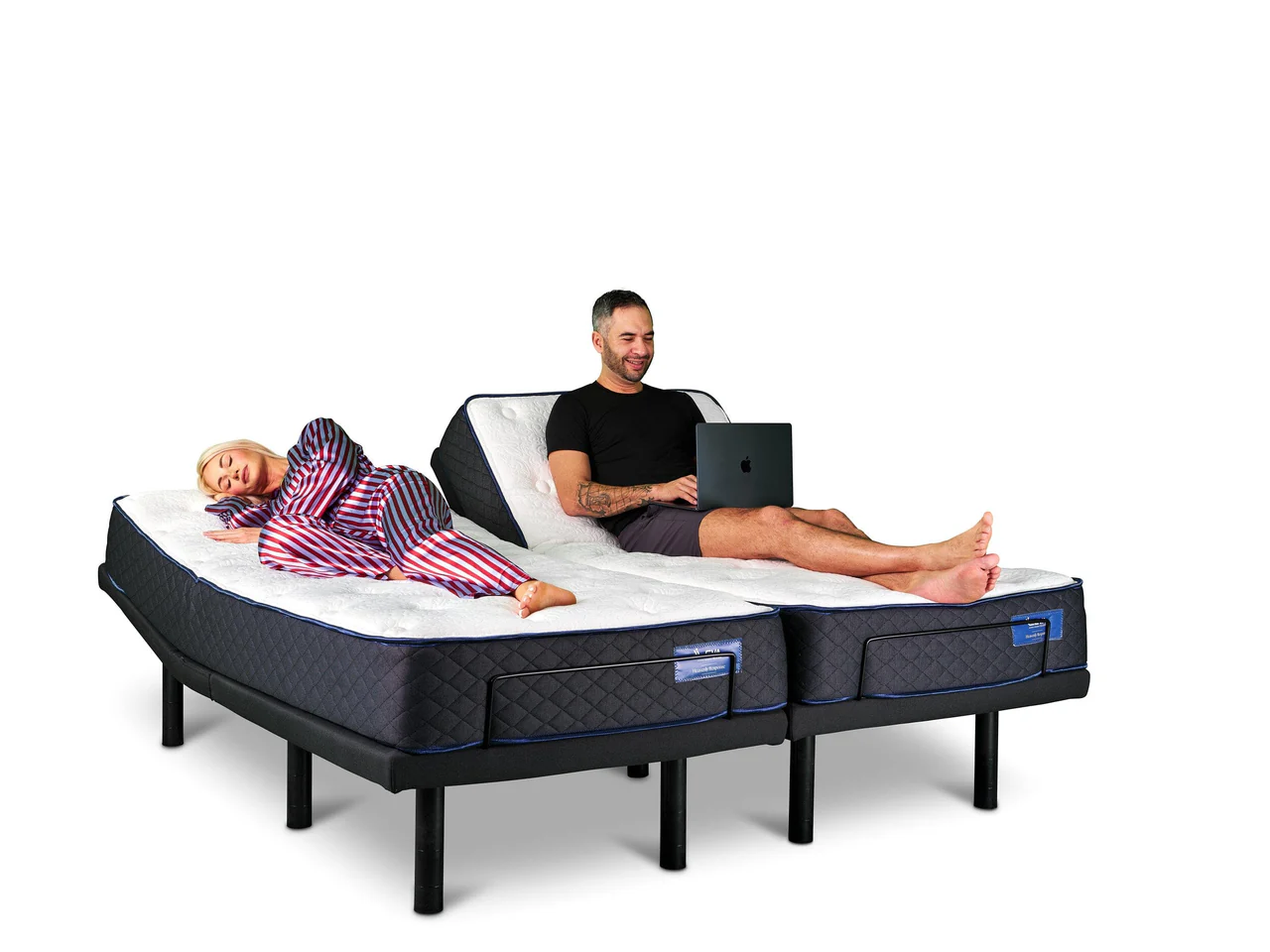
When evaluating split compatibility, confirm that both mattress halves share the same profile height. Both mattresses in a Split King pairing typically have matching heights to maintain a seamless sleep surface. A height mismatch creates a ridge at the center seam that disrupts sleep and accelerates wear on the mattress covers.
5. Temperature Regulation on Elevated Surfaces
Adjustable bases change the airflow dynamics around a mattress. When the head or foot section elevates, the mattress compresses at the fold points, which can trap heat in foam layers that would otherwise dissipate through a flat surface. Mattresses intended for adjustable bases benefit from breathable cover fabrics, open-cell foam constructions, or phase-change material infusions that absorb and release body heat as the sleeper's position changes through the night.
For couples with different temperature preferences, a common source of sleep disruption, Leva Sleep's systems integrate a heating and cooling pad that allows each partner to set an independent sleep temperature. This accessory works alongside the split base configuration so that temperature regulation, like elevation, remains fully individualized. When evaluating a mattress for temperature performance, look for certifications or manufacturer disclosures about foam cell structure and cover breathability rather than relying on marketing language alone.
6. Accessories That Keep Split Systems Working Smoothly
A mattress that meets every structural criterion can still underperform if the surrounding accessories are not designed for an adjustable base. Standard fitted sheets are cut for flat mattresses and often lack the elastic depth to stay anchored when the head or foot section rises. Deep-pocket sheets with reinforced elastic around the full perimeter form the minimum requirement. Leva Sleep engineers its fitted sheets with extra elastic specifically to prevent the sheet-popping failures that disrupt sleep mid-adjustment.
Duvet clips keep the top layer of bedding from bunching toward the foot of the bed when the head section elevates. A mattress protector should remain flexible enough to move with the mattress without creating pressure ridges at the fold points. Remote pockets that attach to the side of the base keep controls accessible so the sleeper does not need to search under the covers after a position change. These accessories are not cosmetic additions. Each one addresses a specific failure mode that standard bedding introduces into an otherwise well-configured sleep system.
Criteria 4 through 6 cover configuration, comfort, and accessory choices that shape daily usability. A split-compatible mattress paired with purpose-built accessories removes many of the small frustrations that often appear on smart adjustable bases. See Leva Sleep's complete adjustable base systems, where mattresses and accessories are engineered to work together from day one.
7. Durability Under Repeated Adjustment
An adjustable base may cycle through dozens of position changes per week. Over months and years, that repetition exposes weaknesses in foam density, coil gauge, and cover stitching that might never appear on a flat bed. When evaluating durability, request the foam density specification. Higher-density foams, typically 4 lb/ft³ or above for memory foam comfort layers, resist compression fatigue better than lower-density alternatives. For hybrid mattresses, a lower coil gauge indicates a thicker wire that maintains its shape under repeated flexing.
Warranty language often serves as a practical proxy for manufacturer confidence in durability. A warranty that explicitly covers use with adjustable bases and addresses sagging or indentation thresholds provides more meaningful protection than a general comfort guarantee. Leva Sleep's US-made mattresses are designed and warranted for adjustable base use, and the company's direct-to-consumer model means warranty claims are handled without the intermediary friction common at general furniture retailers.
8. Medical Positioning and Therapeutic Support
A durable mattress that survives years of repeated adjustment only delivers full value when it also supports therapeutic positioning. For couples managing snoring, mild sleep apnea, acid reflux, or post-surgical recovery, the mattress must support elevation angles without creating pressure points at the fold. A mattress that bunches or gaps at the head articulation point undermines the therapeutic benefit of the elevated position. Smart bases that automatically raise the head approximately 12 degrees when snoring is detected work best with mattresses that adapt smoothly to that angle.
Leva Sleep's adjustable bases include anti-snore positioning that gently elevates the head to open airways, and the company's mattress pairings are selected to maintain stable support at therapeutic angles. Lumbar control and pillow tilt features on higher-end Leva bases further refine the positioning available for joint pain and spinal alignment needs. When evaluating a mattress for medical positioning, confirm that the manufacturer specifies the maximum safe elevation angle and that the mattress cover and foam layers are rated for sustained use at that angle.
Frequently Asked Questions
Do adjustable beds require a special mattress?
Adjustable beds do not require a proprietary mattress, but they do require a mattress with specific construction characteristics. The mattress must be flexible enough to bend repeatedly at the head and foot articulation points without the internal structure resisting the movement or breaking down over time. Memory foam, latex, and pocketed-coil hybrids usually meet this requirement. Traditional innerspring mattresses with connected coil systems do not, because the rigid coil network fights the base's movement and accelerates wear on both the mattress and the motor. Any mattress placed on an adjustable base should carry explicit manufacturer approval for that use.
What happens if you use a standard mattress on an adjustable base?
A standard mattress placed on an adjustable base will typically show one or more failure modes within months of regular use. The most common outcomes include bunching at the fold points, slippage off the platform during elevation, and premature foam breakdown caused by repeated bending against the material's natural resistance. Motor strain often increases as the base works against a mattress that was not designed to flex. In split configurations, an unsplit standard mattress will resist independent movement on each side, which effectively negates the purpose of the dual-zone base. These failures waste the investment in the base and often require an earlier-than-expected mattress replacement.
What is the best mattress thickness for a split adjustable base?
The practical target range for most split adjustable base configurations falls between 10 and 13 inches, as discussed in the thickness section above. Within that range, the optimal thickness for a specific sleeper depends on body weight, preferred firmness, and the base's maximum elevation angle. Heavier individuals generally benefit from the upper end of the range, where additional support layers can be incorporated without compromising the mattress's ability to flex with the base.
How often should a mattress on an adjustable base be replaced?
A mattress on an adjustable base that is used for frequent position changes will typically experience more cumulative stress than one on a flat foundation. The replacement interval depends on foam density, coil gauge, and how many elevation cycles the mattress undergoes per week. As a practical benchmark, inspect the mattress annually for visible sagging, indentation, or cover wear at the fold points. A mattress that shows indentation exceeding one inch, persistent bunching at the articulation zones, or audible resistance during elevation has likely reached the end of its useful life on an adjustable base. Purchasing a mattress with a warranty that explicitly covers adjustable base use provides a documented standard for replacement eligibility.
Are latex mattresses compatible with smart adjustable beds?
Latex mattresses are compatible with smart adjustable beds when kept within the recommended thickness range. Latex is more rigid than memory foam but remains flexible enough to contour to the base's movements when the mattress profile stays on the thinner side of the 10–13 inch window. As noted in the thickness discussion, latex mattresses above 14 inches can feel stiff on some bases. This stiffness is more pronounced with natural latex, which is denser than many synthetic alternatives, though natural latex tends to be more durable under repeated flexing. When evaluating a latex mattress for an adjustable base, confirm the manufacturer's explicit approval for that use and verify that the mattress thickness falls within the range the base motor is rated to handle.
Schedule a consultation at Leva Sleep's La Jolla showroom to review latex, foam, and hybrid options that pair well with smart bases.
Conclusion
The eight criteria above form a complete evaluation framework for any couple assessing mattress compatibility with a smart adjustable base. Mattress construction type and split configuration compatibility carry the most weight. A mattress that cannot flex without internal damage will fail regardless of its other qualities, and a mattress that is not split-ready cannot deliver the independent positioning that makes a dual-zone base worthwhile for couples with different sleep needs.
Leva Sleep addresses every criterion in this framework through a single integrated system. The company offers US-made memory foam and pocketed-coil hybrid mattresses engineered for adjustable base use, Split King and Split Queen configurations with whisper-quiet German motors, purpose-built accessories that prevent sheet slippage and bunching, heating and cooling pad integration for individual temperature control, and anti-snore positioning for medical needs. White-glove delivery and professional setup help ensure that every component works together from the first night. For couples who have experienced the frustration of a standard mattress on an adjustable base, or who want to avoid it entirely, the most reliable starting point is a consultation with a specialist rather than a general retailer. Schedule a consultation at Leva Sleep's La Jolla showroom to build a system tailored to your specific sleep needs.