Written by: Matthew Timmins, Founder and Managing Director, Leva Sleep
Key Takeaways
- Clarify each partner’s specific sleep challenges, such as snoring, pain, or temperature differences, to match smart bed features to real needs.
- Choose split adjustability so each partner controls head, foot, and firmness settings on their own side without waking the other.
- Focus on practical features like anti-snore technology, split temperature control, and sleep tracking that support personalized improvements.
- Test smart beds in-store and through app demos, then protect performance with regular updates, maintenance, and simple routines.
- Experience Leva Sleep’s split systems firsthand at the La Jolla showroom or explore the full collection online by visiting Leva Sleep.
10 Smart Bed Practices for Better Couple Sleep
- Define Your Sleep Needs as a Couple
- Prioritize Split Adjustability for Independent Control
- Seek Must-Have Features: Temperature Control, Tracking, Anti-Snore
- Test In-Store and Via App Demos
- Balance Budget with Long-Term Value and Accessories
- Master App Setup and Custom Positions
- Build Daily Routines with Anti-Snore Hacks
- Perform Regular Maintenance and Firmware Updates
- Troubleshoot Partner Sync and Common Issues
- Optimize for Health Outcomes Like Pain Relief and Apnea
1. Define Your Sleep Needs as a Couple
Start by clearly identifying each partner’s sleep challenges before you look at any smart bed. Sleep Foundation data shows that snoring affects approximately 44% of middle-aged men and 28% of middle-aged women, while the lifetime prevalence of low back pain is around 80% in adults, and 58.9% of patients seeking care for low back pain report that their sleep is disturbed by it.
Document specific issues by asking targeted questions about your nights together. For example, one partner may snore while the other is a light sleeper, which creates constant disruption. Different firmness preferences can cause nightly negotiations over mattress settings and positions. Some couples also manage medical conditions like sleep apnea or acid reflux that require elevated sleep positions for comfort and safety. Leva Sleep’s consultation process helps couples recognize these patterns so the chosen system supports both partners instead of forcing compromise.
2. Prioritize Split Adjustability for Independent Control
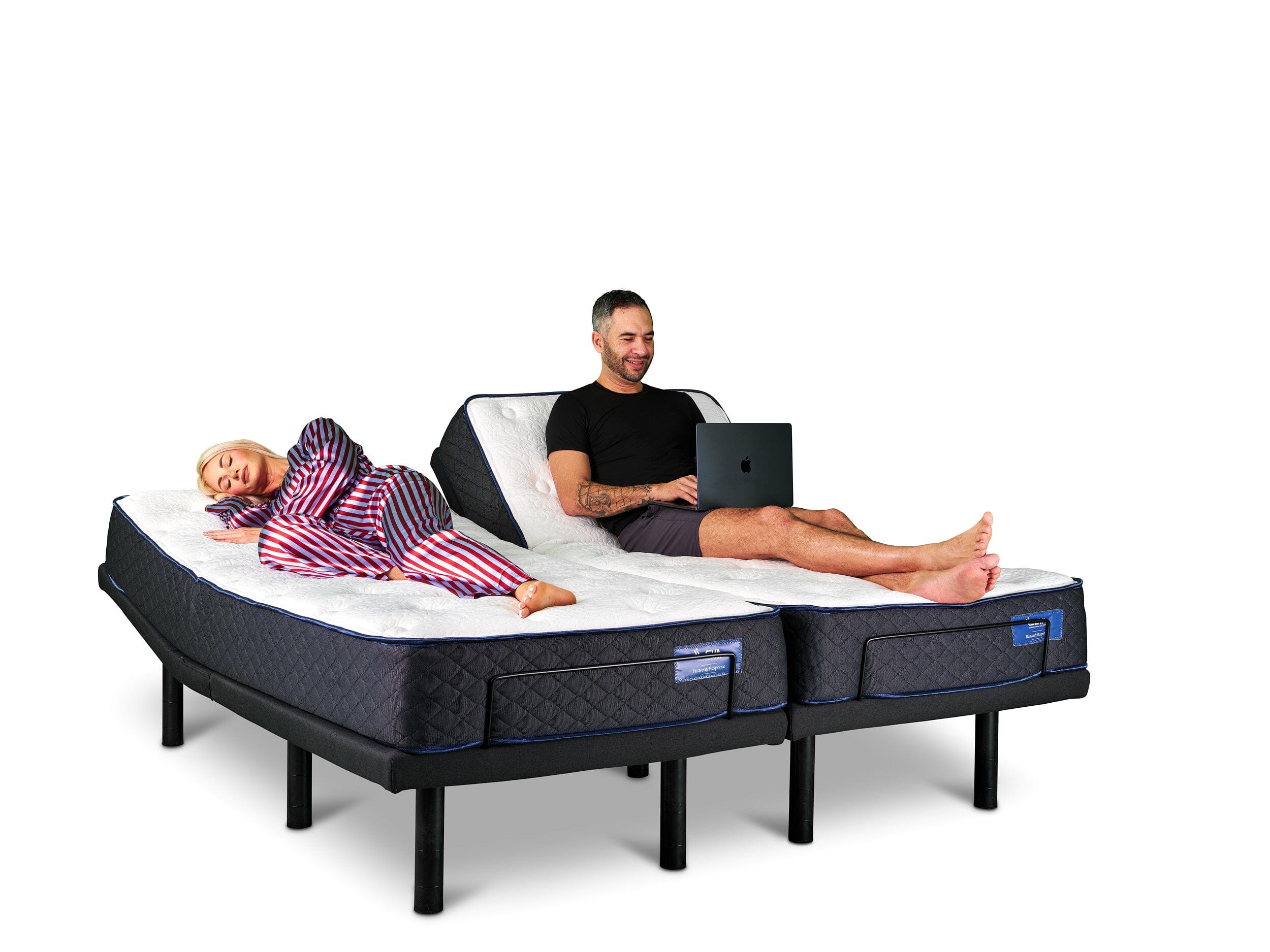
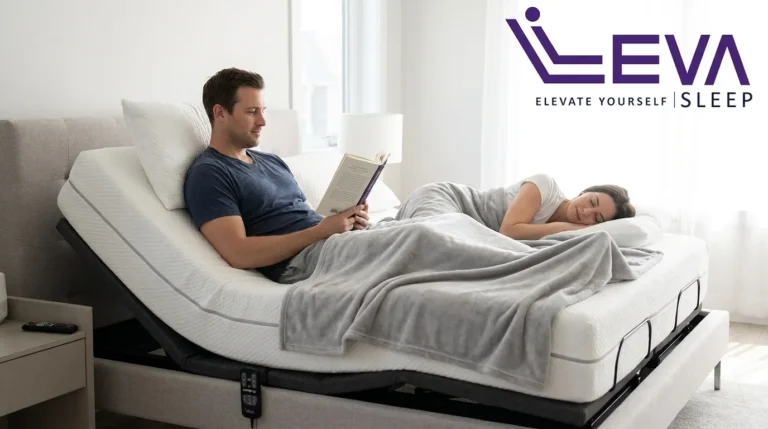
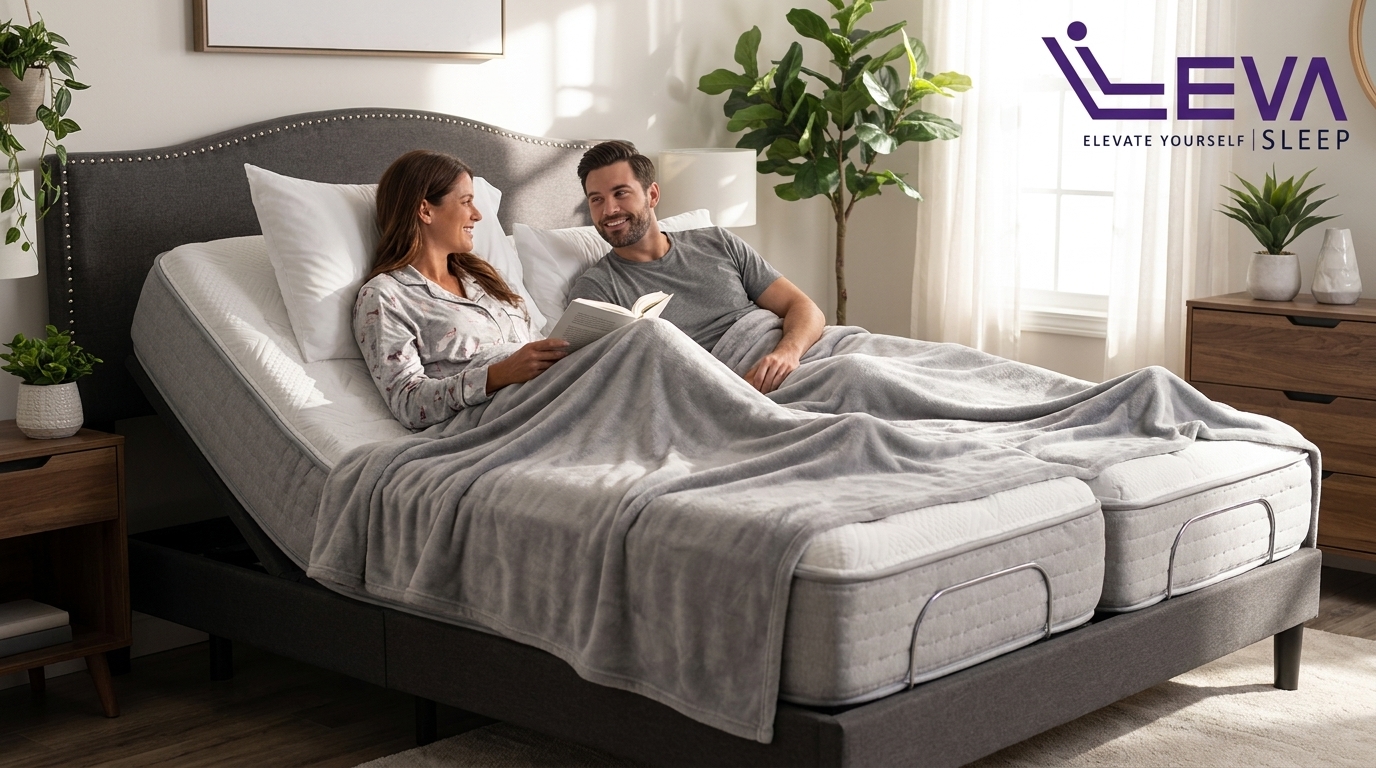
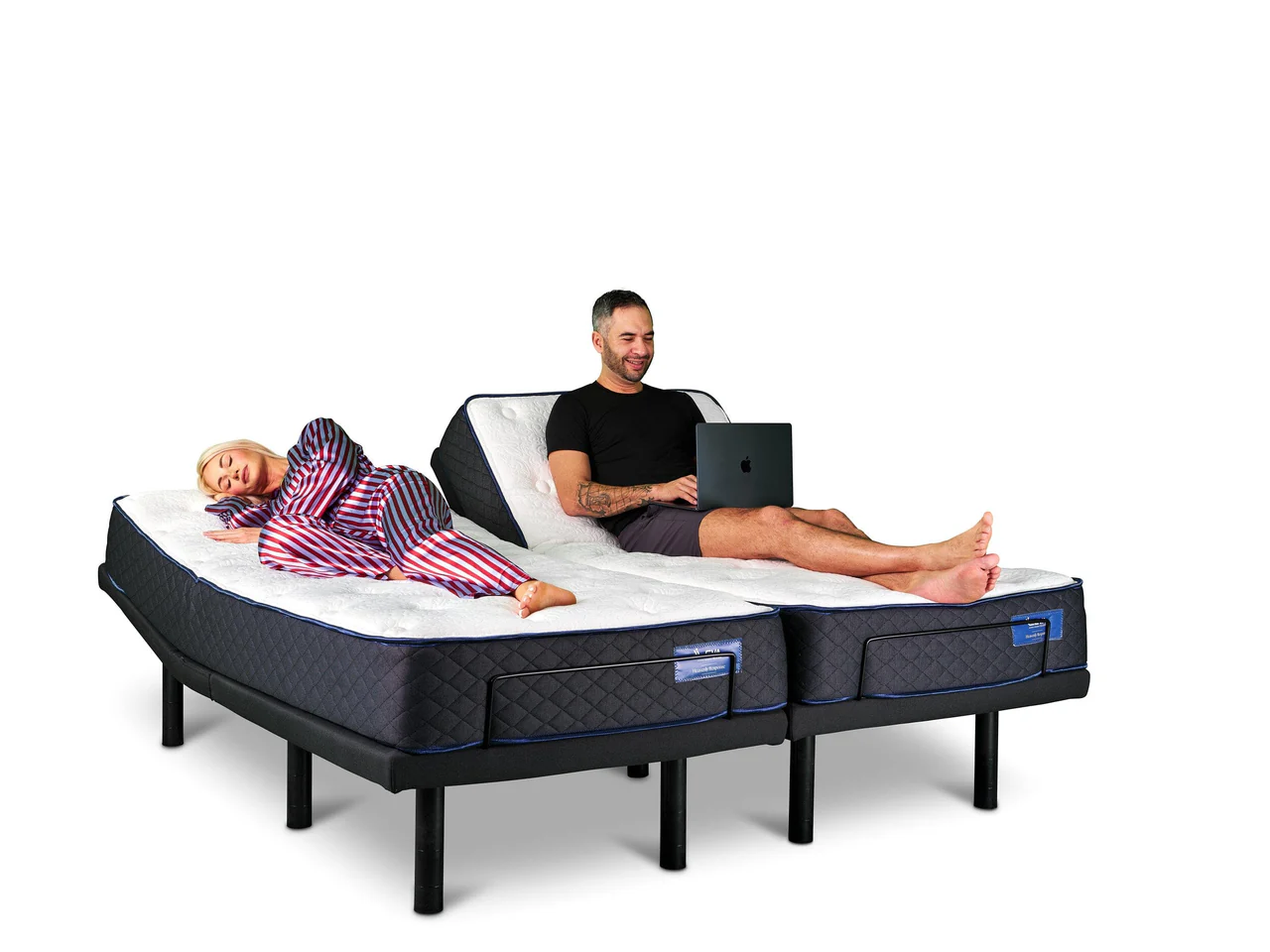
Make split adjustability a top priority if you and your partner have different sleep needs. Split systems allow each side of the bed to move independently, with separate controls for head elevation, foot elevation, massage, and firmness.
Leva Sleep’s Split Queen and Split King systems follow this design, using quiet, high-quality motors so one partner can adjust without waking the other. Basic adjustable beds move as a single unit, which forces both partners into the same position. Split systems avoid that problem. When one partner needs elevation for snoring reduction or pain relief, the other can stay comfortably flat or choose a different setting.
3. Seek Must-Have Features: Temperature Control, Tracking, Anti-Snore
Look for smart beds that solve real problems instead of just adding gadgets. Modern systems combine temperature control, sleep tracking, and anti-snore tools to reduce common disruptions for couples. Temperature regulation supports comfort for both partners, even when their ideal sleep climates differ.
| Feature | Couple Benefit | Leva Example |
|---|---|---|
| Anti-Snore Technology | Reduces partner sleep disruption | 2026 AI-powered micro-adjustments |
| Split Temperature Control | Individual climate preferences | Heating/cooling pads per side |
| Sleep Tracking | Data-driven improvement | App-integrated monitoring |
Leva Sleep’s upcoming anti-snore mode analyzes snoring patterns and makes subtle head elevation changes during the night. Early testing suggests this feature may reduce snoring incidents by 70 to 80 percent. This type of targeted adjustment reflects the next wave of smart bed innovation for 2026.
4. Test In-Store and Via App Demos
Plan time for hands-on testing before you commit to a smart bed. These systems combine adjustable bases, mattresses, and apps, so real-world experience matters more than reading specs.
Leva Sleep’s La Jolla showroom gives couples a chance to try different models, explore the app, and see how split controls feel in daily use. During a visit, you can test multiple sleep positions, listen to the quiet motor operation, and walk through the app interface step by step. This testing phase reduces the risk of costly mistakes and helps you confirm that the system fits both partners’ comfort and usability needs.
5. Balance Budget with Long-Term Value and Accessories
Evaluate smart beds by total long-term value, not just sticker price. Poor sleep can affect productivity, mood, and health, which often costs more over time than a higher-quality bed.
Leva Sleep offers premium smart bed systems at 30 to 50 percent less than comparable competitors like Sleep Number or Tempur-Pedic by removing middleman markups. The complete system approach includes specialized bedding such as extra-elastic fitted sheets, duvet clips for split positioning, and mattress protectors made for adjustable bases. This coordinated setup supports performance and durability. See how Leva Sleep’s direct pricing delivers premium quality at meaningful savings by visiting the La Jolla showroom or shopping online.
Once you select the right smart bed, the next step is learning how to use it effectively every day. The following practices focus on setup, routines, and maintenance so you can get full value from your investment.
6. Master App Setup and Custom Positions
Treat the smart bed app as your control hub for personalized sleep. Proper setup includes creating individual profiles, saving preferred positions, and turning on helpful automations.
Leva Sleep’s app lets each partner store custom positions for reading, watching TV, sleeping, and recovery. The system remembers these preferences and can shift to them with a single tap or scheduled routine. Many couples create separate sleep positions for different health needs, such as a gentle incline for acid reflux or a zero-gravity setting for back pain relief. Over time, these presets make healthy positioning effortless.
7. Build Daily Routines with Anti-Snore Hacks
Consistent routines help your smart bed deliver better results night after night. Sleep hygiene research demonstrates that regular bedtime routines improve sleep quality by 25 to 30 percent.
Effective routines often include gradual position changes before sleep, coordinated temperature adjustments, and planned use of anti-snore settings. Many Leva Sleep customers report success with slight head elevation between 7 and 15 degrees for snoring reduction, combined with side-sleeping support. The goal is to find the smallest adjustment that delivers clear benefits while still feeling natural and comfortable.
8. Perform Regular Maintenance and Firmware Updates
Protect your smart bed investment with simple, regular maintenance. Key tasks include installing firmware updates, checking moving parts, and keeping the app in sync with your devices.
Leva Sleep provides clear maintenance schedules and remote support for common questions. Updates can add new features, refine algorithms, and improve compatibility with phones and tablets. The high-quality motors require little attention but still benefit from occasional inspection. Scheduled professional service visits can extend the system’s lifespan and help preserve warranty coverage.
9. Troubleshoot Partner Sync and Common Issues
Learn basic troubleshooting steps so small issues do not interrupt your sleep. Typical problems include app connectivity glitches, unexpected noise, or positions that no longer feel aligned.
Leva Sleep’s support resources address these concerns in straightforward steps. Bluetooth connections usually work best when devices stay close and run current software. New or increased motor noise can signal the need for lubrication or a service check. Position drift often improves after recalibration through the app. The split design already limits cross-partner disruption, and occasional synchronization checks keep both sides working smoothly.
10. Optimize for Health Outcomes Like Pain Relief and Apnea
Use your smart bed’s precision controls to support specific health goals. Elevation therapy can ease symptoms of conditions such as mild to moderate sleep apnea, especially for back sleepers.
Leva Sleep systems support several therapeutic positions, and each one targets different concerns. Zero-gravity positioning reduces pressure on joints and improves circulation, which helps with general pain relief and recovery. For digestive or breathing issues, head elevation between 15 and 30 degrees can ease acid reflux and support clearer airflow. When swelling is the main problem, leg elevation helps reduce fluid buildup and improves venous return. Work with your healthcare provider to choose the right positions, then use the smart bed’s controls to maintain them consistently.
Frequently Asked Questions
What is a smart bed?
A smart bed combines an adjustable base with app-controlled features such as elevation, temperature regulation, sleep tracking, and automated positioning. Unlike traditional mattresses, smart beds adapt to each sleeper and can address challenges like snoring, pain, or partner disturbances.
What’s the best adjustable smart bed for couples?
The most effective smart beds for couples offer split adjustability so each partner controls their own side. Leva Sleep’s Split Queen and Split King systems provide separate controls for head elevation, foot elevation, massage, and temperature. This design lets both partners improve their sleep without sacrificing comfort for the other.
How does a smart bed app work?
Smart bed apps connect to the base through Bluetooth and give you remote control over all major functions. Users can save custom positions, schedule routines, track sleep patterns, and change settings without getting out of bed. Advanced apps like Leva Sleep’s system also include anti-snore detection and gradual wake-up features.
What are the benefits of smart mattress temperature control?
Temperature control lets each partner choose a comfortable climate on their side of the bed. This feature can reduce night sweats, support deeper sleep stages, and prevent temperature-related wake-ups that many couples experience.
How does Leva Sleep compare to competitors?
Leva Sleep focuses exclusively on adjustable smart beds and offers 15 to 20 models, compared with only a few options at many general retailers. The company provides high-quality motors, split configurations including unique Split Queen designs, and strong value through direct-to-consumer pricing that undercuts many premium competitors.
Conclusion
Successful smart bed use starts with personalization and continues with consistent daily habits. These systems improve couple sleep by addressing root causes of conflict such as different comfort needs, snoring, pain, and temperature preferences.
Results depend on honest assessment of your challenges, a focus on split adjustability, and a commitment to ongoing fine-tuning through app controls and basic maintenance. A well-chosen smart bed can support better health, higher energy, and a more peaceful relationship.
Begin by mapping out your specific sleep needs as a couple, then explore how modern smart bed technology can address them. Start your sleep transformation by scheduling a consultation at Leva Sleep’s La Jolla showroom or browsing Leva’s smart bed systems online.