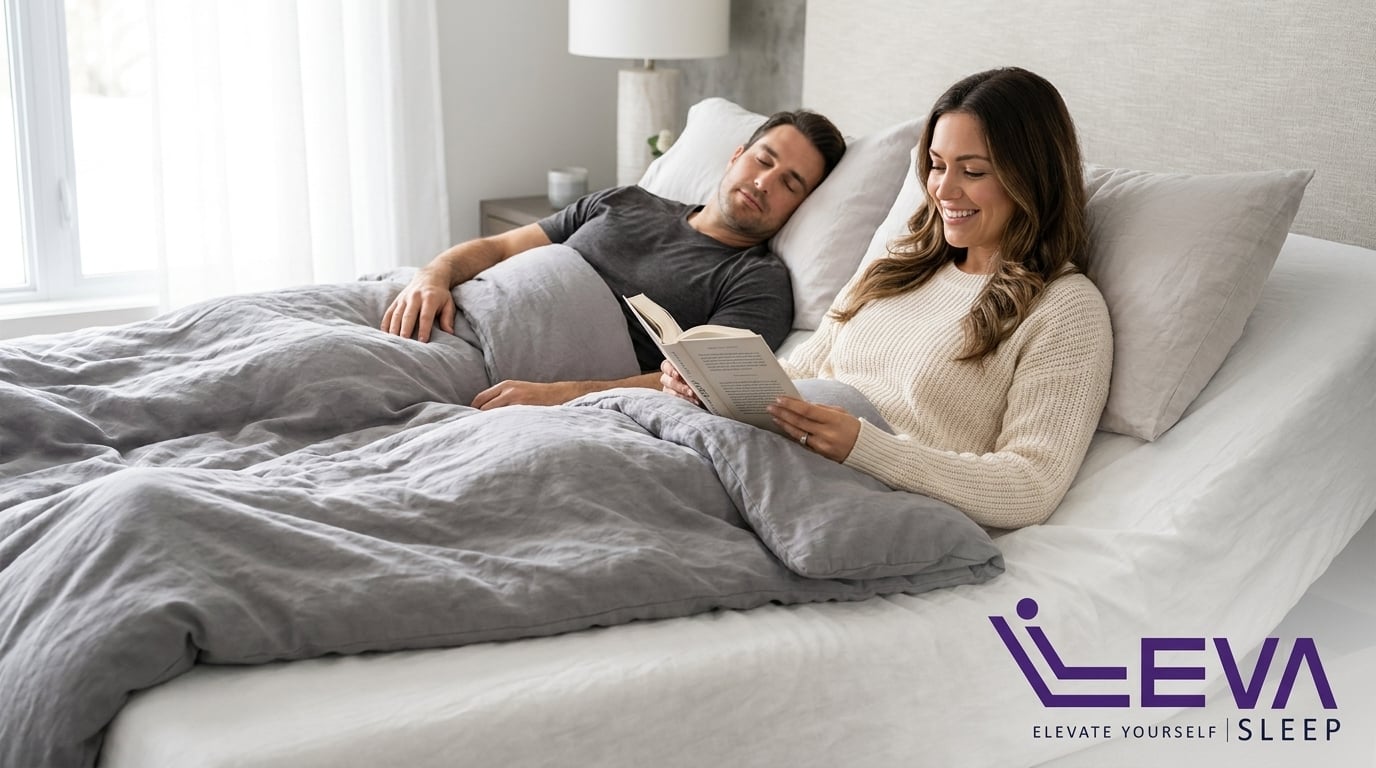
Written by: Matthew Timmins, Founder and Managing Director, Leva Sleep
Key Takeaways for Better Couple Sleep
- Split adjustable bases like Leva Sleep give each partner independent control over position, firmness, and elevation, so you can stay in the same bed comfortably.
- Dual-zone temperature pads solve hot-versus-cold conflicts by letting each partner set a different surface temperature.
- Anti-snore features and positioning wedges reduce awakenings by gently elevating the airway, with 2026 AI modes adding automatic adjustments.
- Wearables, white noise machines, smart pillows, and smart lighting round out your setup with tracking, sound masking, and circadian support.
- Leva Sleep offers premium split adjustable bases at 30–50% lower prices than many comparable competitors. Explore Leva Sleep systems today for comfortable, shared sleep.
The 8 Best Devices for Couples’ Sleep Quality
These eight device categories work together as a complete system for couples. Start with your bed base, then layer in temperature, tracking, and comfort tools as needed.
- 1. Leva Sleep Split Adjustable Bases
- 2. Temperature-Regulating Pads like ChiliPad
- 3. Wearable Sleep Trackers with Couple Sync
- 4. Anti-Snore Devices and Positioning Wedges
- 5. White Noise Machines for Partner Disturbances
- 6. Smart Pillows with Individual Adjustment
- 7. Smart Lighting and Sleep-Wake Dimmers
- 8. Vibration and Massage Bases
1. Leva Sleep Split Adjustable Bases for Couples
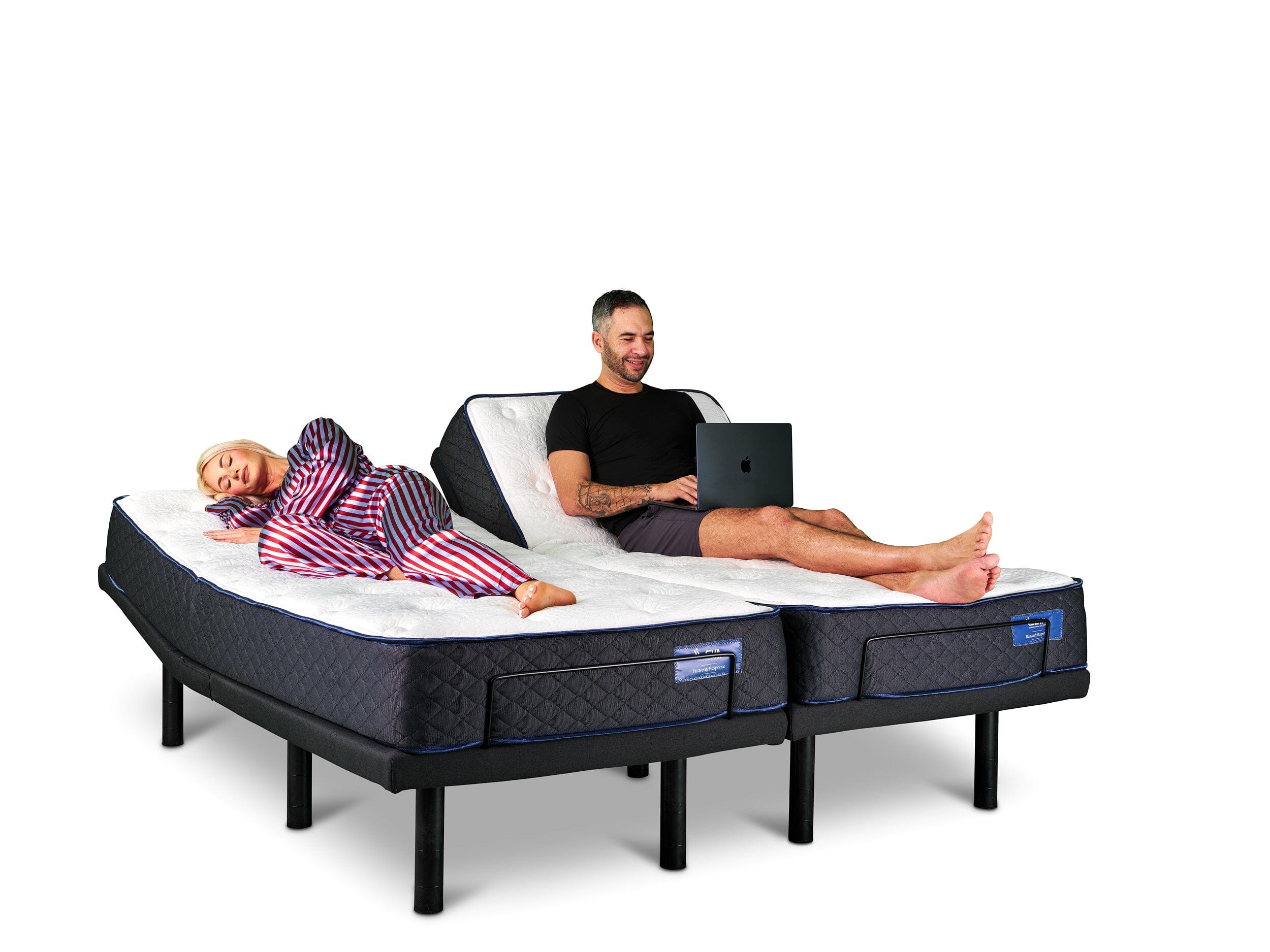
Leva Sleep split adjustable bases give couples personalized comfort without sacrificing a shared bed. These systems offer independent Split Queen and King configurations, so each partner can control elevation, massage, and lumbar support through the app. The upcoming 2026 anti-snore mode detects snoring and makes small head adjustments automatically, while quiet German motors keep movements smooth and discreet. Each base pairs with US-made mattresses and bedding designed to flex with adjustable frames, so the whole setup works as one system.
Leva helps couples avoid compromise on firmness, temperature accessories, or elevation needs. With over 25,000 customers, Leva Sleep delivers premium engineering at 30–50% lower prices than many comparable brands, including Sleep Number. The Split Queen option especially helps couples in smaller rooms who still want independent controls.
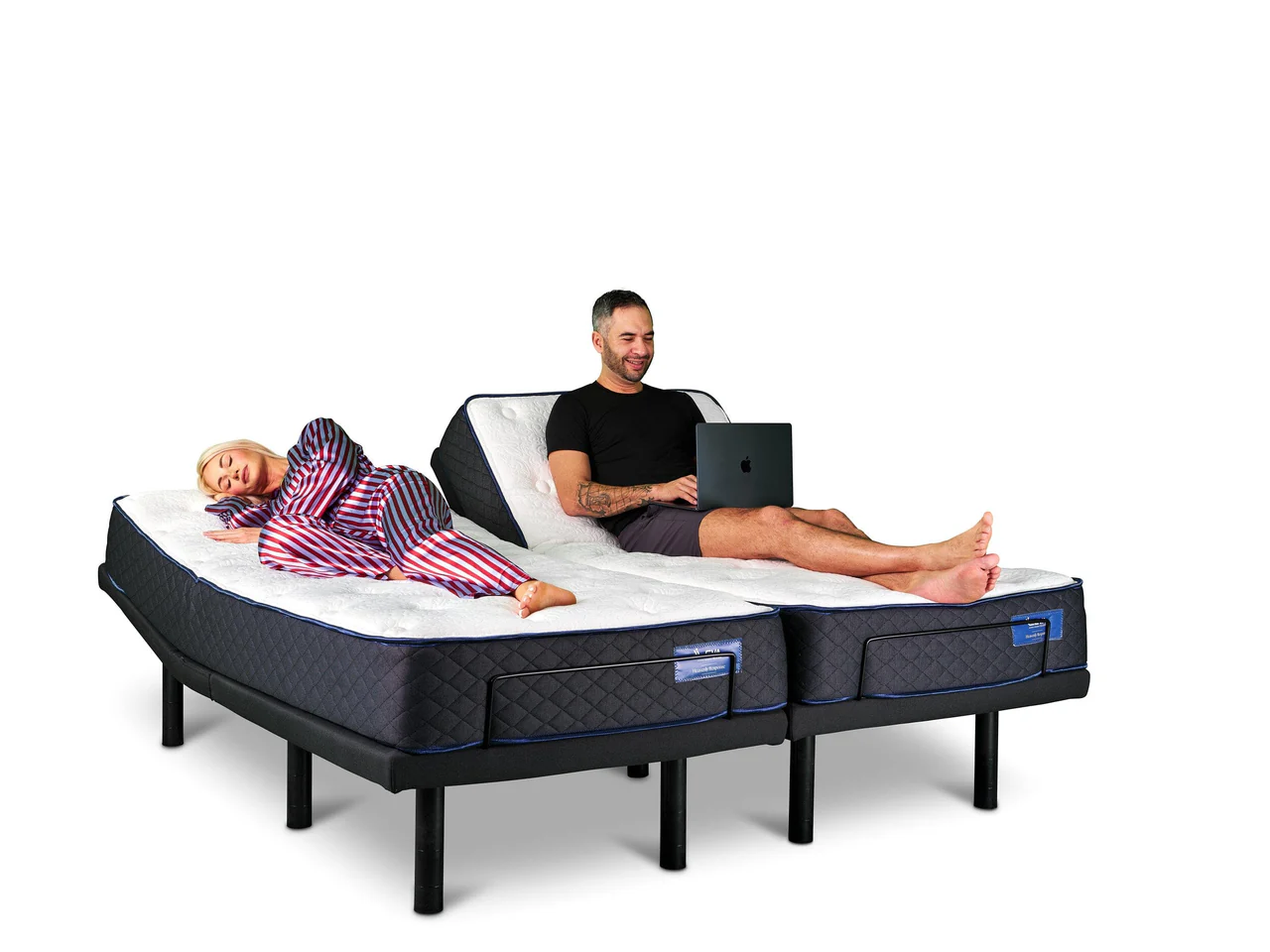
The comparison below highlights how Leva’s split bases stack up against major competitors on control options, noise, anti-snore features, and value.
| Feature | Leva Sleep | Sleep Number | Ghostbed |
|---|---|---|---|
| Split Control | Yes (Queen/King) | Yes (King and Cal King) | Yes (Split King) |
| Noise Level | Whisper-quiet | Typical | Quiet |
| Anti-Snore AI | 2026 Release | Partner Snore | No |
| Price Point | Premium Value | High Premium | Mid-Range |
Leva focuses on Split Queen and King setups with advanced motor technology and integrated accessories. Sleep Number offers split King and split California King mattress options across multiple collections. One couple from San Diego reported reclaiming their shared bed after years in separate rooms due to snoring and back pain differences.
2. Temperature-Regulating Pads like ChiliPad for Couples
After you dial in your bed position, temperature is often the next major source of conflict. Dual-zone temperature systems like Eight Sleep Pod 4 and Chilipad Dock Pro use water-cooled toppers so each partner can set a different surface temperature. These systems directly address thermal mismatches when one partner sleeps hot and the other feels cold.
Research suggests that maintaining an optimal skin surface temperature through active cooling can improve sleep onset and deep sleep, especially for hot sleepers. A sleep.me survey reports that more than half of couples have meaningfully different overnight temperature needs, often driven by hormones, medications, or health conditions.
The table below helps you weigh whether a dual-zone pad is worth it for your relationship and budget.
| Pros | Cons | Evaluation |
|---|---|---|
| Independent temperature zones | High cost ($2,000+) | Best for severe thermal mismatches |
| Proven sleep improvement | Requires maintenance | Pairs well with Leva bases |
Temperature-regulating pads work especially well with Leva split adjustable bases, creating a tailored environment for each partner’s comfort and sleep depth.
3. Wearable Sleep Trackers with Couple Sync
Once you address position and temperature, tracking helps you understand what still disrupts your sleep. In 2026, leading consumer sleep trackers include the Oura Ring Gen4, Whoop 4.0, and Eight Sleep Pod 4. These devices give each partner insight into their own sleep patterns and help couples coordinate bedtimes and recovery needs.
The Oura Ring Gen4 Readiness Score combines sleep stages, HRV, resting heart rate, and temperature deviation. Whoop 4.0’s Sleep Coach sets personalized sleep targets based on circadian rhythm, daily strain, sleep debt, and performance goals.
The following table outlines how wearables support couples who want data-driven decisions about their sleep setup.
| Pros | Cons | Evaluation |
|---|---|---|
| Individual sleep insights | Subscription required | Best for data-driven couples |
| Couples can compare trends | Accuracy varies vs clinical tests | Complements adjustable bases |
Wearables reveal patterns and problems, but they cannot change your mattress firmness or head elevation. For solutions that address root causes like snoring or pressure points, explore Leva Sleep’s 15–20 adjustable base models.
4. Anti-Snore Devices and Positioning Wedges
Snoring often becomes the single biggest threat to shared sleep. Traditional anti-snore tools include nasal strips, mouthguards, and wedges that lift the head to open the airway. For more severe cases, most current CPAP machines operate between 25 and 30 decibels, yet masks and hoses can still bother partners.
Position-based solutions work by gently raising the head and upper body, which reduces airway collapse and soft tissue vibration. This approach feels less invasive than CPAP therapy for many people and can integrate directly into adjustable bed systems for smoother nightly use.
Use the table below to compare simple anti-snore aids with position-focused solutions that pair with an adjustable base.
| Pros | Cons | Evaluation |
|---|---|---|
| Non-invasive approach | Variable effectiveness | Works best with elevation |
| No masks or devices | May require multiple solutions | Integrates with Leva anti-snore AI |
Leva’s 2026 anti-snore mode builds on this strategy by detecting snoring and making small head adjustments automatically, which can reduce noise without waking either partner.
5. White Noise Machines for Partner Disturbances
White noise machines help couples when one partner wakes easily from sound. These devices mask snoring, movement, or street noise with a steady sound backdrop. Many models now offer multiple sound profiles, from simple white noise to nature sounds, plus app control for fine-tuning volume and tone.
Consistent background sound makes sudden noises less jarring, so light sleepers stay asleep more easily. For couples, white noise works especially well when one partner tosses and turns or snores lightly, but the other wants to remain asleep.
The table below shows how white noise fits into a broader couple sleep plan.
| Pros | Cons | Evaluation |
|---|---|---|
| Affordable solution ($20–$200) | Masks rather than solves issues | Good supplementary device |
| Multiple sound options | May disturb some sleepers | Works with any sleep setup |
White noise machines support other tools but do not fix core issues like snoring volume or motion transfer, which adjustable bases can address more directly.
6. Smart Pillows with Individual Adjustment
Smart pillows help couples who need different neck support or loft. These pillows can adjust firmness, height, and sometimes cooling, often through a smartphone app. Each partner can fine-tune their own pillow, which reduces neck pain and morning stiffness.
2026 AI-driven ambient sleep systems now include smart pajamas with conductive threads that track position, temperature, heart rate, and respiration. Smart pillows form one piece of this broader ecosystem that quietly tracks and supports sleep without major lifestyle changes.
The table below summarizes when smart pillows make sense for couples.
| Pros | Cons | Evaluation |
|---|---|---|
| Individual customization | High cost ($300–$800) | Best with adjustable bases |
| Sleep tracking integration | Limited impact on major issues | Addresses neck support differences |
Smart pillows work best with a base that lets you raise or lower your upper body. See how Leva’s adjustable bases complement personalized pillow support at the La Jolla showroom or online.
7. Smart Lighting and Sleep-Wake Dimmers
Smart lighting supports couples who keep different schedules. These systems dim gradually in the evening and brighten gently in the morning, which supports natural circadian rhythms. Many setups allow separate zones, so one partner can wake up with light cues while the other stays in darkness.
Circadian-friendly lighting helps regulate melatonin and keeps sleep-wake cycles more stable. When partners go to bed or wake up at different times, smart lighting can soften those transitions without harsh overhead lights.
The table below shows how lighting fits into a layered sleep environment.
| Pros | Cons | Evaluation |
|---|---|---|
| Supports natural rhythms | Limited direct sleep impact | Good for schedule differences |
| Individual programming | Requires smart home setup | Complements other devices |
Smart lighting works best when combined with proper positioning and temperature control from adjustable bases and temperature pads.
8. Vibration and Massage Bases
Vibration and massage features in adjustable bases help couples unwind before sleep. Modern systems offer different patterns, intensities, and zones, and split bases give each partner separate control. This setup lets one person enjoy massage while the other keeps their side still.
Vibration massage can improve circulation and ease muscle tension, which supports relaxation before bed. This matters for couples because partners often carry different stress loads or physical discomfort. Individual massage controls let one person use therapeutic vibration while the other rests quietly.
The table below outlines how massage features contribute to a couple-focused base.
| Pros | Cons | Evaluation |
|---|---|---|
| Promotes relaxation | May disturb sensitive partners | Best with quality motors |
| Individual controls available | Effectiveness varies by person | Integrated in Leva systems |
The same quiet motor technology that enables smooth position changes in Leva bases also powers the massage function, so couples get relaxation without disruptive noise.
Frequently Asked Questions
What is the best device for couples dealing with snoring issues?
Split adjustable bases with anti-snore positioning offer the strongest solution for many couples. Leva Sleep’s 2026 anti-snore AI mode detects snoring and raises the head slightly to open the airway, without masks or mouthpieces. This approach targets the cause of snoring while allowing both partners to stay comfortable in the same bed.
Should couples choose Split Queen or Split King adjustable bases?
Split Queen bases provide independent controls in a smaller footprint, which suits couples with limited space or those who want closeness plus personalization. Split King offers maximum width and independence for partners who prefer more room. Leva Sleep supports both configurations, while many competitors focus only on King sizes.
Do adjustable beds actually help with sleep apnea?
Elevating the head and upper body can reduce sleep apnea symptoms by helping keep the airway open. Adjustable bases provide gentle, sustained elevation that some people find more comfortable than CPAP for mild to moderate cases. Many couples also find this approach less disruptive than CPAP masks and hoses, which can create noise and physical barriers between partners.
How does Leva Sleep compare to Sleep Number for couples?
Leva Sleep offers several couple-focused advantages. These include quiet German motors, specialized Split Queen options that Sleep Number does not match, and a pricing advantage of roughly 30–50% below many comparable Sleep Number setups. Leva also concentrates on adjustable systems only, which supports deeper expertise in this category.
What is the typical cost range for split adjustable beds?
Quality split adjustable bases with mattresses usually cost several thousand dollars. Leva Sleep provides premium features and US-made mattresses at the lower price range mentioned earlier, which makes advanced adjustable systems more accessible for couples who want better rest together.
Conclusion: Restore Shared Sleep with the Right Devices
Split adjustable bases form the foundation of a complete couple sleep solution. They address snoring through elevation, support temperature tools through compatibility, handle firmness differences with independent controls, and reduce partner disturbance with quiet operation.
Couples who start with a quality adjustable base can then layer in temperature pads, trackers, white noise, smart pillows, and lighting as needed. This step-by-step approach improves energy, health, and relationship quality by protecting shared sleep.