
Written by: Matthew Timmins, Founder and Managing Director, Leva Sleep
Key Takeaways
-
Fetal position with knee support opens vertebrae spaces and reduces nerve compression for disc-related pain and sciatica.
-
Side sleeping with a pillow between knees aligns pelvis and spine and minimizes strain on the lower back and SI joints.
-
Back sleeping with a knee pillow maintains a neutral pelvis position and distributes weight evenly to relax lumbar muscles.
-
Reclined fetal position combines decompression with elevation and works well for sciatica by reducing gravitational pressure on nerves.
-
Split adjustable beds from Leva Sleep support personalized positioning for couples and help maintain lasting back pain relief without compromise.
Quick Preview: 5 Positions from Simple Pillows to Adjustable Bed Relief
The following five positions progress from basic pillow setups to advanced adjustable bed configurations. You can start tonight with simple pillow support and move toward adjustable technology as your pain patterns and budget evolve.
-
1. Fetal Position with Knee Support – Opens vertebrae spaces for disc-related pain
-
2. Side Sleeping with Pillow Between Knees – Aligns pelvis and reduces nerve compression
-
3. Back Sleeping with Knee Pillow – Maintains neutral pelvis position
-
4. Reclined Fetal for Sciatica – Combines decompression with elevation
-
5. Elevate with Split Adjustable Bases – Personalized positioning for couples
Bonus: Couples’ No-Compromise Adjustable Bed Hacks
This bonus section focuses on practical ways couples can use split adjustable bases to avoid “sleep divorce.” You will see how small changes in elevation, presets, and mattress choice help each partner manage pain without sacrificing connection.
1. Fetal Position with Knee Support
The fetal position can open the spaces between vertebrae, reduce nerve compression, and help patients with bulging or herniated lumbar discs or shooting leg pain (sciatica). This position creates space between spinal segments and allows inflamed tissues to decompress overnight.
To use the fetal position, lie on your side and draw your knees toward your chest while curling slightly forward. Place a small pillow between your knees if needed to prevent the top leg from pulling your pelvis out of alignment. Avoid over-curling, which can create tension in your neck and upper back.
For sciatica, sleeping in the fetal position may open space between vertebrae and reduce pressure on inflamed nerve roots for some people with sciatica from a lumbar herniated disc. Switch sides periodically during the night to prevent stiffness from staying in one position too long.
The fetal position works well for disc-related pain but may feel restrictive for some sleepers. It can also cause hip discomfort if you hold the posture too tightly, so adjust knee height and curl until your hips feel relaxed.
2. Side Sleeping with Pillow Between Knees
Side sleeping with a firm pillow between the knees promotes spinal alignment and reduces strain on the lower back. Many people with sciatica and herniated discs find this position easier to maintain through the night than a tight fetal curl.
Using a firm pillow, such as memory foam or contoured support between the knees, keeps the hips, pelvis, and spine aligned in their natural curvature and eliminates strain on the lower back. The pillow should fill the gap between your knees without lifting the top leg higher than your hip.
For sciatica relief, sleep on the side with the affected side facing up and a pillow between the knees to keep the spine aligned while preventing excess pressure on the sciatic nerve. This positioning reduces nerve irritation and supports comfortable spinal alignment.
Pillows can shift as you move, which makes consistent knee separation difficult through the night. When you notice the pillow sliding or compressing, reposition it or consider a more stable support solution.
Experience better alignment with Leva Sleep’s adjustable bases by visiting the La Jolla showroom or exploring options online at LevaSleep
3. Back Sleeping with Knee Pillow
Back sleeping with a pillow under the knees helps keep the pelvis neutral and reduces stress on the lumbar vertebrae. This position spreads your body weight across the mattress and decreases pressure points in the lower back.
Sleeping on your back with a pillow under the knees relaxes the lower back muscles by distributing spinal pressure more evenly. If you still feel a gap between your lower back and the mattress after adding the knee pillow, place a small lumbar pillow or rolled towel in that space to prevent your spine from flattening unnaturally.
The knee pillow should be thick enough to maintain a slight bend in your knees, typically 15-30 degrees. This angle prevents your legs from pulling your pelvis into an anterior tilt, which would increase the lumbar curve and load the spinal joints.
Back sleeping suits many types of lower back pain but may not work for people with sleep apnea or severe snoring. Habitual side sleepers may also need time to adapt and might benefit from extra pillows along the sides for a more secure feeling.
4. Reclined Fetal for Sciatica
The reclined fetal position combines side-lying decompression with gentle elevation to ease sciatica. This approach increases space between spinal vertebrae and reduces gravitational pressure on inflamed nerve roots.
To create a reclined fetal position, use pillows or an adjustable base to elevate your upper body while you stay on your side with knees drawn toward your chest. This setup provides the decompression benefits of the fetal position while reducing the direct downward pull of gravity on the lumbar spine.
Couples often need different elevation levels when one partner manages sciatica. One person may require significant elevation for nerve pain relief, while the other prefers a flatter surface for comfort. A traditional flat bed forces both partners into the same angle and can worsen symptoms or disturb sleep.
Ready for pain-free sleep? Discover Leva Sleep’s split adjustable systems, engineered for back pain relief and couples’ harmony.
5. Elevate with Split Adjustable Bases
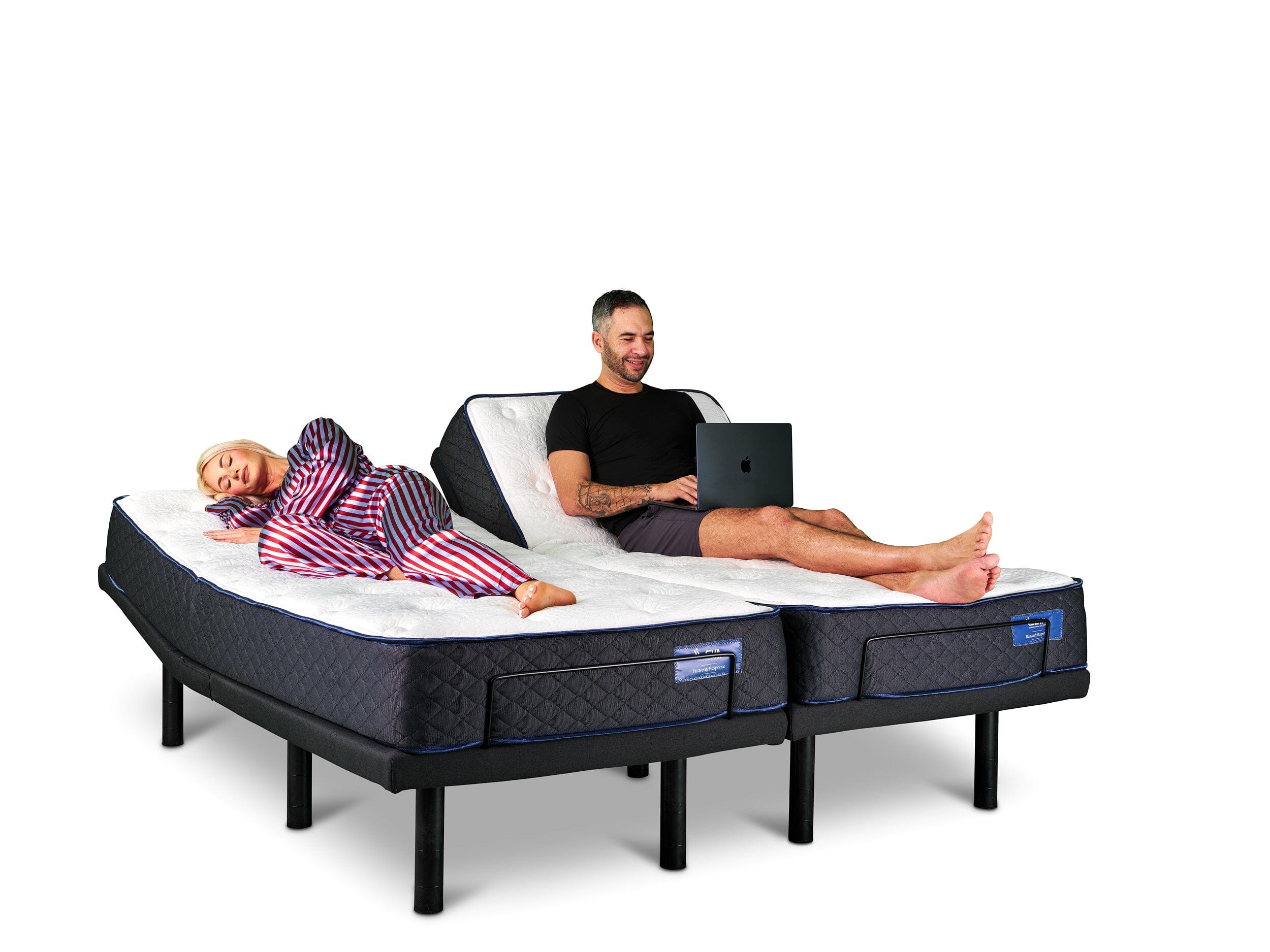
Split adjustable bases from Leva Sleep provide independent head and leg elevation for each partner and allow precise positioning that decompresses the lumbar spine. The whisper-quiet German motors support small adjustments during the night without waking your partner.
Unlike static pillows that compress or slide as you move, adjustable bases hold consistent elevation angles that keep vertebrae spaced and reduce pressure on inflamed discs and nerves. The 2026 anti-snore app presets detect breathing disruptions and gently raise the head section to open airways.
As mentioned earlier, couples often have conflicting positioning needs. Split adjustable bases address this by giving each side separate controls and elevation zones, so one partner can maintain an elevated fetal position while the other rests flat with a knee bend.
Leva Sleep’s systems cost 30-50% less than many comparable luxury competitors and offer 15-20 different adjustable models compared with the 3-5 models at standard retailers. The US-made mattresses are designed to flex with adjustable bases and maintain support at every angle.
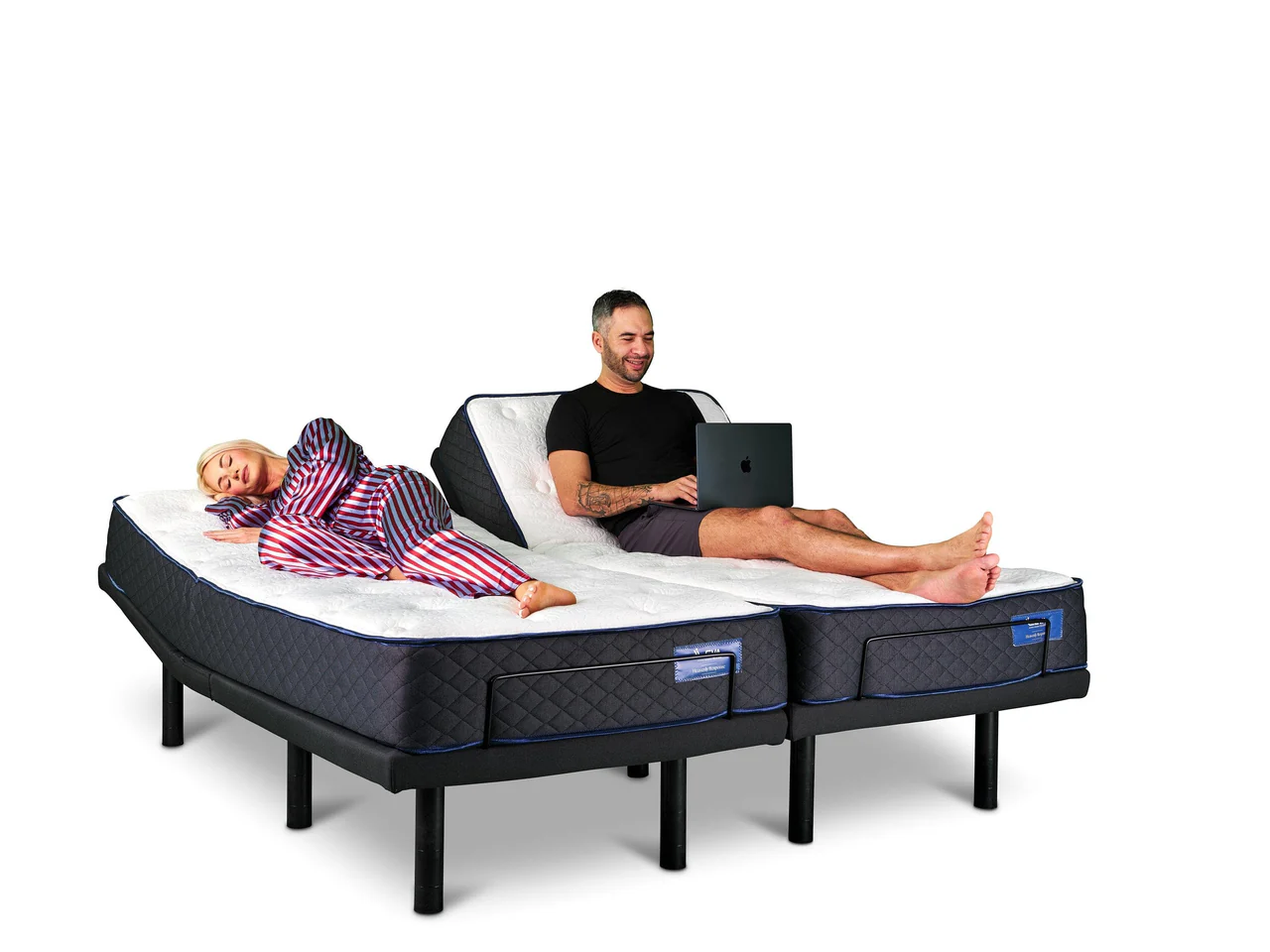
Consider Sarah and Mike, a couple where Sarah’s herniated disc requires elevated fetal positioning and Mike’s sleep apnea improves with slight head elevation in a back-sleeping posture. Their split King adjustable base lets both achieve effective positioning in the same bed and supports their health while keeping them close.
See how split adjustable bases solve couples’ positioning conflicts by visiting the La Jolla showroom or shopping online today.
Bonus: Couples’ No-Compromise Hacks with Adjustable Bases
Couples can use a few simple strategies to get more comfort from split adjustable systems. These habits help each partner manage pain while still feeling connected.
First, agree on a shared baseline height for the foot of the bed, then fine-tune head elevation individually. This approach keeps the mattress surface feeling unified while still allowing personal relief angles.
Next, save custom presets for each partner’s pain flare-ups, such as a “sciatica night” setting or a “disc calm” setting. These presets reduce guesswork when pain spikes and make it easier to return to helpful angles.
Finally, choose a mattress that bends smoothly on an adjustable base and minimizes motion transfer. This combination lets one partner change position without jostling the other, which protects both sleep quality and mood.
FAQ: Common Questions on Sleeping Positions for Back Pain
What is the worst sleeping position for lower back pain?
Stomach sleeping is widely identified as the worst position for lower back pain. Spine specialists identify stomach sleeping as the worst sleeping position because it increases lumbar spine arching and neck rotation, placing excess strain on spinal joints and muscles. A systematic review analyzing six studies found stomach sleeping associated with greater back pain and strain than side or back sleeping, as it increases the lower back curve and aggravates lumbar spine joints. The position forces your neck to twist for breathing while your midsection sinks into the mattress and pushes the lumbar spine into hyperextension.
How should I sleep to stop lower back pain and decompress my lower back?
The most effective positions for stopping lower back pain create space between vertebrae through specific alignment. The fetal position with knee support works well for disc-related pain because it opens spaces between vertebrae and reduces nerve compression. Side sleeping with a pillow between the knees aligns the pelvis and reduces strain on the SI joints.
For maximum decompression, combine these positions with elevation from an adjustable base that holds a steady angle through the night. Pillows often shift and compress, which reduces their effectiveness over several hours.
What is the best approach for sleeping with lower back pain and sciatica?
Sciatica relief depends on reducing nerve irritation with careful positioning. Sleep on your side with the affected leg facing up and use a firm pillow between your knees to maintain spinal alignment. The fetal position often helps because it opens space between vertebrae where inflamed nerve roots exit the spine.
Adding gentle elevation to reduce gravitational pressure can provide extra relief for many people. Avoid twisted or rotated positions, since these can increase pressure on the sciatic nerve and trigger sharper pain.
Are pillows or adjustable beds better for long-term back pain relief?
Pillows can help with short-term positioning, but adjustable beds usually provide better long-term relief for chronic back pain. Pillows shift during sleep, lose height, and sometimes create new pressure points.
Adjustable bases maintain consistent elevation angles and allow precise micro-adjustments as your pain changes. They also support couples with different needs, which reduces the relationship strain that often comes with chronic pain and disrupted sleep.
When should couples consider split adjustable beds, and when should you see a doctor?
Couples should consider split adjustable beds when different positioning needs cause sleep conflicts or when one partner’s pain management requires specific elevation that wakes the other. This technology helps prevent “sleep divorce” while still addressing individual health needs.
See a doctor if lower back pain lasts more than a few weeks, comes with leg numbness or weakness, or significantly limits daily activities. Adjustable beds can support medical treatment but do not replace professional evaluation for serious conditions.
Unlock Pain-Free Sleep Tonight
Proper spinal alignment during sleep plays a central role in reducing lower back pain and improving overall health. The five evidence-based positions in this guide offer immediate options, from the fetal position’s vertebrae decompression to side sleeping’s pelvis alignment.
Start tonight with one of these positions and use pillows to support neutral alignment. As your needs become clearer, consider a split adjustable system that removes positioning conflicts and supports each partner’s pain management plan.
Ready for pain-free sleep? Discover Leva Sleep’s split adjustable systems, engineered for back pain relief and couples’ harmony.