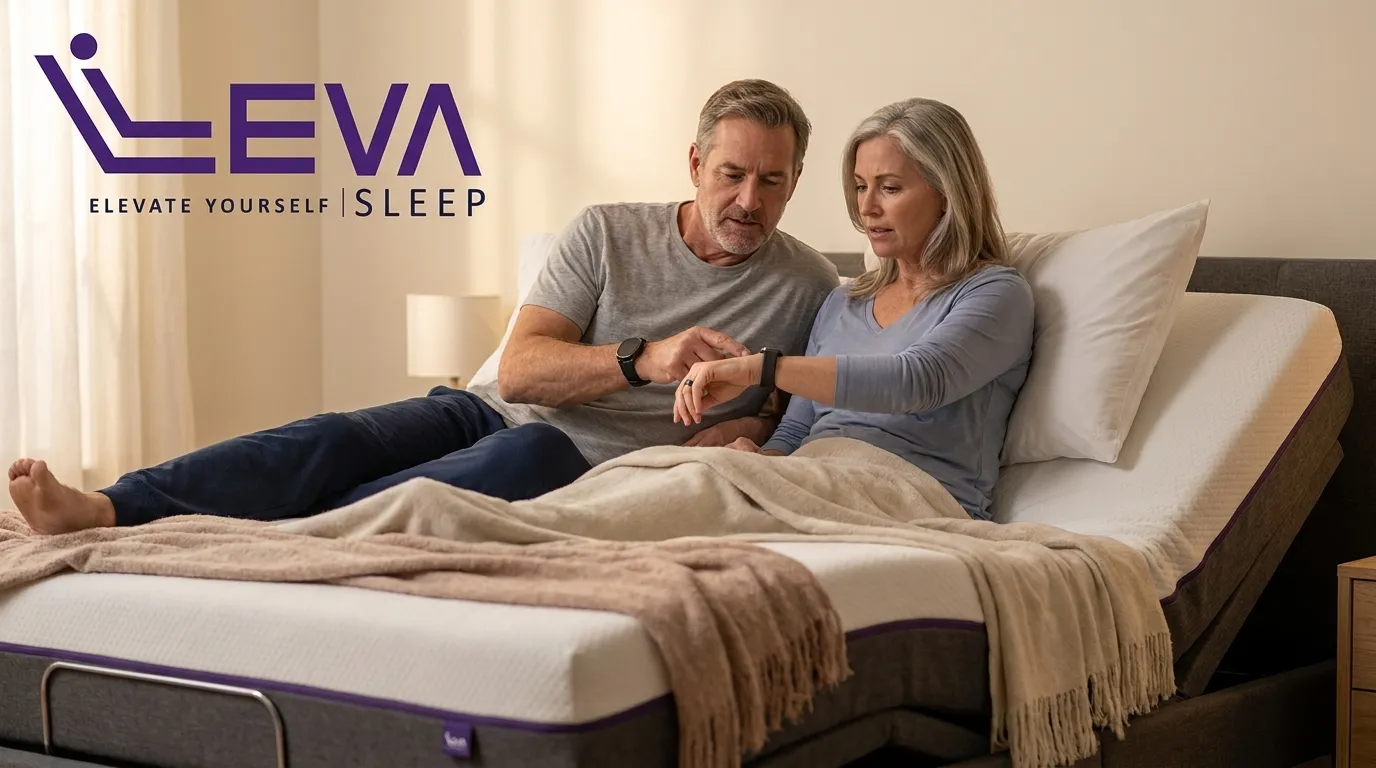
Written by: Matthew Timmins, Founder and Managing Director, Leva Sleep
Key Takeaways for Couples
-
Wearable sleep apnea monitors flag patterns consistent with OSA but do not replace a physician-led diagnosis based on objective testing.
-
Top 2026 options include FDA-cleared devices like Apple Watch Series 11 and WatchPAT ONE, plus comfortable ring and fingertip alternatives for couples.
-
Positional OSA is common, and head-of-bed elevation plus side-sleeping often provide effective, well-tolerated first-line interventions.
-
Key decision factors include FDA clearance, data export options, comfort for side-sleepers, and subscription costs.
-
After any wearable alert, consult a sleep physician and explore non-mask solutions such as Leva Sleep’s split adjustable bases to improve sleep quality for both partners.
Choosing the Right Wearable Device for Sleep Apnea Detection
No single device works best for every sleeper. Your ideal choice depends on FDA clearance status, AHI accuracy, comfort for side-sleepers, subscription costs, and how easily data can be shared with a physician. The five devices below represent leading options for home use in 2026. Compare each one against your own priorities before you buy.
1. Apple Watch Series 11
Apple Watch Series 9 and later received FDA clearance in 2024 for its Sleep Apnea Notifications feature, which analyzes 30 days of breathing disturbance data from blood oxygen, heart rate variability, and accelerometer signals to flag patterns consistent with moderate-to-severe OSA. The Series 11 builds on this capability with improved sensors and refinements. For couples, the watch form factor feels familiar and unobtrusive during the day, though some side-sleepers notice the casing pressing against the wrist overnight. Battery life usually requires daily charging, which can interrupt multi-night tracking if not planned. Data exports through the Apple Health app integrate with many physician portals. No subscription is required for the sleep apnea notification feature, although the watch itself typically retails above $400.
2. Samsung Galaxy Watch 8
Samsung Galaxy Watch models received FDA clearance for sleep apnea detection in 2024, using overnight SpO2 monitoring and reporting results through the Samsung Health app, though availability is limited to select countries. The Galaxy Watch 8 continues this clearance and offers a rounder profile that some side-sleepers find more comfortable than rectangular smartwatch cases. Like Apple Watch, it usually needs daily charging. Samsung Health data can be exported as a PDF for physician review, which simplifies sharing results. No ongoing subscription is required for the sleep apnea feature. Couples already using Android devices will find setup and syncing straightforward.
3. RingConn Gen 2
As of 2026, multiple smart rings, including the Happy Ring, have received FDA clearance for sleep apnea detection as of 2025, and these devices track HRV, SpO2, and movement patterns that may suggest further investigation. The RingConn Gen 2 positions itself as a subscription-free alternative to the Oura Ring, while the Oura Ring 4 requires a $5.99 monthly subscription for full access to features and insights. The ring form factor offers one of the least intrusive options for side-sleepers and couples sharing a bed, with no wrist casing pressing into the mattress and no display glow. Users who want to move sleep data beyond a proprietary app should confirm export options before purchase, since ring platforms differ in data portability. The RingConn Gen 2 functions best as a screening-adjacent wellness tracker rather than an FDA-cleared OSA detection tool.
RingConn Gen 2 vs Apple Watch for OSA Screening
The main trade-off between ring-form and watch-form devices centers on accuracy versus comfort. Apple Watch Series 11 carries FDA clearance for OSA notifications and integrates with physician-compatible data platforms, which makes it the stronger clinical screening tool. The RingConn Gen 2 offers superior overnight comfort for many side-sleepers and couples, with no casing, no display glow, and minimal wrist pressure, but it lacks FDA clearance for OSA detection. For couples where one partner strongly prefers ring-style comfort or finds wrist devices disruptive, a ring tracker can provide a low-friction early signal that prompts a physician conversation, while a cleared smartwatch delivers more clinically actionable data. Neither device replaces a formal home sleep apnea test or in-lab polysomnography. Once either device flags a concern, the next step involves positional management and physician referral, not an immediate CPAP prescription. Explore how Leva Sleep’s split adjustable bases support positional therapy for couples at the La Jolla showroom or online.
4. Wellue SleepU
The Wellue SleepU is a fingertip oximeter with a wrist unit designed for overnight SpO2 and heart rate monitoring. It does not carry FDA clearance for OSA detection, yet it provides continuous oxygen saturation data that a physician can review as part of a broader evaluation. The device requires no subscription, usually retails under $100, and generates reports exportable as PDFs. For couples, the fingertip probe can be dislodged during sleep, especially for active sleepers or those sharing a bed with a restless partner. SleepU works best as a low-cost supplementary tracker rather than a primary screening tool.
5. WatchPAT ONE
WatchPAT ONE is an FDA-cleared, single-use disposable home sleep apnea test that uses Peripheral Arterial Tonometry (PAT) technology with a wrist unit, fingertip probe, and chest sensor to measure REM/non-REM sleep stages, SpO2, AHI, heart rate, snoring, and body position. Validation studies show WatchPAT technology demonstrates good agreement with in-lab polysomnography and sensitivity for detecting OSA. It requires a physician prescription and board-certified sleep physician review, which typically occurs within 3–7 days. The single-use design eliminates subscriptions but introduces per-test costs. For couples seeking the most clinically rigorous at-home option before an in-lab study, WatchPAT ONE currently offers one of the highest-accuracy wearable screening pathways.
After the Alert: Positional Therapy Options for Couples
Positional obstructive sleep apnea (POSA) is defined as OSA in which the AHI during back-sleeping is at least twice as high as in other positions, and research estimates POSA accounts for a substantial portion of all OSA cases. For many of these patients, head-of-bed elevation and side-sleeping provide meaningful clinical benefit.
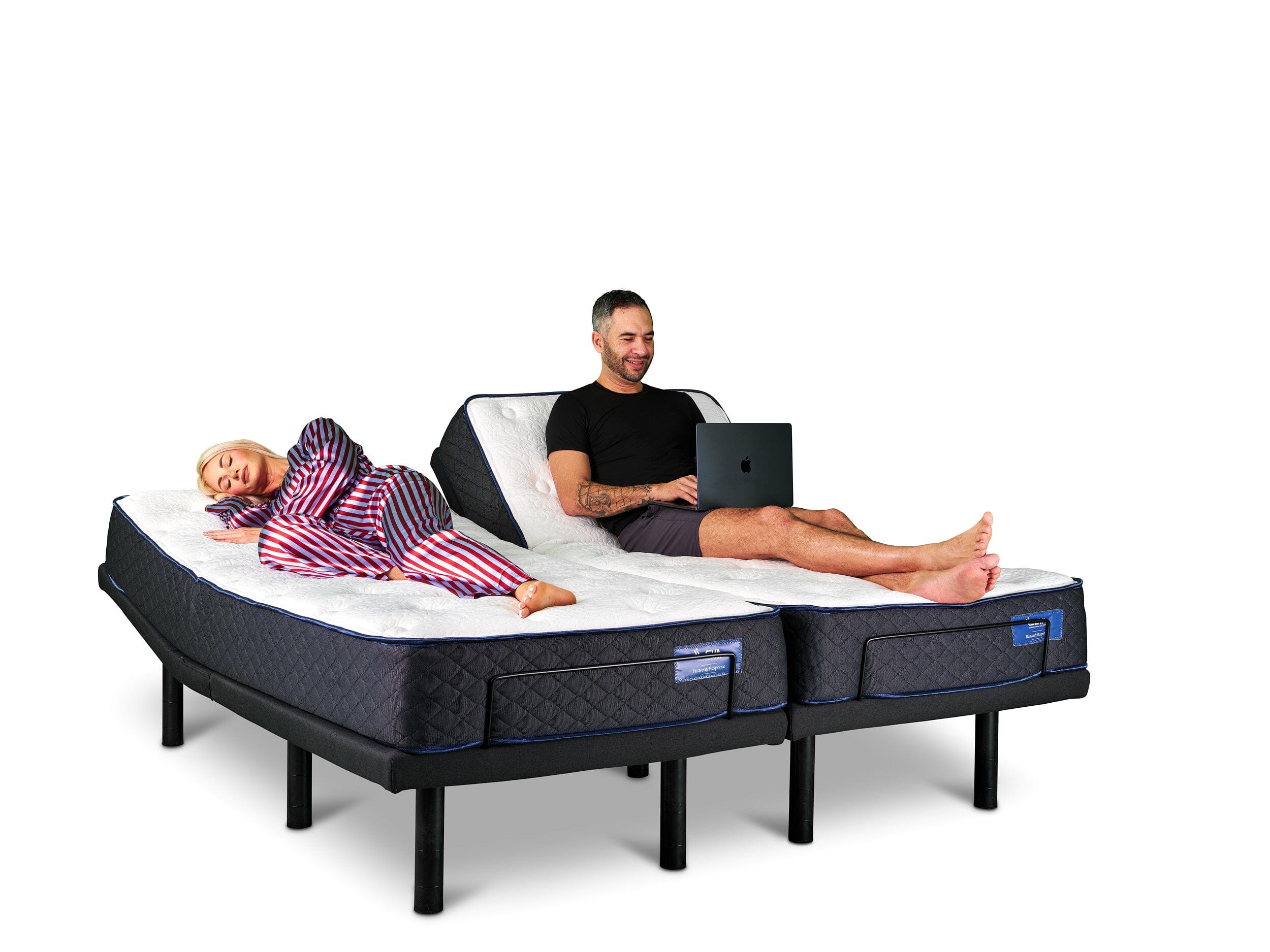
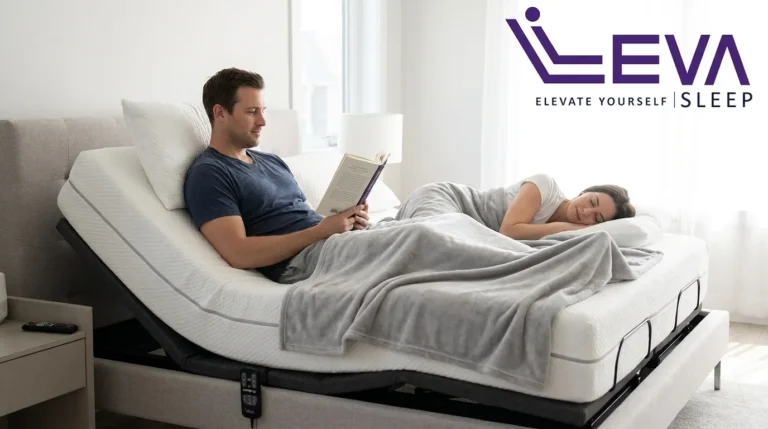
Leva Sleep’s adjustable bases address positional needs directly. Gentle head elevation helps open the airway without a mask, and the split configuration allows one partner to elevate independently without disturbing the other. Leva’s anti-snore mode, arriving spring 2026, detects snoring and makes micro-adjustments to head-of-bed position automatically, creating a passive, mask-free intervention that works while both partners sleep. For couples navigating a positive wearable alert, this setup offers a practical bridge between screening and physician-confirmed therapy.
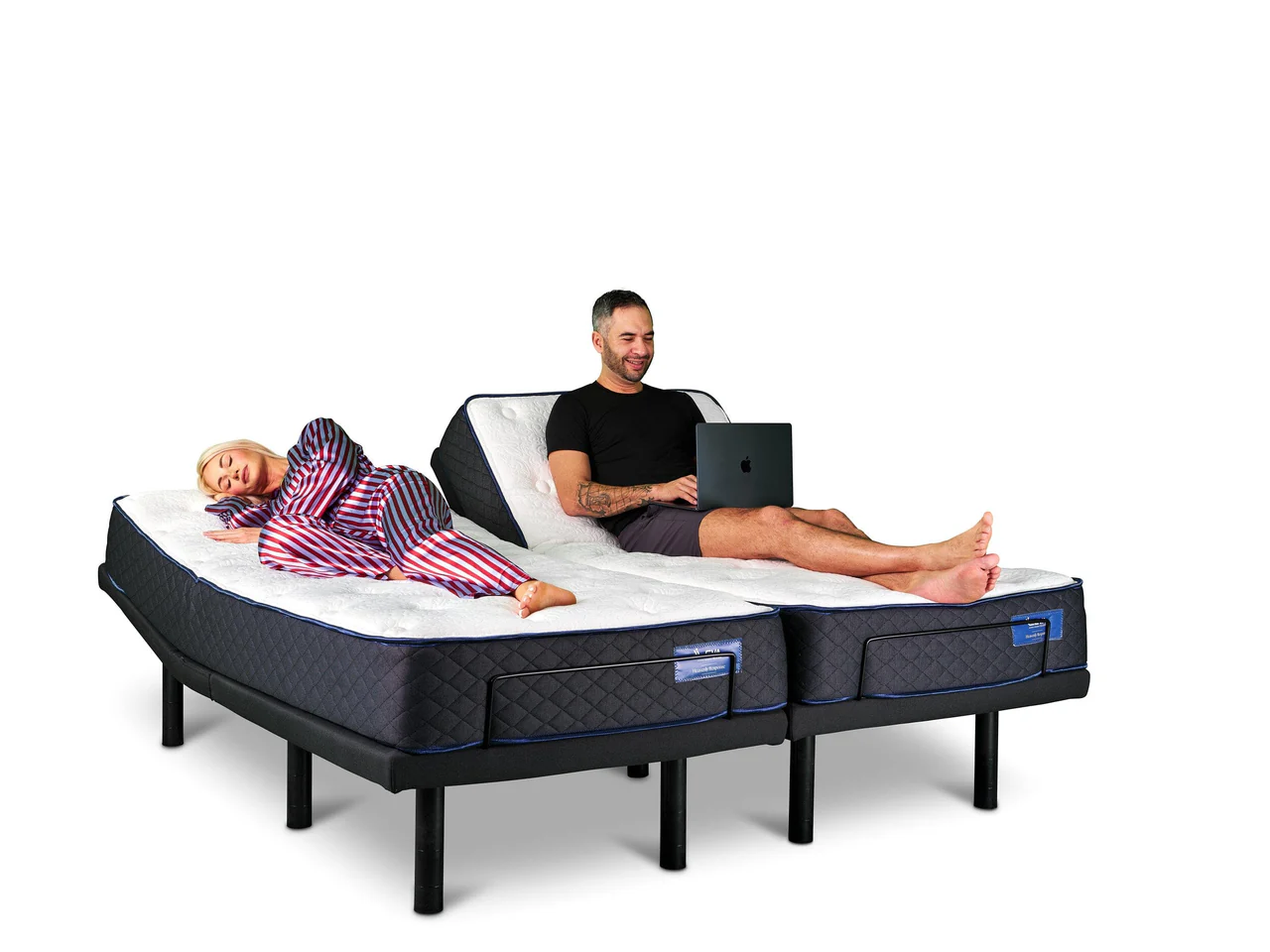
Decision Tree: From Wearable Alert to Non-Mask Management
Step 1 — Wearable flags possible OSA: Your Apple Watch, Galaxy Watch, or WatchPAT ONE generates a sleep apnea notification or elevated AHI estimate.
Step 2 — Log symptoms: Record daytime fatigue, partner-reported snoring, and sleep position for two weeks, using your device’s data export when available.
Step 3 — Physician referral: Share exported data with your primary care provider. Request a formal home sleep apnea test (WatchPAT ONE, SANSA, or equivalent) or in-lab polysomnography if you have significant comorbidities.
Step 4 — Confirm positional component: Ask your sleep physician whether your OSA is positional (supine-dominant), as discussed above.
Step 5 — Implement positional therapy: If your OSA is positional or mild-to-moderate, introduce head-of-bed elevation with an adjustable base. Leva Sleep’s split adjustable systems allow each partner to set independent elevation without compromise.
Step 6 — Follow up: The AASM recommends follow-up in the initial weeks to months after any therapy initiation to assess response and promote adherence. Continue wearable tracking to monitor trends over time.
Real-User Pain Points with Wearable Sleep Apnea Monitoring
Forum discussions about wearable sleep apnea screening often highlight the same frustrations. Many users want to track sleep data beyond a single proprietary app, especially those using ResMed AirSense devices who prefer consolidated dashboards. WatchPAT ONE and SANSA generate physician-reviewable reports that can be shared outside their native platforms, which helps close this gap.
Subscription fatigue also appears frequently. The Oura Ring’s $5.99 monthly fee and Fitbit Premium’s $9.99 monthly charge add up to more than $100 per year. This ongoing cost pushes many users toward one-time-purchase options. Alternatives like the Withings Sleep under-mattress sensor that costs $129.95 with no subscription appeal to sleepers who want passive tracking without recurring fees. RingConn Gen 2 also markets itself as subscription-free, though its lack of FDA clearance for OSA detection limits its clinical usefulness compared with cleared devices.
Couples often report that wrist-worn devices disrupt a partner’s sleep through display glow, charging interruptions, or physical bulk. Ring-form and under-mattress sensors reduce these issues by removing bright screens and rigid casings from the shared sleep space. For couples where both partners want independent data without disturbing each other, Leva Sleep’s split adjustable base paired with individual wearables on each side of the bed offers an integrated, couple-friendly solution.
Frequently Asked Questions
Are FDA-cleared wearable sleep apnea monitors safe to use without a doctor’s supervision?
FDA-cleared wearable monitors such as Apple Watch Series 11 and Samsung Galaxy Watch 8 are designed for consumer use and do not require a prescription to purchase or activate. A positive alert should always prompt a physician consultation. These devices screen for patterns consistent with OSA and do not provide a formal diagnosis, so self-adjusting CPAP settings based only on wearable data is not appropriate. The safest approach is to use the device, log results, and bring the data to a qualified sleep physician.
What should a couple do if only one partner receives a sleep apnea alert?
The partner who received the alert should schedule a physician consultation and request a formal home sleep apnea test or polysomnography referral. The other partner may also benefit from independent sleep tracking, since OSA remains underdiagnosed in both men and women. While waiting for testing, couples can try positional adjustments, such as head-of-bed elevation on the affected partner’s side, using a split adjustable base that allows independent positioning without disrupting the other partner’s comfort settings.
Does insurance cover home sleep apnea tests or wearable screening devices?
Most major U.S. insurers, including Medicare, cover physician-ordered home sleep apnea tests (HSATs) such as WatchPAT ONE when medically indicated. Consumer wearables like Apple Watch or Samsung Galaxy Watch are generally not reimbursable as medical devices without a Letter of Medical Necessity because they are classified as general wellness products unless prescribed for a specific diagnosed condition. Adjustable bed bases are usually not covered by standard health insurance, although some flexible spending accounts (FSAs) or health savings accounts (HSAs) may allow reimbursement for specific medical-use accessories. Confirm eligibility with your plan administrator before you purchase.
Can head-of-bed elevation from an adjustable base replace CPAP for sleep apnea?
Head-of-bed elevation is a clinically recognized positional intervention for mild-to-moderate positional OSA, but it does not replace CPAP for every patient. As noted earlier, recent research found positional therapy comparable to CPAP for positional OSA patients and often better tolerated. Whether elevation alone is sufficient depends on OSA severity, whether your condition is positional, and your individual anatomy. A sleep physician must evaluate these factors before you discontinue or avoid CPAP. Leva Sleep’s adjustable bases and anti-snore mode are designed to complement a physician-guided treatment plan, not replace medical advice.
Which wearable is best for side-sleepers sharing a bed?
Side-sleepers sharing a bed benefit most from low-profile, non-illuminating devices that do not press into the mattress or shine light toward a partner. Ring-form devices offer minimal physical intrusion, although none currently carry FDA clearance for OSA detection. Among FDA-cleared options, Samsung Galaxy Watch 8’s rounder casing is often reported as more comfortable for side-sleeping than rectangular smartwatch profiles. WatchPAT ONE’s fingertip probe can shift during active sleep but provides strong clinical accuracy. Consider comfort, clearance status, and data-export needs together rather than focusing on a single factor.
Conclusion: A Practical 2026 Plan for Couples
The most practical 2026 approach for couples concerned about OSA combines one FDA-cleared screening device with one targeted positional change. Apple Watch Series 11 or WatchPAT ONE provide strong clinical data for physician review. Head-of-bed elevation, especially through a split adjustable base with independent controls, addresses the positional component that drives many OSA cases without masks, separate beds, or comfort trade-offs between partners. Leva Sleep’s spring 2026 anti-snore mode adds automated micro-adjustment capability that makes positional therapy passive and continuous. After screening, consult a board-certified sleep physician to confirm diagnosis and determine whether positional therapy alone fits your severity level. See how Leva Sleep’s anti-snore mode and split adjustability work together at levasleepusa.com.