
Written by: Matthew Timmins, Founder and Managing Director, Leva Sleep
Key Takeaways
- Zero-gravity positioning reduces spinal compression and disc pressure by elevating the torso at a precise 120–128 degree recline with legs above heart level.
- Effective bases include programmable zero-gravity presets, independent lumbar motors, and memory-save functions that keep your spine aligned night after night.
- Wall-hugger mechanisms and split-base options, including Split Queen, let couples customize positions without disturbing each other or crowding the room.
- Compatibility with 8–12 inch memory-foam or pocketed-coil mattresses, quiet brushless motors, and anti-snore presets supports long-term comfort and fewer sleep disruptions.
- Leva Sleep delivers these features with German motors, Split Queen/King configurations, and white-glove service. Shop Leva Sleep today to experience targeted back-pain relief.
1. Spinal-Alignment Presets and Lumbar Control
A zero-gravity preset only helps when the base can hold a precise angle every night. The zero-gravity position elevates the head 30–45 degrees while raising the knees, with feet above heart level. This position offloads pressure from the lumbar region and tailbone. A dedicated lumbar motor adds a third articulation point between the head and foot sections. It raises the lower-back zone independently so the base fills your natural curve instead of letting your spine sag.
Spec checklist: Confirm a programmable zero-gravity preset, not just a manual dial. This lets the base return to the same therapeutic angle every night. Look for a separate lumbar motor or an adjustable lumbar pad so you can fine-tune lower-back support. Verify memory-save functionality for at least two custom positions per side so each sleeper can store a favorite setting.
Red flags: Bases that advertise “zero-gravity” but use only a single head motor cannot maintain the leg raise needed for full spinal decompression. Avoid bases where lumbar support is a fixed foam wedge instead of a motorized component that you can adjust.
2. Wall-Hugger Clearance for Tight Bedroom Spaces
Wall-hugger clearance keeps you close to your nightstand as the head of the bed rises. Standard adjustable bases pivot from a fixed hinge point, which pushes the head of the mattress several inches away from the wall when you sit up. A wall-hugger mechanism slides the entire deck forward as it elevates. This movement preserves access to lamps, water, and devices on your nightstand.
Spec checklist: Ask for the wall-clearance specification at maximum head elevation. A true wall-hugger design usually keeps rearward travel between 0 and 2 inches. Confirm the base includes a retainer bar or anti-slide system. Forward deck movement can cause mattress creep on smooth floors without these features.
Red flags: Bases that list “wall-hugger compatible” without a published clearance figure may only use a shallow pivot. Request the exact specification in writing before you buy.
3. Independent Split-Base Options for Couples
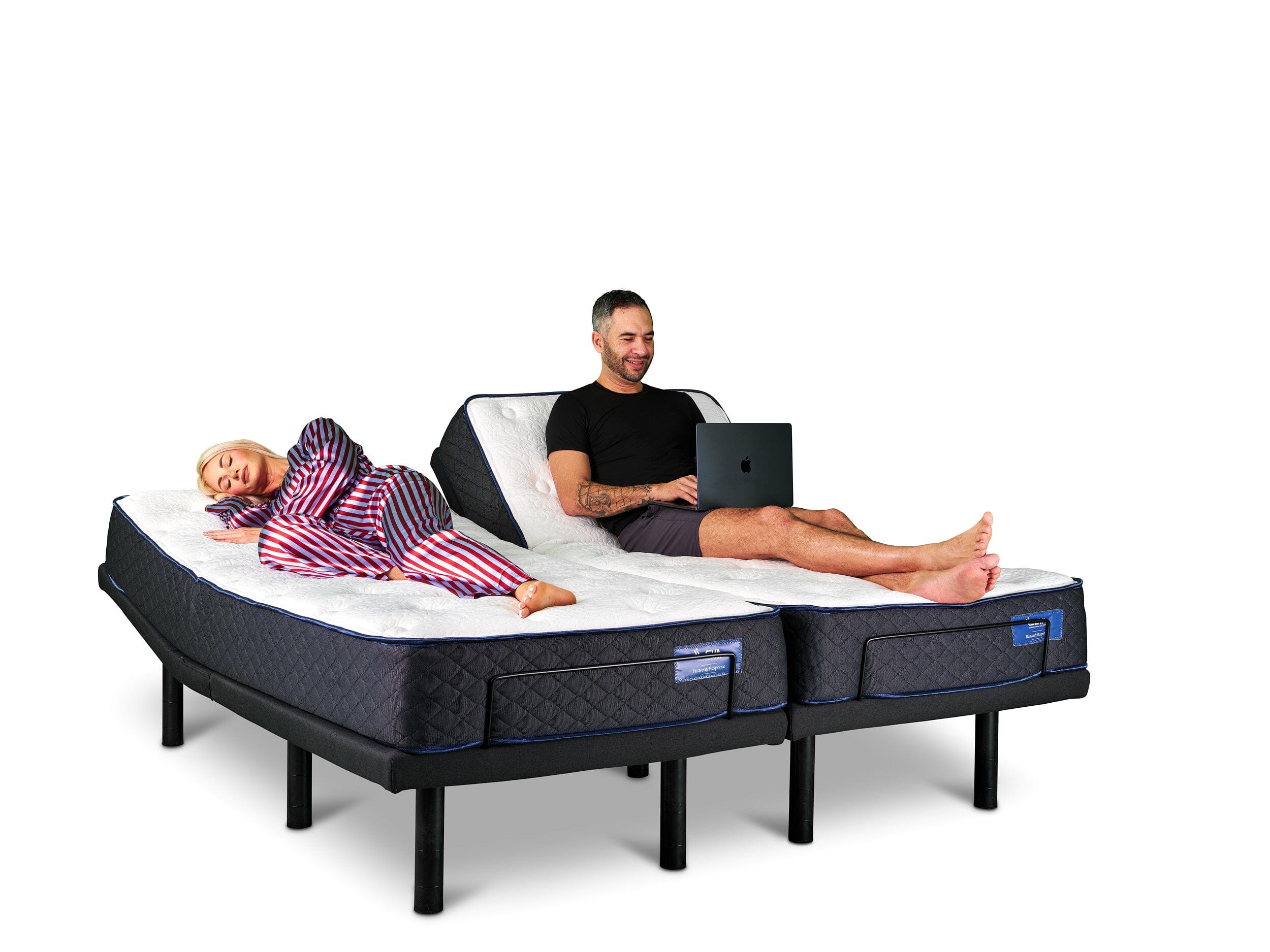
On a standard king adjustable base the entire mattress moves as one unit, so one partner’s adjustment immediately affects the other. A split configuration uses two independent bases with separate motors and controls placed side by side. Each sleeper can choose a personal zero-gravity angle, lumbar height, or flat position without shaking the other side.
Split King adjustable beds are ideal for couples with different health needs such as mismatched chronic back pain. Each person can dial in a neutral-spine or zero-gravity angle independently. Leva Sleep extends this flexibility to the Split Queen configuration, a size many general retailers do not stock. This option brings independent positioning to smaller bedrooms.
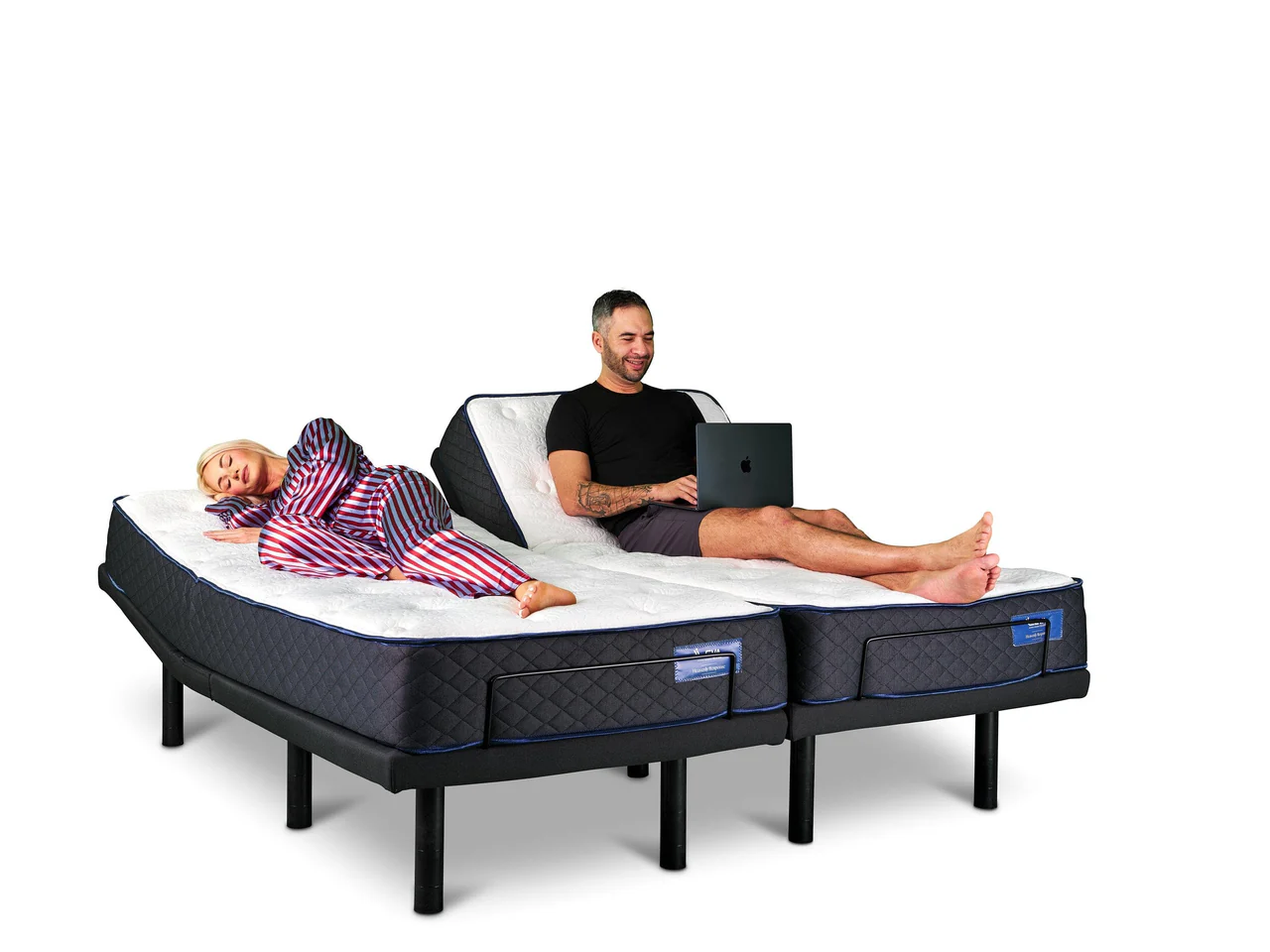
Compare Leva’s Split Queen and Split King configurations to find the right independent-positioning setup for your bedroom.
4. Mattress and Bedding Compatibility Checklist
Mattress compatibility determines whether your base can deliver true zero-gravity comfort. An adjustable base only works when the mattress follows its curves without bridging or internal damage. A compatible mattress must flex smoothly through thousands of elevation cycles. Memory foam rates highest because its cellular structure springs back quickly. Pocketed-coil hybrids perform well when coils are individually wrapped instead of tied together. Traditional innerspring mattresses with border wires are generally incompatible and can warp or strain the motor.
Spec checklist: Target a mattress thickness of 8–12 inches, ideally 10–12 inches, to balance support and flexibility. For a Split King, confirm the base uses two Twin XL mattresses rather than a single king. Check that fitted sheets have deep pockets and strong elastic. Standard sheets often pop off articulating bases during the night.
Red flags: Mattresses over 14 inches often become too rigid to contour properly and can cause bridging or motor strain. Be cautious if a retailer cannot explain mattress thickness limits or sheet requirements for their base.
5. Motor Noise and Motion-Isolation Performance
Quiet motors protect your partner’s sleep when you change positions. Motor noise is a common complaint among couples who move from a flat bed to a basic adjustable base. A loud base can wake a light sleeper as easily as snoring. Whisper-quiet motors, usually brushless DC units from precision manufacturers, run at low noise levels that blend into background sound.
Spec checklist: Request the decibel rating at full travel. Ask whether the motor is brushless DC, which is quieter and longer-lasting, or brushed AC, which is louder and common in budget bases. Confirm that the frame uses vibration-dampening feet or pads so motor noise does not transfer through the floor.
Red flags: Bases that describe motors only as “quiet” or “whisper-quiet” without a decibel figure or motor type rely on marketing language instead of data. A split base with two motors should publish noise specs for both sides running at once, not just for single-side use.
6. Anti-Snore and Mild-Apnea Positioning Features
Raising the head section by 10–15 degrees keeps airways more open and can reduce snoring and mild sleep apnea. This adjustment supports better overnight positioning for people who manage both back pain and airway issues. A dedicated anti-snore mode automates this change, either on a timer or in response to detected snoring sounds. The sleeper stays in a healthier position without waking fully to move the bed.
Spec checklist: Confirm whether the anti-snore feature uses a fixed preset angle or sensor-driven micro-adjustments. Verify that the head-elevation range covers at least 0–60 degrees so you can move between flat sleeping and therapeutic inclines. Check that anti-snore activation does not erase or override a saved zero-gravity preset.
Red flags: Bases that market anti-snore positioning as a simple head-elevation button offer the same function as manual adjustment. Sensor-driven systems that detect snoring and make small automatic changes provide a different level of support and deserve separate evaluation.
Explore Leva’s sensor-driven anti-snore technology and see how it works alongside programmable zero-gravity positioning.
7. Delivery, Setup, and Long-Term Service Realities
Delivery and service affect how quickly you can enjoy your new base. An adjustable base is a heavy electromechanical product. Curbside or threshold delivery leaves you carrying a 100–200 pound unit to the bedroom, connecting motors, calibrating hinges, and removing the old bed. A white-glove delivery team handles room-of-choice placement, full assembly, leg-height adjustment, app pairing, a brief tutorial, and old-bed removal.
Spec checklist: Confirm whether white-glove delivery is included or sold separately and what the service covers. Verify motor and frame warranty lengths independently. Motor warranties shorter than five years on a premium base shift long-term costs to you. Ask whether in-home service is available or whether you must ship the base back for warranty claims.
Red flags: “Free delivery” on a heavy adjustable base usually means curbside drop-off. Retailers who outsource setup to third-party contractors and cannot describe their training offer little accountability if the base is misconfigured.
Side-by-Side Comparison: How Leva Sleep Stacks Up
| Criterion | What to Verify | Leva Sleep | Typical Generalist Retailer | Budget Online Brand |
|---|---|---|---|---|
| Zero-Gravity Angle | Programmable preset at ~15° head, feet above heart | Programmable preset, app-saved | Varies by model, often manual only | Often single fixed preset |
| Lumbar Motor | Independent motorized lumbar zone | Available on select models | Rarely included, fixed foam wedge common | Not typically available |
| Wall-Hugger Depth | Published clearance spec at max elevation | Wall-hugger mechanism, confirm spec at showroom | Model-dependent, often unpublished | Standard pivot only |
| Split Availability | Split Queen and Split King with independent motors | Split Queen and Split King offered | Split King only, Split Queen rare | Split King only, if available |
| Motor Type | Brushless DC, published dB rating | Whisper-quiet German motors | Varies, often undisclosed motor type | Brushed AC common, louder operation |
Note: Leva Sleep specifications reflect published company information. Generalist retailer and budget brand columns represent typical market patterns based on publicly available product listings and should be verified against specific models under consideration.
Frequently Asked Questions
Is zero-gravity positioning safe for seniors with chronic back pain?
Zero-gravity positioning is generally appropriate for older adults with chronic lower back pain because it reduces compressive forces on the lumbar spine and discs instead of adding load. The position elevates the legs above heart level, which also supports circulation and can help with mild edema or leg fatigue. Seniors with specific spinal conditions such as severe stenosis, recent vertebral fractures, or post-surgical hardware should speak with a physician or physical therapist before using any inclined sleep position, because individual anatomy and surgical history affect which angles are helpful or risky.
How long does it take to break in a new adjustable base?
The adjustable base mechanism itself usually needs no break-in period, since motors and hinges work from the first use. The mattress on the base may require a short adaptation period, especially if it uses higher-density foams that soften slightly with body heat and repeated compression. Most sleepers find a preferred zero-gravity or incline angle within one to two weeks as muscles used to flat sleeping adjust to the new support pattern. Start with a modest head elevation of 10–15 degrees and increase gradually to a full zero-gravity preset over several nights to ease the transition.
Can insurance reimburse an adjustable bed prescribed for back pain?
Standard homeowner’s or renter’s insurance does not cover adjustable beds. Health insurance reimbursement for an adjustable base is uncommon but possible in specific cases. Medicare and some private insurers may classify motorized adjustable bases as durable medical equipment when a physician documents medical necessity for conditions such as severe GERD, post-surgical recovery, or a documented respiratory issue. This pathway usually requires a written prescription, a DME supplier enrolled with the insurer, and prior authorization. Patients should contact their insurer directly to confirm coverage rules before purchase, because policies vary by plan and state.
What is Leva Sleep’s return policy on split configurations?
Leva Sleep’s return and trial policies for split configurations can vary by model and purchase channel, so the most accurate details come directly from the company. Prospective buyers can visit the La Jolla showroom or contact Leva Sleep through the website to receive current policy terms in writing before buying. Because split bases involve two independent units and white-glove delivery, understanding return logistics, including whether both units must be returned together and how pickup works, should be part of your decision.
Do all mattresses work with zero-gravity bases?
No. Traditional innerspring mattresses with border wires are incompatible, as noted in the compatibility checklist above. Memory foam, latex, and pocketed-coil hybrid mattresses are the three categories most suited to adjustable bases. Mattress thickness matters as well, because models thicker than 14 inches may be too rigid to contour properly at full elevation. For a Split King configuration, you need two Twin XL mattresses rather than a single king-size mattress. Leva Sleep designs its mattress lineup for adjustable-base use, and all partner mattresses offered through the Leva platform are vetted for compatibility.
Conclusion: Choose the Base That Actually Decompresses Your Spine
Zero-gravity positioning reduces spinal compression, supports the lumbar curve, and improves circulation when the base meets clear mechanical and practical standards. The seven criteria in this guide, including spinal-alignment presets, wall-hugger clearance, split-base independence, mattress compatibility, motor noise, anti-snore capability, and delivery quality, give couples a concrete checklist for separating real solutions from marketing claims. Leva Sleep addresses each criterion with whisper-quiet German motors, Split Queen and Split King configurations, app-controlled zero-gravity presets, U.S.-made compatible mattresses, and in-house white-glove delivery at 30–50% below many comparable luxury brands.
Start your search at Leva Sleep to experience these seven criteria in action.