Written by: Matthew Timmins, Founder and Managing Director, Leva Sleep
Key Takeaways
- Hot beds disrupt sleep and strain relationships, so identify heat sources like mattress retention and partner differences for focused fixes.
- Quick DIY relief comes from stripping heavy bedding, using moisture-wicking sheets, setting fan cross-breezes, and adding slight elevation.
- Long-term upgrades include breathable hybrid mattresses, latex toppers, and split adjustable bases that reduce heat buildup and temperature fights.
- Couples sleep better with independent controls for elevation, firmness, and temperature that do not disturb each partner’s comfort.
- Build a complete cooling system for lasting results, and explore Leva Sleep solutions at the La Jolla showroom or online.
Before You Start: Health Checks and Temperature Baselines
Confirm you can adjust your bedroom setup, including bedding, bed position, and airflow. If you experience severe night sweats, sudden temperature swings, or heavy sweating, talk with a healthcare provider to rule out conditions like menopause, sleep apnea, or hormonal issues.
Set clear expectations. Fan placement and bedding changes can cool you within minutes or hours. Mattress upgrades and split-control systems create lasting change over days or weeks. Focus on solving couples’ temperature differences that flat beds rarely handle well.
Sleep experts cited by Cleveland Clinic recommend a bedroom temperature range of 60–67°F, with Sleep Foundation suggesting 65–68°F. Use a digital thermometer or wearable device to track your bedroom temperature and monitor improvements over time.
Step 1: Pinpoint What Is Making Your Bed Hot
Start by identifying the main sources of heat, such as your body heat patterns, partner temperature differences, and mattress heat retention. Memory foam mattresses made from dense viscoelastic polyurethane with a closed-cell structure often trap body heat and moisture.
Quick DIY approach: Log sweat spots and temperature complaints for 3 to 5 nights. Note which side of the bed feels hotter and when overheating happens most often. Watch for heat buildup around hips, shoulders, or feet.
Success indicator: You can clearly name your main heat sources and choose cooling steps that match your specific problems instead of using random fixes.
Step 2: Strip and Air Out Overheated Bedding
Remove heavy comforters, thick blankets, and non-breathable materials that trap heat and block airflow. Give your mattress and pillows at least 30 minutes to breathe so trapped warmth can escape.
Quick DIY approach: Strip the bed completely and open windows or turn on fans to move fresh air across the mattress. While the mattress airs out, evaluate your bedding for breathability and moisture-wicking based on thread count, fabric type, and weave.
Upgrade option: Replace bulky bedding with lightweight, breathable pieces made for adjustable beds. Choose deep-pocket fitted sheets with strong elastic so they stay in place when you change positions.
Step 3: Switch to Moisture-Wicking, Breathable Sheets
Choose sheets made from bamboo, linen, or Tencel that pull moisture away from your skin and allow steady airflow. Avoid cotton sheets above a 400 thread count, since dense weaves can trap heat even if they feel soft.
Quick DIY approach: Check your current sheets for Oeko-Tex Standard 100 certification, which often pairs with safer processing and better breathability. Look for percale weaves instead of sateen for a cooler, crisper feel.
Success indicator: You wake up with dry skin and sheets, even on warm nights, and notice fewer sticky or sweaty patches.
Step 4: Add a Cooling Mattress Topper for a Cooler Surface
Place a gel-infused or latex topper on your mattress to create a cooler layer between you and heat-trapping foam. Choose toppers with ventilation holes or open-cell designs that move air instead of solid gel slabs that can warm up.
Quick DIY approach: Press down on potential toppers, then release and feel for air movement through the material. Strong airflow signals good breathability. After the airflow check, consider thickness, since 2 to 3 inch toppers often cool better than thicker models that hold heat.
Explore cooling toppers for adjustable beds at Leva Sleep’s La Jolla showroom or online store.
Step 5: Position Fans to Create a Cooling Cross-Breeze
Use ceiling, tower, or box fans to create cross-ventilation across your bed. A ceiling fan that pulls warm air upward pairs well with a floor or bedside fan that pushes cooler air over your body.
Quick DIY approach: Place one fan near a window to pull in cooler outdoor air. Set another fan across the room to move that air over the bed. Test different fan speeds and directions until you feel steady airflow without loud noise or harsh drafts.
Success indicator: You feel a gentle, consistent breeze across your body without cold spots or fan noise that wakes you up.
Step 6: Elevate Your Body to Improve Airflow
Raise your head and feet slightly to improve air circulation around your body and reduce heat at pressure points. Even small angle changes create air gaps that release heat more effectively than lying flat.
Quick DIY approach: Place extra pillows or rolled towels under your head and knees for mild elevation. Avoid steep angles that cause strain or discomfort.
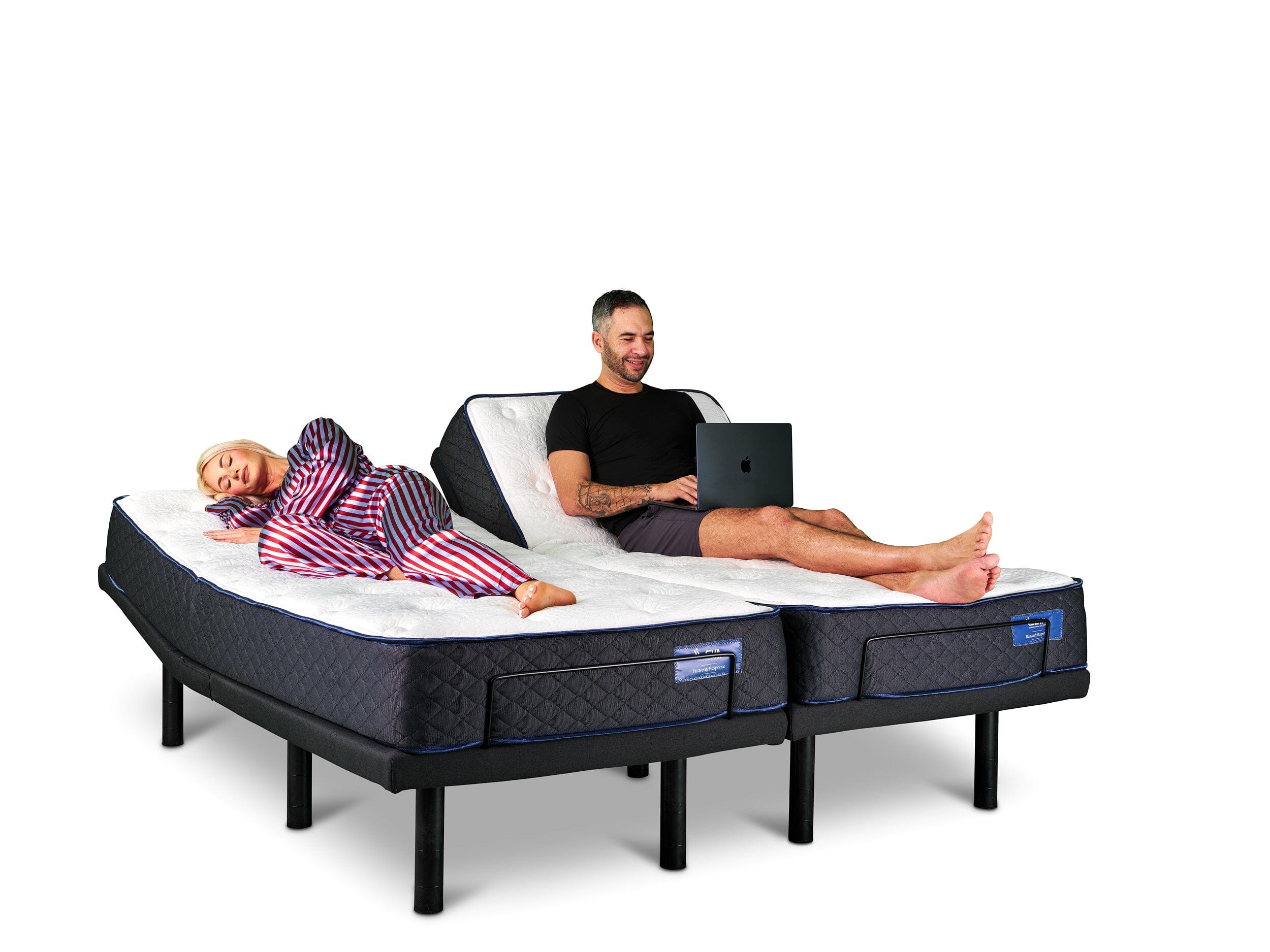
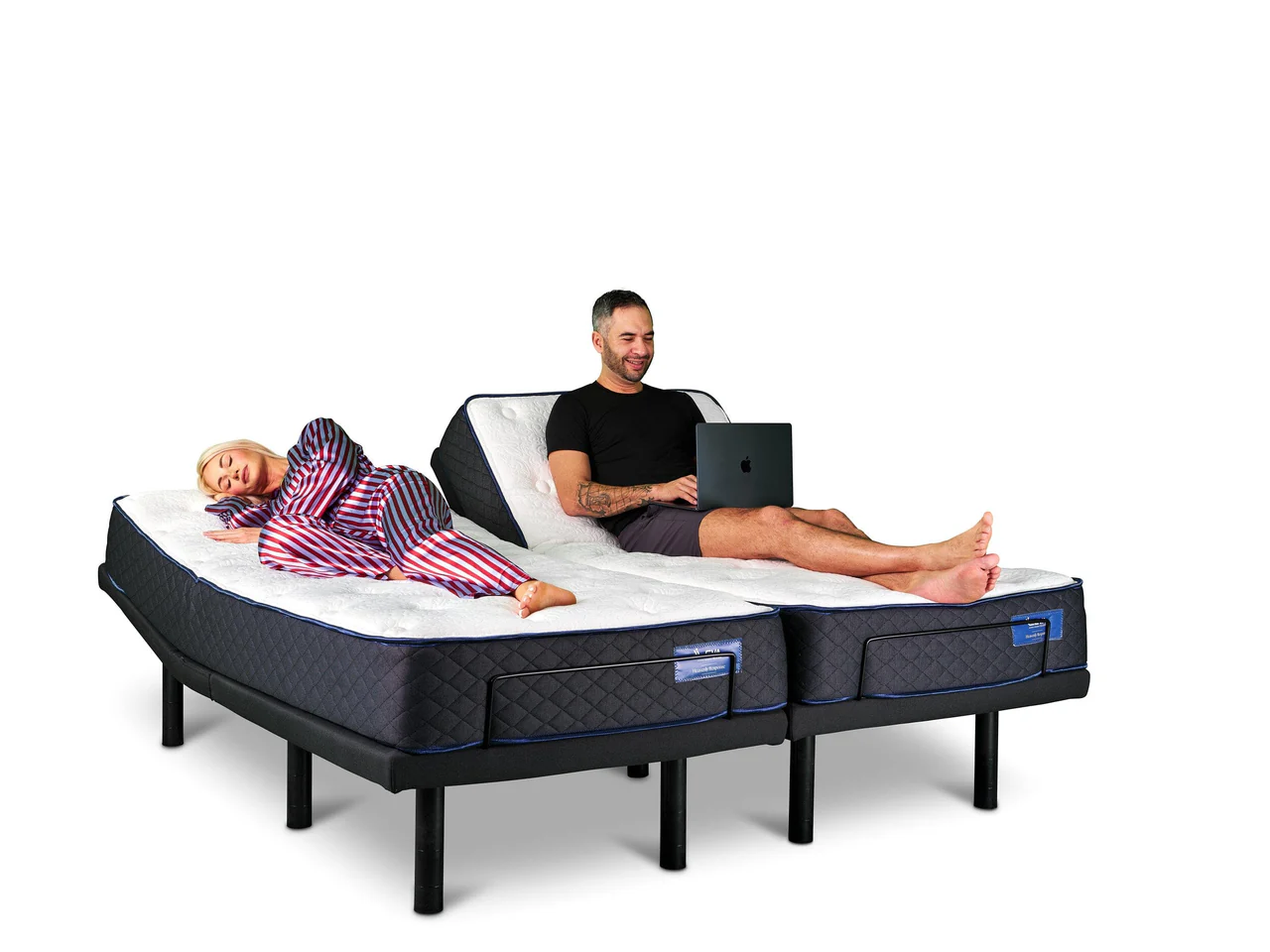
Upgrade option: Split adjustable bases let each partner fine-tune elevation for better airflow and comfort while still sharing one bed. This setup supports different preferences without forcing compromise.
Step 7: Replace Heat-Trapping Mattresses With Cooler Designs
Memory foam, a viscoelastic polyurethane foam first developed by NASA, absorbs body heat and often concentrates warmth at the surface. NapLab notes that latex mattresses like Saatva Zenhaven and Birch cool well because of open-cell structure and strong airflow.
Test your mattress by pressing into the surface and watching how quickly it rebounds. Notice whether the spot feels warm after contact. Slow rebound and lingering warmth signal poor cooling.
Upgrade option: Choose a hybrid mattress with pocketed coils and breathable comfort layers for better airflow than solid foam. Pair a US-made hybrid with a split adjustable base to create separate comfort zones for partners with different temperature needs.
Step 8: Solve Partner Temperature Clashes With Split Controls
Address mismatched temperature preferences by using solutions that give each partner independent control. Traditional flat beds often force one person to sleep too hot or too cold.
Quick DIY approach: Use separate lightweight blankets or sheets so each partner can adjust coverage freely. Place a body pillow between you to reduce direct heat transfer without losing closeness.
Upgrade option: The split bases mentioned earlier can include independent temperature controls that remove the need for compromise. Each partner can adjust elevation, firmness, and temperature on their own side.
Step 9: Apply Cold Compresses and Simple DIY Chillers
Use targeted cooling on pulse points such as wrists, neck, and ankles to lower core temperature quickly. Cold therapy supports the natural temperature drop that prepares your body for sleep.
Quick DIY approach: Place a frozen water bottle at the foot of the bed 10 to 15 minutes before sleep, then remove it once you feel cooler. Use a cool, damp washcloth on your forehead or neck for fast relief.
Success indicator: You feel cooler within 5 to 10 minutes, and the effect lasts long enough for you to fall asleep comfortably.
Step 10: Add Smart Temperature-Regulating Technology
Consider app-controlled heating and cooling pads that let each side of the bed run at a different temperature. Many systems allow you to program temperature curves that shift through the night.
Quick DIY approach: Set a programmable thermostat to lower bedroom temperature 30 to 60 minutes before bed. Let it rise gradually toward morning to support your circadian rhythm.
Upgrade option: Integrated pads with smartphone control let couples set personal temperature targets that adjust based on sleep patterns and room conditions.
Step 11: Adjust Sleep Position for Better Cooling
Use sleep positions that release heat instead of trapping it. Sleeping on your back with arms and legs slightly apart exposes more surface area to cooling air than curled positions.
Quick DIY approach: Try positions that keep your limbs away from your torso to limit heat buildup. When side-sleeping, place a thin pillow between your knees to support alignment while keeping space for airflow.
Upgrade option: Adjustable bases help you fine-tune positions that reduce pressure points and improve airflow. Anti-snore settings can also improve breathing and reduce sleep disruptions.
Step 12: Create a Complete Cooling Sleep System
Combine mattress materials, airflow, elevation, and personal temperature control into one coordinated system. An integrated setup keeps you cool more reliably than a single isolated fix.
Comprehensive approach: Pair a breathable hybrid mattress with split adjustable bases, cooling accessories, and room controls to build custom comfort zones for each partner. This approach removes the need for compromise and works across seasons.
Success indicator: Both partners sleep through the night without temperature-related wakeups, sweating, or constant changes to bedding or thermostat settings.
Common Cooling Mistakes, Pro Tips, and Safety
Avoid focusing only on room temperature while ignoring mattress heat retention and partner differences. Fans and air conditioning help, but they cannot fully fix a hot, dense mattress or mismatched preferences.
Common mistake: Spreading changes out slowly while hot sleeping stems from several combined issues. Address multiple factors together for faster and more reliable relief.
Pro tip: Track temperature and sleep quality with wearables to spot patterns and measure gains. Gradual, data-driven changes show which solutions help you most.
Safety consideration: Avoid extreme elevation angles or sharp temperature shifts without medical guidance, especially if you have heart conditions, sleep apnea, or other concerns that affect safe sleep positions.
Measuring Your Cooling Progress
Monitor sleep quality by tracking nighttime awakenings, sweating episodes, and partner feedback about comfort. Environmental changes often help within 1 to 7 days, while mattress and position changes may take 2 to 4 weeks.
Objective measurements: Use sleep trackers to watch sleep efficiency, deep sleep time, and movement. Less tossing and turning usually signals better temperature control.
Partner feedback: Both partners should notice better sleep and fewer temperature arguments. Effective solutions remove the need for separate bedrooms or constant thermostat battles.
Advanced Cooling Systems and Seasonal Tweaks
Advanced cooling setups use smartphone apps to adjust temperature, elevation, and massage based on sleep stage and room conditions. These systems learn your habits and make small changes automatically.
Seasonal variations: Save different profiles for summer and winter that reflect changes in temperature, humidity, and bedding. Some systems can switch between heating and cooling based on forecast data.
Medical applications: Anti-snore features detect snoring and raise the head slightly to open the airway. This can improve breathing and cooling by increasing airflow around the face and neck.
Frequently Asked Questions (FAQ)
How can I cool my bed down at night fast?
Combine quick room changes with direct body cooling. Strip heavy bedding, set fans for cross-ventilation, apply cold compresses to pulse points, and slightly elevate your head and feet to improve airflow. These steps often bring relief within 10 to 15 minutes without new equipment.
What are the best products for hot sleepers?
Hybrid mattresses with pocketed coils and breathable comfort layers usually cool best, followed by natural latex mattresses with open-cell designs. Helpful accessories include moisture-wicking bamboo sheets, gel-infused toppers, and adjustable bases that improve airflow with elevation. Split Queen and King adjustable bases can also cut costs by 30 to 50 percent compared to some luxury brands while still offering independent controls for couples.
Can adjustable beds fix hot sleeping for couples?
Split adjustable beds often solve hot sleeping for couples by giving each partner control over elevation, airflow, and temperature. Elevation supports better air circulation, and split controls remove the need for shared settings. Some advanced models add integrated heating and cooling pads with app control for precise management.
How can I stay cool while sleeping without AC?
Use fan placement, breathable bedding, mild elevation, and pre-bed cooling routines together. Create cross-ventilation with fans, switch to moisture-wicking sheets, raise your head and feet slightly, and use cold compresses before bed. These steps can make the bed feel 5 to 10 degrees cooler than a flat setup with poor airflow.
What should I do if my bed is too hot?
Work through the 12-step process. Start with fast relief like stripping heavy bedding and repositioning fans. Then add medium-term fixes such as cooling toppers and moisture-wicking sheets. For lasting results, move to breathable mattresses and split adjustable bases that give couples independent temperature control.
Is 72 degrees too hot to sleep in?
Yes, 72°F sits above the optimal range mentioned earlier. Warmer rooms interfere with your natural nighttime temperature drop and can trigger sweating, wakeups, and poor sleep. Many people sleep better when bedroom temperature stays closer to 65°F or slightly below.
Conclusion: Build Your Cooler, Conflict-Free Sleep Setup
Hot beds do not need to ruin your sleep or push couples into separate rooms. This 12-step guide offers quick relief and lasting upgrades, from simple fan and bedding tweaks to advanced split adjustable systems that remove temperature conflicts.
Begin with easy wins like spotting heat sources, improving airflow, and switching to breathable bedding. These steps cool you quickly while you plan longer-term changes such as cooling mattresses and split-control bases.
Lasting success comes from meeting both personal cooling needs and couples’ differences with integrated systems that create individual comfort zones. Modern adjustable setups let both partners enjoy their ideal sleep climate while still sharing one bed.