Written by: Matthew Timmins, Founder and Managing Director, Leva Sleep
Key Sleep Lessons for Couples
- Poor sleep affects 33.2% of U.S. adults and strains relationships through snoring, pain, and mismatched sleep preferences.
- The 10-3-2-1-0 rule structures your evenings: no caffeine 10 hours before bed, food or alcohol 3 hours, work 2 hours, and screens 1 hour, with zero snooze hits.
- A cool bedroom around 65°F supports deeper sleep, and split temperature control helps partners with different comfort needs.
- Head elevation and supportive positions can ease snoring and back pain, especially when paired with adjustable beds.
- Combining these 12 tips with Leva Sleep split adjustable beds creates personalized comfort for both partners.
Quick Preview of the 12 Tips
- Stick to a consistent sleep schedule
- Ditch screens 1 hour before bed
- Cut caffeine 10 hours before bed
- Follow the 10-3-2-1-0 sleep rule
- Keep your bedroom cool (around 65°F)
- Use split temperature control for couples
- Try anti-snore positions with head elevation
- Elevate for back pain relief
- Incorporate supplements like melatonin or holy basil
- Optimize sleep cycles with natural light and exercise
- Track and adjust with wearables and apps
- Upgrade to split adjustable beds
12 Science-Backed Ways to Improve Sleep Quality
Tip 1: Stick to a Consistent Sleep Schedule
Regular bedtimes and wake times train your body’s circadian rhythm, the internal clock that guides sleep and wake cycles. The Mayo Clinic notes that irregular schedules disrupt this rhythm, which makes falling asleep and waking up rested much harder.
For couples, a shared schedule creates predictable structure for both partners. Start by choosing a realistic bedtime that allows 7 to 9 hours of sleep, and treat this as your target. If your current schedule is very different, shift gradually by 15 to 30 minutes each night until you reach that target time.
Use smartphone apps or wearables to confirm you are actually keeping this schedule, not just planning to. Tracking helps you spot patterns, stay consistent on weekends, and see how even small changes affect your energy and mood.
Tip 2: Ditch Screens 1 Hour Before Bed
Blue light from phones, TVs, and tablets signals your brain that it is still daytime and blocks melatonin, the hormone that promotes sleepiness. Harvard Health Publishing confirms this melatonin suppression delays sleep onset and also reduces overall sleep quality, not just the ability to fall asleep.
Couples can protect their evenings by making the bedroom a low-tech zone. Replace scrolling with reading, gentle stretching, or simple conversation that helps both of you unwind.
If devices are unavoidable, use blue light filtering glasses or apps that shift screens to warmer tones after sunset. These tools reduce the impact of light exposure, although they work best alongside a clear cutoff time.
Tip 3: Cut Caffeine 10 Hours Before Bed
Caffeine has a half-life of about 5 to 6 hours, so meaningful amounts can linger in your bloodstream and disrupt deep sleep cycles. The CDC recommends limiting caffeine before bedtime to support better sleep quality.
Partners often metabolize caffeine at different rates. The slower metabolizer should follow the 10 hour cutoff closely, while the other partner can adjust based on personal sensitivity and observed sleep effects.
Remember that caffeine hides in coffee, tea, chocolate, energy drinks, and some medications. Check labels and track how late-day intake affects your ability to fall and stay asleep.
Tip 4: Follow the 10-3-2-1-0 Sleep Rule
The 10-3-2-1-0 sleep rule, created by sports medicine physician and pediatrician Dr. Jess Andrade, gives you a simple five-step evening framework. It recommends no caffeine 10 hours before bed, no food or alcohol 3 hours before, no work 2 hours before, no screens 1 hour before, and hitting snooze 0 times in the morning.
Heavy food or alcohol close to bedtime can trigger heartburn, digestion issues, and night wakings. Late-night work keeps your brain in a high-alert state and raises stress hormones like cortisol, which makes winding down much harder.
This clear checklist helps couples build a predictable wind-down routine together. Over time, it signals both body and mind that sleep is coming and supports more restorative rest.
Tip 5: Keep Your Bedroom Cool (Around 65°F)
A cool bedroom helps your core temperature drop, which is a natural signal for sleep. Experts generally recommend keeping the room between 60 and 67°F for comfortable, continuous sleep.
Most sleep experts recommend a bedroom temperature between 65 and 68°F as ideal for most people. Couples often struggle here because one partner runs hot while the other feels cold.
Use breathable bedding, lighter or heavier sleepwear, and separate blankets if needed. When possible, add zone-based temperature control so each partner can fine-tune comfort without disturbing the other.
Tip 6: Use Split Temperature Control for Couples
Temperature disagreements are one of the most common reasons couples sleep poorly together. One person may kick off the covers while the other piles on extra layers.
Split temperature control lets each partner manage warmth independently. Options include dual-zone heating and cooling pads, separate comforters with different weights, or adjustable bed systems that pair with temperature-regulating accessories on each side.
This approach reduces nightly tug-of-war over blankets and helps both partners stay asleep longer. Over time, it can ease tension and make sharing a bed feel more relaxing.
Tip 7: Try Anti-Snore Positions with Head Elevation
Head-of-bed elevation reduces gravitational collapse of the upper airway in people with mild obstructive sleep apnea, and the same principle often reduces snoring. Snoring can severely disrupt a partner’s sleep, causing repeated awakenings and next-day fatigue.
Raising the head and upper body helps keep the airway more open by limiting the pull on soft tissues in the throat. Couples can use adjustable pillows, wedge pillows, or adjustable bed bases that allow fine-tuned elevation for each person.
The table below compares three supported sleep positions and highlights which issues each position addresses. Use it to match your main concern, such as snoring or back pain, with a practical position to try tonight.
| Position | Benefit | Best For |
|---|---|---|
| Back sleeping with head elevation | Can reduce snoring and sleep apnea symptoms | Snorers, mild sleep apnea |
| Side sleeping with pillow between knees | Maintains spinal alignment | Back pain, pregnancy |
| Back sleeping with knee pillow | Supports lower back curve | Lower back pain |
Tip 8: Elevate for Back Pain Relief
Placing a small pillow under the knees while back sleeping helps maintain the natural curve of the lower back and eases pressure. Side sleeping with a pillow between the knees keeps the spine aligned and reduces strain on the lower back.
For couples managing chronic back pain, adjustable positioning becomes essential rather than optional. Spinal misalignment during sleep contributes to musculoskeletal discomfort and can significantly reduce sleep quality.
Leva Sleep’s split adjustable beds allow each partner to fine-tune head and foot elevation for targeted back support. Visit the La Jolla showroom to test different positions and feel how small angle changes can relieve pressure.
Tip 9: Incorporate Supplements Like Melatonin or Holy Basil
Thoughtful use of supplements can support better sleep when paired with strong habits. Consider physiological doses of melatonin (0.3 to 0.5 mg) to improve sleep onset and maintenance without next-day grogginess. Avoid high-dose melatonin (5 to 10 mg), which may desensitize receptors and cause grogginess or vivid dreams.
Explore standardized holy basil extracts, which increase CAP A1 subtypes during NREM sleep and support more continuous sleep cycles. Test magnesium, which helps convert tryptophan to serotonin, a melatonin precursor, and may reduce cortisol levels.
Couples should talk with a healthcare provider before starting any supplement and begin with lower doses to see how each person responds. The table below summarizes three evidence-supported options so you can compare them and prepare for that discussion.
| Supplement | Recommended Dose | Primary Benefit |
|---|---|---|
| Melatonin | 0.3-0.5 mg | Improves sleep onset |
| Holy Basil | Varies | Enhances NREM sleep quality |
| Magnesium | 200-350 mg | Reduces cortisol, muscle relaxation |
Tip 10: Optimize Sleep Cycles with Natural Light and Exercise
Daytime light exposure and regular movement keep your circadian rhythm on track. The CDC includes regular physical activity as a core part of healthy sleep hygiene.
Morning sunlight helps reset your internal clock so you feel sleepy at night and alert during the day. Exercise increases sleep drive and often shortens the time it takes to fall asleep.
Couples can aim for at least 30 minutes of natural light in the morning and shared walks or workouts during the day. Avoid intense exercise within 3 to 4 hours of bedtime, since it can feel stimulating and delay sleep.
Tip 11: Track and Adjust with Wearables and Apps
Sleep tracking tools give you concrete data instead of guesswork. They reveal patterns in sleep duration, timing, and quality that couples might otherwise miss.
Modern wearables monitor sleep stages, heart rate variability, and movement, while apps can log room temperature and noise. Couples can review this information together to see whose sleep is disrupted, when it happens, and which changes help.
Look for devices that track both partners separately yet display combined insights. This shared view makes it easier to agree on changes and measure whether new habits or equipment actually improve sleep.
Tip 12: Upgrade to Split Adjustable Beds
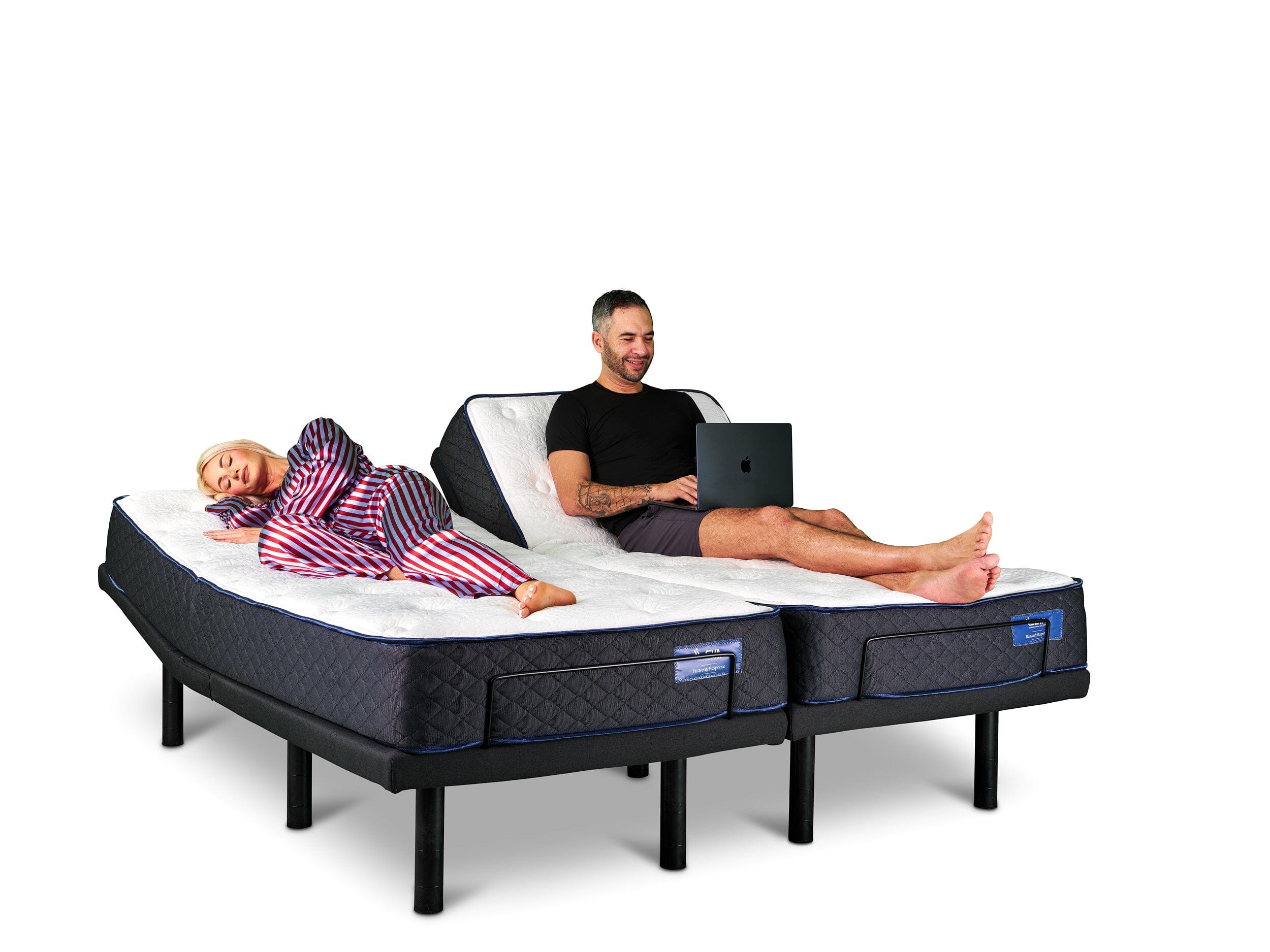
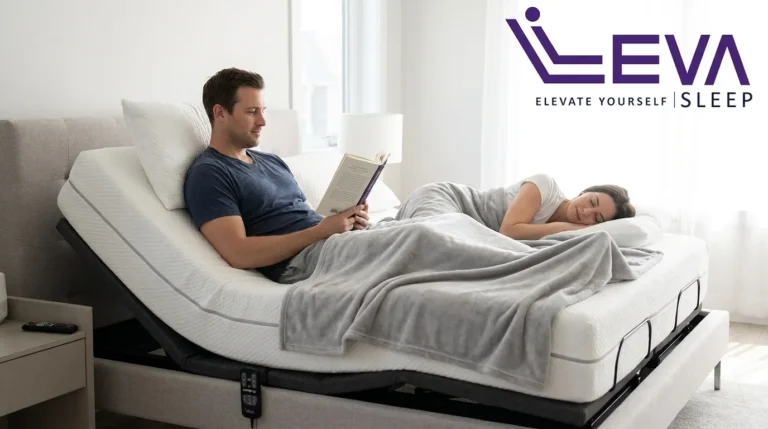
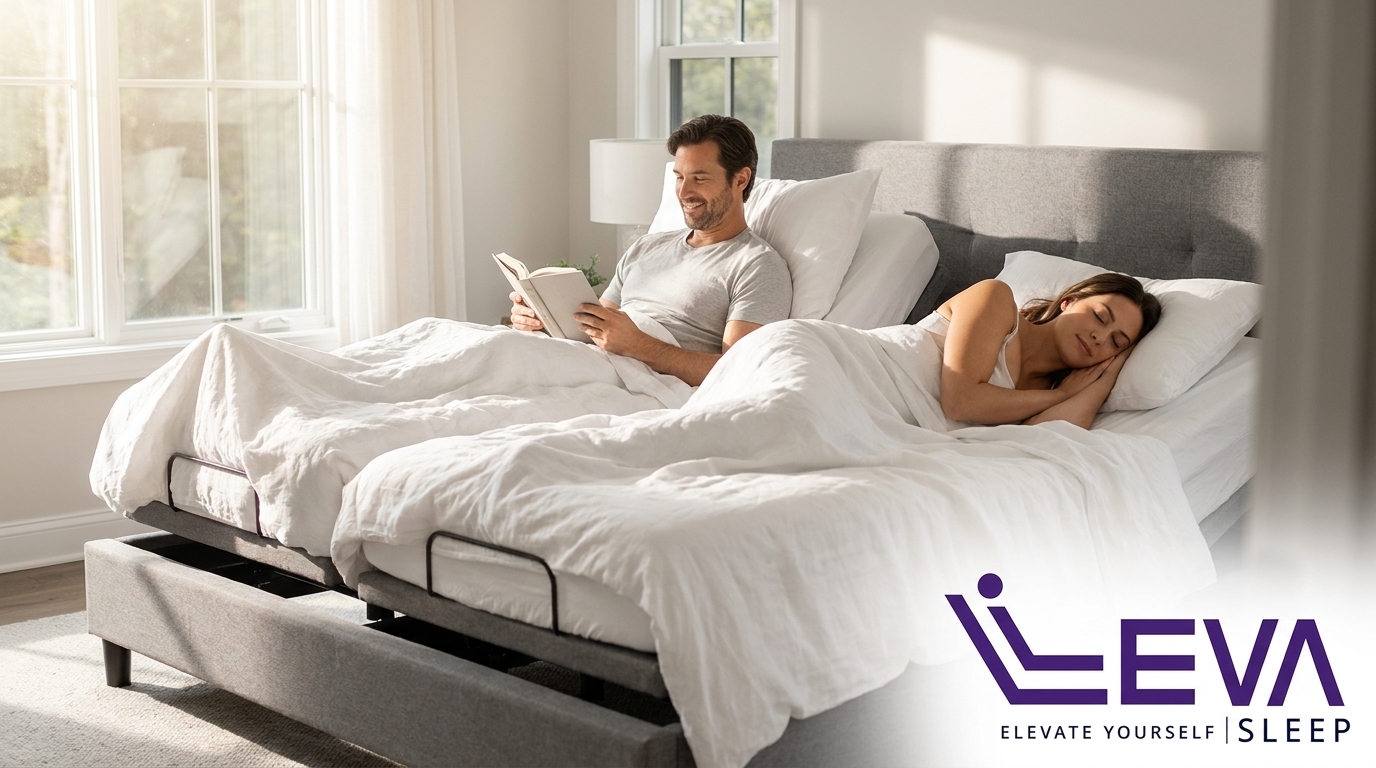
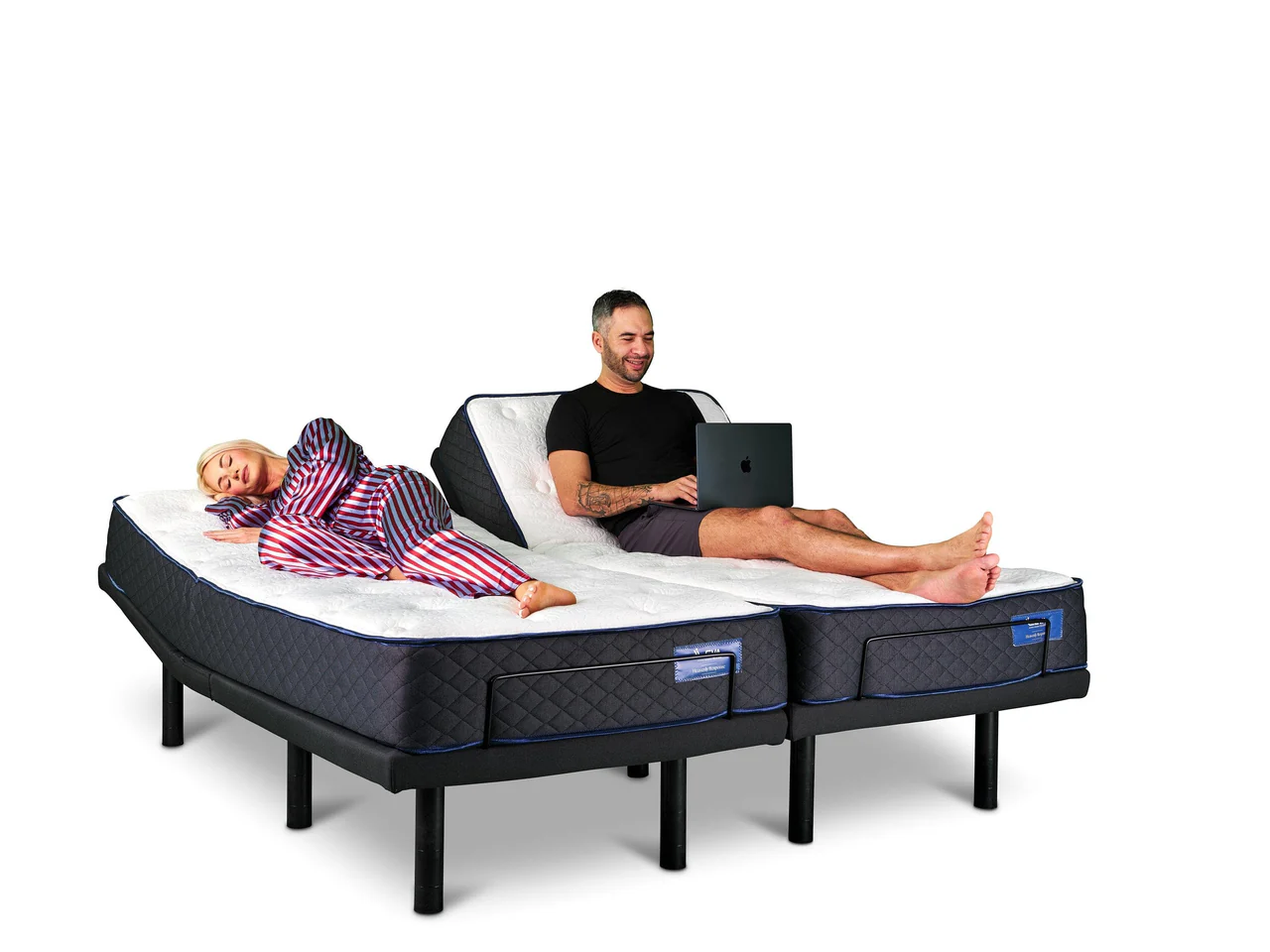
Split adjustable beds give couples independent control over position, firmness, and features on each side of the bed. This setup addresses several issues at once, including snoring, mild sleep apnea, back pain, and different comfort preferences.
Many modern systems include quiet motors, app-based controls, and mattresses designed to flex without sagging. Each partner can raise the head for easier breathing or elevate the legs to ease back pressure without disturbing the other.
For couples who feel forced to choose between sleeping together and sleeping well, split adjustable beds remove that tradeoff. You share a bed, keep your own ideal setup, and maintain both comfort and connection.
Frequently Asked Questions
What is the 10-3-2-1-0 sleep rule?
The 10-3-2-1-0 sleep rule is a simple checklist for evening habits. It calls for avoiding caffeine 10 hours before bed, stopping food and alcohol 3 hours before, ending work 2 hours before, putting away screens 1 hour before, and hitting the snooze button 0 times in the morning.
This structure reduces common sleep disruptors and creates a predictable wind-down routine. Over time, it helps your body and mind shift into sleep mode more smoothly.
What are the best supplements to improve sleep quality?
Helpful options include low-dose melatonin (0.3 to 0.5 mg) for circadian rhythm support, standardized holy basil for deeper NREM sleep, and magnesium for muscle relaxation and cortisol reduction. Some people also benefit from L-theanine for faster sleep onset, ashwagandha for stress relief, and passionflower for its GABA-supporting effects.
Always consult a healthcare provider before starting supplements, especially if you take medications or have ongoing health conditions. A professional can help you choose safe doses and avoid interactions.
How do adjustable beds help with snoring and couples’ sleep issues?
Adjustable beds reduce snoring by elevating the head and upper body, which limits airway collapse and keeps breathing passages more open. This position can also ease mild sleep apnea symptoms.
For couples, split adjustable beds let each partner choose a different position. One person can elevate for snoring relief while the other stays flatter or adjusts for back comfort, so neither has to compromise.
Should couples choose a Split Queen or Split King adjustable bed?
Room size, budget, and personal space preferences guide this choice. Split King offers more space per person, at 38 inches each, and works well in larger bedrooms or for couples who like extra room.
Split Queen provides 30 inches per person, as shown with the Split Queen Symphony Hybrid, and fits better in smaller rooms. Both sizes still deliver independent adjustability and personalized comfort.
When should couples see a doctor about sleep issues?
Couples should seek medical advice if sleep problems persist despite strong habits, or if loud snoring comes with gasping, choking, or pauses in breathing. Excessive daytime fatigue, mood changes, or declining work and relationship performance also signal a need for evaluation.
Consult a clinician if you suspect sleep apnea, experience chronic pain that disrupts sleep, or notice that problems worsen over time. Early assessment can prevent complications and guide more targeted treatment.
Stack These Tips for Lasting Sleep Transformation
Lasting sleep improvement comes from layering changes, not relying on a single fix. Begin with two or three basics, such as a consistent schedule and a screen-free hour, then add temperature control, positioning, and supplements as needed.
For couples who still struggle after adjusting habits, split adjustable bed systems offer a powerful next step. Visit the Leva Sleep La Jolla showroom or explore their split adjustable beds online to find a setup that supports both of you night after night.