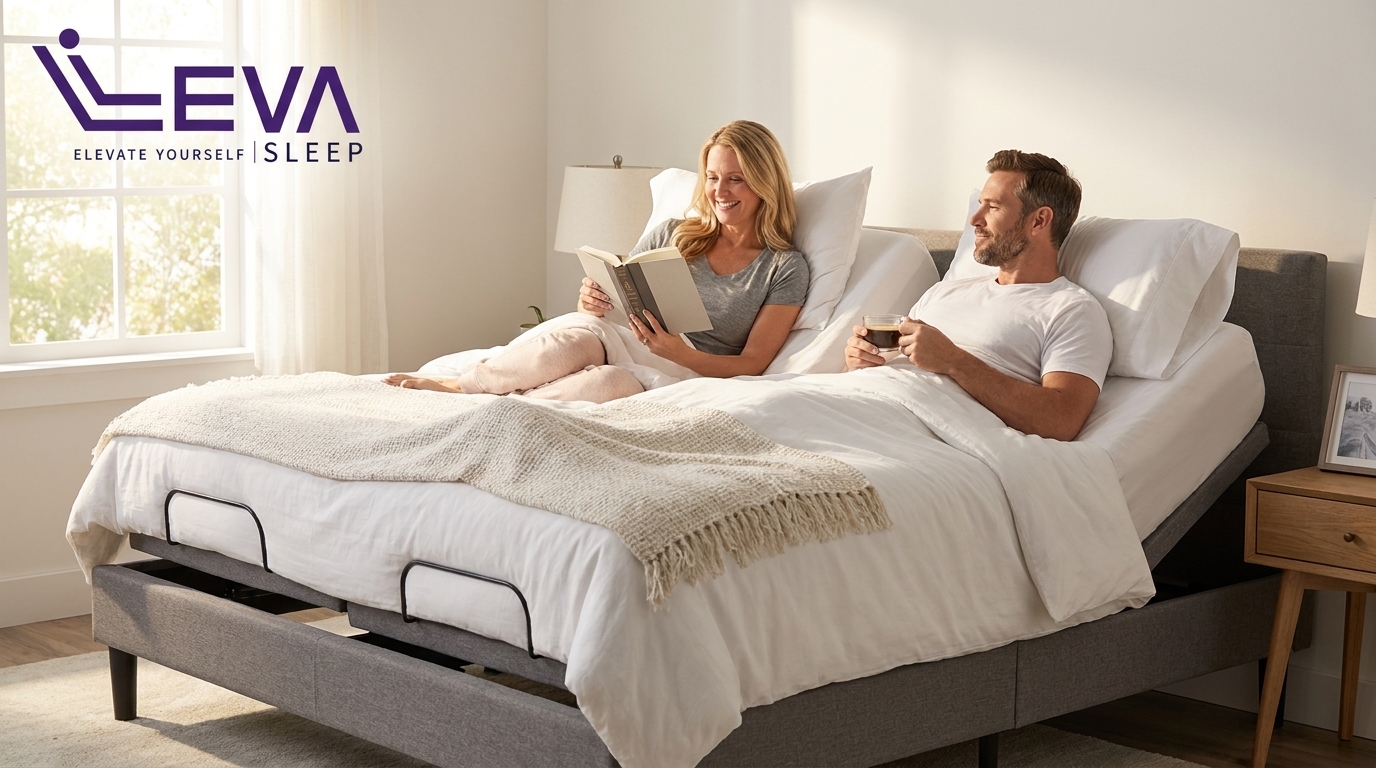
Written by: Matthew Timmins, Founder and Managing Director, Leva Sleep
Key Takeaways for Couples Considering Smart Adjustable Beds
- Smart adjustable beds with split configurations significantly reduce partner disturbances, addressing snoring, pain, and comfort mismatches for couples.
- Independent controls, anti-snore AI, lumbar support, app presets, and quiet motors help both partners protect their sleep quality.
- Better spinal alignment, circulation, and open airways can reduce healthcare costs and support stronger relationship intimacy.
- ROI analysis shows smart beds can deliver long-term savings through higher productivity and lower total ownership costs than flat beds.
- Leva Sleep offers advanced split systems with specialized bedding and white-glove service; visit Leva Sleep’s La Jolla showroom or shop online to explore options for your bedroom.
How Adjustable Beds Support Couples: Pros and Cons
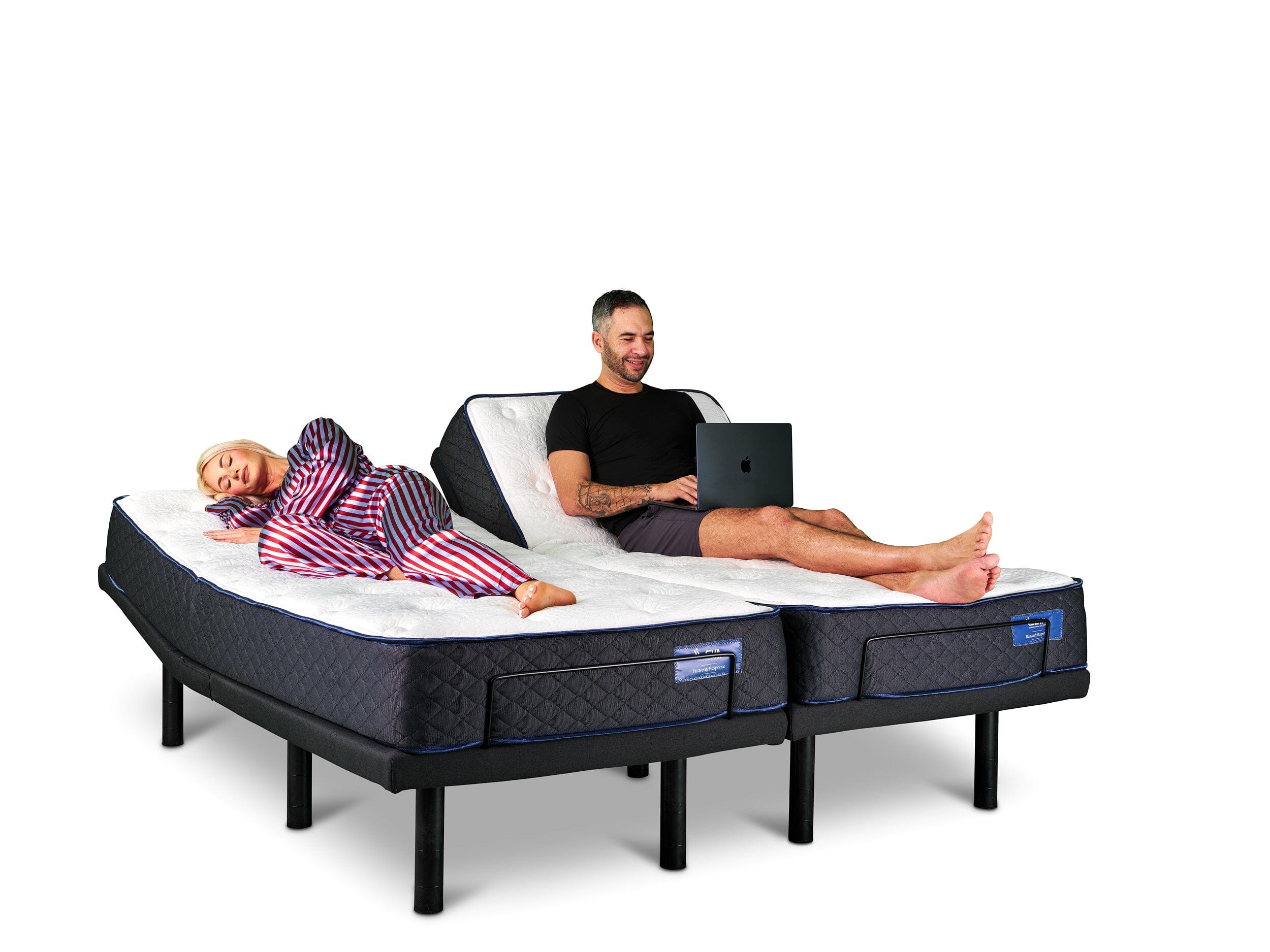
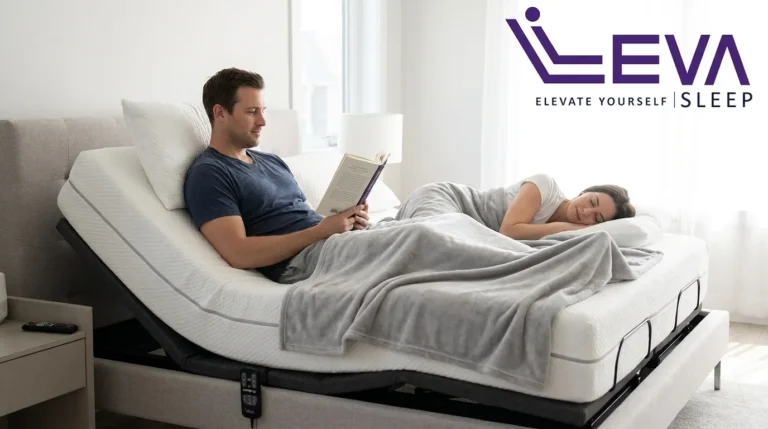
Smart adjustable beds give couples meaningful advantages through dual-zone split configurations that remove the need for sleep compromise. Each partner can fine-tune elevation, use anti-snore positioning, and rely on whisper-quiet motors for smooth adjustments. Smartphone app integration adds convenient presets that match each person’s preferred sleep and relaxation positions.
Primary Advantages for Couples
- Split Queen and King configurations with independent controls for each partner
- Anti-snore AI technology (available 2026) that detects snoring and makes micro-adjustments
- Lumbar support and pillow tilt features that target common pain areas
- App-controlled presets for sleep positions, reading, and massage settings
- Whisper-quiet German motors that minimize sleep disruption
Potential Drawbacks and How Leva Addresses Them
- Higher upfront cost, balanced by extended lifespan and health-related ROI
- Learning curve for ideal settings, simplified through guided app setup and presets
- Sheet compatibility concerns, solved with deep-pocket fitted sheets and added elastic
| Feature | Flat Beds | Smart Adjustables (Leva) |
|---|---|---|
| Partner Disturbances | High (snoring and movement) | Low (significant reduction per Leva data) |
| Customization Options | None | Independent splits with app controls |
| Pain Relief Capability | Poor alignment support | Targeted elevation and lumbar support |
| Sleep Apnea Management | Requires separate CPAP equipment | Integrated head elevation positioning |
How Smart Adjustable Beds Help Couples Stay in the Same Bed
Smart adjustable beds directly address the main sleep conflicts that push couples into separate bedrooms. Chief among these conflicts is snoring, which affects roughly 40% of adults and often drives “sleep divorce.” Because snoring usually stems from restricted airways, adjustable beds with anti-snore positioning gently elevate the head to open those airways. This approach reduces snoring intensity without relying on CPAP masks or oral appliances.
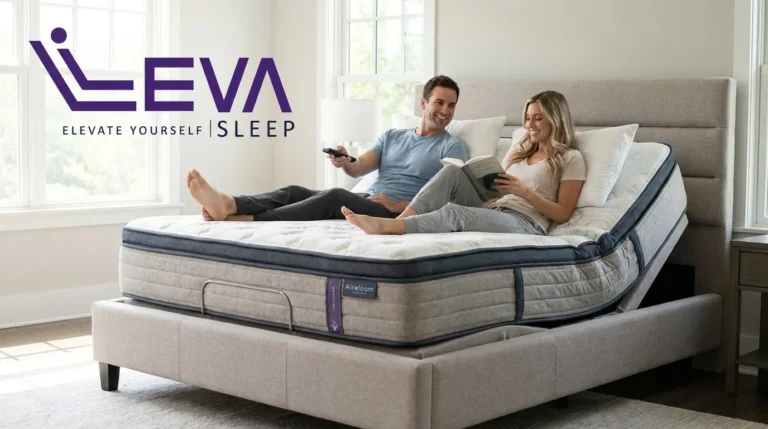
Pain management creates another major advantage for couples. Partners with hip, shoulder, or lower back discomfort can adjust their own side to support healthier spinal alignment. The zero-gravity position elevates both head and feet, which eases pressure points and supports better circulation throughout the night.
Temperature differences between partners often cause ongoing tension. Split adjustable beds work well with temperature-regulating mattress toppers and bedding on each side, so one partner can sleep cooler while the other stays warmer. Each person can fine-tune comfort without affecting the other.
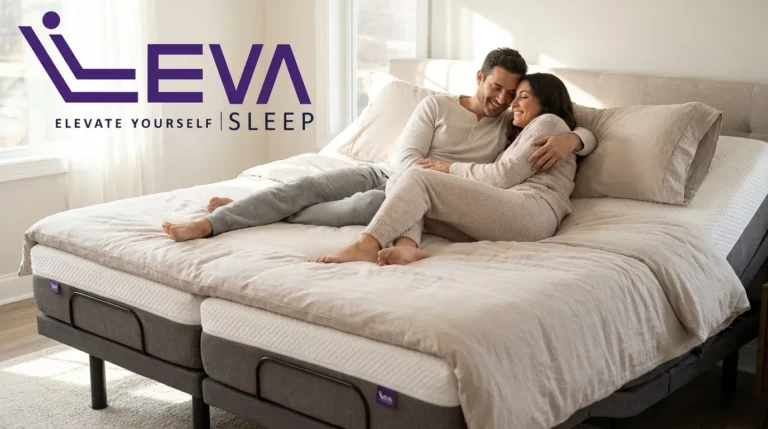
Relationship preservation becomes a powerful, sometimes surprising, outcome. Couples frequently report better intimacy and communication when both partners sleep well in the same bed. Consistent, high-quality sleep supports mood regulation, patience, and emotional resilience, which strengthens connection over time.
These combined health and relationship benefits naturally raise a practical question about value. Couples want to know whether the upfront investment aligns with the long-term returns. The next section connects these improvements to concrete financial outcomes.
Smart Beds vs. Flat Beds: ROI and Long-Term Costs for Couples
Smart adjustable beds require a higher initial spend, yet they can deliver measurable ROI through better health and improved daily performance. Many couples see meaningful long-term value when they factor in higher sleep quality, fewer pain-related appointments, and reduced fatigue.
The table below compares total ownership costs across bed types. It highlights how Leva’s lower healthcare and productivity costs can offset the initial investment over a multi-year period.
| Cost Category | Flat Bed | Competitor Average | Leva Split System |
|---|---|---|---|
| Initial Investment | Moderate | Higher | Competitive |
| Annual Productivity Loss | Higher (fatigue-related) | Moderate | Lower (improved energy) |
| Healthcare Costs (multi-year) | Higher (back and sleep issues) | Moderate | Lower (preventive benefits) |
| Total Multi-Year Cost | Higher | Higher | Lower |
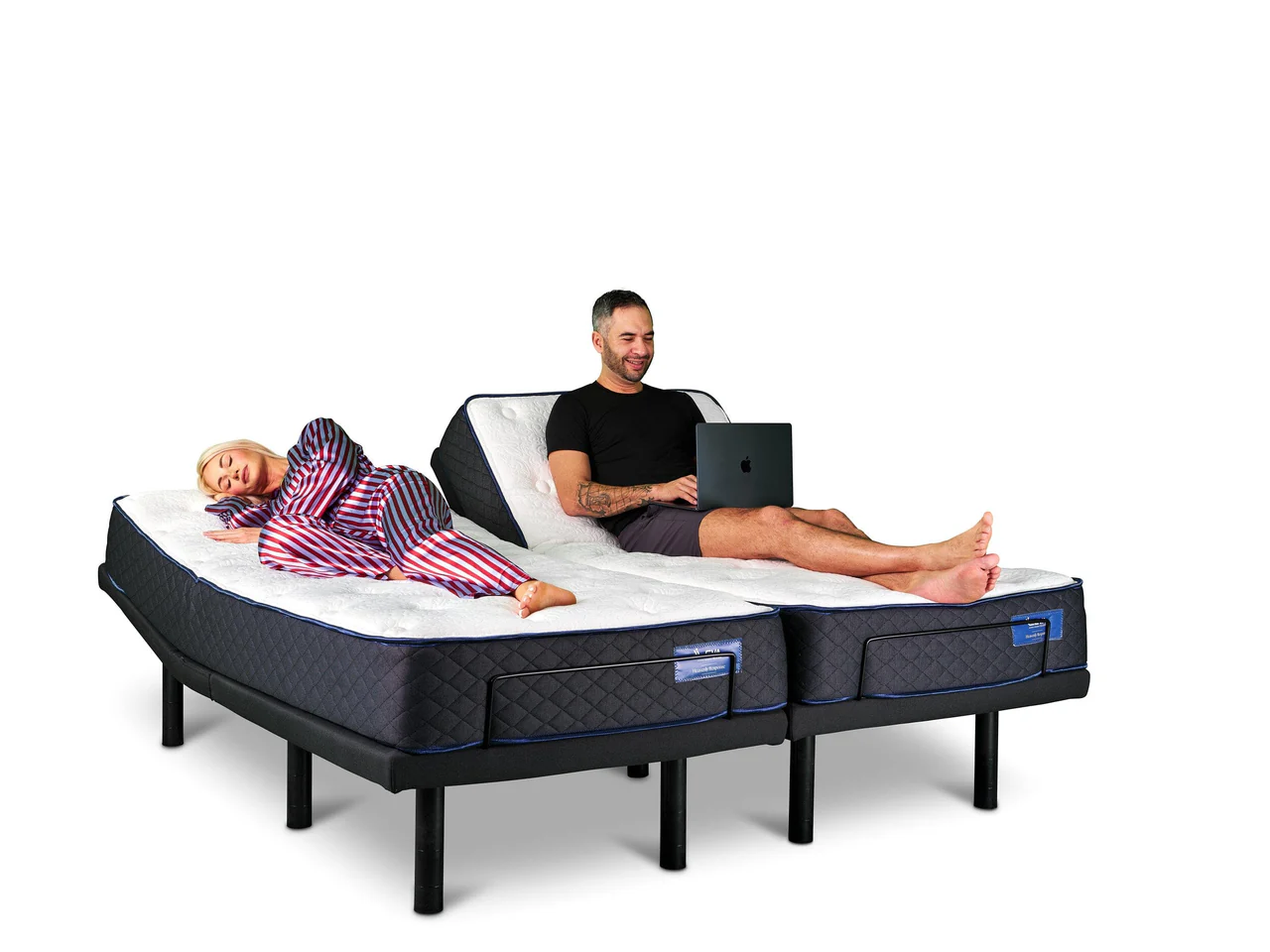
Split Queen configurations give couples in smaller bedrooms a space-efficient way to gain independent adjustability. Split King systems suit larger rooms and couples with very different sleep preferences, since they provide maximum space and customization.
Common Smart Bed Concerns and How Leva Resolves Them
Many shoppers worry about motor noise, bedding fit, and complicated setup when they consider adjustable beds. Leva Sleep focuses on engineering and service upgrades that reduce or remove these concerns for couples.
Motor noise ranks as the most frequent complaint with many adjustable bases. Leva systems use whisper-quiet German motors that operate under 45 decibels, which is quieter than most bedroom fans. Competing products often rely on louder, less refined motors that can wake a partner during position changes.
Bedding fit becomes a problem when standard fitted sheets slip off during elevation. Leva designs specialized bedding with deep pockets, extra elastic, and duvet clips that stay secure in any position. Typical retailers usually offer basic bedding that does not account for the movement of adjustable bases.
Setup complexity can feel intimidating for couples. Leva’s white-glove delivery service includes professional assembly, height adjustments, product walkthroughs, and removal of the old bed. Many competitors provide only doorstep delivery, leaving customers to manage heavy lifting and detailed assembly on their own.
Why Leva Sleep Stands Out for Couples
Leva Sleep focuses solely on adjustable bed systems, offering roughly 15 to 20 models instead of the 3 to 5 basic options at general mattress stores. This narrow focus supports deeper product knowledge, more advanced features, and accessories designed specifically for adjustable bases.
The company’s vertical integration model removes middleman markups and supports the cost advantages detailed in the ROI section above. Leva systems include features such as lumbar control, pillow tilt motors, and upcoming anti-snore AI technology that many competitors reserve for higher-priced tiers.
Customer stories often emphasize relationship improvements. One couple shared, “After eight months with our Leva split king, we’re sleeping together again instead of separate rooms. The snoring issue is completely resolved, and we both wake up without back pain.”
Leva’s La Jolla showroom gives couples a chance to test different configurations before buying. This consultative, in-person experience contrasts with online-only brands that depend on trial periods and return logistics.
Frequently Asked Questions About Adjustable Beds for Couples
Are adjustable beds good for couples?
Adjustable beds with split configurations work very well for couples because they remove the need for sleep compromise. Each partner can control their side’s elevation, firmness, and massage settings while still sharing one bed. This flexibility addresses snoring, back pain, and comfort differences that often push couples into separate sleeping arrangements.
What is the best adjustable bed for couples?
Strong options for couples include split configurations such as Split Queen or Split King, independent controls, quiet motors, and full app integration. Leva Sleep systems deliver these features with whisper-quiet German motors, anti-snore technology, and specialized bedding built for adjustable bases. The choice between Split Queen and Split King depends on bedroom size and how much personal space each partner prefers.
Are Split Queen adjustable beds worth it?
Split Queen adjustable beds provide strong value for couples in smaller rooms or for partners who like closer proximity. They offer the same independent control benefits as Split King systems while taking up less floor space. Leva Sleep is one of the few manufacturers that offer true Split Queen configurations, which helps couples gain adjustable benefits without moving to a larger bedroom.
Do adjustable beds help with snoring?
Adjustable beds can significantly reduce snoring by raising the head and opening the airway in a natural way. This position helps prevent soft tissue collapse that creates snoring sounds. Leva Sleep’s upcoming anti-snore AI technology will detect snoring and make small adjustments to head position throughout the night, providing ongoing snoring reduction without waking the sleeper.
What are the main disadvantages of smart adjustable beds?
The main drawbacks include higher upfront costs, possible motor noise, and bedding fit challenges. Quality systems such as Leva Sleep address these issues with quiet motors, specialized deep-pocket bedding with extra elastic, and pricing that remains competitive with other premium options. For many couples, the long-term health and relationship gains outweigh the initial expense.
Final Verdict: Why Smart Adjustable Beds Pay Off for Couples
Smart adjustable beds with split configurations offer a strong investment for couples who struggle with sleep compatibility. Health improvements, relationship preservation, and long-term cost savings combine to create compelling ROI that often reaches break-even within two to three years. Couples considering separate bedrooms because of snoring, pain, or comfort conflicts can use adjustable beds to stay together while still meeting individual needs.