Written by: Matthew Timmins, Founder and Managing Director, Leva Sleep
Key Takeaways: Unhealthy Positions and Better Options
- Stomach sleeping is the unhealthiest position for adults. It strains the neck, misaligns the spine, and often triggers back pain.
- A tight fetal position restricts breathing, stiffens hips and knees, and limits circulation when held too tightly.
- Back sleeping with arms overhead increases sleep apnea risk, shoulder nerve compression, and snoring from airway collapse and poor circulation.
- Side sleeping with a twisted neck causes cervical misalignment, shoulder strain, and hip issues without proper pillow support.
- Leva Sleep’s split adjustable bases, anti-snore mode, and targeted support help you move into healthier positions with less pain and more consistent alignment.
The 4 Unhealthiest Sleeping Positions Overview
These four common sleeping positions cause the most problems for adults, listed from most to least harmful based on expert consensus:
- 1. Stomach Sleeping
- 2. Tight Fetal Position
- 3. Flat on Back with Arms Overhead
- 4. Side Sleeping with Twisted Neck
1. Stomach Sleeping: The Worst Position for Adults and Back Pain
Sleep specialists consider stomach sleeping the worst sleeping position for spinal alignment because it forces the neck to twist to one side for hours to breathe, straining neck muscles and leading to stiffness or pain, while causing the spine to arch unnaturally and creating pressure in the lower back. This position places the body under constant strain.
- Prolonged cervical spine rotation that can contribute to neck strain
- Unnatural spinal curvature that increases vertebral stress
- Extra stress or pressure on the airway, often leading to or worsening obstructions in obstructive sleep apnea
- Reduced sleep quality from muscle tension and joint strain
Most people need a gradual plan to move away from stomach sleeping. Primary care physicians recommend stomach sleepers use a very thin pillow or none at all to minimize neck twisting and reduce spinal stress as a temporary step while they practice sleeping on their side.
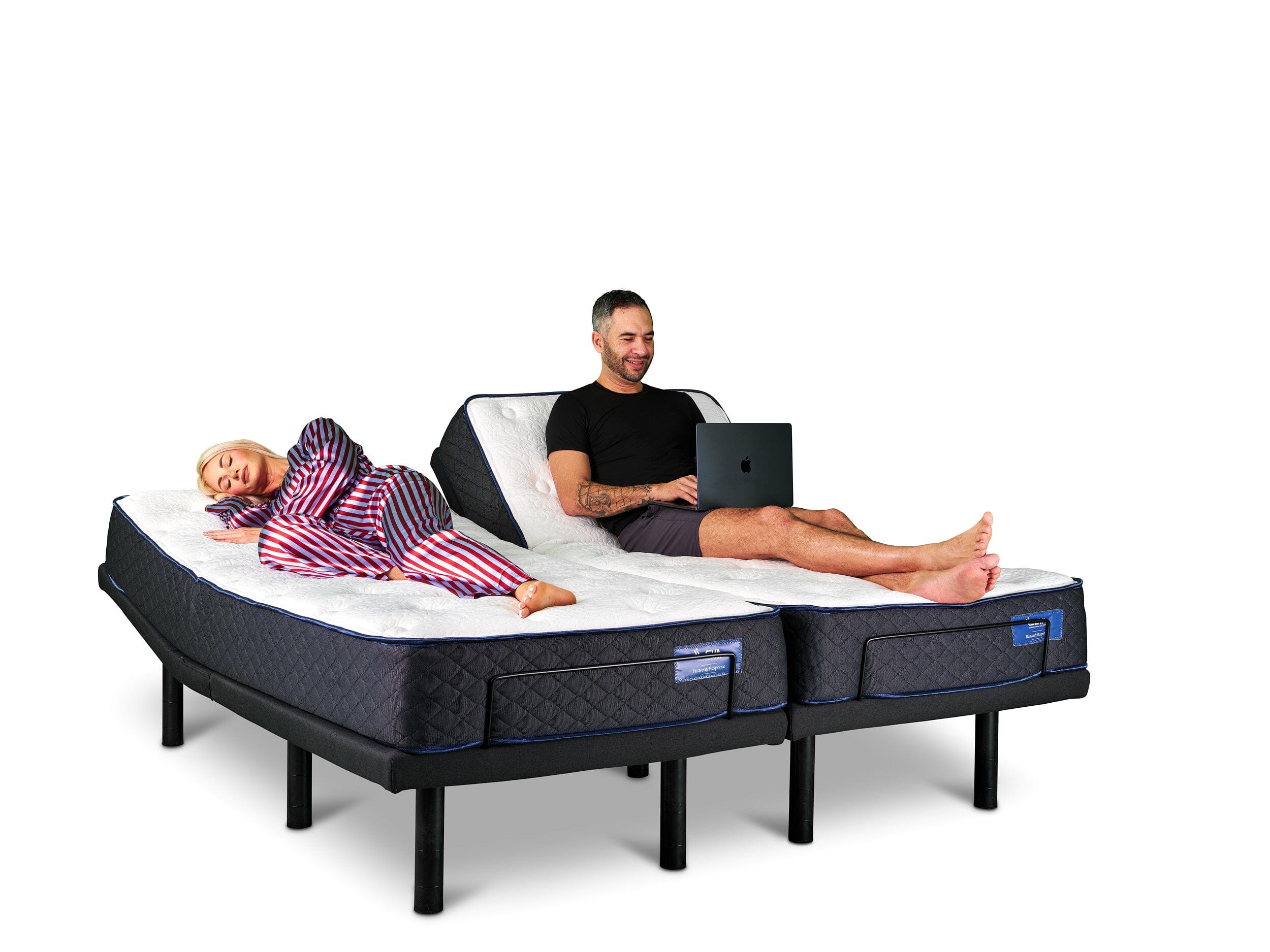
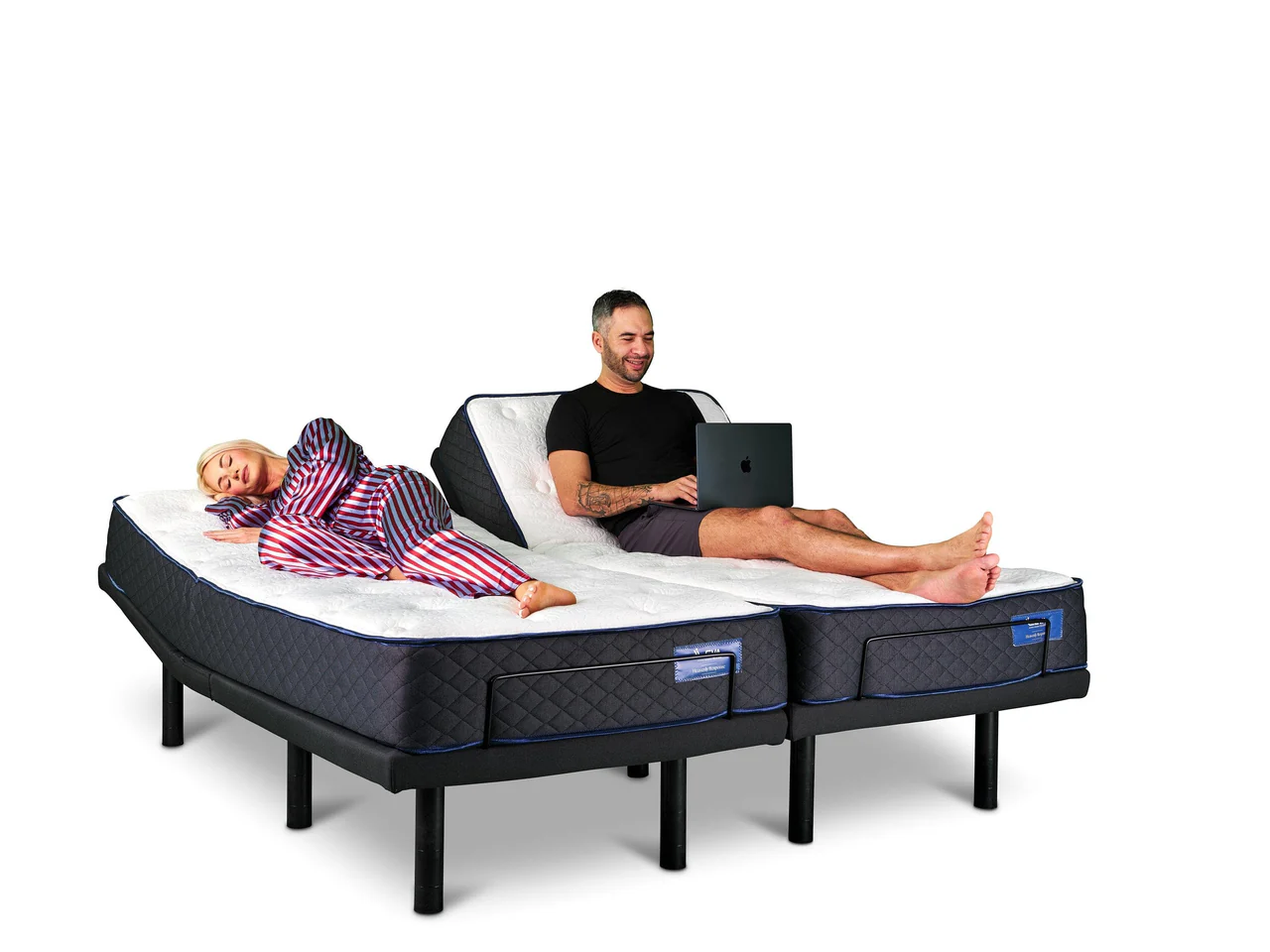
Leva Sleep’s split adjustable bases help address the reasons people cling to stomach sleeping by allowing independent head and leg elevation for each partner. This independent positioning is powered by whisper-quiet German motors that respond to app-controlled commands. Together, these features reduce pressure in healthier positions so comfort improves without returning to the stomach.
2. Tight Fetal Position: Hard on Breathing and Joints
Fetal-position side sleeping does not create a fully neutral spine and can restrict breathing if held too tightly, leading to stiffness. The curled posture compresses the torso and joints.
- Torso compression that can restrict breathing
- Hip and knee joint stiffness from prolonged flexion
- Restricted circulation in hands and feet
- Greater likelihood of morning stiffness
Improvement starts with gently opening the posture. Gradually loosen the curl and extend the legs slightly. A pillow between the knees and ankles prevents stiffness and maintains better spinal alignment.
Leva Sleep’s anti-snore mode automatically detects breathing irregularities and makes small adjustments that improve airway position. The lumbar support feature helps maintain a more natural spinal curve as you ease out of a tight fetal curl. If tight fetal positioning leaves you stiff or short of breath in the morning, explore how Leva’s automatic adjustments can support easier breathing and smoother joint movement.
3. Flat on Back with Arms Overhead: Tough on Sleep Apnea and Shoulders
Back sleeping with arms overhead creates several stresses on the shoulders, nerves, and airway. Back sleeping protects the airway from aspiration of regurgitated or refluxed material by positioning the trachea above the esophagus, yet arm position and head angle still matter.
- Nerve compression in shoulders and arms from overhead positioning
- Higher risk of airway collapse during sleep
- Reduced circulation to raised arms and hands
- Greater snoring intensity for many sleepers
A healthier version of back sleeping keeps the arms down and the spine supported. Transition by lowering the arms to your sides and placing a pillow under the knees for lumbar comfort. Clinical data shows that placing a small firm pillow under the knees while back sleeping reduces lumbar lordosis, relieving pressure on lumbar discs and facet joints.
Leva Sleep’s head elevation feature gently opens the airway and can ease sleep apnea symptoms for many users. Precise positioning controls let you test small angle changes until you find a back-sleeping setup that supports your shoulders, breathing, and lower back.
4. Side Sleeping with Twisted Neck: Shoulder and Neck Strain Risks
When side sleeping lacks proper support with a firm pillow between the knees and a contoured neck pillow, it can cause pelvic twisting and lower back pull. A twisted neck or unsupported hips quickly turn a healthy position into a painful one.
- Cervical spine misalignment from a pillow that is too high or too low
- Shoulder compression and possible nerve irritation
- Hip misalignment without support between the knees
- Morning stiffness from prolonged joint stress
Comfortable side sleeping keeps the head level with the spine and the knees supported. Enhancing side sleeping effectiveness involves straightening the legs rather than tucking them and inserting a pillow between the knees and behind the back to help align the spine.
Leva Sleep’s pillow tilt motor fine-tunes head and neck position so the cervical spine stays aligned. The split base design, described earlier, lets each partner maintain their own preferred side-sleeping angle. Leva’s eight years of adjustable bed engineering support quiet, smooth movement that will not wake you when you change positions.
Healthier Positions and How Leva Supports Them
Back sleeping is recommended by experts as the most spine-friendly position because it evenly distributes body weight to reduce pressure points on joints and soft tissues, supporting the natural spinal curvature. Side sleeping often reduces morning spinal symptoms such as pain and stiffness, especially when the spine stays relatively straight and supported.
The table below shows how Leva’s adjustable base features support healthier positions and reduce the specific risks described above.
| Position | Risks Avoided | Leva Feature | Health Benefit |
|---|---|---|---|
| Supported Back Sleeping | Neck strain, spinal misalignment | Head/knee elevation | Pressure reduction |
| Proper Side Sleeping | Airway obstruction, snoring | Independent positioning | Improved breathing quality |
| Elevated Sleep | Sleep apnea symptoms | Anti-snore mode | Reduced breathing disruptions |
Frequently Asked Questions
Is stomach sleeping completely forbidden for adults?
Stomach sleeping is not formally forbidden, yet sleep medicine experts and physical therapists consistently rank it as the worst position for spinal health. The posture forces long periods of neck rotation and creates an unnatural spinal curve that can cause chronic pain and fragmented sleep. Adults with existing back or neck issues often experience more intense symptoms and slower healing when they continue to sleep on their stomach.
Which sleeping position is worst for sleep apnea?
Both stomach and back sleeping can aggravate sleep apnea, although for different reasons. In patients with tongue-related upper airway obstruction, the tongue falls into the airway to the same extent during back sleeping as during lateral sleeping, which is not attributable to gravitational influences, while stomach sleeping can compress the chest and affect breathing mechanics. Side sleeping remains the most consistently recommended position for sleep apnea management because it helps keep the airway open and lowers obstruction risk.
What is the best sleeping position for chronic back pain?
Supported back sleeping or side sleeping with thoughtful pillow placement usually provides the most relief for chronic back pain. Back sleeping with a pillow under the knees helps maintain the spine’s natural curve. Side sleeping with a pillow between the knees keeps the hips from tilting and protects the lower back. The priority is a neutral spine from neck to pelvis throughout the night.
How can I stop sleeping on my stomach?
Most people break the stomach-sleeping habit through small, steady changes. Start with a very thin pillow to reduce neck strain, then practice rolling to your side whenever you notice you are on your stomach. Place a pillow against your back while side sleeping to make rolling forward more difficult. Adjustable beds support this change by offering comfortable side and back positions that feel stable and reduce the urge to flip onto your stomach.
Do adjustable beds really fix unhealthy sleeping positions?
Adjustable beds reduce the discomfort that pushes people into unhealthy positions. Precise head and leg elevation eases pressure points that often make flat back or side sleeping feel painful. Split adjustable bases are especially helpful for couples because each partner can fine-tune their own position without sacrificing comfort, which removes the pressure to adopt unhealthy positions just to fall asleep.
Conclusion: Moving Away from Harmful Sleep Positions
Stomach sleeping ranks as the unhealthiest position for adults and often triggers a chain of spinal, breathing, and sleep quality problems that intensify with age. Most people succeed when they pair motivation with a sleep system that makes healthier positions feel natural and sustainable.
Leva Sleep’s split adjustable bases reduce the discomfort that keeps couples locked into harmful positions. With independent app control, anti-snore technology, and precise mechanical support, these systems help both partners maintain better spinal alignment without giving up personal comfort. The right adjustable base turns healthier sleep positions into a nightly habit instead of a struggle.